Ally Sykes: Soldier, Musician, Trade Unionist, and Businessman THURSDAY JUNE 20 2013 email print Al

Ally Sykes: Soldier, Musician, Trade Unionist, and Businessman THURSDAY JUNE 20 2013 email print Al

Mohamed Said

JF-Expert Member
Joined
Nov 2, 2008
Posts
21,967
Reaction score
32,074
IN MEMORIAM OF ALLY SYKES AND THE DAY TANU WAS FOUNDED 7 JULAI 1954 (SABA SABA)
Mohamed Said July 07, 2017 0

THURSDAY JUNE 20 2013


ally.jpg


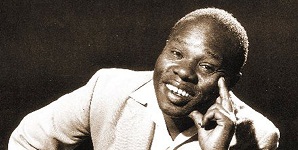
Ally Sykes wore many hats with ease — he was a soldier in Burma, a trade unionist and politician, a businessman, and even founded a jazz band. Illustration/John Nyagah Nation Media Group
In Summary
  • Sykes wore many hats with ease — he was a soldier in Burma, a trade unionist and politician, a businessman, and even founded a jazz band. He passed away last month in a Nairobi hospital at the age of 87.
By MOHAMED SAID
I cannot remember the first time I met Ally Sykes, but I knew him when I was very young. Ally Sykes was one of a kind.
Many do not know of the key role that this iconic figure played in Tanganyika’s drive for Independence, but he shared a lot with me when I was writing a book about his elder brother.
It was Ally and his brother Abdulwahid who took in Julius Nyerere when he first came to Dar es Salaam in 1952, and proposed him to stand for Tanganyika African Association presidency in 1953, which was then held by Abdulwahid himself. Nyerere won that election and the Tanganyika African National Union (Tanu) was formed in 1954.
Ally and Abdulwahid, along with John Rupia, Dossa Aziz and Nyerere formed the inner circle of the nascent nationalist movement, and they were the vanguard in the Independence struggle.
The two Sykes brothers were natural insiders in the political awakening in Tanganyika since their father, Kleist Sykes, was the founding secretary of the African Association in 1929.
When Tanu was founded in July 1954, Ally Sykes, from his own pocket, printed the first 1,000 Tanu cards. He issued Tanu card no. 1 to “Territorial president” Julius Nyerere and card no. 2 to himself, card no. 3 to his elder brother Abdulwahid Sykes, card no. 4 to Dossa Aziz, card no. 5 to Dennis Phombeah, a Nyasa from Nyasaland, card no. 6 to Dome Okochi Budohi, one of the Kenyan nationalists in Tanu, and card no. 7 to John Rupia.
He printed a further 2,000 cards from money borrowed from Tanganyika African Government Servant Association, of which he was secretary.
In the early 1960s, we were living on Lindi Street (which before Independence was known as Kirk Street) near International Hotel in Dar es Salaam. The hotel still exists today, although the house we used to live in was torn down and replaced by a high rise building.
Ally had his office just across our house. He and my father had been friends since childhood; they had gone to school together in Dar es Salaam. I later learned that this office was owned by Peter Colmore, the managing director of High Fidelity Productions, a publicity and advertising agency based in Nairobi, and Ally was his representative in Dar es Salaam.
Ally was a civil servant in the Labour Department but after office hours, he would work at the agency.
Ally formed his first company — Sykes Sales Promotion Consultancy — in 1958 at the age of 32. Colmore, who had built up a very successful sales promotion business in Nairobi, appointed him as his agent for High Fidelity Productions in Tanganyika.


Peter Colmore and Ally Sykes, Paris 1963

It was during this time that I came to know Peter Colmore. Whenever Colmore was in Dar es Salaam he would stay at the International Hotel Annex where he had a permanent room with a brass placard on the door carrying his name.
During this time, Ally, through Tanganyika Broadcasting Corporation, was hosting a radio show for Philips, Shell BP and other companies.
My father was an ardent fan of Ally Sykes’s radio programmes, and though I was very young then, I can still hear Ally’s husky voice on the radio over the music, with my father sitting close by on his favourite sofa. This was in the early 1960s.
Ally was 15 years old when he ran away from home in Dar es Salaam and volunteered for King’s African Rifles (KAR) in Burma, in 1942. His elder brother Abdulwahid had been conscripted and was already serving in Burma. Although Ally’s father Kleist went to the KAR Recruiting Centre at Kilwa Road to protest that Ally was too young to join the army, the authorities refused to listen.


Right Abdul and Sykes
Burma Second World War
(1938 - 1945)

Ally recalled that, “When we were about to be transported to Burma, my father came to Kabete, near Nairobi, where the training centre was, to see me off. But the authorities did not allow him into the camp. He went back to Dar es Salaam a very sad man having not been able to see me.’’
Even before he reached Burma, word was sent to his parents that Ally’s ship was torpedoed by a Japanese submarine and Ally was among the dead soldiers. It was, however, a false alarm, as Ally arrived at Kurnegala Camp in Colombo, Sri Lanka safe and sound in 1943.
What had happened was that while Ally’s convoy was sailing towards Colombo, one of the ships was torpedoed by a Japanese submarine. The vessel sank, killing all the African askaris and their white officers on board.
In Dar es Salaam, death rites for young Ally were even held at Kipata Mosque near their house, but his family was later overjoyed to learn that Ally was still alive.
After the war in 1945, Ally decided not to go back home directly. After disembarking in Mombasa from the ship that was bringing ex-service men back, he took a train to Nairobi to seek employment. In Nairobi, Ally went to work for Colmore, for the first time, as an assistant at his real estate agency.
The two had first met in a record shop a few years earlier, the East African music store owned by Assanand, who once had record shops in all major towns in East Africa. Both were in KAR uniform. Colmore was from the upper class of the British nobility and Ally from a well-to-do family in Dar es Salaam. Ally was fluent in English. That meeting at Assanand’s was a good omen, because after the war their relationship revolved around music, publicity and promotions.
As Colmore’s assistant in the real estate agency, Ally’s job was to take prospective buyers to view properties and negotiate the price, leaving Colmore to seal the deal after he had completed the groundwork. Ally also acted as the public relations officer for the agency.
At that time, during colonialism, Ally’s job was considered prestigious, out of reach for most Africans in Kenya. To get privileges from the colonial system, like staying in a hotel and getting a good salary, Ally registered himself as a Zulu. It wasn’t very far-fetched — Ally’s grandfather was actually a Zulu from South Africa, who came to Tanganyika as a mercenary for the German colonists.
The Germans, wanting to beef up their colonial army, went on a recruiting drive to South Africa and Mozambique, to attract Zulus into their army, as they had a reputation for being fearsome warriors.
After living in Tanganyika for a while, Ally’s grandfather found that life in Tanganyika under the Germans, and later, under the British, was less oppressive than what he had experienced under the Boers in South Africa, and decided to stay.
Ally got on well with Colmore, and they decided to form a band. During the war, Ally had been part of the entertainment unit of the KAR in the Burma Infantry 6th Battalion, and played the saxophone alongside the famous guitarist and vocalist Fundi Konde from Mombasa.
Colmore brought African musicians from Southern Rhodesia, now Zimbabwe, into the country. At the time Kenyan musicians had not learned how to use modern musical instruments. The band from Zimbabwe had musicians who played the piano, saxophone and trumpets. Colmore put Ally in charge, and he was responsible for general management and finding engagements for the band.
They became popular in Nairobi and played mainly for white audiences who could pay high rates. The band held many shows at Nairobi Theatre (now the Kenya National Theatre). The band was first known as the Ally Sykes Band, but was later called the Peter Colmore African Band.
It was while he was in Nairobi that Ally Sykes came to know Jomo Kenyatta, W.W Awori, Tom Mboya, Bildad Kaggia and other Kenyan nationalists. It was also during this time that he came into contact with Mau Mau activists.
Colmore and Ally working under High Fidelity Productions represented, promoted, and were consultants to Coca Cola (East Africa) Ltd; Cooper Motors Corporation Ltd; Allsopp (EA) Ltd; Shell Company of East Africa Ltd, Aspro Nicholas Ltd; Gailey and Roberts Ltd; Bata Shoes Company Ltd; Kenya Broadcasting Service, Cotton Lint and Seed Marketing Board and Raleigh Industries of East Africa Ltd.
They were also commercial representative in Kenya for the Tanganyika Broadcasting Corporation.
As a young boy, I remember the famous poster of Eduardo Masengo the guitarist and singer from Congo in striped blazer with his guitar holding a bottle of Coca-Cola. There was also the famous photograph of Msafiri Morimori, the trombone player, advertising Sportsman Cigarettes. These photographs of Masengo and Morimori were found in all newspapers in East Africa.


Eduardo Massengo

In 1960, Colmore brought Eduardo Masengo over to Dar es Salaam to perform, and Ally asked his friend Julius Nyerere to grace the occasion as the guest of honour at the show, which Masengo gave at Arnautoglo Hall. Colmore also came over from Nairobi for the show and Ally took the opportunity to introduce him to Julius Nyerere.
“I took Colmore over to Nyerere’s house at Magomeni Majumba Sita where he was staying at that time. On that day, Nyerere was a bit distressed since reports had been received from Congo that Lumumba had been killed,” Ally Sykes remembered. “The only thing that I remember about this is that we were all very sad about the events which were taking place in Congo.


Julius Nyerere and Eduardo Massengo, 1958

“I took Peter Colmore to Julius Nyerere with the view of discussing serious business opportunities that would unfold to Africans in free Tanganyika but the atmosphere that day was not permitting,” Ally wrote in his unpublished autobiography Under the Shadow of BritishColonialism. In the book, he reveals that he was getting richer by the day even though he was a civil servant at that time. His wealth eventually created a problem with Julius Nyerere.
After Independence, and following the Arusha Declaration of 1967 which intended to turn Tanzania into a socialist state, the government passed the Leadership Code. The code prohibited civil servants from engaging in business, drawing more than one salary, owning property or holding shares in a private company. The code even prevented a civil servant from renting out property.
Ally knew that the Arusha Declaration would be the turning point in his career and business relationship with Colmore, because as a civil servant he owned property and was an established entrepreneur even before Independence.
In 1971, the government passed the Acquisition of Building Act. By the stroke of a pen, all buildings with the value of more than Tsh100,000 became government property.
Ally and his mother, Bi Mruguru biti Mussa, lost property nationalised by the government, and so did John Rupia.
Ally writes, “Strangely, about this time in 1967, soon after the Arusha Declaration, there was subtle harassment from the government towards me and my business to the extent that one day my mother asked me what has gone wrong between me, my brother Abdulwahid, and Nyerere.”
Colmore could not stand the hostile political climate. He wound up, sold the company to Ally, including the office premises, and went back to Nairobi never to return.
Ally went on to live a full life owning residences in Montreal, Ottawa, Johannesburg, London, Harare and Nairobi. Sykes was buried in Kisutu cemetery, Dar es Salaam in May 2013, and this region will surely be a dimmer place without the light of this remarkable man.
 
Ahsante mkuu kwa kumbukumbu nzuri.
===
Joseverest hujui kiingereza?
argriiii
Alfa...
Nitaweka moja ya Kiswahili In Shaa Allah.

Ally Sykes


Ally Sykes na Mwalimu Julius Nyerere 1958
Ally Kleist Sykes (10 Oktoba 1926 Gerezani, Dar es Salaam - 19 Mei 2013 Nairobi, Kenya) alikuwa mzalendo muasisi wa TANU na moja kati ya wapigania uhuru wakubwa wa Tanganyika katika miaka ya 1950. Ally Sykes ndiye aliyemwandikia na Kumkabidhi Mwalimu Julius Nyerere kadi ya TANU Na. 1. Historia ina kawaida ya kujirudia. Ally Sykes mmoja wa waasisi wa TANU, mmoja wa wale watu wasiozidi takriban saba walikuwa katika kamati ya ndani ya TAA iliyounda TANU, mmoja wa wafadhili wakuu wa TANU, mmoja wa askari kwa maana yake halisi kwa kuwa ni Ally Syke ndiye TAA hadi TANU ikimtegemea kwa kutekeleza mambo ya hatari dhidi ya Waingereza.

Ally Sykes ndiye alikuwa akipewa kazi za hatari za kumwaga ‘’sumu na upupu’’ dhidi ya serikali. Sumu na upupu huu yalikuwa makaratasi aliyokuwa akichapa nyumbani kwake usiku makaratasi ambayo Waingereza waliyaita makaratasi ya ‘’uchochezi.’’ Waingereza na makachero wake walikuwa wanamjua Ally Sykes vizuri. Waingereza walikuwa wakijua kuwa alikuwa na medali ya mlenga shabaha bingwa aliyopata Vita Kuu ya Pili ya Dunia. Huyu ndiye Ally Sykes mzalendo muasisi wa TANU ambaye sahihi yake ndiyo iko katika kadi ya TANU ya Baba wa Taifa.


Yaliyomo
[1Historia


Historia[hariri | hariri chanzo]
Wasifu[hariri | hariri chanzo]

Abdulwaid na Ally Sykes wakiwa 6th Battalion Burma Infantry King's African Rifles (KAR) Vita Vya Pili Vya Dunia (1938 - 1945).
Ally Sykes alikuwa mtu maarufu kupita kiasi. Alikuwa kwanza ana umaarufu wa kuzaliwa. Kazaliwa Dar es Salaam Gerezani, mtoto wa mjini. Kisha alikuwa maarufu kwa nasaba. Baba yake Kleist Sykes alikuwa mmoja wa watu mashuhuri katika siasa zote za Dar es Salaam katika miaka ya ya mwanzo ya 1900 hadi alipofariki mwaka 1949. Baba yake alikuwa maarufu kwa kuwa alilelewa na Affande Plantan askari kiongozi katika jeshi la Wajerumani lilokuja Tanganyika na Herman Von Wissman wakati Wajerumani walipoingia kuitawala Tanganyika.

Kleist alikuwa ndiye katibu muasisi wa African Association mwaka 1929 chama kilichokuja baadae kujibadili na kuwa TANU Ally Sykes akiwa mmoja wa hao waasisi. Baba yake Kleist aliasisi Al Jamiatul Islamiyya Fi Tanganyika (Umoja wa Waislam wa Tanganyika) na kupitia jumuia hii akajenga shule ya kwanza ya Kiiislam Dar es Salaam, shule ambayo ilisomesha Qur’an pamoja na masomo ya kisekula. Hii Al Jamiatul Islamiyya ndiyo iliyotoa viongozi wa kwanza kuiendesha TAA na baadaye TANU katika harakati za kudai uhuru.

Harakati za kupigania uhuru wa Tanganyika na usaibu na Nyerere[hariri | hariri chanzo]
Inajulikana na wengi Ally Sykes na kaka yake Abdulwahid Sykes ndio watu wa mwanzo kumpokea Julius Nyerere alipokuja Dar es Salaam mwaka 1952. Nyerere alifika nyumbani kwa akina Sykes kwa utambulisho na hii ilijenga urafiki ambao ulipitiliza na kuwa udugu mkubwa wa mapenzi ya dhati si baina yao tu bali hata kwa wake na mama zao. Mama yake Nyerere Bi Mugaya hakuwa akipungua nyumbani kwa Mama Abdu Bi Mrurguru biti Mussa Mtaa wa Kirk. Halikadhalika Maria Nyerere hakuwa akipungua nyumbani kwa aidha kwa Bi Zainab mkewe Ally Sykes Mtaa wa Kipata au kwa Bi Mwamvua mkewe Abdulwahid Sykes Mtaa wa Aggrey.

Wakati huu Abdulwahid ndiye akiwa rais wa TAA na harakati za kuanzisha TANU zimepamba moto achilia mbali hila na fitna za Waingereza kuwatokomeza viongozi shupavu wa TAA kama Hamza Mwapachu, Dk. Vedast Kyaruzi, Dk. Wilbard Mwanjisi nje ya Dar es Salaam kukivunja nguvu chama. Ndiyo maana TANU ilipokuja asisiwa mwaka 1954 Ally Sykes kadi yake ya TANU ikawa namba 2, Nyerere namba 1, Abdulwahid Sykes kadi yake namba 3, Dossa Aziz kadi namba 4, John Rupia kadi yake namba 7.

Kipindi hiki Ally Sykes alikuwa Katibu wa Tanganyika African Government Servants Association (TAGSA) na vilevile alikuwa mwakilishi wa chama hicho katika Kamati ya Uajiri ya Serikali (Government Establishment Committee). Thomas Marealle ndiye alikuwa rais wa TAGSA na Rashid Kawawa alikuwa mwanakamati. Wanasiasa hawa vijana Ally Sykes akiwa mmoja wao wenyewe walijipa jina, ‘’Wednesday Tea Club’’ wakikutana kila siku ya Jumatano kunywa chai pamoja na kutumia wakati ule kupanga mikakati ya kuwang’oa Waingereza katika ardhi ya Tanganyika. Kupitia Ally, Abdulwahid na Dossa Aziz Nyerere akaweza kujuana na wenyeji wa Dar es Salaam maarufu katika hao ni Sheikh Hassan bin Amir, Mshume Kiyate, [[[Jumbe Tambaza]], Sheikh Suleiman Takadir, Clement Mtamila, Bi. Titi Mohamed, Tatu biti Mzee na wengineo.

Kifo chake na kutojaliwa mchango wake katika vyombo vya habari[hariri | hariri chanzo]
Historia huwa inajirudia. Kifo cha Ally Sykes kimepuuzwa na vyombo vya habari kama ilivyokuwa awali kuwa hata kifo cha kaka yake Abdulwahid Sykes alipofariki mwaka 1968 magazeti ya TANU (wakati ule ‘’The Nationalist’’ na ‘’Uhuru’’) chama alichokiasisi kwa jasho, damu na fedha zake magazeti haya yalipuuza kifo hicho. Kuna watu katika TANU katika kipindi kile walikuwa wanajaribu kuifuta historia ya kupigania uhuru wakitaka kuondoa mchango wa Abdulwahid na Ally Sykes katika historia ya uhuru. Hata hivyo ‘’Tanganyika Standard’’ gazeti ambalo ndilo liliokuwa likilinda maslahi ya ukoloni Tanganyika, ndilo lililoandika taazia ya Abdulwahid Sykes. Mhariri wa Tanganyika Standard Brendon Grimshaw hakuweza kustahamili fedheha ile, aliandika taazia ambayo itaishi zaidi ya miaka miaka mia moja na zaidi. Taazia ile ilitikisa fikra Makao Mkuu ya TANU Mtaa wa Lumumba na ikawakera wengi. Grimshaw alisema katika taazia yake kuwa TANU imeundwa pakubwa kwa mchango wa ukoo wa Sykes.

Mwaka wa 1968 wakati Abdulwahid anafariki Waislam walikuwa wako katika taharuki kubwa ya kile kilichokujajulikana kama ‘’mgogoro wa East African Muslim Welfare Society (EAMWS) taharuki iliyojaa simanzi kwa kuwa Mufti wa wakati ule Sheikh Hassan bin Amir mmoja wa masheikh viongozi katika TANU alikuwa kakamatwa na kufukuzwa nchini kwa amri ya Nyerere. Wakati haya yakijiri, Tewa Said Tewa na Bi.Titi Mohamed viongozi wa juu wa EAMWS walikuwa wakiandamwa na Nyerere na hapakuwa na uelewano mzuri baina yao. Ajabu ni kuwa umauti umemkuta Ally Sykes katika hali kama ile ile iliyokuwapo wakati kaka yake alipofariki dunia mwaka 1968 wakati nchi ikiwa katika mgogoro wa EAMWS kishindo ambacho kilidumu takriban miezi mitatu.

Ally Sykes kafa wakati nchi ipo katika taharuki kwa kile kinachodaiwa ‘’uadui baiana ya Waislam na Wakristo.’’ Kwa hiki kifo cha Ally Sykes bila shaka wahariri wa magazeti walikuwa wameshughulishwa katika kutafuta habari mpya za ‘’kuchomwa makanisa’’ na ‘’ugomvi wa kuchinja,’’ hawakuwa na muda wa kufuatilia msiba wa muasisi wa TANU marehemu Ally Sykes. Lakini iweje hali iwe kama vile miaka saba tu baada ya uhuru kupatikana nchi iingie na taharuki ya kiasi kile na hivi sasa taharuki ile ijirejee upya tena ikishuhudiwa na waasisi wa harakati za ukombozi?

Nyaraka za historia alizoficha nyumbani pake na kumpatia Mohamed Said[hariri | hariri chanzo]
Nyaraka hizi mpaka Ally Sykes anakufa zilibaki kuwa sehemu ya malalamiko kwa Mohamed Said kwa Ally kuwa hazikustahili kuwa mikononi kwake na kazifungia katika ‘’safe’’ zake.

Nilikuwa nikamwambia mara kadhaa inagawa hakutaka kunisikiliza kuwa nyaraka hizi ni mali ya taifa la Tanzania lazima azikabidhi serikalini kwa kuhifadhiwa na kuwekwa Tanzania National Archive (TNA) kama urithi wa kizazi kijacho. Yeye siku zote akinambia, ‘’Mohamed hizi nyaraka ninaogopa nikiwapa serikali watazichoma moto.’’ Alikuwa na sababu ya kusema vile. Nyaraka za Ally Sykes zinakwenda nyuma kiasi cha miaka mia moja kuanzia siku babu yake Sykes Mbuwane alipotia mguu katika ardhi ya Tanganyika kutoka meli ya kvitia ya Wajerumani pale Pangani akitokea Msumbiji. Nyaraka zile zina barua za wanasiasa wa mwanzo katika Tanganyika achilia mbali habari za baba yake. Ukianza kufunua majalada yale hutachoka kupekua karatasi baada ya karatasi. Nyingine zimechoka kwa umri mrefu.


Ally Kleist Sykes na Peter Horace Colmore, mjini Paris 1963.
Katika majalada yale utakutana na wazalendo na machifu, utakutana na wasiasa wenye asili ya Kiasia na Waingereza wenyewe waliokuwa watawala. Nyaraka zile utawaona na utawasikia watu hawa wakizungumza na wewe: Dk Joseph Mutahangarwa, Chief Abdieli Shangali wa Machame, Paramount Chief Thomas Marealle wa Marangu, Chief Adam Sapi Mkwawa wa Wahehe, Chief Harun Msabila Lugusha, Dk. Wilbard Mwanjisi, Abdulkarim Karimjee, Dk Vedas Kyaruzi, Liwali Juma Mwindadi, H.K. Viran, Stephen Mhando, Dossa Aziz, Ivor Bayldon, Yustino Mponda, Ivor Bayldon, Rashid Mfaume Kawawa, Bhoke Munanka, Rashid Kheri Baghdelleh, Robert Makange, Saadani Abdu Kandoro, Malkia Elizabeth, Chief Secretary Bruce Hutt, Gavana Edward Twining, Gavana Ronald Cameron, Mwalimu Thomas Plantan na ndugu zake – Schneider Abdillah Plantan na Ramadhani Plantan, Mwalimu Mdachi Shariff, Mwalimu Nicodemus Ubwe, Kassela Bantu, John Rupia, Hamza Kibwana Mwapachu, Othman Chande, Leonard Bakuname, Stephen Mhando, Oscar Kambona, Peter Colmore, Albert Rothschild, Ali Mwinyi Tambwe, Alexander Thobias, Japhet Kirilo, Joseph Kimalando, Ian Smith, Roy Welensky, Jim Bailey, Kenneth Kaunda, Meida Springer, John Hatch, Gretton Bailey, Brig. Scupham, Dome Okochi Budohi, Annur Kassum, Nesmo Eliufoo, Yusuf Olotu, Joseph Kimalando, Julius Nyerere na wengine wengi wakubwa kwa nyadhifa walizokuja kukamata katika Tanganyika huru na wale walioanguka njiani.

Mohamed Said
Tazama pia[hariri | hariri chanzo]
Viungo vya Nje[hariri | hariri chanzo]
 
Siku ile ya sherehe za miaka 50 ya Uhuru Kikwete baada ya kuhutubia akasema wazee wengine wapo hapa 'Yuko wapi Ally Sykes'?
hakutokea.....

Ally Sykes alikuwa kama kasusa vile.....

Tatizo la Ally Sykes na ukoo wa Sykes ni 'majivuno na kama kuringa hivi'
wanaona kama 'hawakuthaminiwa'
wana kama 'kususa' hivi..

ajabu wao wame enjoy 'special treatment' miaka yote

Ally Sykes alikuwa na Sykes Travel Agents..wakaati huo vibali vya biashara hizo
ni kama 'marufuku' kwa wengine

Tanga wakawa na kiwanda cha Coca cola au Pepsi kama sikosei
na biashara nyingi tu walipewa leseni kipindi cha 'ujamaa wa Nyerere'
huku wengine hawapati hizo leseni

kusafiri tu wakati wa Nyerere ilikuwa hadi 'ukatambike kwenu'

Mdogo wao mmoja chini ya policy ya CCM ya kuwabeba 'watoto wa waasisi'
akapewa Umeya Dar...lakini ukiwasikiliza wanavyolalamika utasema
'hawajathaminiwa kwa lolote'..

Sykes wana 'entitlement' feeling navyoona...Sykes,Rupias,Bomanis,Mwapachus,
wana fanana hizo tabia...
 
Ili kuelewa mbele tuendako ni vyema tukajua wapi tulitoka. Hongera sana mzee kwa kutupatia kumbukumbu mujarabu
 
Siku ile ya sherehe za miaka 50 ya Uhuru Kikwete baada ya kuhutubia akasema wazee wengine wapo hapa 'Yuko wapi Ally Sykes'?
hakutokea.....

Ally Sykes alikuwa kama kasusa vile.....

Tatizo la Ally Sykes na ukoo wa Sykes ni 'majivuno na kama kuringa hivi'
wanaona kama 'hawakuthaminiwa'
wana kama 'kususa' hivi..

ajabu wao wame enjoy 'special treatment' miaka yote

Ally Sykes alikuwa na Sykes Travel Agents..wakaati huo vibali vya biashara hizo
ni kama 'marufuku' kwa wengine

Tanga wakawa na kiwanda cha Coca cola au Pepsi kama sikosei
na biashara nyingi tu walipewa leseni kipindi cha 'ujamaa wa Nyerere'
huku wengine hawapati hizo leseni

kusafiri tu wakati wa Nyerere ilikuwa hadi 'ukatambike kwenu'

Mdogo wao mmoja chini ya policy ya CCM ya kuwabeba 'watoto wa waasisi'
akapewa Umeya Dar...lakini ukiwasikiliza wanavyolalamika utasema
'hawajathaminiwa kwa lolote'..

Sykes wana 'entitlement' feeling navyoona...Sykes,Rupias,Bomanis,Mwapachus,
wana fanana hizo tabia...

Mohamed Said: THE BUSINESS GENIUS OF PETER HORACE COLMORE AND ALLY KLEIST SYKES

Baba yake Ally Sykes, Kleist Sykes alianza biashara katika miaka ya 1930 na alikuwa katika Dar es Salaam Chamber of Commerce akiwa Mwafrika pekee.

Ally Sykes alikuwa katika kampuni ya baba yake iliyokuwa na wakurugenzi wanne, ''Sykes and Sons Company Limited,'' katika miaka ya 1940 wakuregenzi wakiwa baba na wanae watatu Abdul, Ally na Abbas.

Uhuru umemkuta Ally Sykes akifanya biashara na fedha za biashara hiyo ndizo zilizokuwa zikisaidia harakati za TAA na TANU wakati wa kudai uhuru.

Abdul Sykes alikuwa na Petrol Station mkabala na ofisi ya DC Ilala.
Kituo hicho kipo hapo hadi leo.

Ally Sykes hakupewa leseni ya biashara na serikali ya Tanganyika huru.

snbfdbLr8yAXXnQ0HSrsgifBmLO9AvLclEl0QTb0kLDlcK26MO8gVI5uPw0cPsoqU9oBwFlUovml0X6FtBSV2xN9Kv4hYpp_9TsM5SYOOtYaDlJrx1Kh4LjPnrtGWPX5m1afjMzFN0amsoj9vrzW6158rnf-pb0LyOtP-HVwQvMUUIsz6bNerPy5shOO0YEaxxty1uIJ12T3NxYLvt7s2AXvfB0yUlyP4hxUawsGp8vuP1Qe2WRWcHPJ4guXgid1SiTG8lt6vgMTrwZNUfbaaDRFGHyRJIDZJkfbvLTum_E2MwLNgxMGZqrxzglFtSlEK6yVT_c7k1NI30wYahuQX9Q3NhHnm9v6lXGbluInyIQzO_PfpqysuvfGwX9CgEfx27bIFhr1s-VhQv8Elgk2B-LA5fY6YEp7Ckw0jfQgiAhXIxD560soEzH7M-0WaJmulV4uT1_FDjkrsh-UjY74jfgxM4w_Y1olqn-rgDCIUF2vqocyQt9mxl3zPYwpLr9ncv7oskfNhmf9GSnf3KfRbxF4ttRbAFfh-7DxW8topUccaAZjrVYhbqJRajNEp5wf_dm_l1XK4pUulh5Dt2619H-_MDc-m2SEgcJkyWeXqtLycMdeRwaiKK9mHQ=w907-h629-no

Mwandishi na Ally Sykes Muthaiga Country Club, Nairobi 1989

sRZY13GyV81tQyDTztMKcf9auIHqdgD4O9cvObXXXePmtZ0ISVZTR23nhVxlT4Ds_UVaHdL-6hmX1EdIQk5qIF5rcennu6yeUZrX7ElAitc53zezqCZMC1D-e42ci1Iq1gV3L-gz8JJacTDebHbFeAgtEOpfh5s4Qf98xi0pLEj82cDCLaBM-eo1Ha2UC5CKXxTxiYHEgYCPpXjrIrpysYibiffnJ86c0BksEy3W5BUPEh8cEyhen5hsmPYbZQgogs_zV-X4YjjaEAO4ho5CR8Uq_hrcQwvp8JzdR_8TXf8FiqyiYOEWv4_S9giTFND82s5gjd41L13EfJlCsvnAt7e6tUzggSpqssXM_iLxjryZjoKsPr9eAOo5Ke9Jsd-qnVpmMIq3EySzfGzh-u8-m54rhelDX9Z6usvuQOf7kOsimoOmsatdTQgHdd0icYceLGOhPUXx_AsmXfLJJ5pwJaeH_365VBgFcvXYAJrsfUp8M9XNW-eoMQOCGxOL3ovpQ-W8ELQh2XyBMbTkCyRqWvXv1585PCbpaAy9nY-tZ0u5kChtPC5mAHztpzvQpw7bg8qnYTFF4RQW81wN6UYjqisqT2BHvuqUGVD0d0kUpz5ZMh72MJ2wghkb=w839-h629-no

Mwandishi na Peter Colmore nyumbani kwa Colmore Muthaiga, Nairobi 1995

Msikilize Ally Sykes akizungumza kuhusu maisha yake katika kitabu chake,
''Under the Shadow of British Colonialism,'' by Ally Sykes (unpublished):

''With Colmore as my partner we set up an office in Dar es Salaam. Our company advertised from cigarettes to petroleum products. We represented, promoted, and were consultants to Coca Cola (East Africa) Ltd; The Cooper Motors Corporation Ltd; Allsopp (EA) Ltd; The Shell Company of East Africa Ltd, Aspro Nicholas Ltd; Gailey and Roberts Ltd; Bata Shoes Company Ltd; Kenya Broadcasting Service, Cotton Lint and Seed Marketing Board, Raleigh Industries of East Africa Ltd; Commercial Representative in Kenya for Tanganyika Broadcasting Corporation. The head office of this massive sales promotion venture was in Nairobi Delamere Avenue, now Kenyatta Avenue. Peter Colmore then founded his own recording company - High Fidelity Productions Limited. Peter Colmore built some products into household names in East Africa. The best musicians East Africa had ever known promoted some products. Apart from this Colmore also ventured into film making with Dr. Johnson who owned the recording company Jambo of which the talented singer and bandmaster Salum Abdallah recorded.

Colmore signed Edouard Masengo the gifted guitarist from Elizabethville, Belgian Congo to promote Coca-Cola. Masengo had come to Nairobi with a group called Je-Co-Ke meaning, Jean Comedian Katanga. Colmore who was already in broadcasting was informed that there was a young man in town who played terrific guitar. Colmore went to the hotel where Masengo was lodging. There he found Masengo in a dirty hotel at River Road. He was sitting on the floor playing his guitar with people around him listening to his music. This was the beginning of the association between Colmore and Masengo.

There was the famous poster of Masengo with his guitar and holding a bottle of Coca-Cola. There was also the famous photograph of Msafiri Morimori the trombone player. These photographs were familiar in all newspapers in East Africa. This had a dual effect to the musician as well as to the product. First the sales of the product rose as the market responded to the idol, and second the music of the artist himself was promoted through his personality being associated with the product. The artists made money, the industries earned money made profit and more people were employed. Ally Sykes and Peter Colmore also made money. The quality of life of the people improved and at the end of the day everybody was happy.

Through Masengo, Colmore signed the talented singer and guitarist, Jean Mwenda Bosco also from Elizabethville. Masengo and Bosco were cousins. In January 1959 Peter Colmore and Edward Masengo flew to Elizabethville to fetch Bosco for a short contract for promotion of Aspro. Bosco was a household name in East Africa but no one has seen even his photograph or knew how he looked like because he had never traveled out of Congo. At that time he was recording with a South African recording company, Gallatone. Bosco stayed in Nairobi for six months.

The Belgian government made Colmore pay 30,000 francs as deposit to make sure that Colmore would return Bosco back to Congo. The effect, which Bosco had on the sales of Aspro, was unimaginable. Colmore put Bosco on a countrywide tour of Kenya promoting Aspro as relief for headaches, fever and flu. At that time Bosco was twenty-nine years old and at the prime of his career. Before he left for home Bosco composed a song in praise of Peter Colmore, Shangwe Mkubwa in which he sang of his flight from Elizabethville to Nairobi. In the song Bosco pronounce Cormore instead of Colmore because of his French accent. Music critics of those times were of the opinion that in all his compositions, in this number in praise of Peter Colmore, Bosco was at his best. And if one wants to appreciate the talent of Bosco he only has to listen the guitar work in the song. Bosco died in a road accident in early 1990s in his hometown only few weeks after being interviewed by the BBC Swahili Service. He was 60 years old.

proxy


Colmore also arranged for Masengo and Bosco to perform together at dance halls in Nairobi. By the time Masengo left Kenya he had already made a total of shs.250, 000.00 and had married a very beautiful Masai girl, Lucie Akukuu Mainge and had a daughter, which they named Jojo. This marriage took place in April 1959. Masengo was 29 years old. The marriage could not be conducted in a church because Lucie was a Pagan. Masengo a Catholic had to settle for a civil marriage.

Later when Colmore established his own recording studio, the sales promotion programmes and music of the artists were all recorded under one roof and then distributed from there. There was never a day when High Fidelity Productions was not in the airwaves either in Tanganyika, Kenya or Uganda. Our advertisements were all over East Africa. Colmore also composed his own tunes to go with the programmes. There were signature tunes, which were synonymous to the products. In short we put all kinds of imagination and innovations into our sales promotion. Colmore also promoted entertainers and comedians such as Omari Sulemani best known as Mzee Pembe, Halima bint Said popular radio entertainers and others. He also promoted musicians such as Frank Humplick, Mathias Mulamba, Esther John and John Mwale. He also brought into broadcasting in the Kenya Broadcasting Corporation famous radio announcers and personalities like Stephen Kikumu, Julius Kilua and Said Omari. I also broadcasted radio shows for Philips Company of Holland and was agent for Air France. My wife, Zainab helped me organise and manage the Air France office in Dar es Salaam. I also used my band for sales promotion. When we began promoting The Shell Company of East Africa Limited; I changed the band's name to Shell Merry Makers. I did all this in my spare time while still a civil servant. After coming from work I would go to my office and work until late at night.

mzee-pembe.jpg

Omar Suleiman (Mzee Pembe)

In December 1960 we brought Edouard Masengo over to Dar es Salaam for shows. Masengo was not the only musician to visit Dar es Salaam. We also brought over Msafiri Mori Mori and his Sportsman Cha Cha Band. Nyerere my friend and colleague was the guest of honour in the show, which Masengo gave at Arnautoglo Hall. Colmore also came over from Nairobi for the show and I took the opportunity to introduce Colmore to Julius Nyerere. I took Colmore over to Nyerere’s house at Magomeni Majumba Sita where he was staying. On that day Nyerere was a bit distressed since reports had been received from Congo that Lumumba had been killed. Newspaper report, which we had received, was that, Lumumba was recaptured at Port Francqui after he had escaped from house arrest in Leopoldville. Few days earlier Belgians had ordered a manhunt for Lumumba who it was believed was heading towards Stanleyville where his supporters were based.

There was in the papers what then came to be a very famous photograph of Lumumba with his hands tied to his back sitting at the back of a lorry with a Belgian paratrooper standing guard over him. Lumumba who at that time had lost power as Prime Minister, was being taken back to Leopoldville. As members of TANU and on the brink of achieving independence we followed events in Congo with great interest. Events which were unfolding in Congo were very distressing to most of us. There were reports of mutiny by Congolese troops who it was reported were rounding Belgians including women and children and beating them up. I had special interest in these events, as at that time I believe I was the only person who had been to Congo and had first hand experience of Belgian colonialism. When I was there I had seen how ruthless the Belgians were against the Congolese people.

Masengo was also very sad to hear of the news that Katanga his home province under Moise Tshombe had declared secession from the Congo Republic. Masengo was from the Bayeke, the same tribe as Tshombe. Nyerere had a pathological hatred of Tshombe. We took that opportunity to have Masengo record his old songs with Tanganyika Broadcasting Corporation (TBC). Back in Nairobi both Colmore and Masengo wrote to me, Colmore thanking me for introducing him to Nyerere and Masengo for successfully managing his tour and shows. Colmore told me how grateful he was to Nyerere for showing a firm stand on the Congo problem. At that time Masengo was incorporated into High Fidelity Productions as one of the directors. Colmore was a man of forethought he realised that we will need the support of Nyerere if we were to expand our business in free Tanganyika. That is why that introduction was important to him. Colmore knew how close I was to Nyerere the future leader of Tanganyika. The two of us saw in the independence of Tanganyika only bright future for our company. It was so far what one would call a success story, a dream come true. Colmore business interests were growing and becoming so important in Tanganyika he built a house in Moshi and used to drive over from Nairobi to Moshi each weekend.

At that time Tanganyika had self-government and I took that opportunity to lobby for a dignitary to receive any visiting celebrity at the airport. The following morning the papers would again have no alternative but to give us coverage. Pictures of the musician say Masengo or Msafiri Morimori and the minister would be splashed in all the morning papers thus getting free publicity. The Minister and his wife would also be invited to the show as Guests of Honour I could get any dignitary into our program with relative ease because I did not need an intermediary. My visit or telephone call was enough. I had people like Nyerere, Bhoke Munanka, Job Lucinde, Heri Rashid Baghdelleh, Lucy Lameck and others as guests of honour to our shows. (In those days of the struggle having a common enemy that is, the colonial government we loved each other very much. It was only after we had achieved independence that is when jealousy, intrigues and what have you crept in). In the meantime the company made profits and I passed part of what I earned to TANU with the aim of achieving independence as quickly as possible.''

(Excerpts from unpublished autobiography of Ally Sykes: ''Under The Shadow of British Colonialism - The Life of Ally Kleist Sykes 1926 - 2013'').


CIMG0063-1.JPG


Frank Humplink in Nairobi, 1960s


CIMG0064-1.JPG


Frank Humplink in Nairobi, 1960s
 
Such a wonderful unrevealed history...thank you Mzee Mohamed Said.

My eyes never pass your post without reading it.
 
Dully ni mjukuu wa Abdul Sykes
Ahsante mzee Mohamed Said huu ni ukoo maarufu kwenye Historia ya uhuru wa nchi hii kuna Abdulwahid Sykes,Abas Sykes,Ali Sykes baba yao alikuwa Kleist Sykes hawa pamoja na Dossa Aziz na Rupia ndio waliompandisha chati Mwalimu Nyerere
 
Such a wonderful unrevealed history...thank you Mzee Mohamed Said.

My eyes never pass your post without reading it.
Darcity,
Kwa kweli mimi Bwana Ally aliniponifungulia mafaili yake kuhusu
harakati dhidi ya Waingereza kwa hakika nilielemewa na kila mtu
aliyesoma historia ya watu hawa alipigwa na mshangao.
 
Ahsante mzee Mohamed Said huu ni ukoo maarufu kwenye Historia ya uhuru wa nchi hii kuna Abdulwahid Sykes,Abas Sykes,Ali Sykes baba yao alikuwa Kleist Sykes hawa pamoja na Dossa Aziz na Rupia ndio waliompandisha chati Mwalimu Nyerere
MzeeMeko,
Ingia hapa: www.mohammedsaid.com kuna mengi katika historia ya Tanganyika.
Tafuta kwa jina la mtu mathalan, ''Julius Nyerere,'' au tafuta kwa matukio kama,
''Kura Tatu,'' nk.
 
IN MEMORIAM OF ALLY SYKES AND THE DAY TANU WAS FOUNDED 7 JULAI 1954 (SABA SABA)
Mohamed Said July 07, 2017 0

THURSDAY JUNE 20 2013


ally.jpg


Ally Sykes wore many hats with ease — he was a soldier in Burma, a trade unionist and politician, a businessman, and even founded a jazz band. Illustration/John Nyagah Nation Media Group
In Summary
  • Sykes wore many hats with ease — he was a soldier in Burma, a trade unionist and politician, a businessman, and even founded a jazz band. He passed away last month in a Nairobi hospital at the age of 87.
By MOHAMED SAID
I cannot remember the first time I met Ally Sykes, but I knew him when I was very young. Ally Sykes was one of a kind.
Many do not know of the key role that this iconic figure played in Tanganyika’s drive for Independence, but he shared a lot with me when I was writing a book about his elder brother.
It was Ally and his brother Abdulwahid who took in Julius Nyerere when he first came to Dar es Salaam in 1952, and proposed him to stand for Tanganyika African Association presidency in 1953, which was then held by Abdulwahid himself. Nyerere won that election and the Tanganyika African National Union (Tanu) was formed in 1954.
Ally and Abdulwahid, along with John Rupia, Dossa Aziz and Nyerere formed the inner circle of the nascent nationalist movement, and they were the vanguard in the Independence struggle.
The two Sykes brothers were natural insiders in the political awakening in Tanganyika since their father, Kleist Sykes, was the founding secretary of the African Association in 1929.
When Tanu was founded in July 1954, Ally Sykes, from his own pocket, printed the first 1,000 Tanu cards. He issued Tanu card no. 1 to “Territorial president” Julius Nyerere and card no. 2 to himself, card no. 3 to his elder brother Abdulwahid Sykes, card no. 4 to Dossa Aziz, card no. 5 to Dennis Phombeah, a Nyasa from Nyasaland, card no. 6 to Dome Okochi Budohi, one of the Kenyan nationalists in Tanu, and card no. 7 to John Rupia.
He printed a further 2,000 cards from money borrowed from Tanganyika African Government Servant Association, of which he was secretary.
In the early 1960s, we were living on Lindi Street (which before Independence was known as Kirk Street) near International Hotel in Dar es Salaam. The hotel still exists today, although the house we used to live in was torn down and replaced by a high rise building.
Ally had his office just across our house. He and my father had been friends since childhood; they had gone to school together in Dar es Salaam. I later learned that this office was owned by Peter Colmore, the managing director of High Fidelity Productions, a publicity and advertising agency based in Nairobi, and Ally was his representative in Dar es Salaam.
Ally was a civil servant in the Labour Department but after office hours, he would work at the agency.
Ally formed his first company — Sykes Sales Promotion Consultancy — in 1958 at the age of 32. Colmore, who had built up a very successful sales promotion business in Nairobi, appointed him as his agent for High Fidelity Productions in Tanganyika.
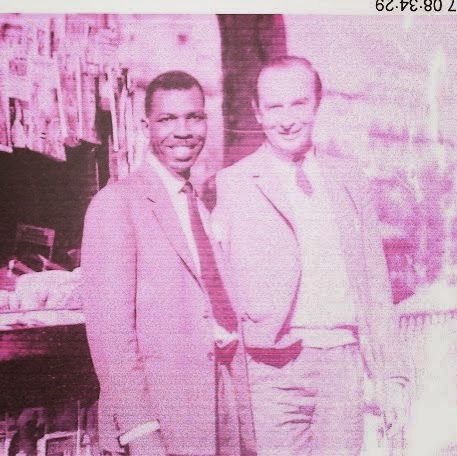

Peter Colmore and Ally Sykes, Paris 1963

It was during this time that I came to know Peter Colmore. Whenever Colmore was in Dar es Salaam he would stay at the International Hotel Annex where he had a permanent room with a brass placard on the door carrying his name.
During this time, Ally, through Tanganyika Broadcasting Corporation, was hosting a radio show for Philips, Shell BP and other companies.
My father was an ardent fan of Ally Sykes’s radio programmes, and though I was very young then, I can still hear Ally’s husky voice on the radio over the music, with my father sitting close by on his favourite sofa. This was in the early 1960s.
Ally was 15 years old when he ran away from home in Dar es Salaam and volunteered for King’s African Rifles (KAR) in Burma, in 1942. His elder brother Abdulwahid had been conscripted and was already serving in Burma. Although Ally’s father Kleist went to the KAR Recruiting Centre at Kilwa Road to protest that Ally was too young to join the army, the authorities refused to listen.
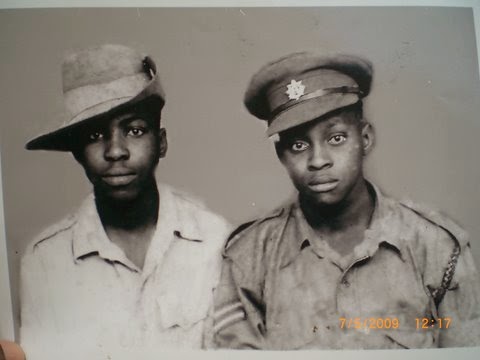

Right Abdul and Sykes
Burma Second World War
(1938 - 1945)

Ally recalled that, “When we were about to be transported to Burma, my father came to Kabete, near Nairobi, where the training centre was, to see me off. But the authorities did not allow him into the camp. He went back to Dar es Salaam a very sad man having not been able to see me.’’
Even before he reached Burma, word was sent to his parents that Ally’s ship was torpedoed by a Japanese submarine and Ally was among the dead soldiers. It was, however, a false alarm, as Ally arrived at Kurnegala Camp in Colombo, Sri Lanka safe and sound in 1943.
What had happened was that while Ally’s convoy was sailing towards Colombo, one of the ships was torpedoed by a Japanese submarine. The vessel sank, killing all the African askaris and their white officers on board.
In Dar es Salaam, death rites for young Ally were even held at Kipata Mosque near their house, but his family was later overjoyed to learn that Ally was still alive.
After the war in 1945, Ally decided not to go back home directly. After disembarking in Mombasa from the ship that was bringing ex-service men back, he took a train to Nairobi to seek employment. In Nairobi, Ally went to work for Colmore, for the first time, as an assistant at his real estate agency.
The two had first met in a record shop a few years earlier, the East African music store owned by Assanand, who once had record shops in all major towns in East Africa. Both were in KAR uniform. Colmore was from the upper class of the British nobility and Ally from a well-to-do family in Dar es Salaam. Ally was fluent in English. That meeting at Assanand’s was a good omen, because after the war their relationship revolved around music, publicity and promotions.
As Colmore’s assistant in the real estate agency, Ally’s job was to take prospective buyers to view properties and negotiate the price, leaving Colmore to seal the deal after he had completed the groundwork. Ally also acted as the public relations officer for the agency.
At that time, during colonialism, Ally’s job was considered prestigious, out of reach for most Africans in Kenya. To get privileges from the colonial system, like staying in a hotel and getting a good salary, Ally registered himself as a Zulu. It wasn’t very far-fetched — Ally’s grandfather was actually a Zulu from South Africa, who came to Tanganyika as a mercenary for the German colonists.
The Germans, wanting to beef up their colonial army, went on a recruiting drive to South Africa and Mozambique, to attract Zulus into their army, as they had a reputation for being fearsome warriors.
After living in Tanganyika for a while, Ally’s grandfather found that life in Tanganyika under the Germans, and later, under the British, was less oppressive than what he had experienced under the Boers in South Africa, and decided to stay.
Ally got on well with Colmore, and they decided to form a band. During the war, Ally had been part of the entertainment unit of the KAR in the Burma Infantry 6th Battalion, and played the saxophone alongside the famous guitarist and vocalist Fundi Konde from Mombasa.
Colmore brought African musicians from Southern Rhodesia, now Zimbabwe, into the country. At the time Kenyan musicians had not learned how to use modern musical instruments. The band from Zimbabwe had musicians who played the piano, saxophone and trumpets. Colmore put Ally in charge, and he was responsible for general management and finding engagements for the band.
They became popular in Nairobi and played mainly for white audiences who could pay high rates. The band held many shows at Nairobi Theatre (now the Kenya National Theatre). The band was first known as the Ally Sykes Band, but was later called the Peter Colmore African Band.
It was while he was in Nairobi that Ally Sykes came to know Jomo Kenyatta, W.W Awori, Tom Mboya, Bildad Kaggia and other Kenyan nationalists. It was also during this time that he came into contact with Mau Mau activists.
Colmore and Ally working under High Fidelity Productions represented, promoted, and were consultants to Coca Cola (East Africa) Ltd; Cooper Motors Corporation Ltd; Allsopp (EA) Ltd; Shell Company of East Africa Ltd, Aspro Nicholas Ltd; Gailey and Roberts Ltd; Bata Shoes Company Ltd; Kenya Broadcasting Service, Cotton Lint and Seed Marketing Board and Raleigh Industries of East Africa Ltd.
They were also commercial representative in Kenya for the Tanganyika Broadcasting Corporation.
As a young boy, I remember the famous poster of Eduardo Masengo the guitarist and singer from Congo in striped blazer with his guitar holding a bottle of Coca-Cola. There was also the famous photograph of Msafiri Morimori, the trombone player, advertising Sportsman Cigarettes. These photographs of Masengo and Morimori were found in all newspapers in East Africa.
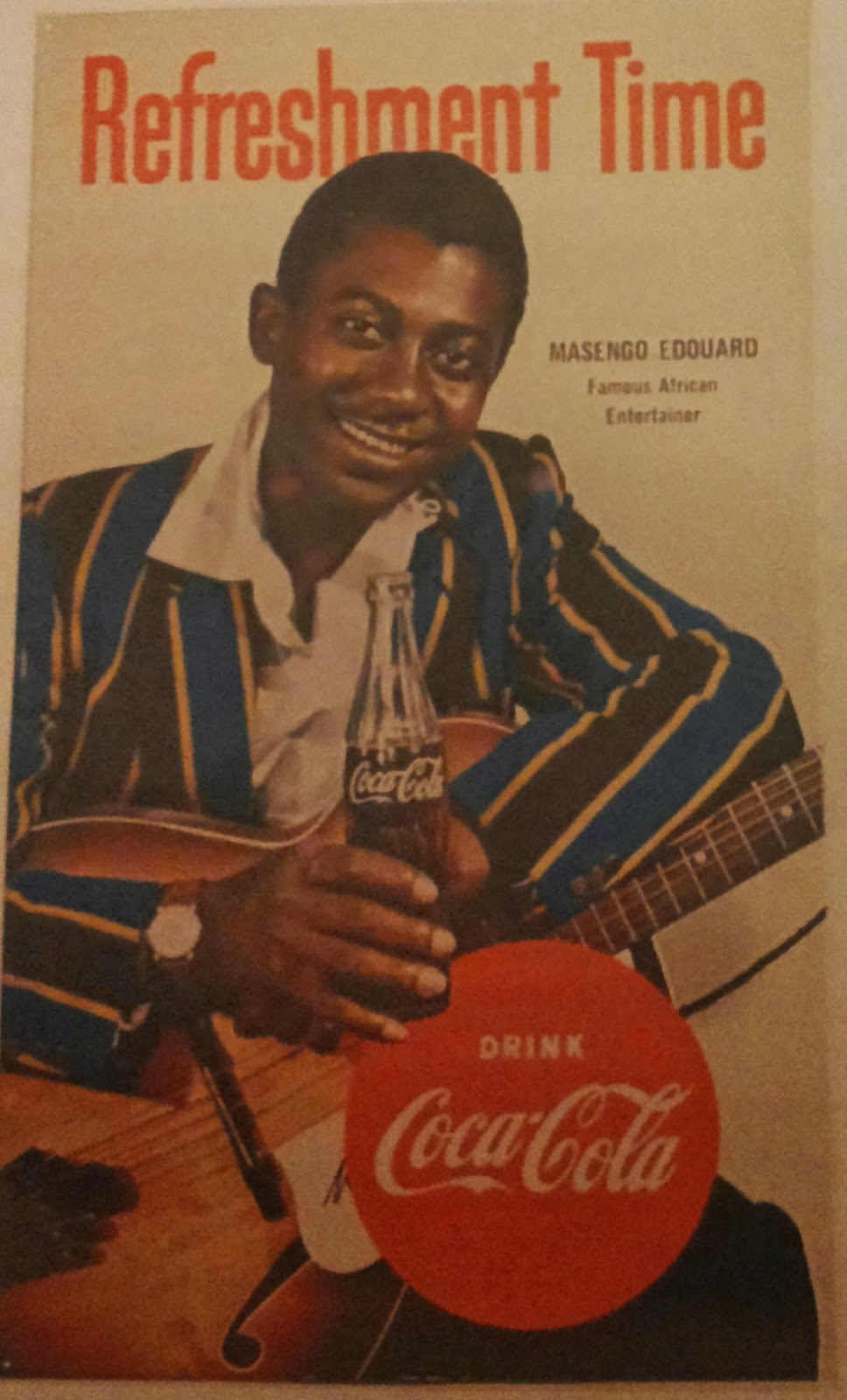

Eduardo Massengo

In 1960, Colmore brought Eduardo Masengo over to Dar es Salaam to perform, and Ally asked his friend Julius Nyerere to grace the occasion as the guest of honour at the show, which Masengo gave at Arnautoglo Hall. Colmore also came over from Nairobi for the show and Ally took the opportunity to introduce him to Julius Nyerere.
“I took Colmore over to Nyerere’s house at Magomeni Majumba Sita where he was staying at that time. On that day, Nyerere was a bit distressed since reports had been received from Congo that Lumumba had been killed,” Ally Sykes remembered. “The only thing that I remember about this is that we were all very sad about the events which were taking place in Congo.
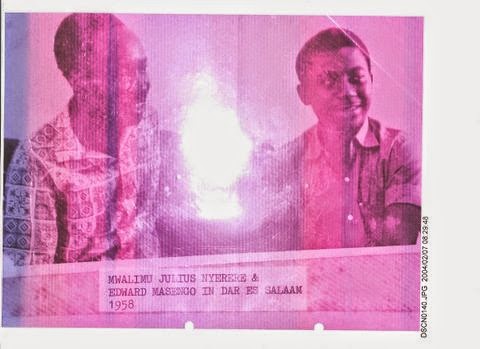

Julius Nyerere and Eduardo Massengo, 1958

“I took Peter Colmore to Julius Nyerere with the view of discussing serious business opportunities that would unfold to Africans in free Tanganyika but the atmosphere that day was not permitting,” Ally wrote in his unpublished autobiography Under the Shadow of BritishColonialism. In the book, he reveals that he was getting richer by the day even though he was a civil servant at that time. His wealth eventually created a problem with Julius Nyerere.
After Independence, and following the Arusha Declaration of 1967 which intended to turn Tanzania into a socialist state, the government passed the Leadership Code. The code prohibited civil servants from engaging in business, drawing more than one salary, owning property or holding shares in a private company. The code even prevented a civil servant from renting out property.
Ally knew that the Arusha Declaration would be the turning point in his career and business relationship with Colmore, because as a civil servant he owned property and was an established entrepreneur even before Independence.
In 1971, the government passed the Acquisition of Building Act. By the stroke of a pen, all buildings with the value of more than Tsh100,000 became government property.
Ally and his mother, Bi Mruguru biti Mussa, lost property nationalised by the government, and so did John Rupia.
Ally writes, “Strangely, about this time in 1967, soon after the Arusha Declaration, there was subtle harassment from the government towards me and my business to the extent that one day my mother asked me what has gone wrong between me, my brother Abdulwahid, and Nyerere.”
Colmore could not stand the hostile political climate. He wound up, sold the company to Ally, including the office premises, and went back to Nairobi never to return.
Ally went on to live a full life owning residences in Montreal, Ottawa, Johannesburg, London, Harare and Nairobi. Sykes was buried in Kisutu cemetery, Dar es Salaam in May 2013, and this region will surely be a dimmer place without the light of this remarkable man.
Ahsante sana Sydney, umefanya nikumbuke mengi ya nyuma hasa wazazi wetu walivyahangaikia [TANU]kuchangishana pesa kuhamasishana kuingia tanu[sijui kama unakumbuka kuwa bibi zetu na mama zetu walikuwa na mwamko mkubwa wa siasa na hawakuwa waoga kabisa. Leo hii ukiondoa wewe unavyotukumbusha, hakuna mwingine yeyote aliye kwenye chama ambacho ni mtoto wa TANU anasema lolote lile kuhusu historia yetu. wakati naandika haya vichozi vya simanzi vinanitoka.
Sijui ni lini viongozi wetu wataamka na kuweka historia yetu vizuri? Hata sijui Mzee Kinana [ambaye nimesikia kuwa hata wazazi wake nao walifanya hivyo huko kaskazini.] Anafikiria nini? Sijui! sijui ! Lakini nikwambie Mohamed, kwa juhudi ambazo unazifanya tukumbuke tulipo toka, mungu atakuweka hai uone mwenyewe [ili uweze kuwahadithia wazee hao waliotangulia] Kukubalika rasmi kwa historia halisi ya mapambano ya kutaka uhuru nchini kwetu ili simanzi zao zitulie.
na kuona siku ambayo h
 
MzeeMeko,
Ingia hapa: www.mohammedsaid.com kuna mengi katika historia ya Tanganyika.
Tafuta kwa jina la mtu mathalan, ''Julius Nyerere,'' au tafuta kwa matukio kama,
''Kura Tatu,'' nk.
Mohammed Said hata mimi ni mpenda historia na mambo ya nyuma sana hata kwenye ukoo wangu mimi ndio naandika historia japo umri wangu sio mkubwa sana.Sasa huwa najiuliza sijui kwanini viongozi wa kisiasa duniani wana tabia hasa wale waasisi wa mataifa yao wana tabia wakishaingia tu madarakani wanajaribu kufuta historia za nyuma ili waonekane wao ndio waanzilishi halisi wa mapambano kumbe waanzilishi halisi wanakuwa wengine kabisa mfano mzuri mapinduzi ya Zanzibar vitabu havimtaji muhusika mkuu njoo kwetu Tanganyika kumbe hata TANU haijazaliwa kuna watu walishaanza harakati toka mwaka 1929 kina Mtemvu wakati baba wa taifa hili akiwa na umri wa miaka7 tu.Haya huko Kenya Dedan Kimathi marehemu Kenyata alikuwa hataki hata kutaja jina lake
 
Back
Top Bottom