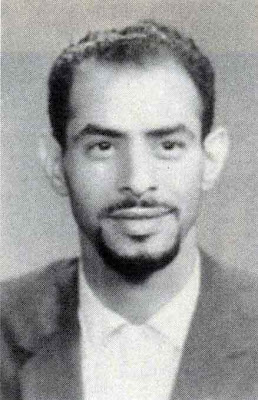
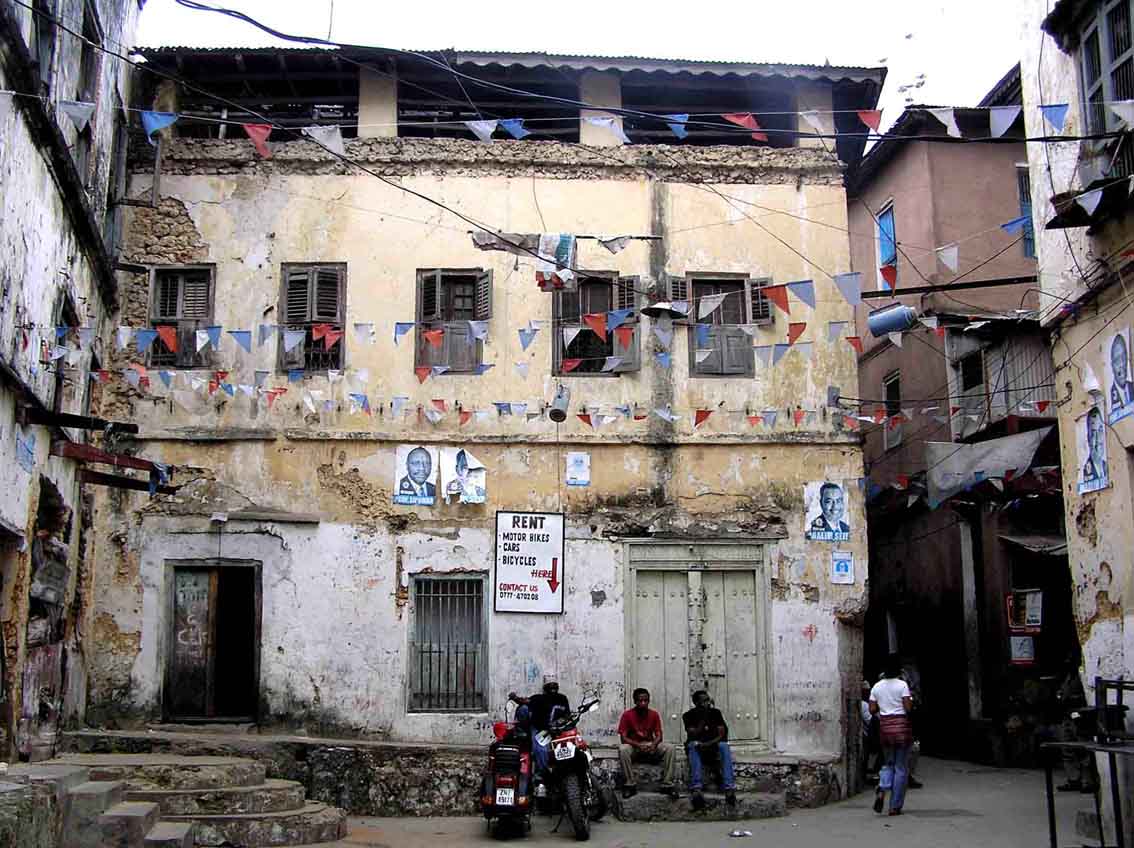
Comrade Ali Sultan Issa Al-Ismaily, who passed away on January 3, 2022, three months shy of his 90th birthday, was iconic, if controversial, figure in Zanzibari politics. The fact that his death was totally ignored by Zanzibar’s official media speaks volumes on the government’s much-vaunted “national reconciliation.”
He may have been an occasional critic of the government but if anything, Ali Sultan was as fierce in his lifelong commitment for the emancipation of Zanzibar’s poor and the oppressed as he was gentle with those he loved.
Ali Sultan’s reputation had preceded him beyond the borders of Zanzibar. His international contacts included Che Guevara and Raul Castro, younger brother of Fidel, the Cuban revolutionary leader.
He once told me of an incident when he hosted Che in Zanzibar in January 1965. Ali first met Che in Cuba in 1962 and then in Geneva in 1964 during the United Nations Conference on Trade and Development (UNCTAD) conference.
When the Argentinian paid a courtesy call at night on President Abeid Karume he found the president anxious, telling him that “your friend Ali Sultan” was plotting against his regime.
Luckily, during the day Che had quizzed Ali about the situation in Zanzibar and he detected no inkling from Ali’s side that he was opposed to Karume. Che duly assured the president of his judgment which placated Karume.
The following morning Che related the incident to Ali who believed that Che’s intervention probably saved his life.
In 1996 while in Cuba for the return of Che’s remains from Bolivia, Ali Sultan was asked by a film crew to reminisce about his time with Che. Ali could not contain himself. He broke down and the recording had to be aborted.
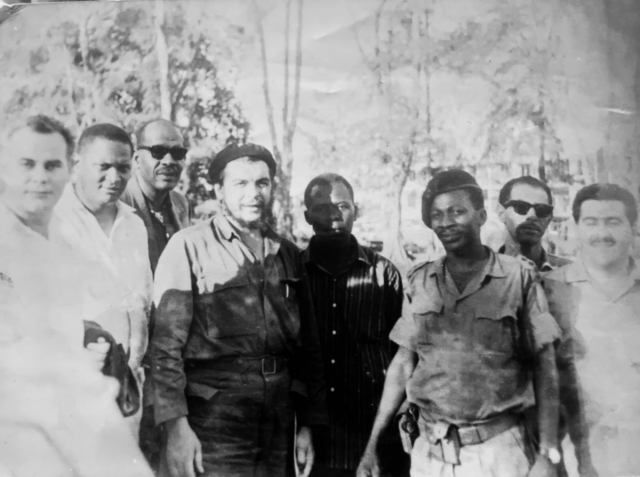 Ali Sultan (second right) in a group photo with the Latin American revolutionary Che Guevara (fourth left). PHOTO | COURTESY OF ALI SULTAN’S FAMILY.
Rubbing shoulders with the world’s political luminaries
Ali Sultan began rubbing shoulders with the world’s political luminaries when he was in his early 20s. In 1957, he met Joseph Stalin’s successor, Nikita Krushchev, when he attended an International Youth Festival in Moscow. Krushchev called him over at an official reception and asked him to open that night’s Kremlin Ball by dancing with a politburo member.
In 1960, Ali Sultan held talks with Kwame Nkrumah in Ghana, Ahmed Sekou Touré in Guinea and Mao Zedong in Wutan as well as Zhou Enlai. A public speech he made in China attacking Marshal Josip Tito’s revisionism in Yugoslavia made it to the front page of Rénmin Ribào (People’s Daily), China’s largest newspaper and the organ of the central committee of the country’s Communist Party.
In Hanoi, he was invited by Ho Chi Minh, the Vietnamese revolutionary leader, to his official residence, for a pep talk on liberation strategy.
Ali considered himself dexterous having worked at various jobs including, as a checker at the Zanzibar docks, a seaman on international steamers, a fireman on a ship, a teacher of English to a son of a ship’s captain, and a performer of odd jobs whenever he jumped ship at various ports, including Calcutta, and Vancouver.
He was a waiter in a Cape Town hotel, a clerk at Dar es Salam port, dishwater in London hotels and a petty trader following his spell in jail in the aftermath of the assassination of Sheikh Karume in 1972.
Later, he was a hotelier, although he once told me that he regarded that more as a philosophy, a disposition, than an occupation. But, beyond all that, Ali Sultan left an enduring mark as a politician first with the Zanzibar Nationalist Party (ZNP) and, later, with its breakaway Umma Party and after the revolution on January 12, 1964, when Zanzibar became a one-party state, the Afro-Shirazi Party (ASP).
Serving the revolution with aplomb
Ali served the revolution with aplomb, sincerely believing that his participation and that of his Marxist comrades would mitigate its flaws. Two of his closest relatives were murdered during the revolution when he was out of the country. His paternal uncle, Sheikh Nasser Issa Al- Ismaily, was brutally killed on the first day of the revolution at his rural home in Mfenesini after his house was first torched.
Sheikh Nasser was the father of the Cambridge-educated Sheikh Issa Nasser Ismaily, who has written a number of books on Zanzibar in Swahili, Arabic and English, including Will Zanzibar Regain her Past Prosperity? His then father-in-law, Sheikh Amour Zahor, was shot and buried alive in October 1964.
Ali’s first appointment in the revolutionary government was as area commissioner for Chake Chake, in Pemba. He incited the wrath of the islanders when he resorted to using the cane against those that he regarded were indolent.
While there he once shared a bed with Frank Carlucci, the visiting US consul, and famously tried to convert him to Marxism. Carlucci, a CIA operative, was deputy director of the spy agency during the Jimmy Carter administration and later became President Ronald Reagan’s national security adviser, and then deputy defence minister.
Carlucci’s now declassified report to the US State Department on his Pemba visit paints Ali as a dedicated administrator popular with the masses. “While not difficult whip up enthusiastic African demonstrations, [Ali Sultan] Issa’s performance all more impressive since armed forces nowhere to be seen except at Mkuani (sic) pier for ship landing,” reads part of the report.
Ali served for two months in Pemba before he was dispatched to the Zanzibar High Commission in London as a consul. He was then appointed a minister of education and of health as well as a member of the then dreaded Revolutionary Council. In early 1972 he was dropped from the Revolutionary Council and appointed chairman of the State Fuel and Power Corporation.
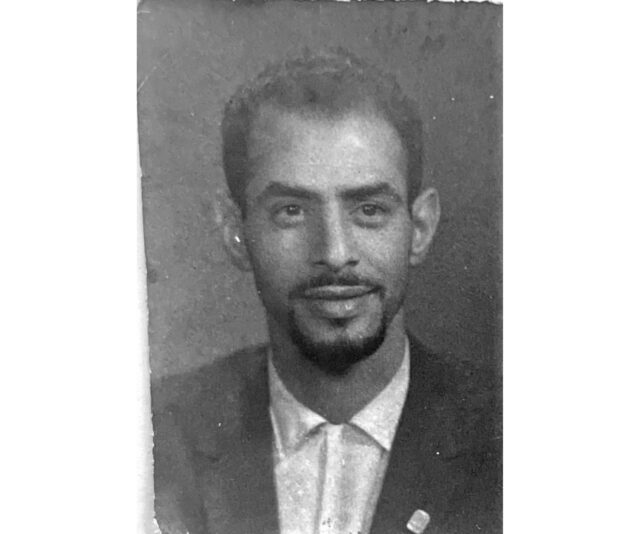 Ali Sultan as a minister during the first post-revolution government in Zanzibar under Abeid Amani Karume. PHOTO | COURTESY OF ALI SULTAN’S FAMILIY.
A few weeks later he was arrested, tried for treason and sentenced to death, following Sheikh Karume’s assassination. He was severely tortured in prison. The death sentence was ultimately commuted and he served a prison term of six years and eight months.
He was released from prison on December 8, 1979. Because he was a prisoner of conscience, he was adopted by a wealthy German branch of Amnesty International, group 88 in Saarbrucken.
They facilitated his travel to join his family in Britain. On January 19, 1979, Colonel Ali Mahfoudh and I were at London’s Heathrow Airport to welcome an emaciated Ali Sultan and listen to the gory details of his imprisonment and of our other comrades. At least three of them perished under torture.
Once in the 1980s when we were having coffee in a bustling street near the Mtendeni area in Unguja he was approached by a man who Ali was quick to introduce to me. “This is one of the gentlemen who used to torture me in prison,” he said. The man quickly turned on his heels and walked away, with his tail between his legs.
In October 1982, Ali Sultan was rearrested for distributing pro-democracy T-shirts and leaflets. He was detained without trial for a year.
Later, he abandoned all his revolutionary credentials to become a pioneering hotelier. In 1987 he visited Washington and met deputy defense secretary Carlucci in his office. Their discussions included Ali’s hotel venture. Afterwards, Carlucci wrote him a note saying, “Your capitalist success exceeds all my expectations.”
Dropping from school to enjoy life
Ali Sultan Issa was born in Wete, Pemba, Zanzibar’s lesser island, on March 4, 1932. He attended primary and secondary schools in the larger island of Unguja but dropped out when he was in Form 2, telling his class teacher, Aboud Jumbe, who later became Zanzibar’s second President and Tanzania’s Vice-President, that he could no longer attend school as he needed to earn money to enjoy life.
A typical Zanzibari, Ali’s ancestry was mixed. Although he was decidedly Arab in appearance, his paternal side tracing its origins from Oman and his maternal side from Yemen, he also had African roots. His paternal great grandmother was a Zaramo from Tanganyika and his maternal grandmother, Bibi Ruzuna binti Tamim, was a Nandi from Kenya.
Bibi Ruzuna was once the wife of the colourful Harrow-educated Sultan Seyyid Ali bin Hamoud whose mother was from Nyasaland (present-day Malawi) and who was forced by the British to abdicate in 1911 after attending King George V’s coronation in London.
Zanzibar’s throne then passed into the hands of Seyyid Ali bin Hamoud’s brother-in-law, Seyyid Khalifa bin Haroub, the grandfather of Seyyid Jamshid bin Abdallah bin Khalifa who was deposed by the 1964 revolution.
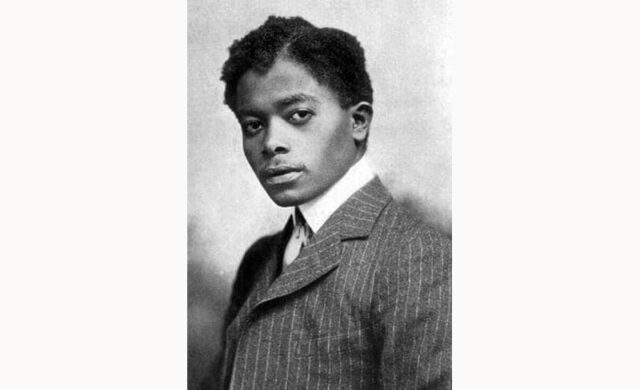 Sayyid Ali bin Hamud Al-Busaid was the eighth Sultan of Zanzibar. He ruled Zanzibar from July 20, 1902 to December 9, 1911, having succeeded to the throne following the death of his father, the seventh Sultan. He served only a few years as sultan because of illness. In 1911, he abdicated in favour of his brother-in-law Sayyid Khalifa bin Harub Al-Busaid. PHOTO | COURTESY OF ALI SULTAN’S FAMILY.
Bibi Ruzuna had three children with the sultan but when she left the palace she was married to Ali’s grandfather, Ali Muhammed Bakashmar al-Abbassy. He was among the first teachers at the isles’ first secular school, established by Sultan Ali bin Hamoud, and was later appointed kadhi (Islamic judge) in Pemba towards the end of the 1930s following the transfer to Unguja of Sayyid Omar bin Ahmed bin Sumeit.
Ali’s uncle, on his maternal side, was Ahmed Rashad Ali, the celebrated propagandist and broadcaster with Radio Cairo. Rashad was famous for spewing out anti-British polemics in his popular broadcasts which were listened to all over East Africa.
I vividly remember Bibi Ruzuna, kanga-clad, sweeping and spring cleaning the front of her modest house in the Ng’ambo area near Msikiti Maiti in Unguja. It is from her that I think Ali inherited his trait of being a stickler for tidiness. Ali was fastidious, at times agonisingly so. He liked his things to be neatly and methodically arranged and had an aversion to dust and crumbs.
Ali’s mother was a formidable lady, both in spirit and stature. By his own admission, he was terrified of her disciplinarian streak.
Ali grew up partly under Bi Ruzuna and partly under the wings of his strong-willed mother. She was a single mother, after demanding a divorce from Ali’s father.
They began leading a peripatetic life, a result of her reduced circumstances moving from house to house, from neighbourhood to neighbourhood seeking solace in her relatives’ abodes or cheaper rental accommodations.
Committing class suicide
As a scion of the landed gentry — his father was a big landowner in Pemba — Ali Sultan committed class suicide at the onset of his political career in the 1950s by joining the Communist Party of Great Britain (CPGB), on May 1, 1954, while living in London. He had stumbled into communism as a seaman in Canada, where he had jumped ship, on his way to Britain.
But it was in London that he cut his communist teeth by attending ideological classes by the CPGB and receiving instruction by seasoned Marxists in Britain as well as in communist countries.
He was also trained in intelligence, sabotage and weaponry, including hand grenades and plastic bombs, in Czechoslovakia, China and North Vietnam.
London in the 1950s was a different place for African students, particularly those with political inclinations or social conscience.
When Ali arrived there in August 1953, he immediately came under the wings of Abdulrahman Babu, an old friend from home who was eight years older than him. Then an avowed anarchist, Babu, charismatic and charming, was already established and moving in anti-colonial circles espousing Pan-Africanist ideals.
Ali first stayed with Babu in lodgings in London’s Shepherd’s Bush where the latter had a clerical job at a post office. Afterwards, Ali moved in with another Zanzibari, Khamis Abdallah Ameir, a member of the Young Communist League in the leafy neighbourhood of Swiss Cottage.
Their opposite neighbour was Mbiyu Koinange, who represented Kenya African Union (KAU), Jomo Kenyatta’s party which was devoted to achieving independence to Kenya. In 1960 it changed into the Kenyan African National Union (KANU).
In a spirit of pan-Africanism, the Zanzibari Marxists assisted Koinange in his anti-colonial work. They met a number of freedom fighters from other African countries at Koinange’s residence.
Ali attended evening classes at the University of London and mingled with other East African students at the East Africa House at 36 Great Cumberland Place, near Marble Arch.
At the time, Babu was also at the forefront of the African liberation struggle as he assisted the Labour MP Fenner Brockway in running the Movement for Colonial Freedom, a political and civil rights advocacy group founded in 1954.
It had the support of many MPs, including future prime minister Harold Wilson and ministers Barbara Castle and Tony Benn. The Movement also supported Fidel Castro in the Cuban revolution.
Leading Marxist movements in Zanzibar
It was no surprise that when Babu, Ali Sultan and Khamis, eventually returned to Zanzibar in that order they, together with Badawi Qullatein, formed the nucleus of the Marxist movement in the islands, with Babu as their undisputed leader.
It was natural for Ali Sultan to be part of that movement as he always sided with the underclass, consisting of the peasants, the urban poor and the unemployed.
At the height of his political career in the early 1960s Ali had developed a comradeship with Cuban revolutionaries, particularly Che and Raul Castro. Ali used camaraderie to advance Zanzibar’s interests.
Through that relationship he was able to establish the Havana office of the Zanzibar Nationalist Party (ZNP) of which he was a senior cadre, first as its organising secretary for Pemba, then director of its International Department and, for a period, as acting secretary-general when Babu, the holder of the post, was on an extended tour abroad.
ZNP’s Havana office was manned by Babu’s devotees — Salim Ahmed Salim, Mohamed Ali Foum and Ali Mahfoudh.
Perhaps crucially, was Ali Sultan’s achievement in lobbying the younger Castro to receive a batch of 18 young Zanzibari militants who owed their allegiance to Babu.
The colonial authorities were hoodwinked into thinking that the youths were heading to Cuba for courses on trade unionism but once in Havana, they received intensive training in guerrilla warfare. Some of them, again thanks to Ali, had already completed basic military courses in Egypt.
These young Cuban-trained comrades, as Babu’s disciples were known, were to play a decisive role in the early days of the Zanzibar Revolution when they tried to give the revolution its ill-suited ideological colours.
They were also instrumental in curbing serious human rights abuses, including murders and rape, perpetrated by lumpen elements from the ASP, the architects of the revolution.
Ali Sultan is also credited with securing scholarships for young Zanzibaris, from across ethnic and political backgrounds, to study in the People’s Republic of China, the former Soviet Union and in a number of East European countries
Leaving ZNP
More than anything else, however, in the annals of Zanzibar’s chequered political history Ali Sultan will be remembered for convincing Babu in 1962 that the ZNP had lost its worth as a progressive, anti-imperialist party after being hi-jacked by conservative elements in its leadership.
In fact, Ali famously argued that the arrest, trial and 15-month imprisonment of Babu for seditious charges in 1962 was the handiwork of the British colonialists in cahoots with the leaders of the coalition government between the ZNP and the Zanzibar and Pemba People’s Party (ZPPP), a breakaway faction from the Afro-Shirazi Party (ASP).
Ali set out his position in a celebrated statement entitled “Condemn Me Now, But History Will Absolve Me” which he delivered at a press conference after his expulsion from the ZNP. Immediately the tract was in great demand in urban Zanzibar.
I remember cycling excitedly to his home in Malindi at the behest of my father to fetch him a copy.
Ali took part of the title from that of a two-hour speech by Fidel Castro “History Will Absolve Me” (Spanish: La Historia me absolverá) which Castro delivered as his defence in court on October 16, 1953, in refuting charges brought against him after he led an attack on the Moncada Barracks in Cuba.
Other ZNP radicals who subscribed to Ali’s position included, Salim Rashid, Ali Mahfoudh, Mohamed Ali Foum, Salim Ahmed Salim and Badawi Qullatein.
Although at the beginning Babu was reluctant to ditch the party which he had so assiduously built, in the end, the pressure from the likes of Ali Sultan was so huge that Babu and the bulk of his followers defected to form the Marxist Umma Party in 1963.
The rupture with the ZNP, almost on the cusp of the Revolution on January 12, 1964, created an anti-comrade animus from former ZNP zealots that has proved difficult to heal nearly three decades since the event.
Ali is credited with having organised the Pemba wing of the ZNP. Aside from his brilliant organising skills as a political leader, Ali led an extraordinary life and he was wont to relate it, warts and all, to anyone who cared to listen.
Always a gadfly, he delighted for most of his life in provoking Zanzibari conservative sensibilities, using bad language. He was a man of voracious appetites for the pleasures of life — a hedonistic indulgence in booze, marijuana and parties.
I only mention this because he himself was remarkably candid, or careless, in detailing his exploits in his published memoirs, Race, Revolution, And the Struggle for Human Rights in Zanzibar: The Memoirs of Ali Sultan Issa and Seif Sharif Hamad.
Over the years, I had observed him in polite political circles as well as in soirées in London, Nairobi and Zanzibar. On each of the occasions, he was in his element. It was as if the two sides of his life, the social and the political, had coalesced into a unitary narrative of the bawdy and the sophisticated.
He unashamedly displayed his foibles. Subtlety, and discretion, were not his métier. The unambiguous telling of his life would make a lesser soul recoil, but not Ali. He was not the one to apologise for his rackety lifestyle although he did apologise publicly for any abuse of power when he was in government.
Ali Sultan’s marriage life
Ali Sultan was married to at least four women at different times. His first marriage was to a South African domestic servant in Cape Town where he had jumped ship when he was barely 20.
We do not know much about her except that her name was Sophia, was a Cape Coloured and had converted to Islam after marrying Ali. It was a marriage of convenience as Ali was living in straitened circumstances.
He married his first Zanzibari wife, Aysha Amour Zahor, in 1958. It was a good match, by Ali’s own account. He politicised her and she not only turned progressive but was also politically active in the women wing of the ZNP, assisting in the party’s mobilisation efforts, addressing women meetings of the ZNP and participating in international conferences.
Theirs was a politically progressive family as was reflected by the names of their children.
They named their eldest daughter Raissa, after a Russian ballerina. The second daughter was named Fidela, after Fidel Castro. Then followed Maotushi, named after Chairman Mao. They chose Stalin as the name for their only son, but he wisely changed it to Sultan.
Aysha, who now resides in the Gulf, had lived and worked in Beijing, China, for several years until she was forced to flee during the Cultural Revolution. Ali had divorced her when he took a second wife, the English Maria (née Neil) in 1966.
He and Maria agreed to be divorced in 1980 after he found it difficult to adjust to a new life in Britain.
Maria predeceased him in 2015. Ali had remained close to their children — Sarah, Salim, Omar and Johanna. With Eshe, Ali had his last born, Natasha, named after a character in Leo Tolstoy’s War And Peace who was born in 1985. Earlier in the 1960s he also had a son, Malik.
A brilliant raconteur
I will always remember Ali Sultan as a brilliant raconteur who used his magpie memory to recall events, almost at will, with dates and days when the said events took place.
He would tell you something and later would correct himself with something like: “I told you the other day that such and such happened on a Wednesday on March 26, 1953. Well, I’ve just remembered; it was not a Wednesday, it was a Thursday.”
Ali was a good laugh. Once apropos of nothing he started chuckling, telling me: “One day just before midday a police car was sent to my house to collect me. I was told I was summoned by [President] Karume to the small State House, what used to be the residence of Karimjee Jivanjee. I panicked wondering what I had done.
“Upon arrival, I found Brigadier Yusuf Himid had just got there. He appeared petrified. Soon after Colonel Ali Mahfoudh’s car also arrived. None of us was any the wiser about the intent of the meeting. We all thought we were in for some sort of confrontation with the president.”
But when they entered the residence, Ali said, they found Karume in a jovial mood, saying: “I asked the cooks to prepare a big pot of pilau especially for us, for our lunch.”
There was relief all around as the palpable state of fear, among the invitees, immediately dissipated.
A born survivor
Ali Sultan’s life defied odds and proved that he was a born survivor. Although he was, in the beginning, steadfast in his communist beliefs, in old age he was reduced to a bundle of contradictions.
He described himself as a socialist rather than as a Marxist believing that he had joined the capitalist class by being the first in the isles to establish the first beach resort hotel, Mawimbini Hotel.
Despite that, he still accepted the broad theoretical postulations of Marxism.
He performed the Hajj, the pilgrimage to Makkah, but later, albeit with restrained abandon, he resumed a life of debauchery, sincerely believing that Allah’s compassion will save him in the afterlife.
Notwithstanding his rakish and unconventional ways, I will miss his winsome personality, charm and political insight. I shouldn’t forget to add his easy laughter, sarcastic at times, and his rendition of the songs of the late Umm Kulthum, the Egyptian diva.
Ali Sultan died peacefully in the afternoon of January 3, 2022, with a smile on his lips.
Ahmed Rajab is a London—based Zanzibari born journalist. He is available on Twitter as @ahmedrajab. These are the writer’s own opinions and do not necessarily reflect on the viewpoint of The Chanzo Initiative.
Source : Ali Sultan Issa: A Revolutionary Icon - The Chanzo Initiative
He may have been an occasional critic of the government but if anything, Ali Sultan was as fierce in his lifelong commitment for the emancipation of Zanzibar’s poor and the oppressed as he was gentle with those he loved.
Ali Sultan’s reputation had preceded him beyond the borders of Zanzibar. His international contacts included Che Guevara and Raul Castro, younger brother of Fidel, the Cuban revolutionary leader.
He once told me of an incident when he hosted Che in Zanzibar in January 1965. Ali first met Che in Cuba in 1962 and then in Geneva in 1964 during the United Nations Conference on Trade and Development (UNCTAD) conference.
When the Argentinian paid a courtesy call at night on President Abeid Karume he found the president anxious, telling him that “your friend Ali Sultan” was plotting against his regime.
Luckily, during the day Che had quizzed Ali about the situation in Zanzibar and he detected no inkling from Ali’s side that he was opposed to Karume. Che duly assured the president of his judgment which placated Karume.
The following morning Che related the incident to Ali who believed that Che’s intervention probably saved his life.
In 1996 while in Cuba for the return of Che’s remains from Bolivia, Ali Sultan was asked by a film crew to reminisce about his time with Che. Ali could not contain himself. He broke down and the recording had to be aborted.
Rubbing shoulders with the world’s political luminaries
Ali Sultan began rubbing shoulders with the world’s political luminaries when he was in his early 20s. In 1957, he met Joseph Stalin’s successor, Nikita Krushchev, when he attended an International Youth Festival in Moscow. Krushchev called him over at an official reception and asked him to open that night’s Kremlin Ball by dancing with a politburo member.
In 1960, Ali Sultan held talks with Kwame Nkrumah in Ghana, Ahmed Sekou Touré in Guinea and Mao Zedong in Wutan as well as Zhou Enlai. A public speech he made in China attacking Marshal Josip Tito’s revisionism in Yugoslavia made it to the front page of Rénmin Ribào (People’s Daily), China’s largest newspaper and the organ of the central committee of the country’s Communist Party.
In Hanoi, he was invited by Ho Chi Minh, the Vietnamese revolutionary leader, to his official residence, for a pep talk on liberation strategy.
Ali considered himself dexterous having worked at various jobs including, as a checker at the Zanzibar docks, a seaman on international steamers, a fireman on a ship, a teacher of English to a son of a ship’s captain, and a performer of odd jobs whenever he jumped ship at various ports, including Calcutta, and Vancouver.
He was a waiter in a Cape Town hotel, a clerk at Dar es Salam port, dishwater in London hotels and a petty trader following his spell in jail in the aftermath of the assassination of Sheikh Karume in 1972.
Later, he was a hotelier, although he once told me that he regarded that more as a philosophy, a disposition, than an occupation. But, beyond all that, Ali Sultan left an enduring mark as a politician first with the Zanzibar Nationalist Party (ZNP) and, later, with its breakaway Umma Party and after the revolution on January 12, 1964, when Zanzibar became a one-party state, the Afro-Shirazi Party (ASP).
Serving the revolution with aplomb
Ali served the revolution with aplomb, sincerely believing that his participation and that of his Marxist comrades would mitigate its flaws. Two of his closest relatives were murdered during the revolution when he was out of the country. His paternal uncle, Sheikh Nasser Issa Al- Ismaily, was brutally killed on the first day of the revolution at his rural home in Mfenesini after his house was first torched.
Sheikh Nasser was the father of the Cambridge-educated Sheikh Issa Nasser Ismaily, who has written a number of books on Zanzibar in Swahili, Arabic and English, including Will Zanzibar Regain her Past Prosperity? His then father-in-law, Sheikh Amour Zahor, was shot and buried alive in October 1964.
Ali’s first appointment in the revolutionary government was as area commissioner for Chake Chake, in Pemba. He incited the wrath of the islanders when he resorted to using the cane against those that he regarded were indolent.
While there he once shared a bed with Frank Carlucci, the visiting US consul, and famously tried to convert him to Marxism. Carlucci, a CIA operative, was deputy director of the spy agency during the Jimmy Carter administration and later became President Ronald Reagan’s national security adviser, and then deputy defence minister.
Carlucci’s now declassified report to the US State Department on his Pemba visit paints Ali as a dedicated administrator popular with the masses. “While not difficult whip up enthusiastic African demonstrations, [Ali Sultan] Issa’s performance all more impressive since armed forces nowhere to be seen except at Mkuani (sic) pier for ship landing,” reads part of the report.
Ali served for two months in Pemba before he was dispatched to the Zanzibar High Commission in London as a consul. He was then appointed a minister of education and of health as well as a member of the then dreaded Revolutionary Council. In early 1972 he was dropped from the Revolutionary Council and appointed chairman of the State Fuel and Power Corporation.
A few weeks later he was arrested, tried for treason and sentenced to death, following Sheikh Karume’s assassination. He was severely tortured in prison. The death sentence was ultimately commuted and he served a prison term of six years and eight months.
He was released from prison on December 8, 1979. Because he was a prisoner of conscience, he was adopted by a wealthy German branch of Amnesty International, group 88 in Saarbrucken.
They facilitated his travel to join his family in Britain. On January 19, 1979, Colonel Ali Mahfoudh and I were at London’s Heathrow Airport to welcome an emaciated Ali Sultan and listen to the gory details of his imprisonment and of our other comrades. At least three of them perished under torture.
Once in the 1980s when we were having coffee in a bustling street near the Mtendeni area in Unguja he was approached by a man who Ali was quick to introduce to me. “This is one of the gentlemen who used to torture me in prison,” he said. The man quickly turned on his heels and walked away, with his tail between his legs.
In October 1982, Ali Sultan was rearrested for distributing pro-democracy T-shirts and leaflets. He was detained without trial for a year.
Later, he abandoned all his revolutionary credentials to become a pioneering hotelier. In 1987 he visited Washington and met deputy defense secretary Carlucci in his office. Their discussions included Ali’s hotel venture. Afterwards, Carlucci wrote him a note saying, “Your capitalist success exceeds all my expectations.”
Dropping from school to enjoy life
Ali Sultan Issa was born in Wete, Pemba, Zanzibar’s lesser island, on March 4, 1932. He attended primary and secondary schools in the larger island of Unguja but dropped out when he was in Form 2, telling his class teacher, Aboud Jumbe, who later became Zanzibar’s second President and Tanzania’s Vice-President, that he could no longer attend school as he needed to earn money to enjoy life.
A typical Zanzibari, Ali’s ancestry was mixed. Although he was decidedly Arab in appearance, his paternal side tracing its origins from Oman and his maternal side from Yemen, he also had African roots. His paternal great grandmother was a Zaramo from Tanganyika and his maternal grandmother, Bibi Ruzuna binti Tamim, was a Nandi from Kenya.
Bibi Ruzuna was once the wife of the colourful Harrow-educated Sultan Seyyid Ali bin Hamoud whose mother was from Nyasaland (present-day Malawi) and who was forced by the British to abdicate in 1911 after attending King George V’s coronation in London.
Zanzibar’s throne then passed into the hands of Seyyid Ali bin Hamoud’s brother-in-law, Seyyid Khalifa bin Haroub, the grandfather of Seyyid Jamshid bin Abdallah bin Khalifa who was deposed by the 1964 revolution.
Bibi Ruzuna had three children with the sultan but when she left the palace she was married to Ali’s grandfather, Ali Muhammed Bakashmar al-Abbassy. He was among the first teachers at the isles’ first secular school, established by Sultan Ali bin Hamoud, and was later appointed kadhi (Islamic judge) in Pemba towards the end of the 1930s following the transfer to Unguja of Sayyid Omar bin Ahmed bin Sumeit.
Ali’s uncle, on his maternal side, was Ahmed Rashad Ali, the celebrated propagandist and broadcaster with Radio Cairo. Rashad was famous for spewing out anti-British polemics in his popular broadcasts which were listened to all over East Africa.
I vividly remember Bibi Ruzuna, kanga-clad, sweeping and spring cleaning the front of her modest house in the Ng’ambo area near Msikiti Maiti in Unguja. It is from her that I think Ali inherited his trait of being a stickler for tidiness. Ali was fastidious, at times agonisingly so. He liked his things to be neatly and methodically arranged and had an aversion to dust and crumbs.
Ali’s mother was a formidable lady, both in spirit and stature. By his own admission, he was terrified of her disciplinarian streak.
Ali grew up partly under Bi Ruzuna and partly under the wings of his strong-willed mother. She was a single mother, after demanding a divorce from Ali’s father.
They began leading a peripatetic life, a result of her reduced circumstances moving from house to house, from neighbourhood to neighbourhood seeking solace in her relatives’ abodes or cheaper rental accommodations.
Committing class suicide
As a scion of the landed gentry — his father was a big landowner in Pemba — Ali Sultan committed class suicide at the onset of his political career in the 1950s by joining the Communist Party of Great Britain (CPGB), on May 1, 1954, while living in London. He had stumbled into communism as a seaman in Canada, where he had jumped ship, on his way to Britain.
But it was in London that he cut his communist teeth by attending ideological classes by the CPGB and receiving instruction by seasoned Marxists in Britain as well as in communist countries.
He was also trained in intelligence, sabotage and weaponry, including hand grenades and plastic bombs, in Czechoslovakia, China and North Vietnam.
London in the 1950s was a different place for African students, particularly those with political inclinations or social conscience.
When Ali arrived there in August 1953, he immediately came under the wings of Abdulrahman Babu, an old friend from home who was eight years older than him. Then an avowed anarchist, Babu, charismatic and charming, was already established and moving in anti-colonial circles espousing Pan-Africanist ideals.
Ali first stayed with Babu in lodgings in London’s Shepherd’s Bush where the latter had a clerical job at a post office. Afterwards, Ali moved in with another Zanzibari, Khamis Abdallah Ameir, a member of the Young Communist League in the leafy neighbourhood of Swiss Cottage.
Their opposite neighbour was Mbiyu Koinange, who represented Kenya African Union (KAU), Jomo Kenyatta’s party which was devoted to achieving independence to Kenya. In 1960 it changed into the Kenyan African National Union (KANU).
In a spirit of pan-Africanism, the Zanzibari Marxists assisted Koinange in his anti-colonial work. They met a number of freedom fighters from other African countries at Koinange’s residence.
Ali attended evening classes at the University of London and mingled with other East African students at the East Africa House at 36 Great Cumberland Place, near Marble Arch.
At the time, Babu was also at the forefront of the African liberation struggle as he assisted the Labour MP Fenner Brockway in running the Movement for Colonial Freedom, a political and civil rights advocacy group founded in 1954.
It had the support of many MPs, including future prime minister Harold Wilson and ministers Barbara Castle and Tony Benn. The Movement also supported Fidel Castro in the Cuban revolution.
Leading Marxist movements in Zanzibar
It was no surprise that when Babu, Ali Sultan and Khamis, eventually returned to Zanzibar in that order they, together with Badawi Qullatein, formed the nucleus of the Marxist movement in the islands, with Babu as their undisputed leader.
It was natural for Ali Sultan to be part of that movement as he always sided with the underclass, consisting of the peasants, the urban poor and the unemployed.
At the height of his political career in the early 1960s Ali had developed a comradeship with Cuban revolutionaries, particularly Che and Raul Castro. Ali used camaraderie to advance Zanzibar’s interests.
Through that relationship he was able to establish the Havana office of the Zanzibar Nationalist Party (ZNP) of which he was a senior cadre, first as its organising secretary for Pemba, then director of its International Department and, for a period, as acting secretary-general when Babu, the holder of the post, was on an extended tour abroad.
ZNP’s Havana office was manned by Babu’s devotees — Salim Ahmed Salim, Mohamed Ali Foum and Ali Mahfoudh.
Perhaps crucially, was Ali Sultan’s achievement in lobbying the younger Castro to receive a batch of 18 young Zanzibari militants who owed their allegiance to Babu.
The colonial authorities were hoodwinked into thinking that the youths were heading to Cuba for courses on trade unionism but once in Havana, they received intensive training in guerrilla warfare. Some of them, again thanks to Ali, had already completed basic military courses in Egypt.
These young Cuban-trained comrades, as Babu’s disciples were known, were to play a decisive role in the early days of the Zanzibar Revolution when they tried to give the revolution its ill-suited ideological colours.
They were also instrumental in curbing serious human rights abuses, including murders and rape, perpetrated by lumpen elements from the ASP, the architects of the revolution.
Ali Sultan is also credited with securing scholarships for young Zanzibaris, from across ethnic and political backgrounds, to study in the People’s Republic of China, the former Soviet Union and in a number of East European countries
Leaving ZNP
More than anything else, however, in the annals of Zanzibar’s chequered political history Ali Sultan will be remembered for convincing Babu in 1962 that the ZNP had lost its worth as a progressive, anti-imperialist party after being hi-jacked by conservative elements in its leadership.
In fact, Ali famously argued that the arrest, trial and 15-month imprisonment of Babu for seditious charges in 1962 was the handiwork of the British colonialists in cahoots with the leaders of the coalition government between the ZNP and the Zanzibar and Pemba People’s Party (ZPPP), a breakaway faction from the Afro-Shirazi Party (ASP).
Ali set out his position in a celebrated statement entitled “Condemn Me Now, But History Will Absolve Me” which he delivered at a press conference after his expulsion from the ZNP. Immediately the tract was in great demand in urban Zanzibar.
I remember cycling excitedly to his home in Malindi at the behest of my father to fetch him a copy.
Ali took part of the title from that of a two-hour speech by Fidel Castro “History Will Absolve Me” (Spanish: La Historia me absolverá) which Castro delivered as his defence in court on October 16, 1953, in refuting charges brought against him after he led an attack on the Moncada Barracks in Cuba.
Other ZNP radicals who subscribed to Ali’s position included, Salim Rashid, Ali Mahfoudh, Mohamed Ali Foum, Salim Ahmed Salim and Badawi Qullatein.
Although at the beginning Babu was reluctant to ditch the party which he had so assiduously built, in the end, the pressure from the likes of Ali Sultan was so huge that Babu and the bulk of his followers defected to form the Marxist Umma Party in 1963.
The rupture with the ZNP, almost on the cusp of the Revolution on January 12, 1964, created an anti-comrade animus from former ZNP zealots that has proved difficult to heal nearly three decades since the event.
Ali is credited with having organised the Pemba wing of the ZNP. Aside from his brilliant organising skills as a political leader, Ali led an extraordinary life and he was wont to relate it, warts and all, to anyone who cared to listen.
Always a gadfly, he delighted for most of his life in provoking Zanzibari conservative sensibilities, using bad language. He was a man of voracious appetites for the pleasures of life — a hedonistic indulgence in booze, marijuana and parties.
I only mention this because he himself was remarkably candid, or careless, in detailing his exploits in his published memoirs, Race, Revolution, And the Struggle for Human Rights in Zanzibar: The Memoirs of Ali Sultan Issa and Seif Sharif Hamad.
Over the years, I had observed him in polite political circles as well as in soirées in London, Nairobi and Zanzibar. On each of the occasions, he was in his element. It was as if the two sides of his life, the social and the political, had coalesced into a unitary narrative of the bawdy and the sophisticated.
He unashamedly displayed his foibles. Subtlety, and discretion, were not his métier. The unambiguous telling of his life would make a lesser soul recoil, but not Ali. He was not the one to apologise for his rackety lifestyle although he did apologise publicly for any abuse of power when he was in government.
Ali Sultan’s marriage life
Ali Sultan was married to at least four women at different times. His first marriage was to a South African domestic servant in Cape Town where he had jumped ship when he was barely 20.
We do not know much about her except that her name was Sophia, was a Cape Coloured and had converted to Islam after marrying Ali. It was a marriage of convenience as Ali was living in straitened circumstances.
He married his first Zanzibari wife, Aysha Amour Zahor, in 1958. It was a good match, by Ali’s own account. He politicised her and she not only turned progressive but was also politically active in the women wing of the ZNP, assisting in the party’s mobilisation efforts, addressing women meetings of the ZNP and participating in international conferences.
Theirs was a politically progressive family as was reflected by the names of their children.
They named their eldest daughter Raissa, after a Russian ballerina. The second daughter was named Fidela, after Fidel Castro. Then followed Maotushi, named after Chairman Mao. They chose Stalin as the name for their only son, but he wisely changed it to Sultan.
Aysha, who now resides in the Gulf, had lived and worked in Beijing, China, for several years until she was forced to flee during the Cultural Revolution. Ali had divorced her when he took a second wife, the English Maria (née Neil) in 1966.
He and Maria agreed to be divorced in 1980 after he found it difficult to adjust to a new life in Britain.
Maria predeceased him in 2015. Ali had remained close to their children — Sarah, Salim, Omar and Johanna. With Eshe, Ali had his last born, Natasha, named after a character in Leo Tolstoy’s War And Peace who was born in 1985. Earlier in the 1960s he also had a son, Malik.
A brilliant raconteur
I will always remember Ali Sultan as a brilliant raconteur who used his magpie memory to recall events, almost at will, with dates and days when the said events took place.
He would tell you something and later would correct himself with something like: “I told you the other day that such and such happened on a Wednesday on March 26, 1953. Well, I’ve just remembered; it was not a Wednesday, it was a Thursday.”
Ali was a good laugh. Once apropos of nothing he started chuckling, telling me: “One day just before midday a police car was sent to my house to collect me. I was told I was summoned by [President] Karume to the small State House, what used to be the residence of Karimjee Jivanjee. I panicked wondering what I had done.
“Upon arrival, I found Brigadier Yusuf Himid had just got there. He appeared petrified. Soon after Colonel Ali Mahfoudh’s car also arrived. None of us was any the wiser about the intent of the meeting. We all thought we were in for some sort of confrontation with the president.”
But when they entered the residence, Ali said, they found Karume in a jovial mood, saying: “I asked the cooks to prepare a big pot of pilau especially for us, for our lunch.”
There was relief all around as the palpable state of fear, among the invitees, immediately dissipated.
A born survivor
Ali Sultan’s life defied odds and proved that he was a born survivor. Although he was, in the beginning, steadfast in his communist beliefs, in old age he was reduced to a bundle of contradictions.
He described himself as a socialist rather than as a Marxist believing that he had joined the capitalist class by being the first in the isles to establish the first beach resort hotel, Mawimbini Hotel.
Despite that, he still accepted the broad theoretical postulations of Marxism.
He performed the Hajj, the pilgrimage to Makkah, but later, albeit with restrained abandon, he resumed a life of debauchery, sincerely believing that Allah’s compassion will save him in the afterlife.
Notwithstanding his rakish and unconventional ways, I will miss his winsome personality, charm and political insight. I shouldn’t forget to add his easy laughter, sarcastic at times, and his rendition of the songs of the late Umm Kulthum, the Egyptian diva.
Ali Sultan died peacefully in the afternoon of January 3, 2022, with a smile on his lips.
Ahmed Rajab is a London—based Zanzibari born journalist. He is available on Twitter as @ahmedrajab. These are the writer’s own opinions and do not necessarily reflect on the viewpoint of The Chanzo Initiative.
Source : Ali Sultan Issa: A Revolutionary Icon - The Chanzo Initiative