
RUCCI
JF-Expert Member
- Oct 6, 2011
- 1,701
- 1,714
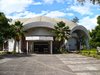
Criminals posing as students have turned the country's most respected and oldest university into a den of robbers-which poses a security threat to thousands of students and their lecturers, thanks to security lapses.
The criminals, who carry laptop bags and books to camouflage their real motive, have vandalised cars belonging to lecturers and students. They have also raped female students and staged robberies right inside the university. There are occasional rape attempts reported each week, according to information available to The Citizen.
Arriving at your office, only to find that your property has been stolen, is a devastating experience. Your sense of safety and well-being is compromised, not to mention the loss of property worth a good deal of money.
Theft of and from cars appears to be just another element of life at the University of Dar es Salaam. Residents, students and visitors who own cars and those who visit have suffered extreme agony brought on by crime at the campus.
Armed robberies targeting student laptops, handbags and mobile phones are seemingly on the rise.
With neither Closed Circuit Television (CCTV) camera nor rigorous inspection of people who enter or exit the university premises, criminals have found it easy to rob their targets-mainly students.
Car vandalism at parking yards and staff residential areas is another issue that poses a big security challenge at the campus. A resident of Sinza Road flats had this to say: "I parked my car at around noon. When I came out of the house at around 3pm, I could not recognise it. All lights, power windows, side mirrors, radio and several other parts were gone-and all this in broad daylight."
Those who park their vehicles at their residential flats have been the main target of muggers. Besides car vandalism, car windows have been smashed and valuables stolen. Auxiliary police have been patrolling the campus but the problem appears to be on the rise as the days go by.
According to students who live off campus, some of those who pretend to be students rob them on their way home. "You can see people carrying books and laptop bags walking to Changanyikeni and think they are fellow students," said Mr Julius Mushi, who was robbed of a laptop computer and a mobile phone last year. "But they attack you and steal everything."
Auxiliary police have recorded up to seven reported cases every week within the university and its vicinity. In the past two years, a man who posed as a student was even elected to the student government only to disappear when he came under scrutiny.
Our (The Citizen) investigation revealed that some of the robbers come to the campus under the pretext of jogging and joining other members of the community of athletes.
Last month, someone parked his Toyota Noah at Research flats and walked a few metres from the office-only to find nothing barely a few minutes later. In February 2012, a man lost his Suzuki Escudo at the College of Engineering and Technology parking lot. A Suzuki Swift was also stolen at the same venue in the same month. Other car thefts have taken place at various parking yards.
The School of Law parking yard, Research flats, cafeteria parking lot and CoET are among the most notorious areas for car theft at the campus. "It appears that people are now getting used to the situation," says a UDSM staff member. "Many staff and visitors have lost cars on this campus and nothing has been done to arrest the situation."
There have, apparently, also been armed robberies within the campus, with some staff being attacked and robbed in their houses. Last year, students were invaded at Yombo lecture rooms and a student was shot. The thugs escaped with laptops and mobile phones.
It is now not advisable to stay late in the office, according to one staff member. According to him, in the past, they would work late-even up to midnight-knowing their safety was guaranteed and the environment was conducive for studying and doing extra work well past the usual hours.
Six lecturers were affected the day his car window was smashed. "When I went to report to police, five other people were there for the same problem," he recalls. "All the police did was take notes."
Who is to blame?
Some members of the UDSM community accuse the police of doing little to arrest the situation. "When my car was stolen, I got some support from security officers," one of them confides. "I was given a detective to deal with my case but he ended up asking me to give him some cash. I refused and my car disappeared just like that."
Another victim had his car window smashed and components and other property stolen. He claims police officers said the robbers were camping in nearby bushes and he would have to pay at least Sh100, 000 to recover his property.
Another staff member, whose car was smashed at the Hill Park yard, said he got the number of the robbery suspect from one of the security officers and contacted the man-who agreed to return the stolen items at a cost of Sh200, 000. "People have reached the point of communicating with criminals and negotiating the recovery of their property," our source said. "There are many examples of people who have got back their items that way."
Security lapses at the campus appear to be routine and the staff have come to terms with the attacks. One of them said, without a hint of irony: "We understand that some cars might be stolen by people who know the owner from his/her home, but why do they opt to pursue him/her and commit the crime at the campus? This means there are a lot of opportunities for robbers in this area."
But some policemen who spoke to The Citizen said most UDSM staff members are reluctant to go the legal way. An officer had this to say: "Sometimes we arrest suspects or UDSM members of staff bring suspects to the post. But when it comes to arraigning them, they do not appear in court and we are unable to proceed with the cases without complainants and witnesses." But some university staff argued in return that they face challenges that can only be resolved through collective efforts.
According to Prof Henry Muzale, the university's position in itself poses a big threat to students and staff. There are many roads that cut across the campus and are also used by the members of the general public. This makes it difficult to tell the difference between ordinary wananchi and the bad guys.
Prof Muzale adds: "The university has no fence. We interact with people from various areas and robbers use that loophole to commit crime in the area. Since members of the community do not wear uniforms either, it has been difficult to identify criminals."
The university has taken some measures to arrest the situation, though, including increasing security patrols and extra time and supplying them with security equipment. "Other plans are on the way but I think the university management would be in a better position to explain the situation," he said.
University responds
Vice Chancellor Rwekaza Mukandala told The Citizen in an exclusive interview that the university was doing all it could to ensure safety and security at the campus. "I admit that we have security challenges, but we have plans on the ground to arrest the situation," he told The Citizen.
The size of the university's land, population, number of entrances and lack of funds pose a challenge to introducing security measures. Besides the main campus, which is about 1,620 acres, the university takes care of Silver Sand Hotel, Kijitonyama Hostel, Mabibo Hostel, School of Journalism and Mass Communication (SJMC), College of Engineering and Technology (CoET), Dar es Salaam University College of Education (DUCE) and others.
The university hosts people from other areas for sports, health services, bank services and a cafeteria. "It is a challenge, therefore, when it comes to security. This is a national institute that cannot be treated like a private property," Prof Mukandala said. "At least 30,000 people are always in the university every day."
The don has a game plan, though. He has come up with a security strategy that will probably end the problem. On realising how big the problem was, the university administration got in touch with the former Inspector General of Police, Said Mwema. "We knew that there was a need for strong, experienced and skilled personnel to lead auxiliary police," Prof Mukandala said. The UDSM auxiliary police are currently led by a commissioner of police. "The first thing in organising any movement is to get strong leadership," Prof Mukandala added. "UDSM has already put up strong leadership in the security sector and we are collaborating with the officer in implementing various plans."
The university has bought patrol vehicles, motorcycles and police gear on the advice of security experts. The university is also using its resources to train auxiliary police officers. The officers are being brought up to speed on crime control, intelligence and physical fitness trainings.
The VC also revealed that the university intended to install security cameras in prime locations on campus and offers digital and computer-related training for auxiliary police. "We cannot set CCTV cameras in all areas of the university at once," he added. "But I can assure you that plans are underway to install these devices in prime areas and this will help our security department monitor and control incidents."
According to the UDSM boss, there is a possibility of putting up a fence around the institution-if and when there are funds for the project. He added: "We believe the security perimeter will help reduce or control crime. We once secured a deal with a construction company that agreed to build the wall at Sh700 million, but the deal fell through."
Given the financial hurdle, the project will probably be carried out in phases. The Head of UDSM Auxiliary Police, Mr Bwelela Kilonzo, says he is re-organising his team for big results. "We have a strategic plan to implement, many changes are being made and soon people will see positive transformation," he said.
Mr Kilonzo's team has boosted patrols, police training, supervision and implementation of advocacy and publicity so that all members of the UDSM community can engage with security matters. "I will soon start providing education for all staff on this campus," he told The Citizen. "We need to implement a neighbourhood security strategy. Everybody should participate in security. When you look out for your family, car or office, you should do the same for your neighbour," he added.
The security boss denies that the UDSM security is as bad as it is painted and argues that the situation is well in hand. "Generally, I can assure the UDSM community that things are under control and we are implementing the security strategy," he said. "The only thing we need is co-operation."
Kinondoni Regional Police Commander Camillius Wambura told us he would have to contact his unit at UDSM police post for a briefing on the security status on the ground.
Theft of cars happened virtually everywhere, he added, but he would follow-up the matter. "I am going to investigate this matter and see what to do," he said. "I might need to meet the university community and listen to their problems before I take action."
The RPC wants all citizens to play their part in ensuring security.
Source:The Citizen
