Ifahamu Geology ya Zanzibar.

Ifahamu Geology ya Zanzibar.

Crocodiletooth

JF-Expert Member
Joined
Oct 28, 2012
Posts
20,561
Reaction score
24,428
Welcome to Zanzibar. Zanzibar is an island of coral origin. It forms coral limestone. Today we look at the eastern coast of the island, where this limestone created a small island that is subject to erosion and a spectacular spectacle. Welcome to the next sequel of the Geocache AGT series.


GEOLOGY ISLAND

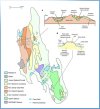
The Zanzibar archipelago, consisting of the islands of Unguja and Pemba and several surrounding islets, arepart of the ancient Miocene Rufiji/Ruvu delta. The coreof these islands consists of rocks ranging in age fromMiocene to recent clacareous sediment with limestone of marine origin that was subsequently more or lesscovered by sands, silt and clays brought by rivers fromthe East African mainland. The abundance of corallimestones on both islands is thought to indicate thepossibility that the sea might have covered much of theislands at some point in time. However, due to periods of isostatic movement and block faulting over the coastalTanzania and offshore zone these islands remainedabove sea level as blocks of the original delta.

The islands are about 40 km from the coast of EastAfrica separated by Pemba Channel on the north andZanzibar Channel on the south. Unguja Island is about 40 km south east of Pemba and about 56 km north of Latham Island or Fungu Kizimkazi, which is a small un-inhabited island also part of the Zanzibar archipelago.

Pemba Channel is much deeper and can reach up to 800m in depth off the continental shelf of the mainlandTanzania.Pemba is a simple fault block and rose earlier thanUnguja; it is thus composed of lower stratigraphic rocks,and geologically much older than Unguja.Topographically, it is a single ridge and watershed with araised east coast. It is dissected by hills and ridges andhas a marked indented western coastline with low-lyingshore and numerous marine inlets and dense mangroveforests. The highest point on Pemba Island is atSiniongoni about 90m above sea level.

Unguja Island is elongate and indented only sparselywith a stand of mangrove forests much smallercompared to that of Pemba. Believed to have emergedfrom the sea later compared to Pemba, it wasconnected to the mainland of Tanzania as late as duringthe beginning of the Pleistocene age. The topography of Unguja Island is generally flat but with a central ridgerunning from north to south whose highest point is atMasingini about 120m above sea level.
°°°°°°°°°°°°°°°°°°°°°°°°°°°°°°°°°°°

M1
Crystalline, reef and detrital limestone
Hard and dense crystalline Miocene limestone consisting of broken limestone, crushed coal,shell fragments and bands of flint. Sandy and gritty, formed as discontinuous reef, cavernousin places. Supplies water to lakes at Bambi and many springs and well, including cave wells

M3
Marls, sandy clays and clayey sands
Forms the main base rock of Unguja. Bluish grey to bluish green in colour comprising ofdense, roughly sorted Miocene chalky rocks with veins of gravel which weather to a red,yellow, or brown colour.

Q1
Soils, laterites, alluvial and colluvialdeposits
Mixture of red, brown and black Quaternary soils rich in iron oxide typical of tropicalenvironments. This fine grained soil maintains a water table forming an underground aquiferwhich provides a source of water for hillside springs.

Q2
Coralline and reef limestone
White, cream or yellow-brown Quaternary limestone which tends to be grey along rocky andjagged outcrops. Notably free from iron staining. Common across Unguja, except thenorth-eastern region, forming the island’s main underground aquifer. Frequently cavernousforming many cave wells in conjunction with M1.

Q3 Marine and fluvial sands and sandstone
Sands mixed with shell fragments, fish bones and sharks’teeth which are lightly cementedforming grey, coarse Quaternary sandstone. Provides water for pumped wells at KisimaMchanga and Cheju.

Doline
Bowl-shaped depression
Bowl-shaped closed depressions (1–1,000 m in diameter) formed by the dissolution oflimestone rocks by corrosive groundwater (carbonic acid from the reaction of water withcalcium carbonate which is abundant in limestone rocks). Fine-grained soils often drain intothese features.
 

Attachments

  • 74ed4447-720d-4630-9792-93e7cac931b9.jpg
    74ed4447-720d-4630-9792-93e7cac931b9.jpg
    99.3 KB · Views: 11
Back
Top Bottom