
Ab-Titchaz
JF-Expert Member
- Jan 30, 2008
- 14,630
- 4,253
Raila rubbishes ICC pull out bid
Friday, September 6, 2013 - 00:00 -- BY DAVID MWERE
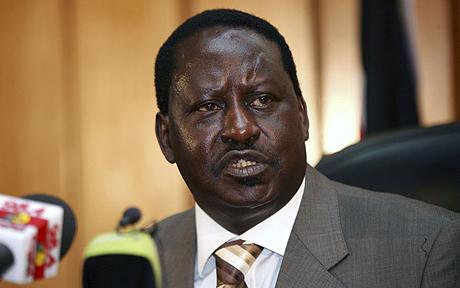
FORMER Prime Minister Raila Odinga has dismissed the move by the Jubilee allied MPs to seek the country's withdrawal from the Rome Statute.
Raila who led a Cord parliamentary group meeting yesterday at ODM offices said there are more pressing issues affecting the country that need attention than a special seating to pull out of the ICC.
The MPs said the move will not bring honor and dignity to the country and it will not make ICC disappear from the criminal justice system.
On Tuesday, Speakers of the Senate and National Assembly recalled their respective Houses from recess to debate and approve a motion that will compel the government to introduce a Bill to sever links with the ICC.
The recall comes as Deputy President William Ruto prepares to leave the country on Monday next week for his trial at the Hague.
President Uhuru Kenyatta's case is set for November 12.
Yesterday Raila said the high cost of living due to the impact of the VAT Act and insecurity in the country warrant a recall of the House as opposed to withdrawal from the ICC.
"The two issues are critical and important to Kenyans. The government must deal with the high cost of basic commodities and insecurity in Marsabit, Lolgorian and Mandera," he said.
In the resolutions that were also adopted, Cord said the membership of Kenya in the ICC was a representation of the peoples' sovereign will.
"The ICC is based on the principle of complimentarity which makes the court's jurisdiction subordinate to national courts except in very limited and well established circumstances and situations," said the statement that was read by Tongaren MP Eseli Simiyu.
He said it is ridiculous for Jubilee MPs to seek withdrawal when they had scuttled attempts to form a local tribunal to try the suspects. The MPs said the pull out will be inconsistent with and defeat the purposes and objectives of the constitution.
"For Kenya to remain faithful to the constitution as enacted, we should not withdraw from the Rome Statute. Kenya cannot exist outside the realm of international law in all situations. The thinking has not helped leaders of Libya and Sudan to run away or be shielded from international justice.
"The reputation of being the first country to pull out of ICC is not a good one. Nearly a fortnight ago the United Nations General Assembly reaffirmed its full support for the court and Kenya should not take lightly the resolutions and commitment of the world body."
The statement further said Cord believes the suspects will be absolved through a judicial process of the ICC.
Raila rubbishes ICC pull out bid | The Star
Friday, September 6, 2013 - 00:00 -- BY DAVID MWERE
FORMER Prime Minister Raila Odinga has dismissed the move by the Jubilee allied MPs to seek the country's withdrawal from the Rome Statute.
Raila who led a Cord parliamentary group meeting yesterday at ODM offices said there are more pressing issues affecting the country that need attention than a special seating to pull out of the ICC.
The MPs said the move will not bring honor and dignity to the country and it will not make ICC disappear from the criminal justice system.
On Tuesday, Speakers of the Senate and National Assembly recalled their respective Houses from recess to debate and approve a motion that will compel the government to introduce a Bill to sever links with the ICC.
The recall comes as Deputy President William Ruto prepares to leave the country on Monday next week for his trial at the Hague.
President Uhuru Kenyatta's case is set for November 12.
Yesterday Raila said the high cost of living due to the impact of the VAT Act and insecurity in the country warrant a recall of the House as opposed to withdrawal from the ICC.
"The two issues are critical and important to Kenyans. The government must deal with the high cost of basic commodities and insecurity in Marsabit, Lolgorian and Mandera," he said.
In the resolutions that were also adopted, Cord said the membership of Kenya in the ICC was a representation of the peoples' sovereign will.
"The ICC is based on the principle of complimentarity which makes the court's jurisdiction subordinate to national courts except in very limited and well established circumstances and situations," said the statement that was read by Tongaren MP Eseli Simiyu.
He said it is ridiculous for Jubilee MPs to seek withdrawal when they had scuttled attempts to form a local tribunal to try the suspects. The MPs said the pull out will be inconsistent with and defeat the purposes and objectives of the constitution.
"For Kenya to remain faithful to the constitution as enacted, we should not withdraw from the Rome Statute. Kenya cannot exist outside the realm of international law in all situations. The thinking has not helped leaders of Libya and Sudan to run away or be shielded from international justice.
"The reputation of being the first country to pull out of ICC is not a good one. Nearly a fortnight ago the United Nations General Assembly reaffirmed its full support for the court and Kenya should not take lightly the resolutions and commitment of the world body."
The statement further said Cord believes the suspects will be absolved through a judicial process of the ICC.
Raila rubbishes ICC pull out bid | The Star


