
Ab-Titchaz
JF-Expert Member
- Jan 30, 2008
- 14,630
- 4,253
Raila on why land is a campaign issue
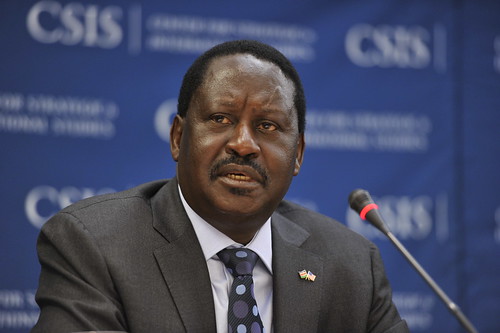
By RAILA ODINGA
Posted Saturday, February 9 2013 at 19:35
In Summary
Land disputes in Kenya are older than the country. They started several hundred years ago when the Omani Arabs discovered the value of the east coast of Africa and set up trading centres along it. They eventually put up Sultanates that claimed right of government in several towns like Mombasa and Malindi.
Then came the Portuguese who also wanted to own Kenya's east coast. They fought the Arabs and forced them out and ruled the coast for about 150 years. The Arabs eventually regained control.
Then came the British from whom the whole story of colonialism began. This period saw the enactment of the Crown Land Ordinance by the British Parliament. The Ordinance declared virtually all land in Kenya as belonging to the English Queen to dispose of as she wished.
We know of the armed struggles that followed, beginning with the resistance of Waiyaki wa Hinga in 1891, the Nandi rebellion in the early 1900 and the Mau Mau uprising in the 1940s-50s.
We have read about the traditional skirmishes over land in the pre-colonial period between the Maasai and Kipsigis or the Kisii and the Luo.
Land, in Kenya, has therefore always been a particularly emotive issue. In recent times, however, it is also one that has often resulted in strife between local communities and threatens the security of the Kenyan Nation.
Despite all these we, as a country, never addressed the issue head-on and kept hoping that it would resolve itself through market economy forces.
Unfortunately, over the last 50 years, that has not happened. Instead, the tensions keep piling up and the gravity of the situation keeps getting worse. Yet there are those who want to continue with the gamble that the situation will resolve itself.
I see it differently. I believe we are many decades from the economy in which land is no longer critical to the livelihoods of a majority of the population. I also believe that the land question cannot be kept simmering through these decades and that it will erupt before we achieve the intended economy. I believe that only through honest political will can this issue be resolved conclusively.
So far, we have put in place the relevant constitutional infrastructure to address this issue. We promulgated a new Constitution on August 27, 2010, which sought to rectify the loopholes that were in the old constitution.
The Constitution classifies all land into three categories. It created "Public Land" and declared all government land to belong to the public. This means that the government can no longer allocate the land without regard to public interest as has happened in the past.
The Constitution then created "Community Land". Most of these lands are what were known in the old constitution as "Trust Land".
These lands were previously administered by county councils on behalf of the people. However, the trust was greatly abused with a lot of these lands falling illegally into private hands. The Constitution now gives communities a right to hold the land for themselves.
Lastly the Constitution created private land and declared any land held by any person under a freehold title or leasehold to be private.
The Constitution then created an independent National Land Commission to manage land issues and advise the government on land policy. Specifically though, and in recognition of the inequities of the past, the National Land Commission was mandated by the Constitution "to initiate investigation, on its own initiative or on a complaint, into present or past historical land injustices, and recommend appropriate redress."
This should have resolved the problem, and politicians would not have spoken on the land question again. However, six months since the proposed members of the National Land Commission were approved by Parliament, the Office of the President has not gazetted them. The Attorney-General says that Head of Civil Service Francis Kimemia ignored advice from his office to gazette the team.
This is just but one example of how a government without the political will to implement land reforms can frustrate an independent constitutional commission and make it unable to discharge its mandate.
To tell aspirants for the presidency to stop talking about the land question and to insist that the land matter be left to a commission, which the relevant authorities are already frustrating successfully, is literally attempting to ensure that this matter is never resolved.
Unfortunately, it is during election time that illegal land transactions have taken place, with public land being dished out to individuals to buy support.
That is why I have said that I cannot stop talking about land because it will never be resolved unless a President with the political will to resolve it is elected. I am also quite suspicious about the refusal to gazette the members of the land commission.
I want to convince Kenyans that they can trust me with this issue and that I will approach it soberly and impartially and lead the country into a solution satisfactory to all, with the Constitution being my guide.
These solutions will never be implemented if Kenya has a government that is hostile to land reform. Kenya needs a government that will not shy away from this problem.
Mr Odinga is the Cord presidential candidate
Raila on why land is a campaign issue - Blogs - elections.nation.co.ke
By RAILA ODINGA
Posted Saturday, February 9 2013 at 19:35
In Summary
- I want to convince Kenyans that they can trust me with the land issue
Land disputes in Kenya are older than the country. They started several hundred years ago when the Omani Arabs discovered the value of the east coast of Africa and set up trading centres along it. They eventually put up Sultanates that claimed right of government in several towns like Mombasa and Malindi.
Then came the Portuguese who also wanted to own Kenya's east coast. They fought the Arabs and forced them out and ruled the coast for about 150 years. The Arabs eventually regained control.
Then came the British from whom the whole story of colonialism began. This period saw the enactment of the Crown Land Ordinance by the British Parliament. The Ordinance declared virtually all land in Kenya as belonging to the English Queen to dispose of as she wished.
We know of the armed struggles that followed, beginning with the resistance of Waiyaki wa Hinga in 1891, the Nandi rebellion in the early 1900 and the Mau Mau uprising in the 1940s-50s.
We have read about the traditional skirmishes over land in the pre-colonial period between the Maasai and Kipsigis or the Kisii and the Luo.
Land, in Kenya, has therefore always been a particularly emotive issue. In recent times, however, it is also one that has often resulted in strife between local communities and threatens the security of the Kenyan Nation.
Despite all these we, as a country, never addressed the issue head-on and kept hoping that it would resolve itself through market economy forces.
Unfortunately, over the last 50 years, that has not happened. Instead, the tensions keep piling up and the gravity of the situation keeps getting worse. Yet there are those who want to continue with the gamble that the situation will resolve itself.
I see it differently. I believe we are many decades from the economy in which land is no longer critical to the livelihoods of a majority of the population. I also believe that the land question cannot be kept simmering through these decades and that it will erupt before we achieve the intended economy. I believe that only through honest political will can this issue be resolved conclusively.
So far, we have put in place the relevant constitutional infrastructure to address this issue. We promulgated a new Constitution on August 27, 2010, which sought to rectify the loopholes that were in the old constitution.
The Constitution classifies all land into three categories. It created "Public Land" and declared all government land to belong to the public. This means that the government can no longer allocate the land without regard to public interest as has happened in the past.
The Constitution then created "Community Land". Most of these lands are what were known in the old constitution as "Trust Land".
These lands were previously administered by county councils on behalf of the people. However, the trust was greatly abused with a lot of these lands falling illegally into private hands. The Constitution now gives communities a right to hold the land for themselves.
Lastly the Constitution created private land and declared any land held by any person under a freehold title or leasehold to be private.
The Constitution then created an independent National Land Commission to manage land issues and advise the government on land policy. Specifically though, and in recognition of the inequities of the past, the National Land Commission was mandated by the Constitution "to initiate investigation, on its own initiative or on a complaint, into present or past historical land injustices, and recommend appropriate redress."
This should have resolved the problem, and politicians would not have spoken on the land question again. However, six months since the proposed members of the National Land Commission were approved by Parliament, the Office of the President has not gazetted them. The Attorney-General says that Head of Civil Service Francis Kimemia ignored advice from his office to gazette the team.
This is just but one example of how a government without the political will to implement land reforms can frustrate an independent constitutional commission and make it unable to discharge its mandate.
To tell aspirants for the presidency to stop talking about the land question and to insist that the land matter be left to a commission, which the relevant authorities are already frustrating successfully, is literally attempting to ensure that this matter is never resolved.
Unfortunately, it is during election time that illegal land transactions have taken place, with public land being dished out to individuals to buy support.
That is why I have said that I cannot stop talking about land because it will never be resolved unless a President with the political will to resolve it is elected. I am also quite suspicious about the refusal to gazette the members of the land commission.
I want to convince Kenyans that they can trust me with this issue and that I will approach it soberly and impartially and lead the country into a solution satisfactory to all, with the Constitution being my guide.
These solutions will never be implemented if Kenya has a government that is hostile to land reform. Kenya needs a government that will not shy away from this problem.
Mr Odinga is the Cord presidential candidate
Raila on why land is a campaign issue - Blogs - elections.nation.co.ke


