
Hussein Massanza
JF-Expert Member
- Dec 26, 2012
- 1,016
- 2,195
1. Introduction
Tanzania has always been known as a nation of peace and political stability, and the recent election was a testament to this. Although there was speculation about the possibility of violence both before and after 25 October, the election period passed relatively peacefully. In addition, Tanzania has never faced civil conflict. And citizens themselves report feeling secure, being satisfied with the work of police around elections, and having faith in the army .
However, on a larger scale, the threat to security in East Africa seems to be growing. Radical organizations, specifically the Somalia based Al-Shabab, have been mounting deadly attacks in the region in recent years. The bloodiest of these have been in Kenya and Uganda, but there have been other threats to Tanzania. A 2014 report states that, since 2012, Tanzania has been experiencing a rising number of terrorist and radical attacks . Recently, a February attack on police stations in Tanga was linked to radical factions , and in March The Citizen newspaper reported that Al-Shabab had made a commitment to support ISIS attacks in Tanzania, Kenya, and Ethiopia.
As global and regional headlines continue to emphasize insecurity, it is important to try to understand what citizens' think about radicalism in Tanzania and East Africa. What do they see as the cause of violent extremism? And what solutions do they offer? Are they worried for themselves and their loved ones? Or, are they confident of the nation's peaceful history and ethos, and the capacity of their security forces?
Data for this brief come from Twaweza's flagship Sauti za Wananchi survey. Sauti za Wananchi is a nationally-representative, high-frequency mobile phone panel survey. It is representative for Mainland Tanzania. Information on the overall methodology is available at Sauti za Wananchi :: Uwazi :: Twaweza.org. For this brief data were collected from 1,879 respondents from the second panel for Sauti za Wananchi. This was the third round of calls to the new panel, conducted between 29 September and 11 October 2015.
The key findings are:
- More than 8 out of 10 citizens (88%) believe that Tanzania is secure, however fewer feel the same about East Africa as a whole (61%).
- More than 5 out of 10 citizens (56%) say that economic and political marginalization drives the appeal of radical groups.
- Almost half of citizens (48%) believe that a heavy crack down using the military, police, and intelligence is the best way for government to counter radicalization and terrorism.
- 1 out of 20 citizens (5%) know of someone whom a violent extremist group has recruited or tried to recruit.
- 3 out of 10 citizens are worried about radical organizations trying to recruit their family members in the near future.
- 6 out of 10 citizens believe that the government did a lot to improve security during the elections.
- 3 out of 10 citizens cite problems with the police as the main reason why crimes are not reported.
Fact 1: Four out of ten citizens believe that East Africa is not secure.
Just 12% of citizens believe that Tanzania is not secure. However, 38% of them believe that East Africa as a whole is not secure. Only 9% of our respondents stated that East Africa is very secure, compared to 26% for Tanzania.
This is consistent with citizens' memory of recent attacks. When asked about recent incidents involving extremist groups, citizens were most likely to be aware of the attacks at Garissa University (63%) and West Gate Mall (40%), both in Kenya 5 . Nevertheless, when asked if they are worried about the threats to attack Tanzania in the near future, 56% reported being worried while 38% were not 6 .
Fact 2: More than half of citizens think marginalization explains the appeal of radical groups.
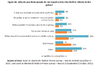
One third (32%) of respondents did not have an answer when we asked them what might be contributing to the appeal of radical groups in East Africa. Those who had a response highlighted economic and political motivations, including frustration with the government and political system, the lack of employment, and poor governance (56%), over religious ones (21% 7 ).
In addition, 59% of citizens say that young men are the main targets for enrolment in radical/extremist groups .
Fact 3: Half of citizens favour a military solution to radicalism.
Almost half of our respondents (48%) think that security forces should be used to combat radicalism. Nine out of 10 (96%) of Tanzanians view their military as strong, and 90% believe that the military could protect them in case of an attack by a radical group .
Only 20% of citizens believe that working with communities or entering into a dialogue with radical groups is the best way forward.
Fact 4: 3 out of 10 citizens worry about radical organizations trying to recruit their family
Only 5% of citizens know of anyone whom a violent extremist group has recruited or tried to recruit 10 . Despite this, 3 out of 10 citizens (30%) are worried about their family members being targeted for recruitment in the near future.
Fact 5: 6 out of 10 citizens report that the government did a lot to improve security during the election.
In 2015, there was some concern about security during the general elections. This year was the first time that an opposition coalition had come together to mount such a strong challenge and rallies for both sides drew thousands of supporters. There was some concern that demonstrations might escalate into violent protest.
The government took noticeable measures during this time to keep the peace, and 61% of citizens believe that government measures went a long way in improving election security.
Fact 6: 3 out of 10 citizens cite troubles with police as the main reason why crimes are not reported.
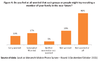
The most visible symbol of state security in Tanzania is the police force. They are responsible for maintaining law and order. However, a recent Afrobarometer survey indicates that 56% of those who had experienced crime did not report it to the police 11 . When we asked citizens why crimes are not reported to the police, 3 out of 10 (31%) report some issue with the police themselves 12 .
In addition, 25% of citizens stated that a fear of revenge by their attacker was the main reason people did not report crimes to police.
As a comparison, when asked the same question in February / March of this year, more than 6 out of 10 citizens (61%) cited troubles with the police as the reason crimes do not get reported, and fear of revenge by the attacker was only mentioned by 2% of citizens.
3. Conclusion
Tanzania is known around the world as a haven of peace and political stability; however, increased violence in the region has threatened the security of citizens and made them wary. Even though an overwhelming majority (88%) of citizens say Tanzania is a secure nation, 56% of citizens are concerned about the threat of future attacks on Tanzanian soil.
Also, while only 5% of respondents reported hearing of attempted recruitment by radical groups, 3 out of 10 citizens worry about radical organizations trying to recruit their family members in the near future. Perhaps as a result of this fear, nearly half of all citizens believe that police, military and intelligence services should be used to crack down on extremist groups and on the communities in which they live.
Overall Tanzanians have a high level of faith in their military, and citizens are confident that they would be protected in case of an attack by a radical group. So, what should Tanzania's next move be in the fight against radicalism? Although many citizens seem to favor the use of military force, a recent report suggests that the use of excessive force might exacerbate the extremism it seeks to eliminate.
In the past, Tanzania has opted out of military intervention in Somalia. Considering that there have been no serious attacks within the nation's borders recently, a military strategy seems pre-emptive at best. The most effective method, surely, would be to address the root causes of radicalization which, according to citizens, are largely due to political and economic marginalization.
Deliberate efforts at encouraging and listening to citizens voices, responding to their priority needs, and purposefully working to reduce marginalization will benefit all Tanzanians while significantly reducing the risk of radicalization.
Attachments
-
 Screenshot from 2015-12-17 14:16:55.png47.4 KB · Views: 246
 -
 Screenshot from 2015-12-17 14:17:27.png4.4 KB · Views: 221
 -
 Screenshot from 2015-12-17 14:18:03.png6.6 KB · Views: 216
 -
 Screenshot from 2015-12-17 14:18:15.png10.4 KB · Views: 216
 -
 Screenshot from 2015-12-17 14:18:26.png5.8 KB · Views: 219
 -
 Screenshot from 2015-12-17 14:18:45.png8.7 KB · Views: 222
 -
 Screenshot from 2015-12-17 14:19:22.png11.6 KB · Views: 231
 -
 Screenshot from 2015-12-17 14:19:45.png9.9 KB · Views: 230
 -
 Screenshot from 2015-12-17 14:19:59.png4.2 KB · Views: 219


