
Cicero
JF-Expert Member
- Jan 20, 2016
- 2,924
- 3,074
The Government of Tanzania is looking for the best policies and institutional designs to turn future petroleum revenues into welfare, development and jobs. This Brief argues that the Tanzanian society will benefit more by investing in infrastructure, health and education, rather than establishing a petroleum sovereign wealth fund and investing in foreign assets.
Exploration for oil and gas in Tanzania started in the 1950s. The first discoveries were made in the 1970s, and commercial production started in 2004. Since 2010, additional huge reserves have been discovered offshore the southern coast. The size of the total confirmed gas reserves is currently standing at more than 57 trillion cubic feet. There are prospects for additional offshore, as well as onshore, reserves of both gas and oil. There is considerable uncertainty about the decision to invest in a liquefied natural gas (LNG) plant, the total volume of petroleum reserves, and the future petroleum prices.
The challenge
On average, countries with abundant reserves of petroleum are claimed to have lower economic growth, less democracy, more social unrest, and an erosion of their institutional quality. Such outcomes have sparked an interest in policy solutions to deal with these possible adverse effects of resource abundance. A main challenge with the literature on the so-called resource curse, however, is that it mainly describes the economic and political outcomes resulting from resource abundance, but is rather short on offering policy advice. Politicians and bureaucrats in petroleum producing countries, in contrast, have put major efforts into policy solutions and institutional designs to cope with possible unfavorable consequences of petroleum income. One dominant institutional design, which more and more petroleum producers seem to adopt, is to establish a petroleum fund.
A possible solution
The first petroleum fund established was the Kuwait Investment Authority in 1953. Later petroleum funds include the Alberta Heritage Savings Trust Fund in Canada, established in 1976, the Alaska Permanent Fund established the same year, and the Norwegian Government Pension Fund Global established in 1990. In recent years, petroleum funds have spread to many petroleum producers, including several African countries. For example, Chad, Angola and Nigeria, have established sovereign wealth funds to manage their petroleum revenues.
The design of a petroleum fund depends on answers to the following three questions: First, how much of the petroleum income shall be channelled into the fund? Second, how shall the fund be managed? Third, how shall payments out of the fund be decided? Various sovereign wealth funds have provided different answers to these three questions.
It is important to distinguish between two different purposes of petroleum funds. Savings funds, on the one hand, are sovereign wealth funds with the aim of transferring petroleum wealth into long-term financial wealth. They are a vehicle for long-term management of petroleum revenues. Stabilization funds, on the other hand, are funds that aim to preventing short-term fluctuations in revenues to turn into short-term fluctuations in government spending. This can be done, for instance as in the copper fund in Chile, by spending less than the total revenues when the prices are high, and more when prices are low. In this brief, we are mainly concerned with savings funds, although it is important to acknowledge that also saving funds have short term stabilizing properties on the economy.
The establishment of a fund brings with it potential benefits, but also potential costs
The benefits
Before deciding to establish a fund or not, one has to trade off the benefits against the eventual costs. Turning first to the benefits, a petroleum fund makes policy more rules based, and less the object of day-to-day political decisions. This has the potential effect of ensuring a long-term perspective on policy. Such a long-term policy view on the petroleum assets is important for several reasons. First, what is often termed petroleum income is not really income in the conventional sense, but selling off one type of assets (non-renewable natural resource assets) and replacing them with another (dollars).
The establishment of a petroleum fund is a way to manage this transition from resource wealth to financial wealth. Second, consuming too much of the petroleum proceeds in the short run induces a structural shift away from traded towards (public and private) non-traded sectors that is not sustainable. It has, at some point, to be reversed. Third, a petroleum fund may contribute to investment decisions being based on long-term economic criteria, and not day-to-day political decisions.
Fourth, a petroleum fund ensures the decoupling of resource spending and resource income. Petroleum prices and production levels are volatile. A petroleum fund can transform such volatile income streams into more stable government spending. This has a stabilization effect on the economy, ensuring that the cycles in the resource sector are not magnified by pro-cyclical use of resource income. It also allows for more stable provision of public services. In conclusion, there are many attractive attributes of establishing a petroleum fund.
The costs
Turning to the costs, the potential drawbacks of establishing a petroleum fund can be illustrated by experiences from other African countries that have introduced such funds. Some of the initial experiences with these are not favourable. One particular example is Chad, which assisted by the World Bank established a “future generations fund” where petroleum revenues were set aside.
The deal was that the fund was set up as part of an agreement with the World Bank that involved financing of the pipeline from land-locked Chad to the port in Cameroon. However, when political tensions erupted, the fund was raided by the president and spent on the military. As a response, the World Bank aborted their relations with the regime. Another example is Angola, which established a petroleum fund in 2008. In 2013, the son of President Dos Santos became the head of its board of directors. This questions whether the petroleum fund in reality is setting up a new way to manage the resource wealth, as well as its independence from the current political elite.
These examples bring with them some general lessons. In particular, a drawback with a petroleum fund in a weakly institutionalized setting is that financial assets are highly appropriable. This generates incentives for rent-seeking by political and private entrepreneurs with the aim of securing these funds for their own political or private purpose. Such rent-seeking is costly in itself, in that entrepreneurial talent is wasted in trying to appropriate income already created, rather than creating additional income. Such rent-seeking also brings with it negative externalities for the rest of society. In particular, there are three important negative externalities.
First, when more entrepreneurial talent is allocated to rent-seeking and less to productive activities, the income of each remaining producer falls. The reason is that when entrepreneurs shift from production to rent-seeking, then this is equivalent to a shift from activities with positive externalities for the rest of the economy (production that generates income and thus demand which benefits other producers), to activities with negative externalities (rent-seeking that generates costs for other producers since rent-seekers predate on producers). Consequently, the aggregate fall in production can be large.
Second, the presence of a lootable petroleum fund produces perverse incentives when it comes to investing in institutional capacity. Weak institutions are a prerequisite for politicians being able to loot a fund. Thus, a petroleum fund may bring with it political incentives to weaken, rather than to strengthen, institutions.
Third, the sum of the previous two channels makes it less attractive for private investors to invest. The future capital stock of the economy, and thus income, is lower than it otherwise would be.
In sum, establishing a petroleum fund in a weakly institutionalized setting brings with it considerable potential costs for the society.
The alternatives
Developing countries typically have low levels and poor quality of their infrastructure, and the human capital and health of their populations. Starting at such low initial levels, the potential return of investments in these areas are higher than for developed countries. Therefore, from the point of view of society, the return of investing in infrastructure, health and education is simply higher the lower the levels of such investments are in the first place. In contrast, the direct return from foreign financial assets in a petroleum fund is independent of the level of development of a country. In isolation, this means that, from the point of view of a developing country, a petroleum fund should be less attractive as compared with a developed country.
There are also additional arguments that pull in the same direction. We have already seen that a potential drawback with a petroleum fund is that its assets are lootable. Investments in infrastructure, education and health are, in comparison, difficult to loot. This has the implication that the perverse effects on incentives to invest in institutional capacity created by a petroleum fund are not present. They may even be turned on their head: higher levels of human capital, infrastructure and health empower the population, in turn increasing the demand for inclusive institutions.
The same three channels that produces negative externalities with a petroleum fund, may with the alternative use produce positive externalities: The incentives for entrepreneurs is shifted towards production and away from rent-seeking, the institutional quality may improve, and these two effects make it more attractive for private entrepreneurs to invest.
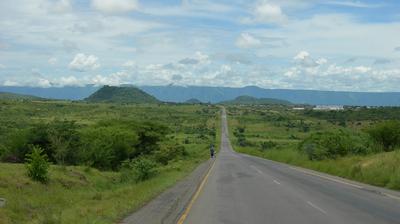
Photo: Joachim Huber, Creative Commons / flickr
Policy implications
The direct financial return of a petroleum fund is the same for developing and developed countries. However, using incomes from petroleum to invest in infrastructure, education and health creates higher societal returns for a developing than for a developed country.
Establishing a petroleum fund in a weakly institutionalized setting may produce perverse incentives for entrepreneurs to engage in rent-seeking rather than in productive activities, and for politicians to weaken rather than strengthen institutional quality.
Investing in infrastructure, human capital, and health, on the other hand creates incentives for production rather than rent-seeking, and may improve institutional quality rather than deteriorate it.
The payoff for the Tanzanian society is most likely much higher by using petroleum revenues to invest in infrastructure, health and education, rather than to establish a petroleum fund to invest in foreign assets.
Exploration for oil and gas in Tanzania started in the 1950s. The first discoveries were made in the 1970s, and commercial production started in 2004. Since 2010, additional huge reserves have been discovered offshore the southern coast. The size of the total confirmed gas reserves is currently standing at more than 57 trillion cubic feet. There are prospects for additional offshore, as well as onshore, reserves of both gas and oil. There is considerable uncertainty about the decision to invest in a liquefied natural gas (LNG) plant, the total volume of petroleum reserves, and the future petroleum prices.
The challenge
On average, countries with abundant reserves of petroleum are claimed to have lower economic growth, less democracy, more social unrest, and an erosion of their institutional quality. Such outcomes have sparked an interest in policy solutions to deal with these possible adverse effects of resource abundance. A main challenge with the literature on the so-called resource curse, however, is that it mainly describes the economic and political outcomes resulting from resource abundance, but is rather short on offering policy advice. Politicians and bureaucrats in petroleum producing countries, in contrast, have put major efforts into policy solutions and institutional designs to cope with possible unfavorable consequences of petroleum income. One dominant institutional design, which more and more petroleum producers seem to adopt, is to establish a petroleum fund.
A possible solution
The first petroleum fund established was the Kuwait Investment Authority in 1953. Later petroleum funds include the Alberta Heritage Savings Trust Fund in Canada, established in 1976, the Alaska Permanent Fund established the same year, and the Norwegian Government Pension Fund Global established in 1990. In recent years, petroleum funds have spread to many petroleum producers, including several African countries. For example, Chad, Angola and Nigeria, have established sovereign wealth funds to manage their petroleum revenues.
The design of a petroleum fund depends on answers to the following three questions: First, how much of the petroleum income shall be channelled into the fund? Second, how shall the fund be managed? Third, how shall payments out of the fund be decided? Various sovereign wealth funds have provided different answers to these three questions.
It is important to distinguish between two different purposes of petroleum funds. Savings funds, on the one hand, are sovereign wealth funds with the aim of transferring petroleum wealth into long-term financial wealth. They are a vehicle for long-term management of petroleum revenues. Stabilization funds, on the other hand, are funds that aim to preventing short-term fluctuations in revenues to turn into short-term fluctuations in government spending. This can be done, for instance as in the copper fund in Chile, by spending less than the total revenues when the prices are high, and more when prices are low. In this brief, we are mainly concerned with savings funds, although it is important to acknowledge that also saving funds have short term stabilizing properties on the economy.
The establishment of a fund brings with it potential benefits, but also potential costs
The benefits
Before deciding to establish a fund or not, one has to trade off the benefits against the eventual costs. Turning first to the benefits, a petroleum fund makes policy more rules based, and less the object of day-to-day political decisions. This has the potential effect of ensuring a long-term perspective on policy. Such a long-term policy view on the petroleum assets is important for several reasons. First, what is often termed petroleum income is not really income in the conventional sense, but selling off one type of assets (non-renewable natural resource assets) and replacing them with another (dollars).
The establishment of a petroleum fund is a way to manage this transition from resource wealth to financial wealth. Second, consuming too much of the petroleum proceeds in the short run induces a structural shift away from traded towards (public and private) non-traded sectors that is not sustainable. It has, at some point, to be reversed. Third, a petroleum fund may contribute to investment decisions being based on long-term economic criteria, and not day-to-day political decisions.
Fourth, a petroleum fund ensures the decoupling of resource spending and resource income. Petroleum prices and production levels are volatile. A petroleum fund can transform such volatile income streams into more stable government spending. This has a stabilization effect on the economy, ensuring that the cycles in the resource sector are not magnified by pro-cyclical use of resource income. It also allows for more stable provision of public services. In conclusion, there are many attractive attributes of establishing a petroleum fund.
The costs
Turning to the costs, the potential drawbacks of establishing a petroleum fund can be illustrated by experiences from other African countries that have introduced such funds. Some of the initial experiences with these are not favourable. One particular example is Chad, which assisted by the World Bank established a “future generations fund” where petroleum revenues were set aside.
The deal was that the fund was set up as part of an agreement with the World Bank that involved financing of the pipeline from land-locked Chad to the port in Cameroon. However, when political tensions erupted, the fund was raided by the president and spent on the military. As a response, the World Bank aborted their relations with the regime. Another example is Angola, which established a petroleum fund in 2008. In 2013, the son of President Dos Santos became the head of its board of directors. This questions whether the petroleum fund in reality is setting up a new way to manage the resource wealth, as well as its independence from the current political elite.
These examples bring with them some general lessons. In particular, a drawback with a petroleum fund in a weakly institutionalized setting is that financial assets are highly appropriable. This generates incentives for rent-seeking by political and private entrepreneurs with the aim of securing these funds for their own political or private purpose. Such rent-seeking is costly in itself, in that entrepreneurial talent is wasted in trying to appropriate income already created, rather than creating additional income. Such rent-seeking also brings with it negative externalities for the rest of society. In particular, there are three important negative externalities.
First, when more entrepreneurial talent is allocated to rent-seeking and less to productive activities, the income of each remaining producer falls. The reason is that when entrepreneurs shift from production to rent-seeking, then this is equivalent to a shift from activities with positive externalities for the rest of the economy (production that generates income and thus demand which benefits other producers), to activities with negative externalities (rent-seeking that generates costs for other producers since rent-seekers predate on producers). Consequently, the aggregate fall in production can be large.
Second, the presence of a lootable petroleum fund produces perverse incentives when it comes to investing in institutional capacity. Weak institutions are a prerequisite for politicians being able to loot a fund. Thus, a petroleum fund may bring with it political incentives to weaken, rather than to strengthen, institutions.
Third, the sum of the previous two channels makes it less attractive for private investors to invest. The future capital stock of the economy, and thus income, is lower than it otherwise would be.
In sum, establishing a petroleum fund in a weakly institutionalized setting brings with it considerable potential costs for the society.
The alternatives
Developing countries typically have low levels and poor quality of their infrastructure, and the human capital and health of their populations. Starting at such low initial levels, the potential return of investments in these areas are higher than for developed countries. Therefore, from the point of view of society, the return of investing in infrastructure, health and education is simply higher the lower the levels of such investments are in the first place. In contrast, the direct return from foreign financial assets in a petroleum fund is independent of the level of development of a country. In isolation, this means that, from the point of view of a developing country, a petroleum fund should be less attractive as compared with a developed country.
There are also additional arguments that pull in the same direction. We have already seen that a potential drawback with a petroleum fund is that its assets are lootable. Investments in infrastructure, education and health are, in comparison, difficult to loot. This has the implication that the perverse effects on incentives to invest in institutional capacity created by a petroleum fund are not present. They may even be turned on their head: higher levels of human capital, infrastructure and health empower the population, in turn increasing the demand for inclusive institutions.
The same three channels that produces negative externalities with a petroleum fund, may with the alternative use produce positive externalities: The incentives for entrepreneurs is shifted towards production and away from rent-seeking, the institutional quality may improve, and these two effects make it more attractive for private entrepreneurs to invest.
Photo: Joachim Huber, Creative Commons / flickr
Policy implications
The direct financial return of a petroleum fund is the same for developing and developed countries. However, using incomes from petroleum to invest in infrastructure, education and health creates higher societal returns for a developing than for a developed country.
Establishing a petroleum fund in a weakly institutionalized setting may produce perverse incentives for entrepreneurs to engage in rent-seeking rather than in productive activities, and for politicians to weaken rather than strengthen institutional quality.
Investing in infrastructure, human capital, and health, on the other hand creates incentives for production rather than rent-seeking, and may improve institutional quality rather than deteriorate it.
The payoff for the Tanzanian society is most likely much higher by using petroleum revenues to invest in infrastructure, health and education, rather than to establish a petroleum fund to invest in foreign assets.


