Africa history made (Marejeo)

Africa history made (Marejeo)

5622f114d52eec4d1527043c67ce661d.jpg
 
The late Ken Walibora was born In Baraki, Bungoma County, during the early post-colonial years in Kenya on 6th January 1964. Born at a significant time in Kenyan history, he became one of the finest Kenyan Swahili fiction writers, poets, media personalities and linguists...[emoji1139][emoji1139]
FB_IMG_1710780584138.jpg
FB_IMG_1710780588313.jpg
 
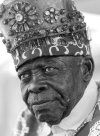
Born 1930 now aged 94 a true living legend

-His Music Career started in Mid 1940s when he started playing Gallon Guitars and By The Time the "Paseri Bros" recorded their song "Napolo" in 1948 which he remixed it later, Giddes had already Mastered Playing Guitar.
.
#TrueLegend
FB_IMG_1710943886076.jpg
 
ANCIENT KINGS OF ANGOLA.

Angola has a rich history that dates back centuries, and several ancient kings have played important roles in shaping the country's development. Some of the most notable include:

- Ngola Kiluanji Kia Samba, also known as "King Kiluanji," who ruled from 1656 to 1666 and is credited with expanding the power and influence of the Kingdom of Ndongo.

- Ngola Mbande, who ruled the Kingdom of Ndongo in the early 17th century and is known for his resistance to Portuguese colonialism.

- Ngola Kanini, who ruled the Kingdom of Ndongo from the mid-17th to the early 18th centuries and was known for his successful military campaigns against the Portuguese.

- Ngola Kaumbi a Nzinga, who ruled the Kingdom of Matamba from 1624 to 1657 and is celebrated as a powerful and fearless queen who led successful military campaigns against the Portuguese.

These kings and queens played a significant role in shaping the history and culture of Angola and are still revered in Angolan history and folklore today.
 

Attachments

  • FB_IMG_1712995449498.jpg
    FB_IMG_1712995449498.jpg
    88.5 KB · Views: 5
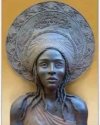
DID YOU KNOW CALIFORNIA WAS NAMED IN HONOR OF A BLACK WOMAN? That’s right! The mythical Black Queen Califia.(Khalifa)!!!

According to her story, California was an island where only Black women lived. Gold was the only metal and pearls were as common as rocks.

These women were the most powerful beings on earth. When Cortez reached California, searching for this mythical queen, her influence over him was so overwhelming that he paid tribute to Queen Califia by naming the state after her.

""California literally means, “the land where Black women live.""

It’s documented that of the 44 people who founded Los Angeles, 26 were of African descent. What is amazing (and not taught in California schools) is the majority of the founders of San Francisco, San Jose and San Diego were of African descent, or that Orange County, Beverly Hills, LaJolla and Malibu were settled and once owned by people of African descent.

History has been hidden way too long!
 

Attachments

  • FB_IMG_1714576491855.jpg
    FB_IMG_1714576491855.jpg
    43.8 KB · Views: 4
DID YOU KNOW CALIFORNIA WAS NAMED IN HONOR OF A BLACK WOMAN? That’s right! The mythical Black Queen Califia.(Khalifa)!!!

According to her story, California was an island where only Black women lived. Gold was the only metal and pearls were as common as rocks.

These women were the most powerful beings on earth. When Cortez reached California, searching for this mythical queen, her influence over him was so overwhelming that he paid tribute to Queen Califia by naming the state after her.

""California literally means, “the land where Black women live.""

It’s documented that of the 44 people who founded Los Angeles, 26 were of African descent. What is amazing (and not taught in California schools) is the majority of the founders of San Francisco, San Jose and San Diego were of African descent, or that Orange County, Beverly Hills, LaJolla and Malibu were settled and once owned by people of African descent.

History has been hidden way too long!
Ndugu naweza kupata mawasiliano yako
 
Meet Maria Felipa de Oliveira, the Black Woman Who Helped Brazil Gain Independence. She was one of 3 women that participated in the struggle for Bahia's independence in Brazil 🇧🇷 in 1823.

Overall she led around 200 rèsistance fighters using gùerrilla tactics (mostly Black and indigenous women). They continued to fight until the last Portuguese troops left the country on July 2nd, 1823.

Maria Felipa continued her life as a fisherwoman and capoeirista practioner, admired by the people of her island and all over Brazil. She dièd on January 4, 1873.
 

Attachments

  • FB_IMG_1715416154878.jpg
    FB_IMG_1715416154878.jpg
    20 KB · Views: 5
Meet Maria Felipa de Oliveira, the Black Woman Who Helped Brazil Gain Independence. She was one of 3 women that participated in the struggle for Bahia's independence in Brazil 🇧🇷 in 1823.

Overall she led around 200 rèsistance fighters using gùerrilla tactics (mostly Black and indigenous women). They continued to fight until the last Portuguese troops left the country on July 2nd, 1823.

Maria Felipa continued her life as a fisherwoman and capoeirista practioner, admired by the people of her island and all over Brazil. She dièd on January 4, 1873.
 
The story of the Leopard in the KONGO tradition

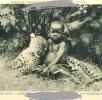
"Ngo" is a kikongo name meaning leopard and which gave birth to the name of KONGO kingdom (Leopard kingdom) which became in modern times CONGO. Central to the history of the country as in the life of the Congolese, the leopard represents far more than just an emblem and a national symbol.

The etymology of "Kongo" means "ally of the leopard", derived from "ko-ngo".
It even arises the myth of the leopard chief, the protector of the realm according to which in case of serious dangers, the populations would rush to him to find refuge. "Tuele ku Ngo" they said. (Translate "We are going to the Leopard" in Kikongo language). So it was the short phrase "ku Ngo" that gave birth to Congo.

Considered since the night of time as a cunning animal, its beautiful skin that always makes dreaming is sacred in the Bantu tradition. The leopard's touch dresses the head of the customary chiefs as a crown. This symbolism is firmly rooted in the subconscious of the bantus.

In Kasai, big chefs are called "mukalenga wa nkashama" which means "mother leopard" or "leopard belly". And at the Otetela family, the chief receives on the day of his inauguration several badges closely related to the sacred animal: two leopard skins, a leopard skin hat, a necklace made of leopard teeth and a spear, all to legitimize his authority.
The panthera pardus (leopard) skin hairstyle has always been in Bantoue society one of the most important and solemn material symbols of traditional power bequeathed by deceased ancestors.
 

Attachments

  • FB_IMG_1715877325711.jpg
    FB_IMG_1715877325711.jpg
    28.4 KB · Views: 3
The story of the Leopard in the KONGO tradition

"Ngo" is a kikongo name meaning leopard and which gave birth to the name of KONGO kingdom (Leopard kingdom) which became in modern times CONGO. Central to the history of the country as in the life of the Congolese, the leopard represents far more than just an emblem and a national symbol.

The etymology of "Kongo" means "ally of the leopard", derived from "ko-ngo".
It even arises the myth of the leopard chief, the protector of the realm according to which in case of serious dangers, the populations would rush to him to find refuge. "Tuele ku Ngo" they said. (Translate "We are going to the Leopard" in Kikongo language). So it was the short phrase "ku Ngo" that gave birth to Congo.

Considered since the night of time as a cunning animal, its beautiful skin that always makes dreaming is sacred in the Bantu tradition. The leopard's touch dresses the head of the customary chiefs as a crown. This symbolism is firmly rooted in the subconscious of the bantus.

In Kasai, big chefs are called "mukalenga wa nkashama" which means "mother leopard" or "leopard belly". And at the Otetela family, the chief receives on the day of his inauguration several badges closely related to the sacred animal: two leopard skins, a leopard skin hat, a necklace made of leopard teeth and a spear, all to legitimize his authority.
The panthera pardus (leopard) skin hairstyle has always been in Bantoue society one of the most important and solemn material symbols of traditional power bequeathed by deceased ancestors.
 
Contrary to records of history studied today, the Gikuyu community just like most tribes of Kush existed more than 3000 B.C and thus the history of the Gikuyu may go way before Egyptians discovered writing.

As described in various records most of which were erased from black history, the Gikuyu traveled across kush (Alkebulan/Afrika) in different times under different names. For instance there are records of the community referring to itself as Kabiru. These Kabiru people are said to have lived as mercenaries who were hired to fight by communities traveling up north including semites moving from Egypt. There are records of the existence of Kabiru people in Semitic history which is recorded as Khabiru in Hebrew. A black community of warriors.

The Kabiru would later travel southwards from Egypt in what seems like escape from war or crisis and settled around Mt Kirinyaga where they assimilated smaller tribes and renamed themselves Gikuyu.
There are Gikuyu narratives that claim that Gikuyu (founder of Gikuyu nation) came together with his brothers Meru and Embu. There are scholars of Eastern theology who claim the existence of the ark of covenant on Mt Kenya ( a subject to be studied).

If indeed the ark is hidden on the mountain then it could be true that the Gikuyu (founder) ran southwards after acquiring the ark remember they were mercenaries and hid it atop the mountain. It could also explain the changing of name from Kabiru to Gikuyu to hide their identity.

Also, there are scholars and Gikuyu historians who refer to Gikuyu, Meru and Embu (the three brothers) as the sons of a king in the north specifically in Habesh (Abaci in Gikuyu language) which is modern day North of Ethiopia. These historians say these brothers ran after crisis broke out in the ruling house and thus they took with them an important symbol.

There are various twists, however the bottom line is, the Gikuyu migrated from Ethiopia and by large Misri and not congo as modern history claims.
 

Attachments

  • FB_IMG_1715918541225.jpg
    FB_IMG_1715918541225.jpg
    48.5 KB · Views: 6
Contrary to records of history studied today, the Gikuyu community just like most tribes of Kush existed more than 3000 B.C and thus the history of the Gikuyu may go way before Egyptians discovered writing.

As described in various records most of which were erased from black history, the Gikuyu traveled across kush (Alkebulan/Afrika) in different times under different names. For instance there are records of the community referring to itself as Kabiru. These Kabiru people are said to have lived as mercenaries who were hired to fight by communities traveling up north including semites moving from Egypt. There are records of the existence of Kabiru people in Semitic history which is recorded as Khabiru in Hebrew. A black community of warriors.

The Kabiru would later travel southwards from Egypt in what seems like escape from war or crisis and settled around Mt Kirinyaga where they assimilated smaller tribes and renamed themselves Gikuyu.
There are Gikuyu narratives that claim that Gikuyu (founder of Gikuyu nation) came together with his brothers Meru and Embu. There are scholars of Eastern theology who claim the existence of the ark of covenant on Mt Kenya ( a subject to be studied).

If indeed the ark is hidden on the mountain then it could be true that the Gikuyu (founder) ran southwards after acquiring the ark remember they were mercenaries and hid it atop the mountain. It could also explain the changing of name from Kabiru to Gikuyu to hide their identity.

Also, there are scholars and Gikuyu historians who refer to Gikuyu, Meru and Embu (the three brothers) as the sons of a king in the north specifically in Habesh (Abaci in Gikuyu language) which is modern day North of Ethiopia. These historians say these brothers ran after crisis broke out in the ruling house and thus they took with them an important symbol.

There are various twists, however the bottom line is, the Gikuyu migrated from Ethiopia and by large Misri and not congo as modern history claims.
 
Back
Top Bottom