benmbusule
Member
- Apr 28, 2021
- 7
- 4
Hello JF members,
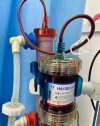
Many of us know dialysis, but far fewer have heard of hemoperfusion technology. It is an extracorporeal blood purification technique that uses adsorption cartridges to remove toxins, inflammatory mediators and protein-bound substances directly from the blood. These are substances conventional hemodialysis often cannot clear well. It is used for cases such as acute drug poisoning, severe uremic itching (pruritus), liver failure and cytokine-driven illnesses.
Until recently, this technology was largely unknown and unused in routine practice in Tanzania. I’m a Dialysis Applications Specialist, RN with over seven years of experience in renal replacement therapy, critical care and extracorporeal treatments. Having worked in dialysis units, emergency care and ICU settings, I kept seeing patients whose conditions hemodialysis alone couldn’t adequately address. That gap pushed me to pursue advanced training in hemoperfusion technology
Where we are since 2023:
Over 200 healthcare professionals (nurses, dialysis technicians, physicians and ICU staff)I have been trained in principles, indications, safety and clinical application.
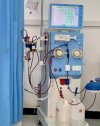
Hemoperfusion has been started in multiple hospitals and clinical settings, including critical care.
More than 30 cartridges have been used to treat six patients with severe renal-failure-related itching and acute drug poisoning.
All six recovered well, with marked clinical improvement and no major complications reported.
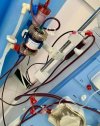
These are small numbers, but they suggest the therapy is feasible and safe here when proper training is in place. The focus has been on building local skills (patient selection, cartridge priming, circuit connection and disconnection, monitoring, complication management and post-procedure care) rather than depending on outside expertise.
Challenges so far: limited awareness, cost, and the need for continuous education.
I would like to hear from you:
Benjamin Emmanuel Meshack, RN
Dialysis Applications Specialist (Hemoperfusion Technology)
Dar es Salaam, Tanzania
Many of us know dialysis, but far fewer have heard of hemoperfusion technology. It is an extracorporeal blood purification technique that uses adsorption cartridges to remove toxins, inflammatory mediators and protein-bound substances directly from the blood. These are substances conventional hemodialysis often cannot clear well. It is used for cases such as acute drug poisoning, severe uremic itching (pruritus), liver failure and cytokine-driven illnesses.
Until recently, this technology was largely unknown and unused in routine practice in Tanzania. I’m a Dialysis Applications Specialist, RN with over seven years of experience in renal replacement therapy, critical care and extracorporeal treatments. Having worked in dialysis units, emergency care and ICU settings, I kept seeing patients whose conditions hemodialysis alone couldn’t adequately address. That gap pushed me to pursue advanced training in hemoperfusion technology
Where we are since 2023:
Over 200 healthcare professionals (nurses, dialysis technicians, physicians and ICU staff)I have been trained in principles, indications, safety and clinical application.
Hemoperfusion has been started in multiple hospitals and clinical settings, including critical care.
More than 30 cartridges have been used to treat six patients with severe renal-failure-related itching and acute drug poisoning.
All six recovered well, with marked clinical improvement and no major complications reported.
These are small numbers, but they suggest the therapy is feasible and safe here when proper training is in place. The focus has been on building local skills (patient selection, cartridge priming, circuit connection and disconnection, monitoring, complication management and post-procedure care) rather than depending on outside expertise.
Challenges so far: limited awareness, cost, and the need for continuous education.
I would like to hear from you:
- Have you, or has someone you know, come across hemoperfusion in a Tanzanian hospital?
- For doctors, nurses and technicians here: would you consider it for poisoning or refractory uremic itching? What would you need first (training, protocols, equipment)?
- How can cost be handled so patients in need can access it, for example through NHIF or other insurers?
- What would it take to include hemoperfusion in national treatment guidelines?
Benjamin Emmanuel Meshack, RN
Dialysis Applications Specialist (Hemoperfusion Technology)
Dar es Salaam, Tanzania