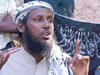
Al-Shabaab spokesperson, Abdulaziz Abu Musab
Uganda offered useful support in the lead-up to the US strike that killed Ahmed Abdi Godane, the leader of militant group al-Shabab.
A well-placed source in UPDF said in a Monday interview that before the US strike, the Amisom contingent of which Ugandans make up the largest contingent among the peace-keepers, had got information that Godane had met with his fighters at Dhay Tubako, about 300 kilometres from Mogadishu.
Here al-Shabab planned to launch a new offensive against Amisom troops and within the East African region.
"In that meeting, Godane was responsible for transitioning the militant group away from Somalia nationalists and more towards extremists that were looking to have wide-scale attacks in the region," our source said.
This information, the source confirmed, was quickly passed onto the US intelligence and could have been useful in planning the strike that killed Godane. Indeed, in a statement he issued after news filtered through that Godane had been killed, John Kirby, the Pentagon spokesperson, US acknowledged that the support of allies helped them eliminate Godane
"The United States worked in coordination with its friends, allies and partners to counter the regional and the global threats by violent extremist organizations including the most recent netting of Godane," Kirby said in a statement issued on September 5.
Kirby said the air strike was based on "actionable intelligence" that led to the targeting of the encampment and a specific vehicle at the encampment in which Godane was travelling.
ABC News, a reputable media organisation in the United States, reported on September 5 that a senior US official had told them that the air strike that killed Godane was carried out in conjunction with an offensive by Amisom. Uganda with 6,000 troops has the largest number of troops that make up the Amisom contingent.
Gen Wamala Katumba, the chief of defence forces told The Observer yesterday that information surrounding the death of Godane was still classified. But he conceded that once Amisom captured some bases previously occupied by the al-Shabab, it left Godane exposed. The bases he was talking about are Kartunwaary, Marinrangwaayi, Katoniwaari, Baromali and Beradi Amin.
Katumba warned in an interview with The Observer last week that the new al-Shabab leader Sheikh Umar alias Abu Ubaidah had threatened to revenge on US, Uganda and other African countries over the killing of Godane.
Who is Godane?
Godane, 37, also known as Ahmed Abdi ew-Mohammed or Abu Zubair, was named leader of al-Shabab in December 2007. In Uganda, he will be remembered as the master-mind of the twin suicide bombings in Kampala, on July 11, 2010, that left more than 70 people dead.
He claimed responsibility for the attack last year on the Westgate shopping mall in Kenya's capital of Nairobi, in which at least 67 people died. Shortly after, the U.S.A put a bounty of $7 million on his head.
Godane may have been responsible for the death of Fazul Abdullah Mohammed, the leader of al-Qaeda in East Africa, in June 2011, according to US intelligence reports. Al-Shabab has suffered losses in Somalia since being forced to withdraw from Mogadishu in August 2011.
Source: The oserver
http://www.observer.ug/index.php?op...-shabab-leader&catid=78:topstories&Itemid=116


