
lee Vladimir cleef
JF-Expert Member
- Feb 5, 2013
- 9,571
- 35,475
Mgunduzi halisi ni nani?,ni yule anayetangaza kwanza uguduzi wake kabla ya mwingine?Je haiwezekani kukatokea wagunduzi wawili kwa kitu kimoja kutoka mahali tofauti kwa nyakati tofauti bila kufahamiana wala kuigana,isipokua tu mawazo yao yamefananana katika ugunduzi wao kutokana na shida (tatizo) zao,hivyo kupelekea wao kutafuta kitu cha kuwaondolea shida au (tatizo) hilo? Je, ni sahihi kumtangaza mtu wa kwanza kuripoti kuwa yeye ndio mgunduzi wa kitu fulani ilhali kuna mtu mwingine ana ugunduzi wa kitu hichihicho isipokua tu hakuweza kupata namna ya kuwatangazia watu juu ya ugunduzi wake?
Unaweza kuamini kuwa kuna mahala fulani hapa duniani hususani Afrika, kuna watu wamegundua vitu bora kabisa kwa manufaa ya dunia lakini hawajui namna ya kutangaza ugudunzi wao ama hawana msaada wowote ama hawaoni umuhimu wa kutangaza ugunduzi wao?
Je ni nini kinawafanya wagunduzi wengi wa Marekani kuwa matajiri na maarufu sana hapa duniani kuliko wagunduzi wa nchi nyingine,mfani mdogo tu mgunduzi wa Face book,Lakini nashangaa wagunduzi wa nje ya Marekani wakubwa wa mambo amabayo tunayafurahia leo hawana umaarufu wowote wala hawajulikani wala kutajwa sana,mfano wagunduzi kutoka Urusi waliogundua TELEVISION,RADIO,TRANSFOMA,SOLA SELI,KATAPILA,MASHINE YA KUVUNIA MAZAO,TAPE REKODA,TRENI YA UMEME,HELKOPTA.N.K
Je hakuna wagunduzi maarufu wa Kichina,Kiarabu,Kihindi n.k?
Je siasa zinaathiri hayo niliyoelezea hapo juu?
Naomba tujadili
ona mfano wa wagunduzi wa Urusi walivyogundua na dunia inafurahia.
Contributions by Russian Inventors
The development of global scientific thought has been influenced by Russian inventors who have greatly contributed much to the world. Some of these inventions have literally transformed the world, some of them are debatable about who where the real inventors. What is known is all of us that we have been able to enjoy these blessings of civilization no matter who these men where. They have been things like aircraft, cars, computers and television and much, much more. In the western world we have come to believe some these contributions came from the US. But researching this has revealed that the east may have been the real contributors. Enjoy the reading and share your thoughts once done.


1. The first Radio
Alexander Popov, a professor of physics, announced the invention of a system for wireless communications at a lecture to the Russian Physical and Chemical Society at St Petersburg University on May 7, 1895 and displayed the world’s first radio set. He was unable to publish his work though because he worked for a military institution. Italian Guglielmo Marconi conducted similar experiments at about the same time – his article was published in 1897. Unlike Popov’s, Marconi’s invention was commercialized fast, so they still argue in the West over who invented radio first. No matter who was the real inventor this is truly a remarkable achievement of humanity and an indispensable feature of present-day life.

2. The First Television
This is another of the hotly debated inventions between is claimed by both Philo Farsworth and Vladimir Zworykin. Zworykin was another Russian pioneer whose inventions debuted in the United States. He came up with the main invention of the 20th century – electronic television. He applied for a television patent in the US in late 1925 or early 1926 and not 1923 a popular belief is held. Six years later, he developed the kinescope, a high-vacuum television receiver tube, and two years later, he created the first transmitting device, which he called an iconoscope. Either way this is another modern convenience that the world would be very different without.


3. Petroleum Cracking
Ir cannot even be imagined in the modern world living without a car. Today cars wouldn’t be possible without petroleum. The process of Cracking allows petroleum to be produced from heavy or high-boiling factions of oil. It is owing to process of cracking that we have the enormous amounts of petrol that modern cars consume. Cracking allows up to 70% of crude oil to be turned into petrol (gasoline), while standard distillation methods provide 10% to 20%. This cracking method was invented by Russian engineer Vladimir Shukhov, who also created the first industrial cracking unit in 1891. His patent (Shukhov cracking process – patent of Russian empire No. 12926 from November 27, 1891) on cracking was used to invalidate Standard Oil‘s patents (Burton process – Patent of USA No. 1,049,667 on January 7, 1913) on oil refineries. In 1937 the Shukhov cracking process was superseded by catalytic cracking. It is still in use today to produce diesel.


4. Synthetic rubber
In our modern economy it’s hard to imagine the world without synthetic rubber. Man-made rubber is mostly used to make tires for vehicles, aircraft and bicycles but it is also used in making seals, insulation, medical devices as well as many other areas. Synthetic rubber is also indispensable when producing solid rocket propellants. The first practical artificial rubber commercially was polybutadiene resin, synthesized by the method developed by Russian chemist Sergei Lebedev. He invented the first specimens of synthetic rubber in 1910. His book “Research in polymerisation of by-ethylene hydrocarbons”, printed in 1913, provided the foundations for commercial artificial rubber synthesis.

5. The Helicopter
Igor Sikorsky was another Russian inventor whose potential was fully realized abroad. In 1910, he created the prototype of a rotor-driven device, which successfully got off the ground. In 1912, he created the first hydroplane in the world and then the first multiple-engine aircraft. After the 1917 Revolution in Russia, he had to emigrate to the US, where he established his own company, Sikorsky Aero Engineering Company, using a contribution from remarkable Russian composer Sergei Rachmaninoff. Sikorsky’s first experimental helicopter designed in the United States got off the ground in September 1939. The design of that machine, which has been considered a classic helicopter design for more than fifty years now, has been used for almost 95% helicopters built around the world. In 1942, Sikorsky created a two-seater helicopter.


6. Electrical Transformer
You cannot have a power grid without transformers. Transformers were invented, built and put into operation by Russian electrical engineer Pavel Yablochkov and physicist Ivan Usagin. The solution that made it to history books as the “distribution of light” was produced by Yablochkov in the mid-1870s. The invention, which consisted of a transformer and condenser, was displayed in Paris and St Petersburg and, as early as 1882, the open-core transformer was patented in France by inventors Lucien Gaulard and Josiah Willard Gibbs.

7. The first Solar Cell
 It is owing to discoveries by world renowned Russian physicist Alexander Stoletov that we enjoy television today. In the late 1880s, he produced a theoretical justification of photoelectric effect through a series of experiments. Photoelectric effect formed the basis for the production of solar cells, which are broadly used in practice now. Stoletov created the first solar cell based upon outer photoelectric effect and discovered the proportionality between the intensity of light and photo induced current.

8. First electrically powered railway Trams
 Fyodor Pirotsky’s invention of an electrically powered railway Trams was the beginning of the transport revolution that contributed to the development of towns and industrial centers. Fyodor Pirotsky conducted a slew of experiments that started in 1874-1876, on the transmitting of electricity over long distances, with one rail serving as a direct conductor and the other, as a reverse conductor. An electric motor, located one kilometer from the power source, worked. A few years later, he conducted an experiment at a railway spur near the Sestroretsk line in St. Petersburg, Russia. Some historians claim that the result of his work brought the first electric tram to the world. The first real electrified tram line was opened as late as 1881 in a Berlin suburb on the based on designs by the Russian inventor.

9. First Caterpillar tracks, track assembly
 In 1837, Russian army captain Dmitry Zagryazhsky came up with drawings of a caterpillar drive and applied to the Ministry of Finance for a patent for his invention of a “carriage with a flat chain mechanical caterpillar”. He was granted a patent but his invention did not interest manufacturers at that time and the patent was annulled in 1839. It wouldn’t be til later that a Russian by the name of , Fyodor Blinov, would create a tracked vehicle called “wagon That moved on endless rails” (caterpillars). This design lacked self-propulsion and was pulled by horses. Blinov received a patent for his “wagon” in 1878. From 1881 to 1888 he developed a steam-powered caterpillar-tractor. This self-propelled crawler was successfully tested and featured at a farmers’ exhibition in 1896.

10. The Videotape recorder
This last inventor is a little dearer to the heart since he was born in Tatarstan, Russia. He emigrated from Russia to China, where he worked for the Shanghai Power Company until he emigrated to the United States in 1927. He founded, in 1944, the Ampex company, using his initials, A.M.P., plus “ex” for “excellence” to create the name. Poniatoff secured his place in the history of magnetic recording twice during his long life. The first break-through occurred in 1947 when Ampex was down to eight employees in a post-World War I1 recession introduced the first practical magnetic audio recorder in the United States. The technical milestone helped launch a multi-billion dollar industry and set Ampex’s future course of development. That was followed by introduction of the first practical videotape recorder in 1956, an invention that revolutionized the television broadcast industry and gave Ampex a world-wide reputation for technical innovation.
Unaweza kuamini kuwa kuna mahala fulani hapa duniani hususani Afrika, kuna watu wamegundua vitu bora kabisa kwa manufaa ya dunia lakini hawajui namna ya kutangaza ugudunzi wao ama hawana msaada wowote ama hawaoni umuhimu wa kutangaza ugunduzi wao?
Je ni nini kinawafanya wagunduzi wengi wa Marekani kuwa matajiri na maarufu sana hapa duniani kuliko wagunduzi wa nchi nyingine,mfani mdogo tu mgunduzi wa Face book,Lakini nashangaa wagunduzi wa nje ya Marekani wakubwa wa mambo amabayo tunayafurahia leo hawana umaarufu wowote wala hawajulikani wala kutajwa sana,mfano wagunduzi kutoka Urusi waliogundua TELEVISION,RADIO,TRANSFOMA,SOLA SELI,KATAPILA,MASHINE YA KUVUNIA MAZAO,TAPE REKODA,TRENI YA UMEME,HELKOPTA.N.K
Je hakuna wagunduzi maarufu wa Kichina,Kiarabu,Kihindi n.k?
Je siasa zinaathiri hayo niliyoelezea hapo juu?
Naomba tujadili
ona mfano wa wagunduzi wa Urusi walivyogundua na dunia inafurahia.
Contributions by Russian Inventors
The development of global scientific thought has been influenced by Russian inventors who have greatly contributed much to the world. Some of these inventions have literally transformed the world, some of them are debatable about who where the real inventors. What is known is all of us that we have been able to enjoy these blessings of civilization no matter who these men where. They have been things like aircraft, cars, computers and television and much, much more. In the western world we have come to believe some these contributions came from the US. But researching this has revealed that the east may have been the real contributors. Enjoy the reading and share your thoughts once done.


1. The first Radio
Alexander Popov, a professor of physics, announced the invention of a system for wireless communications at a lecture to the Russian Physical and Chemical Society at St Petersburg University on May 7, 1895 and displayed the world’s first radio set. He was unable to publish his work though because he worked for a military institution. Italian Guglielmo Marconi conducted similar experiments at about the same time – his article was published in 1897. Unlike Popov’s, Marconi’s invention was commercialized fast, so they still argue in the West over who invented radio first. No matter who was the real inventor this is truly a remarkable achievement of humanity and an indispensable feature of present-day life.

2. The First Television
This is another of the hotly debated inventions between is claimed by both Philo Farsworth and Vladimir Zworykin. Zworykin was another Russian pioneer whose inventions debuted in the United States. He came up with the main invention of the 20th century – electronic television. He applied for a television patent in the US in late 1925 or early 1926 and not 1923 a popular belief is held. Six years later, he developed the kinescope, a high-vacuum television receiver tube, and two years later, he created the first transmitting device, which he called an iconoscope. Either way this is another modern convenience that the world would be very different without.


3. Petroleum Cracking
Ir cannot even be imagined in the modern world living without a car. Today cars wouldn’t be possible without petroleum. The process of Cracking allows petroleum to be produced from heavy or high-boiling factions of oil. It is owing to process of cracking that we have the enormous amounts of petrol that modern cars consume. Cracking allows up to 70% of crude oil to be turned into petrol (gasoline), while standard distillation methods provide 10% to 20%. This cracking method was invented by Russian engineer Vladimir Shukhov, who also created the first industrial cracking unit in 1891. His patent (Shukhov cracking process – patent of Russian empire No. 12926 from November 27, 1891) on cracking was used to invalidate Standard Oil‘s patents (Burton process – Patent of USA No. 1,049,667 on January 7, 1913) on oil refineries. In 1937 the Shukhov cracking process was superseded by catalytic cracking. It is still in use today to produce diesel.


4. Synthetic rubber
In our modern economy it’s hard to imagine the world without synthetic rubber. Man-made rubber is mostly used to make tires for vehicles, aircraft and bicycles but it is also used in making seals, insulation, medical devices as well as many other areas. Synthetic rubber is also indispensable when producing solid rocket propellants. The first practical artificial rubber commercially was polybutadiene resin, synthesized by the method developed by Russian chemist Sergei Lebedev. He invented the first specimens of synthetic rubber in 1910. His book “Research in polymerisation of by-ethylene hydrocarbons”, printed in 1913, provided the foundations for commercial artificial rubber synthesis.

5. The Helicopter
Igor Sikorsky was another Russian inventor whose potential was fully realized abroad. In 1910, he created the prototype of a rotor-driven device, which successfully got off the ground. In 1912, he created the first hydroplane in the world and then the first multiple-engine aircraft. After the 1917 Revolution in Russia, he had to emigrate to the US, where he established his own company, Sikorsky Aero Engineering Company, using a contribution from remarkable Russian composer Sergei Rachmaninoff. Sikorsky’s first experimental helicopter designed in the United States got off the ground in September 1939. The design of that machine, which has been considered a classic helicopter design for more than fifty years now, has been used for almost 95% helicopters built around the world. In 1942, Sikorsky created a two-seater helicopter.


6. Electrical Transformer
You cannot have a power grid without transformers. Transformers were invented, built and put into operation by Russian electrical engineer Pavel Yablochkov and physicist Ivan Usagin. The solution that made it to history books as the “distribution of light” was produced by Yablochkov in the mid-1870s. The invention, which consisted of a transformer and condenser, was displayed in Paris and St Petersburg and, as early as 1882, the open-core transformer was patented in France by inventors Lucien Gaulard and Josiah Willard Gibbs.

7. The first Solar Cell
 It is owing to discoveries by world renowned Russian physicist Alexander Stoletov that we enjoy television today. In the late 1880s, he produced a theoretical justification of photoelectric effect through a series of experiments. Photoelectric effect formed the basis for the production of solar cells, which are broadly used in practice now. Stoletov created the first solar cell based upon outer photoelectric effect and discovered the proportionality between the intensity of light and photo induced current.
8. First electrically powered railway Trams
 Fyodor Pirotsky’s invention of an electrically powered railway Trams was the beginning of the transport revolution that contributed to the development of towns and industrial centers. Fyodor Pirotsky conducted a slew of experiments that started in 1874-1876, on the transmitting of electricity over long distances, with one rail serving as a direct conductor and the other, as a reverse conductor. An electric motor, located one kilometer from the power source, worked. A few years later, he conducted an experiment at a railway spur near the Sestroretsk line in St. Petersburg, Russia. Some historians claim that the result of his work brought the first electric tram to the world. The first real electrified tram line was opened as late as 1881 in a Berlin suburb on the based on designs by the Russian inventor.
9. First Caterpillar tracks, track assembly
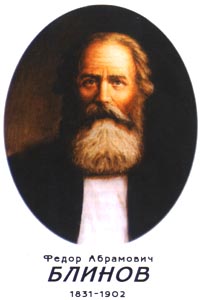 In 1837, Russian army captain Dmitry Zagryazhsky came up with drawings of a caterpillar drive and applied to the Ministry of Finance for a patent for his invention of a “carriage with a flat chain mechanical caterpillar”. He was granted a patent but his invention did not interest manufacturers at that time and the patent was annulled in 1839. It wouldn’t be til later that a Russian by the name of , Fyodor Blinov, would create a tracked vehicle called “wagon That moved on endless rails” (caterpillars). This design lacked self-propulsion and was pulled by horses. Blinov received a patent for his “wagon” in 1878. From 1881 to 1888 he developed a steam-powered caterpillar-tractor. This self-propelled crawler was successfully tested and featured at a farmers’ exhibition in 1896.
10. The Videotape recorder
This last inventor is a little dearer to the heart since he was born in Tatarstan, Russia. He emigrated from Russia to China, where he worked for the Shanghai Power Company until he emigrated to the United States in 1927. He founded, in 1944, the Ampex company, using his initials, A.M.P., plus “ex” for “excellence” to create the name. Poniatoff secured his place in the history of magnetic recording twice during his long life. The first break-through occurred in 1947 when Ampex was down to eight employees in a post-World War I1 recession introduced the first practical magnetic audio recorder in the United States. The technical milestone helped launch a multi-billion dollar industry and set Ampex’s future course of development. That was followed by introduction of the first practical videotape recorder in 1956, an invention that revolutionized the television broadcast industry and gave Ampex a world-wide reputation for technical innovation.


