Je, wajua Sultan aliyefurushwa na mapinduzi matukufu alikuwa ni puppet wa wakoloni?

Je, wajua Sultan aliyefurushwa na mapinduzi matukufu alikuwa ni puppet wa wakoloni?

Wanabodi,

Tunapojiandaa kusherehekea kumbukumbu ya miaka 53 ya Mapinduzi Matukufu ya Zanzibar, kuna baadhi ya vibaraka wa Sultan mpinduliwa wanafanya juhudi kubwa kuuchokoa Muungano ili uvunjike ili kumrejesha Sultani kuitawala Zanzibar.

Kwa vile sii wengi wanaoijua historia ya huyo Sultani wakidhani ni muendelezo wa Sultani Sayyid Said, kumbe sio.

Sultani aliyepinduliwa Zanzibar na Mapinduzi Matukufu ni Sultani kibaraka wa wakoloni ambao walimuokota na kumpachika usultani baada ya wakoloni hawa kulivamia kasri la Sultani na kumuua Sultani halisi kisha kumpachika Sultan bandia ambaye ni kibaraka wao na ndio maana alikimbilia London na sio Oman.

Fuatilia kisa hiki

The Shortest War in History
By Ben Johnson, EditorCOMMENTS

113479_mainImage.jpg

The little known Anglo-Zanzibar War of 1896 is generally considered to be the shortest war in history, lasting for a grand total of 38 minutes.

The story begins with the signing of the Heligoland-Zanzibar treaty between Britain and Germany in 1890. This treaty effectively drew up spheres of influence between the imperial powers in East Africa; Zanzibar was ceded to British influence, whilst Germany was given control over mainland Tanzania.

With this new found influence, Britain declared Zanzibar a protectorate of the British Empire and moved to install their own ‘puppet’ Sultan to look after the region. Hamad bin Thuwaini, who had been a supporter of the British in the area, was given the position in 1893.

Build up to the conflict


khalidofzanzibar.jpg
Hamad ruled over this relatively peaceful protectorate for just over 3 years until, on August 25, 1896, he died suddenly in his palace. Although the truth will never be fully known about the causes for his death, it is widely believed that his cousin, Khalid bin Barghash (pictured to the right), had him poisoned.


This belief is compounded by the fact that within a few hours of Hamad’s death, Khalid had already moved into the palace and assumed the position of Sultan, all without British approval.

Needless to say the local British diplomats were not at all happy with this turn of events, and the chief diplomat in the area, Basil Cave, quickly declared that Khalid should stand down. Khalid ignored these warnings and instead starting gathering his forces around the Palace.

These forces were surprisingly well armed, although it’s worth noting that quite a few of their guns and cannons were actually diplomatic gifts that had been presented to the former Sultan over the years! By the end of 25th August, Khalid had his palace secured with almost 3,000 men, several artillery guns and even a modestly armed Royal Yacht in the nearby harbour.

basilcave.jpg
At the same time, the British already had two warships anchored in the harbour, the HMS Philomeland theHMS Rush, and troops were quickly being sent ashore to protect the British Consulate and to keep the local population from rioting. Cave (pictured to the right) also requested backup from another nearby British ship, the HMS Sparrow, which entered the harbour on the evening of the 25th August.

Even though Cave had a significant armed presence in the harbour, he knew that he did not have the authority to open hostilities without express approval of the British government. To prepare for all eventualities, he sent a telegram to the Foreign Office that evening stating: “Are we authorised in the event of all attempts at a peaceful solution proving useless, to fire on the Palace from the men-of-war?” Whilst waiting for a reply from Whitehall, Cave continued issuing ultimatums to Khalid but to no avail.

The next day, two more British warships entered the harbour, the HMS Racoon and the HMS St George, the latter carrying Rear-Admiral Harry Rawson, commander of the British fleet in the area At the same time, Cave had received a telegraph from Whitehall stating:

"You are authorised to adopt whatever measures you may consider necessary, and will be supported in your action by Her Majesty's Government. Do not, however, attempt to take any action which you are not certain of being able to accomplish successfully."

zanzibarpalace.jpg


Zanzibar Palace in the late 1800's

The final ultimatum to Khalid was issued on the 26th August, demanding that he leave the palace by 9am the next day. That night, Cave also demanded that all non-military boats leave the harbour in preparation for war.

At 8am the next morning, only one hour before the ultimatum expirated, Khalid sent a reply to Cave stating:

"We have no intention of hauling down our flag and we do not believe you would open fire on us."

Cave replied in true 19th century British diplomatic style, stating that he had no desire to fire upon the palace “but unless you do as you are told, we shall certainly do so.”

The conflict
That was the last Cave heard from Khalid, and at 9am the order was given for the British ships in the harbour to begin bombarding the palace. By 09:02 the majority of Khalid’s artillery had been destroyed, and the palaces wooden structure had started to collapse with 3,000 defenders inside. It is also around this time, two minutes after the bombardment started, that Khalid is said to have escaped through a back exit of the palace, leaving his servants and fighters to defend the palace alone.

By 09:40 the shelling had ceased, the Sultan’s flag pulled down, and the shortest war in history had officially ended after only 38 minutes.

palaceafterbombardment.jpg


Zanzibar Palace after the bombardment

For such a short war, the casualty rate was surprisingly high with over 500 of Khalid’s fighters killed or wounded, mainly due to the high explosive shells exploding on the palace’s flimsy structure. One British petty officer was also severely injured, but later recovered in hospital.

marineswithguns.jpg


British marines standing next to a captured artillery gun

With Khalid out of the way, the UK was free to place the pro-British Sultan Hamud on the throne of Zanzibar, and he ruled on behalf of Her Majesty's Government for the next six years.

As for Khalid, he managed to escape with a small group of loyal followers to the local German Consulate. Despite repeated calls from the British for his extradition, he was smuggled out of the country on October 2nd by the German navy and taken to modern day Tanzania. It was not until British forces invaded East Africa in 1916 that Khalid was finally captured and subsequently taken to Saint Helena for exile. After ‘serving time’, he was later allowed to return to East Africa where he died in 1927.

Hivyo kuna Wanzanzibari wanaoshadidishwa kushinikizwa kuuvunja huu Muungano wetu adhimu Bila kujua malengo ya kificho ya washadidishaji hao kwa kutanguliza malengo ya hadaa kumbe lengo ni kuirejesha Zanzibar kwa wakoloni wale wale tuliowatimua na Sultani wao kibaraka na serikali yao kibaraka iliyopinduliwa.

Wanzanzibari msikubali kudanganywa! .

Paskali


362221.bin


The British-born Israeli spymaster David Kimche, known as "the man with the suitcase", was involved in many foreign escapades, including the Iran-Contra affair, which shook the Reagan administration in the 1980s. He was one of the founding fathers of the Israel intelligance agency Mossad, creating their research department and recruiting and directing operatives all over the world.

Born into a Zionist London family in 1928, Kimche, a descendant of aristocratic Swiss Jews, was one of nine siblings. At 18 he moved to Palestine and fought in the 1948 war for independence which led to the creation of the state of Israel. After the war, after failing to pass an entrance exam for the Israeli foreign ministry, Kimche pursued a degree in Middle Eastern studies at Jerusalem's Hebrew University and worked for a while as a night editor at the Jerusalem Post.

In 1953, he joined the newly formed Mossad intelligence agency, and was one of those who determined its doctrine and designed its modus operandi. He was involved in virtually every aspect of Mossad and, employing a combination of cunning and charm, climbed the organisation's ranks over two decades to become its deputy director.

With his British accent, aristocratic European mannerisms and low-key personality, Kimche was a rare breed among his Mossad colleagues. At that time most were either Eastern European apparatchiks or Israeli-born military officers. In that environment Kimche, who was not tied to any of the political cliques that dominated the Israeli security service, developed a reputation as a detached and sophisticated professional. He was regarded as urbane and brilliant. His first major role was the exposure of Avri Elad, an Israeli intelligence officer who betrayed his comrades in Egypt. Elad was subsequently sentenced to 10 year's imprisonment.

Thereafter, Mossad sent him abroad where, in the 1950s and 1960s, he appeared mainly in Africa and Asia, either as an Israeli diplomat with the cover name David Sharon or, at other times, as a British businessman. Journalists who covered Africa remember "Sharon" as a source of information (and disinformation) on the politics of the newly emerging states. Kimche's activities were part of an Israeli effort to establish ties with non-Arab countries on the "periphery" of the Middle East, such as Iran and Turkey. He travelled frequently to Iran during the Shah's reign, where he developed a close friendship with Ya'akov Nimrodi, the Israeli military attaché in Tehran, who became an arms dealer after his retirement.

Nicknamed "the man with the suitcase" by his colleagues, Kimche would appear in African states a day or two before a major coup and leave a week later after the new regime was firmly in control, often with the aid of Israeli security teams. One of Israel's protégés in Africa was the infamous Ugandan dictator Idi Amin.

As many developing nations, under the influence of Egypt's President Nasser, adopted an increasingly hostile attitude toward Israel, Kimche's reach expanded and nowhere appeared off-limits or too small. He used Israeli aid packages, which included military training and support (financed occasionally by the CIA), to establish Israeli footholds and allies in countries as far afield as South East Asia and Central America. He also located Mossad listening stations in the Horn of Africa. Even the former British island of Zanzibar, off the coast of Africa, was targeted, and in 1964, when Kimche was "visiting", a bloody coup ensued and the Sultan was deposed
 
Tukumbushe pia maasi ya Tanganyika Rifles yaliopelekea Nyerere kuomba msaada wa malkia kuyazima. Jee Nyerere naye puppet wa malkia baada ya kurejeshwa kwenye madaraka na Jeshi la uingereza?
 
nilielewa kuwa pemba na unguja kuna utata wakati nilipokutana nao nchi za nje. wapemba walikuwa wanalalamika kuonewa hawapewi uongozicwa nchi cnk. sasa mbona kiongozi ni mpemba? Pia mbona wapemba ni wasomi san pia na wako kwenye ajira? labda waseme kama wanabagiliwa tujue
Wanaojihesabu Wapemba hasa ni wale wenye Urangi-rangi na ndiyo walalamishi wa kila kitu.
 
Wanabodi,

Tunapojiandaa kusherehekea kumbukumbu ya miaka 53 ya Mapinduzi Matukufu ya Zanzibar, kuna baadhi ya vibaraka wa Sultan mpinduliwa wanafanya juhudi kubwa kuuchokoa Muungano ili uvunjike ili kumrejesha Sultani kuitawala Zanzibar.

Kwa vile sii wengi wanaoijua historia ya huyo Sultani wakidhani ni muendelezo wa Sultani Sayyid Said, kumbe sio.

Sultani aliyepinduliwa Zanzibar na Mapinduzi Matukufu ni Sultani kibaraka wa wakoloni ambao walimuokota na kumpachika usultani baada ya wakoloni hawa kulivamia kasri la Sultani na kumuua Sultani halisi kisha kumpachika Sultan bandia ambaye ni kibaraka wao na ndio maana alikimbilia London na sio Oman.

Fuatilia kisa hiki

The Shortest War in History
By Ben Johnson, EditorCOMMENTS

113479_mainImage.jpg

The little known Anglo-Zanzibar War of 1896 is generally considered to be the shortest war in history, lasting for a grand total of 38 minutes.

The story begins with the signing of the Heligoland-Zanzibar treaty between Britain and Germany in 1890. This treaty effectively drew up spheres of influence between the imperial powers in East Africa; Zanzibar was ceded to British influence, whilst Germany was given control over mainland Tanzania.

With this new found influence, Britain declared Zanzibar a protectorate of the British Empire and moved to install their own ‘puppet’ Sultan to look after the region. Hamad bin Thuwaini, who had been a supporter of the British in the area, was given the position in 1893.

Build up to the conflict


khalidofzanzibar.jpg
Hamad ruled over this relatively peaceful protectorate for just over 3 years until, on August 25, 1896, he died suddenly in his palace. Although the truth will never be fully known about the causes for his death, it is widely believed that his cousin, Khalid bin Barghash (pictured to the right), had him poisoned.


This belief is compounded by the fact that within a few hours of Hamad’s death, Khalid had already moved into the palace and assumed the position of Sultan, all without British approval.

Needless to say the local British diplomats were not at all happy with this turn of events, and the chief diplomat in the area, Basil Cave, quickly declared that Khalid should stand down. Khalid ignored these warnings and instead starting gathering his forces around the Palace.

These forces were surprisingly well armed, although it’s worth noting that quite a few of their guns and cannons were actually diplomatic gifts that had been presented to the former Sultan over the years! By the end of 25th August, Khalid had his palace secured with almost 3,000 men, several artillery guns and even a modestly armed Royal Yacht in the nearby harbour.

basilcave.jpg
At the same time, the British already had two warships anchored in the harbour, the HMS Philomeland theHMS Rush, and troops were quickly being sent ashore to protect the British Consulate and to keep the local population from rioting. Cave (pictured to the right) also requested backup from another nearby British ship, the HMS Sparrow, which entered the harbour on the evening of the 25th August.

Even though Cave had a significant armed presence in the harbour, he knew that he did not have the authority to open hostilities without express approval of the British government. To prepare for all eventualities, he sent a telegram to the Foreign Office that evening stating: “Are we authorised in the event of all attempts at a peaceful solution proving useless, to fire on the Palace from the men-of-war?” Whilst waiting for a reply from Whitehall, Cave continued issuing ultimatums to Khalid but to no avail.

The next day, two more British warships entered the harbour, the HMS Racoon and the HMS St George, the latter carrying Rear-Admiral Harry Rawson, commander of the British fleet in the area At the same time, Cave had received a telegraph from Whitehall stating:

"You are authorised to adopt whatever measures you may consider necessary, and will be supported in your action by Her Majesty's Government. Do not, however, attempt to take any action which you are not certain of being able to accomplish successfully."

zanzibarpalace.jpg


Zanzibar Palace in the late 1800's

The final ultimatum to Khalid was issued on the 26th August, demanding that he leave the palace by 9am the next day. That night, Cave also demanded that all non-military boats leave the harbour in preparation for war.

At 8am the next morning, only one hour before the ultimatum expirated, Khalid sent a reply to Cave stating:

"We have no intention of hauling down our flag and we do not believe you would open fire on us."

Cave replied in true 19th century British diplomatic style, stating that he had no desire to fire upon the palace “but unless you do as you are told, we shall certainly do so.”

The conflict
That was the last Cave heard from Khalid, and at 9am the order was given for the British ships in the harbour to begin bombarding the palace. By 09:02 the majority of Khalid’s artillery had been destroyed, and the palaces wooden structure had started to collapse with 3,000 defenders inside. It is also around this time, two minutes after the bombardment started, that Khalid is said to have escaped through a back exit of the palace, leaving his servants and fighters to defend the palace alone.

By 09:40 the shelling had ceased, the Sultan’s flag pulled down, and the shortest war in history had officially ended after only 38 minutes.

palaceafterbombardment.jpg


Zanzibar Palace after the bombardment

For such a short war, the casualty rate was surprisingly high with over 500 of Khalid’s fighters killed or wounded, mainly due to the high explosive shells exploding on the palace’s flimsy structure. One British petty officer was also severely injured, but later recovered in hospital.

marineswithguns.jpg


British marines standing next to a captured artillery gun

With Khalid out of the way, the UK was free to place the pro-British Sultan Hamud on the throne of Zanzibar, and he ruled on behalf of Her Majesty's Government for the next six years.

As for Khalid, he managed to escape with a small group of loyal followers to the local German Consulate. Despite repeated calls from the British for his extradition, he was smuggled out of the country on October 2nd by the German navy and taken to modern day Tanzania. It was not until British forces invaded East Africa in 1916 that Khalid was finally captured and subsequently taken to Saint Helena for exile. After ‘serving time’, he was later allowed to return to East Africa where he died in 1927.

Hivyo kuna Wanzanzibari wanaoshadidishwa kushinikizwa kuuvunja huu Muungano wetu adhimu Bila kujua malengo ya kificho ya washadidishaji hao kwa kutanguliza malengo ya hadaa kumbe lengo ni kuirejesha Zanzibar kwa wakoloni wale wale tuliowatimua na Sultani wao kibaraka na serikali yao kibaraka iliyopinduliwa.

Wanzanzibari msikubali kudanganywa! .

Paskali
Pasco siku zote nakuambia pilipili usiyoila inakuwashia nini? Unaonyesha waziwazi ulivyokuwa huna elimu ya kutosha kuhusu ya Zanzibar na East Africa kwa jumla. Unsema Sultan alopinduliwa 1964 was the replacement wa yule waliomwindoa Waingereza katika 1890 sasa hata kama huyo alopinduliwa kama alikuwa na umri wa Mwaka mmoja hapo 1890 basi hesabu hazikuonei huruma na ujinga wako[emoji23] [emoji23] [emoji23] Maana baina ya 1890 na 1964 ni miaka 74. Sultan alopinduliwa mwaka 1964 ni Jamshid bin Abdullah amezaliwa 16 September 1929.
9ddb510d99899a3205e32b722df6e216.jpg


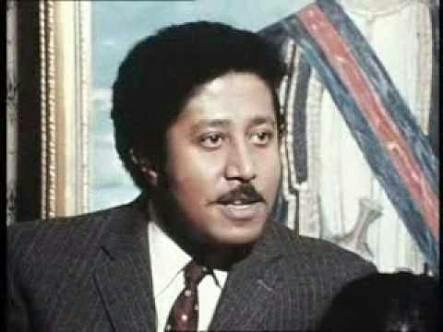
Huyo hapo Jamshid baada ya kuwasili London 1964 angalia umri wake.
6d62bb5de42f6edd2aa2e6f32df42b72.jpg


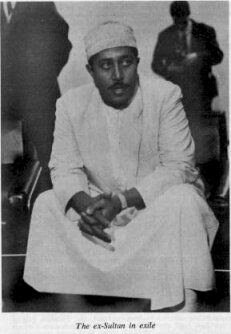
Huyo ni Jamshid akiwa mara baada ya kupinduliwa kwa serikali ya Umoja wa Kitaifa chini Utawala wake akiwa constitutionsl Monarch and Head Of State.
11c5212ac3cb2d0da4f47e59f7fc8490.jpg

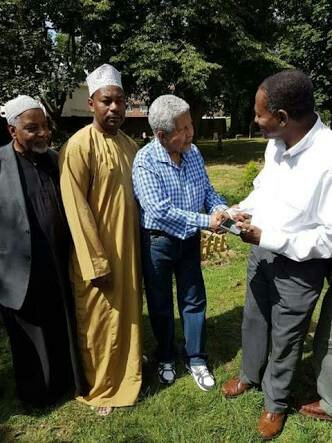
Jamshid akiwa mazikoni Portsmouth UK mwaka 2015.
Je huyo ndie alitawala 1890 mpaka 1964?
826141ac8334976bed94af2dec5f1ce0.jpg

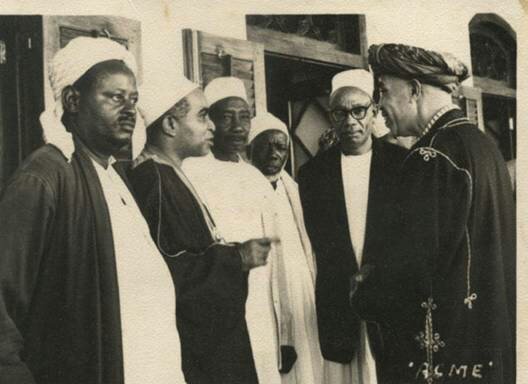
Cabinet ya Serikali ya Zanzibar baada ya Uhuru 1963. Waangalie hao kina Mzee Ameir Tajo, Abulwakil, Shamte na Karume wote walikuwa mawaziri. Je ni waarabu hao?/

Chuki yako na Warabu wa Zanzibar kaa nayo ikumalize mwenyewe but usitunge uwongo ulokuwa hauna kifuniko.

Angalia kwenu na kama utabahatika tena kupenya pale Magogoni kamuulize JPM kama hata anaijuwa hiyo historia ya Tanganyika. Waingereza na Waarabu ndio walioshirikiana na kina Mkwawa kumtoa Mdachi wa Birsmark kule kwenu. Tafuta elimu uelimkee usituletee ujinga hapa
 
Tukumbushe pia maasi ya Tanganyika Rifles yaliopelekea Nyerere kuomba msaada wa malkia kuyazima. Jee Nyerere naye puppet wa malkia baada ya kurejeshwa kwenye madaraka na Jeshi la uingereza?
Je kuna thread inayizungumzia hayo maasi ya tanganyika rifles,kama haipo nakuomba kwa hisani yako uianzishe ili na sie wengine tusiojua tupate kudurusu.shukran
 
Wanabodi,

Tunapojiandaa kusherehekea kumbukumbu ya miaka 53 ya Mapinduzi Matukufu ya Zanzibar, kuna baadhi ya vibaraka wa Sultan mpinduliwa wanafanya juhudi kubwa kuuchokoa Muungano ili uvunjike ili kumrejesha Sultani kuitawala Zanzibar.

Kwa vile sii wengi wanaoijua historia ya huyo Sultani wakidhani ni muendelezo wa Sultani Sayyid Said, kumbe sio.

Sultani aliyepinduliwa Zanzibar na Mapinduzi Matukufu ni Sultani kibaraka wa wakoloni ambao walimuokota na kumpachika usultani baada ya wakoloni hawa kulivamia kasri la Sultani na kumuua Sultani halisi kisha kumpachika Sultan bandia ambaye ni kibaraka wao na ndio maana alikimbilia London na sio Oman.

Fuatilia kisa hiki

The Shortest War in History
By Ben Johnson, EditorCOMMENTS

113479_mainImage.jpg

The little known Anglo-Zanzibar War of 1896 is generally considered to be the shortest war in history, lasting for a grand total of 38 minutes.

The story begins with the signing of the Heligoland-Zanzibar treaty between Britain and Germany in 1890. This treaty effectively drew up spheres of influence between the imperial powers in East Africa; Zanzibar was ceded to British influence, whilst Germany was given control over mainland Tanzania.

With this new found influence, Britain declared Zanzibar a protectorate of the British Empire and moved to install their own ‘puppet’ Sultan to look after the region. Hamad bin Thuwaini, who had been a supporter of the British in the area, was given the position in 1893.

Build up to the conflict


khalidofzanzibar.jpg
Hamad ruled over this relatively peaceful protectorate for just over 3 years until, on August 25, 1896, he died suddenly in his palace. Although the truth will never be fully known about the causes for his death, it is widely believed that his cousin, Khalid bin Barghash (pictured to the right), had him poisoned.


This belief is compounded by the fact that within a few hours of Hamad’s death, Khalid had already moved into the palace and assumed the position of Sultan, all without British approval.

Needless to say the local British diplomats were not at all happy with this turn of events, and the chief diplomat in the area, Basil Cave, quickly declared that Khalid should stand down. Khalid ignored these warnings and instead starting gathering his forces around the Palace.

These forces were surprisingly well armed, although it’s worth noting that quite a few of their guns and cannons were actually diplomatic gifts that had been presented to the former Sultan over the years! By the end of 25th August, Khalid had his palace secured with almost 3,000 men, several artillery guns and even a modestly armed Royal Yacht in the nearby harbour.

basilcave.jpg
At the same time, the British already had two warships anchored in the harbour, the HMS Philomeland theHMS Rush, and troops were quickly being sent ashore to protect the British Consulate and to keep the local population from rioting. Cave (pictured to the right) also requested backup from another nearby British ship, the HMS Sparrow, which entered the harbour on the evening of the 25th August.

Even though Cave had a significant armed presence in the harbour, he knew that he did not have the authority to open hostilities without express approval of the British government. To prepare for all eventualities, he sent a telegram to the Foreign Office that evening stating: “Are we authorised in the event of all attempts at a peaceful solution proving useless, to fire on the Palace from the men-of-war?” Whilst waiting for a reply from Whitehall, Cave continued issuing ultimatums to Khalid but to no avail.

The next day, two more British warships entered the harbour, the HMS Racoon and the HMS St George, the latter carrying Rear-Admiral Harry Rawson, commander of the British fleet in the area At the same time, Cave had received a telegraph from Whitehall stating:

"You are authorised to adopt whatever measures you may consider necessary, and will be supported in your action by Her Majesty's Government. Do not, however, attempt to take any action which you are not certain of being able to accomplish successfully."

zanzibarpalace.jpg


Zanzibar Palace in the late 1800's

The final ultimatum to Khalid was issued on the 26th August, demanding that he leave the palace by 9am the next day. That night, Cave also demanded that all non-military boats leave the harbour in preparation for war.

At 8am the next morning, only one hour before the ultimatum expirated, Khalid sent a reply to Cave stating:

"We have no intention of hauling down our flag and we do not believe you would open fire on us."

Cave replied in true 19th century British diplomatic style, stating that he had no desire to fire upon the palace “but unless you do as you are told, we shall certainly do so.”

The conflict
That was the last Cave heard from Khalid, and at 9am the order was given for the British ships in the harbour to begin bombarding the palace. By 09:02 the majority of Khalid’s artillery had been destroyed, and the palaces wooden structure had started to collapse with 3,000 defenders inside. It is also around this time, two minutes after the bombardment started, that Khalid is said to have escaped through a back exit of the palace, leaving his servants and fighters to defend the palace alone.

By 09:40 the shelling had ceased, the Sultan’s flag pulled down, and the shortest war in history had officially ended after only 38 minutes.

palaceafterbombardment.jpg


Zanzibar Palace after the bombardment

For such a short war, the casualty rate was surprisingly high with over 500 of Khalid’s fighters killed or wounded, mainly due to the high explosive shells exploding on the palace’s flimsy structure. One British petty officer was also severely injured, but later recovered in hospital.

marineswithguns.jpg


British marines standing next to a captured artillery gun

With Khalid out of the way, the UK was free to place the pro-British Sultan Hamud on the throne of Zanzibar, and he ruled on behalf of Her Majesty's Government for the next six years.

As for Khalid, he managed to escape with a small group of loyal followers to the local German Consulate. Despite repeated calls from the British for his extradition, he was smuggled out of the country on October 2nd by the German navy and taken to modern day Tanzania. It was not until British forces invaded East Africa in 1916 that Khalid was finally captured and subsequently taken to Saint Helena for exile. After ‘serving time’, he was later allowed to return to East Africa where he died in 1927.

Hivyo kuna Wanzanzibari wanaoshadidishwa kushinikizwa kuuvunja huu Muungano wetu adhimu Bila kujua malengo ya kificho ya washadidishaji hao kwa kutanguliza malengo ya hadaa kumbe lengo ni kuirejesha Zanzibar kwa wakoloni wale wale tuliowatimua na Sultani wao kibaraka na serikali yao kibaraka iliyopinduliwa.

Wanzanzibari msikubali kudanganywa! .

Paskali
Paskali...umeandika sana lakini ntakujibu kwa ufupi sana na ndio ukweli.
Nyerere kabla ya uhuru alisema ..ninavo ichukia Zanzibar basi ningevi vurumisha hivi visiwa huko baharini na kuzama...kwa nini alivichukia ? UDINI..
kwa vile hakua na nuclea bomb la kuvizamisha akaandaa malinduzi watu wazanzibari wakauliwa kwa wingi sana ...na akalazimisha huu muungano unao usema.
Haya kayathibitisha Aboud jumbe ndani ya kitabu chake Udini !
Udini ndio nguzo kuu ya muungano.
Nyerere hakufurahia kuwa na jirani muislam ...
Na Puppet sio sultan..bali serikali ya asp na ccm ...hawa ni vibaraka walokubali kuuza nchi yao kwa ahadi za vyeo wao na familia zao....huu ukweli mpaka leo puppets hawa wanapokezana vijiti.
Lakini Alhamdulilah vijana sasa wanaelewa somo...wanajielewa ccm imebaki na vikundi vya kutesa watu kubaki madarakani...walinzi wao sio raia tena ni mazombie
 
Nawatakia kumbukumbu njema ya Mapinduzi Matukufu ya Zanzibar yaliyovikomboa visiwa hivi.
P
 
Hivi kweli wananchi waliopo sehemu yao watahitaji tena utawala wa nje? Ili iweje?
Basi uzezeta huo, ambao sidhani kama hawajielewi
Arudi Sultan ili iweje auze tende?
Kwani wao hawawezi kujiongoza mpaka wamlete mtu kutoka Oman?

Kwa kweli hili bandiko sijalielewa kabisa labda nimepitwa na mijadala kabla ya hii post
Labda

Sent from my SM using Tapatalk
 
Back
Top Bottom