kidole kimekufa ganzi, kimejaa nisaidieni
Our Community
Regional Communities
Navigation
Install the app
How to install the app on iOS
Follow along with the video below to see how to install our site as a web app on your home screen.
Note: This feature may not be available in some browsers.
More options
Style variation
You are using an out of date browser. It may not display this or other websites correctly.
You should upgrade or use an alternative browser.
You should upgrade or use an alternative browser.
kidole kimekufa ganzi, kimejaa nisaidieni
- Thread starter mataka
- Start date

Herbalist Dr MziziMkavu
JF-Expert Member
- Feb 3, 2009
- 42,872
- 34,363
- Thread starter
- #3
asante kwa ushauri wako bwana mzizimkavu
Herbalist Dr MziziMkavu
JF-Expert Member
- Feb 3, 2009
- 42,872
- 34,363
Mkuu njiwa Hatuwezi kumpa ushauri pasipo kukiangalia na kujuwa kimevimba kwa sababu gani? huenda ndani ya hicho kidole kuna mdudu anayevimbisha hicho kidole. Lazima aende hospitali kuangaliwa ndipo anaweza kupatiwa dawa.Kitaalamu nadhani twaita raynaud's phenomenon ...
Physiology yake ni tamu sana.. .
Aende hosptal ushauri mzuri
Last edited by a moderator:
Herbalist Dr MziziMkavu
JF-Expert Member
- Feb 3, 2009
- 42,872
- 34,363
Mkuu njiwa wewe ni Mtaalamu nini?Kitaalamu nadhani twaita raynaud's phenomenon ...
Physiology yake ni tamu sana.. .
Aende hosptal ushauri mzuri
Raynauds phenomenon
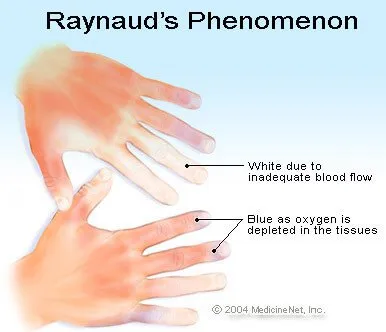
Raynauds phenomenon is a condition in which cold temperatures or strong emotions cause blood vessel spasms that block blood flow to the fingers, toes, ears, and nose.
Causes
Raynaud's phenomenon can be associated with other conditions. This is called secondary Raynaud's phenomenon. Most people with the condition are over age 30.
Common causes are:
- Diseases of the arteries, such as atherosclerosis and Buerger's disease, which is associated with smoking
- Drugs that cause narrowing of arteries, such as amphetamines, certain types of beta-blockers, some cancer drugs, ergot compounds, and methysergide
- Arthritis and autoimmune conditions, such as scleroderma, Sjogren syndrome, rheumatoid arthritis, andsystemic lupus erythematosus
- Repeated injury, particularly from vibrations such as those caused by typing or playing the piano
- Smoking
- Frostbite
- Thoracic outlet syndrome
Symptoms
Strong emotions or exposure to the cold causes the fingers, toes, ears, or nose to become white, then turn blue. When blood flow returns, the area becomes red and then later returns to normal color. The attacks may last from minutes to hours.
People with primary Raynaud's phenomenon (no other cause or condition) have problems in the same fingers on both sides, but they do not have very much pain.
People with Raynaud's phenomenon associated with other medical conditions are more likely to have pain or tingling in different fingers. The pain is rarely severe. There may be ulcers on the affected fingers.
Exams and Tests
Your health care provider can usually make the diagnosis by examining you and asking questions about your health history. However, vascular ultrasound and a cold stimulation test for Raynaud's phenomenon may be done to confirm the diagnosis.
Different blood tests may be done to diagnose arthritic and autoimmune conditions that may cause Raynaud's phenomenon.
Treatment
The following lifestyle changes may help people with Raynaud's phenomenon:
- Stop smoking
- Avoid caffeine
- Stop and avoid medications that cause tightening or spasms of the blood vessels
- Keep the body warm. Avoid exposure to cold in any form. Wear mittens or gloves outdoors and when handling ice or frozen food. Avoid getting chilled, which may happen after any active recreational sport.
- Wear comfortable, roomy shoes and wool socks. When outside, always wear shoes.
It is important to treat the condition causing Raynaud's phenomenon.
Outlook (Prognosis)
The outcome varies depending on the cause and the severity of the condition.
Possible Complications
- Gangrene or skin ulcers may occur if an artery becomes completely blocked (most likely to occur in people who also have arthritis or autoimmune conditions)
- Permanently decreased blood flow to the area can lead to thin and tapered fingers, with smooth, shiny skin and slow growing nails
When to Contact a Medical Professional
Call your health care provider if:
- You have a history of Raynaud's phenomenon and the affected body part (arm, hand, leg, foot, or other part) becomes infected or develops a sore
- Your fingers change color and you do not know the cause
- Your fingers or toes turn black or the skin breaks
- You have a sore on the skin of your feet or hands
- You have a fever, swollen or painful joints, or skin rashes
Prevention
Avoid exposure to the cold. Dress warmly when you cannot avoid cold. If you smoke, stop smoking, as it further constricts the blood vessels. source.Raynaud
Last edited by a moderator:

njiwa
JF-Expert Member
- Apr 16, 2009
- 13,144
- 6,942
mkuu MziziMkavu naam ni MD ..