Kumbukumbu za ulimwengu (World Archives)

Kumbukumbu za ulimwengu (World Archives)

Kulikuwa na mabudha 2 waliosimama ambao bado ungeweza kuwaona mwaka wa 2001. Buddha huyu mkubwa alisimama kwa urefu wa m 55, aliyejengwa karibu 615 c. Buddha mdogo alikuwa na urefu wa 38 m, alijengwa karibu 550 c na alisimama mita 800 mashariki mwa Buddha mkubwa.

Mabudha wa Bamiyan walisimama kwa zaidi ya miaka 1400 kwenye miamba ya kaskazini ya Bonde la Bamiyan, wakishuhudia karne nyingi za historia ya mikoa na kuvutia watu kutoka mbali na mbali. Waliangamizwa na Taliban mnamo Machi 2001.

Hii ni hadithi yao.

The Buddhas were carved into the naturally occurring conglomerate stone with the back of head to the helm of the clothing being attached to the back of the cliffs. This allowed worshippers to go behind the head and walk around the shoulders of the Buddha and around his bare feet.
The Buddhas had partially blank faces, being blank from the top of the hair down to the upper lip. It is now thought that this was part of the design due to the existence of horizontal & vertical recesses, in which a "mask" can be slide into, maybe made of brass or gilded wood.
20221126_171941.jpg
20221126_171756.jpg
 
The Buddha’s traditional 3 part monastic garments was molded on their bodies using clay. They were painted bright orange red first and then painted white. The bigger Buddha was finally painted red again. The Buddhas' robes on the insider were painted blue with crush lapis lazuli
20221126_172037.jpg
 
The smaller Buddha is believed to have his left hand holding in varamudra which symbolizes charity and compassion and its right hand in abharamudra which symbolizes the dispelling of fear. The larger Buddha is believed to be holding his hand in varamudra
20221126_172144.jpg
 
There were 3 seated Buddha statues between these two colossal Buddhas, no images of them remain now. In the same conglomerate rock face, there were also over 700 caves used for prayer & meditation. Many caves had Buddhist religious paintings.

Now, only empty niches remain.
20221126_172232.jpg
 
THE GOOD SIDE OF SADDAM HUSSEIN—MBONA WAZUNGU HAWASEMI KUHUSU HILI!?
#UZI
[emoji1659]Ashukuriwe yule aliyeniumba “Binadamu”, kwasababu laiti kama Ningeumbwa “Mkonge”,
KATU[emoji3544]
Nisingekubali Nivunwe,na kisha nyuzi-nyuzi zangu eti zikatumike kuinyonga shingo ya Saddam Hussein, NISINGEKUBALI
20221126_172530.jpg
 
Scene from Coleridge's Rime of the Ancient Mariner by Gustave Doré (1875)
20221126_172911.jpg
 
Clearing Up, Coast of Sicily by Andreas Achenbach (1847)
20221126_172943.jpg
 
Steamboat in a Storm on the North Sea by Albert Reiger (1905)
20221126_173019.jpg
 
Storm on the Sea of Galilee by Rembrandt (1633)
20221126_173056.jpg
 
Seastorm by the Arco di Miseno by Joseph Rebell (1819)
20221126_173253.jpg
 
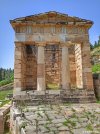
Hazina ya Athens huko Delphi inapatikana moja kwa moja chini ya Hekalu la Apollo kando ya Njia Takatifu. 510-480 KK
#Akiolojia
 

Attachments

  • 20221129_075816.jpg
    20221129_075816.jpg
    622.3 KB · Views: 19
For #FindsFriday, the glittering gold of the Didcot Hoard. A rare Roman gold coin hoard discovered in Oxfordshire by a metal detectorist in 1995. It contains 126 #Roman gold coins struck between AD 54-160. Buried in the AD 160s. Ashmolean Museum.
20221129_080620.jpg
 
Gold coin of Croesus, Lydia, circa 550 BC. Collection: British Museum.
20221129_121740.jpg
 
Ram - spring, ikifuatiwa na Bull - majira ya joto, ikifuatiwa na Simba - Autumn, ikifuatiwa na Mbuzi - baridi...

Kwa hivyo vuli (inaanza Leo) inaisha (Inaua) msimu wa joto (huanza Taurus)...
20221129_121918.jpg
 
Why does Art Nouveau design look like that?

(Wisteria Lamp by Clara Driscoll for Tiffany's, 1902)
20221129_122047.jpg
 
The first reference to Art Nouveau - "New Art" - was in Belgium in 1884.

It became an international phenomenon by the 1890s and was finished by WW1.

But, despite its brief lifespan, Art Nouveau is one of the most enduringly popular styles - so where did it come from?
20221129_122142.jpg
 
Back
Top Bottom