Kumbukumbu za ulimwengu (World Archives)

Kumbukumbu za ulimwengu (World Archives)

Inside the Great Pyramid
FB_IMG_1684159590076.jpg
 
Control room of a WW1 German submarine UB-110.

This image shows manhole to periscope wall, valve wheels for flooding and blowing. Hanwheels for periscope gear, air pressure gauges. The UB-110 sunk after attacking a merchant shipping convoy near Hartlepool in July 1918. It was then salvaged and transferred to Swan Hunter Wigham Richardson Ltd. Dry Docks (Wallsend), with an order to restore her to fighting state. The order cancelled following Armistice and she was scrapped thereafter.
 

Attachments

  • FB_IMG_1685231605262.jpg
    FB_IMG_1685231605262.jpg
    120.9 KB · Views: 20
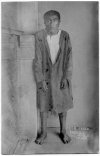
Ishi (c1861 – March 25, 1916) was the last known member of the Native American Yahi people from the present-day state of California in the United States. The rest of the Yahi (as well as many members of their parent tribe, the Yana) were killed in the California genocide in the 19th century. Ishi, who was widely acclaimed as the "last wild Indian" in the United States, lived most of his life isolated from modern North American culture. In 1911, aged 50, he emerged at a barn and corral, 2 mi (3.2 km) from downtown Oroville, California.

Ishi, which means "man" in the Yana language, is an adopted name. The anthropologist Alfred Kroeber gave him this name because, in the Yahi culture, tradition demanded that he not speak his own name until formally introduced by another Yahi. When asked his name, he said: "I have none, because there were no people to name me," meaning that there was no other Yahi to speak his name on his behalf.

Ishi was taken in by anthropologists at the University of California, Berkeley, who both studied him and hired him as a janitor. He lived most of his remaining five years in a university building in San Francisco. His life was depicted and discussed in multiple films and books, notably the biographical account Ishi in Two Worlds published by Theodora Kroeber in 1961.

𝐄𝐚𝐫𝐥𝐲 𝐥𝐢𝐟𝐞

In 1865, Ishi and his family were attacked in the Three Knolls Massacre, in which 40 of their tribesmen were killed. Although 33 Yahi survived to escape, cattlemen killed about half of the survivors. The last survivors, including Ishi and his family, went into hiding for the next 44 years. Their tribe was popularly believed to be extinct. Prior to the California Gold Rush of 1848–1855, the Yahi population numbered 404 in California, but the total Yana in the larger region numbered 2,997.

The gold rush brought tens of thousands of miners and settlers to northern California, putting pressure on native populations. Gold mining damaged water supplies and killed fish; the deer left the area. The settlers brought new infectious diseases such as smallpox and measles. The northern Yana group became extinct while the central and southern groups (who later became part of Redding Rancheria) and Yahi populations dropped dramatically. Searching for food, they came into conflict with settlers, who set bounties of 50 cents per scalp and 5 dollars per head on the natives. In 1865, the settlers attacked the Yahi while they were still asleep.

𝐑𝐢𝐜𝐡𝐚𝐫𝐝 𝐁𝐮𝐫𝐫𝐢𝐥𝐥 𝐰𝐫𝐨𝐭𝐞, 𝐢𝐧 𝐈𝐬𝐡𝐢 𝐑𝐞𝐝𝐢𝐬𝐜𝐨𝐯𝐞𝐫𝐞𝐝:

"In 1865, near the Yahi's special place, Black Rock, the waters of Mill Creek turned red at the Three Knolls Massacre. 'Sixteen' or 'seventeen' Indian fighters killed about forty Yahi, as part of a retaliatory attack for two white women and a man killed at the Workman's household on Lower Concow Creek near Oroville. Eleven of the Indian fighters that day were Robert A. Anderson, Harmon (Hi) Good, Sim Moak, Hardy Thomasson, Jack Houser, Henry Curtis, his brother Frank Curtis, as well as Tom Gore, Bill Matthews, and William Merithew. W. J. Seagraves visited the site, too, but some time after the battle had been fought.

Robert Anderson wrote, "Into the stream they leapt, but few got out alive. Instead many dead bodies floated down the rapid current." One captive Indian woman named Mariah from Big Meadows (Lake Almanor today), was one of those who did escape. The Three Knolls massacre is also described in Theodora Kroeber's Ishi in Two Worlds.

Since then more has been learned. It is estimated that with this massacre, Ishi's entire cultural group, the Yana/Yahi, may have been reduced to about sixty individuals. From 1859 to 1911, Ishi's remote band became more and more infiltrated by non-Yahi Indian representatives, such as Wintun, Nomlaki, and Pit River individuals.

In 1879, the federal government started Indian boarding schools in California. Some men from the reservations became renegades in the hills. Volunteers among the settlers and military troops carried out additional campaigns against the northern California Indian tribes during that period.

In late 1908, a group of surveyors came across the camp inhabited by two men, a middle-aged woman, and an elderly woman. These were Ishi, his uncle, his younger sister, and his mother, respectively. The former three fled while the latter hid in blankets to avoid detection, as she was sick and unable to flee. The surveyors ransacked the camp, and Ishi's mother died soon after his return. His sister and uncle never returned, possibly drowning in a nearby river.

𝐀𝐫𝐫𝐢𝐯𝐚𝐥 𝐢𝐧𝐭𝐨 𝐄𝐮𝐫𝐨𝐩𝐞𝐚𝐧 𝐀𝐦𝐞𝐫𝐢𝐜𝐚𝐧 𝐒𝐨𝐜𝐢𝐞𝐭𝐲

After the 1908 encounter, Ishi spent three more years alone in the wilderness. Starving and with nowhere to go, Ishi, at around the age of 50, emerged on August 29, 1911, at the Charles Ward slaughterhouse back corral near Oroville, California, after forest fires in the area. He was found pre-sunset by Floyd Hefner, son of the next-door dairy owner (who was in town), who was "hanging out", and who went to harness the horses to the wagon for the ride back to Oroville, for the workers and meat deliveries. Witnessing slaughterhouse workers included Lewis "Diamond Dick" Cassings, a "drugstore cowboy". Later, after Sheriff J.B. Webber arrived, the Sheriff directed Adolph Kessler, a nineteen-year-old slaughterhouse worker, to handcuff Ishi, who smiled and complied.

The "wild man" caught the imagination and attention of thousands of onlookers and curiosity seekers. University of California, Berkeley anthropology professors read about him and "brought him" to the Affiliated Colleges Museum (1903—1931), in an old law school building on the University of California's Affiliated Colleges campus on Parnassus Heights, San Francisco. Studied at the university, Ishi also worked as a janitor and lived at the museum for most of the remaining five years of his life.

In October 1911, Ishi, Sam Batwi, T. T. Waterman, and A. L. Kroeber, went to the Orpheum Opera House in San Francisco to see Lily Lena (Alice Mary Ann Mathilda Archer, born 1877) the "London Songbird," known for "kaleidoscopic" costume changes. Lena gave Ishi a piece of gum as a token.

On May 13, 1914, Ishi, T. T. Waterman, A.L. Kroeber, Dr Saxton Pope, and Saxton Pope Jr. (11 years old), took Southern Pacific's Cascade Limited overnight train, from the Oakland Mole and Pier to Vina, California, on a trek in the homelands of the Deer Creek area of Tehama county, researching and mapping for the University of California, fleeing on May 30, 1914, during the Lassen Peak volcano eruption.

T.T. Waterman and A.L. Kroeber, director of the museum, studied Ishi closely over the years and interviewed him at length in an effort to reconstruct Yahi culture. He described family units, naming patterns, and the ceremonies that he knew. Many traditions had already been lost when he was growing up, as there were few older survivors in his group. He identified material items and showed the techniques by which they were made.

In February 1915, during Panama–Pacific International Exposition, Ishi was filmed in the Sutro Forest with the actress Grace Darling for Hearst-Selig News Pictorial, No. 30.

𝐃𝐞𝐚𝐭𝐡

Lacking acquired immunity to common diseases, Ishi was often ill. He was treated by Saxton T. Pope, a professor of medicine at UCSF. Pope became a close friend of Ishi and learned from him how to make bows and arrows in the Yahi way. He and Ishi often hunted together. Ishi died of tuberculosis on March 25, 1916. It is said that his last words were, "You stay. I go." His friends at the university tried to prevent an autopsy on Ishi's body since Yahi tradition called for the body to remain intact. However, the doctors at the University of California medical school performed an autopsy before Waterman could prevent it.

Ishi's brain was preserved and his body was cremated. His friends placed grave goods with his remains before cremation: "one of his bows, five arrows, a basket of acorn meal, a box full of shell bead money, a purse full of tobacco, three rings, and some obsidian flakes." Ishi's remains were interred at Mount Olivet Cemetery in Colma, California, near San Francisco. Kroeber put Ishi's preserved brain in a deerskin-wrapped Pueblo Indian pottery jar and sent it to the Smithsonian Institution in 1917. It was held there until August 10, 2000, when the Smithsonian repatriated it to the descendants of the Redding Rancheria and Pit River tribes. This was in accordance with the National Museum of the American Indian Act of 1989 (NMAI). According to Robert Fri, director of the National Museum of Natural History, "Contrary to commonly-held belief, Ishi was not the last of his kind. In carrying out the repatriation process, we learned that as a Yahi–Yana Indian his closest living descendants are the Yana people of northern California." His remains were also returned from Colma, and the tribal members intended to bury them in a secret place.

(𝐈𝐦𝐚𝐠𝐞: 𝐈𝐬𝐡𝐢, 𝐃𝐞𝐞𝐫 𝐂𝐫𝐞𝐞𝐤 𝐈𝐧𝐝𝐢𝐚𝐧 𝐓𝐡𝐞 𝐖𝐢𝐥𝐝 𝐌𝐚𝐧)

(𝐒𝐨𝐮𝐫𝐜𝐞: 𝐈𝐬𝐡𝐢 𝐢𝐧 𝐓𝐰𝐨 𝐖𝐨𝐫𝐥𝐝𝐬: 𝐀 𝐁𝐢𝐨𝐠𝐫𝐚𝐩𝐡𝐲 𝐨𝐟 𝐭𝐡𝐞 𝐋𝐚𝐬𝐭 𝐖𝐢𝐥𝐝 𝐈𝐧𝐝𝐢𝐚𝐧 𝐢𝐧 𝐍𝐨𝐫𝐭𝐡 𝐀𝐦𝐞𝐫𝐢𝐜𝐚 & 𝐖𝐢𝐤𝐢)
 

Attachments

  • FB_IMG_1686297456682.jpg
    FB_IMG_1686297456682.jpg
    20.2 KB · Views: 48
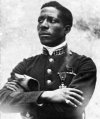
Sick of American racism, Eugene Bullard snuck onto a German freighter in 1912 and started a new life in Europe. By the time WWI broke out, he was living in France and eagerly signed up to join the army of his adopted country. He then became the first Black American fighter pilot, though he only flew for France and never for the United States. And as World War 2 loomed on the horizon, he used his Parisian jazz club connections and German fluency to spy on Nazis
 

Attachments

  • 20230627_020627.jpg
    20230627_020627.jpg
    127.8 KB · Views: 41
Occupied for over 4 millennia, Rathcroghan is an archaeological site located in the west of Ireland. It comprises structures dating from the Neolithic to the early Middle Ages, consisting of 240 buildings that include tombs, temples, and residences. The establishment of Rathcroghan led to the formation of a small centralized society, predominantly composed of Celts, around 1000 BC.

In ancient times, this region was recognized as the entrance to the Celtic underworld and encompassed several sacred sites that served as venues for ceremonies and religious festivals.

The structure depicted in the photo is Mount Rathcroghan, constructed using multiple layers of gravel and earth. It measures 89 meters in diameter and stands at an impressive height of nearly 6 meters. The summit likely served as a tomb for the burial of King Dathí, the last pagan king of Ireland, in the year 445. Legend has it that Dathí, who held the title of Supreme King of Ireland, met his demise when he was struck by lightning on an expedition to the Alps. His tomb was enclosed by log walls and was accompanied by a gate and other royal residences.

Throughout history, Rathcroghan was a frequently visited site for pilgrimages. However, during the Middle Ages, it experienced depopulation and gradually transformed into a country estate owned by various Irish individuals. By the 6th century, the site was practically uninhabited.

Presently, the archaeological complex of Rathcroghan serves as a tourist attraction. However, there is limited information available regarding its structures or the people responsible for their construction.
20230627_024925.jpg


Sent using Jamii Forums mobile app
 
Katikati ya miaka ya 1950, Ndege ya Hiller iliunda safu ya majukwaa ya kuruka kwa mpango wa Jeshi la Wanamaji. Rubani aliegemea upande anaotaka na jukwaa lingefuata. Ndege ya Hiller ilijumuisha propela pacha zinazozunguka katika nyumba ya pande zote (feni iliyo na ducted). Asilimia 60 ya lifti ya jukwaa ilitolewa kwa msukumo kutoka kwa propela zinazozunguka kikabili na 40% ilitolewa na hewa inayosonga juu ya ukingo wa mbele wa feni (kanuni ya Bernoulli).
FB_IMG_1687825025502.jpg


Sent using Jamii Forums mobile app
 
The little girl in this photograph is Ruby Crane.....from the age of 3 years old Ruby walked blinded soldiers around a rehabilitation centre called St Dunstans at Brighton in Sussex, where Rubys Father was the head gardener....she knew they were blinded and just returned from the first World War.....wandering in the grounds she would take ahold their hand and ask them where they wanted to go ( individual workshops ) and guide them there....people were so affected by little Ruby walking the blind soldiers around they would send her dolls and toys as a thank you for all the support she was giving to the men and women affected by sight loss.....little Ruby was rewarded with a long life as she passed away in her late nineties, in 2011.
Ruby recalled..... " I always remember how my little hand seemed so small in their big hands....they were so pleased to have a child come and talk to them....it was something different away from the monotonous grind of not being able to see things, I think. "
Ruby was so popular that she featured on the front page of the St Dunstans first Annual Report for 1915/1916 and later Flag Day emblems incorporated a similar design that featured Little Ruby.

Evaline Brueton Consulting Historian-Disability Pride month series
 

Attachments

  • FB_IMG_1688883211620.jpg
    FB_IMG_1688883211620.jpg
    42.2 KB · Views: 21
This 15-year-old girl lived in Inca empire and was sacrificed 500 years ago as an offering to gods.

She is preserved this well because she was frozen during sleep and kept in a dry cold condition at more than 6000m above sea level all this time.

Found in 1999 near top of Llullaillaco volcano, northwestern Argentina. She was an archaeological revolution for being one of best preserved mummies, since there was even blood in her body and her internal organs remained.
 

Attachments

  • 20230720_141917.jpg
    20230720_141917.jpg
    44.6 KB · Views: 23
Jicho hili la bandia lililotengenezwa kwa mchanganyiko wa lami asilia na mafuta ya wanyama lina takriban miaka 5,000. Ilipatikana karibu na jiji la Zabol nchini Iran mwaka wa 2006. Wanaakiolojia wanaamini kwamba jicho la bandia, ambalo mara moja lilipakwa rangi ya dhahabu, lilikuwa limevaliwa na kuhani wa kale ambaye alisimama 6’ mrefu.
Zaidi Most Valuable Museum Artifacts From Around The World
 

Attachments

  • FB_IMG_1690816759248.jpg
    FB_IMG_1690816759248.jpg
    48.3 KB · Views: 13
Mwanamke wa Moor na mjakazi wake, karibu 1856.
 

Attachments

  • FB_IMG_1690938198027.jpg
    FB_IMG_1690938198027.jpg
    32.8 KB · Views: 20
Citizens of Herculaneum in the dock buildings, 79 AD
 

Attachments

  • FB_IMG_1691990988108.jpg
    FB_IMG_1691990988108.jpg
    62.2 KB · Views: 21
Said to be one of the oldest photographs taken in Barbados of a Bajan, this image captures Nancy Daniels. The picture is believed to have been taken in the 1850s, either at a studio in Bridgetown by the photographer Campion or at the house where she worked as a domestic servant.

Nancy was born either in 1751 or 1755 in West Africa, believed to be modern day Nigeria as it was thought she was of Igbo ethnicity. Her real name is unknown and it is believed she came to Barbados in her teens or as a young woman. Even though Nancy would have grown up in West Africa, survived the Middle Passage and being sold into slavery, the devastating Bridgetown Fire of 1766, the destructive hurricane of 1780, the Bussa revolt of 1816 as well as Emancipation and Apprenticeship, little is known of her life.

She is known to have lived in Bridgetown at Synagogue Lane and worked for the Daniels family as a domestic servant, for whom she worked for many years, first as an enslaved women and later as a domestic servant after Emancipation. At her death her age is officially recorded as 116 years, dying and buried on September 24th, 1871, but oral sources from the family put her age at 120 years old. She is one of the oldest people to have lived in Barbados, achieving super centenarian status.

From #bazodeemag

#history #oldbarbados #historical #historicphoto #historicphotography #nancydaniels #igbo #igbokwenu #igbohistory #igbowomen #nigeria #bridgetown
 

Attachments

  • FB_IMG_1693196817340.jpg
    FB_IMG_1693196817340.jpg
    76.8 KB · Views: 16
The giant of Kandahar , photographed Afghanistan 1923
 

Attachments

  • FB_IMG_1694216992268.jpg
    FB_IMG_1694216992268.jpg
    25.6 KB · Views: 11
Back
Top Bottom