LAPSSET: Lamu Port and South Sudan Ethiopia Transport: News & Photos

LAPSSET: Lamu Port and South Sudan Ethiopia Transport: News & Photos

To be fair, Basi huu ni mwaka wa 5 toka tumeanza ujenzi wa bomba la Hoima-Tanga.
Asante Ndugu. Nimemdharau sana huyo jamaa. Jamaa anataka kulazimisha kwamba ujenzi wa Lamu port berths ulianza 2012 ambapo Lappset corridor plan ilikuwa launched. 2012 pia ujenzi wa Headquarters building na police station pia ilikuwa launched lakini ujenzi wa berths za port hazikuwa launched in 2012 maana hata contractor hakuwa amepatikana. Contractor mwenyewe wa kujenga Lamu port berths alishinda zabuni 2014 na akaanza ujenzi 2016. Hata nimemuwekea video inayoonyesha kwamba 2015 ujenzi bado haukuwa umeanza. Lakini nimeshangaa sana kuona huyu jamaa bado anakazana kwamba ujenzi wa Lamu berths ulianza hata kabla ya zabuni (tender) kutolewa, kabla ya Environmental impact assesment kufanywa (2014) na detailed engineering design kufanywa (2014).
Ni kweli ulivyosema kwamba kama ujenzi unaanza during planning stage basi ujenzi wa EACOP ulianza 2017. Mimi mwenyewe sina muda wa kuendelea na huu mjadala lakini nimeweka hapa evidence zote ili watu wenye akili timamu kama wewe wajisomee na waamue nani apo sahihi.
 
To be fair, Basi huu ni mwaka wa 5 toka tumeanza ujenzi wa bomba la Hoima-Tanga.
Hoima-Tanga pipeline hakukuwa na launching of construction! show me any evidence of the construction being launched as far as i know there has been Agreements and MOU launch!
 
Kisumu city port. Oil being loaded onto a wagon ferry to transport oil to Uganda. (1 million litres per trip)
ErYdvBPXMAE5_uX.jpeg
 
Hoima-Tanga pipeline hakukuwa na launching of construction! show me any evidence of the construction being launched as far as i know there has been Agreements and MOU launch!
2012 hakukuwa na launching of construction of Lamu port berths. Huna evidence kuhusu madai yako na kila mtu anajua kwamba huna evidence zaidi ya wivu wako wa kitoto.
 
2012 hakukuwa na launching of construction of Lamu port berths. Huna evidence kuhusu madai yako na kila mtu anajua kwamba huna evidence zaidi ya wivu wako wa kitoto.
Hiyo video imesema ujenzi wa gati za bandari ya Lamu sikiliza dk 0.38!

 
Hiyo video imesema ujenzi wa gati za bandari ya Lamu sikiliza dk 0.38!


Amesema lapsset was launched to set the stage for the construction of the 3 berths. Kizungu ni shida kwako. Setting the stage inamaanisha "in preparation for something." Lapsset was launched in preparation for the construction of the berths.


Halafu kama ungekuwa mtu genuine, mtu mzuri ungejiuliza mbona by 2015 ujenzi wa berths haukuwa umeanza. Nimekupa hata video ambayo umejifanya kwamba hujaiona na umekataa hata kucomment kuhusu hii video. Argument yako haina mashiko ikiwa utakataa kucomment kuhusu hii video ambayo inapinga madai yako.


Wewe ukipewa evidence inayokinzana na madai yako unaignore hio evidence na ndio maana umekataa kuzungumza kuhusu hio video


Vile vile umeamua kuignore hii evidence na kutoizungumzia kabisa.
Screenshot_20210213-093254.jpg
Screenshot_20210213-093258.jpg
 
Hiyo video imesema ujenzi wa gati za bandari ya Lamu sikiliza dk 0.38!


Hii article pia inasema kwamba contract for construction of Lamu port berths ilisigniwa in 2014.


a80a43df6e62c58c74e19c4220091ac5.JPG

How Mtwara Port Shows Its Potential in Cargo Transport​


21 January 2021


Tanzania Daily News (Dar es Salaam)

By Y Rodgers Luhwago
BOASTING its pride of being a natural harbour Mtwara Port is the country's strategic terminal that plays a significant role in facilitating cargo transport for the southern regions of Mtwara, Lindi and Ruvuma.

Due to its strategic location, the Port also serves as an ideal gateway to the outside world for commodity exports and imports for some parts of the Southern African Development Community (SADC) member states such as Mozambique, Malawi and Zambia.

That prompted the Tanzania Ports Authority (TPA) to massively invest in the expansion work of the terminal, a task that was assigned to two Chinese firms - Chinese firms- M/S China Railway Construction Engineering Group( CRCEG) and China Railway Major Bridge Engineering Group ( CRMBEG) - at the cost of 137bn/-.


According to TPA officials, the two firms had the task of constructing a new berth measuring 300metres in length and 13.5 metres in depth, enabling the port to accommodate mega ships weighing 65,000 tonnes.

Before the expansion work the port was accommodating cargo ships with 40,000 tonnes ( Dead Weight -DWT), as the terminal was operating with an old 380-metre berth only, meaning that with the construction of the second berth with 300 metres Mtwara Port will now have a berth measuring 680 metres in length.

The second task that the two contracted firms were assigned to undertake was the expansion of the port's cargo storage yard by constructing a 79,000 -square metre area. Originally the port had a storage yard measuring 40,000 square metres only.

TPA officials say upon completion of the project, Mtwara Port will increase its cargo handling capacity from 400,000 tonnes per annum to 1,500,000 tonnes as all the necessary state -of -the art cargo handling equipment, including modern mobile cranes and other heavy lifting machines will be availed.


The government's future plan on Mtwara Port is to have four berths given the fact that the project falls under its determination to exploit to the maximum the benefits brought about by Mtwara Corridor.

Significance of Mtwara Port to southern regions and some neighbouring countries The significance of the terminal to the residents of the southern regions can be traced back to the yester years when the port served as a gateway for exporting cashews. Some literature materials trace the importance of the port back to the colonial era when it served as the landing site for missionaries who had settled in Lindi and Mtwara regions.

As time moved on, especially after independence, the government expanded the terminal to be able to meet the growing cargo handling demand brought about by the increase in cashews exports and other loose cargo.


Currently, Mtwara Port plays a significant role in ferrying cashew nuts abroad including Vietnam. Cashew nuts, which is the cash earning crop for the southerners, is one of the dependable forex earner for the country.

Cement produced at Dangote Cement Plant in Mtwara Region has been reaching markets in Comoro, Zanzibar and some parts in SADC region through Mtwara Port.

A fertiliser plant to be established in Lindi will also depend on the port for the product to reach markets in some parts in the southern region and beyond. According to Mtwara Port management, the port eyes handling transit fuel consignment for some SADC countries.


Mtwara Port was included in what can simply be termed as the International Maritime Security System (ISPS Code Compliance) in 2013 that compels the port to conform to international maritime security laws and regulations.

The terminal also uses an Integrated Security System, all of which have contributed making it one of the most secure gateways along the Indian Ocean shoreline. Statistics released by authority in Mtwara region shows an increase in number of cargo ships handled by the port in recent years.

According to data released by Mtwara Port management, the port handled 141 ships in 2018/19 financial year, generating 5.645bn/- in revenue compared to 66 ships handled by the same port the preceding financial year, which is equivalent to 113 per cent increase.
In 2013/14 financial year the port handled 356,356 metric tonnes of cargo while the following financial year (2014/15) cargo handled by the port dropped to 296,577 metric tonnes. In 2015/16 Mtwara port handled 268,035 metric tonnes while the following year cargo again rose to 377,590 metric tonnes.

In 2017/18 financial year, the cargo slightly decreased to 363,287 metric tonnes before it again slid down further to 106,170 metric tonnes in 2018/19 financial year. The decrease in cargo handled was an expected phenomenon as coal imports through the port for Dangote cement plant in Mtwara were halted after the plant switched to gas.

However, Dangote cement plant has remained one of top users of the through cement exports to Zanzibar, Comoro and some parts of the Southern African countries. Data available at TPA shows in July 2019, a total of 800 tonnes of cement were handled by the port followed by 1,000 tonnes the following month while in September 2019th another 1,000 tonnes of Dangote cement were handled by the port.

Available reports at TPA showed the Dangote cement plant was planning to start ferrying 120,000 tonnes of cement each month through Mtwara port under concessionary rate agreement. According to TPA, being a dependable cash earning produce for the southerners and the country at large, cashew nut has been contributing considerably to the tonnage handled by the port every year.

To ordinary residents of the southern region, Mtwara port has contributed much in lessening the cost of living after the Energy and Water Utilities Regulatory Authority (EWURA) issued an order requiring fuel destined for Mtwara, Lindi and Ruvuma regions be offloaded at Mtwara terminal.

Previously fuel destined for the three regions was offloaded at the principal port of Dar es Salaam before being transported overland, further hiking pump prices. To create convenient fuel handling environment, efforts are underway by TPA to build modern infrastructure, including installing a flow metre to facilitate storage and shipment of oil destined for some parts of Malawi, Mozambique and Zambia.

After construction of Mbinga-Mbamba Bay Port road to the tarmac level, Mtwara terminal is expected to contribute significantly to the government coffers as cargo destined for some parts of some SADC Member states will now be imported through Mtwara Port before being transported up to Mbamba Bay Port in Lake Nyasa where to be ferried to the respective destinations.

The route that stretches from Mtwara via Masasi, Tunduru, Songea-Mbinga up to Mbamba Bay Port is much shorter than the distance from Dar es Salaam to Tunduma or Kasumulu borders, meaning that traders from Malawi and the northern parts of Mozambique and Zambia will find Mtwara terminal as a convenient gateway for their exports and imports.

It should be borne in mind that TPA is also carrying out a major facelift on Mbamba Bay Port in Ruvuma region to capitalise on opened Mtwara corridor.


KPA boasts of port efficiency after centralised operations​

Port recorded 1.360 million TEUs in 2020 compared to 1.417 million TEUs in 2019.​

In Summary
• Acting Managing Director Rashid Salim said the reduction of cargo dwell time at the Port of Mombasa is a result of a raft of strategic operational changes implemented by the Authority.
• KPA took over the operations at Port Reitz Yard and reorganised the planning units of the logistics partners, increasing harmony in the operations of the unit.

by PATRICK VIDIJAInvestigative Journalist

News
17 February 2021 - 12:20
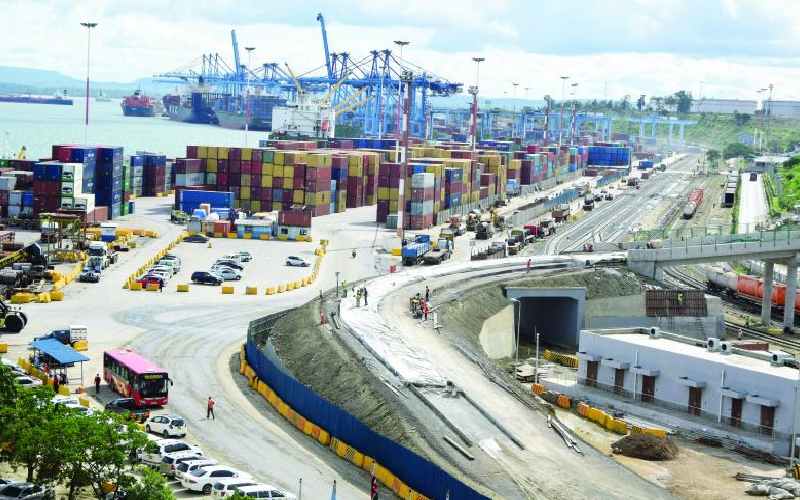
The port of Mombasa
The port of Mombasa
Image: FILE
The Kenya Ports Authority now says it has seen tremendous efficiency after plan to centralise its operations.
Acting Managing Director Rashid Salim on Wednesday said cargo dwell time at the Port of Mombasa has reduced from an average of 5.6 days in December 2020 to 4.6 days in January 2021.
He said this is a result of a raft of strategic operational changes implemented by the Authority.

He said KPA took over the operations at Port Reitz Yard and reorganised the planning units of the logistics partners, increasing harmony in the operations of the unit hence increasing end-to-end efficiency in the port operations.
According to him, dangerous cargo loading which was previously experiencing great delays due to the distance of the loading zone from stacking blocks was improved by allowing it to be loaded at the now optimised line 12 at Port Reitz which is more efficient especially for cargo received at Container Terminal 2.
"Additionally, centralisation of the cargo handling processes and the recently introduced double-deck wagons on the Standard Gauge Railway (SGR) have significantly contributed to increased deliveries to the Inland Container Depot," Salim said.
In a statement to newsrooms, Salim said a total of 10,072 twenty-foot equivalent unit (TEUs) have been evacuated in the past two weeks compared to 9,774 in the first two weeks of the year.
He said a single double-deck train currently hauls 114 TEUs on a single trip using up to 30 per cent fewer resources compared to the normal single stack train.
“Loading of double-deck wagons has greatly boosted the number of containers being evacuated. We started with one double-deck train of 38 wagons hauling 114 TEUs and this has now stabilized at two trains per week,” Salim noted.
He said as of today, the port only allows up to four waiting ships on the queue with the numbers expected to drop in the coming week.

“In fact, we will be loading containers directly from the discharging vessels,” he said.
The port’s performance recorded a decline in 2020 recording 1.360 million TEUs compared to 1.417 million TEUs witnessed in 2019.
The 4.0 per cent decrease was attributed to disruptions to the supply chain because of global lockdowns imposed due to the current Covid-19 pandemic.
Salim said as part of improving the service delivery to customers across the region, the port plans to enhance the use of Hand Held Terminals (HHT) for customers to get real-time updates.
“We are in constant communication with our stakeholders to come up with more strategies for swift ship turnaround so that we not only improve efficiency but also jointly meet our obligations,” he said.
He said a forecast for the next two weeks shows that 14 vessels are expected to discharge 19,533 TEUs at the container terminals and load another 21,541 TEUs.
The Conventional cargo is expected to receive 18 general cargo ships to discharge 330,623 metric tonnes and load 54,333 metric tonnes.
Some 3 tanker vessels are expected as well to discharge 157,074 metric tonnes.


My take.

Mombasa port is more efficient than Tanzanian ports.
 

KPA boasts of port efficiency after centralised operations​

Port recorded 1.360 million TEUs in 2020 compared to 1.417 million TEUs in 2019.​

In Summary
• Acting Managing Director Rashid Salim said the reduction of cargo dwell time at the Port of Mombasa is a result of a raft of strategic operational changes implemented by the Authority.
• KPA took over the operations at Port Reitz Yard and reorganised the planning units of the logistics partners, increasing harmony in the operations of the unit.
by PATRICK VIDIJAInvestigative Journalist
News
17 February 2021 - 12:20
  • 2021-02-17-kpa-boasts-of-port-efficiency-after-centralised-operations
The port of Mombasa
The port of Mombasa
Image: FILE
The Kenya Ports Authority now says it has seen tremendous efficiency after plan to centralise its operations.
Acting Managing Director Rashid Salim on Wednesday said cargo dwell time at the Port of Mombasa has reduced from an average of 5.6 days in December 2020 to 4.6 days in January 2021.
He said this is a result of a raft of strategic operational changes implemented by the Authority.

He said KPA took over the operations at Port Reitz Yard and reorganised the planning units of the logistics partners, increasing harmony in the operations of the unit hence increasing end-to-end efficiency in the port operations.
According to him, dangerous cargo loading which was previously experiencing great delays due to the distance of the loading zone from stacking blocks was improved by allowing it to be loaded at the now optimised line 12 at Port Reitz which is more efficient especially for cargo received at Container Terminal 2.
"Additionally, centralisation of the cargo handling processes and the recently introduced double-deck wagons on the Standard Gauge Railway (SGR) have significantly contributed to increased deliveries to the Inland Container Depot," Salim said.
In a statement to newsrooms, Salim said a total of 10,072 twenty-foot equivalent unit (TEUs) have been evacuated in the past two weeks compared to 9,774 in the first two weeks of the year.
He said a single double-deck train currently hauls 114 TEUs on a single trip using up to 30 per cent fewer resources compared to the normal single stack train.
“Loading of double-deck wagons has greatly boosted the number of containers being evacuated. We started with one double-deck train of 38 wagons hauling 114 TEUs and this has now stabilized at two trains per week,” Salim noted.
He said as of today, the port only allows up to four waiting ships on the queue with the numbers expected to drop in the coming week.

“In fact, we will be loading containers directly from the discharging vessels,” he said.
The port’s performance recorded a decline in 2020 recording 1.360 million TEUs compared to 1.417 million TEUs witnessed in 2019.
The 4.0 per cent decrease was attributed to disruptions to the supply chain because of global lockdowns imposed due to the current Covid-19 pandemic.
Salim said as part of improving the service delivery to customers across the region, the port plans to enhance the use of Hand Held Terminals (HHT) for customers to get real-time updates.
“We are in constant communication with our stakeholders to come up with more strategies for swift ship turnaround so that we not only improve efficiency but also jointly meet our obligations,” he said.
He said a forecast for the next two weeks shows that 14 vessels are expected to discharge 19,533 TEUs at the container terminals and load another 21,541 TEUs.
The Conventional cargo is expected to receive 18 general cargo ships to discharge 330,623 metric tonnes and load 54,333 metric tonnes.
Some 3 tanker vessels are expected as well to discharge 157,074 metric tonnes.


My take.

Mombasa port is more efficient than Tanzanian ports.
see a decrease

Port recorded 1.360 million TEUs in 2020 compared to 1.417 million TEUs in 2019.​

 
see a decrease

Port recorded 1.360 million TEUs in 2020 compared to 1.417 million TEUs in 2019.​

Kwa sababu ya corona. China ambayo ni factory of the world ilifunga border kwa miezi mitatu. Hata industries za China ziliwacha kuzalisha products kwa miezi kadhaa. Hata factory za Europe na USA zilisitisha uzalishaji wa bidhaa.
1.36 TEUs bado ni more than all the TEUs handled by all your ports combined. Sasa sijui unacheka nini. Ports zenu zote haziwezi kufikia hio 1.36 TEUs. Kwa hivyo uwe na adabu sio kushangilia na kufurahi kwamba mizigo zimepungua ilhali bado tunahandle more cargo kushinda ports zenu zote. Uwe na aibu kidogo saa zingine wewe mzee.
 
Back
Top Bottom