LAPSSET: Lamu Port and South Sudan Ethiopia Transport: News & Photos

LAPSSET: Lamu Port and South Sudan Ethiopia Transport: News & Photos

Dar es Salaam and Central Coast Sea Ports​

Dar es Salaam port is the Tanzania principal port with a rated capacity of 4.1 million (dwt) dry cargo and 6.0 million (dwt) bulk liquid cargo. The Port has a total quay length of about 2,600 metres with eleven deep-water berths. Dar es Salaam port handles about 95% of the Tanzania international trade. The port serves the landlocked countries of Malawi, Zambia, Democratic Republic of Congo, Burundi, Rwanda and Uganda. The port is strategically placed to serve as a convenient freight linkage not only to and from East and Central Africa countries but also to middle and Far East, Europe, Australia and America.

Port Facilities:​

Facilities available to support operations of Dar es salaam port are: -
  • General cargo Berth (1-7) from break bulk, PORO and dry bulk.
  • Container Terminal Berths (Berth 8-11), leased to Tanzania International Container Terminal services Ltd (TICTS).
  • Grain Terminal facility (silos with storage capacity of 30,000 tons). Inland Container Deposits (ICDs) facilities with the capacity of (14,500 TEUs) and CFs with the capacity of holding 6,000 vehicles at once).
  • A 150,000 MT Single Point Mooring (SPM) – for handling refined and crude oil.
  • Kurasini oil Jetty (KOJ) for handling refined products (tanker size 45,000MT for KOJ1 and 5,000 tons for KOJ2).
Generally, the intrinsic capacity of the port of Dar es salaam is to handle more than 10 million tons of cargo as follows: -
  • General cargo 3.1 million tons.
  • Container 9,619,876 TEUs) 1.0 million tonnes; and
  • Liquid bulk 6.0 million tons.

Port Features​

With the quay length of 2,600 meters, it is divided into:

General Cargo Terminal​

This is a break-bulk section of a port with a quay of 1,478 meters comprising of 7 main quays, transit sheds with 64,463.5 of total floor sq. meters and open storage of 201,613.


Container Terminal​

This terminal is operated by a private company, the Tanzania International Container Terminal Services (TICTS). TICTS manage the container handling activities at berth Number 8-11. The terminal has a total quay length of 540 meters. Back up facilities of container terminal includes the container depot located about 2 kilometers away at kurasini (KICD) and Ubungo container Depot.


Grain Terminal​

Dar es salaam Port has fully automated grain handling facility with silos with the capacity of 30,000 metric tons. Grains can be discharged and bagged along the quay at an average of more than 2000 tons in 24 hours, or transferred to silo using dump trucks. The grain terminal has concrete silos, fumigation, aeration and temperature control facilities.


Oil Terminal​

There are two oil terminal, the single point Mooring (SPM) and Kurasini Oil Jetty (KOJ). The SPM is an offshore tanker berth for handling exclusively crude and refined oil. It has capacity to accommodate tankers of up to 150,000 deadweight tons with fast discharge speed (flow rate of 2,500 cubic meters per hour for crude oil). SPM is connected to refineries in Dar es salaam and Ndola, Zambia through floating hoses and submarines pipes. KOJ is the tanker jetty for handling refined oil products with pumping capacity of 750 tons per hour. It can handle tankers up to 45,000 deadweights.


Storage Areas​

The port provides both open and covered storage; it has silos for grains at any time of need and maintains storage yards for containers, motors vehicles and general cargo.


Marine crafts/navigation Aids​

The port is served with berthing tugs, pilots boats mooring boats and surveillance / patrol boat, water barge, and floating cranes. Moreover, there are navigation aids to facilitate movement of vessels in the port. These include; buoys, beacons, leading marks and light house.


Container Handling Equipment​

Port terminals operates with Panamax Ship to Shore Gantry cranes (SSGs), Rubber Tyred Gantry cranes (RTGs) and Rail Mounted Gentry Crane (RMG), Gottwalds, highway trucks , folk lift trucks, Highway trailers, Terminal tractors and Trailers.


General Cargo Handling Equipment.​

The major equipment for handling general cargo are portal cranes, forklifts, tractors, trailers, grabs, hoppers, Bigging units, dump trucks, weighbridges, and conveyor belts


Major Port Development Projects​

  • Upgrading of Dar es Salaam Port Berths 1-7​

    Tanzania Ports Authority (TPA) is implementing a number of major projects as outlined in the National Ports Master Plan (PMP) study undertaken by Royal Haskoning in February 2009. The study laid out long term strategy for Tanzanian Ports to create capacity for the expected demand. One of such projects is the Dar es Salaam Maritime Gateway Project (DMGP).
    DMGP will improve the effectiveness and efficiency by converting the port as world class port with optimized efficiency to accommodate the calling and reception of larger vessels.
    Port modernization projects include but not limited to strengthening and deepening of berths 1-7 and RORO terminal, dredging of entrance channel, turning circle and harbour basin, strengthening and deepening 8-11, and construction of a new terminal jet.
  • Modernization of operations for handling dry bulk cargo​

    Under the same project, TPA will modernize operations of handling dry bulk cargo by applying state of art conveyance technology.
  • The Development of Dry/ Floating dock facility.​

    A modern operational dock facility for maintenance and repair of marine crafts will facilitate an optimal level of equipment availability of such crafts, hence enhance port operational efficiency.

 
Total number of berths at Mombasa port with their length!
BERTH NO.BERTH TYPELENGTH (M)DRAFT (M)QUAY LEVEL ABOVE CD (M)APRON DEPTH (M)RESTRICTIONBOLLARD DIR DEGREE
1CONV./PASS/RORO173.110.005.48617.50-1 - 8/9177 - 357
2CONV./PASS166.410.005.48617.50-8/9 - 15/16177 - 357
3CONV.166.410.005.48617.50-15/16 - 22/23171 - 350
4CONV.190.210.005.486--22/23 - 30/31164 - 344
5CONV./RORO178.610.005.486--30/31 - 38/39164 - 344
7CONV.208.210.005.48620.42-38/49122 - 302
8CONV.170.710.005.48620.42* TIDAL49 - 56/57161 - 341
9CONV.179.811.005.48620.42* TIDAL56/57 - 64/65154 - 334
10CONV.204.210.005.48620.42* TIDAL64/65 - 73/74154 - 344
11CONV.184.49.455.486--75 - 85077 - 257
12CONV.182.910.005.486--85 - 95/96090 - 270
13CONT.174.010.005.486--95/96 - 105/106090 - 270
14CONT.181.49.755.486--105/106 - 116/117081 - 261
16CONT.177.7*12.305.486--116/117 - 128060 - 240
17CONT.182.9*12.505.486--128 - 139060 - 240
18CONT.239.0*12.504.486--139 - 152060 - 240
20CONT.2109.95.5CD - 11-160 - 166072 - 252
21CONT.35013.55.5CD - 15.0-166 - 181072 - 252
BASE TITANIUMBULK19012.55.486-SST ON RT-139 - 319
SOTOIL TERMINAL1989.75DAYLIGHT PILOTAGE & TIDAL-177 - 357
KOTOIL TERMINAL25913.25DAYLIGHT PILOTAGE078 - 258
MBARAKIMULTI-PURPOSE306.310.501 - 14143 - 323
AGOLGAS TERMINAL2008.7DAYLIGHT PILOTAGE & TIDAL
 
The berths at Mombasa Port ranges between 210m to 350m, the ones at Dar Port ranges between 145m to 170m. So bado hamuezani na Mombasa. Again the depths at Dar Port is 10.5 while in Mombasa Port the depth is 17m deep.

Not so fast here is the length of all your berths at Mombasa port! Only 5 berths are above 210 m in length! See the red highlighted length under Length(m) column for berths 19 21, 20, KOT, Mbaraki! BTW Mombasa port has no Ro-Ro berth! In total all berths at Mombasa port give 4.6 km in length!
BERTH NO.BERTH TYPELENGTH (M)DRAFT (M)QUAY LEVEL ABOVE CD (M)APRON DEPTH (M)RESTRICTIONBOLLARD DIR DEGREE
1CONV./PASS/RORO173.110.005.48617.50-1 - 8/9177 - 357
2CONV./PASS166.410.005.48617.50-8/9 - 15/16177 - 357
3CONV.166.410.005.48617.50-15/16 - 22/23171 - 350
4CONV.190.210.005.486--22/23 - 30/31164 - 344
5CONV./RORO178.610.005.486--30/31 - 38/39164 - 344
7CONV.208.210.005.48620.42-38/49122 - 302
8CONV.170.710.005.48620.42* TIDAL49 - 56/57161 - 341
9CONV.179.811.005.48620.42* TIDAL56/57 - 64/65154 - 334
10CONV.204.210.005.48620.42* TIDAL64/65 - 73/74154 - 344
11CONV.184.49.455.486--75 - 85077 - 257
12CONV.182.910.005.486--85 - 95/96090 - 270
13CONT.174.010.005.486--95/96 - 105/106090 - 270
14CONT.181.49.755.486--105/106 - 116/117081 - 261
16CONT.177.7*12.305.486--116/117 - 128060 - 240
17CONT.182.9*12.505.486--128 - 139060 - 240
18CONT.239.0*12.504.486--139 - 152060 - 240
20CONT.2109.95.5CD - 11-160 - 166072 - 252
21CONT.35013.55.5CD - 15.0-166 - 181072 - 252
BASE TITANIUMBULK19012.55.486-SST ON RT-139 - 319
SOTOIL TERMINAL1989.75DAYLIGHT PILOTAGE & TIDAL-177 - 357
KOTOIL TERMINAL25913.25DAYLIGHT PILOTAGE078 - 258
MBARAKIMULTI-PURPOSE306.310.501 - 14143 - 323
AGOLGAS TERMINAL2008.7DAYLIGHT PILOTAGE & TIDAL
 

Dar es Salaam and Central Coast Sea Ports​

Dar es Salaam port is the Tanzania principal port with a rated capacity of 4.1 million (dwt) dry cargo and 6.0 million (dwt) bulk liquid cargo. The Port has a total quay length of about 2,600 metres with eleven deep-water berths. Dar es Salaam port handles about 95% of the Tanzania international trade. The port serves the landlocked countries of Malawi, Zambia, Democratic Republic of Congo, Burundi, Rwanda and Uganda. The port is strategically placed to serve as a convenient freight linkage not only to and from East and Central Africa countries but also to middle and Far East, Europe, Australia and America.

Port Facilities:​

Facilities available to support operations of Dar es salaam port are: -
  • General cargo Berth (1-7) from break bulk, PORO and dry bulk.
  • Container Terminal Berths (Berth 8-11), leased to Tanzania International Container Terminal services Ltd (TICTS).
  • Grain Terminal facility (silos with storage capacity of 30,000 tons). Inland Container Deposits (ICDs) facilities with the capacity of (14,500 TEUs) and CFs with the capacity of holding 6,000 vehicles at once).
  • A 150,000 MT Single Point Mooring (SPM) – for handling refined and crude oil.
  • Kurasini oil Jetty (KOJ) for handling refined products (tanker size 45,000MT for KOJ1 and 5,000 tons for KOJ2).
Generally, the intrinsic capacity of the port of Dar es salaam is to handle more than 10 million tons of cargo as follows: -
  • General cargo 3.1 million tons.
  • Container 9,619,876 TEUs) 1.0 million tonnes; and
  • Liquid bulk 6.0 million tons.

Port Features​

With the quay length of 2,600 meters, it is divided into:

General Cargo Terminal​

This is a break-bulk section of a port with a quay of 1,478 meters comprising of 7 main quays, transit sheds with 64,463.5 of total floor sq. meters and open storage of 201,613.


Container Terminal​

This terminal is operated by a private company, the Tanzania International Container Terminal Services (TICTS). TICTS manage the container handling activities at berth Number 8-11. The terminal has a total quay length of 540 meters. Back up facilities of container terminal includes the container depot located about 2 kilometers away at kurasini (KICD) and Ubungo container Depot.


Grain Terminal​

Dar es salaam Port has fully automated grain handling facility with silos with the capacity of 30,000 metric tons. Grains can be discharged and bagged along the quay at an average of more than 2000 tons in 24 hours, or transferred to silo using dump trucks. The grain terminal has concrete silos, fumigation, aeration and temperature control facilities.


Oil Terminal​

There are two oil terminal, the single point Mooring (SPM) and Kurasini Oil Jetty (KOJ). The SPM is an offshore tanker berth for handling exclusively crude and refined oil. It has capacity to accommodate tankers of up to 150,000 deadweight tons with fast discharge speed (flow rate of 2,500 cubic meters per hour for crude oil). SPM is connected to refineries in Dar es salaam and Ndola, Zambia through floating hoses and submarines pipes. KOJ is the tanker jetty for handling refined oil products with pumping capacity of 750 tons per hour. It can handle tankers up to 45,000 deadweights.


Storage Areas​

The port provides both open and covered storage; it has silos for grains at any time of need and maintains storage yards for containers, motors vehicles and general cargo.


Marine crafts/navigation Aids​

The port is served with berthing tugs, pilots boats mooring boats and surveillance / patrol boat, water barge, and floating cranes. Moreover, there are navigation aids to facilitate movement of vessels in the port. These include; buoys, beacons, leading marks and light house.


Container Handling Equipment​

Port terminals operates with Panamax Ship to Shore Gantry cranes (SSGs), Rubber Tyred Gantry cranes (RTGs) and Rail Mounted Gentry Crane (RMG), Gottwalds, highway trucks , folk lift trucks, Highway trailers, Terminal tractors and Trailers.


General Cargo Handling Equipment.​

The major equipment for handling general cargo are portal cranes, forklifts, tractors, trailers, grabs, hoppers, Bigging units, dump trucks, weighbridges, and conveyor belts


Major Port Development Projects​

  • Upgrading of Dar es Salaam Port Berths 1-7​

    Tanzania Ports Authority (TPA) is implementing a number of major projects as outlined in the National Ports Master Plan (PMP) study undertaken by Royal Haskoning in February 2009. The study laid out long term strategy for Tanzanian Ports to create capacity for the expected demand. One of such projects is the Dar es Salaam Maritime Gateway Project (DMGP).
    DMGP will improve the effectiveness and efficiency by converting the port as world class port with optimized efficiency to accommodate the calling and reception of larger vessels.
    Port modernization projects include but not limited to strengthening and deepening of berths 1-7 and RORO terminal, dredging of entrance channel, turning circle and harbour basin, strengthening and deepening 8-11, and construction of a new terminal jet.
  • Modernization of operations for handling dry bulk cargo​

    Under the same project, TPA will modernize operations of handling dry bulk cargo by applying state of art conveyance technology.
  • The Development of Dry/ Floating dock facility.​

    A modern operational dock facility for maintenance and repair of marine crafts will facilitate an optimal level of equipment availability of such crafts, hence enhance port operational efficiency.

Thanks for confirming that Dar has seven berths with a depth of 11m compared to Mombasa's 23 berths with depths of 17m.
 
Not so fast here is the length of all your berths at Mombasa port! Only 5 berths are above 210 m in length!
BERTH NO.BERTH TYPELENGTH (M)DRAFT (M)QUAY LEVEL ABOVE CD (M)APRON DEPTH (M)RESTRICTIONBOLLARD DIR DEGREE
1CONV./PASS/RORO173.110.005.48617.50-1 - 8/9177 - 357
2CONV./PASS166.410.005.48617.50-8/9 - 15/16177 - 357
3CONV.166.410.005.48617.50-15/16 - 22/23171 - 350
4CONV.190.210.005.486--22/23 - 30/31164 - 344
5CONV./RORO178.610.005.486--30/31 - 38/39164 - 344
7CONV.208.210.005.48620.42-38/49122 - 302
8CONV.170.710.005.48620.42* TIDAL49 - 56/57161 - 341
9CONV.179.811.005.48620.42* TIDAL56/57 - 64/65154 - 334
10CONV.204.210.005.48620.42* TIDAL64/65 - 73/74154 - 344
11CONV.184.49.455.486--75 - 85077 - 257
12CONV.182.910.005.486--85 - 95/96090 - 270
13CONT.174.010.005.486--95/96 - 105/106090 - 270
14CONT.181.49.755.486--105/106 - 116/117081 - 261
16CONT.177.7*12.305.486--116/117 - 128060 - 240
17CONT.182.9*12.505.486--128 - 139060 - 240
18CONT.239.0*12.504.486--139 - 152060 - 240
20CONT.2109.95.5CD - 11-160 - 166072 - 252
21CONT.35013.55.5CD - 15.0-166 - 181072 - 252
BASE TITANIUMBULK19012.55.486-SST ON RT-139 - 319
SOTOIL TERMINAL1989.75DAYLIGHT PILOTAGE & TIDAL-177 - 357
KOTOIL TERMINAL25913.25DAYLIGHT PILOTAGE078 - 258
MBARAKIMULTI-PURPOSE306.310.501 - 14143 - 323
AGOLGAS TERMINAL2008.7DAYLIGHT PILOTAGE & TIDAL
See how confused you are. Are you not the same person who said that Mombasa Port only have 10 berths? How come now they are above 20?😂😂 Again thanks for enlightening us that some berths are actually 20m deep, I didn't know that. Tony254 did you know this?
 
See how confused you are. Are you not the same person who said that Mombasa Port only have 10 berths? How come now they are above 20?😂😂 Again thanks for enlightening us that some berths are actually 20m deep, I didn't know that. Tony254 did you know this?
The other website said so! Can be the other berths r defunct!
 
Kingereza kimekupiga Chenga mzee. Hata heri utulie tu utoe maumivu pole pole instead of continueing to embarrass yourself here.

According to your article, container berths are 10, 2 bulk cement berths, 10 conventional cargo berths, 2 oil jetties. Ukiunganisha hizo unapata ngapi?
wewe huwa sikujibu! Today u will have a field day!
 
Mmeanza mwaka huu kujenga tayari ushanihesabia vile mta take over okanda huu 🤣 🤣 🤣 Sisi tuko na miaka mingi tumekua tukifanya hii biashara, tunaamikia na wateja, nyinyi mtakua ndo mnaanza kutengeneza jina, itawachukua angalau miaka zaidi ya 7mkifanya maintenance ya meli zenu kwanza kabla nchi yeyote jirani kuamini kwamba mna uwezo. Stop counting your chics before they hatch!

Hebu cheki kwa mfano, hii meli ya alpha kirawira ilitengenezewa pale Mombasa na kampuni ya SECO, Hua inabeba mizigo na magari ya usafirishaji ukanda huu hadi mozambique kutoka Kenya

b.jpg


151136712_4006965366036422_5853120476123627296_o.jpg


View attachment 1735890

View attachment 1735892


View attachment 1735895


View attachment 1735896


Hio ndo aina ya competition unafaa kutarajia, so goodluck


Incat Crowther's Partnership with Azam Builds on Confidence​


  • Incat Crowther's Partnership with Azam Builds on Confidence

15 Apr 2021

Incat Crowther is pleased to announce a contract to design a 53m Catamaran Passenger Ferry for Azam Marine of Tanzania, Africa, to be named Kilimanjaro VIII.

The vessel will be longer and wider than the 2019-delivered Kilimanjaro VII, measuring 53m by 12.5m. Passenger capacity increases to 654.

Kilimanjaro VIII will continue the use of the operator’s trademark parallel boarding system, whereby five ramps per side load passenger and cargo in segregated flows. VIP and Royal Class passengers board into a discreet stair tower directly to the upper deck cabin, whilst economy passengers load separately aft and midships. The fifth ramp is dedicated to luggage trolley movements.This well-proven boarding system ensures passenger classes and luggage trolleys remain separated, reducing turnaround time and improving safety, whilst providing exclusivity for premium passengers.

The new design will seat 340 passengers in its main deck economy cabin whilst the mid-deck cabin seats 36 VIP passengers and 12 Royal Class passengers in full lie-flat seats. The remainder of the mid-deck seats 266 economy passengers.

The luggage room houses up to 10 tonnes of luggage and cargo, whilst IMO HSC code-compliant stability enhances her safety credentials.

Kilimanjaro VIII will feature a modern evolution of the fleet’s style, with an edginess to her lines and a long, sleek profile. Combined with the introduction of a reverse-bow hull configuration, the vessel offers passengers a state-of-the-art ride.

The vessel will be powered by a pair of Cummins QSK95-M main engines. These will be rated to deliver more power to carry the increased payload over Kilimanjaro VII, which was the first fast passenger vessel to utilize this configuration. The large twin engine solution is an effective way of providing more speed and low fuel burn whilst avoiding the through-life cost and complexity of a four-engine power train. Engine room accessibility is improved over a four-engine arrangement, and maintenance and operational requirements are reduced. Additional dividends are realized in the routing and a reduction in the duplicity of systems.

Kilimanjaro VIII will be the 11th Incat Crowther-designed vessel for the operator and the 8th built by Tasmanian builder Richardson Devine Marine. Not only is the newbuild a sign of increased post-COVID confidence in the passenger market, it’s an ongoing demonstration of Azam’s confidence in the designer and builder.

 
Kuna mtu alisema kwamba Mombasa port haina Ro-Ro berth. Hii ni nini?
 
Japan through JICA plays a very big role in funding the expansion of Mombasa port and the connecting roads like Dongo Kundu bypass. This CNN report talks about JICA's role in funding Mombasa port's expansion and supporting infrastructure. Thank you Japan for the assistance.
 
Video of New Kipevu oil terminal. This video is 10 months old and the New Kipevu oil terminal is now more than 80% complete.
 
Kuna mtu nilisikia akisema kwamba Uganda watawacha kutumia Northern corridor ya Kenya na wataanza kutumia central corridor. Uganda wanakwama na Northern corridor


KPA assures Uganda efficient cargo clearance at port

BUSINESS NEWS

By Patrick Beja | April 17th 2021
zwzmvu4wnip9fa6erw6079c0a1cc8a9.jpg

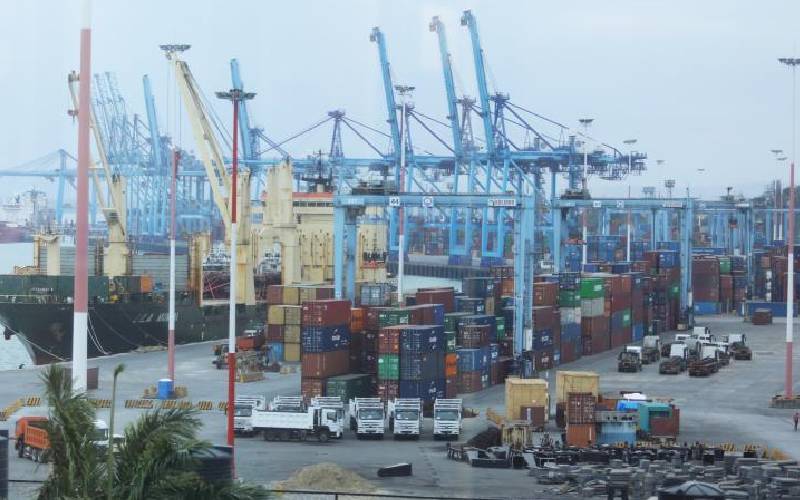
Containers at the Kenya Ports Authority in Mombasa County on Monday 8th September 2020. [Kelvin Karani, Standard]
Kenya Ports Authority (KPA) has assured Uganda and the transit market of efficient service delivery on clearance of outbound cargo as long as port users provide the necessary documentation.
While lauding Uganda as a valuable customer, KPA acting managing director Rashid Salim said the authority had opened a liaison office in Kampala for the importers and exporters in the country to ensure efficiency in service delivery.

Engineer Salim spoke yesterday when he received a Ugandan delegation led by the new Ugandan Consul General to Mombasa, Ambassador Paul Mukumbya.
“The port has also extended its services to the Naivasha Inland Container Depot linked by the Standard Gauge Railway line, and the Kenya Government donated some land to Uganda as their cargo storage facility to reduce the cost of doing business,” Salim said.

Over the last five years, Ugandan cargo at the port has registered a compounded average growth of 4.9 percent from 6.35 million tonnes in 2016 to 7.7 million tonnes in 2020. In the same period, Ugandan cargo occupied an average share of 23.7 percent of the total cargo throughput handled.
Uganda is a major customer for the port, commanding 80.8 percent of the transit market share. During the period, there was a steady growth in total transit traffic.

Ambassador Mukumbya commended KPA for infrastructural improvements at the port, which have contributed to faster handling of cargo.
Uganda Revenue Authority assistant commissioner, Customs External Operations Officer, Julius Rubagumya, who was at the meeting, lauded operations at the Kisumu Port, noting they had facilitated convenient movement of fuel imports into Uganda across the Lake.
He added that the upgrade of the Meter Gauge Railway (MGR) linking Kisumu to Naivasha SGR will reduce the cost of doing business to the benefit of the consumer.
 
A quarter (1/4) of all cargo that passes through Mombasa port goes to Uganda
 
80% of cargo that is destined to other countries apart from Kenya (transit cargo) goes to uganda
 
Ugandan Oil is now being transported to Uganda through Lake Victoria from Kisumu.
 
Kenya is trying to connect SGR at Naivasha with existing MGR that goes to Kisumu. Once this is done by end of this year, there will be a continuous railway line from Mombasa to Kisumu. This will enable some Ugandan goods to be transported by rail from Mombasa to Kisumu then by water from Kisumu to Uganda thus lowering transportation costs.
 
Ideally,government can't really choose the ideal transportation for a particular busineman man. A businessman will always look for the effecient and most reliable option, whether Mombasa or Dar. From the raw data so far, mombasa has proven to be the best option for most.
However Dar port is expanding as well. So the competition will be stiff in the next 10 years, hence the idea of Lamu port.kudos to GoK for the forsight
 
Ideally,government can't really choose the ideal transportation for a particular busineman man. A businessman will always look for the effecient and most reliable option, whether Mombasa or Dar. From the raw data so far, mombasa has proven to be the best option for most.
However Dar port is expanding as well. So the competition will be stiff in the next 10 years, hence the idea of Lamu port.kudos to GoK for the forsight
Dar can't compete with Mombasa. How can a Port of 7 berths compete with a Port of 23 berths. Cargo clearance at the Port of Mombasa is less than 6 hours compared to 4 days in Dar.
 
Ideally,government can't really choose the ideal transportation for a particular busineman man. A businessman will always look for the effecient and most reliable option, whether Mombasa or Dar. From the raw data so far, mombasa has proven to be the best option for most.
However Dar port is expanding as well. So the competition will be stiff in the next 10 years, hence the idea of Lamu port.kudos to GoK for the forsight
Mombasa is much closer to Kampala than Dar. Mombasa is 1165 km from Kampala while Dar is 1,678 km from Kampala. That is a difference of 513 kilometres. Let me give you an idea of how far 513 kilometres is, 480 km is approximately the distance between Nairobi and Mombasa. So 513 km is a bigger distance than even the distance between Mombasa and Nairobi. This means that the transport costs between Dar and Kampala will always be high and they cannot lower the cost of transportation enough to compete with Mombasa port. The only Ugandans who use Dar port are the ones who live near the border with Tanzania. But the capital city of Kampala is where most businesses and businessmen and importers/exporters are based and that is why they prefer to use Mombasa port which is closer to them hence cheaper than Dar port
 
Just because Tanzania has stolen the pipeline project from Kenya does not mean that they will also steal the transportation business. Dar port is just too far from Kampala for businessmen in Kampala to use it. To make matters worse, Mombasa port is more efficient than Dar port. Mombasa port clears goods much faster than Dar port. Kenya also has superior rail transportation. Tanzania's SGR is still under construction while Kenya's is already working.
 
Back
Top Bottom