Lets see if Kenyan companies can acquire Ethiopian companies as Kenyans have always bragged

Lets see if Kenyan companies can acquire Ethiopian companies as Kenyans have always bragged

Geza Ulole

JF-Expert Member
Joined
Oct 31, 2009
Posts
65,136
Reaction score
91,917
Ethiopia opens up telecoms, airline to private, foreign investors
Aaron Maasho
5 MIN READ

ADDIS ABABA (Reuters) - Ethiopia said on Tuesday it would open its state-run telecoms monopoly and state-owned Ethiopian Airlines to private domestic and foreign investment, a major policy shift that will loosen the state’s grip on the economy.


A member of the ground crew directs an Ethiopian Airlines plane at the Bole International Airport in Ethiopia's capital Addis Ababa, August 21, 2015. REUTERS/Tiksa Negeri/File Photo
The East African nation of 100 million people has one of the most closed and controlled economies in Africa. The ruling EPRDF coalition, in power since 1991, has long supported deep state involvement in the economy.

But the EPRDF said on Tuesday that Ethiopia needed economic reforms to sustain rapid growth and boost its exports.

“While majority stakes will be held by the state, shares in Ethio Telecom, Ethiopian Airlines, Ethiopian Power, and the Maritime Transport and Logistics Corporation will be sold to both domestic and foreign investors,” it said in a statement.

It was referring to the state monopolies in the electricity, telecoms and logistics sectors, as well as the highly profitable national flag carrier.

The announcement was the first clear signal that Prime Minister Abiy Ahmed, who came to power in April promising a “new political beginning”, would implement real economic reforms.

The 41-year-old former army officer was appointed by the EPRDF after his predecessor, Hailemariam Desalegn, resigned in February after three years of unrest in which hundreds of people were killed by security forces.

Observers say Abiy is under pressure to meet high public expectations. In the past two months he has travelled around Ethiopia, promising to address grievances and to strengthen a range of political and civil rights.

Earlier on Tuesday parliament approved the government’s decision to lift a six-month state of emergency two months earlier than planned. [L5N1T71ON]

UNEMPLOYMENT
One challenge is appealing to disaffected youth, which will require the creation of many more jobs. Anger over high unemployment fuelled violence that led to Hailemariam’s resignation.

Around 40 percent of the population is under the age of 15, the United Nations says. Up to three million people enter the labour market every year but most do not find jobs, local economists say.

Massive state-led infrastructure projects that are expanding road and rail networks have driven economic growth of nearly 10 percent for the past decade.

But the heavy spending has drained capital from heavily regulated state banks and left little for local businesses and the few foreign investors allowed into a handful of sectors.

Local and foreign investors have long said that opening up new sectors could ease a shortage of foreign exchange.

Ethiopia’s foreign reserves amounted to only $3.2 billion by the end of the 2016-17 fiscal year - the equivalent of less than two months worth of imports.

The move to liberalise sectors of the economy which have always been off limits to foreign investors came as a surprise after the new premier had signalled to local businessmen that the government would remain involved in infrastructure, banking and telecoms.

The EPRDF statement did not mention banking sector changes.

The coalition said “corporations under government hands - railway, sugar, industry parks, hotels and various manufacturing firms” would also be either partially or fully privatised.

Ethiopia is one of few African countries to still have a state monopoly in telecoms.

Last month Ethio Telecom said it would allow some local firms to provide internet services through its infrastructure, which could spur competition and expand the data market.

PEACE WITH ERITREA
In another huge policy shift announced on Tuesday, the EPRDF said Ethiopia would “fully accept and implement” a peace agreement with Eritrea that was signed in 2000 and a subsequent international boundary ruling that handed a flashpoint border town to Asmara.

The Horn of Africa neighbours have remained at odds since a 1998-2000 war over a disputed town that a boundary commission subsequently handed to Eritrea but which Ethiopia rejected.

The EPRDF said it had taken the decision to accept and implement the peace deal with Eritrea “in order to benefit the peoples of both countries who are linked by blood”.


Eritrea’s Information Minister Yemane Gebremeskel told Reuters he had not seen the Ethiopian government’s statement so could not immediately comment.

Reporting by Aaron Maasho; Additional reporting and writing by Maggie Fick; Editing by Gareth Jones

Ethiopia opens up telecoms, airline to private, foreign investors

MY TAKE

Pretty sure South African and European companies will push aside Kenyan fantasy! Just like what happened with Breweries.
 
  1. Heineken introduces new flavors


news-Heineken.gif

BUSINESS
Heineken introduces new flavors
19 May 2018
By Dawit Endeshaw


Heineken Brewery SC has introduced two new beers to Ethiopian market called Sofi Buna and Walia 3.3.

This is the third attempt in almost one year where the company introduced a new beer. It is to be recalled that in June 2017, Heineken introduced Walia Radler which has 2.5 percent alcohol content.

This time around–Sofi Buna—a nonalcoholic beer mixed with malt has come with a coffee taste. The second one–Walia 3.3–came with limited alcohol content: 3.3 percent.

Heineken first established itself in the Ethiopian market after acquiring Harar and Bedele brewery factories. At the time, the company bought the two factories from the government.

It first entered the market in August 2011, where it purchased the two factories from the then Privatization & Public Enterprise Supervising Agency (PPESA). The breweries were sold to Heineken for USD 163 million. At the time, the two factories had the capacity to produce 750,000 hecto-liters per year.

Currently, there are around seven breweries operating in Ethiopia with an annual production capacity of 12 million hectoliters and Heineken is among the leaders in the market.

Few researches show that BGI has the biggest market share with 38 percent followed by Heineken with at 30 percent market share.

Over the past one year, the very competitive brewery market in Ethiopia has shown a significant shift where BGI is now on the process of acquiring Raya Brewery and Zebidar.


FacebookTwitterLinkedInTeilen
Related Topics

Heineken introduces new flavors | The Reporter Ethiopia English
 
SABMiller Taps Ethiopia's 'Holy Water'


By
Peter Wonacott
Updated Jan. 13, 2011 12:01 a.m. ET

AMBO, Ethiopia—The last emperor of Ethiopia used to travel here to drink water that seeped from fissures of volcanic rock. The naturally sparkling liquid was so prized for its restorative powers that locals called it holy water.

Ethiopians still quaff Ambo's precious resource. But today, it is bottled and sold by a unit of multinational brewer SABMiller PLC, which acquired an aging mineral-water bottling plant once belonging to Emperor Haile Selassie.

WHO'S BUYING?
Read profiles of three African consumers

ETHIOPIA'S CONSUMER CLASS

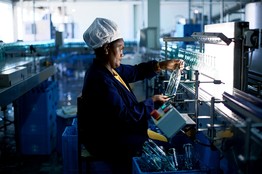
A worker inspects a bottle of Ambo sparkling water: prized by Ethiopians for its healing powers and sold by multinational brewer SABMiller. PER-ANDERS PETTERSSON FOR THE WALL STREET JOURNAL
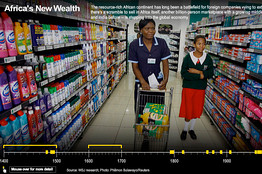
AFRICA'S NEW WEALTH

See a timeline of foreign investment in Africa.
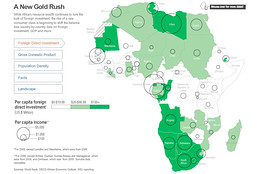
A NEW GOLD RUSH

See a map and country-by-country facts on African economies.
Since SABMiller took over in 2009, the company has redesigned bottles and overhauled assembly lines once held together by broomsticks and wire. New flavors of Ambo water include pineapple and lemon-lime and are sold to fancy hotels and European cafés.

Resource-rich Africa long has been a battlefield for foreign companies vying to extract and export. Now, there's a scramble to sell in Africa itself, a billion-person marketplace with a growing middle class that is stepping into the global economy.

But while poverty rates have fallen in the past decade, half the population still lives on only $1.25 a day, according to the World Bank, which considers Africa the world's hardest region to conduct business.

"You've got to separate the working environment from the opportunity, and don't let one scare you from the other," says Johann Krige, managing director of Ambo Mineral Water. "We feel we can see a way through the minefield."

The opportunity comes from a continent where gross domestic product rose an average of 4.9% a year from 2000 through 2008, more than twice the pace of the previous two decades, according to consulting firm McKinsey & Co.

In Ethiopia, stutter steps into the global economy have spurred change.

From 2003 through 2008, the country's economy grew at an average annual rate of 11.2%, twice the clip for the continent as a whole, according to the Africa Development Bank. Per capita annual income is $330—low compared with other developing countries, but more than double what it was in 2000, the World Bank says.

"The commanding heights of the economy will be owned by the government," Hailemariam Desalegn, Ethiopia's deputy prime minister and minister of foreign affairs said recently at a conference of young African leaders. "This is our way of thinking. Whether it's correct or not, we'll see."

Ethiopia has relaxed its grip on agriculture and a few other sectors, and foreign investment has trickled in.

The streets of the capital Addis Ababa offer vivid signs of the transition. Donkey carts trundle by shops selling Dell computers and Sharp microwave ovens, a girl yanks a goat by one of its hind legs past a Pepsi sign, a man balances cabbages on his head as he passes the country's presidential palace, where South African wine is served to state guests.

In this environment, SABMiller has eased into Ethiopia.

Several generations ago, farmers found lost cows slurping water from natural springs in the rocky hills outside Ambo. Locals said the water cured stomach ailments, alleviated rheumatism and improved digestion. Ethiopia's Orthodox Christians believed it cleansed the spirit. Legend has it that Haile Selassie, known as the "Lord of Lords," was driven here in a maroon Rolls Royce to bathe in the hot springs.

THE NEXT CONTINENTAL SHIFT
OB-LU794_AFRICA_DV_20110112234439.jpg

Multinational corporations are racing to make the most of Africa's burgeoning middle class. With reporters on the ground there, a Wall Street Journal series examines the changes.

READ MORE
After the government resisted SABMiller's efforts to buy a brewery, a consortium led by the company acquired a 67% stake in the Ambo mineral-water factory, with the government holding the balance.

SABMiller has invested about $20 million in the Ambo plant, which, pushing four decades at its current site, had become an industrial relic. When SABMiller arrived two years ago, assembly lines were jury-rigged, stock was kept in cages to prevent theft and half-century-old records were stacked in outhouses.

The company refurbished old assembly lines and installed a new one. Now the factory spits out 40,000 glass bottles an hour, up from about 12,000 when the plant was state-owned, says Philip Gane, the plant's technical director. He says SABMiller spent about $130,000 on equipment that uses cameras to line up labels on bottles.

Ambo water is sold in Ethiopian shops for about 30 cents a bottle but for much more in upscale hotels and restaurants. And SABMiller exports it to the Mideast, Europe and North America. Ambo sells for about $6 a bottle in New York restaurants. SABMiller has expanded the line with a less-carbonated, fruit-flavored version to compete with soft drinks like Coke and Pepsi.

Ambo water is part of a SABMiller portfolio that includes 45 African beers catering to a variety of tastes and represents a little less than half the company's volume for the continent. Nile Gold is a premium beer in Uganda.

But Chibuku, a traditional sorghum beer popular with price-sensitive consumers on the continent, is known by some middle-class Zimbabweans as "the dog won't touch it."

"Local brands done well are our backbone," Mr. Krige, the Ambo plant's managing director, says over a glass of his chilled sparkling water.

In 2009, SABMiller began brewing beer in southern Sudan. In keeping with southern Sudanese ritual, a white bull was slaughtered to bless the brewery's opening.

In the fiscal half through September, SABMiller's sales in Africa rose 19% from a year earlier to $1.51 billion, outpacing growth in Latin America and Asia. European sales fell 5%.

But the challenges are many. Blackouts affect production and restrictive currency laws are a hurdle to importing factory equipment. Ambo residents grumble about layoffs since SABMiller took over.

"After SABMiller has come, the people haven't benefited," says Alemayehu Bayisa, the 41-year old caretaker of the Ambo hot springs. "I understand they want to modernize and use new machines, but that has meant layoffs at the factory."

The company says it offered early retirement for workers over 55 years old, resulting in about 95 early retirees, but said much of the original work force remains.

There are signs that Ethiopia's privatization experiment is set to spread. The government in November offered the opportunity to invest in a joint venture with a state-owned brewery. SABMiller is one of five international bidders.

"The bar of entry is getting lower," Mr. Krige says brightly. But he strikes a note of caution: "That means our competitors also will be coming."

Write to Peter Wonacott at peter.wonacott@wsj.com

SABMiller Taps Ethiopia's 'Holy Water'
 
Ethiopia: Diageo Beer Company Launches an Expansion Project
Latest Business Alerts
No Comments


diageo.jpg
Diageo PLC, producer of Meta Abo, Zemen Beer and Malta Guinness non-alcoholic beer brands, begins a 780 million Birr expansion project, according to Addis Fortune.

The expansion was needed because the company wants to increase its production capacity from 1.7 million hectoliters to four million hectoliters per year. It has received an expansion license from Ethiopian Investment Commission in July 15, 2015.

The expansion project is taking place at the factory’s site in Sebeta, 25 km south-west of Addis Ababa.
Diageo has acquired Meta Abo Brewery from the Privatization and Public Enterprises Supervising Agency (PPESA) in 2013 by 225 million dollars.

Diageo, Britain based Beverage Company, entered markets of 180 countries. It has brands in beer, wine and liquor, including Guinness Beer, Johnnie Walker (Whiskey) as well as Smirnoff (Vodka).

Source: Addis Fortune

Ethiopia: Diageo Beer Company Launches an Expansion Project
 
By Dawit Endeshaw
Heineken Ethiopia is set to inaugurate its one year expansion project executed at a total cost of 2.4 billion Br. The project will give the company the highest production capacity in Ethiopia's brewery industry. When fully operational the capacity of Heniken is expected to surpass the current leader in the industry, BGI Ethiopia by one million hectoliter.

Elmi Olindo Contractors Plc has carried out building on the expansion, which took 14 months to complete while LEHUI Group was involved in brewhouse setup and the installation of fermentation and storage tanks. Elmi Olindo which is an Ethiopian-based company is the same company who was also behind the construction of Dashen Brewery plant in Debr Berhan. It began its activity in 1937 in Asmara, Eritrea.

The expansion will double the capacity of the Qilinto plant, in the souther outskirt of the capital in particular and will boost the total production of three plants including Bedele and Harar to four million hectoliters, a year. To date, the company has invested close to 11 billion Br in Ethiopia.

The first plant at Qilinto was known for producing only Walia beer. Following this expansion the market will see the company producing its flagship brand, Heineken Beer. The Qilinto plant will become the seventh Heineken producing factory in Africa to produce Heineke Beer. Heineken beer is widely consumed across 30 African countries.

With the opening of the new plant, Heineken will overtake BGI as Ethiopia's biggest beer production company. BGI is now producing three million hectoliter per a year.

The expansion will also increased the company's employees to 270 from 290, in addition to hundreds of outsourced employees, such as security and janitorial workers.

Heineken entered the Ethiopian market in 2011 following the acquisition of Harar and Bedele breweries for 163.4 million dollars, through the government's privatization policy.

"We are investing for the future," said Fekadu Beshah, external communications and sustainability manager at Heineken Breweries S.C.

"We are preparing for a very competitive and dynamic market. Heineken [Ethiopia] is still targeting the local market," he added.

The growing brewery market in Ethiopia is attracting new players and fresh injections of cash for production capacity expansion. Just last year, Dashen Brewery invested close to two billion Br in a new plant in Debre Birhan, which is now operational. Diageo-Meta finalized its own expansion at a total cost of 780 million Br, boosting its production to 1.7 million hectoliters. In the past five years, new brewery companies such as Habesha and Raya have also joined the market.

"I think nowadays, the brewery companies are expanding for one reason: to position themselves along different segments of the society," commented a marketing expert who is close to the industry.

"The companies always need to update themselves by introducing new brands and targeting new markets in a stiff market", said the expert.

The market is now believed to have a total production capacity of 10.5 million hectoliters. With Heineken's expanded capacity, that figure will reach 12 million hectoliters.

"Urbanization and economic growth coupled with aggressive promotional campaigns have contributed to an increase in demand," said Abdulemenan Mohammed Hamza, a financial expert told Fortune.

With the growing industry, per capita consumption has also increased. In 2013, the figure was at five liters while latest reports show that is has now escalated to eight liters.

There are currently seven breweries operating the country.

Read the original article on Addis Fortune.

https://addisfortune.net/articles/heineken-to-claim-no1-production-capacity/
 
I was in Ethiopia last year around June. That country is heavily controlled by the government. This is a good move especially for the telecomm sector. Ethiopia with 100 million people is easily one of the biggest telecomm markets. Also the peace deal with Eritrea is a genius move by the prime minister. War doesn't put food on the table, now ethiopia could soon start using Eritrea's port which they haven't used since the war era of 1998.
Geza just a little advise. Not everything is about Kenya. Not every progress in Africa is about Kenya.Learn to breathe sometimes without thinking about Kenya. Tunaeza geuza Kenya awe msichana halafu tukupe umuowe.
 
We DON'T brag.... We do it then it comes out to you as bragging...... That's lazy of you.
Endeleeni kubweka!

4. Ethiopia
Ethiopia is home to 86.5 million people. The market was long expected to become a material revenue source for EABL. In 2012 the country tendered its state owned breweries. However, Diageo won a USD 225m bid for an Ethiopian brewery, ending EABL’s chances of domestic production. This will not, however, preclude the company from importing its African brands in to Ethiopia.
East African Breweries

East African Breweries Targets Zambia And Ethiopia Markets

By J. Mwamunyange, Special Correspondent
Nairobi — After recording a pre-tax profit of Ksh5.3 billion ($75.7 million) in its half year for the period ended December 2006, the leading regional brewer, East African Breweries Ltd (EABL), is now targeting markets in Zambia and Ethiopia.

EABL managing director Gerald Mahinda said the firm was now "setting its sights on markets beyond East Africa."

http://allafrica.com/stories/200703200599.html
 
I was in Ethiopia last year around June. That country is heavily controlled by the government. This is a good move especially for the telecomm sector. Ethiopia with 100 million people is easily one of the biggest telecomm markets. Also the peace deal with Eritrea is a genius move by the prime minister. War doesn't put food on the table, now ethiopia could soon start using Eritrea's port which they haven't used since the war era of 1998.
Geza just a little advise. Not everything is about Kenya. Not every progress in Africa is about Kenya.Learn to breathe sometimes without thinking about Kenya. Tunaeza geuza Kenya awe msichana halafu tukupe umuowe.
muache ndoto za Alinacha!
 
Back
Top Bottom