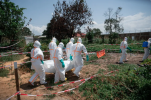
Mlipuko wa 17 wa virusi vya Ebola nchini Jamhuri ya Kidemokrasia ya Kongo umekuwa mbaya zaidi katika historia ya nchi hiyo baada ya idadi ya vifo kufikia watu 2,325 na kupita rekodi ya mwaka 2018-2020. Taasisi ya Kitaifa ya Afya ya Jamii nchini humo imeripoti kuwa jumla ya maambukizi yaliyothibitishwa imefikia 4,945, huku visa vipya 101 vikirekodiwa ndani ya saa 24 pekee.
Soma pia: Vifo vya Ebola vyafikia 1000 Congo
Viongozi wa Umoja wa Mataifa na Shirika la Afya Duniani (WHO) wameonya kuhusu kasi kubwa ya kusambaa kwa virusi hivyo, wakieleza kuwa msukumo wa sasa unaweza kupita hata janga la Afrika Magharibi la mwaka 2014-2016 lililoua zaidi ya watu 11,000.

Hali hii inatishia zaidi kwa sababu mlipuko huu unasababishwa na aina ya Ebola ya Bundibugyo, ambayo haina chanjo wala matibabu rasmi yaliyoidhinishwa. Kiwango cha vifo kimepanda hadi asilimia 46, huku juhudi za uokoaji zikikwamishwa na kuchelewa kugundulika kwa wagonjwa, miundombinu dhaifu ya afya, pamoja na migogoro ya silaha karibu na mipaka ya Sudan Kusini, Uganda, na Rwanda.
=================
The Ebola outbreak in the Democratic Republic of the Congo (DRC) has killed 2,325 people, surpassing the death toll from the 2018-2020 outbreak to become the deadliest in the country’s history.
The confirmed number of people infected with the virus has risen to 4,945, including 101 new cases detected in the previous 24 hours, the DRC’s National Public Health Institute said in its latest report on Sunday.
“The outbreak is the fastet growing on record,” Tom Fletcher, the United Nations humanitarian chief, said in a statement on Friday. “We need speed, scale, and solidarity before this virus gets even further ahead of us.”
The outbreak, the DRC’s 17th, was already the biggest in the countrys history in terms of number of cases – a milestone reached in late July. The latest government data shows that the total number of deaths has surpassed the 2,299 deaths recorded in the 2018-2020 outbreak, which was previously the country’s worst on record.
“Ebola is winning in the Democratic Republic of the Congo. We cannot let the virus outrun our response,” Fletcher said as he outlined the latest efforts to contain the virus.
On Wednesday, World Health Organization Director-General Tedros Adhanom Ghebreyesus said that at its current pace,the outbreak is on track to eclipse the West African Ebola outbreak of 2014 to 2016, a crisis that killed more than 11,000 people and accelerated the push to develop a vaccine.
The current outbreak is caused by the Bundibugyo species of Ebola virus, which has no approved vaccines or treatments. The outbreak has gained momentum since it was declared on May 15, as weak health infrastructure, the region’s remoteness, and ongoing conflict near the DRC’s borders with South Sudan, Uganda, and Rwanda have hindered response efforts.
The proportion of people dying from the outbreak after a confirmed infection, known as the case fatality ratio, has risen from about 20 percent in early June to 46 percent, according to government data, meaning nearly one in every two confirmed cases is now deadly.
“Normally, as an outbreak progresses, the case fatality ratio should fall as contact tracing improves and patients are identified and treated earlier,” said Thomas Parisch, a public health specialist deployed to the DRC with medical charity Doctors Without Borders, known by its French initials MSF.
“Instead, we’re still seeing many cases detected very late, when treatment is less likely to succeed, with many identified only after they die in the community.”
A small number of experimental vaccines and therapies are being evaluated, while global health authorities assess whether existing Ebola treatments could offer protection. Evidence so far is limited to animal studies.
Source: Aljazeera
Soma pia: Vifo vya Ebola vyafikia 1000 Congo
Viongozi wa Umoja wa Mataifa na Shirika la Afya Duniani (WHO) wameonya kuhusu kasi kubwa ya kusambaa kwa virusi hivyo, wakieleza kuwa msukumo wa sasa unaweza kupita hata janga la Afrika Magharibi la mwaka 2014-2016 lililoua zaidi ya watu 11,000.
Hali hii inatishia zaidi kwa sababu mlipuko huu unasababishwa na aina ya Ebola ya Bundibugyo, ambayo haina chanjo wala matibabu rasmi yaliyoidhinishwa. Kiwango cha vifo kimepanda hadi asilimia 46, huku juhudi za uokoaji zikikwamishwa na kuchelewa kugundulika kwa wagonjwa, miundombinu dhaifu ya afya, pamoja na migogoro ya silaha karibu na mipaka ya Sudan Kusini, Uganda, na Rwanda.
=================
The Ebola outbreak in the Democratic Republic of the Congo (DRC) has killed 2,325 people, surpassing the death toll from the 2018-2020 outbreak to become the deadliest in the country’s history.
The confirmed number of people infected with the virus has risen to 4,945, including 101 new cases detected in the previous 24 hours, the DRC’s National Public Health Institute said in its latest report on Sunday.
“The outbreak is the fastet growing on record,” Tom Fletcher, the United Nations humanitarian chief, said in a statement on Friday. “We need speed, scale, and solidarity before this virus gets even further ahead of us.”
The outbreak, the DRC’s 17th, was already the biggest in the countrys history in terms of number of cases – a milestone reached in late July. The latest government data shows that the total number of deaths has surpassed the 2,299 deaths recorded in the 2018-2020 outbreak, which was previously the country’s worst on record.
“Ebola is winning in the Democratic Republic of the Congo. We cannot let the virus outrun our response,” Fletcher said as he outlined the latest efforts to contain the virus.
On Wednesday, World Health Organization Director-General Tedros Adhanom Ghebreyesus said that at its current pace,the outbreak is on track to eclipse the West African Ebola outbreak of 2014 to 2016, a crisis that killed more than 11,000 people and accelerated the push to develop a vaccine.
The current outbreak is caused by the Bundibugyo species of Ebola virus, which has no approved vaccines or treatments. The outbreak has gained momentum since it was declared on May 15, as weak health infrastructure, the region’s remoteness, and ongoing conflict near the DRC’s borders with South Sudan, Uganda, and Rwanda have hindered response efforts.
The proportion of people dying from the outbreak after a confirmed infection, known as the case fatality ratio, has risen from about 20 percent in early June to 46 percent, according to government data, meaning nearly one in every two confirmed cases is now deadly.
“Normally, as an outbreak progresses, the case fatality ratio should fall as contact tracing improves and patients are identified and treated earlier,” said Thomas Parisch, a public health specialist deployed to the DRC with medical charity Doctors Without Borders, known by its French initials MSF.
“Instead, we’re still seeing many cases detected very late, when treatment is less likely to succeed, with many identified only after they die in the community.”
A small number of experimental vaccines and therapies are being evaluated, while global health authorities assess whether existing Ebola treatments could offer protection. Evidence so far is limited to animal studies.
Source: Aljazeera