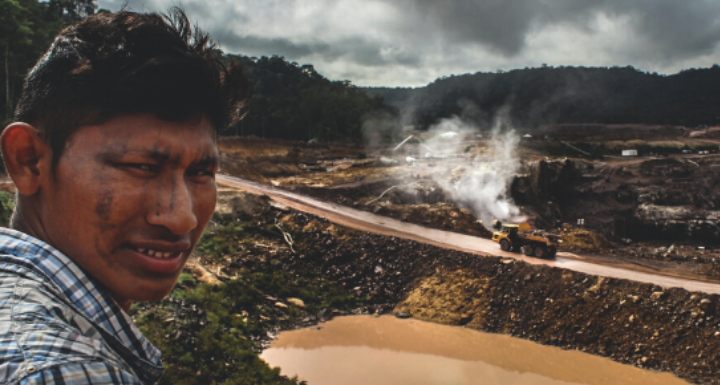
common sense inaonyesha kuwa treatment ya maji ya bwawa ili yawe na oxygen ya kutosha baada ya kutumika ni very expensive, otherwise viumbe hai down stream vinavyotegemea maji kuishi vitaathirika sana. Tukiua Selous tutakuwa wa ajabu sana
Huyu mzee kwa kupenda kuitafuta Legacy kwa nguvu atatuharibia mazingira ya SELOUS
----------------------------------------------------------------------------------------------------------------------------------------------------------------
Dams and Water Quality
(An excerpt from
Silenced Rivers: The Ecology and Politics of Large Dams, by Patrick McCully)
The chemical, thermal and physical changes which flowing water undergoes when it is stilled can seriously contaminate a reservoir and the river downstream. The extent of deterioration in water quality is in general related to the retention time of the reservoir — its storage capacity in relation to the amount of water flowing into it. Water in a small headpond behind a run-of-river dam will undergo very little or no deterioration; that stored for many months or even years behind a major dam may be lethal to most life in the reservoir and in the river for tens of kilometres or more below the dam.
Water released from deep in a reservoir behind a high dam is usually cooler in summer and warmer in winter than river water, while water from outlets near the top of a reservoir will tend to be warmer than river water all year round. Warming or cooling the natural river affects the amount of dissolved oxygen and suspended solids it contains and influences the chemical reactions which take place in it. . Altering natural seasonal changes in temperature can also disrupt the lifecycles of aquatic creatures — breeding, hatching and the metamorphosing of larvae, for example, often depend on thermal cues.
The pre-dam temperatures of the Colorado in Glen Canyon varied seasonally from highs of around 27 degrees centigrade to lows of near freezing. However, the temperature of water flowing through the intakes at Glen Canyon Dam, 70 metres below the full reservoir level, varies only a couple of degrees around the year with an average of less than eight degrees centigrade. The Colorado is now too cold for the successful reproduction of native fish as far as 400 kilometres below the dam — although introduced trout thrive in the cold water.
Relatively warm winter releases from reservoirs in cold climates will inhibit the formation of ice downstream. Reduced ice cover makes hazardous or impossible the use of frozen rivers as winter roads: in northern Scandinavia, for example, dams mean that the Sami people can no longer use many of their traditional winter reindeer herding routes which follow frozen rivers. Cold winter air passing over the relative warmth of some of the huge Russian and Canadian reservoirs can cause long spells of freezing fog.
In the same way as reservoirs trap river sediment, they also trap most of the nutrients carried by the river. During warm weather, algae are likely to proliferate near the surface of a highly nutrient-enriched, or eutrophic, reservoir. Through photosynthesis the algae consume the reservoir nutrients and produce large amounts of oxygen. Summer releases from the surface layer, or epilimnion, of a reservoir will thus tend to be warm, nutrient-depleted, high in dissolved oxygen, and may be thick with algae. High levels of algae can provide food for fish but also give water an unpleasant smell and taste, clog water supply intakes, coat gravel beds and restrict recreation. Massive algal blooms in the shallow, stagnant reservoirs of the ex-USSR have rendered their water unfit for either household or industrial use.
When algae in a reservoir die they sink to its bottom layer, or hypolimnion, where they decay and in doing so consume the already limited hypolimnion oxygen (there is usually not enough light for photosynthesis at the bottom of a reservoir). The acidity of this oxygen-depleted water often render it capable of dissolving minerals, such as iron and manganese, from the lake bed. Warm weather releases from a dam with low-level outlets will thus be cold, oxygen-poor, nutrient-rich and acidic, and may contain damagingly high mineral concentrations. The presence of an adequate level of dissolved oxygen in a river is one of the main indicators of good water quality. Water poor in dissolved oxygen can 'suffocate' aquatic organisms and make water unfit to drink. Dissolved oxygen, furthermore, is vital to enable bacteria to break down organic detritus and pollution.
Young Reservoirs
During the first years after a reservoir is filled the decomposition of submerged vegetation and soils can drastically deplete the level of oxygen in the water. Rotting organic matter can also lead to releases of huge amounts of the greenhouse gases methane and carbon dioxide. Reservoirs often 'mature' within a decade or so, although in the tropics it may take many decades or even centuries for most of the organic matter to decompose. Thorough clearing of vegetation in the submergence zone before the reservoir is filled can reduce this problem, but because it is difficult and prohibitively expensive, especially for large reservoirs, this is only ever partially done at best.
The most notorious examples of the large-scale flooding of forest have occurred in South America. Brokopondo Dam in Suriname submerged 1,500 square kilometres of rainforest — one per cent of the country. The decomposition of the organic matter in its shallow reservoir severely deoxygenated the water and caused massive emissions of hydrogen sulphide, a corrosive and foul-smelling gas. Workers at the dam had to wear masks for two years after the reservoir started to fill in 1964. The cost of repairing damage done to Brokopondo's turbines by the acidic, deoxygenated water was estimated in 1977 to have totalled $4 million, more than seven per cent of the total project cost. Studies carried out in 1967 showed that oxygen levels in the river only began to recover around 110 km downstream of the dam, depriving many riverside communities of drinking water and fish.
Despite a legal requirement to clear vegetation from all areas to be submerged, the Brazilian electricity utility Eletronorte cleared less than a fifth of the 2,250 square kilometres of rainforest inundated by Tucuruí and only a token two per cent of the 3,150 square kilometres of forest inundated by Balbina Dam. Clearing all of the Tucuruí reservoir would have increased the project's cost by an estimated $440 million, or nine per cent. Because Balbina's turbine intakes are at the very bottom of the 50 metre high dam, the Uatumã River, a north-bank tributary of the Amazon, is receiving almost totally deoxygenated water from the reservoir. The consumption of oxygen by decomposing vegetation in the newly-filled reservoir behind Yacyretá Dam on the border between Argentina and Paraguay is believed to have killed the more than 120,000 dead fish found downstream after the first test of the dam's turbines in August 1994.
Nutrient-enriched tropical reservoirs are particularly prone to colonization by aquatic plants. Mats of floating plants can impede fishing boats and nets, block out light for other organisms, clog turbines and provide an excellent habitat for disease vectors such as mosquitoes and the snails which host the schistosomiasis parasite. Through transpiration, aquatic plants can also lower reservoir levels: losses of water from evaporation and transpiration in weed-covered reservoirs can be up to six times higher than those from evaporation in open waters.
Reservoir operators' most dreaded weed is the water hyacinth (Eichhornia crasspipes), a native of Amazonia which is now found throughout the tropics. Water hyacinths can proliferate at an extraordinary rate in eutrophic reservoirs, largely stymieing efforts to eradicate them by physically removing the plants or by spraying them with herbicides (which brings in its wake its own inevitable problems). Two years after Brokopondo began to fill over half its reservoir was covered with water hyacinth. The plant was partially brought under control by a long-term programme of aerial spraying with the carcinogenic herbicide 2,4-D which also poisoned many other plants and animals. African reservoirs have also suffered serious infestations of water hyacinths and other plants. At one point a fifth of the surface of Kariba Reservoir — more than 1,000 square kilometres — was smothered by aquatic plants.
Scientists have only relatively recently become aware of what now appears to be a pervasive reservoir contamination problem, the accumulation of high levels of mercury in fish. Mercury is naturally present in a harmless inorganic form in many soils. Bacteria feeding on the decomposing matter under a new reservoir, however, transform this inorganic mercury into methylmercury, a central nervous system toxin. The methylmercury is absorbed by plankton and other creatures at the bottom at the aquatic food chain. As the methylmercury passes up the food chain it becomes increasingly concentrated in the bodies of the animals eating contaminated prey. Through this process of bioaccumulation, levels of methylmercury in the tissues of large fish-eating fish at the top of the reservoir food chain can be several times higher than in the small organisms at the bottom of the chain.
Elevated mercury levels in reservoir fish were first noticed in South Carolina in the late 1970s. Since then they have been recorded in Illinois, northern Canada, Finland and Thailand. The problem is in fact probably much more widespread that the few studies done suggest: scientists from Canada's Department of Fisheries and Oceans say that fish mercury concentrations 'have increased in all reservoirs for which pre- and post-impoundment data have been collected.'
The best researched case of reservoir methylmercury is at the La Grande hydrocomplex in Quebec, part of the huge James Bay Project. Ten years after the La Grande 2 Reservoir was first impounded mercury levels in pike and another predatory fish called walleye had risen to six times their pre-reservoir level and showed no signs of levelling off. As fish are a major part of the traditional diet of the local Cree native people, mercury levels in their bodies have risen dangerously. By 1984, six years after La Grande 2 Dam was completed, 64 per cent of the Cree living on the La Grande estuary had blood mercury levels far exceeding the World Health Organisation tolerance limit.
Turning Sweet Water to Salt
Because they greatly multiply the surface area of water exposed to the rays of the sun, dams in hot climates can lead to the evaporation of huge amounts of water which is mainly lost to the river downstream. In the region of 170 cubic kilometres of water evaporates from the world's reservoirs every year, more than seven per cent of the total amount of freshwater consumed by all human activities. The annual average of 11.2 cubic kilometres of water evaporated from Nasser Reservoir behind the High Aswan Dam is around ten per cent of the water stored in the reservoir and is roughly equal to the total withdrawals of water for residential and commercial use throughout Africa.
The massive amounts of evaporation from the reservoirs behind Hoover and the other dams on the Colorado — one third of the river's flow is evaporated from reservoirs — is one of the reasons why the salinity of the river has risen to damaging and costly levels. High salt concentrations are poisonous to aquatic organisms and they corrode pipes and machinery: the increased Colorado River salinity costs Southern California's water users millions of dollars each year.
Soils are often naturally saline in arid areas like the US West and are made even saltier when irrigated. Irrigation water percolates through the soils, picking up salts, then returns to the river. On rivers like the Colorado the same water may be used for irrigation 18 times over. Reservoir evaporation concentrates further the level of salt in the river. The salinity of the water at Imperial Dam, just north of the Mexican border, increased from an average of 785 parts per million (ppm) between 1941 and 1969, to over 900 ppm in 1990. It is predicted to exceed 1,200 ppm after the year 2000. The US standard for drinking water is 500 ppm.
In the early 1960s, a surge in salt levels caused a dramatic decline in yields on fields irrigated with Colorado water in Mexicali, one of Mexico's most productive agricultural regions. Mexico City made a formal protest to Washington, DC, and finally in 1974 the two countries signed an agreement under which the salinity of the Colorado River at the Mexican border must not exceed 1024 ppm. The Bureau of Reclamation's 'salinity control program', initiated after the treaty with Mexico, had cost taxpayers $660 million by 1993. The centrepiece of the programme is a money-sucking, technological non-fix — one of the world's largest and most expensive desalination plants. The plant, built at Yuma, Arizona, cost $256 million. It began operation in May 1992, but was closed again in January 1993 after floods destroyed some of the drains bringing it saline water. Federal budget cuts mean that the plant may never start up again. 'In a region covered with water-reclamation projects of fabulous expense and questionable usefulness,' wrote Martin Van Der Werf in the Arizona Republic, 'the Yuma plant may be the biggest laughingstock of all.'
For decades, the western United States was ground zero for one of the greatest experiments humans had ever undertaken: replumbing the world’s rivers. As Marc Reisner cataloged so forcefully in the book Cadillac Desert, dam builders pursued these mega-projects with little regard for whether they...

www.internationalrivers.org