Tarishi
Senior Member
- May 9, 2008
- 120
- 158
Your Holiness,
I write with urgency from Tanzania, a land whose history has long stood as a shining example of interfaith harmony. For more than six decades, Christians and Muslims have lived as brothers and sisters, bound not by creed alone but by a shared identity as Tanzanians. It was the late Mwalimu Julius Kambarage Nyerere, himself a devout Catholic and the founding father of our nation, who planted those seeds of tolerance.
He led not as a Catholic president, but as a Tanzanian one, whose faith inspired him to respect others.
When he stepped aside, Alhaj Ali Hassan Mwinyi, a Muslim, took the presidency and the same peace endured. H.E. Benjamin William Mkapa, a Catholic, followed, then H.E. Dr. Jakaya Mrisho Kikwete, a Muslim, and after him H.E. Dr. John Pombe Magufuli, again a Catholic. Now, for the first time, our nation is led by a Muslim woman, President Dr Samia Suluhu Hassan. And through all those decades, Tanzania remained what the world admired: a nation where faith built bridges, not walls.
But Your Holiness, today that heritage is under assault — not from extremists outside, but from the very institution meant to be a guardian of peace and moral clarity. The Tanzania Episcopal Conference, the collective body of Catholic bishops in this country, has increasingly abandoned the pulpit of salvation and turned it into a platform of politics. Sunday after Sunday, homilies in dioceses across the land no longer speak of the Gospels but of government, not of Christ’s love but of Samia’s alleged failings. The bishops proclaim her unfit to govern, unworthy of a second term, unqualified to lead. They denounce her presidency with a bitterness that has become routine, as though the Eucharist were now a sacrament of opposition.
Across Tanzania today, Catholic sermons have stopped being about salvation. Instead, they have turned into loudspeakers for political warfare. Bishops, led by Archbishop Damian Denis Dallu of Songea and orchestrated by the TEC, have transformed Sunday homilies into rallies against our Head of State, President Dr. Samia Suluhu Hassan.
They claim she is “unfit to govern.” They call for her to step aside. They sneer at her presence as though leadership in Tanzania is reserved only for men — or for Catholics.
Your Holiness, this is not faith. This is factionalism dressed in vestments.
The loudest voice in this crusade has been Fr. Charles Kitima, the Secretary-General of the TEC. He spares no Sunday, no microphone, and no camera in his crusade against President Samia’s government. His venom is public; his disdain is undisguised. And whose voice has become a megaphone of defiance. His rhetoric is not tempered counsel; it is a relentless attack.
Recently, when news broke of his being assaulted inside the heavily guarded TEC compound in Dar es Salaam, the country was stunned. Yet many here whisper that the incident bore the marks of orchestration, a performance designed to cast the government as persecutor and the Church as victim. Whether true or not, the episode served him well, giving him another excuse to thunder against the presidency. But the irony cannot be ignored: when John Pombe Magufuli, a devout Catholic, was president, and when his rule was feared as much as it was revered, the bishops were quiet. The pulpits then were docile, the sermons tame. Not once did they declare him unfit, nor did they speak with such ferocity.
Why now? Why only when the head of state is a Muslim woman? The double standard, Your Holiness, is as clear as it is dangerous.
And the hostility does not stop with President Samia. The bishops have extended their scorn to former President Jakaya Mrisho Kikwete, accusing him of refusing to “retire” simply because he continues to stand beside her at national functions. Yet this accusation betrays either ignorance or deliberate distortion.
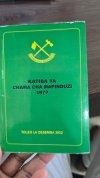
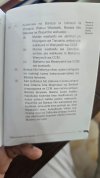
The constitution of the ruling party, Chama Cha Mapinduzi (CCM), is crystal clear. On page 143, it stipulates that retired Presidents and retired Vice Presidents must serve as members of the Advisory Council of Leaders. Julius Nyerere did. Ali Hassan Mwinyi did. Benjamin Mkapa did. Jakaya Kikwete himself is bound to do so. His presence at national functions is not indulgence, nor an act of clinging to power; it is duty. By attacking him today, TEC undermines not only an individual but the institutional fabric of our republic. It confirms, too, that desperation has made them careless, even reckless, forgetting to do their homework before laying claim to the right to speak with authority.
Your Holiness, this is not a minor quarrel. It is a crisis of boundaries. The Church is meant to stand above partisan struggles, to provide a moral compass when politicians lose their way. But when the Church itself descends into the mud of politics, it loses its halo and risks becoming just another party in clerical robes. The State can wrestle with politicians; it cannot wrestle with altars. A President may debate with an opponent; she cannot, with humility, spar with a bishop without appearing to blaspheme. And so the nation is paralysed, trapped between respecting faith and defending government.
Your Holiness, this is no longer a matter of criticism. It is an undeclared war. And if it continues, it will corrode the very harmony that Nyerere, Mwinyi, Mkapa, Kikwete and even Magufuli preserved. Tanzanians of different faiths have always drawn pride from the fact that we can be led by a Catholic, then a Muslim, then a Catholic again, without strife. Now the bishops risk shattering that balance. Their words, repeated week after week, are not harmless sermons; they are sparks falling on dry grass.
I must speak plainly. What the TEC is doing is not prophecy; it is provocation. It is not guidance; it is partisanship. It is not the mission of Christ; it is a crusade of grievance. And when bishops behave like politicians, they should not be surprised if they drag the Church down into the dust of politics, where moral authority evaporates and credibility is squandered.
Your Holiness, I implore you to act. You, and you alone, have the authority to call Archbishop Damian Denis Dallu of Songea, Fr Charles Kitima, and the wider TEC leadership to order. Remind them that their calling is eternal, not electoral. Remind them that they were ordained to preach the Gospel, not to campaign from the altar. Remind them that their power lies not in undermining governments, but in inspiring peace, humility, and reconciliation among the faithful.
If Rome remains silent, Tanzania may pay dearly. Already, murmurs grow that the Church is weaponising faith against a Muslim president, a narrative that risks inflaming sectarian division in a land where such division has never been our portion. This is not the Tanzania that Nyerere built, nor the legacy that Mwinyi, Mkapa, Kikwete or Magufuli left behind. If the bishops continue unchecked, they will not only betray their flock, but they will also desecrate the very harmony that has been our greatest blessing.
Please, Your Holiness, SOS.
I write not as one seeking a quarrel with your Church, but as a witness to a creeping distortion of its sacred mission in my homeland. Had these attacks come from the opposition, they would be filed under politics and handled accordingly. But when they come from the altar, from the lips of a bishop who now sounds more like a political party leader than a shepherd of souls, how does one answer back without risking sacrilege? How does a humble servant of the people defend himself without being accused of attacking the faith itself?
This is why I turn to you, Pope Francis XIV, not merely as a pontiff but as the last guardian of the line that separates the pulpit from the hustings. For if the Church in Tanzania becomes indistinguishable from a political machine, then it is not only the state that is endangered but the very moral authority of Catholicism itself. Silence now will be read as consent. An intervention delayed will look like complicity.
Your Holiness, I urge you: call your bishops to order. Remind them that they were consecrated to guide souls, not to undermine governments. Remind them that politics has its own arena, and that the crucifix must never be turned into a campaign banner. Tanzania cries for peace between Church and State. With humility, I beg you to hear our plea before the schism grows.
Your Holiness, I write with urgency because time is short. The political season gathers momentum, and with every sermon turned into a campaign speech, wounds deepen. I ask you, as the spiritual father of the Catholic world, to intervene now. Silence will not be neutrality; it will be endorsement. And history will remember that under your watch, the Catholic Church in Tanzania chose division over unity, noise over faith, and partisanship over peace.
With respect, yet with defiance against the silence that breeds injustice,
Tarishi Hauwawi
Dar es Salaam, Tanzania