Rais John Mahama afungua rasmi mwaka wa Mahakama ya Afrika jijini Arusha leo 02 March 2026

Rais John Mahama afungua rasmi mwaka wa Mahakama ya Afrika jijini Arusha leo 02 March 2026

Bagamoyo

Platinum Member
Joined
Jan 14, 2010
Posts
32,522
Reaction score
37,398
02 March 2026

TAARIFA: Rais Mahama afungua rasmi mwaka wa Mahakama ya Afrika jijini Arusha leo 02 March 2026​


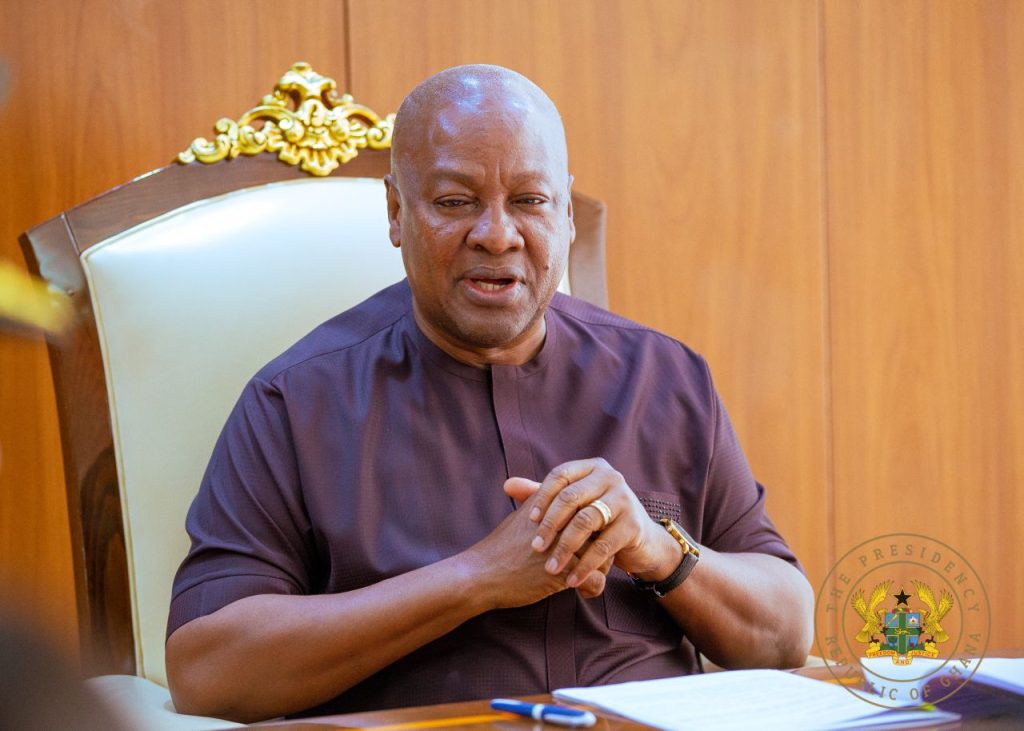
PHOTO-2026-02-28-19-23-24-1024x731.jpg

Rais John Dramani Mahama aliondoka Accra Ghana Jumapili, tarehe 1 Machi 2026, na kuelekea Arusha, Tanzania.

Rais John Mahama ni Mgeni Maalum wa Heshima katika sherehe kuu ya kufungua mwaka wa mahakama wa 2026 wa Mahakama ya Afrika ya Haki za Binadamu na Watu yenye makao yake rasmi mjini Arusha Tanzania.

Sherehe hiyo pia imetumika kuzindua maadhimisho ya miaka 20 ya mahakama hiyo ya Afrika ya Haki za Binadamu na watu

Huu utakuwa mwaliko wa kwanza kwa Rais aliye madarakani wa Jamhuri ya Ghana kuhutubia Mahakama iliyo taasisi chini ya Umoja wa Afrika AU. Mada kuu ya ufunguzi wa mwaka wa mahakama ni 'Miaka 20 ya Huduma katika Kulinda Haki za Binadamu na Watu barani Afrika'.

Akiwa Arusha, Rais Mahama atafanya mazungumzo na Rais wa Tanzania, Mheshimiwa Samia Suluhu Hassan.

Bw. Mahama ataondoka Arusha baada ya programu ya ufunguzi Jumatatu 02 March 2026, na akiwa hayupo, Makamu wa Rais atafanya kazi kama Rais kwa mujibu wa Kifungu cha 60(8) cha Katiba.
—

Felix Kwakye Ofosu (Mbunge)
Msemaji wa Rais,
Waziri, Mawasiliano ya Serikali.

RAIS MAHAMA ALIPOWASILI UWANJA WA NDEGE WA KILIMANJARO INTERNATIONAL AIRPORT TANZANIA

View: https://m.youtube.com/watch?v=2x4EY3qQQ9E
 
02 March 2026
Arusha, Tanzania

HOTUBA YA RAIS JOHN MAHAMA
Mada kuu ya ufunguzi wa mwaka wa mahakama ni 'Miaka 20 ya Huduma katika Kulinda Haki za Binadamu na Watu barani Afrika'.

MuHeshimu na Kutekeleza hukumu za Mahakama ya Afrika kwa nia njema - Rais John Mahama ahimiza nchi wanachama zenye kigugumizi​

Rais Mahama azungumzia jinsi baba yake alivyotiwa kizuizini na watawala

View: https://m.youtube.com/watch?v=VQXbFkStzms
Rais John Dramani Mahama ametoa wito kwa viongozi wa Afrika kuheshimu na kutekeleza hukumu za Mahakama ya Afrika kuhusu Haki za Binadamu na Watu kwa nia njema.
‎ ‎Akizungumza
wakati wa ufunguzi wa Mwaka wa Mahakama wa 2026 jijini Arusha, Tanzania Jumatatu Machi 2, 2026, Rais Mahama pia alizitaka nchi wanachama kutoa tamko linalohitajika ambalo litaruhusu watu binafsi na mashirika yasiyo ya kiserikali kufikia Mahakama moja kwa moja

Ninaomba kwa unyenyekevu mataifa yote ya Afrika na watu binafsi kuheshimu na kutekeleza hukumu za Mahakama kwa nia njema na pia kutoa tamko la kuruhusu watu binafsi na mashirika yasiyo ya kiserikali kufikia Mahakama hii moja kwa moja,” alisema.

‎ ‎Rais alisema mataifa 55 ya Afrika yana uhusiano wa karibu na lazima yafanye kazi pamoja kulinda haki na heshima ya watu wao. Kulingana naye, dhuluma dhidi ya mtu mmoja huathiri familia, jamii na mataifa yote.

‎Alibainisha kuwa Mahakama ya Afrika, katika miongo miwili iliyopita, imeonyesha ujasiri na kujitolea katika kulinda haki za binadamu barani. Alisisitiza kwamba Mahakama lazima ipewe uwezo wa kuendelea kulinda maadili na maadili ya pamoja ya Afrika.

Rais John Mahama pia alitoa wito kwa nchi wanachama wa Umoja wa Afrika ambazo bado hazijaidhinisha itifaki ya Mahakama kufanya hivyo bila kuchelewa. Aliwahakikishia Wakuu wenzake wa Nchi kwamba hawana cha kuogopa kutoka kwa chombo cha mahakama kinachotetea haki, uwajibikaji na utawala wa sheria.

Rais John Dramani Mahama ‎alisisitiza kwamba urithi mkubwa wa Afrika si maliasili zake, bali watu wake na urithi wao wa kitamaduni. Alisema kulinda heshima, uhuru na haki za raia kutasaidia kulinda mustakabali wa bara, hasa kadri idadi ya watu wa Afrika inavyoendelea kuongezeka kwa kasi.

‎Rais pia aliwasihi viongozi na raia wote kuunga mkono taasisi imara zinazoendeleza haki na haki za binadamu kote barani.

JUSTICE FOR ALL ! President John Dramani Mahama addresses the African Court on Human and Peoples' Rights, emphasizing the importance of upholding human rights in Africa

1772468680295.jpeg
1772468792957.jpeg
 
02 March 2026

African Court on Human & Peoples' Rights
Arusha, Tanzania


President John D. Mahama calls for direct access to African human rights court​


View: https://m.youtube.com/watch?v=GLu_uPy4kW4
President John Dramani Mahama made the remarks on Monday, March 2, 2026, in Arusha, where he was the guest of honour at the opening of the court’s 2026 judicial year and the launch of its 20th anniversary.


The proposal seeks to address a gap in Africa’s human rights system, where individuals in many countries cannot directly seek redress at the continental court without state approval.

Mr Mahama said the court’s effectiveness depends not only on access but also on whether member states comply with its decisions.

“We must empower the Court to be the institution that stands guard over those ideals,” he said, referring to the rights set out in the African Charter.

lg.php

He linked his position to wider concerns about weakening protections globally, noting that reliance on external standards for democracy and the rule of law is becoming less dependable.


“For far too long, we compared ourselves to the West and used what we believe were their standards as our benchmarks,” he said, adding that recent developments show those standards are “fast crumbling”.

Mr Mahama said Africa must strengthen its own institutions, with the court playing an oversight role across the continent’s 55 countries.

He also referred to his personal experience, recalling that his father was detained on several occasions during periods of military rule in Ghana.


“I remain the child whose father was detained for serving his country and advising its leader,” he said, explaining how the experience shaped his views on justice and due process.

Mr Mahama said the effects of injustice extend beyond individuals to families and communities, underlining the need for an independent continental body.

He noted Ghana’s contribution to the court, citing the service of Justice Sophia Akuffo, a former president of the court, and Justice Dennis Dominic Adjei, who is currently serving a six-year term.


As the court marks 20 years of operation, Mr Mahama urged African states to strengthen their support for the institution.

“Now is the time to deepen our commitment to the courts,” he said, adding that the institution must grow into a leading international judicial body in the years ahead
 

View: https://m.youtube.com/watch?v=VQXbFkStzms

Rais John Dramani Mahama ametoa wito kwa viongozi wa Afrika kuheshimu na kutekeleza hukumu za Mahakama ya Afrika kuhusu Haki za Binadamu na Watu kwa nia njema wakati afungua mwaka wa mahakama ya Africa ya Haki za Binadamu na Watu leo tarehe 02 Machi 2026 mjini Arusha yalipo makao makuu ya Mahakama ya Afrika

Kutoka maktaba:

13 JUNE 2023

kesi ya Bob Chacha Wangwe dhidi ya Jamhuri ya Muungano wa Tanzania
Ambayo inapinga Vifungu vya Sheria ya Taifa ya Uchaguzi ambavyo vinaruhusu wakurugenzi DED kusimamia chaguzi za Urais, Ubunge na Udiwani
13 JUNE 2023

Mahakama ya Afrika yaiagiza Tanzania kufanya marekebisho ya sheria inayowapa mamlaka Wakurugenzi wa Halmashauri kusimamia uchaguzi​

Hukumu iliyotolewa katika uamuzi Leo ni kuhusu kesi iliyofunguliwa na Mwanaharakati Bob Chacha Wangwe dhidi ya Jamhuri ya Muungano wa Tanzania ambayo inapinga Vifungu vya Sheria ya Taifa ya Uchaguzi ambavyo vinaruhusu wakurugenzi kuwa wasimamizi wa uchaguzi, ikidaiwa kuwa 'makada wa Chama Cha Mapinduzi' ambacho ni chama tawala hivyo mpeleka maombi anadai kuwa ni vigumu uchaguzi kuwa wa huru na wa haki, lakini pia inadaiwa kuwa vifungu hivyo vinakiuka haki ya usawa mbele ya sheria ikiwa ni pamoja na haki ya wananchi kuchagua viongozi wao wanaowataka kwa uhuru.

UPDATES:
Mahakama ya Afrika ya Haki za Binadamu na Watu imeagiza Serikali ya Jamhuri ya Muungano wa Tanzania kufanya marekebisho ya sheria ya Taifa ya uchaguzi inayotoa uhalali kwa Wakurugenzi (DED) kusimamia uchaguzi.

Uamuzi huo umetolewa kufuatia kutupilia mbali kwa mara nyingine ushahidi wa upande wa Serikali kwenye ile kesi ya kupinga hiyo.

Kufuatia maelekezo hayo mahakama hiyo imeielekeza Serikali ndani miezi 12 kupeleka ripoti ya utekelezaji wa uamuzi huo.

Ikumbukwe Kesi hiyo ambayo uamuzi wake umetolewa leo June 13, 2023, ilifunguliwa na Mwanaharakati Bob Chacha Wangwe dhidi ya Jamhuri ya Muungano wa Tanzania ambayo inapinga Vifungu vya Sheria ya Taifa ya Uchaguzi ambavyo vinaruhusu wakurugenzi kuwa wasimamizi wa uchaguzi,

Ambapo mlalamikaji alidai kuwa Wakurugenzi (DED) hao ni 'makada wa Chama Cha Mapinduzi' ambacho ni chama tawala hivyo kupelekea uchaguzi kushindwa kuwa wa huru na wa haki. Lakini pia inadaiwa kuwa vifungu hivyo vinakiuka haki ya usawa mbele ya sheria ikiwa ni pamoja na haki ya wananchi kuchagua viongozi wao wanaowataka kwa uhuru.

Inaweza kukumbukwa kwenye uchaguzi wa mwaka 2020 baadhi ya wadau hususani wanasiasa wa vyama vya upinzani Tanzania na Wanaharakati walikosoa vipengere hivyo vinavyotoa mamlaka kwa Wakurugenzi DED kusimamia uchaguzi, wakitaja Wakurugenzi hao waliokuwa na dhamana kuwa ni makada wa Chama tawala hivyo ilikuwa ni vigumu kwao kusimamia misingi na taratibu za uchaguzi licha ya baadhi ya wengine kuwa na mtazamo tofauti.

Akizungumza kuhusu kesi hiyo mara baada ya uamuzi,Wakili wa upande wa mleta maombi, Jebra Kambole amesema kuwa walichukua uamuzi wa kufungua shauri hilo wakiamini wanaweza kupata haki licha ya kushindwa kwenye mahakama ya rufaa.

“Baada ya kushindwa hiyo kesi mahakama ya Rufaa tuliamini kuna haki zetu hazijawa sawa kwahiyo tukapeleka kesi kwenye mahakama ya Afrika ya Haki za Binadamu na Watu, kwamba vile vifungu vinavyotoa mamlaka kwa wakurugenzi (DED) vinakiuka mkataba wa Afrika wa Haki za Binadamu na Watu”amesema Wakili Jebra Kambore

Ameongeza kuwa “Mahakama imekubaliana na sisi kuwa sheria haijaweka vigezo vya Wakurugenzi hao kusimamia uchaguzi, mahakama imeona kuwa kutokana na kutokuwepo kwa vigezo ni kwamba mtu yoyote anaweza kusimamia uchaguzi. Mahakama imesema Wakurugenzi wasisimamie uchaguzi"

Ikumbukwe Kesi hiyo ambayo uamuzi wake umetolewa leo June 13, 2023, ilifunguliwa na Mwanaharakati Bob Chacha Wangwe dhidi ya Jamhuri ya Muungano wa Tanzania ambayo inapinga Vifungu vya Sheria ya Taifa ya Uchaguzi ambavyo vinaruhusu wakurugenzi kuwa wasimamizi wa uchaguzi.

Ambapo mlalakaji alidai kuwa Wakurugenzi hao ni 'makada wa Chama Cha Mapinduzi' ambacho ni chama tawala hivyo kumpelekea uchaguzi kushindwa kuwa wa huru na wa haki. Lakini pia inadaiwa kuwa vifungu hivyo vinakiuka haki ya usawa mbele ya sheria ikiwa ni pamoja na haki ya wananchi kuchagua viongozi wao wanaowataka kwa uhuru.

Inaweza kukumbukwa kwenye uchaguzi wa mwaka 2020 baadhi ya wadau hususani wanasiasa wa vyama vya upinzani Tanzania na Wanaharakati walikosoa vipengere hivyo vinavyotoa mamlaka kwa Wakurugenzi kusimamia uchaguzi, wakitaja Wakurugenzi hao waliokuwa na dhamana kuwa ni makada wa Chama tawala hivyo ilikuwa ni vigumu kwao kusimamia misingi na taratibu za uchaguzi licha ya baadhi ya wengine kuwa na mtazamo tofauti.

images%20(8).jpg


Mahakama ya Afrika ya Haki za Binadamu imepiga marufuku Wakurugenzi kusimamia chaguzi, yaagiza serikali kufanya marekebisho ya sheria ya uchaguzi na kupeleka ripoti ya utekelezaji wa marekebisho hayo ndani ya miezi 12.

Mahakama ya Afrika.jpg

Kesi hii ilifunguliwa na mwanasheria Bob Wangwe kupinga wakurugenzi wa mamlaka za serikali za mtaa kusimamia uchaguzi. Itakumbwa kuwa hii ni mara ya pili kwa Wakurugenzi wa Halmashauri kupigwa marufuku kusimamia uchaguzi mbali na uamuzi wa Mahakama ya Rufani ya Tanzania iliyoamua kuwa waendelee kusimamia chaguzi kwa sababu wanakula viapo vya kukana uanachama wao wa vyama vya siasa kabla ya kusimamia chaguzi.

Chanzo: Jambo TV

Sasa serikali isisubiri kusukumwa kukazia hukumu hii kabla ya 2025


13 June 2023
Arusha, Tanzania

Application 011/2020 - Bob Chacha Wangwe and Legal and Human Rights Centre vs United Republic of Tanzania​

II. SUBJECT OF THE APPLICATION
A. Facts of the Matter
3. The Applicants challenge the provisions of the National Elections Act and they
claim that the Respondent State, by enacting and implementing the impugned
provisions, violated numerous rights including the right to equality before the law ; the citizen’s right to participate freely in the government of his country,
either directly or through freely chosen representative, the right to vote and be
elected at genuine periodic election and the right to equal access to public.

B. Alleged violations
4. The Applicants allege that the Respondent State has violated fundamental rights
guaranteed in article(s) 1, 13 (1), 21 (1) and (3); 25 (2) & 26; 21 (1) & 21 (2). 74(14) of the Charter, the Universal Declaration of Human Rights, 1948 (hereinafterreferred to as “the UDHR), International Covenant on Civil and Political Rights, 1966 (hereinafter referred to as “the ICCPR) and the Constitution of the United
Republic of Tanzania, respectively.

JUDGEMENT:

The Applicants alleged that the Respondent State had violated their right to participate in the government of their country contrary to Article 13(1) of the Charter and also their right to equality before the law and to equal protection of the law contrary to Article 3 of the Charter.

The Applicants submitted that section 6(1) of the NEA violated the Charter because the Director of Elections is appointed by the President who is the Chairperson of the ruling party and also among the contestants in elections. This manner of appointing the Director of Elections, the Applicants contended, raised questions of impartiality and independence of the
Electoral Commission.

The Applicants also submitted that section 6(1) “lacks the criteria for
the appointment of the Director of Elections and thus, makes it wide, broad and vague, and
subject to abuse
”.

The Court noted that at the core of the Applicants’ grievances, in respect of the appointment of the Director of Elections, was the question of the independence and impartiality of the office.

In line with its jurisprudence, the Court pointed out that States have latitude in terms of configuring their electoral management bodies while bearing in mind the overriding responsibility of establishing an institution that is independent and impartial.

Having considered the Parties’ arguments, and given the various methods for constituting electoral management bodies in use in Africa, the Court held that there is no violation of Article
13(1) of the Charter by the mere reason that the Director of Elections is appointed by the
President. It also held that Article 13(1) of the Charter is not violated simply on the basis that the President makes the appointment of the Director of Elections following recommendation (s) by the Electoral Commission.

In respect of the Applicants’ allegation that section 6(1) of the NEA “lacks the criteria for the appointment of the Director of Elections and thus, makes it wide, broad and vague, and subject
to abuse”, the Court observed that, indeed, section 6(1) did not set out any qualifications that
an appointee for the position must possess in order to qualify for appointment.


The Court thus found it anomalous that the Respondent State’s laws contain no provisions
stipulating the qualifications that one must possess to be appointed a Director of Elections.

The Court held, therefore, that in relation to the head of the Electoral Commission’s secretariat, it behoved the Respondent State to appoint individuals of the highest calibre who can independently, impartially and transparently coordinate the management of the electoral process. However, without a clearly laid out qualifications scheme, the considerations that the
appointing authority may take into mind when appointing a Director of Elections were unclear.

The Court found that this exposed the process not only to uncertainty but also the possible consideration of irrelevant factors.

Given the violations of the Charter that the Court had established, it also found a violation of Article 1 of the Charter.

On reparations, the Court reiterated its established jurisprudence that for reparations to be granted, the Respondent State should, first, be internationally responsible for the wrongful act.

Second, causation should be established between the wrongful act and the alleged prejudice. Furthermore, and where it is granted, reparation should cover the full prejudice suffered.
Finally, the Applicant bears the onus to justify the claims made.

The Court having found that sections 6(1), 7(2) and 7(3) of the NEA, in part, violate Article 13(1) of the Charter, ordered the Respondent State to take all necessary constitutional and
legislative measures, within a reasonable time and without any undue delay, to ensure that these provisions are amended and aligned with the provisions of the Charter so as to eliminate
the violations of Article 13(1) of the Charter asestablished.

The Court also noted that the violations that it had established raised critical matters of public concern and specifically in relation to the management of electoral processes within the Respondent State. In the circumstances, the Court deemed it proper to make an order suo motu for publication of this Judgment.

The Court, therefore, ordered the Respondent State to publish this Judgment within a period of three (3) months from the date of notification, on the
websites of the Judiciary and the Ministry for Constitutional and Legal Affairs, and to ensure that the text of the Judgment remains accessible for at least one (1) year after the date of
publication.

On implementation of decisions, the Court reiterated that this is required as a matter of judicial
practice. The Court, therefore, ordered the Respondent State to submit to it within twelve (12)
months from the date of notification of this Judgment, a report on the status of implementation
of the decision set forth herein and thereafter, every six (6) months until the Court considered
that there has been full implementation thereof.
Each Party was ordered to bear its own costs.
Justice Rafaâ BEN ACHOUR issued a Dissenting Opinion.
Further Information
Further information about this case, including the full text of the decision of the African Court,
may be found on the website at: African Court Cases | Details of a case
For any other queries, please contact the Registry by email [email protected]

READ MORE :

Source : African Court Cases | Details of a case

The Respondent State argues that
“The right to participate in the conduct of business is not absolute, insofar
as it may be legitimately restricted by law”. Relying on Article 27(2) of the
Charter and the decision of the Court in Tanganyika Law Society and
Legal and Human Rights Centre, Reverend Christopher Mtikila v.
Tanzania, the Respondent State argues that “the restrictions on persons
eligible for appointment to the position of Director of Elections are
reasonable and justifiable. The appointment of a civil servant to the
position of Director of Elections is in the public interest, as it is easy to
verify his or her ethical, professional and academic background, since the
public service is governed by a well-established legal framework”.
5. The Respondent State’s reasoning found favour with the majority of the Court,
which found that
“Section 6(1) of the NEA is not in violation of the Charter insofar as it
restricts the appointment of the Director of Elections only to candidates
from the public service”.
2
6. It is this finding, and the reasoning behind it, that I disagree with. Indeed, I believe
that reserving the position of Director of Elections only to public servants openly
violates the principle of equality of all before the law.
3
It is exclusive and
discriminatory and cannot be justified on any objective basis.
2§ 93 of the Judgement.
3Principle proclaimed by Article 7 of the Universal Declaration of Human Rights of 10 December
1948: “All are equal before the law and are entitled without any discrimination to equal protection of the
law. All are entitled to equal protection against any discrimination in violation of this Declaration and
against any incitement to such discrimination”, and reiterated in Article 26 of the International Covenant.

The Court composed of: Blaise TCHIKAYA, Vice-President; Ben KIOKO, Rafaâ BEN
ACHOUR, Suzanne MENGUE, Tujilane R. CHIZUMILA, Chafika BENSAOULA, Stella
I. ANUKAM, Dumisa B. NTSEBEZA, Modibo SACKO, Dennis D ADJEI – Judges; and
Robert ENO, Registrar.
In accordance with Article 22 of the Protocol to the African Charter on Human and
Peoples’ Rights on the Establishment of an African Court on Human and Peoples’ Rights (hereinafter referred to as “the Protocol”) and Rule 9(2) of the Rules of Court (hereinafter referred to as “the Rules”),1 Justice Imani D. ABOUD, President of the Court and a national of Tanzania, did not hear the Application.

In the Matter of:
Bob Chacha WANGWE and Legal and Human Rights Centre

Represented by:

i. Advocate Jebra KAMBOLE, Law Guards Advocates;

ii. Advocate Fulgence MASSAWE, Legal and Human Rights Centre; and

iii. Advocate Amani JOACHIM, Legal and Human Rights Centre.

Versus

UNITED REPUBLIC OF TANZANIA
Represented by:

i. Dr Boniface Nalija LUHENDE, Solicitor General, Office of the Solicitor General;

ii. Ms Sarah Duncan MWAIPOPO, Deputy Solicitor General, Office of the
Solicitor General;

iii. Mr Vincent E. A. TANGOH, Director, Civil Litigation, Office of the Solicitor
General;

iv. Ms Alesia A MBUYA, Assistant Director, Constitutional, Human Rights and
Election Petitions, Principal State Attorney, Office of the Solicitor General;

v. Daniel NYAKIHA, State Attorney, Office of the Solicitor General;

vi. Vivian METHOD, State Attorney, Office of the Solicitor General;

vii. Ms Caroline Kitana CHIPETA, Acting Director, Legal Affairs, Ministry of
Foreign Affairs and East African Cooperation; and

viii. Ms Blandina KASAGAMA, Legal Officer, Ministry of Foreign Affairs and East
African Cooperation.
 
Utasikia "tunajitoa ICC kwakuwa Africa tuna mahakama yetu, tumalize mambo yetu wenyewe!"
Kuna ile picha inamuonyesha Waziri Kombo akiongea na kiongozi wa ICC wapenda umbea wakaipa vichwa vya habari vingi vyenye kuzua taharuki.

Mjadala wa kikao kile ulihusu ICC kutaka kupatiwa eneo Arusha ili waweze kujenga ofisi zao hapa Tanzania.
 
02 March 2026
Arusha, Tanzania

ALL EYES ON SAMIA AT THE AFRICAN COURT ON HUMAN AND PEOPLES' RIGHTS
1772471293518.jpeg

Tanzania's Samia Suluhu Hassan has taken center stage in Arusha, presiding over the official opening of the 2026 judicial year for the African Court on Human and Peoples' Rights amid growing regional scrutiny.

The diplomatic spotlight shifted to the East African hub on Monday as dignitaries and legal scholars converged to inaugurate the continent's apex human rights tribunal.

This ceremonial opening occurs at a pivotal moment for African jurisprudence. With several member states questioning the court's jurisdiction and domestic political crises escalating across the region, President Samia's presence underscores a renewed commitment to institutional diplomacy and the reinforcement of human rights frameworks across the African Union.

A Renewed Mandate for Justice​

The African Court on Human and Peoples' Rights (AfCHPR), headquartered in Arusha, remains the primary judicial organ of the African Union mandated to ensure the protection of human rights. Despite its critical role, the institution has historically grappled with low compliance rates and the withdrawal of declarations allowing individuals and NGOs direct access to the court. President Samia's keynote address served as a powerful diplomatic anchor, urging member states to honor their legal obligations and uphold the rule of law.

Since assuming office, the Tanzanian leader has steadily worked to repair her nation's international image, reversing several isolationist policies of her predecessor. By actively championing the AfCHPR, she is positioning Tanzania as a regional guarantor of democratic norms and legal transparency. Her administration's recent efforts to ease restrictions on the press and political opposition lend significant credibility to her rhetoric on the Arusha stage.

The theme for the 2026 judicial year focuses heavily on enhancing the implementation of the court's rulings. Judicial experts at the symposium highlighted that while the court issues progressive judgments, domestic enforcement remains tragically weak. The gap between international law and local compliance forms the most formidable barrier to true justice on the continent.

Regional Implications and the Kenyan Angle​

For neighboring Kenya and the broader East African Community (EAC), the functionality of the African Court is of paramount importance. Cross-border disputes, electoral justice challenges, and systemic human rights abuses frequently spill over national boundaries, necessitating a robust regional arbiter. Kenyan legal practitioners have increasingly looked toward Arusha for appellate justice when domestic avenues are exhausted.

The integration of East African legal frameworks depends heavily on the precedents set by the AfCHPR. Recent rulings concerning indigenous land rights, freedom of expression, and electoral integrity serve as binding guidelines for Kenyan courts. The strengthening of the Arusha tribunal directly fortifies the legal recourse available to East African citizens facing state overreach.

The court outlined several operational priorities intended to increase its efficacy and accessibility over the next twelve months:

  • Implementation of a comprehensive digital case management system to expedite the filing process.
  • Establishment of legal aid funds to support marginalized communities in accessing the tribunal.
  • Initiation of high-level diplomatic dialogues with member states that have withdrawn individual access declarations.
  • Expansion of capacity-building programs for domestic judiciaries to align local laws with the African Charter.
  • Enhanced collaboration with the African Commission to ensure cohesive monitoring of state compliance.

Addressing Continental Crises​

The opening ceremony could not ignore the immediate crises destabilizing the continent. Ongoing conflicts in the Horn of Africa, governance challenges in West Africa, and the resurgence of military coups demand a strong judicial response. The President of the AfCHPR reiterated that human rights violations are both a cause and consequence of political instability, making the court's mandate indispensable for continental peace.

The tribunal is currently reviewing a backlog of complex cases involving extrajudicial killings, arbitrary detentions, and the suppression of political dissent. The speed and authority with which the court resolves these cases will significantly impact its legitimacy. Legal analysts argue that without the coercive power to enforce its decisions, the court must rely entirely on diplomatic pressure and the political will of leaders like Samia Suluhu to ensure compliance.

Tanzania's hosting of the court is not merely symbolic; it represents a tangible investment in the Pan-African vision. The modernization of the Arusha facilities and the logistical support provided by the host government demonstrate a localized commitment to continental institutions. This symbiotic relationship between the host nation and the tribunal is vital for the court's operational stability.

The Future of African Jurisprudence​

As the legal year commences, the pressure mounts on the AfCHPR to deliver landmark rulings that resonate beyond the courtroom. The institution must navigate the delicate balance between respecting national sovereignty and aggressively defending universal human rights. The success of this endeavor requires the unwavering support of the African Union's political leadership.

The gathering in Arusha serves as a stark reminder that the architecture of African justice is still under construction. While the foundational treaties are robust, the structural integrity of the system relies on the daily commitment of its member states to submit to impartial adjudication.

"The true measure of our legal sovereignty is not our immunity to scrutiny, but our courage to submit our actions to the scales of universal justice."
 
Kwa tabia za viongozi wengi wa bara la Africa, hiyo mahakama ni ceremonial tu, haina meno kabisa.
 
Kutoka maktaba:

13 JUNE 2023


kesi ya Bob Chacha Wangwe dhidi ya Jamhuri ya Muungano wa Tanzania

13 JUNE 2023

Mahakama ya Afrika yaiagiza Tanzania kufanya marekebisho ya sheria inayowapa mamlaka Wakurugenzi wa Halmashauri kusimamia uchaguzi​

Hukumu iliyotolewa katika uamuzi Leo ni kuhusu kesi iliyofunguliwa na Mwanaharakati Bob Chacha Wangwe dhidi ya Jamhuri ya Muungano wa Tanzania ambayo inapinga Vifungu vya Sheria ya Taifa ya Uchaguzi ambavyo vinaruhusu wakurugenzi kuwa wasimamizi wa uchaguzi, ikidaiwa kuwa 'makada wa Chama Cha Mapinduzi' ambacho ni chama tawala hivyo mpeleka maombi anadai kuwa ni vigumu uchaguzi kuwa wa huru na wa haki, lakini pia inadaiwa kuwa vifungu hivyo vinakiuka haki ya usawa mbele ya sheria ikiwa ni pamoja na haki ya wananchi kuchagua viongozi wao wanaowataka kwa uhuru.

UPDATES:
Mahakama ya Afrika ya Haki za Binadamu na Watu imeagiza Serikali ya Jamhuri ya Muungano wa Tanzania kufanya marekebisho ya sheria ya Taifa ya uchaguzi inayotoa uhalali kwa Wakurugenzi (DED) kusimamia uchaguzi.

Uamuzi huo umetolewa kufuatia kutupilia mbali kwa mara nyingine ushahidi wa upande wa Serikali kwenye ile kesi ya kupinga hiyo.

Kufuatia maelekezo hayo mahakama hiyo imeielekeza Serikali ndani miezi 12 kupeleka ripoti ya utekelezaji wa uamuzi huo.

Ikumbukwe Kesi hiyo ambayo uamuzi wake umetolewa leo June 13, 2023, ilifunguliwa na Mwanaharakati Bob Chacha Wangwe dhidi ya Jamhuri ya Muungano wa Tanzania ambayo inapinga Vifungu vya Sheria ya Taifa ya Uchaguzi ambavyo vinaruhusu wakurugenzi kuwa wasimamizi wa uchaguzi,

Ambapo mlalamikaji alidai kuwa Wakurugenzi (DED) hao ni 'makada wa Chama Cha Mapinduzi' ambacho ni chama tawala hivyo kupelekea uchaguzi kushindwa kuwa wa huru na wa haki. Lakini pia inadaiwa kuwa vifungu hivyo vinakiuka haki ya usawa mbele ya sheria ikiwa ni pamoja na haki ya wananchi kuchagua viongozi wao wanaowataka kwa uhuru.

Inaweza kukumbukwa kwenye uchaguzi wa mwaka 2020 baadhi ya wadau hususani wanasiasa wa vyama vya upinzani Tanzania na Wanaharakati walikosoa vipengere hivyo vinavyotoa mamlaka kwa Wakurugenzi DED kusimamia uchaguzi, wakitaja Wakurugenzi hao waliokuwa na dhamana kuwa ni makada wa Chama tawala hivyo ilikuwa ni vigumu kwao kusimamia misingi na taratibu za uchaguzi licha ya baadhi ya wengine kuwa na mtazamo tofauti.

Akizungumza kuhusu kesi hiyo mara baada ya uamuzi,Wakili wa upande wa mleta maombi, Jebra Kambole amesema kuwa walichukua uamuzi wa kufungua shauri hilo wakiamini wanaweza kupata haki licha ya kushindwa kwenye mahakama ya rufaa.

“Baada ya kushindwa hiyo kesi mahakama ya Rufaa tuliamini kuna haki zetu hazijawa sawa kwahiyo tukapeleka kesi kwenye mahakama ya Afrika ya Haki za Binadamu na Watu, kwamba vile vifungu vinavyotoa mamlaka kwa wakurugenzi (DED) vinakiuka mkataba wa Afrika wa Haki za Binadamu na Watu”amesema Wakili Jebra Kambore

Ameongeza kuwa “Mahakama imekubaliana na sisi kuwa sheria haijaweka vigezo vya Wakurugenzi hao kusimamia uchaguzi, mahakama imeona kuwa kutokana na kutokuwepo kwa vigezo ni kwamba mtu yoyote anaweza kusimamia uchaguzi. Mahakama imesema Wakurugenzi wasisimamie uchaguzi"

Ikumbukwe Kesi hiyo ambayo uamuzi wake umetolewa leo June 13, 2023, ilifunguliwa na Mwanaharakati Bob Chacha Wangwe dhidi ya Jamhuri ya Muungano wa Tanzania ambayo inapinga Vifungu vya Sheria ya Taifa ya Uchaguzi ambavyo vinaruhusu wakurugenzi kuwa wasimamizi wa uchaguzi.

Ambapo mlalakaji alidai kuwa Wakurugenzi hao ni 'makada wa Chama Cha Mapinduzi' ambacho ni chama tawala hivyo kumpelekea uchaguzi kushindwa kuwa wa huru na wa haki. Lakini pia inadaiwa kuwa vifungu hivyo vinakiuka haki ya usawa mbele ya sheria ikiwa ni pamoja na haki ya wananchi kuchagua viongozi wao wanaowataka kwa uhuru.

Inaweza kukumbukwa kwenye uchaguzi wa mwaka 2020 baadhi ya wadau hususani wanasiasa wa vyama vya upinzani Tanzania na Wanaharakati walikosoa vipengere hivyo vinavyotoa mamlaka kwa Wakurugenzi kusimamia uchaguzi, wakitaja Wakurugenzi hao waliokuwa na dhamana kuwa ni makada wa Chama tawala hivyo ilikuwa ni vigumu kwao kusimamia misingi na taratibu za uchaguzi licha ya baadhi ya wengine kuwa na mtazamo tofauti.

images%20(8).jpg


Mahakama ya Afrika ya Haki za Binadamu imepiga marufuku Wakurugenzi kusimamia chaguzi, yaagiza serikali kufanya marekebisho ya sheria ya uchaguzi na kupeleka ripoti ya utekelezaji wa marekebisho hayo ndani ya miezi 12.

Mahakama ya Afrika.jpg

Kesi hii ilifunguliwa na mwanasheria Bob Wangwe kupinga wakurugenzi wa mamlaka za serikali za mtaa kusimamia uchaguzi. Itakumbwa kuwa hii ni mara ya pili kwa Wakurugenzi wa Halmashauri kupigwa marufuku kusimamia uchaguzi mbali na uamuzi wa Mahakama ya Rufani ya Tanzania iliyoamua kuwa waendelee kusimamia chaguzi kwa sababu wanakula viapo vya kukana uanachama wao wa vyama vya siasa kabla ya kusimamia chaguzi.

Chanzo: Jambo TV

Sasa serikali isisubiri kusukumwa kukazia hukumu hii kabla ya 2025


13 June 2023
Arusha, Tanzania

Application 011/2020 - Bob Chacha Wangwe and Legal and Human Rights Centre vs United Republic of Tanzania​

II. SUBJECT OF THE APPLICATION
A. Facts of the Matter
3. The Applicants challenge the provisions of the National Elections Act and they
claim that the Respondent State, by enacting and implementing the impugned
provisions, violated numerous rights including the right to equality before the law ; the citizen’s right to participate freely in the government of his country,
either directly or through freely chosen representative, the right to vote and be
elected at genuine periodic election and the right to equal access to public.

B. Alleged violations
4. The Applicants allege that the Respondent State has violated fundamental rights
guaranteed in article(s) 1, 13 (1), 21 (1) and (3); 25 (2) & 26; 21 (1) & 21 (2). 74(14) of the Charter, the Universal Declaration of Human Rights, 1948 (hereinafterreferred to as “the UDHR), International Covenant on Civil and Political Rights, 1966 (hereinafter referred to as “the ICCPR) and the Constitution of the United
Republic of Tanzania, respectively.

JUDGEMENT:

The Applicants alleged that the Respondent State had violated their right to participate in the government of their country contrary to Article 13(1) of the Charter and also their right to equality before the law and to equal protection of the law contrary to Article 3 of the Charter.

The Applicants submitted that section 6(1) of the NEA violated the Charter because the Director of Elections is appointed by the President who is the Chairperson of the ruling party and also among the contestants in elections. This manner of appointing the Director of Elections, the Applicants contended, raised questions of impartiality and independence of the
Electoral Commission.

The Applicants also submitted that section 6(1) “lacks the criteria for
the appointment of the Director of Elections and thus, makes it wide, broad and vague, and
subject to abuse
”.

The Court noted that at the core of the Applicants’ grievances, in respect of the appointment of the Director of Elections, was the question of the independence and impartiality of the office.

In line with its jurisprudence, the Court pointed out that States have latitude in terms of configuring their electoral management bodies while bearing in mind the overriding responsibility of establishing an institution that is independent and impartial.

Having considered the Parties’ arguments, and given the various methods for constituting electoral management bodies in use in Africa, the Court held that there is no violation of Article
13(1) of the Charter by the mere reason that the Director of Elections is appointed by the
President. It also held that Article 13(1) of the Charter is not violated simply on the basis that the President makes the appointment of the Director of Elections following recommendation (s) by the Electoral Commission.

In respect of the Applicants’ allegation that section 6(1) of the NEA “lacks the criteria for the appointment of the Director of Elections and thus, makes it wide, broad and vague, and subject
to abuse”, the Court observed that, indeed, section 6(1) did not set out any qualifications that
an appointee for the position must possess in order to qualify for appointment.


The Court thus found it anomalous that the Respondent State’s laws contain no provisions
stipulating the qualifications that one must possess to be appointed a Director of Elections.

The Court held, therefore, that in relation to the head of the Electoral Commission’s secretariat, it behoved the Respondent State to appoint individuals of the highest calibre who can independently, impartially and transparently coordinate the management of the electoral process. However, without a clearly laid out qualifications scheme, the considerations that the
appointing authority may take into mind when appointing a Director of Elections were unclear.

The Court found that this exposed the process not only to uncertainty but also the possible consideration of irrelevant factors.

Given the violations of the Charter that the Court had established, it also found a violation of Article 1 of the Charter.

On reparations, the Court reiterated its established jurisprudence that for reparations to be granted, the Respondent State should, first, be internationally responsible for the wrongful act.

Second, causation should be established between the wrongful act and the alleged prejudice. Furthermore, and where it is granted, reparation should cover the full prejudice suffered.
Finally, the Applicant bears the onus to justify the claims made.

The Court having found that sections 6(1), 7(2) and 7(3) of the NEA, in part, violate Article 13(1) of the Charter, ordered the Respondent State to take all necessary constitutional and
legislative measures, within a reasonable time and without any undue delay, to ensure that these provisions are amended and aligned with the provisions of the Charter so as to eliminate
the violations of Article 13(1) of the Charter asestablished.

The Court also noted that the violations that it had established raised critical matters of public concern and specifically in relation to the management of electoral processes within the Respondent State. In the circumstances, the Court deemed it proper to make an order suo motu for publication of this Judgment.

The Court, therefore, ordered the Respondent State to publish this Judgment within a period of three (3) months from the date of notification, on the
websites of the Judiciary and the Ministry for Constitutional and Legal Affairs, and to ensure that the text of the Judgment remains accessible for at least one (1) year after the date of
publication.

On implementation of decisions, the Court reiterated that this is required as a matter of judicial
practice. The Court, therefore, ordered the Respondent State to submit to it within twelve (12)
months from the date of notification of this Judgment, a report on the status of implementation
of the decision set forth herein and thereafter, every six (6) months until the Court considered
that there has been full implementation thereof.
Each Party was ordered to bear its own costs.
Justice Rafaâ BEN ACHOUR issued a Dissenting Opinion.
Further Information
Further information about this case, including the full text of the decision of the African Court,
may be found on the website at: African Court Cases | Details of a case
For any other queries, please contact the Registry by email [email protected]

READ MORE :

Source : African Court Cases | Details of a case

The Respondent State argues that
“The right to participate in the conduct of business is not absolute, insofar
as it may be legitimately restricted by law”. Relying on Article 27(2) of the
Charter and the decision of the Court in Tanganyika Law Society and
Legal and Human Rights Centre, Reverend Christopher Mtikila v.
Tanzania, the Respondent State argues that “the restrictions on persons
eligible for appointment to the position of Director of Elections are
reasonable and justifiable. The appointment of a civil servant to the
position of Director of Elections is in the public interest, as it is easy to
verify his or her ethical, professional and academic background, since the
public service is governed by a well-established legal framework”.
5. The Respondent State’s reasoning found favour with the majority of the Court,
which found that
“Section 6(1) of the NEA is not in violation of the Charter insofar as it
restricts the appointment of the Director of Elections only to candidates
from the public service”.
2
6. It is this finding, and the reasoning behind it, that I disagree with. Indeed, I believe
that reserving the position of Director of Elections only to public servants openly
violates the principle of equality of all before the law.
3
It is exclusive and
discriminatory and cannot be justified on any objective basis.
2§ 93 of the Judgement.
3Principle proclaimed by Article 7 of the Universal Declaration of Human Rights of 10 December
1948: “All are equal before the law and are entitled without any discrimination to equal protection of the
law. All are entitled to equal protection against any discrimination in violation of this Declaration and
against any incitement to such discrimination”, and reiterated in Article 26 of the International Covenant.

The Court composed of: Blaise TCHIKAYA, Vice-President; Ben KIOKO, Rafaâ BEN
ACHOUR, Suzanne MENGUE, Tujilane R. CHIZUMILA, Chafika BENSAOULA, Stella
I. ANUKAM, Dumisa B. NTSEBEZA, Modibo SACKO, Dennis D ADJEI – Judges; and
Robert ENO, Registrar.
In accordance with Article 22 of the Protocol to the African Charter on Human and
Peoples’ Rights on the Establishment of an African Court on Human and Peoples’ Rights (hereinafter referred to as “the Protocol”) and Rule 9(2) of the Rules of Court (hereinafter referred to as “the Rules”),1 Justice Imani D. ABOUD, President of the Court and a national of Tanzania, did not hear the Application.

In the Matter of:
Bob Chacha WANGWE and Legal and Human Rights Centre

Represented by:

i. Advocate Jebra KAMBOLE, Law Guards Advocates;

ii. Advocate Fulgence MASSAWE, Legal and Human Rights Centre; and

iii. Advocate Amani JOACHIM, Legal and Human Rights Centre.

Versus

UNITED REPUBLIC OF TANZANIA
Represented by:

i. Dr Boniface Nalija LUHENDE, Solicitor General, Office of the Solicitor General;

ii. Ms Sarah Duncan MWAIPOPO, Deputy Solicitor General, Office of the
Solicitor General;

iii. Mr Vincent E. A. TANGOH, Director, Civil Litigation, Office of the Solicitor
General;

iv. Ms Alesia A MBUYA, Assistant Director, Constitutional, Human Rights and
Election Petitions, Principal State Attorney, Office of the Solicitor General;

v. Daniel NYAKIHA, State Attorney, Office of the Solicitor General;

vi. Vivian METHOD, State Attorney, Office of the Solicitor General;

vii. Ms Caroline Kitana CHIPETA, Acting Director, Legal Affairs, Ministry of
Foreign Affairs and East African Cooperation; and

viii. Ms Blandina KASAGAMA, Legal Officer, Ministry of Foreign Affairs and East
African Cooperation.

03 March 2026

KIONGOZI WA ACT WAZALENDO

NGOME YA WANAWAKE ACT - WAZALENDO / WACHARUKA MATUKIO YA OKTOBA 29, 2025​


View: https://m.youtube.com/watch?v=MQRTnqa_vp4
 
Back
Top Bottom