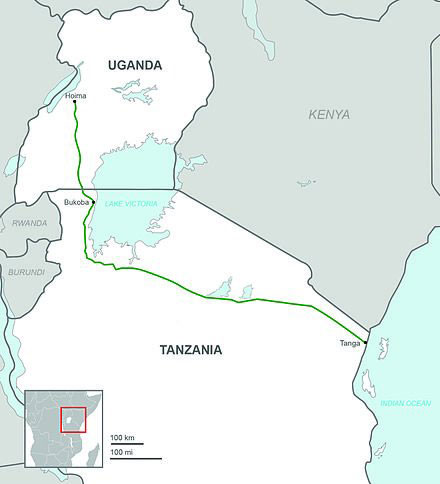
South Sudan is in negotiation with Uganda and Tanzania to use Hoima-Tanga pipeline after DRC Congo

South Sudan is in negotiation with Uganda and Tanzania to use Hoima-Tanga pipeline after DRC Congo

Tullow completes $575 million sale of Uganda assets to Total​

Back to Press releases

close


Published on:

10 November 2020​

Locations:
Topics:

10 November 2020 - Tullow Oil plc (Tullow) is pleased to announce that the sale of its assets in Uganda to Total has completed with $500 million consideration received earlier today. Tullow is also due to receive a further $75 million when a Final Investment Decision is taken on the development project plus contingent payments linked to the oil price payable after production commences.

The closing of this transaction follows the satisfaction of all deal conditions, announced on 21 October 2020, which included the execution of the binding Tax Agreement, the approval for the transfer of Tullow’s interests to Total and the transfer of operatorship for Block 2.

Although Tullow will retain a financial link to the development project through the potential contingent payments, the closing of this transaction marks Tullow’s exit from its licences in Uganda after 16 years of operations in the Lake Albert basin.

Tullow now has net debt of $2.4 billion and available liquidity of $1 billion. Rahul Dhir, CEO, and Les Wood, CFO, will lay out their plans for the Group in the coming years at a Capital Markets Day on 25 November 2020.

Rahul Dhir, Chief Executive Officer of Tullow Oil Plc, commented today:
"The closing of our transaction with Total clearly evokes mixed emotions within Tullow. While we are sad to be exiting Uganda after many years, the $575 million of proceeds form an important part of our plan to strengthen Tullow’s balance sheet and improve our financial position. We will watch the progress of Uganda’s oil & gas industry with much interest and all of us at Tullow wish the people and Government of Uganda and our former Joint Venture Partners every good fortune as they take this important project forward.”


Total roils Kenya oil plan in row over new licence​

By MACHARIA KAMAU | October 6th 2020 at 09:00:00 GMT +0300
mvovcyngncpobiny45f7c000515dc1.jpg
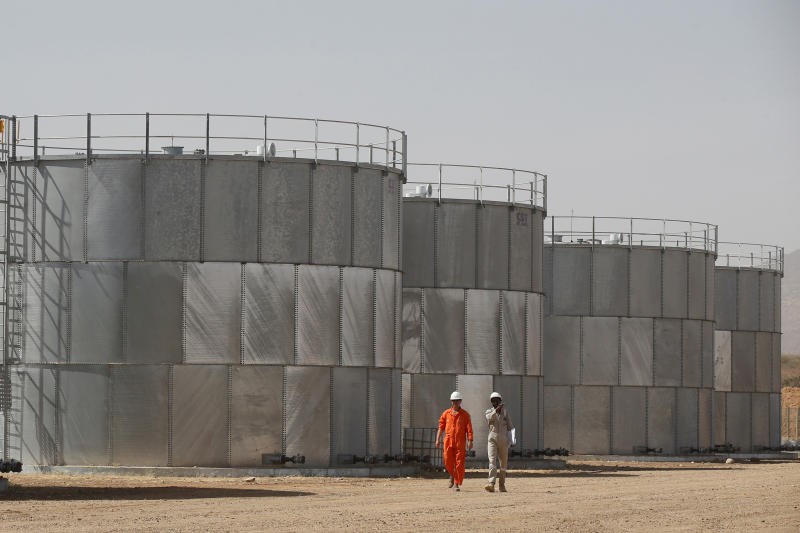
Workers walk past storage tanks at Tullow Oil's Ngamia 8 drilling site in Lokichar, Turkana County, Kenya, February 8, 2018. Picture taken February 8, 2018.
[Reuters]

The joint venture partners that Kenya is relying on to delivery petrodollars are reading from different scripts, which could further slow down the project.
The project has already experienced numerous delays, the latest being a three-month pause on the project occasioned by Covid-19 before the State stepped in with major concessions.

And there could be a further delay after French oil major Total protested to the Petroleum Ministry, which turned down a 15-month extension on the firm’s exploration licences on the Lokichar oil blocks.

The joint venture partners – Tullow, Africa Oil and Total – had applied for a 33-month extension on the exploration licence, which they argued would be ample time to get the oil fields ready for the commercial phase of the project.

While lengthy, the firms had argued, the extension would also enable them to recover time wasted during a number of stoppages when there was no work taking places, including the recent suspension of operations between May and August owing to restrictions that had been placed to contain the spread of Covid-19.

The companies invoked force majeure (unforeseeable circumstances that prevent someone from fulfilling a contract) clauses in May, which was lifted in August. It is against this backdrop that Total has protested the 15-month extension and instead demanded more time and reportedly threatened to withdraw from the project should the ministry fail to grant it its wishes.

According to an insider familiar with the development, Total protested the licence extension to the ministry without consulting its other partners - Tullow Oil and Africa Oil - raising concerns whether all is well within the partnership.

Ideally, the three companies are supposed to consult among themselves and present a united front not just to the government but also shareholders and the public.


The Petroleum Ministry said it had received a letter from Total Oil but clarified that the firm had not made any threats to ditch the Kenyan oil project.

Principal Secretary Andrew Kamau said despite the concerns raised by Total, the matter had been concluded since Tullow and Africa Oil had accepted the licence extension given by the government.

Tullow, as the operator of the block, communicates on behalf of the partners.
“They (Total) wrote and said they would have liked more time,” he said, adding that the ministry may not review the request as Total’s other partners had already accepted the 15-month extension and the terms. Such communication, the PS noted, should also come from the blocks’ operator, in this case, Tullow, after the joint venture partners have discussed and agreed, hence more grounds why the government may not consider the request by Total for more time.

“It is not true (that they threatened to withdraw from the project) … they have even said that they had been misconstrued. They are not leaving,” said Kamau.

Total owns a 25 per cent stake in the oil blocks, while Tullow Oil, which doubles up as the operator, has 50 per cent and Africa Oil 25 per cent.

The French firm has always seemed to be pulling in the opposite direction when it comes to the Kenyan oil project.
It has been among the stakeholders that pushed Uganda hard to construct the export pipeline through Tanzania.

This is as opposed to the initial plans of developing a pipeline jointly with Kenya, which would have come from Western Uganda, traversed the country and linked up with the planned crude oil pipeline in Lamu.

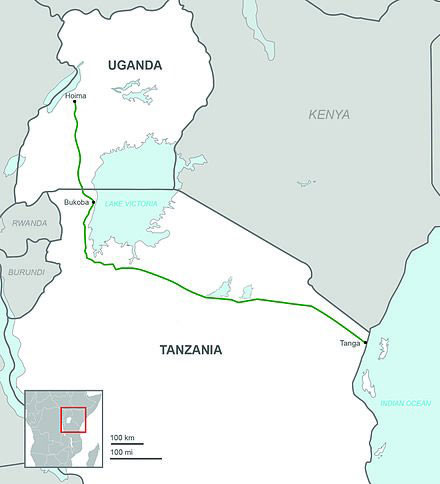
In mid-September this year, Tanzania and Uganda signed an agreement for the construction of a Sh378 billion East African Crude Oil Pipeline from Hoima in western Uganda to the port of Tanga.

Total, which is the operator of the Uganda project, has in the past, however, expressed its support for the Lokcihar-Lamu pipeline. In 2018 after a State House visit by the company’s senior officials, it committed to playing part in building the pipeline.

When the firm joined the Turkana oil project after buying out Maersk, it was expected that its presence would be a shot in the arm for the project.

Being one the global oil majors, the company was expected to lend its vast knowledge in oil as well as financial muscle to the project.


In the year to December 2019, Total paid the government Sh43.2 million in licence and infrastructure development fees. Of this, the Energy Ministry got Sh38 million in licence fees, while another Sh5.5 million was paid the National Oil Corporation (Nock) as fees for infrastructure development, according to the company’s annual report.

In the report, the firm is unclear as to how much was pumped into the development of the Lokichar oil fields.

Reached for comment, Total’s local office declined to comment on why it had opposed the 15-month extension on the licences as well as its investments in the Turkana blocks and its planned disposal of its 50 per cent stake in the project.

The joint venture partners will need to meet certain conditions between October 1 and December 31 this year for them to be allowed to carry on with activities between January 1 and December 31, 2021.

When it published its half-year results in September, Tullow noted that while the pandemic and the resulting stoppage of works had slowed down the project, it had tasked the joint venture partners to look into how best to progress.

emacharia@standardmedia.co.ke


MY TAKE
Total a globally major oil producer is in Lokichar-Lamu pipeline to dictate terms knowing none of the other 2 shareholders r having muscles to carry on with the project solo as they r oil explorer! Believe me no pipeline to Lokichar will be built before EACOP is fully commissioned n operational!

CC: Tony254 what's ur opinion?


Last month, Canadian-based Africa Oil Corporation (AOC) said it was short of funds to complete ground activities at its South Lokichar Basin, Turkana County, further complicating Kenya’s chance to taste oil money.

In February reports indicated that Tullow and Total were looking for ways to sell down their stakes in the Kenyan project as part of the restructuring plan.

The British oil firm is frustrated by FID on Kenya, which has been postponed severally due to stalled issuance of an environmental impact assessment license.

The company had previously aimed to give the final go-ahead by the end of 2019 for its onshore Kenyan oilfields, which are expected to produce up to 100,000 barrels per day.

It had expected to start production of oil by 2022, which was pegged on getting investment commitments from each partner this year.


The East African is busy to propagate negative news on EACOP and refinery!

EpC9E5NXEAkC1x5
 
This are so called, most positive minded people in the region.
Unamaanisha nini na "this are??" Ujue hii habari inajaribu kulinda bomba la refined oil la Mombasa-Kisumu. Huwezi niambia ati Uganda refinery ya 30,000-60,000 barrels per day haitakuwa na faida katika region isiyo na refinery na wakazi zaidi ya 150mln people!
 
Geza Ulole
It should be "these are..." sort of typo issues.
I just wanted to point out, how these so called +ve minded people, are so bitter and -ve to whatever good things happening to their neighbours.
I remember the other day, one guy was talking with BBC, that they will do anything to see the EACOP is not succeeding. They will deploy all means at their disposal to sabotage the plan.
So what is currently happening comes from their side to stop our mission of accomplishing the project.
 
Geza Ulole
It should be "these are..." sort of typo issue.
I just wanted point out, how these so called +ve minded people, are so bitter and -ve to whatever good things happening to their neighbours.
I remember the other day, one guy was talking with BBC, that they will do anything to see the EACOP is not succeeding. They will deploy all means at their disposal to sabotage the plan.
So what is currently happening comes from their side to stop our mission of accomplishing the project.
ungeleta hiyo clip humu! The thing is Kenya has zero influence when it comes to regional mega projects! Only Kikwete ndio alikuwa anawa-entartain! JPM ni namba nyingine! hivi unadhani kama Kikwete angekuwa madarakani JNHPP ingejengwa?
 
ungeleta hiyo clip humu! The thing is Kenya has zero influence when it comes to regional mega projects! Only Kikwete ndio alikuwa anawa-entartain! JPM ni namba nyingine! hivi unadhani kama Kikwete angekuwa madarakani JNHPP ingejengwa?

Yeah, one whistleblower alikuwa akijiapiza kulizuia bomba mpaka pale ambapo litakuwa limejengwa kabisa.
 

Oil final investment decision expected by end of March -Minister​

The Independent
January 28, 2021
Business, NEWS Leave a comment


oil1.jpg
Kingfisher-Oil-Field-Development

Kampala, Uganda | THE INDEPENDENT |
The Minister of Energy and Mineral development Mary Goretti Kitutu has disclosed that the Final Investment Decision (FID) for oil production will be taken before the end of March 2021.

Kitutu made the disclosure during an interface with the Parliamentary committee on Natural Resources on Wednesday that needed some clarifications on the sector’s Budget Framework Paper for the next financial year.

FID represents the point at which the international oil companies (IOCs) and the Government of Uganda through the Uganda National Oil Company (UNOC) will commit to oil field development. The project execution phase should commence shortly after FID with significant expenditure on building the production facilities.

The Executive Director of the Uganda Petroleum Authority (PAU) Ernest Rubondo told MPs that before the end of the first quarter of the Calendar year the FID will be taken and following this, four main projects will take shape with each of the projects costing over $3bn.

He disclosed that oil will not begin to flow until after a three year construction period.

He listed the projects as the production in Kilenga at Buliisa operated by Total E&P and Tullow Oil, the production at the Kingfisher oil field in Kikuube district operated by CNOOC, the development of the crude oil pipeline from Hoima to Tanga and the development of the Refinery.

UNoc-kitutu.jpg


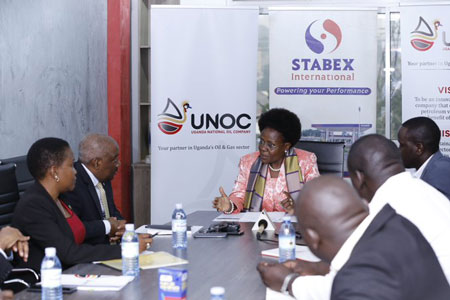
FILE PHOTO: Mary Goretti Kitutu chairs a meeting at UNOC. Final decision on oil development in pipeline

He appealed to the MPs that the PAU will have to be adequately funded in order to meet the challenges of regulating the industry in light of the extensive investments he outlined.

Rubondo stated that the authority has been underfunded and yet the regulation of the projects which will be running concurrently is critical, and says the authority will be expected to perform several functions on the ground including receiving data plus processing it. He warned that without the additional funding, the consequences of no regulation would be dire.


According to the authority’s presentation before the MPs, the PAU funding allocation for the 2021/2022 financial year is 53.02bn shillings, leaving a funding shortfall of 136.138bn shillings.

Earnest-Rubondo2.jpg


Rubondo

For instance staff training requires an allocation of 7.398bn shillings but only 450.25m has been provided additionally regulation and monitoring of upstream petroleum operations requires 27.45bn shillings but only 1.5bn shillings has been provided.

Rubondo emphasizes that since the country is implementing maiden projects the staff need to be trained to regulate and monitor these projects.

Rubondo also states that the Authority will need additional staff in order to bring staff levels from the current 165 to the approved structure of 283 staff.
The minister stressed that it is critical to have the authority well-funded such that there are no delays once the FID is finalized between February and March 2020.

********
URN


Africa-focused Tullow expects oil production to fall 16% in 2021​

in Oil & Companies News 28/01/2021


freight_red_oil_barrels1.jpg

Africa-focused independent Tullow Oil warned Jan. 27 that its oil production will fall by 16% in 2021, caused by a lack of drilling activity last year along with a planned shutdown at the Jubilee field in Ghana.

Tullow said its working interest production averaged 74,900 b/d in 2020 but this will fall to 63,000 b/d in 2021.

“This forecast reflects the drilling hiatus in 2020, a planned shutdown in September on Jubilee and deferred development drilling on Simba in Gabon,” it said.

The cash-strapped company recently adopted a new game plan, which involves focusing almost solely on growing its offshore West African assets and scaling down exploration in other frontier basins.

“The plan is focused on ensuring that Tullow’s producing assets in West Africa reach their full potential,” said Tullow CEO Rahul Dhir. “We will leverage the new plan and our reduced cost base to generate positive free cash flow at current commodity prices, drive down our net debt and deliver a robust balance sheet.”

Production in Ghana has been dogged by several technical and operational issues in recent years, mainly focused on the FPSO infrastructure at the Jubilee field.

Tullow said a new oil offloading system is being commissioned at Jubilee, which will be ready for a first lifting in February.

“A drilling rig is being mobilized to Ghana to commence operations in the second quarter of the year and the first new production well on Jubilee is forecast to be onstream in the third quarter,” it also added.

In November, Dhir said that production from Tullow’s oil fields in Ghana would fall due to a recent lack of investment.

Tullow said a massive reduction in its drilling program due to the coronavirus pandemic was one of the main reasons for the expected fall in production this year.

Restructuring
London-listed Tullow has endured a difficult few years, after a series of operational and financial setbacks.

It is hoping to generate $7 billion of operating cash flow in the next 10 years by focusing over 90% of its investment in its West African assets, the bulk of which in Ghana.

The company has recently undergone restructuring, which is expected to deliver sustainable annual cash savings of over $125 million.

Tullow said it has agreed to extend the redetermination of the group’s Reserve Base Lending facility with its creditors.

It was due to complete in January, but it has now been extended by one month.
Capital expenditure is forecast to be about $265 million, with around $100 million additionally to be spent on decommissioning, it said.

Meanwhile, Tullow’s Turkana project in Kenya has now been reworked to ensure that it is robust at low oil prices and it expects to submit a revised plan to the government of Kenya later this year.

A final investment decision on Turkana was recently pushed back to the end of 2022.

Located in northwest Kenya, Turkana is expected to produce some 80,000 b/d via a planned export pipeline to the port of Lamu on the Indian Ocean.

Dhir acknowledged in November that the Kenyan oil project requires “a different way of thinking” because of its complexity.

The project is estimated to cost $3 billion, comprising $1.8 billion for the upstream portion and $1.2 billion for the pipeline.


MY TAKE
Tony254 will u guys see even a picture of a pipeline in Lamu?
 

After Coronavirus shock, Uganda sets oil FID for early this year​

The Independent January 31, 2021 Business, NEWS Leave a comment


Hoima-Tanga-1.jpg
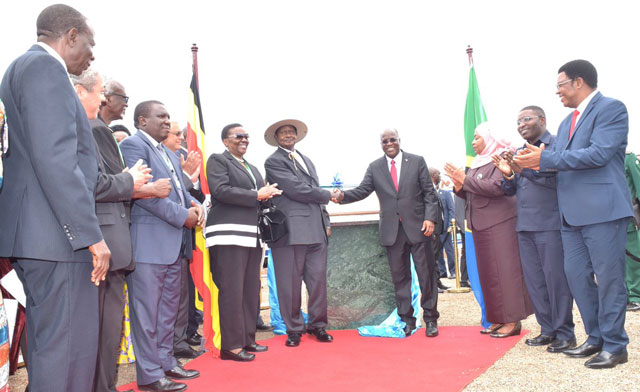
Museveni Magufuli after they laid a foundation stone to mark the start of construction of the crude oil pipeline from Hoima to Tanga in 2017. PHOTO PPU

Hoima, Uganda | THE INDEPENDENT | Uganda is optimistic that the Final Investment Decision-FID on the commercial oil and gas production will be made in the first months of this year to pave way for the construction of the final structures in the sector.

These will include the oil refinery in Hoima district valued at U$3.5 billion, two central processing facilities as well as the U$3.2 billion crude oil export pipeline from Hoima to the Indian Ocean Cost of Tanga in Tanzania.

The government, through the National Oil Company, also plans to construct the Kampala Storage Terminal in Wakiso district worth U$51 million (Shs 190 billion), which will act as a collection center for refined fuel for both the local and export markets.

It is estimated that the facilities that will facilitate commercial oil production will cost about U$15 billion. Ernest Rubondo, the Executive Director, the Petroleum Authority of Uganda-PAU, most of the hurdles in the negotiations with different stakeholders have been overcome. Uganda first confirmed commercially viable oil deposits more than 13 years go. Since then, the production date has been postponed several times, over legal and regulatory issues, disagreements between the government and oil companies over taxes among others.


The FID had been expected by the end of June last year, but a combination of falling global oil prices as well as the disruptions caused by the onset of the COVID-19 pandemic slowed down the progress. The field pipelines, the export pipelines and the central processing facilities are the main pre-requisite for the production of crude, while the refinery is expected to be completed later.

oil-pipeline.jpg


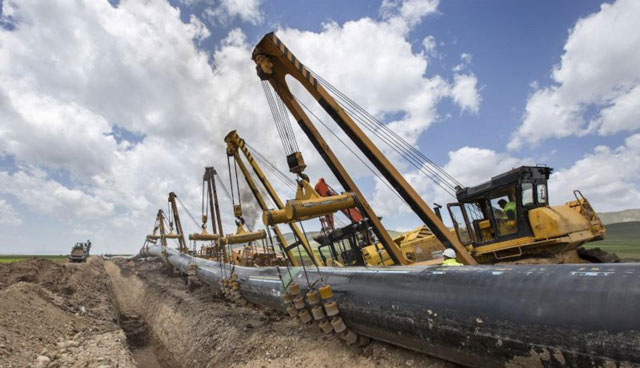
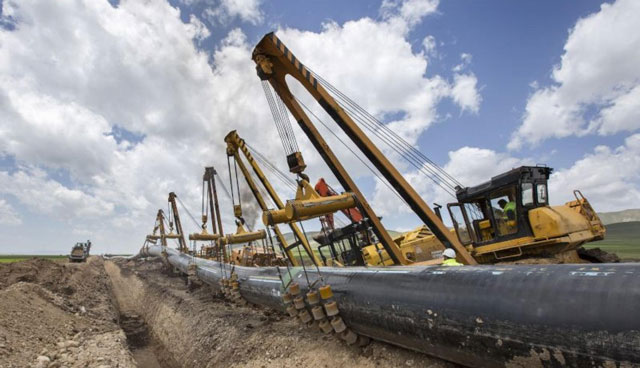
The pipeline will be one of the developments form oil developments in the region. Its impact on people and nature needs to be monitored
“When the dual shock of the coronavirus pandemic and the oil price slump hit us, we thought it was not the right time to promote new investment opportunities and we feared not being able to achieve the FID. We believe we should be able to take an FID on the refinery by February 2022 and it could start operating four years after that,” says Peter Mulisa, the Head of Legal and Corporate Affairs at the Uganda National Oil Company, UNOC.

The construction of the refinery and the other petrochemical industries will also, depend on the finalization of the processing facilities in oil fields as well as the export pipeline. However, Rubondo says a final decision on the crude pipeline depends on the progress of the projects upstream like the central processing facilities, so that each project developer is sure that they will be put to use immediately they are concluded.


He says what is left is the conclusion of the agreements on oil transportation tariffs and the shareholding in the Oil Pipeline Company, but that the stakeholders have already agreed on the principles.

Earlier last year, it had been expected that once Tullow Oil completed the sale of its assets to TOTAL, the FID would be made before the end of 2020, but this was not be possible. In 2018, the AGRC – a U.S.-led group of companies including General Electric, YAATRA Africa, and the Italian engineering firm Saipem – won the right to finance, build and operate a planned U$3.5 billion oil refinery.

Uganda, Tanzania and the oil companies led by TOTAL are in the process of creating the holding company for the East African Crude Oil Pipeline or EACOP, in which they will each have shares. There are also growing concerns that fossil fuels are becoming less important globally as consuming industries are increasingly opting for alternative and cleaner sources of energy like solar, wind and geothermal.

The automotive industry, the biggest consumer of fossil fuel is also moving away from fuel to electric powered vehicles. Many countries and financial companies are also increasingly withdrawing from financing of fossil fuel industries. The UK for example, announced last year that they would no longer fund such projects especially in Africa, to encourage the continent to migrate to the more climate-friendly green, clean or renewable energy.

However, Rubondo says the oil companies that are investing in Uganda are ready to sink in their money despite the low global crude oil prices and the waning global interest in the industry. He adds that the delays could not be avoided as Uganda was entering into a new industry.

****
URN


Intra-African Gas Pipelines: Operational and Upcoming Projects​


By Charné Hundermark, Southern and East Africa Editor on February 16, 2021

The African continent holds an impressive natural gas resource base, providing a resource to fuel decarbonizing economies globally, as well as domestic industries. While some African nations, such as Equatorial Guinea, Algeria and Egypt, have successfully extended the natural gas value chain, most others are yet to fully realize the benefits of the resource.

Gas pipeline projects bridge the gap between gas rich countries and gas deficient countries, allowing the utilization of the resource continent-wide. Several cross-border pipeline projects have been proposed, adding to some already operational networks.

The West African Gas Pipeline (operational)
The West African Gas Pipeline Project (WAGP) is a natural gas pipeline linking Nigeria’s Escravos region of the Niger Delta with Benin, Togo and Ghana. Developed by the West African Gas Pipeline Company Limited – a consortium of Chevron, Nigerian National Petroleum Corporation, Royal Dutch Shell, Volta River Authority, Société Togolaise de Gaz, and Société Beninoise de Gaz – the 678 km pipeline has a capacity of 5 billion cubic meters (bcm) of gas per year. The WAGP connects the western region of Africa, providing a viable natural gas supply to all participating countries. With a possible extension to Côte d’Ivoire, the project demonstrates the success of regional cooperation in the utilization of natural gas.

The Republic of Mozambique Pipeline Company Project (operational)
The Republic of Mozambique Pipeline Company (ROMPCO) is the commercial operator of an 865 km high-pressure gas pipeline connecting the onshore gas fields in Pande and Temane in Mozambique with Sasol’s operations in South Africa. Operating since 2004, the pipeline has provided a direct connection between the two countries and has ensured the effective monetization of Mozambique’s previously stranded resources.

The African Renaissance Pipeline Project (planned)
The African Renaissance Pipeline Project (ARP), a proposed $6 billion natural gas pipeline that aims to link Mozambique’s gas-rich Rovuma basin to Springs in Gauteng, South Africa, will connect an abundant resource with an increasing number of customers in the wider region. Extending 2,600 km and with an annual capacity of 18 billion cubic meters (bcm) – equivalent to 13.2 tons of LNG – the ARP will enable both Mozambique and South Africa to increase access to fuel for industry and power generation, while reducing reliance on other fossil fuels. Scheduled for completion in 2025 for the Mozambican segment of the pipeline and 2026 for the South African segment, the ARP is expected to boost southern Africa’s competitiveness through job creation and economic revitalization.

The Tanzania-Uganda Natural Gas Pipeline
The Tanzania-Uganda Natural Gas Pipeline Project is a proposed natural gas pipeline transporting LNG from Dar es Salaam, Tanzania, to Kampala, Uganda. The 1,800 km pipeline will connect Tanzania’s abundant gas reserves with Uganda’s growing steel industry, generating economic growth through industrialization. The project is expected to commence operations in 2026.

The Ajaokuta-Kaduna-Kano Natural Gas Pipeline
The Ajaokuta-Kaduna-Kano Natural Gas Pipeline (AKKP), part of the Trans Nigeria Pipeline Project, is a planned natural gas pipeline that will transport natural gas from Ajaokuta in Kogi State to Kano, in Kano State, Nigeria. The 614 km pipeline is intended to establish a connection between pipeline networks in the various regions of the country and to the wider region through the Trans Nigeria Pipeline Project. The estimated cost of the project is $2.8 billion and construction commenced in July 2020

The Trans-Sahara Gas Pipeline Project
The Trans-Sahara Gas Pipeline Project (TSGP) is a proposed 4,400 km natural gas pipeline that aims to connect Nigeria’s resources to Hassi R’Mel in Algeria, linking to a wider regional network of pipelines including the Trans Nigeria Gas Pipeline, the Maghreb-Europe Gas Pipeline and the Medgas Gas Pipeline. The $21 billion TSGP was officially launched in 2001 with a Memorandum of Understanding between Nigeria and Algeria and is expected to have an annual capacity of 30 bcm. Despite delays over the last decade, the TSGP re-emerged in planning documents in 2019, when the Trans Nigeria Gas Pipeline advanced into developmental phases.

One of the key challenges for cross-border pipeline development involves the securing of adequate funding as the high-costs of such infrastructural developments often prevents project take-off. Therefore, the integration of public and private sector financing will prove important to the success of intra-African pipeline projects. Additionally, intra-African projects rely on cooperation between multiple nations in which policy, legal and sectoral differences may cause challenges. Political will and regional regulatory alignment are essential to the realization of Africa’s regional gas pipelines.

 
Among the things to follow closely soon after commissioning of EACOP.
 
Back
Top Bottom