Taliban wapiga marufuku vitabu vyote vilivyoandikwa na wanawake

Taliban wapiga marufuku vitabu vyote vilivyoandikwa na wanawake

MK254

JF-Expert Member
Joined
May 11, 2013
Posts
33,575
Reaction score
53,613
Kulingana na sheria za dini ya muarabu, mwanamke hapaswi kusikika popote na kwa lolote, yaani akae ndani tu na akitoka ajighubike yale manguo ya muarabu meusi na aandamane na mwanaume, kidogo waarabu wenyewe wameanza kulegeza hizi sheria za kufanya wanawake wawe mazombi, ila hawa jamaa ambao hata sio waarabu wameshobokea dini hadi basi, jamaa wamepiga marufuku vitabu vyote vilivyoandikwa na wanawake, hawataki hata kugusa wala kusoma au kujua nini kimeandikwa humo, kimsingi kimeandikwa na binadamu mwenye jinsia ya kike basi ni haram.

Sijui muarabu aliwaza nini kuanzisha hii dini yake ilhali alizaliwa akakuta dini zingine, yeye kaja na yake humo kajaza mambo ya hovyo sana.

Jameni wanawake wa hiyo dini ambao mlibahatika kuzaliwa kwenye mataifa mengine mshukuru sana maana mnapewa uhuru hata wa kuwa marais.
Kuna yule mwanamke wa hii dini hutupigia sana makelele humu FaizaFoxy

==================================


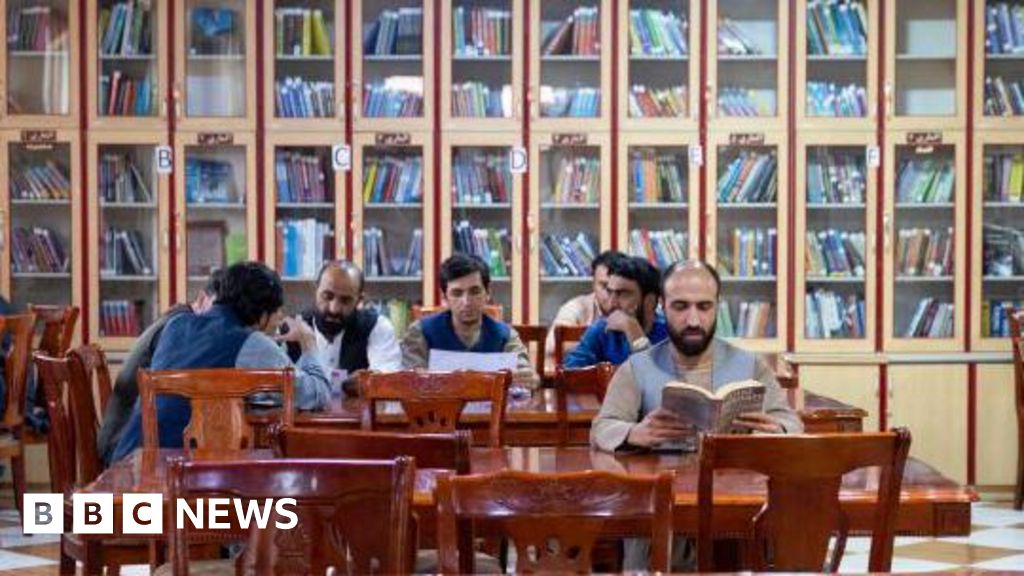
The Taliban government has removed books written by women from the university teaching system in Afghanistan as part of a new ban which has also outlawed the teaching of human rights and sexual harassment.

Some 140 books by women - including titles like "Safety in the Chemical Laboratory" - were among 680 books found to be of "concern" due to "anti-Sharia and Taliban policies".

The universities were further told they were no longer allowed to teach 18 subjects, with a Taliban official saying they were "in conflict with the principles of Sharia and the system's policy".

The decree is the latest in a series of restrictions which the Taliban have brought in since returning to power four years ago.
Just this week, fibre-optic internet was banned in at least 10 provinces on the orders of the Taliban's supreme leader in a move officials said was to prevent immorality.

While the rules have had an impact on many aspects of life, women and girls have been particularly hard-hit: they are barred from accessing education over the sixth grade, with one of their last routes to further training cut off in late 2024, when midwifery courses were quietly shuttered.

Now even university subjects about women have been targeted: six of the 18 banned are specifically about women, including Gender and Development, The Role of Women in Communication, and Women's Sociology.

The Taliban government has said it respects women's rights in accordance with their interpretation of Afghan culture and Islamic law.

'A void in education'​

A member of the committee reviewing the books confirmed the ban on books written by women, telling BBC Afghan that "all books authored by women are not allowed to be taught".

Zakia Adeli, the former deputy minister of justice prior to the Taliban's return and one of the authors who has found their books on the banned list, was unsurprised by the move.

"Considering what the Taliban have done over the past four years, it was not far-fetched to expect them to impose changes on the curriculum," she said.

"Given the Taliban's misogynistic mindset and policies, it is only natural that when women themselves are not allowed to study, their views, ideas and writings are also suppressed."

The new guidelines, which have been seen by BBC Afghan, were issued in late August.

Ziaur Rahman Aryubi, the deputy academic director of the Taliban government's Ministry of Higher Education, said in a letter to universities that the decisions had been made by a panel of "religious scholars and experts".

As well as books by women, the ban appears to have targeted books by Iranian authors or publishers, with one member of the book review panel telling the BBC it was designed to "prevent the infiltration of Iranian content" into the Afghan curriculum".

In the 50-page list sent to all universities in Afghanistan, 679 titles appear, 310 of which are either authored by Iranian writers or published in Iran.

Two different people, including one on the book review committee, told BBC Afghan that the decision was taken to "prevent the infiltration of Iranian content" through the curriculum.

The neighbouring countries do not have an easy relationship, clashing over issues such as water rights in recent years. Iran has also forced more than 1.5m Afghans who had been living in the country back across the border since January amid rising anti-Afghan sentiment.

But the decision has worried some lecturers, with a professor at one institution, who spoke on condition of anonymity, saying he feared it would be almost impossible to fill the gap.

"Books by Iranian authors and translators serve as the primary link between Afghanistan's universities and the global academic community. Their removal creates a substantial void in higher education," he said.

A professor at Kabul University told the BBC that under such circumstances, they are forced to prepare textbook chapters themselves, taking into account the do's and don'ts imposed by the Taliban government.

But the crucial question is whether these chapters can be prepared according to global standards or not.

The BBC has approached the Taliban's Ministry of Education for comment.
 
Kulingana na sheria za dini ya muarabu, mwanamke hapaswi kusikika popote na kwa lolote, yaani akae ndani tu na akitoka ajighubike yale manguo ya muarabu meusi na aandamane na mwanaume, kidogo waarabu wenyewe wameanza kulegeza hizi sheria za kufanya wanawake wawe mazombi, ila hawa jamaa ambao hata sio waarabu wameshobokea dini hadi basi, jamaa wamepiga marufuku vitabu vyote vilivyoandikwa na wanawake, hawataki hata kugusa wala kusoma au kujua nini kimeandikwa humo, kimsingi kimeandikwa na binadamu mwenye jinsia ya kike basi ni haram.

Sijui muarabu aliwaza nini kuanzisha hii dini yake ilhali alizaliwa akakuta dini zingine, yeye kaja na yake humo kajaza mambo ya hovyo sana.

Jameni wanawake wa hiyo dini ambao mlibahatika kuzaliwa kwenye mataifa mengine mshukuru sana maana mnapewa uhuru hata wa kuwa marais.
Kuna yule mwanamke wa hii dini hutupigia sana makelele humu FaizaFoxy

==================================


The Taliban government has removed books written by women from the university teaching system in Afghanistan as part of a new ban which has also outlawed the teaching of human rights and sexual harassment.

Some 140 books by women - including titles like "Safety in the Chemical Laboratory" - were among 680 books found to be of "concern" due to "anti-Sharia and Taliban policies".

The universities were further told they were no longer allowed to teach 18 subjects, with a Taliban official saying they were "in conflict with the principles of Sharia and the system's policy".

The decree is the latest in a series of restrictions which the Taliban have brought in since returning to power four years ago.
Just this week, fibre-optic internet was banned in at least 10 provinces on the orders of the Taliban's supreme leader in a move officials said was to prevent immorality.

While the rules have had an impact on many aspects of life, women and girls have been particularly hard-hit: they are barred from accessing education over the sixth grade, with one of their last routes to further training cut off in late 2024, when midwifery courses were quietly shuttered.

Now even university subjects about women have been targeted: six of the 18 banned are specifically about women, including Gender and Development, The Role of Women in Communication, and Women's Sociology.

The Taliban government has said it respects women's rights in accordance with their interpretation of Afghan culture and Islamic law.

'A void in education'​

A member of the committee reviewing the books confirmed the ban on books written by women, telling BBC Afghan that "all books authored by women are not allowed to be taught".

Zakia Adeli, the former deputy minister of justice prior to the Taliban's return and one of the authors who has found their books on the banned list, was unsurprised by the move.

"Considering what the Taliban have done over the past four years, it was not far-fetched to expect them to impose changes on the curriculum," she said.

"Given the Taliban's misogynistic mindset and policies, it is only natural that when women themselves are not allowed to study, their views, ideas and writings are also suppressed."

The new guidelines, which have been seen by BBC Afghan, were issued in late August.

Ziaur Rahman Aryubi, the deputy academic director of the Taliban government's Ministry of Higher Education, said in a letter to universities that the decisions had been made by a panel of "religious scholars and experts".

As well as books by women, the ban appears to have targeted books by Iranian authors or publishers, with one member of the book review panel telling the BBC it was designed to "prevent the infiltration of Iranian content" into the Afghan curriculum".

In the 50-page list sent to all universities in Afghanistan, 679 titles appear, 310 of which are either authored by Iranian writers or published in Iran.

Two different people, including one on the book review committee, told BBC Afghan that the decision was taken to "prevent the infiltration of Iranian content" through the curriculum.

The neighbouring countries do not have an easy relationship, clashing over issues such as water rights in recent years. Iran has also forced more than 1.5m Afghans who had been living in the country back across the border since January amid rising anti-Afghan sentiment.

But the decision has worried some lecturers, with a professor at one institution, who spoke on condition of anonymity, saying he feared it would be almost impossible to fill the gap.

"Books by Iranian authors and translators serve as the primary link between Afghanistan's universities and the global academic community. Their removal creates a substantial void in higher education," he said.

A professor at Kabul University told the BBC that under such circumstances, they are forced to prepare textbook chapters themselves, taking into account the do's and don'ts imposed by the Taliban government.

But the crucial question is whether these chapters can be prepared according to global standards or not.

The BBC has approached the Taliban's Ministry of Education for comment.

Hao wamejifunza kutoka kwenye Biblia:

Women should remain silent in the churches. They are not allowed to speak, but must be in submission, as the law says. (1 Corinthians 14:34)

I do not permit a woman to teach or to assume authority over a man; she must be quiet. (1 Timothy 2:12)
 
Kulingana na sheria za dini ya muarabu, mwanamke hapaswi kusikika popote na kwa lolote, yaani akae ndani tu na akitoka ajighubike yale manguo ya muarabu meusi na aandamane na mwanaume, kidogo waarabu wenyewe wameanza kulegeza hizi sheria za kufanya wanawake wawe mazombi, ila hawa jamaa ambao hata sio waarabu wameshobokea dini hadi basi, jamaa wamepiga marufuku vitabu vyote vilivyoandikwa na wanawake, hawataki hata kugusa wala kusoma au kujua nini kimeandikwa humo, kimsingi kimeandikwa na binadamu mwenye jinsia ya kike basi ni haram.

Sijui muarabu aliwaza nini kuanzisha hii dini yake ilhali alizaliwa akakuta dini zingine, yeye kaja na yake humo kajaza mambo ya hovyo sana.

Jameni wanawake wa hiyo dini ambao mlibahatika kuzaliwa kwenye mataifa mengine mshukuru sana maana mnapewa uhuru hata wa kuwa marais.
Kuna yule mwanamke wa hii dini hutupigia sana makelele humu FaizaFoxy

==================================


The Taliban government has removed books written by women from the university teaching system in Afghanistan as part of a new ban which has also outlawed the teaching of human rights and sexual harassment.

Some 140 books by women - including titles like "Safety in the Chemical Laboratory" - were among 680 books found to be of "concern" due to "anti-Sharia and Taliban policies".

The universities were further told they were no longer allowed to teach 18 subjects, with a Taliban official saying they were "in conflict with the principles of Sharia and the system's policy".

The decree is the latest in a series of restrictions which the Taliban have brought in since returning to power four years ago.
Just this week, fibre-optic internet was banned in at least 10 provinces on the orders of the Taliban's supreme leader in a move officials said was to prevent immorality.

While the rules have had an impact on many aspects of life, women and girls have been particularly hard-hit: they are barred from accessing education over the sixth grade, with one of their last routes to further training cut off in late 2024, when midwifery courses were quietly shuttered.

Now even university subjects about women have been targeted: six of the 18 banned are specifically about women, including Gender and Development, The Role of Women in Communication, and Women's Sociology.

The Taliban government has said it respects women's rights in accordance with their interpretation of Afghan culture and Islamic law.

'A void in education'​

A member of the committee reviewing the books confirmed the ban on books written by women, telling BBC Afghan that "all books authored by women are not allowed to be taught".

Zakia Adeli, the former deputy minister of justice prior to the Taliban's return and one of the authors who has found their books on the banned list, was unsurprised by the move.

"Considering what the Taliban have done over the past four years, it was not far-fetched to expect them to impose changes on the curriculum," she said.

"Given the Taliban's misogynistic mindset and policies, it is only natural that when women themselves are not allowed to study, their views, ideas and writings are also suppressed."

The new guidelines, which have been seen by BBC Afghan, were issued in late August.

Ziaur Rahman Aryubi, the deputy academic director of the Taliban government's Ministry of Higher Education, said in a letter to universities that the decisions had been made by a panel of "religious scholars and experts".

As well as books by women, the ban appears to have targeted books by Iranian authors or publishers, with one member of the book review panel telling the BBC it was designed to "prevent the infiltration of Iranian content" into the Afghan curriculum".

In the 50-page list sent to all universities in Afghanistan, 679 titles appear, 310 of which are either authored by Iranian writers or published in Iran.

Two different people, including one on the book review committee, told BBC Afghan that the decision was taken to "prevent the infiltration of Iranian content" through the curriculum.

The neighbouring countries do not have an easy relationship, clashing over issues such as water rights in recent years. Iran has also forced more than 1.5m Afghans who had been living in the country back across the border since January amid rising anti-Afghan sentiment.

But the decision has worried some lecturers, with a professor at one institution, who spoke on condition of anonymity, saying he feared it would be almost impossible to fill the gap.

"Books by Iranian authors and translators serve as the primary link between Afghanistan's universities and the global academic community. Their removal creates a substantial void in higher education," he said.

A professor at Kabul University told the BBC that under such circumstances, they are forced to prepare textbook chapters themselves, taking into account the do's and don'ts imposed by the Taliban government.

But the crucial question is whether these chapters can be prepared according to global standards or not.

The BBC has approached the Taliban's Ministry of Education for comment.

Huku kwetu Waislamu wanaongozwa na mwanamke.
 
Hao wamejifunza kutoka kwenye Biblia:

Women should remain silent in the churches. They are not allowed to speak, but must be in submission, as the law says. (1 Corinthians 14:34)

I do not permit a woman to teach or to assume authority over a man; she must be quiet. (1 Timothy 2:12)

Umesema vizuri in the church, sasa nyie uzombi wenu mnafanya kote hata kwa wasioamini katika dini ya huyo muarabu, mnalazimisha kila mwanamke.
 
Huku kwetu Waislamu wanaongozwa na mwanamke.

Kuna inawauma ila tu basi, japo huwa naona masheikh wanamshobokea sana na kujipendekeza akienda msikitini, kuna hata kipindi niliona anahutubia msikitini.
 
Kulingana na sheria za dini ya muarabu, mwanamke hapaswi kusikika popote na kwa lolote, yaani akae ndani tu na akitoka ajighubike yale manguo ya muarabu meusi na aandamane na mwanaume, kidogo waarabu wenyewe wameanza kulegeza hizi sheria za kufanya wanawake wawe mazombi, ila hawa jamaa ambao hata sio waarabu wameshobokea dini hadi basi, jamaa wamepiga marufuku vitabu vyote vilivyoandikwa na wanawake, hawataki hata kugusa wala kusoma au kujua nini kimeandikwa humo, kimsingi kimeandikwa na binadamu mwenye jinsia ya kike basi ni haram.

Sijui muarabu aliwaza nini kuanzisha hii dini yake ilhali alizaliwa akakuta dini zingine, yeye kaja na yake humo kajaza mambo ya hovyo sana.

Jameni wanawake wa hiyo dini ambao mlibahatika kuzaliwa kwenye mataifa mengine mshukuru sana maana mnapewa uhuru hata wa kuwa marais.
Kuna yule mwanamke wa hii dini hutupigia sana makelele humu FaizaFoxy

==================================


The Taliban government has removed books written by women from the university teaching system in Afghanistan as part of a new ban which has also outlawed the teaching of human rights and sexual harassment.

Some 140 books by women - including titles like "Safety in the Chemical Laboratory" - were among 680 books found to be of "concern" due to "anti-Sharia and Taliban policies".

The universities were further told they were no longer allowed to teach 18 subjects, with a Taliban official saying they were "in conflict with the principles of Sharia and the system's policy".

The decree is the latest in a series of restrictions which the Taliban have brought in since returning to power four years ago.
Just this week, fibre-optic internet was banned in at least 10 provinces on the orders of the Taliban's supreme leader in a move officials said was to prevent immorality.

While the rules have had an impact on many aspects of life, women and girls have been particularly hard-hit: they are barred from accessing education over the sixth grade, with one of their last routes to further training cut off in late 2024, when midwifery courses were quietly shuttered.

Now even university subjects about women have been targeted: six of the 18 banned are specifically about women, including Gender and Development, The Role of Women in Communication, and Women's Sociology.

The Taliban government has said it respects women's rights in accordance with their interpretation of Afghan culture and Islamic law.

'A void in education'​

A member of the committee reviewing the books confirmed the ban on books written by women, telling BBC Afghan that "all books authored by women are not allowed to be taught".

Zakia Adeli, the former deputy minister of justice prior to the Taliban's return and one of the authors who has found their books on the banned list, was unsurprised by the move.

"Considering what the Taliban have done over the past four years, it was not far-fetched to expect them to impose changes on the curriculum," she said.

"Given the Taliban's misogynistic mindset and policies, it is only natural that when women themselves are not allowed to study, their views, ideas and writings are also suppressed."

The new guidelines, which have been seen by BBC Afghan, were issued in late August.

Ziaur Rahman Aryubi, the deputy academic director of the Taliban government's Ministry of Higher Education, said in a letter to universities that the decisions had been made by a panel of "religious scholars and experts".

As well as books by women, the ban appears to have targeted books by Iranian authors or publishers, with one member of the book review panel telling the BBC it was designed to "prevent the infiltration of Iranian content" into the Afghan curriculum".

In the 50-page list sent to all universities in Afghanistan, 679 titles appear, 310 of which are either authored by Iranian writers or published in Iran.

Two different people, including one on the book review committee, told BBC Afghan that the decision was taken to "prevent the infiltration of Iranian content" through the curriculum.

The neighbouring countries do not have an easy relationship, clashing over issues such as water rights in recent years. Iran has also forced more than 1.5m Afghans who had been living in the country back across the border since January amid rising anti-Afghan sentiment.

But the decision has worried some lecturers, with a professor at one institution, who spoke on condition of anonymity, saying he feared it would be almost impossible to fill the gap.

"Books by Iranian authors and translators serve as the primary link between Afghanistan's universities and the global academic community. Their removal creates a substantial void in higher education," he said.

A professor at Kabul University told the BBC that under such circumstances, they are forced to prepare textbook chapters themselves, taking into account the do's and don'ts imposed by the Taliban government.

But the crucial question is whether these chapters can be prepared according to global standards or not.

The BBC has approached the Taliban's Ministry of Education for comment.

Safi sana.
Takbeeeer
 
Back
Top Bottom