US Singer & Actress Whitney Houston Dies Aged 48

US Singer & Actress Whitney Houston Dies Aged 48

2009-Whitney-Houston-perf-020.jpg

2009: at the Grammy Salute to Industry Icons honouring Clive Davis
 
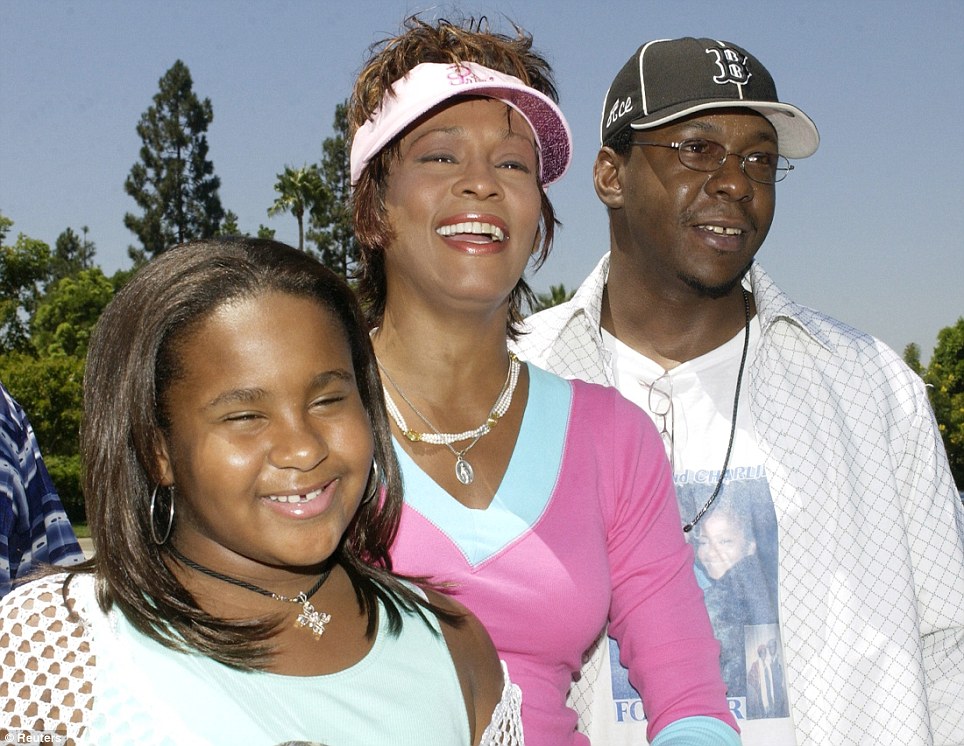
Whitney-Houston-and-Bobbi-001.jpg

2011: Houston and her daughter, Bobbi Kristina, arrive at the 2011 pre-Grammy gala
 

[h=1]Whitney Houston: squandered talent of a record-breaking singer who had it all[/h] Born into something approaching soul music royalty, Whitney Houston had a dazzling voice and a troubled personal life


Whitney-Houston-at-Wemble-007.jpg
Whitney Houston at Wembley Arena in 1988. Photograph: Peter Brooker/Rex Features

At the outset of her record-breaking career, Whitney Houston did not seem like the kind of artist whose life would end prematurely in a hotel room after years of drink and drug abuse. If she had any problem at all, it was that she was too squeaky clean.
No one ever doubted her talent: descended from a line of great singers, she was blessed with a voice that everyone from Smokey Robinson to Simon Cowell agreed was one of the best in the world. But her critics claimed the records she made with it erred on the safe side, tending towards pop rather than soul, the middle of the road rather than the cutting edge.
But her talent became eclipsed by a troubled personal life: Houston turned out to be far more unpredictable than initial appearances as a consummate professional suggested.
The reactions to Houston's death from her peers and fellow musicians were varied. Some expressed shock at her demise, aged 48. Others spoke of their sadness but seemed less surprised. "We all knew she had issues," said Cowell, referring to a well-publicised struggle with drink and drugs.
The singer's body was found by a member of her entourage in the bathtub of her room at the Beverly Hills Hilton on Saturday afternoon. She had been due to attend a pre-Grammy awards party at the hotel hosted by Clive Davis, the record producer and music industry executive credited with discovering her in a New York nightclub in 1983. Attempts to resuscitate her failed and she was pronounced dead at 3.55pm.
Sources claimed that prescription pill bottles were found in the room, and that Houston had looked dishevelled and disoriented when leaving a Hollywood club after a performance last week. An autopsy will be held in the next two days. "There were no obvious signs of any criminal intent," a Los Angeles police spokesman said.
Houston was born into something approaching soul music royalty. Her mother was Cissy Houston, who as leader of the Sweet Inspirations appeared on records by Wilson Pickett, Aretha Franklin and The Drifters among countless others; Dionne Warwick was her cousin.
She began her singing career in the traditional setting of a gospel church choir, and at 15 sang backing vocals on Chaka Khan's 1978 soul hit I'm Every Woman. However, she made her name dealing not in R&B but in effervescent pop songs such as I Wanna Dance With Somebody (Who Loves Me), How Will I Know and, most famously, big ballads: The Greatest Love of All and her record-breaking 12m-selling version of Dolly Parton's I Will Always Love You.
Her voice was clean and cool, full of melismatic embellishments. It spoke of dazzling virtuosity rather than raw power or emotions dredged from the depths of a troubled soul. Even when her public image spiralled out of control, her music didn't follow suit.
Released after a series of train-wreck appearances and amid lurid rumours about her drug use and the state of her marriage to fellow singer Bobby Brown, 2002's Just Whitney was as glossy and measured as her earlier albums. Its message was business as usual, despite the mounting evidence to the contrary.
Her eponymous 1985 debut album topped the US charts for a record-breaking 14 weeks, sold 25m copies worldwide and spawned three US No 1 singles. It attracted criticism for its mainstream sound at a time when hip hop was emerging as the gritty dominant force in black music.
Nominated in four categories at the 1986 Grammy awards, she won not the award for best R&B song or best female R&B vocal performance but best female pop vocal performance. Three years later, when she was nominated for a Soul Train award, the announcement of her name was greeted with jeers by the audience.
Houston nevertheless proved ground-breaking and influential. The single How Will I Know became a success on MTV in an era when other black artists, except for Michael Jackson, struggled to gain exposure on the channel. She was also more steely than her popular image suggested. She had worked as a model, but refused to do business with agencies that had links with apartheid-era South Africa and later became the first major musician to visit the post-apartheid country.
Her second album, 1987's Whitney, contained four US No 1 singles; she again won the best female pop vocal performance Grammy, for I Wanna Dance With Somebody (Who Loves Me) and was again overlooked in the R&B categories.
Her third album, I'm Your Baby Tonight, leaned more towards a contemporary soul sound – she asserted more control over the project than its predecessors and worked with R&B producers Babyface and LA Reid – but seemed more interested in a career as an all-round entertainer. She focused on acting and did not release another solo album for eight years.
Her first film role, as a singer stalked by a fan in The Bodyguard in 1992, received mixed reviews, as did her contributions to its soundtrack, but they did nothing to impede her commercial success: boosted by I Will Always Love You, the soundtrack became one of the biggest selling albums in history.
Houston made further films, and in 1998 released what may have been her best album, My Love Is Your Love, noticeably tougher and more eclectic than anything she had previously put her name to, touching on reggae and hip hop.
By then, however, her success was overshadowed by her private life, following her marriage to Brown. He later claimed that at least part of his motivation in marrying Houston in 1992 had been to soften his public image, but in effect, the opposite happened: Houston became embroiled in his drug scandals and legal problems.
In 2000, she failed to appear as scheduled at Davis's induction into the Rock and Roll Hall of Fame and her erratic behaviour led to her being fired by Burt Bacharach from the Oscars show. Her efforts at damage-limitation – including defiant interviews on the Oprah Winfrey show and later appearances in a reality series, Being Bobby Brown – only seemed to compound the perception of her as out of control. "The biggest devil is me. I'm either my best friend or my worst enemy," Houston told ABC's Diane Sawyer in an infamous 2002 interview with Brown by her side.
The couple divorced in 2007, and Houston released an album, I Look To You, two years later. It sold well, but a tour met with a mixed response, with some suggesting her lifestyle had permanently damaged her once-remarkable voice.
 
[h=1]Whitney Houston obituary[/h] Superstar singer credited as the first 'pop diva', whose compelling talent was lost to drug addiction


Whitney-Houston-001.jpg
Whitney Houston was lauded by other vocalists for her impeccable technique and polish, qualities that elevated her above almost every other star of her era. Photograph: PR

Few pop singers have been gifted with a voice as glorious as Whitney Houston's, and even fewer have treated their talent with the frustrating indifference she did toward the end of her life. She sold more records and received more awards than almost any other female pop star of the 20th century, but spent most of her last years mired in a drug addiction that sapped her will to sing and left her in a shambolic state.
Her death at the age of 48 will send her albums back into the charts, and introduce her music to a generation who knew her only as a troubled character whose commercial success peaked in the 1990s. Though never edgy as a musician – her skills were often wasted on bland adult-contemporary songs – she was more than just a purveyor of anodyne chart hits. Houston was lauded by other vocalists for her impeccable technique and polish, qualities that elevated her above almost every other star of her era.
Houston was gospel-trained, but her voice also lent itself to R&B, pop and ballads, and she was adept at each style. It was a ballad that provided her biggest hit, a 1992 cover version of Dolly Parton's I Will Always Love You. Her melodramatic rendition, featuring one of her most powerful vocals, sold 12m copies worldwide, making it one of the biggest singles of all time.
Her total record sales topped 170m, putting her in an elite group of female superstars that included Mariah Carey and Celine Dion, both of whom were heavily influenced by her emotional, vibrato-laden style.
Houston often gravitated to dramatic songs with lyrics about triumphing over the odds, and has been credited with inventing the "pop diva" genre that has inspired singers to the present day. She was also the first black woman to break through the colour bar at the all-important MTV, which hitherto had played white artists almost exclusively. The station's heavy rotation of her videos made her a familiar face to Middle America, and her mix of glamour, talent and approachability made her an aspirational figure for millions of teenage girls, both black and white. A US magazine editor dubbed her "the first black America's sweetheart".
Houston's success made her rich, enabling her to maintain a cocaine habit that kept her from making records for years at a time in her 30s and 40s. Looking back on her addiction after kicking it in the late 2000s, she said paying for it had been easy, as "there was so much money". But she "didn't think about the singing part any more," and when she did return to touring, the neglect showed. She was unable to get through concerts without breathlessness and frequent halts. Her comeback tour in 2010 was marred by reviews claiming she was unfit to be on stage, and a clip of her sounding wobbly at a gig in Birmingham was played on the TV news.
Houston was born in Newark, New Jersey, to a musical family: she was the daughter of the gospel star Cissy Houston, a cousin of Dionne Warwick and goddaughter of Aretha Franklin. She began singing in her church choir at the age of 11, and as a young teenager occasionally performed at her mother's concerts. Her voice attracted attention, and when she was 15, she and Cissy sang backup on Chaka Khan's 1978 hit I'm Every Woman.
She went on to provide vocals for Lou Rawls and Jermaine Jackson, and simultaneously developed a sideline in modelling. Her fresh-faced prettiness made her a success in front of the camera, and she was the second black model to appear on the cover of the American magazine Seventeen in 1981, when black faces were a rarity in fashion magazines. Even Seventeen hedged its bets by putting a white model next to her in the photo.
By her late teens, Houston had been a featured vocalist on albums by the disco songwriter Paul Jabara and the avant-garde New York funk outfit Material. By then, her style was fully formed; on the Material track Memories, the richness of her tone was balanced by a poise and precision that was uncanny in a teenager. Inevitably, she was offered record deals, and signed with the Arista label, where she stayed for the rest of her life.
Convinced that she had what it took to be a blockbusting star, Arista's influential president, Clive Davis, personally oversaw the recording of her first album. He also turned up with her in 1983 on the Merv Griffin chat show, where she was introduced to the American public. She sang Home, from the soundtrack of The Wiz, and her vocals were flawless, but her frumpy ruffled dress and short, natural hair didn't project what Arista considered the right – saleable – image. By the time her first album came out, in 1985, she'd been given a thorough makeover: the cover photo showed a sleek-haired, golden-skinned sylph wearing an elegantly draped white gown.
Whitney Houston, as the debut was titled, was praised not for the music, which was unexceptional dance-pop, so much as for the promise the 21-year-old singer showed. "Obviously headed for stardom," predicted Rolling Stone magazine. It sold 3m copies in the US in its first year, and eventually about 25m globally. It also won a Grammy award, the first of six in her career.
The next few years saw her break the Beatles' record for the greatest number of No 1 singles in a row – she managed seven – and become America's highest-earning black female entertainer. Her ubiquity on radio and TV paved the way for other African-American singers and groups such as Mary J Blige and Destiny's Child, who became hugely popular.
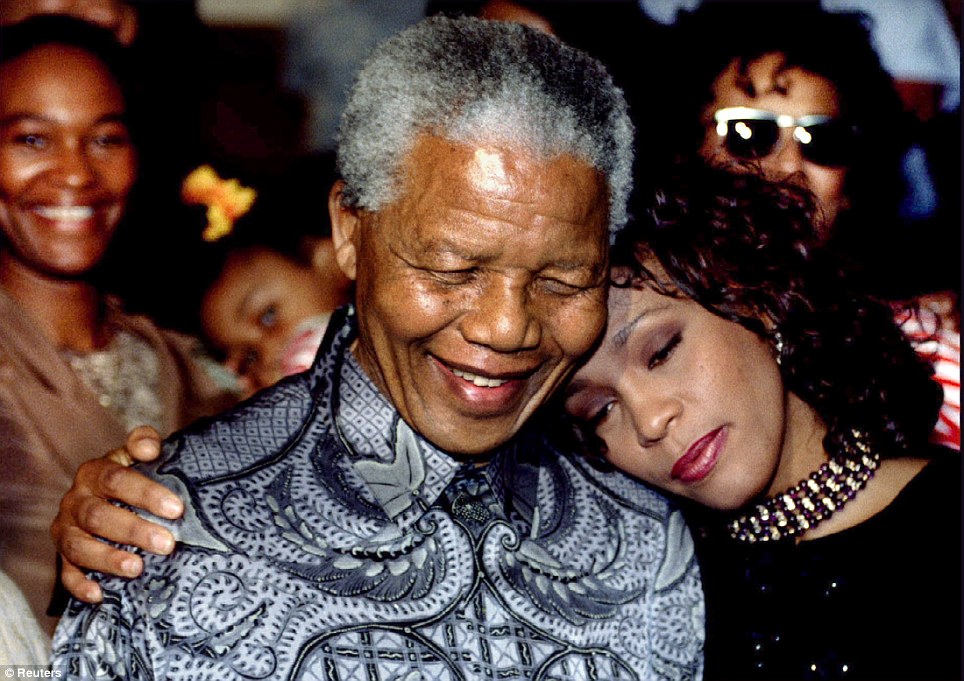
Her accessibility to all ages and cultural backgrounds helped less easily marketed artists like Blige, but, as culturally significant as she was, Houston was primarily an entertainer. Despite occasional involvement in issues such as the fight against apartheid, which saw her appear at the concert for Nelson Mandela's 70th birthday, she was not an activist. Whatever her private views on politics and race, her public self was always poised and wholesome. Ironically, a venture into a more urban, soulful sound on the 1990 album I'm Your Baby Tonight elicited a sceptical reaction from some black critics.
Commercially, her most barnstorming project was the 1992 film The Bodyguard. Kevin Costner played the titular guard, while Houston played a film star and sang on the soundtrack. Her acting won her a Razzie award for worst actress (which did not deter her from making several more films, and getting better reviews), but the soundtrack became the biggest album of her career, selling 44m copies and spawning I Will Always Love You. The song was inescapable, spending 14 weeks at No 1 in the US and roosting at the top of nearly every other pop chart in the world.
The same year, she married ex-boy band member Bobby Brown, who came to be widely blamed for her downward spiral. "The princess marries the bad boy," Houston wryly described the union years later. The marriage produced her only child, Bobbi Kristina, but Brown was jealous of his wife's success and was emotionally abusive. Her drug use began around that time, and by 1996 she was a daily user. She made one other album that decade, the well-reviewed My Love Is Your Love (1998), but by the turn of the century stories about her behaviour were rife.
Houston turned up late for events or missed them altogether, was dropped as a performer at the 2000 Oscars because she was "out of it" at rehearsals, was arrested for marijuana possession and looked skeletal at a Michael Jackson tribute in 2001.
Promoting her 2002 album, Just Whitney, she told a TV interviewer, "Crack is cheap. I make too much money to ever smoke crack. We don't do crack. Crack is whack." But she was freebasing cocaine, and as the decade went on she was photographed looking dishevelled and frighteningly haggard. She and Brown would spend a week at a time taking drugs and watching TV, she later said. In her addled state she agreed to appear on a reality show called Being Bobby Brown (2005)and succeeded in losing the last remnants of her dignity, telling her husband in one episode: "I need to poop a poop."
Even in a decade in which celebrities regularly suffered humiliating falls from grace, Houston's was shocking. Narcotics and her toxic relationship with Brown ravaged her looks and robbed her voice of its ability to soar.
Her mother forced her into rehab in 2006, and the following year Houston divorced Brown. Her last album, I Look to You, came out in 2009 to generally positive reviews. Her name still retained enough star-power to sell out most of the gigs on the tour promoting it, but many fans complained that her voice was no longer up to the rigours of touring.
In May 2011 Houston underwent a further period of rehab. Last autumn she returned to acting for a remake with the American Idol winner Jordin Sparks of the 1976 film Sparkle. Filming of the story of the effect of fame and drugs on a singing group of three sisters was completed recently.
Houston was found dead, the cause not immediately clear, in a hotel room in Los Angeles, where she had gone for Davis's pre-Grammy party. That this should happen after so many wasted years comes as a sad contrast to her gilded years as America's sweetheart.
She is survived by her mother, two brothers and her daughter.
• Whitney Elizabeth Houston, pop singer, born 9 August 1963; died 11 February 2012
 
maisha ni jinsi unavyoamua kuishi....; RIP whitney houston
 
Uteja noma, akili inavurugika hata kama ukikuwa na stable life. Mungu ailaze mahala pema roho ya mburudishaji Whitney na alaaniwe yule aliyemfundisha kubwia unga. Huyu akifa moto woote wa jehnamu umshukie.
 
[h=1]Whitney Houston obituary[/h] Superstar singer credited as the first 'pop diva', whose compelling talent was lost to drug addiction


Whitney-Houston-001.jpg
Whitney Houston was lauded by other vocalists for her impeccable technique and polish, qualities that elevated her above almost every other star of her era. Photograph: PR

Few pop singers have been gifted with a voice as glorious as Whitney Houston's, and even fewer have treated their talent with the frustrating indifference she did toward the end of her life. She sold more records and received more awards than almost any other female pop star of the 20th century, but spent most of her last years mired in a drug addiction that sapped her will to sing and left her in a shambolic state.
Her death at the age of 48 will send her albums back into the charts, and introduce her music to a generation who knew her only as a troubled character whose commercial success peaked in the 1990s. Though never edgy as a musician – her skills were often wasted on bland adult-contemporary songs – she was more than just a purveyor of anodyne chart hits. Houston was lauded by other vocalists for her impeccable technique and polish, qualities that elevated her above almost every other star of her era.
Houston was gospel-trained, but her voice also lent itself to R&B, pop and ballads, and she was adept at each style. It was a ballad that provided her biggest hit, a 1992 cover version of Dolly Parton's I Will Always Love You. Her melodramatic rendition, featuring one of her most powerful vocals, sold 12m copies worldwide, making it one of the biggest singles of all time.
Her total record sales topped 170m, putting her in an elite group of female superstars that included Mariah Carey and Celine Dion, both of whom were heavily influenced by her emotional, vibrato-laden style.
Houston often gravitated to dramatic songs with lyrics about triumphing over the odds, and has been credited with inventing the "pop diva" genre that has inspired singers to the present day. She was also the first black woman to break through the colour bar at the all-important MTV, which hitherto had played white artists almost exclusively. The station's heavy rotation of her videos made her a familiar face to Middle America, and her mix of glamour, talent and approachability made her an aspirational figure for millions of teenage girls, both black and white. A US magazine editor dubbed her "the first black America's sweetheart".
Houston's success made her rich, enabling her to maintain a cocaine habit that kept her from making records for years at a time in her 30s and 40s. Looking back on her addiction after kicking it in the late 2000s, she said paying for it had been easy, as "there was so much money". But she "didn't think about the singing part any more," and when she did return to touring, the neglect showed. She was unable to get through concerts without breathlessness and frequent halts. Her comeback tour in 2010 was marred by reviews claiming she was unfit to be on stage, and a clip of her sounding wobbly at a gig in Birmingham was played on the TV news.
Houston was born in Newark, New Jersey, to a musical family: she was the daughter of the gospel star Cissy Houston, a cousin of Dionne Warwick and goddaughter of Aretha Franklin. She began singing in her church choir at the age of 11, and as a young teenager occasionally performed at her mother's concerts. Her voice attracted attention, and when she was 15, she and Cissy sang backup on Chaka Khan's 1978 hit I'm Every Woman.
She went on to provide vocals for Lou Rawls and Jermaine Jackson, and simultaneously developed a sideline in modelling. Her fresh-faced prettiness made her a success in front of the camera, and she was the second black model to appear on the cover of the American magazine Seventeen in 1981, when black faces were a rarity in fashion magazines. Even Seventeen hedged its bets by putting a white model next to her in the photo.
By her late teens, Houston had been a featured vocalist on albums by the disco songwriter Paul Jabara and the avant-garde New York funk outfit Material. By then, her style was fully formed; on the Material track Memories, the richness of her tone was balanced by a poise and precision that was uncanny in a teenager. Inevitably, she was offered record deals, and signed with the Arista label, where she stayed for the rest of her life.
Convinced that she had what it took to be a blockbusting star, Arista's influential president, Clive Davis, personally oversaw the recording of her first album. He also turned up with her in 1983 on the Merv Griffin chat show, where she was introduced to the American public. She sang Home, from the soundtrack of The Wiz, and her vocals were flawless, but her frumpy ruffled dress and short, natural hair didn't project what Arista considered the right – saleable – image. By the time her first album came out, in 1985, she'd been given a thorough makeover: the cover photo showed a sleek-haired, golden-skinned sylph wearing an elegantly draped white gown.
Whitney Houston, as the debut was titled, was praised not for the music, which was unexceptional dance-pop, so much as for the promise the 21-year-old singer showed. "Obviously headed for stardom," predicted Rolling Stone magazine. It sold 3m copies in the US in its first year, and eventually about 25m globally. It also won a Grammy award, the first of six in her career.
The next few years saw her break the Beatles' record for the greatest number of No 1 singles in a row – she managed seven – and become America's highest-earning black female entertainer. Her ubiquity on radio and TV paved the way for other African-American singers and groups such as Mary J Blige and Destiny's Child, who became hugely popular.
Her accessibility to all ages and cultural backgrounds helped less easily marketed artists like Blige, but, as culturally significant as she was, Houston was primarily an entertainer. Despite occasional involvement in issues such as the fight against apartheid, which saw her appear at the concert for Nelson Mandela's 70th birthday, she was not an activist. Whatever her private views on politics and race, her public self was always poised and wholesome. Ironically, a venture into a more urban, soulful sound on the 1990 album I'm Your Baby Tonight elicited a sceptical reaction from some black critics.
Commercially, her most barnstorming project was the 1992 film The Bodyguard. Kevin Costner played the titular guard, while Houston played a film star and sang on the soundtrack. Her acting won her a Razzie award for worst actress (which did not deter her from making several more films, and getting better reviews), but the soundtrack became the biggest album of her career, selling 44m copies and spawning I Will Always Love You. The song was inescapable, spending 14 weeks at No 1 in the US and roosting at the top of nearly every other pop chart in the world.
The same year, she married ex-boy band member Bobby Brown, who came to be widely blamed for her downward spiral. "The princess marries the bad boy," Houston wryly described the union years later. The marriage produced her only child, Bobbi Kristina, but Brown was jealous of his wife's success and was emotionally abusive. Her drug use began around that time, and by 1996 she was a daily user. She made one other album that decade, the well-reviewed My Love Is Your Love (1998), but by the turn of the century stories about her behaviour were rife.
Houston turned up late for events or missed them altogether, was dropped as a performer at the 2000 Oscars because she was "out of it" at rehearsals, was arrested for marijuana possession and looked skeletal at a Michael Jackson tribute in 2001.
Promoting her 2002 album, Just Whitney, she told a TV interviewer, "Crack is cheap. I make too much money to ever smoke crack. We don't do crack. Crack is whack." But she was freebasing cocaine, and as the decade went on she was photographed looking dishevelled and frighteningly haggard. She and Brown would spend a week at a time taking drugs and watching TV, she later said. In her addled state she agreed to appear on a reality show called Being Bobby Brown (2005)and succeeded in losing the last remnants of her dignity, telling her husband in one episode: "I need to poop a poop."
Even in a decade in which celebrities regularly suffered humiliating falls from grace, Houston's was shocking. Narcotics and her toxic relationship with Brown ravaged her looks and robbed her voice of its ability to soar.
Her mother forced her into rehab in 2006, and the following year Houston divorced Brown. Her last album, I Look to You, came out in 2009 to generally positive reviews. Her name still retained enough star-power to sell out most of the gigs on the tour promoting it, but many fans complained that her voice was no longer up to the rigours of touring.
In May 2011 Houston underwent a further period of rehab. Last autumn she returned to acting for a remake with the American Idol winner Jordin Sparks of the 1976 film Sparkle. Filming of the story of the effect of fame and drugs on a singing group of three sisters was completed recently.
Houston was found dead, the cause not immediately clear, in a hotel room in Los Angeles, where she had gone for Davis's pre-Grammy party. That this should happen after so many wasted years comes as a sad contrast to her gilded years as America's sweetheart.
She is survived by her mother, two brothers and her daughter.
• Whitney Elizabeth Houston, pop singer, born 9 August 1963; died 11 February 2012
 
[h=1]Whitney Houston expected to storm charts after death[/h] Official Charts Company says singer likely to dominate singles and albums charts as fans pay tribute by buying her music


Whitney-Houston-007.jpg
Whitney Houston's music sales are expected to surge following her sudden death. Photograph: Walter Bieri/Keystone

Whitney Houston's music is expected to soar to the top of the charts after the news of her death on Saturday, the Official Charts Company (OCC) has said.
The company expects a sales surge to impact on the charts, with the singer's songs likely to take places in the official singles chart and official albums chart over the next week.
Although first verified sales reports will not be made until Tuesday morning, incorporating sales from Sunday and Monday, the OCC said it understood sales were already surging.
A similar effect was seen after the deaths of Michael Jackson in June 2009 and Amy Winehouse in August 2011 as fans paid tribute by buying the artists' singles and albums.
In summer 2009, six Michael Jackson albums hit the albums chart top 40, including a greatest hits at No 1, while five singles hit the singles chart top 40 a week after the singer's death.
Two years later, Amy Winehouse's albums took three places in the official top 10, and five of her singles were in the top 40.
The OCC described Houston as a "true legend" of the UK's charts. Her first hit in the country, Saving All My Love For You, became No 1 in 1985. She racked up four No 1 singles and 13 more top 10 singles, along with two No 1 albums.
The star's biggest hit was a cover of Dolly's Parton's I Will Always Love You, which featured in The Bodyguard, which became the biggest-selling single of 1992 and the 10th biggest single of 1993, according to official charts data. It held the No 1 spot for 10 weeks.
 
[h=1]Whitney Houston: Five great performances[/h] From her first lead vocal, to the single that placed her at the heart of the 90s R&B revolution, here are five classic


Memories (1982)
Although Whitney Houston had sung back-up on record (she appears on Chaka Khan's I'm Every Woman) and onstage, her first lead vocal was with a most unlikely set of collaborators – the New York experimentalists led by Bill Laswell who worked under the banner of Material. You'd never guess she was only 19 when it was recorded: she sounds absolutely unbothered by the fact she's acommpanied on sax by the great Archie Shepp. You'd also never guess the song was written by Soft Machine's Hugh Hopper, making this the only debut by a major R&B star with a connection to the Canterbury progressive rock scene. Houston's performance is as fresh and clear as a spring morning. There's no flashiness, no showboating – just a pure and true voice offering everything in service of the song. Not for nothing did the Village Voice's Robert Christgau call it "one of the most gorgeous ballads you've ever heard".
How Will I Know? (1985)
The Whitney Houston that became a superstar in 1985 was, in many ways, the creation of the legendary music mogul Clive Davis, who'd spotted her and groomed her and launched her upon the world as a chart-ready pop soul superstar. Saving All My Love For You was the colossal ballad, but this was the poptastic one, the song that positioned her as the clean-cut cutie (the cover of the single is, perhaps, the worst-styled photo in history, even by the standards of the 1980s). Even now, though. it's not hard to see why Houston became an instant sensation: Davis had an instinct for knowing how best to present her, and she responded with a performance that fizzes with life and vitality. The song tells a story as old as pop: does he fancy me? And yet it never feels hackneyed. The only quibble one might have would be: how can a woman this confident be in any way uncertain of her allure?
The Star Spangled Banner (1991)
To Britons, the notion that a performance of the national anthem could somehow be a defining moment is completely alien. It's simply impossible to imagine a nation being transfixed by, say, Michael Ball belting out God Save the Queen before the FA Cup final. But Britons have a different relationship to their anthem (and their country) than do Americans, and when Houston performed The Star Spangled Banner before the 1991 Super Bowl, she lifted herself from being a pop singer into an embodiment of national hopes: this was at the time of the Gulf War, remember, when patriotism mattered (not for nothing was her recording was reissued in the wake of the 9/11 attacks). This version is a piece of daring, a highwire act of soulfulness: the song is taken out of waltz time – at the suggestion of her musical director, Ricky Minor – to enable Houston to bring the full force of her voice to bear in an arrangement that highlights her gospel background. NFL officials were petrified, fearing it simply wasn't the national anthem as America knew it, and begged her to go for a more traditional reading. Not for the first time, sports adminstrators were completely out of touch with the mood of their country. Houston's version became a hit single in the US. Yes, a national anthem released as a single. Incredible.
I Have Nothing (1992)
If you were to pick one style of which Houston had absolute mastery, it would be the ballad. The soundtrack to her 1992 movie vehicle The Bodyguard offered a colossal worldwide hit in a version of Dolly Parton's I Will Always Love You, but this – a modest success by comparison, reaching No 4 in the US and No 3 in the UK – is the one that's secured an afterlife, as one of the favoured songs of talent show contestants. By this time, Houston had such command of balladry – and such power in her voice – that you suspect she could have flattened whole cities with a single sustained note, and I Have Nothing is all about her power, and her control of it. She refrains from the melismatic tricksiness of I Will Always Love You, choosing instead to communicate clearly and directly. And while there are many for whom the production styles of soul and R&B from the 80s onwards rob the music of simple sense of communion of the great soul ballads of previous generations, this is a performance and a song that is undeniable.
It's Not Right But It's Okay (1999)
By the end of the 1990s, Houston was no longer the epitome of wholesomeness she had been when her career was launched. Her marriage to Bobby Brown appeared to have introduced her to another side of life, and her behaviour became erratic as rumours about her lifestyle swirled around. When she needed to, though, she could still produce exactly what was needed, musically. As R&B changed, becoming by a distance the most sonically adventurous mainstream genre, Houston changed with it. It's Not Right But It's Okay – and though it's about infidelity, how hard was it not to read the title as a statement about her view of her own life? – was produced by hitmaker du jour Rodney Jerkins and remixed by Thunderpuss, and it repositioned Houston as someone with same command of the contemporary as Aaliyah, who was just about young enough to be her daughter. The voice is harder, coarser than it had been in 1985, but it suits the grittiness of the song – Houston is utterly believable as a woman who has suffered.
 
[h=1]Whitney Houston: the trailblazer[/h] Whitney Houston, who died on Saturday, was the inverse of today's young female singers


WHITNEY-HOUSTON-007.jpg
Whitney Houston, who died on Saturday. Photograph: Vince Bucci/AFP/Getty

For little girls in the 1980s and 1990s, Whitney Elizabeth Houston was everything. Her big hair, the seemingly heartfelt lyrics, her skinny little knees in a denim miniskirt, her powerhouse of a voice – she was the supreme living doll. I have not met a single woman of my generation – white, black, brown or whatever – who did not want to be her at some point. She was perfect.
And now, with her passing, a certain kind of pop star is gone for ever. Her mix of gospel vocals with unthreatening girly looks and attitude made parents comfortable – more than can be said for the likes of Rihanna. The gospel in her voice was the legacy of an early life spent singing in church, and the illustrious line of female gospel vocalists she came from: her mother is the great Cissy Houston, her cousin Dionne Warwick, her godmother Aretha Franklin. It meant that Whitney was probably singing in church as she was learning to speak, perfecting the vocal acrobatics heard among black congregations everywhere. By the time she was making her first forays into pop, she was already a seasoned performer with a weekly audience. The gospel training also allowed her to straddle genres to powerful effect, as anyone who remembers her cover of Dolly Parton's I Will Always Love You – who doesn't? – will attest.
That ineffable girl-next-door vibe Whitney had is something that's more or less disappeared from the pop scene in the last 15 years. Child and teenage stars endure, sure, but not like her. She was pretty – enough to be a successful model – but she was also sweet. Her persona didn't seem like an act to shift more units, though it undoubtedly helped. It reflected her upbringing, her rootedness in a certain kind of black culture. I remember my mum referring to her as a "good girl" – a ringing endorsement if ever there was one. But her safeness as a pop star didn't mean she was boring, because that voice made one thing very clear: "I may look like a milquetoast, but have you heard me sing?"
You very quickly run out of words to describe Whitney's voice. In her heyday – basically a large chunk of the 80s and 90s – it could stop you in your tracks. Today's pop stars bandy vocal pyrotechnics about regardless of their capacity to really pull it off. They are all knowing sexuality and casually orchestrated middle finger salutes. Whitney existed in a world before all of that. She was marketed as America's sweetheart, previously the domain of blond white girls: a huge cultural shift. When she co-starred in The Bodyguard opposite Kevin Costner, one of the most famous Hollywood actors of the time, it was virtually unprecedented. Here was a black woman, a singer no less, making a worldwide smash hit movie like it was a normal thing to do.
It was Whitney's famously clean living that made her subsequent troubles – a relationship with R&B bad boy Bobby Brown (immortalised in their duet Something in Common), drug use, a reality TV programme, finally divorce – seem all the sadder. In many ways, her life was the inverse of today's female singers. While they play wild and dangerous on stage, they seem to lead focused, driven, business-led lives off it. Nowhere is this more apparent than in the case of Beyoncé. She's Sasha Fierce while performing, but Beyoncé the CEO at all other times.
Like Michael Jackson before her, Whitney Houston defined the pop landscape of her time and influenced it for years afterwards. Every time you hear Beyoncé drag out a single syllable over three or four beats, that's Whitney. And when Mariah Carey does her little hand movements to accompany a ridiculously high note, that's Whitney too. This was a talent that others can only imitate. And for all her troubles in later life, her legacy is secure: come The X Factor this autumn, you'll hear it by the truckload.
 
[h=1]RIP Whitney Houston[/h] Her sad, untimely death is a reminder of how hard it is to find happiness in the spotlight of fame. But that voice is for the ages


Whitney Houston's rendition of the Star Spangled Banner at the Super Bowl, 1991, via Whitney Houston: five great performances Slow suicide is the term I've used for years to describe those individuals who are incredibly unhappy in their own lives, in their own skin, and do things to destroy that life, to destroy that skin. Whatever the race or culture of that person is immaterial; it doesn't matter if they are famous and wealthy, or unknown and poor. What matters is the source of their pain, and the ways they've chosen to deal with that pain. Or not.
I have often wondered if Whitney Houston was ever happy – as a world-class singer, as a daughter, as a wife, as a mother. She is gone now, her death a sad and jolting concluding scene to a long-running drama that we witnessed – at times, with tremendous pride and at times, with alarming discomfort – because she was by far the most gifted and the most visible singer of her generation, of the past 25 years. And because she battled various forms of drug addiction on an Olympian stage, and was in a wild and notoriously dysfunctional and abusive marriage with R&B singer Bobby Brown for 15 years.
My heart aches for Whitney Houston, even if many of us, through the years, could see such a moment coming. There was too much photographic evidence of her fluctuating weight, of her caramel-brown face drenched in sweat when not performing. But when you die in a Beverly Hills hotel room, at age 48, alone, on the eve of the Grammy Awards, discovered by your bodyguard, after 170m records sold, too-many-to-count Grammy, Billboard, and Emmy awards, and the biggest US single of all time ("I Will Always Love You"), we have to wonder, if we are sincere with ourselves: did we collectively participate in the slow and catastrophic plunge of Whitney Houston?
For sure, the social media networks are abuzz with genuine tributes to her, from celebrities, from those who actually knew her, from profoundly heart-broken fans. But I also think about how Whitney Houston had declined from American musical royalty to the oft-ridiculed and washed-up singer and drug fiend. There were interventions by her mother, the gospel singer Cissy Houston, and others. But there were also shameful, high-voltage spotlights, like her awkward interview with Diane Sawyer where she declared, when asked about her alleged drug use, "crack is wack." We also cannot forget Bobby Brown's car crash of a TV show, "Being Bobby Brown", which felt like we were watching a buffoonish caricature of love and marriage.
Yet, we absorbed these moments anyhow, because in this age of reality television, celebrity confessionals, YouTube and TMZ, the tribulations of mega-stars like Whitney Houston not only provide raw amusement for us, but allow us to mask in cowardly fashion our own sins and failings while mocking these clearly flawed human beings. That, indeed, is the great conundrum of the entertainment industry. On the one hand, it affords opportunities to be whatever we want to be, and more. On the flip side, the industry is a space where far too many individuals never fully grow up or evolve, never fully find out who they really are beneath the hype and hysteria.
For example, Houston was dogged for years by rumors of lesbianism because of her extremely close relationship with then-best friend Robyn Crawford (after Houston's marriage to Brown, Crawford mysteriously faded from view, and I do wonder what she has to say about Whitney's death), and even of an alleged affair with Tom Cruise's "Top Gun" co-star Kelly McGillis. Who knows what is legit and what is fairy tale, but what if part of Houston's drug dependency and acting out had to do with her living a make-believe existence crafted by others, simply to protect her image and superstardom? What if some of those nearest to her participated in a kind of collusion because they knew that homophobia in America would derail their breadwinner named Whitney Houston? Or because they were homophobic themselves?

And what if Houston was never the flawless pop princess we fancied her to be, that she really was just a girl from the tough streets of urban America with a big dream and a big voice? What if the post-Bodyguard Whitney was much closer to her real persona than the Whitney we came to adore in the 1980s and early 1990s?
In due time, I am sure the Whitney Houston storytellers will emerge. But, for now, I would much prefer to remember Whitney Houston for the angelic and genius singer she was. I will not lie and say I was a huge fan of Houston's when she burst on the scene in 1985, with her self-titled debut album. Yes, I knew she was the daughter of Cissy Houston, the cousin of Dionne Warwick, and the goddaughter of Aretha Franklin. If there was ever a black soul lineage to hail from, this was it.
Legendary music mogul Clive Davis's very conscious decision to take this gospel-steeped black child of Newark and East Orange, New Jersey and transform her into a top-40 diva may have made Houston an international star, but it left some African Americans initially scratching our heads about her bubbly pop leanings. With hindsight, Davis did the right thing because he understood America, and the world, was ready to embrace a vocalist like Whitney Houston.
That is because Whitney Houston had it all. She was tall, lean, and so jaw-droppingly gorgeous that she had a modeling career before her vocation as a singer exploded (including as one of the first women of color ever on the cover of Seventeen). She possessed a grace and class on stage that belied the fact she was only 22 when her first album appeared. She had the extraordinary ability to bring folks from all walks of life together just by belting a song. (Think of her singing America's national anthem at the 1991 Super Bowl, days after the first Gulf war began.) And as others have remarked, she had the kind of voice for which one quickly runs out of superlatives, that comes along but a few times in every generation. Ask those she has influenced, like Grammy and Oscar-winner Jennifer Hudson or multiple Grammy-winner Mariah Carey.
And you felt Whitney Houston's voice: esteemed by black church fans; connected with the traditions of a people who used music as an escape from their blues; in the mold of Ella Fitzgerald, Sarah Vaughan, Chaka Khan, and, yes, Aretha Franklin; and boundless in the way life, all of our lives, should be boundless. Houston's interpretation of "The Greatest Love of All" (originally recorded by George Benson in the 1970s) on that first album caught my attention for these very reasons.
But it was when The Bodyguard (1992) became a monster film hit and the theme song "I Will Always Love You" was so ubiquitous, that I decided to see Houston perform in person. It was at Radio City Hall, New York in 1992 or 1993. She had a band, and she had a stool. There were no dancers, no gimmicks, just that voice. When Houston hit the climax of "I Will Always Love You", there was not a dry eye in the building, mine included. I remember coming away from that concert thoroughly miffed that I had not been an avid supporter of hers until the point. But for the rest of her short career, I certainly was, following every song or CD release, every appearance and hiccup in the twisting pulp fiction that was her real life.
There has been much talk of parallels between the demise of Michael Jackson and Whitney Houston. I actually feel that Whitney Houston's spiritual twin is Judy Garland. Like Houston, Garland grew up in a musical family, and performed from her childhood on. Like Houston, there were bottomless expectations for Garland's career, stunning successes as both singer and actress, and a long bout with substance abuse. Like Houston, there were bad relationships, public humiliations, multiple comebacks, and a voice and body that, near the end, had been destroyed by years of neglect and decay. And like Houston, Judy Garland died in her late 40s, the promise of what could have been gone forever.
Like Marilyn Monroe. Like Dorothy Dandridge. Like Janis Joplin. Like Amy Winehouse. Alas, Whitney Houston is no more in flesh, but her voice, a beacon of what is possible and the best in us, will remain long after the final tears and eulogies are said, long after the final renderings of her life by media and those who knew her, or thought they did. May Whitney Houston rest in the peace she never could achieve in her lifetime. Finally
 
kuna wimbo BBC wameupiga asubuhi kwenye tribute ya houston,lyric moja inamalizia kwa kusema.....'when i die don't cry for me.......
 
Back
Top Bottom