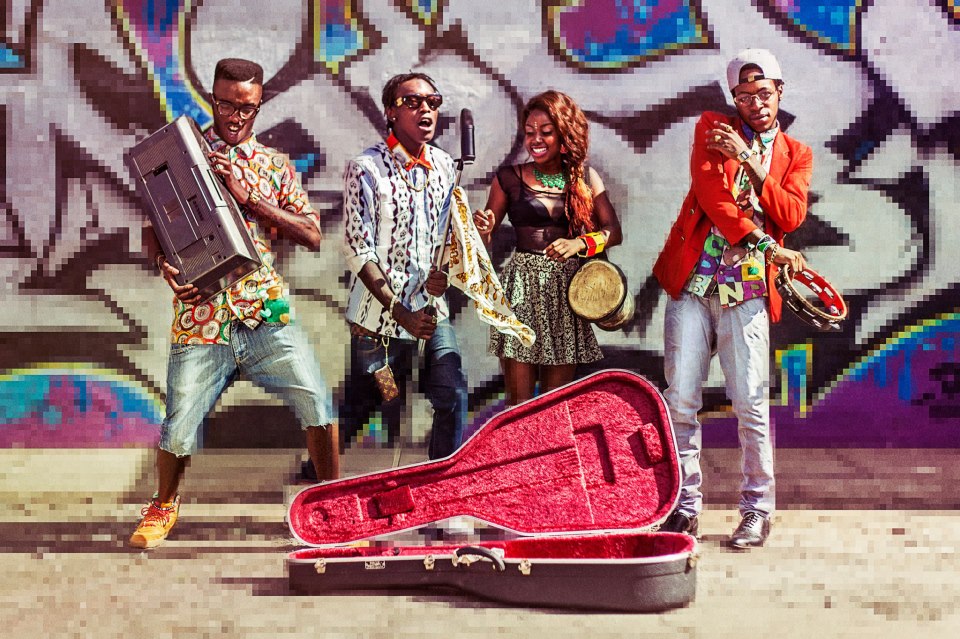
Why Kenyan Music is Nothing Compared to that from Nigeria, South Africa, Uganda & Tanzania

Why Kenyan Music is Nothing Compared to that from Nigeria, South Africa, Uganda & Tanzania

kadoda11

JF-Expert Member
Joined
Jan 6, 2011
Posts
21,453
Reaction score
20,746
Friday, 14 February 2014 10:10

Written by Jeff Omondi (Writer):

Back in the 60s up until early 90s Kenya was
the yardstick of Africa music. As an African
artist if you didn't record or release your
single/album in Nairobi then would have
started counting losses. It's not a wonder why
the likes of the late Tabu Ley, Mbilia Bel, Koffi,
the late Franco, Defao (who I hear lives in
Dandora, but that's story for another day) and
other accomplished African artists sang about
Kenya or mentioned Kenya in their songs.
Kenya ndo ilikua kusema (as our social media
guru, Chege, puts it).

Fast-forward to the new millennium. Kenya's glory
in the music scene is fast dwindling and less and
lesser artists are making their way here. Kenyan
music videos are no longer getting airplay on
Africa's biggest music channel, Channel O (tell me
of any 5 Kenyan music video you've recently seen
playing on Channel O and I'll buy you a crate of
quail eggs).

Just like that we've witnessed Nigeria rise from just
an oil-rich company into an African powerhouse
for music and movies; and nothing is stopping
them. Just like Kwaito is now a mainstay in our
clubs and deejays' mixtapes. Just like we are now
aping the bongo-style of singing (Gospel
notwithstanding).

But really what's ailing this once very lucrative
industry? Here's what I think is;

1. Lack of unity:

Which genre can we brag about as our identity in
music? South Africans have kwaito, Tanzanians
have bongo. But here...! every record label is
emerging with its own style to outdo the other.
Instead of concentrating on producing quality
music they compete on who has the latest genre/
sub-genre!

Meanwhile as we are mark-timing our African
counterparts are reaching new horizons. You can't
compare even in your dreams Kenyan music to
Naija's, Bongo or Kwaito. Never!

Instead of artists working together to see the
prosperity of this industry, they're busy tearing
each other down.

There are cartels fully in operation that ensure
certain artist(s) makes it/ doesn’t make it in the
industry. And if you thought it was a joke think
again. These cartels pay some of the top radio
hosts not to play music from certain record labels
or artists. Yes, it's deep-rooted like that.

These cartels are anchored so deep that they even
exist in the Gospel scene. Kwanza I'm made to
understand that it's worse there before if you
don't belong to a certain faction your hopes of
making it as a Gospel singer are as good as
dashed.

This disunity has killed a lot of artists' careers who
wanted to be neutral and just do music roho safi.....

read more here : Why Kenyan Music is Nothing Compared to that from Nigeria, South Africa, Uganda & Tanzania | Ghafla!Kenya

CC lawmaina78 Geza Ulole Kiranga Mekatilili and and all "banterers" from north.
 
Last edited by a moderator:
" South Africans have kwaito,
Tanzanians have bongo. But here...! every record label is emerging with its own style to outdo the other.
Instead of concentrating on producing quality music they compete on who has the latest genre/ sub-genre".!!!.
 
wanaiga sana hawana identity yao.

ukiwauliza wanaimba aina gani ya mziki,hawana jibu.watakwambia eti ooh we've won many international awards and bla bla.
 
i think so.

First thing first, I want to declare that I find nationality based squabbles infantile. Therefore I will write from the depth of my conviction with no regard to partisan squabbling, if any transpires or transpired.

I think the piece is shallow and unfairly suggest art can be dictated and prescribed.

It also holds lazily that uniformity of style, in an almost groupthink idolizing manner that thinly disguises a quixotic quest for unity and identity, is necessarily a good thing.

I am of the school of thought holding that for art to truly flourish, it has to spring up organically.

There is also a tendency for some people to be overly critical towards their own nations, perhaps due to a misplaced patriotism.

I see this with some Kenyans being overly critical about Kenya, holding Tanzania as an example, as done by this writer in parts of the piece. Equally some Tanzanians are heralding Kenya. In a sort of "the grass is greener on the other side" effect.

The truth is probably not so simple and muddled in all shades of qualifications.

It almost feels like the writer is more interested in Kenya winning brownie points, income from lucrative recording sojourns and international prestige than having art flourishing.

I may not have the most current information, but I think the Kenyans have a solid foundation in a market economy that is needed to support the successful growth of art, in many cases more so than Tanzania. I am not so sure about the right promotion of the organic elements that are uniquely Kenyan, of which a legion can be adopted. From the string heavy songs of the Western/Nyanza region to the Vanga/ Chakacha of the Coast region.

I am sure people are indulging themselves in their indigenous music, and young people have some ways to infuse that into a contemporary Kenyan music organically, much like we are seeing Mchiriku fusing into Bongoflava/ hip hop and produce a uniquely Tanzanian brand of music.

I am just not comfortable with this art by prescription idea. It's almost like "art by committee" on the level of Nchimbi's of "vazi la taifa". A joke to be pampered as some bigwigs pet, right up there with some "price commission", only to die due to a lack of the necessary creativity oxygen that could only be found in an organic environment.

I would let art grow organically and just support the environment it grows in by promoting sprouting acts showing promise.
 
Friday, 14 February 2014 10:10

Written by Jeff Omondi (Writer):

Back in the 60s up until early 90s Kenya was
the yardstick of Africa music. As an African
artist if you didn't record or release your
single/album in Nairobi then would have
started counting losses. It's not a wonder why
the likes of the late Tabu Ley, Mbilia Bel, Koffi,
the late Franco, Defao (who I hear lives in
Dandora, but that's story for another day) and
other accomplished African artists sang about
Kenya or mentioned Kenya in their songs.
Kenya ndo ilikua kusema (as our social media
guru, Chege, puts it).

Fast-forward to the new millennium. Kenya's glory
in the music scene is fast dwindling and less and
lesser artists are making their way here. Kenyan
music videos are no longer getting airplay on
Africa's biggest music channel, Channel O (tell me
of any 5 Kenyan music video you've recently seen
playing on Channel O and I'll buy you a crate of
quail eggs).

Just like that we've witnessed Nigeria rise from just
an oil-rich company into an African powerhouse
for music and movies; and nothing is stopping
them. Just like Kwaito is now a mainstay in our
clubs and deejays' mixtapes. Just like we are now
aping the bongo-style of singing (Gospel
notwithstanding).

But really what's ailing this once very lucrative
industry? Here's what I think is;

1. Lack of unity:

Which genre can we brag about as our identity in
music? South Africans have kwaito, Tanzanians
have bongo. But here...! every record label is
emerging with its own style to outdo the other.
Instead of concentrating on producing quality
music they compete on who has the latest genre/
sub-genre!

Meanwhile as we are mark-timing our African
counterparts are reaching new horizons. You can't
compare even in your dreams Kenyan music to
Naija's, Bongo or Kwaito. Never!

Instead of artists working together to see the
prosperity of this industry, they're busy tearing
each other down.

There are cartels fully in operation that ensure
certain artist(s) makes it/ doesn't make it in the
industry. And if you thought it was a joke think
again. These cartels pay some of the top radio
hosts not to play music from certain record labels
or artists. Yes, it's deep-rooted like that.

These cartels are anchored so deep that they even
exist in the Gospel scene. Kwanza I'm made to
understand that it's worse there before if you
don't belong to a certain faction your hopes of
making it as a Gospel singer are as good as
dashed.

This disunity has killed a lot of artists' careers who
wanted to be neutral and just do music roho safi.....

read more here : Why Kenyan Music is Nothing Compared to that from Nigeria, South Africa, Uganda & Tanzania | Ghafla!Kenya

CC lawmaina78 Geza Ulole Kiranga Mekatilili and and all "banterers" from north.

Bana don't scavenge for any garbage out there and rank it as gospel truth. We've painstakingly tried to educate you people that in Kenya we have various genre serving our rich diversity. We are not amassed into one basket like you guys. Sauti Sol just launched a song and are hitting a 200k hits in just 5 days Sauti Sol - NISHIKE (TOUCH ME) Official Music Video - YouTube
 
Aisee wakati sisi tukiwa tunaona bongo falava yetu kama big G, kumbe wenzetu wanachukulia kama tumefanikiwa
 
Aisee wakati sisi tukiwa tunaona bongo falava yetu kama big G, kumbe wenzetu wanachukulia kama tumefanikiwa

Yeah,

This is a "grass is greener on the other side effect".

Bongoflava ina vitu vikali na garbage pia, kwa hiyo si haki kusema tunaiona kama Big G.
 
Bana don't scavenge for any garbage out there and rank it as gospel truth. We've painstakingly tried to educate you people that in Kenya we have various genre serving our rich diversity. We are not amassed into one basket like you guys.

check what your fellow country man says " South Africans have kwaito,
Tanzanians have bongo. But here...! every
record label is emerging with its own style to
outdo the other.
Instead of concentrating on producing
quality music they compete on who has the
latest genre/ sub-genre".
 
Aisee wakati sisi tukiwa tunaona bongo falava yetu kama big G, kumbe wenzetu wanachukulia kama tumefanikiwa

kwa kiasi flani,bongofleva imepiga hatua na tunajivunia kwa hilo,it's no longer a "bubblegum gerne" as some music critics used to call it.
hutaki unaacha.
 
hahaha,
"....Just like we are
now aping the bongo-style of singing (Gospel
notwithstanding)".
 
kwa kiasi flani,bongofleva imepiga hatua na tunajivunia kwa hilo,it's no longer a "bubblegum gerne" as some music critics used to call it.
hutaki unaacha.

kama kawaida yako ni ramaging ukitafuta anything saying tz is on top but kaka kenyans sing and have organized industry minting money not just from shows but royalties for even foreigners from tz,congo, uganda etc.blow ya trumpet as you wish you making sweeter blah blah

[h=1]Kenya Copyright Board and Collecting Societies: Myths and Facts[/h] Posted on August 14, 2013 by vnzomo 3 Comments

The subject of this article is to critically analyse some of the questionable statements made by KECOBO in the latest edition of its newsletter, "Copyright News". This particular edition is themed: Collective Management Organisations (CMOs). As many may know, there are currently four registered CMOs in Kenya namely (from oldest to youngest): the Music Copyright Society of Kenya (MCSK), the Reproduction Rights Society of Kenya (KOPIKEN), the Kenya Association of Music Producers (KAMP) and the Performers Rights Society of Kenya (PRiSK).
In a previous article here, this blogger commented on KECOBO's poor performance in licensing and supervision of CMOs. Therefore this recent publication by KECOBO is useful in identifying certain areas of concern in the regulation of CMOs.
Read the rest of this article here.


[h=1]Amalgamation of Collecting Societies, Compulsory Licensing and the Role of the Copyright Tribunal[/h] Posted on September 11, 2013 by vnzomo Leave a comment

Currently, copyright and related rights licensing within the music industry generates approximately Kshs 308 million in total. From this total income, MCSK takes home over 80% with the remaining 20% shared between the related rights CMOs: KAMP and PRiSK. If you ask any of the CEOs of these three CMOs (pictured above), they will tell you that collecting just over a quarter million in license fees is barely scratching the surface of the millions of shillings in uncollected royalty payments. However, the singular challenge in collecting these missing millions has been the division among the three CMOs.
KECOBO, the government regulator of CMOs, has midwifed several failed attempts to structure a joint partnership between these three CMOs with the most notable attempt in April 2011 with the support of the Norwegian Copyright Development Association (NORCODE). The bone of contention appears to have been whether the three parties ought to be treated as equal partners in the joint revenue collection venture. At the time, this blogger was an observer and recalls that MCSK seemed particularly opposed to the idea of "a partnership among equals" for several valid reasons.

[h=1]Welcome to MCSK - Music Copyright Society of Kenya[/h] [h=2]HIGHEST ROYALTY EARNER[/h] In fact, the top ten lists of highest earners was dominated by main stream artistes.
With the enhanced focus on regional based stations, there has been increased royalties paid by the regional based stations and there has been increased submission of log sheets which has directly ensured that the regional musicians whose music has been broadcast within the regional and / or vernacular stations have earned more royalties.
MCSK is happy to announce that there has been an increased number of artistes who will receive six (6) figure royalty cheques in comparison to last financial year. In this year distribution the top forty (40) musicians have all received six figure payments. Last financial year, it was only the top ten who were within six figure amounts.
Further, this financial year, the highest earner has received close to 30% more than what the highest earner received in the last financial year. It is expected that by the time the distributions are completed i.e. after the April 30 th distribution and June 27 th ( compensating Oct 2013 ) distributions , the highest earner is likely to receive almost twice what the highest earners received last financial year and will be well in the seven digit amounts . Mcsk is not at liberty at this stage to disclose individual earnings but will disclose the same after consultation with the respective top earners.
The top ten earners and / or most popular artistes lists is as follows:
1) Kalenjin Junior Kotestes band
2) Dennis Waweru Kaggia aka DNA
3) Hubert Mbuku Nakitare aka NONINI
4) Collins Mike Majale aka Collo
5) David Kamoni Mathenge aka Nameless
6) Gloria Owendi Muliro
7) Jean Pierre Nimbona aka Kidum
8) Angela Chibalonza Muliri
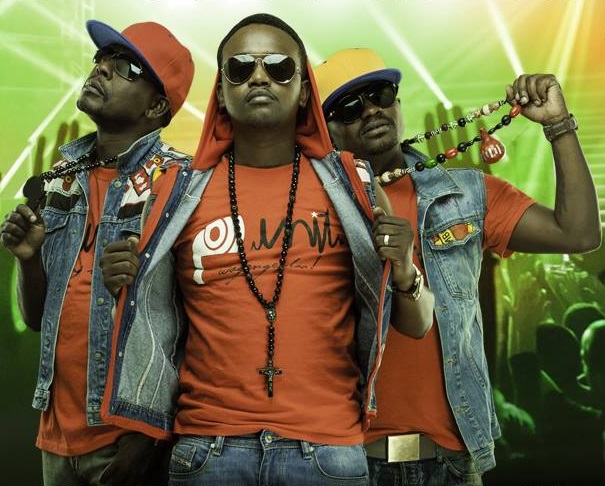
9) P UNIT
10) Linet Masivo Munyali aka Size 8
Within the top ten lists, only three gospel artistes appeared with the other seven in top ten list being secular musicians.
Positions eleven and twelve were however occupied by gospel artistes Daddy Owen and Victor Mbuvi respectively.
Others in the top twenty list are:
Octopizzo , Dennis Mutara , Sauti Sol ( who are a new entrant into the top 20 list ) , Wahu , Pastor Joel Kimeto ( who is also a new entrant in the top 20 list ) , Les Wanyika , Ulopa ( new entrant ) and finally CAMP MULLA rounding up the top twenty list .
The full list of top earners in all categories of distribution will be released at the end of June 2014 after computation of all categories of royalties to be paid out which include international royalties , mechanical rights ( ring tones ) , payments from concerts and events and payments from performances in public places ( PPP) .
Mcsk wishes to congratulate all the artistes who have performed well to have their musical works broadcast.
Mcsk also wishes to express its sincere gratitude to all the media houses that have remitted royalty payments and have now enabled the artistes to receive their royalty cheques.


[h=1]Kenyan DJ's Ready to Pay Music Royalties[/h] By Elly Gitau, 15 February 2014
  • [h=5]Kenya[/h]KENYAN DJs are now ready to pay royalties for all the local music they play. In the past, there has been a cold war between a section of artistes and DJs over royalties. Some singers have been pushing the Music Copyright Society of Kenya to compel DJs to pay royalties for their music.


According to DJ Gordo, also known as 'the rock guru', the deejaying industry has never opposed the suggestion to pay royalties. He said they are ready to pay the musicians their dues if proper mechanisms are put in place.
"We want to be team players in the music industry. After all, music and the deejaying industry are supposed to correlate. They are co-joined at the hip and they must therefore be in harmony. We need each other if we are to make the industry more prosperous. So the notion that DJs are not willing to pay royalties is misguided. We are ready to do so," DJ Gordo said.


[h=2]REVEALED: Top 20 Music Money Makers of 2014. You'll Be Shocked Who Earned the Most[/h] Wednesday, 26 February 2014 12:43 , Written by Jeff Omondi (Writer)


As the music business rebounded in 2014, royalties from radio remained the biggest source of income for the top earners in the Kenya music business. Music Copyright Society of Kenya (MCSK) has just released the list of top earners and most popular artists.

For the first time in MCSK distributions a regional-based artist (vernacular artist) has emerged as the highest earner. The previous years have been dominated by mainstream artistes such as Nonini and P Unit.
This comes as good news for regional-based musicians considering MCSK has increased its focus on regional-based musicians (and not to mean that there will be neglect of mainstream musicians).
Without further ado I give you the top 20 earners/ most popular artistes;

Kalenjin Junior Kotestes Band
DSCN0589.JPG

Dennis Waweru Kaggia (DNA)
DNA_1.jpg

Hubert Mbuku Nakitare (Nonini)
nonini_mgenge.jpg

Collins Mike Majale (Collo)
Collo_new.jpg

David Kamoni Mathenge (Nameless)
Namless_shocked_faced.jpg

Gloria Owendi Muliro
Gloria_Muliro_3.jpg

Jean Pierre Nimbona (Kidum)
KIDUM_medium.jpg

Angela Chibalonza Muliro

9k=

P Unit
P-Unit_new.jpg

Linet Masivo Munyali (Size 8)

2Q==

Daddy Owen
daddy_owen3.jpg

Victor Mbuvi
mbuvi.jpg

Octopizzo

AbM4Hydn3RnlAAAAAElFTkSuQmCC

Dennis Mutara
155152_479205677275_7819109_n.jpg

Sauti Sol
sauti-sol_range_rover.jpg

Wahu
Wahu_nu.jpg

Pastor Joel Kimetto
Pastor_Joel_Kimetto.jpg

Les Wanyika

Z

Ulopa

Z


Camp Mulla
Camp_Mulla_latest_photo.jpg

The full list of top earners in all categories of distribution will be released at the end of June 2014 after computation of all categories of royalties to be paid out which include international royalties, mechanical rights (ringtones), payments from concerts & events and; payments from performances in public places (PPP).
 
a copy and paste geek with his unsummarized, long but useless googled article is back.hey waltham,we're not discussing about how your artists get their royalties from Kenya copyright board and collecting societies.pls re-read the thread.
 
Last edited by a moderator:
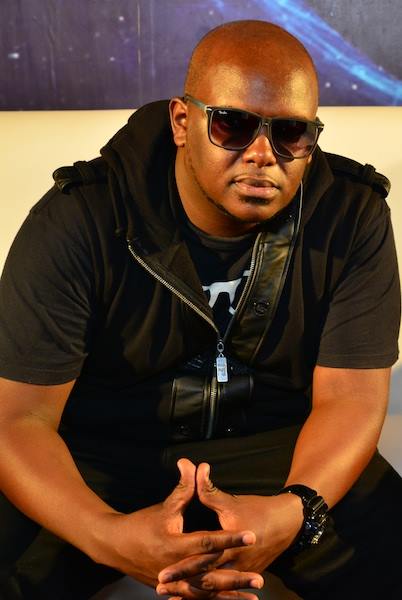
a copy and paste geek with his unsummarized, long but useless googled article is back.hey waltham,we're not discussing about how your artists get their royalties from kenya copyright board and collecting societies.pls re-read the thread.

i don have to read anything read what i gave you and stop childish cries.oh i have an analogue phone post short articles.poor you i will give you even longer ones cry baby.get to know business is abt money.music is business.its abt whose better organized and the kenyan industry is better organized.brings more returns in its all facets, cut the ---- whose singing sweeter music.its sweet to those listen to it and hence loyalties are paid from their listening.now go organize your sector and report back.
 
get to know business is abt money.music is business.its abt whose better organized and the kenyan industry is better organized.brings more returns in its all facets, cut the ---- whose singing sweeter music.its sweet to those listen to it and hence loyalties are paid from their listening.

bla bla bla.
i bet you've not read an interesting paragragh of the article, written by your compatriot.

and i qoute "Meanwhile as we are mark-timing our African counterparts are reaching new horizons. You can't compare even in your dreams Kenyan music to Naija's, Bongo or Kwaito. Never!

Instead of artists working together to see the
prosperity of this industry, they're busy tearing
each other down."

of course that's a typical kenyan greedy.you guys are sick.i didnt know if you do this in your showbiz industry.asante sana ndg. Jeff Omondi.
 
bla bla bla.
i bet you've not read an interesting paragragh of the article, written by your compatriot.

and i qoute "Meanwhile as we are mark-timing our African counterparts are reaching new horizons. You can't compare even in your dreams Kenyan music to Naija's, Bongo or Kwaito. Never!

Instead of artists working together to see the
prosperity of this industry, they're busy tearing
each other down."

of course that's a typical kenyan greedy.you guys are sick.i didnt know if you do this in your showbiz industry.asante sana ndg. Jeff Omondi.

useless comments from a bankrupt source.btn kenya and tz which industry is making more money from all fronts.and you talk of success in tz industry.you are allowed to shout sweet nothings that your work in JF
 
Back
Top Bottom