Tetesi: Akagera National Park ya Rwanda inavyochukua wanyama wa pori ya Burigi na Kimisi na kuwafungia kwenye fensi
Our Community
Regional Communities
Navigation
Install the app
How to install the app on iOS
Follow along with the video below to see how to install our site as a web app on your home screen.
Note: This feature may not be available in some browsers.
More options
Style variation
You are using an out of date browser. It may not display this or other websites correctly.
You should upgrade or use an alternative browser.
You should upgrade or use an alternative browser.
Tetesi: Akagera National Park ya Rwanda inavyochukua wanyama wa pori ya Burigi na Kimisi na kuwafungia kwenye fensi
- Thread starter R.B
- Start date


ichumu lya
JF-Expert Member
- Aug 11, 2016
- 2,651
- 2,790
Kwani twiga wetu walipandishwa ndege kutokea pori gani? Toa hoja dhaifu apa ccm mnauza mali hasiri za Taifa.

kisungu
JF-Expert Member
- Feb 20, 2013
- 788
- 266
Akagera national park ya rwanda inavyochukua wanyama wa poli la burigi, kimisi ,rumanyika na ibanda na kuwafungia kwenye fence-h kigwangala umelala
Akagera national park ni mbuga inayounganisha mapoli ya tanzania na rwanda , tanzania kuna mapoli mengi ambayo badala ya kuyapandisha hadhi tumeyaacha kama game resrve ambayo ni wa poli la burigi, kimisi ,rumanyika na ibanda. rwanda mbuga yao inayoungana na mapoli aya wameifanya national park .
Inalindwa na jeshi la rwanda. kutoka na vita wanyama wengi walikuwa upande wa tanzania miaka ya 80 mpaka 90, wilaya ya biharamulo wanyama walikuwa nakuja mpaka mjini suala la kuona simba, chui , swala , nyani na kifaru ilikuwa suala la kawaida na tembo . lakini kwa sasa wamepotea.
Na hii historia imeanza baada ya rwanda kupandisha ifadhi ya akagera na kuifanya nationa park.
1. wanatumia jina la akagera kuwaadaa watalii wanaodhani wakuja mkoa kagera na kiuhalisia mbuga hiyo inapakana na kagera kwani wanshare wanyama na mapoli ya kagera
2. mapoli ya kagera yalivamiwa na wanyarwanda kimkakati na kuanza kuchoma moto mapoli ya tanzania na kuwafukuza wanyama kuamia poli lao la akagera.
3 jeshi la jirani lilianza kuteka poli la burigi , na serikali kupeleka operation ya kusindikiza magari ili hali rwanda wana fukuza wanyama na kuwapeleka poli lao .
4. baada ya wanyama wa kila aina toka mapoli ya kagera kujaa poli la akagera wamezungusha fence ya moto wa umeme kuwazuia wasirudi na wanaoingia kwenye fence awarudi .
Ushauri wa bure ... tulishakosea zamani tusifufue makaburi ,nashauri ipandishwe hadhi poli la burigi na kuwa national park ili tudhibiti wanyama wetu ili kujua idadi ya wanyama na kuwatrack
Kama wanafanya hivyo wanakosea sana kiikolojia, kwa mtu anayejua maana ya national park... Hiyo sio national park na wanajidanganya, hakuna mtalii atakayeenda kuangalia wanyama kwenye zoo.
Ni ujinga wanafanya najiuliza kwani hawana wataalam wa ekolojia??? Wanyama wanatakiwa waishi freely to avoid inbreeding, in the long run they will face a very weak population of animals.
Kuna madhara makubwa sana kwa baadae kuliko faida, mashirika makubwa duniani hayaruhusu kuzuia the so called wildlife corridors since animals has no political boundaries. Na Kama wakigunduliwa watawekewa vikwazo vikali sana vya utalii dunia nzima. Niseme tuu kama kweli kuna ushahidi hakuna haja ya kulalamika huku kwenye social media, sheria iko wazi na technology imekuwa pana sana, siku hizi unaweza kugundua kila mnyama ame originate wapi through using DNA barcoding na njia nyingine. Tukishapata ushahidi..
Kwisha habari kwanza watalipa faini moja kubwa mno, pili tutaua soko lao la utalii moja kwa moja na watajuta. Hakuna haja ya kusema tunaonewa.. Hapana.. Tufuate taratibu mambo yako wazi kabisa watanzania na we don't have to feel ourselves inferior.
Tanzania ni nchi pekee duniani ambayo iko rich in biodiversity in natural habitat.. Hao Rwanda wanajidanganya tuu. Tuwapuuze


mngony
JF-Expert Member
- Jul 27, 2012
- 5,555
- 6,972
Nami naamini hivyo Mkuu. Issue nyeti hii Taifa halina ulinzi?Hii inaweza kuwa ni mada nzito sana ya kuanzia mwaka na ambayo kama watu wanafuatilia (na I know they do) watu wetu wa inteligensia (TISS na wa Jeshi) watakuwa wanaunda task force kuelekea pande hizo kabla ya mwisho wa wiki..
mngony
JF-Expert Member
- Jul 27, 2012
- 5,555
- 6,972
Hawa majirani sio wa kuaminika.Unapofanya urafiki na jirani lazime uwe na tahadhali sana hasa ukifanya urafiki na nchi za maziwa makuu kama Rwanda!!! I tell you be careful sana!! They may have longterm plans against you !!! Ni wapole kama huwa lakini wajanja kama nyoka
mngony
JF-Expert Member
- Jul 27, 2012
- 5,555
- 6,972
Utashangaa wengine wanashindwa kulisemea hili kwa kuhofia urafiki na nchi jirani na bado wanajiita wazalendoAsante kwa Taarifa Mtanzania Mzalendo, hii ndio Tafsiri kamili ya uzalendo.

binti kiziwi
JF-Expert Member
- Aug 4, 2014
- 11,201
- 28,642
Nawapenda sana watu wenye uwezo mzuri wakufikiri, hongera mkuu.Huyu mtoa uzi anatumia akili tu sio "facts", Kagera kwa lugha ya kihaya kutiririka kwa maji. Akagera maana yake mto mdogo "a small river" kwa watu wa uganda, rwanda na burundi kuna baadhi ya maneno yanaingiliana na watu wa kagera, Simiyu, Shinyanga , hasa kanda ya ziwa kwa ujumla. Lakini sio kweli kwamba Akagera National Park ya Rwanda inaitwa hivyo kwa ujanja ili kupata advantage Mkoa wa Kagera.
Maelezo yangu hapo juu yasitafsiliwe kana kwamba ninapinga kuwa Rwanda hawafungii wanyama waliovuka nyakati zile kwenye uzio " fance". Maana hata mimi nilishakuwa nazo la kutafiti mazingira yanayovutia wanyama kwenda masai mara Kenya na baadae kurudi Tanzania ili wakiisha kuja huku tuwafungie wasirudi Kenya. Nadhani lilikuwa wazo la kijinga au la ubinafsi, kwani kuna madhara gani wote tukipata kutokana na riziki aliyotupa sisi waja wake ( wakenya na watanzania) Subuana?
Wanyarwanda watakuwa wametenda kitendo cha kijinga na hiyo ni kuharibu ecologia ya dunia kwa kuzuia asili kutawala. Kama wanafanya hivyo, sisi tuna faida kubwa moja, kuwa wanyama wetu waliosalia na kwa kuwa wanazaliana basi hawataingia Rwanda maana uzio unazuia pande mbili. Ni hayo tu.
mechard Rwizile
JF-Expert Member
- Sep 21, 2011
- 1,571
- 873
Basi wewe sio Binti Kiziwi, ni binti Msikivu.Nawapenda sana watu wenye uwezo mzuri wakufikiri, hongera mkuu.


Targaryen
JF-Expert Member
- Feb 20, 2017
- 675
- 642
Hii inaweza kuwa ni mada nzito sana ya kuanzia mwaka na ambayo kama watu wanafuatilia (na I know they do) watu wetu wa inteligensia (TISS na wa Jeshi) watakuwa wanaunda task force kuelekea pande hizo kabla ya mwisho wa wiki..
naunga mkono hoja serikali iwe siriasi sasa katika taarifa kama izi

Chiwa
JF-Expert Member
- Apr 17, 2008
- 4,116
- 4,979
mimi ni mmoja wapo mara nyingi nashindwa kutofautiza r na l muhimu nafikiri tuzingatie ujumbe ufike lakini muendelee kutusahisha kwa kuwa uandishi ni taaluma ya watu kama taaluma zingine.Kwa siku za karibuni uandishi umekuwa kero kubwa sana.Kwa bahati mbaya ni watu wazima kabisa wenye matatizo hayo.

Kibanga Ampiga Mkoloni
JF-Expert Member
- Aug 9, 2007
- 18,772
- 8,939
Akagera National Park
From Wikipedia, the free encyclopedia
View over the Park
Akagera National Park covers 1,200 square kilometres (120,000 ha) in eastern Rwanda, along the Tanzanian border. It was founded in 1934 to protect animals and vegetation in three ecoregions: savannah, mountain and swamp. The park is named for the Kagera River which flows along its eastern boundary feeding into several lakes the largest of which is Lake Ihema. The complex system of lakes and linking papyrus swamps makes up over a third of the park, and is the largest protected wetland in Eastern-Central Africa.
Contents
1 History
2 Tourism
3 See also
4 References
5 Literature
6 External links
History
Much of the savannah area of the park was settled in the late 1990s by former refugees returning after the end of the Rwandan Civil War. Due to land shortages, in 1997, the western boundary was regazetted and much of the land allocated as farms to returning refugees. The park was reduced in size from over 2,500 square kilometres (250,000 ha) to its current size. Although much of the best savannah grazing land is now outside the park boundaries, what remains of Akagera is some of the most diverse and scenic landscape in Africa.
In 2009 the Rwanda Development Board (RDB) and the African Parks Network entered into a 20-year renewable agreement for the joint management of Akagera. The Akagera Management Company was formed in 2010 as the joint management body for Akagera National Park. Over the next 5 years a $ 10 million expenditure was carried out in the national park area, with financial help from the Howard Buffett Foundation. The aim was to increase the security of the national park and to reintroduce locally extinct species. Security measures that were taken include: the construction of a western boundary fence which measures 120.0 kilometres (74.6 miles), deploying an air surveillance helicopter, training of an expert rhino tracking and protection team and a canine anti-poaching unit.[1]
In July 2015, 7 lions from South Africa were introduced and released in the park, making them the first lions in Rwanda for 15 years. AndBeyond donated five lionesses from Phinda Private Game Reserve[2] and Tembe Elephant Reserve in KwaZulu-Natal donated two male lions,[3] in an effort that was described by African Parks as "a ground-breaking conservation effort for both the park and the country" as part of a project aimed at reversing the local extinction of the species in Akagera National Park. The original Eastern African lions, which were nevertheless closely related to Southern African lions,[4] disappeared in the years following the 1994 genocide in the country. Rwandans who had fled the aggression, before returning and settling in the park, killed the lions in order to protect their livestock.[1]
In May 2017, Rwanda reintroduced around 20 Eastern black rhinoceroses from South Africa, after an absence of 10 years. More than 50 black rhinos lived in the savannah-habitat of the park, in the 1970s. Due to widespread poaching, their numbers declined over the following decades, and previously, the last confirmed sighting was in 2007.[1]
Tourism
More than 36,000 tourists visited the park in 2016. With the reintroduction of black rhinos and African lions, the national park is now home to all of Africa's "big five": the lion, leopard, elephant, rhino, and buffalo.[1]
From Wikipedia, the free encyclopedia
View over the Park
Akagera National Park covers 1,200 square kilometres (120,000 ha) in eastern Rwanda, along the Tanzanian border. It was founded in 1934 to protect animals and vegetation in three ecoregions: savannah, mountain and swamp. The park is named for the Kagera River which flows along its eastern boundary feeding into several lakes the largest of which is Lake Ihema. The complex system of lakes and linking papyrus swamps makes up over a third of the park, and is the largest protected wetland in Eastern-Central Africa.
Contents
1 History
2 Tourism
3 See also
4 References
5 Literature
6 External links
History
Much of the savannah area of the park was settled in the late 1990s by former refugees returning after the end of the Rwandan Civil War. Due to land shortages, in 1997, the western boundary was regazetted and much of the land allocated as farms to returning refugees. The park was reduced in size from over 2,500 square kilometres (250,000 ha) to its current size. Although much of the best savannah grazing land is now outside the park boundaries, what remains of Akagera is some of the most diverse and scenic landscape in Africa.
In 2009 the Rwanda Development Board (RDB) and the African Parks Network entered into a 20-year renewable agreement for the joint management of Akagera. The Akagera Management Company was formed in 2010 as the joint management body for Akagera National Park. Over the next 5 years a $ 10 million expenditure was carried out in the national park area, with financial help from the Howard Buffett Foundation. The aim was to increase the security of the national park and to reintroduce locally extinct species. Security measures that were taken include: the construction of a western boundary fence which measures 120.0 kilometres (74.6 miles), deploying an air surveillance helicopter, training of an expert rhino tracking and protection team and a canine anti-poaching unit.[1]
In July 2015, 7 lions from South Africa were introduced and released in the park, making them the first lions in Rwanda for 15 years. AndBeyond donated five lionesses from Phinda Private Game Reserve[2] and Tembe Elephant Reserve in KwaZulu-Natal donated two male lions,[3] in an effort that was described by African Parks as "a ground-breaking conservation effort for both the park and the country" as part of a project aimed at reversing the local extinction of the species in Akagera National Park. The original Eastern African lions, which were nevertheless closely related to Southern African lions,[4] disappeared in the years following the 1994 genocide in the country. Rwandans who had fled the aggression, before returning and settling in the park, killed the lions in order to protect their livestock.[1]
In May 2017, Rwanda reintroduced around 20 Eastern black rhinoceroses from South Africa, after an absence of 10 years. More than 50 black rhinos lived in the savannah-habitat of the park, in the 1970s. Due to widespread poaching, their numbers declined over the following decades, and previously, the last confirmed sighting was in 2007.[1]
Tourism
More than 36,000 tourists visited the park in 2016. With the reintroduction of black rhinos and African lions, the national park is now home to all of Africa's "big five": the lion, leopard, elephant, rhino, and buffalo.[1]
Kibanga Ampiga Mkoloni
JF-Expert Member
- Aug 9, 2007
- 18,772
- 8,939
Lions, rhinos to return to Akagera National Park rekindles Natural species to Rwanda's wild life
Posted By: Patience Rutayisire - On:30/07/2017
In 1934, when Akagera savanna was turned into a national park, lions, rhinoceros together with other big animals, were roaming in the low altitude park of eastern Rwanda. Detailed story below tells more.
Get a website easly and fast.
Trusted Web Hosting, Domain Registration
and Web Design
The savanna landscape, whose name came from Akagera River considered the remotest source of Nile River, is 2,700 square kilometers long.
There were various animal species including elephants, rhinos, lions, buffalos, zebras and 11 species of antelopes, enjoying the protected savanna habitat which is endowed with some 10 lakes, according to Daniel Nishimwe, the Managing Director of Guide & Car Rent, a company that offers services to tourists visiting the park.
photo
Ten eastern black rhinoceros from South Africa were reintroduced in May, something that sealed Akagera National Park's 'big five' status.
Referring to the existence of the large lion population in the park, Olivier Mahoro, from Wilson Tours, a travel agency, said that Akagera was the first Park in Africa with a high lion concentration (high lion density compared to the size of the park).
However, after the genocide against the Tutsi which resulted in the death of more than one million Rwandans, and exile of many others, a big portion of the park was given to the Rwandans upon repatriation as they needed land on which to cultivate crops for livelihood, and pasture for their cows.
As a result, Nishimwe said, the government decided to give a large portion of the park to the people in need, a move which saw the size of the park reduced from 2,700 km2 to about 1,100 km2.
Given that the people who were settled near the park had cattle, Nishimwe said the cows would go to graze in the park, and the lions killed the cows, or even went out of the park to hunt the cows for prey.
That situation was a big blow to lion population as the residents looked for ways to kill the animals so as to save their cows.
The residents used a drug called ‘Kalo’, and they killed the lions, he said pointing out that the drug was so powerful that it could kill up to five times.
“If a cow eats such a drug, it dies and if a lion consumes the dead cow’s meat, it dies,” Nishimwe explains.
He said the last three lions which had not yet fallen victim to the fatal drug were last spotted in 1999. From that time until 2015, there were no lions in Akagera.
Talking about rhinos, Mahoro noted they were snared, and that they were subject of poaching as people were attracted to their horn which some people believe has some healing powers.
According to Rwanda Development Board (RDB), back in the 1970s, more than 50 black rhinos thrived in Akagera National Park, but they suffered the pressure of wide-scale poaching such that the last confirmed sighting of the species was in 2007.
Wildlife restoration efforts
Mahoro said that in 2010, the government through Rwanda Development Board (RDB) signed a 20-year agreement with African Parks, a wildlife conservation firm, to manage Akagera National Park.
To ensure better management of the park, the organization was given a mandate to increase the number of animal species, ensuring that Africa’s five big animals are seen in the park again and fence the park, all of which he said has so far been achieved – with the park currently having an electric wire fence.
“Such a fence is intended to prevent animals from getting out of the park and stop people from entering the park,” he said.
The big five animals made up of the lion, leopard, buffalo, elephant and rhinoceros is now available in the Park, which Mahoro said is something to appreciate.
Seven lions were brought into Akagera in 2015, and the number of the lions in the park has grown to 19 according to Nishimwe.
Now, the roaring of the lion is combined with the singing of some 525 species of birds in Akagera as conservation efforts in the park gain momentum. 20 Eastern black rhinos were reintroduced in 2016.
“It’s exciting that Rwanda has a big five game park ... so, people can comfortably come here for game viewing, either day drive or night drive or both safaris and see some of these animals,” said Linda Mutesi, Tourism Marketing Manager at RDB.
As per African Parks, there are less than 5,000 black rhinos in the wild, of which approximately 1,000 are the Eastern black rhino subspecies.
Akagera received over 35,000 tourists in 2016.
RDB targets to generate about $444 million in revenues from tourism, from about $404 million that the sector generated in 2016.
Story by New Times
Posted By: Patience Rutayisire - On:30/07/2017
In 1934, when Akagera savanna was turned into a national park, lions, rhinoceros together with other big animals, were roaming in the low altitude park of eastern Rwanda. Detailed story below tells more.
Get a website easly and fast.
Trusted Web Hosting, Domain Registration
and Web Design
The savanna landscape, whose name came from Akagera River considered the remotest source of Nile River, is 2,700 square kilometers long.
There were various animal species including elephants, rhinos, lions, buffalos, zebras and 11 species of antelopes, enjoying the protected savanna habitat which is endowed with some 10 lakes, according to Daniel Nishimwe, the Managing Director of Guide & Car Rent, a company that offers services to tourists visiting the park.
photo
Ten eastern black rhinoceros from South Africa were reintroduced in May, something that sealed Akagera National Park's 'big five' status.
Referring to the existence of the large lion population in the park, Olivier Mahoro, from Wilson Tours, a travel agency, said that Akagera was the first Park in Africa with a high lion concentration (high lion density compared to the size of the park).
However, after the genocide against the Tutsi which resulted in the death of more than one million Rwandans, and exile of many others, a big portion of the park was given to the Rwandans upon repatriation as they needed land on which to cultivate crops for livelihood, and pasture for their cows.
As a result, Nishimwe said, the government decided to give a large portion of the park to the people in need, a move which saw the size of the park reduced from 2,700 km2 to about 1,100 km2.
Given that the people who were settled near the park had cattle, Nishimwe said the cows would go to graze in the park, and the lions killed the cows, or even went out of the park to hunt the cows for prey.
That situation was a big blow to lion population as the residents looked for ways to kill the animals so as to save their cows.
The residents used a drug called ‘Kalo’, and they killed the lions, he said pointing out that the drug was so powerful that it could kill up to five times.
“If a cow eats such a drug, it dies and if a lion consumes the dead cow’s meat, it dies,” Nishimwe explains.
He said the last three lions which had not yet fallen victim to the fatal drug were last spotted in 1999. From that time until 2015, there were no lions in Akagera.
Talking about rhinos, Mahoro noted they were snared, and that they were subject of poaching as people were attracted to their horn which some people believe has some healing powers.
According to Rwanda Development Board (RDB), back in the 1970s, more than 50 black rhinos thrived in Akagera National Park, but they suffered the pressure of wide-scale poaching such that the last confirmed sighting of the species was in 2007.
Wildlife restoration efforts
Mahoro said that in 2010, the government through Rwanda Development Board (RDB) signed a 20-year agreement with African Parks, a wildlife conservation firm, to manage Akagera National Park.
To ensure better management of the park, the organization was given a mandate to increase the number of animal species, ensuring that Africa’s five big animals are seen in the park again and fence the park, all of which he said has so far been achieved – with the park currently having an electric wire fence.
“Such a fence is intended to prevent animals from getting out of the park and stop people from entering the park,” he said.
The big five animals made up of the lion, leopard, buffalo, elephant and rhinoceros is now available in the Park, which Mahoro said is something to appreciate.
Seven lions were brought into Akagera in 2015, and the number of the lions in the park has grown to 19 according to Nishimwe.
Now, the roaring of the lion is combined with the singing of some 525 species of birds in Akagera as conservation efforts in the park gain momentum. 20 Eastern black rhinos were reintroduced in 2016.
“It’s exciting that Rwanda has a big five game park ... so, people can comfortably come here for game viewing, either day drive or night drive or both safaris and see some of these animals,” said Linda Mutesi, Tourism Marketing Manager at RDB.
As per African Parks, there are less than 5,000 black rhinos in the wild, of which approximately 1,000 are the Eastern black rhino subspecies.
Akagera received over 35,000 tourists in 2016.
RDB targets to generate about $444 million in revenues from tourism, from about $404 million that the sector generated in 2016.
Story by New Times
Kibanga Ampiga Mkoloni
JF-Expert Member
- Aug 9, 2007
- 18,772
- 8,939
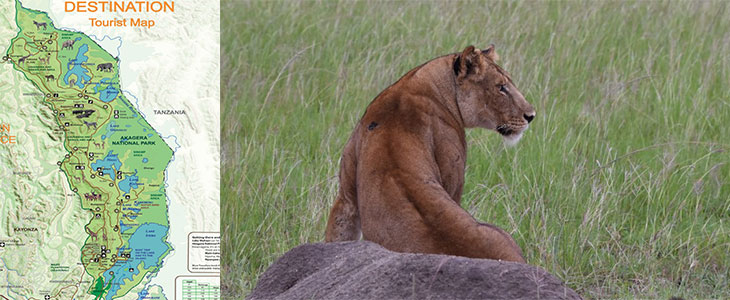
Kibanga Ampiga Mkoloni
JF-Expert Member
- Aug 9, 2007
- 18,772
- 8,939

Kibanga Ampiga Mkoloni
JF-Expert Member
- Aug 9, 2007
- 18,772
- 8,939

Akagera National Park
Set at a relatively low altitude on the border with Tanzania, Akagera National Park could scarcely be more different in mood to the breezy cultivated hills that characterise much of Rwanda. Dominated scenically by the labyrinth of swamps and lakes that follow the meandering course of the Akagera River, the most remote source of the Nile, this is archetypal African savannah landscape of tangled acacia woodland interspersed with open grassland.
More Information
Akagera National Park
Akagera is, above all, big game country! Herds of elephant and buffalo emerge from the woodland to drink at the lakes, while lucky visitors might stumble across a leopard, a spotted hyena or even a stray lion. Giraffe and zebra haunt the savannah, and more than a dozen types of antelope inhabit the park, most commonly the handsome chestnut-coated impala, but also the diminutive oribi and secretive bushbuck, as well as the ungainly tsessebe and the world's largest antelope, the statuesque Cape eland.
Camping alongside the picturesque lakes of Akagera is a truly mystical introduction to the wonders of the African bush. Pods of 50 hippopotami grunt and splutter throughout the day, while outsized crocodiles soak up the sun with their vast jaws menacingly agape. Magically, the air is torn apart by the unforgettable high duetting of a pair of fish eagles, asserting their status as the avian monarchs of Africa's waterways. Lining the lakes are some of the continent’s densest concentrations of waterbirds, while the connecting marshes are the haunt of the endangered and exquisite papyrus gonolek, and the bizarre shoebill stork - the latter perhaps the most eagerly sought of all African birds

bukoba boy
JF-Expert Member
- Jan 15, 2015
- 5,370
- 3,962
Rwanda haka kanchi imekuaje awamu hii wanatusumbua sana hv?au ni kweli PK anazo taarifa chafu sana za magufuli anafanya kumblackmail?