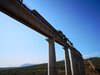
Cost comparison SGR Kenya vs SGR Tanzania

Cost comparison SGR Kenya vs SGR Tanzania

Jifundisheni kutumia content kwa mijadala yenu, sio kupiga kelele za debe...... Mnaonyesha low grasp kwa kitu rahisi.. Once again, Diesel powered train has nothing to do with Chinese classifications of railway standards!!!!!
And BTW Uganda SGR ni continuously wielded and electric,... Its still Class 1 Chinese standards!


From Uganda Ministry of Transport

For KenyaVsUganda, same class 1 but one is jointed, the other is continuous

View attachment 1185459


And for Ethiopia Vs Uganda, this is where we see the diference between the Chinese classes, Class 2 has level crossings to reduce cost while class 1 has complete grade separation, Fully Automated signaling system VS Semi-Automated, The Soil cut, Embankment, Earthworks are much higher for class 1....

View attachment 1185461


And as for AREMA standards Vs Chinese Standards, this is what Uganda's ministry wrote


View attachment 1185483

View attachment 1185480
who wrote this?
 
Nairobi backs down on SGR decree
News17 Aug 2019 by WCN Editorial

The government of Kenya has backtracked on a recent decree that all cargo imports transported from Mombasa to Nairobi and beyond should be carried on the Standard Gauge Railway
Linked InTwitterFacebookeCard

The government of Kenya has backtracked on a recent decree that all cargo imports transported from Mombasa to Nairobi and beyond should be carried on the Standard Gauge Railway (SGR) to be cleared at Embakasi – the inland container depot in Nairobi.

The policy had been mooted since soon after the SGR was completed in 2017 in order to make the project commercially viable and to enable loan repayments to the Chinese, while reducing congestion at Mombasa. The Transport Committee had directed the Infrastructure Cabinet Secretary James Macharia to explain the directive, but the government seems to have backed down before he could do so.

There was widespread opposition to the plan, not least because it has huge political connotations, as many Kenyans on the coast believe that the government favours economic development in Nairobi over Mombasa. Clearing all cargo in Nairobi would see the transfer of hundreds of jobs from the port city to the capital.

In the first six months of this year, the SGR handled 197,000 TEU in comparison compared to 77,020 TEU in the same period last year, which was the start-up period.
Freight charges have been cut to improve competitiveness with trucking. (Photo: capitalfm.co.ke)

Freight charges have been cut to improve competitiveness with trucking. (Photo: capitalfm.co.ke)

Although freight volumes are increasing, it seems likely that revenues are lower than anticipated, and meanwhile growth in passenger traffic over the past year has been slow.

Freight charges on the line were reduced last year in order to encourage uptake: the original average charge of US$33.3/tonne was cut to US$20.5/tonne. It has been reported in Kenya that the cost of transporting cargo by the SGR is now similar to road freight costs.

The government says that it will be able to start repayments on its KSh324B (US$3.10B) loan by January 2020. In May, the Treasury approved a KSh35B (US$334M) payment to China’s Exim Bank in the current financial year. An average of eight freight trains operate on the line each day, but the Kenya Railways Corporation (KRC) aims to increase this to 10 as soon as possible. Services are being jointly marketed by the KRC, the Kenya Ports Authority and the SGR contractor, China Road and Bridge Corporation.

The SGR project was designed to encourage customers in Uganda, Rwanda, eastern Democratic Republic of Congo and South Sudan to use Mombasa. Some of the cargo carried on the line is bound for those markets, but an agreement on extending the line into Uganda has been repeatedly delayed, although the first section - from Nairobi to Naivasha - is now 98% complete.

 
Jifundisheni kutumia content kwa mijadala yenu, sio kupiga kelele za debe...... Mnaonyesha low grasp kwa kitu rahisi.. Once again, Diesel powered train has nothing to do with Chinese classifications of railway standards!!!!!
And BTW Uganda SGR ni continuously wielded and electric,... Its still Class 1 Chinese standards!


From Uganda Ministry of Transport

For KenyaVsUganda, same class 1 but one is jointed, the other is continuous

View attachment 1185459


And for Ethiopia Vs Uganda, this is where we see the diference between the Chinese classes, Class 2 has level crossings to reduce cost while class 1 has complete grade separation, Fully Automated signaling system VS Semi-Automated, The Soil cut, Embankment, Earthworks are much higher for class 1....

View attachment 1185461


And as for AREMA standards Vs Chinese Standards, this is what Uganda's ministry wrote


View attachment 1185483

View attachment 1185480
Hawa ni madebe hapa hakuna kitu wameelewa,
Nchi ya mazuzu.
 
When we talk about rail standards, We are talking about a totally different thing from locomotive.... i.e, The same locomotivecan be used for a rail built for different classes of the same standard.... Kwa mfano hii locomotives za Kenya, bado zinaeza zikatembea juu ya reli hio yenu!!!


When they say Chinese class one standard, they are talking about things like minimum height and width of the embankment, type of railway, steel, sleepers used and how many per km, type of rail steel used, communication systems...etc things like that.... This does not include the locomotive type..... So you cannot say that Kenyan locomotives are what is Chinese class 1 standards like you had said earlier.


For e.g these are the standards of steels used in different railway standards from different countries...

international-standards-steel-rails.jpg


So lets take a hypothetical example of German standards, the Germans could decide that a class A standard will use the 60kg/m steel and have 700 sleepers per km while the embankment will be 2m high, while a class B standard will use the the 54kg/m and be 0.8m heigh ... blah blah blah.... Those two rails built to different classes could end up using the same exact locomotive! Either one could be faster than the other, heck even the one built with a lower quality steel of 54kg/m could end up having a bigger carrying capacity if they use more sleepers per km and they create a 3rd standard called Class B++..


Chinese steel standards

HTB1L2CFOpXXXXcrXFXXq6xXFXXXz.jpg
Usijisumbue bure kutumia explanations za nguvu,
Hawa ni wajinga wa mwisho,always shallow to grasp anything.
 
Vitu vya China vinavyouzwa Marekani na Ulaya sio Sawa na vinavyouzwa Afrika. Acha kujipa moyo, ukiondoa stesheni zenu, reli na treni zenu zote ni uchafu mtupu.
Ndiyo maana kila siku mnaishia kutuonesha stesheni na si magarimoshi yenu wala low quality SGR.
Yes, very low quality SGR indeed!!!

vrAci7H.jpg


D1swldzWwAAbFrj.jpg


gSJpCEf.jpg

eelizoAh.jpg
32382739_1680141192021246_5594631306077011968_n.jpg
XcWnnUM.jpg
zxhUX0X.jpg
D7UarXDVUAARKn4.jpg
SulBRHp.png

De6oSz9XUAAi08P.jpg


rnj4qdK.jpg

JeZcUNK.jpg


jQR9gfSh.jpg
 

Attachments

  • uUPiGmu.jpg
    uUPiGmu.jpg
    44.4 KB · Views: 15
  • BEzQX.jpg
    BEzQX.jpg
    154.3 KB · Views: 18
  • DyJxokVWoAA0BF3.jpg
    DyJxokVWoAA0BF3.jpg
    50.2 KB · Views: 19
Huyo huyo jamaa aliwaambia eti member wa SADC hawatokuja.
Chombo chochote cha moto lazima kifanyiwe Service.
Mafala hawa wakenya.
Badala walete reliable sources wanaleta source za udaku udaku km hzi.
Usikute hawalijui hilo km chombo cha usafiri chahitaji service.
 
Back
Top Bottom