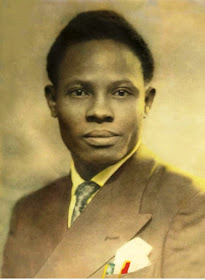
The Story of Martin Kayamba (II)
My Visit to England
Since 1924 there had been a rumour in East Africa about the proposed federation of the East African Territories, i.e. Kenya Colony, Uganda Protectorate and Tanganyika Territory. The Ormsby-Gore Commission was sent out in 1924.
It toured through the East African Territories and eventually made its report on the matter. The Hilton- Young Commission was sent out to East Africa in 1927 on the same question and made its report, as the result of which the Joint Committee on Closer Union of the East African Territories was appointed in England, composed of members of the Houses of Lords and Commons, to make further inquiry into the matter.
The Joint Committee required witnesses to be sent to England to give evidence before the Committee on the subject, and for the first time in the history of the British Empire, and East Africa in particular, three Africans were required from each of the three territories of East Africa, i.e. Kenya, Uganda and Tanganyika Territory, to go to England to give evidence to the Honourable Committee, on behalf of ten million natives inhabiting these territories. The following were selected to represent Tanganyika: Chief Makwaiya, K.M., of Shinyanga, Mwami Lwamugira, K.M., of Bukoba, Mr. H. M. T. Kayamba of Tanga (the writer).
The Tanganyika African delegates left Dar-es-Salaam by S.S. Francisco Crispi on 50th March, 1931, together with P. E. Mitchell, Esq., M.C., Secretary for Native Affairs, and 0. Guise- Williams, Esq., District Officer. Chief Makwaiya was accompanied by his son-in-law, Makoni.
Two of us were Christians and two Mohammedans. Christians have no difficulty in sailing by European steamers and to European countries, as they can eat any food cooked for European tables. But there was a small point to dear regarding the food of our Mohammedan colleagues. Chief Makwaiya and Makoni are staunch Mohammedans and were very particular about food. Mr. Mitchell arranged with the District Commissioner at Mombasa for Chief Makwaya to consult with Sir Ali bin Salim, K.B.E., C.M.G., of Mombasa in order to remove the scruple from his mind about food.
On 51st March we arrived at Mombasa; the first thing we did was to drive by taxi to the District Commissioner to see Sir Ali bin Salim. The District Commissioner took us to Sir Ali bin Salim, who kindly invited us into his office. After the matter had been explained to him, he told Chief Makwaiya that Mohammedans are not forbidden by their religion to eat food cooked by Christians or meat of animals killed by Christians or Jews, because Christians have the Gospel (Injili) and Jews have the Deuteronomy (Torati). Both these books come from ‘God. He had been to England himself for one year and during that period ate the same food which Europeans ate. The only meat which a Mohammedan is forbidden to eat is pork, and he strongly warned Chief Makwaiya that they should not touch it.
In confirmation of what he had said he was willing to come on board S.S. Francisco Crispi to lunch with us. We were very pleased to invite him to lunch. At 12 noon he arrived on board and had lunch with us. At 4 p.m. he kindly sent his car to take us round Mombasa Island, and we enjoyed the trip very much. Sir Ali bin Salim is famous for his hospitality and charity to all races in Kenya Colony.
Kenya Native delegates embarked on board the steamer on 1st April. Arab delegates also embarked on the same day. Our steamer left Mombasa at 12,50 p.m. for Kismayu. We left Kismayu at 2.50 the same day and arrived at Mogadishu at 7.50 a.m. on 5rd April Good Friday. We landed at Mogadishu and strolled round the town. The Roman Catholic Cathedral there is a fine building. The native village is rather poor and filthy, especially the market place. There is no shed for the market, and natives have to sell their goods on a sandy place. Some of them stick dirty pieces of clothes on pieces of wood as shelters for themselves and their commodities. The Governor’s palace is a fine building. The Sultan or Sheik of Somalis has his residence here.
We left Mogadishu at 5 p.m. on 4th April for Hafun. On board there were always cinema shows in the evenings and music. We were very well treated on board. On the 6th we arrived at Hafun.
On the 9th we arrived at Massawa. It is a fine port belonging to the Italian Eritrea. There is a fine pier, and our steamer was berthed alongside it. An Italian man-of-war was at the harbour. The natives of this town are mixed Arabs, Abyssinians, Danakil, etc. There are nice buildings of stone for Europeans and natives. This is a sign of the wealthiness of the natives of this town.
Chief Makwaiya made friends with one wealthy Egyptian who invited him to his house and made him a nice dinner, and gave him a present of a beautiful fez. He offered to pay his expenses to Mecca on pilgrimage, but the Chief was unable to accept his kind offer. When Chief Makwaiya told me this, I was doubtful if the man was genuine and was not one of the slave dealers enticing the Chief to go to Mecca and on the way dispose of him to Arabian slave dealers on the Persian Gulf.
At daybreak on the 14th we arrived at Suez and at 9 a.m. entered the canal. Here we were shown the Sinai Mountains, where Prophet Moses received the tablets containing the ten Commandments.
Ismalia is a fine town. I saw the monument erected to commemorate the defence of the canal during the Great War. On the eastern side of the canal palm groves and cultivated land can be seen. It is said that this country belongs to the Biblical land of Goshen where Patriarch Jacob and his children settled. Here also traces of the ancient canal of the Pharaohs have been discovered. We were shown the supposed track of the Israelites crossing through the Bitter Lakes. El Kantara (the bridge) in the olden days was an important place of caravans between Egypt, Palestine and Syria. It is related that probably Abraham, and his sons spent a few days at El Kantara on their way to Egypt.
We arrived at Port Said at 12 midnight. Port Said is a fine port. On this day it was decorated with electric lights in honour of the Egyptian Prime Minister, Sidky Pasha, who visited Port Said on the same day.
This is the western gateway of the canal. At the entrance of the harbour there is the statue of Ferdinand de Lesseps, the builder of the canal. Some of us landed and saw very little of the town, as it was night time. This was the last port of Africa on our journey and we were now sailing through the Mediterranean Sea. Up to this port we enjoyed a fine voyage except for the heat in the Red Sea. The sea after leaving Port Said was rough. Two or three of our colleagues were seasick and unablfe to touch food.
On the 18th we sighted the island of Stromboli which has a volcanic mountain. We could see the smoke issuing from the peak of the volcano. The town is built on the sides of the hill, which looks like a man sitting on the furnace. All of us were amazed to see the inhabitants of this volcanic island living around the volcano with ease and happiness and without any fear of the possible eruption. We were told that vine trees are grown on the island and the soil is very fertile, which may be the inducement to the inhabitants to hazard their living on the volcano.
On the llth at 5.30 p.m. we arrived at Naples. It is a big town and a nice harbour. We could see the volcanic mountain Vesuvius. We were first shown the Cathedral, which is said to have been formerly the temple of Minerva, the Roman Goddess. We saw many fine statues in the public gardens. The buildings are of fine stones and beautiful in appearance. There is a big glass house and in the night it is illuminated with electric lights of multi-colours. This town is very beautiful and dean. The harbour is surrounded with a breakwater. There are electric tramways; horse-carts are still used for carrying passengers and are very cheap. This was the first big town of its size we had seen since we left East Africa.
At 6 a.m. on the 20th we arrived at Livorno. It is a small harbour, which has a canal going into the town. Two submarines, one Italian dreadnought, four British destroyers and about four Italian cruisers were lying in the harbour. A seaplane was flying over the harbour, and a ship was on construction. We did not land to see the town as time was too short.
At 5.30 p.m. the same day we arrived at Genoa. There were many ships in the harbour. I counted nearly two hundred ships at various docks. This is an old Italian port and its merchants are famous. It was the birthplace of Christopher Columbus, the old explorer who discovered Mexico.
The Customs House is beautiful. Here we saw many Alpine soldiers having come down for a holiday. Several launches were carrying them for a picnic. On seeing them, Chief Makwaiya was greatly astonished and remarked: ‘At home they ask for men when they are themselves men!’ He meant in Africa they ask for working men to serve them but here they are workers themselves. This sudden exclamation caused me to laugh, and turning to my right I beheld a European from East Africa, who understood Swahili; he also heard Chief Makwaiya’s remarks, and laughed. Apparently the chief had in his mind a picture of a few Europeans in Tanganyika employing African labourers and never doing any handiwork themselves; when he now contrasted it with what he saw at the pier he was amazed.
The crowd at the pier was evidently enjoying itself. They had band and music of all sorts and were playing and singing to their hearts’ desire.
Here we had to show our passports. It was the end of our sea voyage between Africa and Europe except for the English Channel. We landed and were motored to the hotel Astoria, where we were not allowed to go out. Tanganyika delegates were lodged in one room and Kenya in the other. The hotel is grand and very nice. We could reach our rooms by the lift.
The next morning we left by train at 9.15 for Paris. All the way we found nice farms and excellent roads. The peasant buildings are small and some of them are very poor. It is within the means of the Africans to build such cottages provided they are properly trained to build them themselves.
Some of the roads are narrower than our roads in Africa, and some villages have paths similar to the usual African paths. The size of some of these farms is in most cases the same as that of African farms. Probably the only difference lies in the method of cultivation, which is highly superior to the African’s, and therefore the quantity of crops is comparatively greater in Europe than in Africa, for the same size of a farm. I much admired the terrace cultivation on the Alps mountains; the ground in many cases is stony, but this defect does not preclude the Italian farmers from making a good use of every bit of land. I was thinking of the natives of the western part of the island of Zanzibar in Chwaka area. That part of the island is very stony and the natives have to use wooden hoes in cultivation and planting of their crops. If these people had come to Italy and seen the Alpine peasants they could no doubt improve their method of cultivation on stony land. Farms are dotted about on stony patches on the Alps and snow is flowing right up to the foot of these big mountains.
The reproach that Africans are scratching the land to grow a few crops is here disproved. Peasantry cultivation in Europe did not appear to me to be dissimilar to that of the African, so far as the sizes of the farms are concerned. The construction of farm houses is different, but some of the peasant buildings in Europe are not up to the mark that one expected. So there are weak points everywhere in comparison to the degree of civilization. Undoubtedly the farms throughout those parts of Italy and France we passed are excellent in cultivation and planting and are beautiful to look at.
Modane being the frontier of France and Italy, we had to show our passports to the French authorities prior to our entering the French country. The next morning we arrived at the southern station of Paris. It was very cold that morning, and streams of people were pouring into Paris from the towns outside Paris to work. We disembarked and had our breakfast at the station restaurant. We then motored through broad streets of Paris to the northern station. The superb buildings lined on each side of the streets were most imposing and pleasant to the eye. It was a great pity that we could not see much of this famous city.
At 8.25 a.m. our train steamed off the Paris station. The farms of France are very beautiful and are scattered all along the railway line to Boulogne. Pretty farm cottages are built here and there. Fat cows and fowls are to be seen in these farms. The sizes of farms are about the same as in Italy and Africa, the difference as in Italy is in the way they are kept. We all thought it would be a valuable lesson to Africans to come to these countries and see how farms are kept, and acquire an object lesson. One can learn much more by seeing the actual work done than by reading from books.
The English Channel was calm that day, so we had a fine sailing to Folkestone where we arrived at 1.25 p.m. The Folkestone harbour appears to be rather exposed to rough weather during storms. Mr. Mitchell told us that we would find England to be a very clean country and this was perfectly true. We landed and showed our passports to the authorities.
Mr. Mitchell through his great kindness arranged for us to travel first class from Folkestone to London. We had our lunch on the train. The English train travels very fast without shaking, and we enjoyed it very much. On the way we saw nice English farms, some of them with best poultry and livestock. Hops, apples, cherries and peaches are grown in these farms. Some of the farms are not big and are similar in size to those of France and Italy, but the agriculture, as in France and Italy, is superior. The soil is fertile and watery. Hedges form boundaries of farms and partitions of farms and pasture-land. Farms are kept thoroughly dean everywhere.
At Victoria Station several gentlemen were present to meet us, also ladies were there. Newspaper men were present. Of those present I knew Mr. and Mrs. McGregor Ross, Mr. and Mrs. Buckley, Mr. Surridge, Archdeacon Owen, Rev. Canon Leakey and Dr. Leakey. We were introduced to Mr. Harris, Secretary of the Anti-Slavery and Aborigines Protection Society, and other ladies and gentlemen. Mr. and Mrs. Fazan were also present.
One thing struck me most at the first appearance, it was brick buildings. In the parts of England where I had been I saw they used bricks more than stones. On inquiry I was told the brick buildings are cheaper, and in that part of England there are not many stones to be found. It is true, on our way from Folkestone to London we did not see many stones, but we saw much chalk at places. What caused me much surprise was, all my informants of England never mentioned to me that bricks were much used there for building purposes, although they are not so much used in Africa. One gentleman told me he did not like brick buildings.
In the vicinity of the railway stations in London the buildings are black on account of smoke. This I expected to see because I had read and heard about it. I think it is more in France than in London. The passages in French trains and lavatories are sooty. Third-class carriages in France are no better than third-class carriages of the Tanganyika Railways. Some of the delegates thought the buildings in African towns were cleaner in appearance than some of the buildings in European towns owing to smoke.
In London buildings are too close together and compact. African huts are built separately with open spaces between them. The compactness of buildings in English towns and European towns is probably due to less building spaces available in those towns, which is not the case in Africa, except in few cases of coastal Arab towns like Zanzibar.
To return to my narration of our reception at the Victoria Station. We were very well received and we soon saw that we had many friends or at least people who were sympathetic with our cause. Mr. McGregor Ross I knew in Kenya when I was a boy of fifteen years of age. I served in his department as a tracer in the Drawing Department and afterwards as a store clerk.
We cleared our kit from the luggage room and got ready to start to our new home in London. We were very sorry to part with Mr. Mitchell, who was kind to us all and rendered us every assistance in his power during our whole journey to London.
About 5 p.m. we left Victoria Station for Hitherwood, Sydenham Hill. We stayed at the International Hostel. It was very cold at the time and we had to make the best of the new climate. At first it was very trying indeed. I was provided with six blankets yet I felt as if I had no blanket on me. Fortunately we soon got used to the climate and felt quite at home.
Mr. Fazan showed us our rooms. Each one was allotted a separate bedroom, except Chief Makwaya and Makoni shared one room and Headman Mutua and Mr. Ezekiel Apindi shared another. My room was No. 16, this number I had to mark on my clothes and napkins, etc. A big hall was provided for our exclusive use as a sitting-room and dining-room. The building is three-storeyed and very comfortable. There were three Indians staying in the hostel and several Europeans of various nationalities. The other visitors told us that at times Africans from America and other parts of Africa stay at the hostel. We liked the place because the company was friendly and obliging.
Mr. Fazan explained to us the arrangements that had been prepared for us to see various places. The only difficulty was that before leaving Africa we were promised to be paid 21/- per diem for our food plus free accommodation. On this account the Kenya delegates thought the money would suffice for all their expenses. On the way and when we got to England we were informed that the whole matter of our allowance had been altered. The allowance was to be retained by the Government and all our expenses would be defrayed by the Government. As we were unprepared for this it spelt difficulty to some of the delegates who had not made provision for the financial emergency. The situation was explained to Mr, Fazan, who kindly took up the matter with the Colonial Office, and it was arranged to pay us an allowance of 8/- per diem for out-of-pocket expenses and 2/- for theatres and cinemas. The latter amount was kept by Mr. Fazan. As I did not attend any cinema or theatre during the stay at Sydenham this allowance was not expended by me.
It was arranged that we should be accompanied with officers whilst going out as we were strangers and did not know London streets. The London streets are so many and so intricate that it is very difficult for a stranger to find his way to any place. A stranger can get to a place by the aid of a cabman, who can take one to any place if he is told the address. I was informed that no cabman can get a driving licence unless he knows most places in London. It would be easy for any one to lose his way in London, and it would take him a long time to learn. A guide-book can be procured showing all London streets, but even this is of little help, as the streets are so many and intricate like a cobweb. A reverend gentleman who is living in the centre of London told me that he did not know streets of some parts of London.
It was questioned several times by the members of the Committee if Swahili was a suitable lingua franca for East Africans. The Baganda delegate was against the introduction of Swahili language in their country. However, here at Sydenham, Swahili proved its usefulness. First we were six different tribes staying at Hitherwood Sukuma, Ziba, Kilindi, Kikuyu, Kamba and Kavirondo. If it were not for Swahili it would have been impossible for some of us to understand each other except those who understood English, and these were not all. When Uganda delegates arrived we had three more different tribes added to our number Baganda, Banyoro and Basoga.
While travelling by the Italian boat and passing through Italy and France we had to speak with Italians and French by gestures as we did not understand their language. I remember after passing Modane a French soldier sat with us in our carriage and was anxious to talk with us; we did not understand French, but thanks to his knowledge of German he could talk with Mwami Lwamugira who understands German.
After that a charming French gentleman entered our carriage and we travelled with him up to Lyon with the greatest difficulty we could understand each other a little by gestures, but it was tiresome to draw any meaning from them so we had to drop it and sleep. At Hitherwood Swahili made us great friends and we were happy together there through its knowledge.
There is a ping-pong game at Hitherwood and some of us tried to learn it. We were quite at home there, in the evenings we arranged our seats around the fire and enjoyed our evening conversation discussing what we had seen during the day and what we expected to see the following morning.
Sydenham being situated on a hill was rather colder than the central London. So no sooner had we taken our bath and changed our dresses than we dashed to the sitting-room to warm ourselves by the fire. We usually had our breakfast at this time.
At 8 a.m. we were at the station waiting for our London train. The way to the station from Hitherwood is steep and slippery during the rainy season. Near the station at the top on the side of the road we met two men with a harmonium. One of them was playing the harmonium and the other was collecting pennies in his cap given as charity or in exchange for the music which the passers-by were not enjoying. Apparently these men were poor, begging by means of music.
In Zanzibar and Mombasa, Arab beggars go about playing cymbals and singing and visit every door begging. I remember when I was in Zanzibar, one of these professional beggars was said to possess about 500/- but was still begging. To him it was a profession and not due to poverty. At Mombasa it was said some of these beggars were very rich and owned shops which were managed by members of their family. At Sydenham we soon got used to these two people and not once or twice we dropped a few pennies into the cap of the collector, until we found it was a daily business.
Read more :
The Story of Martin Kayamba (II)