Waufukweni
JF-Expert Member
- May 16, 2024
- 5,383
- 18,776
Aprili 17, 2026 Iran imetangaza kuwa Mlango wa bahari wa Hormuz (Strait of Hormuz) umefunguliwa kwa shughuli za kibiashara wakati huu wa makubaliano ya kusitisha mapigano kati ya Israel na Lebanon.
Waziri wa Mambo ya Nje, Seyed Abbas Araghchi, amesema; "Sambamba na kusitisha mapigano nchini Lebanon, njia ya meli zote za kibiashara kupitia Mlango wa bahari wa Hormuz umefunguliwa kwa muda uliosalia wa kusitisha mapigano."
Hata hivyo, Araghchi ameongeza kuwa meli lazima zipite katika "njia iliyoratibiwa" iliyotangazwa na mamlaka za usafiri wa majini za Iran.
Israel na Lebanon zilikubaliana siku ya Alhamisi, Aprili 16, 2026 kusitisha mapigano kwa muda wa siku 10, kuanzia saa kumi na moja jioni siku hiyo hiyo. Operesheni za kijeshi za Israel nchini Lebanon dhidi ya kundi la wanamgambo wa Hezbollah, ambao ni washirika wa karibu wa Iran, imekuwa kikwazo kikubwa katika mazungumzo kati ya Washington na Tehran.
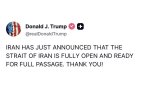
Rais Donald Trump aliishukuru Iran kwa kufungua lango hilo kupitia ujumbe wake kwenye mitandao ya kijamii. Lakini, Trump alisisitiza kuwa kuzingirwa kwa bandari za Iran na jeshi la majini la Marekani (naval blockade) kutaendelea kuwepo hadi pale makubaliano rasmi yatakapofikiwa na Tehran.
Kufuatia tangazo hilo, bei ya mafuta duniani imeshuka kwa zaidi ya 11%.

===
Iran on Friday declared the Strait of Hormuz completely open to commercial traffic during the ceasefire between Israel and Lebanon.
"In line with the ceasefire in Lebanon, the passage for all commercial vessels through Strait of Hormuz is declared completely open for the remaining period of ceasefire," Foreign Minister Seyed Abbas Araghchi said in a social media post. However, vessels must transit through a "coordinated route" announced by Iran's maritime authorities, Araghchi said.
President Donald Trump thanked Iran for opening the strait in a social media post. But Trump said the U.S. naval blockade of Iran's ports will remain in effect until an agreement is reached with Tehran.
Oil prices plunged more than 11% after the announcement.
Israel and Lebanon agreed Thursday to a 10-day ceasefire starting at 5 p.m. ET that evening. Israel's military campaign in Lebanon against the militant group Hezbollah, who are close allies of Iran, has been a sticking point in negotiations between Washington and Tehran.
Trump agreed to a two-week ceasefire on April 7 in exchange for Iran completely opening the strait. But Iran's parliamentary speaker Mohammad Bagher Ghalibaf accused the U.S. of violating the agreement by allowing Israel to continue its campaign in Lebanon.
The strait has remained almost completely closed during the U.S.-Iran ceasefire as the two countries disputed the terms of the agreement. Just a few commercial vessels are transiting the waterway daily.
Negotiations between Vice President JD Vance and Ghalibaf last weekend in Pakistan failed to produce an agreement to permanently end the U.S. war with Iran. Trump said U.S. and Iranian negotiators could meet again this weekend in Pakistan for a second round of talks.
What is the Strait of Hormuz, why does it matter?
It's a critical shipping route through which roughly 20% of the world's oil and natural liquefied gas is transported.
The strait's geography has allowed Iran to use it as leverage throughout this war, selectively preventing vessels from passing through the narrow waterway and spiking oil prices in the process.
Bounded to the north by Iran and to the south by Oman and the United Arab Emirates (UAE), the corridor - only about 50km (31 miles) wide at its entrance and exit, and about 33km wide at its narrowest point - connects the Gulf with the Arabian Sea.
The strait is deep enough for the world's biggest crude oil tankers, and is used by major Middle Eastern oil and LNG producers, as well as their customers.
In 2025, about 20 million barrels of oil and oil products passed through the Strait of Hormuz per day, according to estimates from the US Energy Information Administration (EIA). That is nearly $600bn (£447bn) worth of energy trade per year.
The oil comes not only from Iran but other Gulf states such as Iraq, Kuwait, Qatar, Saudi Arabia and the UAE.
Waziri wa Mambo ya Nje, Seyed Abbas Araghchi, amesema; "Sambamba na kusitisha mapigano nchini Lebanon, njia ya meli zote za kibiashara kupitia Mlango wa bahari wa Hormuz umefunguliwa kwa muda uliosalia wa kusitisha mapigano."
Hata hivyo, Araghchi ameongeza kuwa meli lazima zipite katika "njia iliyoratibiwa" iliyotangazwa na mamlaka za usafiri wa majini za Iran.
Israel na Lebanon zilikubaliana siku ya Alhamisi, Aprili 16, 2026 kusitisha mapigano kwa muda wa siku 10, kuanzia saa kumi na moja jioni siku hiyo hiyo. Operesheni za kijeshi za Israel nchini Lebanon dhidi ya kundi la wanamgambo wa Hezbollah, ambao ni washirika wa karibu wa Iran, imekuwa kikwazo kikubwa katika mazungumzo kati ya Washington na Tehran.
Rais Donald Trump aliishukuru Iran kwa kufungua lango hilo kupitia ujumbe wake kwenye mitandao ya kijamii. Lakini, Trump alisisitiza kuwa kuzingirwa kwa bandari za Iran na jeshi la majini la Marekani (naval blockade) kutaendelea kuwepo hadi pale makubaliano rasmi yatakapofikiwa na Tehran.
Kufuatia tangazo hilo, bei ya mafuta duniani imeshuka kwa zaidi ya 11%.
===
Iran on Friday declared the Strait of Hormuz completely open to commercial traffic during the ceasefire between Israel and Lebanon.
"In line with the ceasefire in Lebanon, the passage for all commercial vessels through Strait of Hormuz is declared completely open for the remaining period of ceasefire," Foreign Minister Seyed Abbas Araghchi said in a social media post. However, vessels must transit through a "coordinated route" announced by Iran's maritime authorities, Araghchi said.
President Donald Trump thanked Iran for opening the strait in a social media post. But Trump said the U.S. naval blockade of Iran's ports will remain in effect until an agreement is reached with Tehran.
Oil prices plunged more than 11% after the announcement.
Israel and Lebanon agreed Thursday to a 10-day ceasefire starting at 5 p.m. ET that evening. Israel's military campaign in Lebanon against the militant group Hezbollah, who are close allies of Iran, has been a sticking point in negotiations between Washington and Tehran.
Trump agreed to a two-week ceasefire on April 7 in exchange for Iran completely opening the strait. But Iran's parliamentary speaker Mohammad Bagher Ghalibaf accused the U.S. of violating the agreement by allowing Israel to continue its campaign in Lebanon.
The strait has remained almost completely closed during the U.S.-Iran ceasefire as the two countries disputed the terms of the agreement. Just a few commercial vessels are transiting the waterway daily.
Negotiations between Vice President JD Vance and Ghalibaf last weekend in Pakistan failed to produce an agreement to permanently end the U.S. war with Iran. Trump said U.S. and Iranian negotiators could meet again this weekend in Pakistan for a second round of talks.
What is the Strait of Hormuz, why does it matter?
It's a critical shipping route through which roughly 20% of the world's oil and natural liquefied gas is transported.
The strait's geography has allowed Iran to use it as leverage throughout this war, selectively preventing vessels from passing through the narrow waterway and spiking oil prices in the process.
Bounded to the north by Iran and to the south by Oman and the United Arab Emirates (UAE), the corridor - only about 50km (31 miles) wide at its entrance and exit, and about 33km wide at its narrowest point - connects the Gulf with the Arabian Sea.
The strait is deep enough for the world's biggest crude oil tankers, and is used by major Middle Eastern oil and LNG producers, as well as their customers.
In 2025, about 20 million barrels of oil and oil products passed through the Strait of Hormuz per day, according to estimates from the US Energy Information Administration (EIA). That is nearly $600bn (£447bn) worth of energy trade per year.
The oil comes not only from Iran but other Gulf states such as Iraq, Kuwait, Qatar, Saudi Arabia and the UAE.