Jifunze kusoma Alama za Nyakati. Siku ukiona Ulinzi ni Mkubwa basi jua kuwa Usalama ni Mdogo
Our Community
Regional Communities
Navigation
Install the app
How to install the app on iOS
Follow along with the video below to see how to install our site as a web app on your home screen.
Note: This feature may not be available in some browsers.
More options
Style variation
You are using an out of date browser. It may not display this or other websites correctly.
You should upgrade or use an alternative browser.
You should upgrade or use an alternative browser.
Jifunze kusoma Alama za Nyakati. Siku ukiona Ulinzi ni Mkubwa basi jua kuwa Usalama ni Mdogo

Chaliifrancisco
JF-Expert Member
- Jan 17, 2015
- 26,021
- 79,710
Imeandikwa wapi?Imeandikwa wazi ,Alilaaniwa ktk ardhi kwa habari ya kilimo ,siyo vitu vingine...

Kaka yake shetani
JF-Expert Member
- Feb 1, 2023
- 5,771
- 14,732
Tumeshaona kwa JPM na sasa kwa mama samia
Sweya Makungu
JF-Expert Member
- Jun 11, 2023
- 508
- 601
- Thread starter
- #45
Katika Biblia. Mwanzo 4 : 12 " utakapoilima ardhi haitakupa mazao yake;Imeandikwa wapi?
Sweya Makungu
JF-Expert Member
- Jun 11, 2023
- 508
- 601
- Thread starter
- #46
Sweya Makungu
JF-Expert Member
- Jun 11, 2023
- 508
- 601
- Thread starter
- #47
HahahahaahaTumeshaona kwa JPM na sasa kwa mama samia

Glenn
JF-Expert Member
- May 23, 2015
- 69,329
- 164,730
Ushakuwa Dahan?Naam
Sweya Makungu
JF-Expert Member
- Jun 11, 2023
- 508
- 601
- Thread starter
- #49
Hahahaha kwann mkuu?Ushakuwa Dahan?

Sweya Makungu
JF-Expert Member
- Jun 11, 2023
- 508
- 601
- Thread starter
- #51
Nashukuru Sana mkuuAndiko Bora kabisa
Chaliifrancisco
JF-Expert Member
- Jan 17, 2015
- 26,021
- 79,710
Chakula chake anatoa wapi? Mifugo yake inakula nini? Chuma hakilimwi ardhini?Katika Biblia. Mwanzo 4 : 12 " utakapoilima ardhi haitakupa mazao yake;

WORLD WAR 5
JF-Expert Member
- Aug 28, 2021
- 508
- 970
I gattu gee✌🏼

Kiranga
Platinum Member
- Jan 29, 2009
- 78,790
- 128,275
Hiyo story ya Cain na Abel ni ya kutungwa tu.Ukitaka kujua hizi dini zinatupiga ndio hapa.
Kama mtu alilaaniwa katika ardhi akaamua kuwa mfugaji je hiyo mifugo inatoa wapi chakula kama sio ardhini? Je yeye mwenyewe anatoa wapi chakula kama sio kwenye hiyo ardhi au hao wanyama wanaopata chakula ardhini?
Je hivyo vyuma walifua vipi kama sio kwa madini chuma yaliyo ardhini?
Hebu muda mwingine muwe mnatumia hata akili kidogo mnapotaka kuandika mambo yenu ya kusadikika.
Cc Scars Kiranga
How to Read the Bible | James Kugel
In How to Read the Bible, Harvard professor James Kugel leads the reader chapter by chapter through the "quiet revolution" of recent biblical scholarship, showing time and again how radically the interpretations of today's researchers differ from what people have always thought. The story of...
 www.jameskugel.com
How to Read the Bible
A Guide to Scripture, Then and Now
READ AN EXCERPTScholars from different fields have joined forces to reexamine every aspect of the Hebrew Bible. Their research, carried out in universities and seminaries in Europe and America, has revolutionized our understanding of almost every chapter and verse. But have they killed the Bible in the process?
In How to Read the Bible, Harvard professor James Kugel leads the reader chapter by chapter through the “quiet revolution” of recent biblical scholarship, showing time and again how radically the interpretations of today’s researchers differ from what people have always thought. The story of Adam and Eve, it turns out, was not originally about the “Fall of Man,” but about the move from a primitive, hunter-gatherer society to a settled, agricultural one. As for the stories of Cain and Abel, Abraham and Sarah, and Jacob and Esau, these narratives were not, at their origin, about individual people at all but, rather, explanations of some feature of Israelite society as it existed centuries after these figures were said to have lived. Dinah was never raped — her story was created by an editor to solve a certain problem in Genesis. In the earliest version of the Exodus story, Moses probably did not divide the Red Sea in half; instead, the Egyptians perished in a storm at sea. Whatever the original Ten Commandments might have been, scholars are quite sure they were different from the ones we have today. What’s more, the people long supposed to have written various books of the Bible were not, in the current consensus, their real authors: David did not write the Psalms, Solomon did not write Proverbs or Ecclesiastes; indeed, there is scarcely a book in the Bible that is not the product of different, anonymous authors and editors working in different periods.
Such findings pose a serious problem for adherents of traditional, Bible-based faiths. Hiding from the discoveries of modern scholars seems dishonest, but accepting them means undermining much of the Bible’s reliability and authority as the word of God. What to do? In his search for a solution, Kugel leads the reader back to a group of ancient biblical interpreters who flourished at the end of the biblical period. Far from naïve, these interpreters consciously set out to depart from the original meaning of the Bible’s various stories, laws, and prophecies — and they, Kugel argues, hold the key to solving the dilemma of reading the Bible today.
How to Read the Bible is, quite simply, the best, most original book about the Bible in decades. It offers an unflinching, insider’s look at the work of today’s scholars, together with a sustained consideration of what the Bible was for most of its history — before the rise of modern scholarship. Readable, clear, often funny but deeply serious in its purpose, this is a book for Christians and Jews, believers and secularists alike. It offers nothing less than a whole new way of thinking about sacred Scripture.
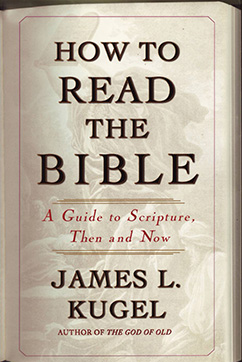
Copyright © 2023 by James L. Kugel
Sweya Makungu
JF-Expert Member
- Jun 11, 2023
- 508
- 601
- Thread starter
- #55
Duuu chuma Tena kulimwa au kuchimbwa!!Chakula chake anatoa wapi? Mifugo yake inakula nini? Chuma hakilimwi ardhini?
Chakula si wakulima walikuwepo ambao nao hawakuwa wafugaji..
Mifugo si ilikula majani ya kondeni yaliyojiotea km wanyama wengine ambayo siyo mazao ya kuliwa na binadamu...
Sweya Makungu
JF-Expert Member
- Jun 11, 2023
- 508
- 601
- Thread starter
- #56
NaamI gattu gee✌🏼
Sweya Makungu
JF-Expert Member
- Jun 11, 2023
- 508
- 601
- Thread starter
- #57
Duuuu
DuuuuHiyo story ya Cain na Abel ni ya kutungwa tu.
How to Read the Bible | James Kugel
In How to Read the Bible, Harvard professor James Kugel leads the reader chapter by chapter through the "quiet revolution" of recent biblical scholarship, showing time and again how radically the interpretations of today's researchers differ from what people have always thought. The story of...
How to Read the Bible
A Guide to Scripture, Then and Now
READ AN EXCERPT
Scholars from different fields have joined forces to reexamine every aspect of the Hebrew Bible. Their research, carried out in universities and seminaries in Europe and America, has revolutionized our understanding of almost every chapter and verse. But have they killed the Bible in the process?
In How to Read the Bible, Harvard professor James Kugel leads the reader chapter by chapter through the “quiet revolution” of recent biblical scholarship, showing time and again how radically the interpretations of today’s researchers differ from what people have always thought. The story of Adam and Eve, it turns out, was not originally about the “Fall of Man,” but about the move from a primitive, hunter-gatherer society to a settled, agricultural one. As for the stories of Cain and Abel, Abraham and Sarah, and Jacob and Esau, these narratives were not, at their origin, about individual people at all but, rather, explanations of some feature of Israelite society as it existed centuries after these figures were said to have lived. Dinah was never raped — her story was created by an editor to solve a certain problem in Genesis. In the earliest version of the Exodus story, Moses probably did not divide the Red Sea in half; instead, the Egyptians perished in a storm at sea. Whatever the original Ten Commandments might have been, scholars are quite sure they were different from the ones we have today. What’s more, the people long supposed to have written various books of the Bible were not, in the current consensus, their real authors: David did not write the Psalms, Solomon did not write Proverbs or Ecclesiastes; indeed, there is scarcely a book in the Bible that is not the product of different, anonymous authors and editors working in different periods.
Such findings pose a serious problem for adherents of traditional, Bible-based faiths. Hiding from the discoveries of modern scholars seems dishonest, but accepting them means undermining much of the Bible’s reliability and authority as the word of God. What to do? In his search for a solution, Kugel leads the reader back to a group of ancient biblical interpreters who flourished at the end of the biblical period. Far from naïve, these interpreters consciously set out to depart from the original meaning of the Bible’s various stories, laws, and prophecies — and they, Kugel argues, hold the key to solving the dilemma of reading the Bible today.
How to Read the Bible is, quite simply, the best, most original book about the Bible in decades. It offers an unflinching, insider’s look at the work of today’s scholars, together with a sustained consideration of what the Bible was for most of its history — before the rise of modern scholarship. Readable, clear, often funny but deeply serious in its purpose, this is a book for Christians and Jews, believers and secularists alike. It offers nothing less than a whole new way of thinking about sacred Scripture.
Copyright © 2023 by James L. Kugel

wa ukae
JF-Expert Member
- Aug 11, 2008
- 2,720
- 2,151
Sweya Makungu
JF-Expert Member
- Jun 11, 2023
- 508
- 601
- Thread starter
- #59
Hahahahaaha naam karibu
Kiranga
Platinum Member
- Jan 29, 2009
- 78,790
- 128,275
Naam.Duuuu
Duuuu
Una hoja gani kwenye maelezo haya ya wanazuoni?