Kenya says the ICJ has no jurisdiction in Somalia sea dispute case

Kenya says the ICJ has no jurisdiction in Somalia sea dispute case

Na hii? Dhuks

1024px-East_Africa_Protectorate_and_Uganda_%281898%29.png


nomasana, sam999, NairobiWalker, hbuyosh, msemakweli, simplemind, Kimweri, Bulldog, MK254, Kafrican, Ngongo, Ab_Titchaz, mtanganyika mpya, JokaKuu, Ngongo, Askari Kanzu, Dhuks, Yule-Msee, waltham, Mzee, mombasite gabriel, Juakali1980, Boda254, mwaswast, MwendaOmo, Mwanakijiji,Iconoclastes, oneflash, Kambalanick, 1 Africa, saadeque, burukenge, nyangau mkenya, Teen-Upperhill Nairobi, kadoda11
 
Geza na Lapsset huwa inamuuma sana. Assuming that KENYA loses, does it take Lamu to Somalia territory?
 
Geza na Lapsset huwa inamuuma sana. Assuming that KENYA loses, does it take Lamu to Somalia territory?
It doesn't but since the waters will be Somalian every ship calling at Lamu will have to pay a fee to Somalian govt since will have to cross Somalian economic zone making it expensive! And there are possibilities Somalia will also file the case for the Northern Frontier Provinces too!


maritime+border.jpg
 
Ngoja uone povu litavyowatoka
tutokwe povu na nini wakati hio ardhi ni yetu tangu uhuru..... hapa nilipo nimeweka tabasamu la ki lucifer morningstar.....yani kenya came from nowhere to become the economic powerhouse of east and central africa...... sisi ni kama wa israeli ki aina, we are the chosen people!!!!!! we will survive under the most difficult environment/circumstances, someone give me an ai-men!!!!
 
It doesn't but since the waters will be Somalian every ship calling at Lamu will have to pay a fee to Somalian govt since will have to cross Somalian economic zone making it expensive! And there are possibilities Somalia will also file the case for the Northern Frontier Provinces too!


maritime+border.jpg
So by your deduction no part of Kenya would touch the international waters? Your delusion is more grand than i expected.
 
So by your deduction no part of Kenya would touch the international waters? Your delusion is more grand than i expected.
since u don't know maritime routes u will never understand what it means to have such a narrow corridor as far as navigation is concerned! Poor illiterate u...🙄
 
Hundreds of Somalis stage anti-Kenya protest in maritime border row
ico_plus.png
Share
ico_bookmark.png
Bookmark
ico_print.png
Print Rating
oil+rig.jpg

Offshore oil and gas exploration platforms in the Indian Ocean. Somalia accused Kenya of unnecessarily prolonging a battle over lucrative Indian Ocean oil and gas reserves, saying "both impoverished nations" had an interest in swiftly resolving the maritime border dispute. PHOTO | FILE

By AFP

Posted Thursday, September 22 2016 at 11:39
In Summary

  • A long-running dispute between the two Horn of Africa neighbours went before the UN's top court in The Hague this week, which is yet to decide whether it has jurisdiction to hear the claim that will determine the fate of offshore oil and gas reserves.


Related Stories


Hundreds of Somalis took to the streets of Mogadishu on Wednesday in protest at Kenya's territorial claim to a disputed portion of potentially lucrative Indian Ocean waters.

A long-running dispute between the two Horn of Africa neighbours went before the UN's top court in The Hague this week, which is yet to decide whether it has jurisdiction to hear the claim that will determine the fate of offshore oil and gas reserves.

Led by protesters wrapped in Somalia's national colours — a white star on light blue — hundreds of people called into the street by the Mogadishu mayor denounced "Kenyan ambitions to claim a portion of Somalia's territorial waters".

"There is no one who can purchase Somalia's territorial waters," Mayor Yusuf Hussein Jimale said during a rally at a city square.

"We are very much hopeful that the verdict of the hearing at the International Court of Justice (ICJ) in The Hague will be in our favour," he added.

Somalia took its case to the ICJ in 2014, saying long negotiations with Kenya had proved fruitless.

Both countries lay claim to a triangle of water stretching over more than 100,000 square kilometres (40,000 square miles) that is believed to hold oil and gas.

"This is about integrity. Somalia needs to unite in defending its territorial waters and that is why we are here," said protester Asha Abdirahman.

A relative newcomer to the oil industry, Kenya is thought to have major potential in a part of Africa recently found to be sitting on significant reserves.

At the start of preliminary hearings Monday, Kenya argued the tribunal was not competent in the case and asked it to dismiss Somalia's request.

The hearings continue Friday after which the ICJ will rule on whether to take up the case.

Hundreds of Somalis stage anti-Kenya protest in maritime border row

MY TAKE
Naskia KCB wamefungua branch Mogadishu! Aroo inabidi muweke ngome kabisa!

nomasana
, sam999, NairobiWalker, hbuyosh, msemakweli, simplemind, Kimweri, Bulldog, MK254, Kafrican, Ngongo, Ab_Titchaz, mtanganyika mpya, JokaKuu, Ngongo, Askari Kanzu, Dhuks, Yule-Msee, waltham, Mzee, mombasite gabriel, Juakali1980, Boda254, mwaswast, MwendaOmo
, Iconoclastes, oneflash, Kambalanick, 1 Africa, saadeque, burukenge, nyangau mkenya, Teen-Upperhill Nairobi, kadoda11
 
Why government risks losing maritime dispute with Somali
By Nzau Musau Updated Sun, October 2nd 2016 at 15:58 GMT +3 SHARE THIS ARTICLE

Kenya is likely to lose maritime dispute claims against Somalia in the long run if past determinations of International Court of Justice (ICJ) are anything to go by, a maritime law expert has cautioned.

Prof Musili Wambua, who is one of Kenya’s foremost maritime law experts says the method adopted by Kenya to claim the maritime border -- parallel of latitude -- is likely to be dropped in favour of the one preferred by Somalia - equidistant line.

At stake are oil and gas deposits in the three blocks within the disputed area. Kenya could win on some of the preliminary points on jurisdiction raised last week and the dispute could be stayed pending determination of the Commission on the Limits of the Continental Shelf (CLCS).

“Based on the cases decided by the ICJ, Kenya may lose on the use of the parallel of latitude as the court is likely to settle on the equidistant line, leading Kenya to lose the oil blocks L21, L23 and L24,” Wambua says. He says that the only way Kenya can avoid losing is by demonstrating existence of “very strong circumstances which warrant a departure from the equidistant line advocated by Somalia.”

“There are strong arguments which may persuade the court to stay the proceedings pending the conclusion of the submission to CLCS. However, it is worth noting that Somalia’s claim is not restricted to the extra 150nm which Kenya is claiming in the CLCS reference,” Wambua said.

In its court papers, Somalia wants delimitation of three zones - the Territorial Sea, the Exclusive Economic Zone and Continental Shelf.

“It is only in Nicaragua v Honduras that the ICJ departed from the principle of equidistant special circumstances principle/rule and applied bisector method because equidistant could not produce equitable outcome,” Wambua said. The bedrock of Kenya’s preliminary objections to the case is a 2009 Memorandum of Understanding (MoU) with Somalia acknowledging a dispute and vowing not to challenge each other’s claims pending CLCS process of registering borders.

Former Foreign Affairs minister Moses Wetang’ula signed the MoU on behalf of Kenya while Abdirahman Warsame the National Planning minister signed for Somali.

During written and oral submissions last week, Kenya painted the picture of a Somali government that has fallen to Al Shabab propaganda that by agreeing to the MoU, Somali had essentially sold the sea to Kenya.

On the same year it was signed, Somali parliament disowned the MOU. It now blames Kenya for “capitalising” on its vulnerability during a delicate transitional moment after years of upheaval.

“After many years of conflict and exploitation, Somalia is proud to be in a position to stand on its own feet, and claim its lawful sovereign rights and jurisdiction in the waters and seabed adjacent to its coast,” Somalia says in submissions being considered by the judges.

It says it was ambushed with the MoU, that the proposal for the same never originated from them, that they gave “very little input” and that the signed MoU bears only Kenya’s Court of Arms.

It blames Kenya for failing to attend the final round of negotiations in Mogadishu in August 2014. While Kenya argues security fears led to cancellation of the visit by Mr Wetangula, Somalia says Italian and French companies have continued their exploratory activities in disputed areas courtesy of Kenya.

However during the oral hearings, Kenya’s lawyer Prof Payam Akhavan said Somali’s claims were overblown as “Oil has yet to be discovered, let alone exploited.” Attorney General Githu Muigai also said Kenya had suspended its activities in the disputed area.

“There is no basis for Somalia’s alarmist accusations against Kenya — and most certainly no justification for the accusation that it is an unjust nation taking advantage of its neighbour. “This is especially unbecoming given the extraordinary sacrifices that Kenya has made in solidarity with the Government and people of Somalia,” Prof. Akhavan said.

Read more at: Why government risks losing maritime dispute with Somali

Read more at: Why government risks losing maritime dispute with Somali
 
Kenya loses round one in sea row case with Somalia
Thursday February 2 2017
email print

Githu.jpg

Attorney-General Githu Muigai who argued that the case was an unnecessary stumbling block to the fledgling relations between the two countries, especially on security cooperation. PHOTO | DENNIS ONSONGO | NATION MEDIA GROUP

In Summary
  • The court found that the MoU signed by Kenya’s then Foreign Minister Moses Wetang’ula and Somalia’s then Minister of Planning, and the current presidential candidate Abdirahman Abdishakur was a valid bilateral agreement.
  • In a ruling delivered on Thursday, the court’s President Ronny Abraham poked holes into a Memorandum of Understanding signed between Kenya and Somalia, which Nairobi had said constitutes an agreement to use the UN Commission on Law of the Sea instead of the court.
Advertisement

Mutash.jpg

By AGGREY MUTAMBO
More by this Author
Kenya has lost its bid to stop a case filed by Somalia over a maritime dispute from going to a full hearing.

Judges at the International Court of Justice on Thursday dismissed the two reasons fronted by Kenya’s lawyers that there exists an alternative method of resolving the matter and that the case is invalid because the alternative method had not been exhausted.

In a ruling delivered on Thursday, the court’s President Ronny Abraham poked holes into a Memorandum of Understanding signed between Kenya and Somalia, which Nairobi had said constitutes an agreement to use the UN Commission on Law of the Sea instead of the court.

“The question before the court is whether the parties agreed to a method of delimitation (of the area under dispute) other than the court,” the 66-year-old French judge told the court.

He declared the MoU was not intended to establish a specific procedure for the settlement of the maritime dispute. The court also rejected Somalia’s argument that the MoU was not binding because Parliament had rejected it.

The court found that the MoU signed by Kenya’s then Foreign Minister Moses Wetang’ula and Somalia’s then Minister of Planning, and the current presidential candidate Abdirahman Abdishakur was a valid bilateral agreement.

The judge said the document did not require parliamentary approval as had been argued by Mogadishu because the two ministers were authorised representatives of their respective governments.

The Kenyan legal team argued that the court lacked jurisdiction since both Kenya and Mogadishu had agreed on an alternative dispute settlement. When Kenya joined the UN, it indicated in 1965 that it would agree to the court’s general jurisdiction only as long as there were no alternative methods of resolving disagreements.

“It does not, however, prescribe a method of settlement. Consequently this case does not, by virtue of the MoU, fall out of this court,” the judge said, reading a judgement in which four of the 13 judges of the court dissented.

The decision means that Mogadishu has won round one of the dispute and the case will go to a full hearing at a date to be announced by the International Court of Justice.

Attorney General Githu Muigai, who was in court during the hearing, had argued that the case was an unnecessary stumbling block to the fledgling relations between the two countries, especially on security cooperation.

But while Somalia acknowledged Kenya’s support in fight against Al Shabaab, Ms Mona Al-Sharmani, Somalia’s senior presidential advisor, told the court the very existence of the dispute was an unnecessary divergence that must be resolved.

Somalia sued Kenya in August 2014 saying the boundary should extend diagonally to the south at Kiunga into the sea, and not eastwards as it is today. But that may also affect Kenya’s sea border with Tanzania.

The area in contest is about 100,000 square kilometres, forming a triangle east of the Kenya coast.

In 2009, Kenya and Somalia reached an MoU, which was deposited to the UN in 2011. The agreement had stated that the border would run east.

Kenya loses sea row case with Somalia
 
Kenya fails to stop UN court from ruling on sea border with Somalia
maritime+border.jpg

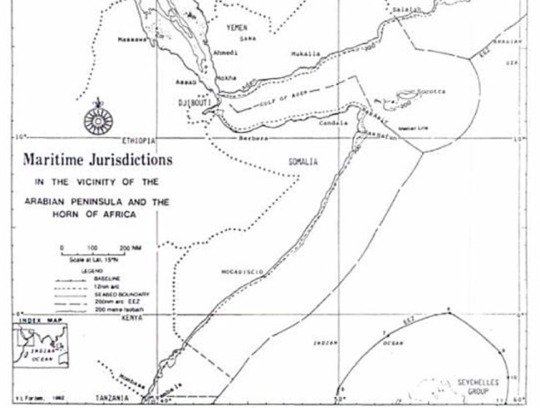
Kenya and Somalia assert ownership of a triangular area of about 100,000 square kilometres of marine territory that is said to have oil and gas deposits in the Indian Ocean. FILE GRAPHIC | NATION MEDIA GROUP

In Summary

  • Judges at the International Court of Justice (ICJ) dismissed Kenya’s arguments that there exists an alternative method to resolve the matter which was yet to be exhausted.
  • Somalia took Kenya to the ICJ in The Hague in August 2014 after six years of negotiations over the ocean boundary proved futile.
  • The two countries assert ownership of a triangular area of about 100,000 square kilometres of marine territory that is said to have oil and gas deposits in the Indian Ocean.


Kenya has lost its bid to stop a top UN court from hearing a maritime border dispute case between Nairobi and Mogadishu.

Judges at the International Court of Justice (ICJ) dismissed Kenya’s arguments that there exists an alternative method to resolve the matter which was yet to be exhausted.

In its ruling on Thursday, the ICJ president Ronny Abraham said the agreement signed between Kenya and Somalia did not bind the parties to settle the dispute out of court.

“The question before the Court is whether the parties agreed to a method of delimitation (of the area under dispute) other than the court,” Judge Abraham said, adding that the agreement failed to establish the procedure to settle the matter.

“It does not, however, prescribe a method of settlement," the judge said.

"Consequently, this case does not, by virtue of the MoU, fall out of this Court,” he said, reading the ruling in which only 4 of the 13 judges of the Court dissented.

The ICJ said the pact signed by Kenya’s former Foreign minister Moses Wetang’ula and Somalia’s ex-Minister of Planning and International Cooperation, who is currently running for president, Abdirahman Abdishakur was a valid bilateral agreement.

But the 66 year-old French judge said the document did not require parliamentary approval as had been argued by Mogadishu because the two ministers were authorised representatives of their respective governments.

ICJ jurisdiction

Led by Attorney-General Githu Muigai, Kenya’s legal team had argued that the ICJ lacked jurisdiction since the two countries had an alternative dispute mechanism.

Kenya said that since it joined the UN in 1965, it had indicated that it would only agree to the ICJ’s general jurisdiction only if there lacked an alternate method to resolve disagreements.

READ: UN court has no jurisdiction in Somalia border dispute, says Kenya

But this was rejected by Court.

“The Court finds that Kenya’s preliminary objection to the Somali case must be rejected. This dispute, does not fall outside Kenya’s scope of optional declarations,” the judge said.

The ruling means that the case will proceed before the Court, giving the Mogadishu its first win in the legal battle that is likely take some years to be settled.

Diplomatic relations

Kenya had maintained that the case was an unnecessary stumbling block to the fledgling relations between the two countries, especially on security cooperation.

But while Somalia acknowledged Nairobi’s support in the fight against the Al Shabaab terrorist group, Ms Mona Al-Sharmani, a senior presidential advisor had told the Court the very existence of the dispute was an unnecessary divergence that needed to be resolved.

Somalia took Kenya to the ICJ in The Hague in August 2014 after six years of negotiations over the ocean boundary proved futile.

READ: Somalia slams Kenya for dragging out maritime border row

The two countries assert ownership of a triangular area of about 100,000 square kilometres of marine territory that is said to have oil and gas deposits in the Indian Ocean.

Somalia, which lies to the north of Kenya, wants the borderline from its coast to run southeast, while Nairobi wants it to run eastwards as it is currently.

In 2009, the two countries signed an MoU that stated that the border would run east along the line of latitude but allowed further negotiations to be held under the UN Commission on the Limits of the Continental Shelf to establish the actual marine boundary.

The pact was deposited with the UN in 2011.

Kenya also argues that the agreement stated that the maritime boundary adjustments would only occur after the commission had established the outer limits of the continental shelf and that both sides would avoid courts as much as possible over the matter.

However, Somalia says Kenya frustrated the talks forcing it to seek the Court’s determination of the border row.

The Court said it will announce a date for the hearing.

Kenya fails to stop UN court from ruling on sea border with Somalia

nomasana, sam999, NairobiWalker, hbuyosh, msemakweli, simplemind, Kimweri, Bulldog, MK254, Kafrican, Ngongo, Ab_Titchaz, mtanganyika mpya, JokaKuu, Ngongo, Askari Kanzu, Dhuks, Yule-Msee, waltham, Mzee, mombasite gabriel, Juakali1980, Boda254, mwaswast, MwendaOmo, Mwanakijiji,Iconoclastes, oneflash, Kambalanick, 1 Africa, saadeque, burukenge, nyangau mkenya, Teen-Upperhill Nairobi, kadoda11
 
if you've been in a court then you know what this means.....
this was just a pleliminary hearing, not the actual case... this was just the first session where the coutrs decides if there is a case on not.....
kenya wanted the whole thing to be thrown out all together even b4 it begins........

But that dint happen so now the actual case will begin where each side will make its argument........
the ICJ unlike other courts does not just make its rulling based on facts and who is guilty..... the courts s also looks at economic sence, fair distribution ...and stull like that.... there is no way in hell the ICJ will allow an already thriving maritime economic zone to be rendered useless when somali itself as it stands has the longest coastline in africa....... If Kenya indeed took somalia's coast unfairly the most probable scenario ICJ will sujjest Kenya maintain control over that territory but both Kenya and Somalia share any natural reasources like oil/gas that gets discovered in that particular territory.......
in a worse case scenario for Kenya, somali gets the whole territory, there is no way in hell Kenya will give up that territory, the ICJ would have just comitted Kenya into a state of war over that territory..... but that wont happen because for the ICJ judgementbto be binding, both parties of the dispute must agree and sign the judgment, even if Kenya had already agreed to ackknowledge the juridiction of the court, Kenya can still refuse to agree with the rulling and the ICJ cannot force Kenya to give up the territory.
 
if you've been in a court then you know what this means.....
this was just a pleliminary hearing, not the actual case... this was just the first session where the coutrs decides if there is a case on not.....
kenya wanted the whole thing to be thrown out all together even b4 it begins........

But that dint happen so now the actual case will begin where each side will make its argument........
the ICJ unlike other courts does not just make its rulling based on facts and who is guilty..... the courts s also looks at economic sence, fair distribution ...and stull like that.... there is no way in hell the ICJ will allow an already thriving maritime economic zone to be rendered useless when somali itself as it stands has the longest coastline in africa....... If Kenya indeed took somalia's coast unfairly the most probable scenario ICJ will sujjest Kenya maintain control over that territory but both Kenya and Somalia share any natural reasources like oil/gas that gets discovered in that particular territory.......
in a worse case scenario for Kenya, somali gets the whole territory, there is no way in hell Kenya will give up that territory, the ICJ would have just comitted Kenya into a state of war over that territory..... but that wont happen because for the ICJ judgementbto be binding, both parties of the dispute must agree and sign the judgment, even if Kenya had already agreed to ackknowledge the juridiction of the court, Kenya can still refuse to agree with the rulling and the ICJ cannot force Kenya to give up the territory.
keep consoling urself i am pretty sure Somalia will win the case 95% sure! I will come back here to prove that to u the day of verdict!
 
ken_eth.jpg

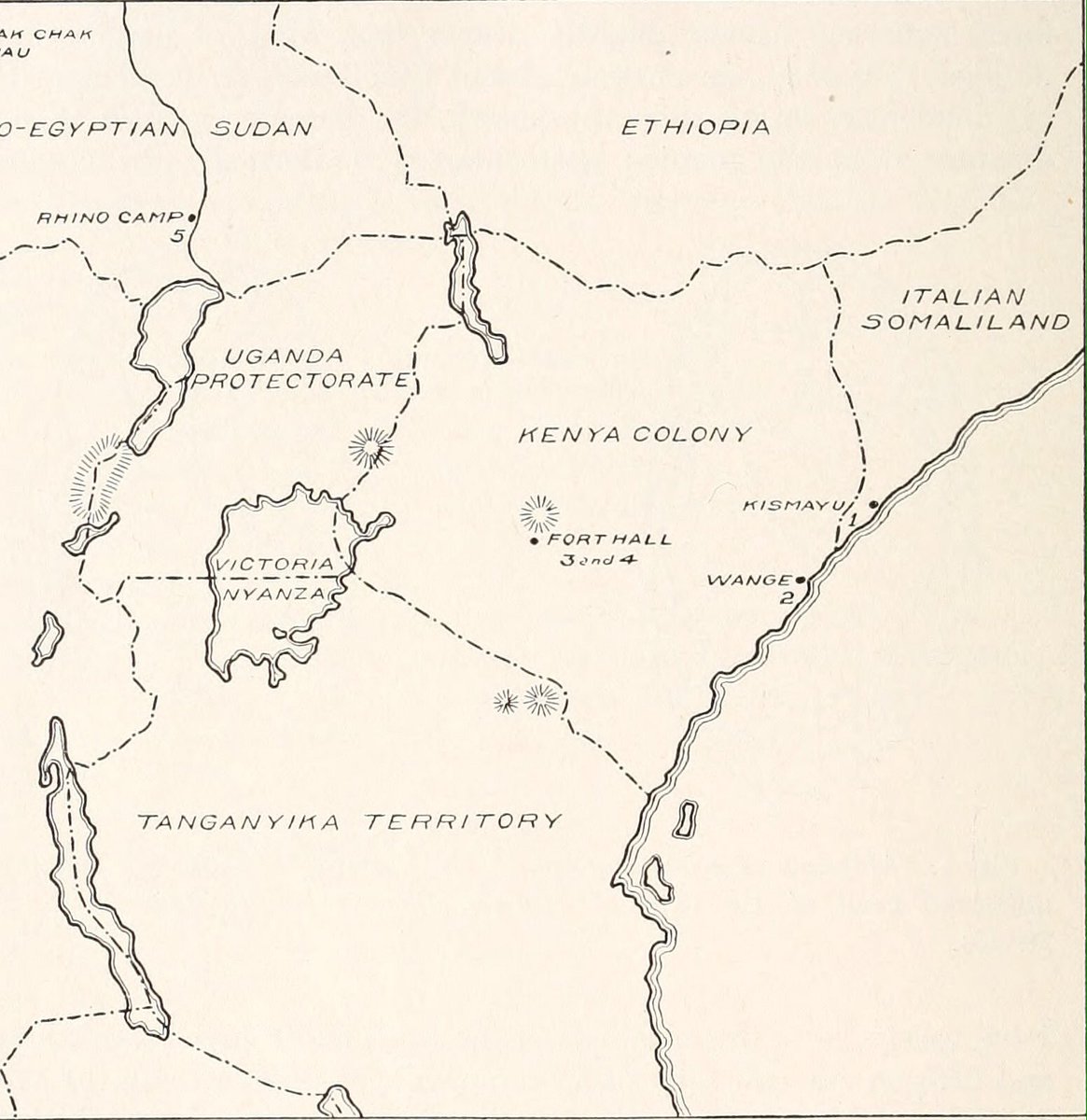
Hahaha Geza Ulole. Uganda wanataka the pink part. One time Idd Amin said Uganda border inafaa kuwa Naivasha. The blue Part Somalia wanasema ni their land. Na Pwani mnasema ni yenu.
 
keep consoling urself i am pretty sure Somalia will win the case 95% sure! I will come back here to prove that to u the day of verdict!
You first need to understand how the court works before you understand what a win ir a loss means.... even if kenya were to win the case, somalia can still refuse the rulling and still pursue the matter using other means......

has the ICC ever arresyed sudan president who is wanted ???? evin if the icc were to try albashir in absentia and find him guiltyband sentence him to life in prison, they still cant arrest him....

the ICJ is alitle different but somewhat the same.... for a border dispute case to be declaired resolved both parties must sign the final rulling....

Why do you think China is now violation like 7 nations in the south china sea and the UN cant do anything about it?


here is another good example, USA Vs Nicaragua.... USA eventually refused to agree with the rulling .... And this case was even worse, the USA was actively and forcefully violating the teritorial integrity of bicaragua ....

----------The Republic of Nicaragua v. The United States of America (1986) ICJ 1 is a public international law case decided by the
International Court of Justice (ICJ). The ICJ ruled in favor of Nicaragua and against the United States and awarded reparations to Nicaragua. The ICJ held that the U.S. had violated international law by supporting the Contras in their rebellion against the Nicaraguan government and by
mining Nicaragua's harbors. The United States refused to participate in the proceedings after the Court rejected its argument that the ICJ lacked jurisdiction to hear the case. The U.S. also blocked enforcement of the judgment by the
United Nations Security Council and thereby prevented Nicaragua from obtaining any compensation.[2] Nicaragua, under the later, post-FSLN government of Violeta Chamorro, withdrew the complaint from the court in September 1992 following a repeal of the law which had required the country to seek compensation
-----------
there is als a border dispute with canada in which the US refused to accept the rulling.
..


The ICJ just like the ICC can only depend on the UN secufity council to enforce any rulling, but the UNSC is made up of politically appointed representetives, and in such deliberation, You only need one Veto permanent member to disagree and the whole decision can be thrown out Russia and China have never voted against kenya at the UNSC so even is somalia were to win, i dont see how all the veto memebers will vote in favour of somalia after kenya refuses to accept the rulling
keep consoling urself i am pretty sure Somalia will win the case 95% sure! I will come back here to prove that to u the day of verdict!

You first need to understand how the court works before you understand what a win ir a loss means.... even if kenya were to win the case, somalia can still refuse the rulling and still pursue the matter using other means......

has the ICC ever arresyed sudan president who is wanted ???? evin if the icc were to try albashir in absentia and find him guiltyband sentence him to life in prison, they still cant arrest him....

the ICJ is alitle different but somewhat the same.... for a border dispute case to be declaired resolved both parties must sign the final rulling....

Why do you think China is now violation like 7 nations in the south china sea and the UN cant do anything about it?


here is another good example, USA Vs Nicaragua.... USA eventually refused to agree with the rulling .... And this case was even worse, the USA was actively and forcefully violating the teritorial integrity of bicaragua ....

----------The Republic of Nicaragua v. The United States of America (1986) ICJ 1 is a public international law case decided by the
International Court of Justice (ICJ). The ICJ ruled in favor of Nicaragua and against the United States and awarded reparations to Nicaragua. The ICJ held that the U.S. had violated international law by supporting the Contras in their rebellion against the Nicaraguan government and by
mining Nicaragua's harbors. The United States refused to participate in the proceedings after the Court rejected its argument that the ICJ lacked jurisdiction to hear the case. The U.S. also blocked enforcement of the judgment by the
United Nations Security Council and thereby prevented Nicaragua from obtaining any compensation.[2] Nicaragua, under the later, post-FSLN government of Violeta Chamorro, withdrew the complaint from the court in September 1992 following a repeal of the law which had required the country to seek compensation
-----------
there is als a border dispute with canada in which the US refused to accept the rulling.
..


The ICJ just like the ICC can only depend on the UN secufity council to enforce any rulling, but the UNSC is made up of politically appointed representetives, and in such deliberation, You only need one Veto permanent member to disagree and the whole decision can be thrown out Russia and China have never voted against kenya at the UNSC so even is somalia were to win, i dont see how all the veto memebers will vote in favour of somalia after kenya refuses to accept the rulling
 
Somalia given greenlight to respond in border case
TUESDAY FEBRUARY 13 2018

maritime+border.jpg

The area in the Kenya-Somalia maritime border dispute is about 100,000km2 forming a triangle east of the Kenya coast. FILE GRAPHIC | NATION MEDIA GROUP

In Summary
  • The court Monday announced that Somalia should respond to Kenya’s claim that the current flow of the border should remain intact.

  • Somalia sued Kenya in August 2014, saying the border between the two countries should extend diagonally into the sea.

  • The area in contest is about 100,000 square kilometres, forming a triangle east of the Kenyan coast.
nation.jpg

By DAILY NATION
More by this Author
The International Court of Justice has allowed Somalia to file a response to a case in which it has sued Kenya over a maritime border.

The move kick-starts a fresh round of arguments, which could determine the final flow of the border.

The court Monday announced that Somalia should respond to Kenya’s claim that the current flow of the border should remain intact by June 18, after which Kenya will have another six months to respond.

“The court issued this decision taking into account the views of the parties and the circumstances of the case. The subsequent procedure has been reserved for further decision,” said a statement from the court’s registry.

Kenya's plea

On February 2 this year, presiding judge Ronny Abraham accepted Kenya’s plea to file a second round of arguments, which Nairobi said would take longer to prepare. This means the two countries will have another opportunity to argue before the court.

Somalia sued Kenya in August 2014, saying the border between the two countries should extend diagonally into the sea, south of Kiunga and not eastwards as it is today. But Kenya has argued that this may also affect its sea border with Tanzania.

The current border has existed largely as a result of Presidential Proclamation of 1979.

When the case was presented to court last year in February, Kenya’s preliminary objections were dismissed.

Kenya had argued that the court lacked jurisdiction and that the two countries had signed a memorandum of understanding to have the matter resolved through the UN Commission on the Limits of the Continental Shelf, something which Nairobi had claimed was not yet exhausted.

Area in contest

The area in contest is about 100,000 square kilometres, forming a triangle east of the Kenyan coast.

In 2009, Kenya and Somalia had reached an MoU and deposited it at the UN. It proclaimed that the sea border should run eastwards. But the case is also influenced by the suspected oil deposits in the contested area.

Somalia had argued that Kenya was prospecting in the area, something that could expose Somali resources to exploitation should it win.

In December, Kenya filed an argument before the Court saying the matter can best be handled through the United Nations Convention on the Law of the Sea (UNCLOS) and insisted its continued exploration, fishing and other activity in the disputed area is based on a bilateral decree issued by the countries’ leaders in 1979.

Somalia allowed to respond in border case


MY TAKE

Nyang'aus should leave us out of their open day territorial theft! As far as i know Somalia does not want to take the whole of Kenya's maritime territory but the 38000 sq km as their point of contention is pretty open n has nothing to do with Kenya's southern border going eastwards parrarel to latitudes. The map in the East African is deliberately distorting Somalia's claim as shown in the map below n i'm pretty sure Kenya will lose this case..

kharidad3.jpg
 
Hahah u simply fails to see kenya was created by patching up lands taken from Zanzibari sultanate and from Somalia also! Remember Shifta referundum?

sec_greatersomalia1.jpg

a patch up is still wealthier, more developed and currently a hub of the "whole" countries.. Makes TZ even more pathetic than i thought it was
 
Back
Top Bottom