petro matei
JF-Expert Member
- May 11, 2014
- 803
- 937
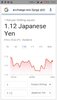
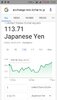
Uchumi haupimwi kwa thamani ya fedha check Japan Pesa yao iko chini ila uchumi wao ni hatari$1 = Ksh 101
$1 = Tsh 2,290
Kojoa ulale.
Follow along with the video below to see how to install our site as a web app on your home screen.
Note: This feature may not be available in some browsers.
Uchumi haupimwi kwa thamani ya fedha check Japan Pesa yao iko chini ila uchumi wao ni hatari$1 = Ksh 101
$1 = Tsh 2,290
Kojoa ulale.

Worst thing about privatisation is the job losses that will never come back. Secondly if your argument is that we should privatise to ensure that a company makes profit then why should we privatise a public company that is already making alot of profit? For example Kenya ports has never made a loss in the last 15 years or so, why in the hell should we privatise Kenya ports? Where do you expect those more than 4,000 employees to go? A private company will sack more than half of them with the lame excuse of trying to increase efficiency. Soma hii Guardian article as reference:I know about SAP. Privatization was just one of like 100 requirements.
For you to blame the failure of these SAPs solely on privatization is just lame.
SAP covered everything from price controls to cutting social programmes etc.
What I know and the world knows, government-run companies always under-perform when compared to privately run companies.
Most of them outright make losses year in year out.
Management of these companies is given as political patronage irrespective of the president of the day. There is bureaucracy. There is no incentive to innovate etc. the list is long.
Privatizing a company properly is paramount. Even when selling, you can't just sell it to some briefcase company. It has to come tied with conditions to benefit the community and country.
Again i still insist, privatisation is a disaster strategy for the government of Kenya. Let them not try to privatise Kenya pipeline or Kenya ports. They can privatise the others, i have no problem. I am also thoroughly informed about international affairs and i can tell you that many British people consider U.K's privatisation as a total disaster. It has led to de-industrialisation in some areas and massive unemployment in others. Some British people are blaming Thatcher for this disaster. For the link of just one of these complainants:
10 reasons to end privatisation now
We use cookies on this site to enhance your user experience.
PRIVACY POLICY
OK, I AGREE
NO, THANKS
Jump to navigation
We Own It
Public services for
people not profit
YouTube
Contact us
DONATE
About
Why public ownership?
Our public services
News
Act now
10 REASONS TO END PRIVATISATION NOW
Here are 10 reasons why public services should never be privatised:
1 - Your services get worse
2 - Privatisation costs you more
3 - You can't hold private companies accountable
4 - Privatisation creates a divided society
5 - You don't get a democratic voice
6 - Public services are natural monopolies
7 - Private companies cherry pick services
8 - Privatisation means fragmentation
9 - Privatisation means less flexibility
10 - Privatisation is risky
Join 37,000 people demanding public ownership
Enter email to sign *
1. Your services get worse
Public services involve caring for people. But private companies make a profit from public services by cutting corners or underinvesting.
There is a conflict between making a profit and taking the time to care. For example, private care workers often can't stop for a cup of tea with an older, vulnerable person they are caring for - because they're only allowed 15 minutes for their visits.
2. Privatisation costs you more
You pay more, both as a taxpayer and directly when they privatise public services.
Have you noticed how your water bills, energy bills, train and bus fares keep on rising in real terms? And did you know that the US privatised health system costs double what we pay for ours?
In a privatised service, profits must be paid to shareholders, not reinvested in better services. Interest rates are higher for private companies than they are for government. Plus, there are the extra costs of creating and regulating an artificial market.
3. You can't hold private companies accountable
If a private company runs a service, they are not democratically accountable to you. You don't have a voice.
Contracts to deliver public services are agreed between private companies and government behind closed doors. There is very little transparency, public accountability or scrutiny. The companies are not subject to Freedom of Information requests because of ‘commercial confidentiality’.
When private companies fail to deliver, the public has no powers to intervene and government (local and national) doesn’t always have the time or expertise to force them to keep their promises.
4. Privatisation creates a divided society
Public services are important to meet everyone's basic needs, so we can all be part of the community.
Schools and hospitals are not optional extras. We all need and rely on public services - they are universal. That means they need to be accessible and high quality for everyone.
Privatisation often goes hand in hand with encouraging richer people to pay more and opt out of the services we all use. This leads to division, making it harder to provide excellent public services for everyone.
5. You don't get a democratic voice
When we go to the shops, we all make our own individual decisions about what we want. Public services are different – they give us a chance to come together to decide what kind of society we want to live in.
For example, we might want clean, green energy for our future – but the private companies control the energy ‘market’ and often invest in dirty energy, without giving us a say.
6. Public services are natural monopolies
Privatisation was introduced because of a belief in free markets and consumer choice. But public services are often what economists call ‘natural monopolies’.
For example, when you take the train, you don’t really have a choice about which one to use. There’s no real competition. Facebook is another, relatively new ‘natural monopoly’. If all your friends are using it, it's difficult for you not to.
Private monopolies often become the worst of all worlds. You don’t have consumer power because you can’t go elsewhere. But you don’t have power as a citizen to make the service better through democratic accountability.
Cherries
7. Private companies cherry pick services
Private companies cherry pick the profitable bits of a service so they can make as much money as possible.
For example, bus companies will only run services in busy areas, so rural communities lose out unless government steps in with a subsidy. It's more efficient to run public services in public ownership so that profits can be reinvested across the whole network as needed.
In probation services, private companies are paid to manage medium to low risk offenders, while the state continues to take responsibility for high risk offenders.
8. Privatisation means fragmentation
When lots of private companies are involved in delivering a public service, this can create a complicated, fragmented system where it’s not always clear who’s doing what. For example, our railway.
Private companies don’t necessarily have much incentive to work together and share information. This makes it difficult to provide an integrated service.
Privatisation is fragmenting our NHS and the cost of the internal market is at least £4.5 billion a year.
Capita cartoon
9. Privatisation means less flexibility
Councils and government departments are responsible for meeting the needs of the public – but privatisation means less flexibility for changing circumstances.
If an outsourcing contract with a private company needs changing, government must pay more to make changes or improvements, add in extras or to opt out.
And selling off public assets (like student loans) or public land (like school playing fields) means we the public have fewer options and resources for delivering the services we’ll need in the future.
10. Privatisation is risky
Look what happened when Carillion failed. If private companies are running our public services and are too big to fail, the public has to pick up the pieces when things go wrong.
Share to spread the word.
Latest news
Britain fell for a neoliberal con trick - even the IMF says so
Wed 17 Oct 2018. Source: www.theguardian.com
Investors benefit from water groups’ borrowing at expense of customers
Fri 12 Oct 2018. Source: www.ft.com
Public Ownership 2.0: There is such a thing as society
Let's make public ownership so successful it can never be dismantled!
Fri 13 Jul 2018.
Firefighting training at an MoD site
4 reasons why the MoD’s fire service needs to stay public
Wed 06 Jun 2018.
'Privatisation has failed repeatedly'
Fri 11 May 2018. Source: newint.org
The case for public ownership
Tue 01 May 2018. Source: newint.org
Is Capita wobbling too? Just another reason to end local privatisation
Mon 23 Apr 2018.
Privatisation overseas is a waste of government aid money
Mon 12 Feb 2018. Source: www.newstatesman.com
Find out more
Video
G4S prison failure shows that privatisation isn't working
Source: www.youtube.com
Video
Let's END local privatisation
Source: www.youtube.com
Video
Capita and Serco are gearing up to run the MoD fire service. Here's how we stop them.
Source: www.youtube.com
Download
We Own It leaflet
Research
Pills and Profits: How drug companies make a killing out of public research
Source: stopaids.org.uk
Video
John McDonnell on Labour's public ownership policies
Source: www.youtube.com
Download
We Own It manifesto 2017: How public ownership can give us real control
Video
Why do we pay more for privatisation?
Source: www.youtube.com
About Why public ownership? Our public services News Act now
We Own It is a not-for-profit company limited by guarantee, registered in England and Wales (company number 8239094). Privacy policy
Website by Artful Robot
For example Kenya ports has never made a loss in the last 15 years or so, why in the hell should we privatise Kenya ports? Where do you expect those more than 4,000 employees to go?
Worst thing about privatisation is the job losses that will never come back.
Uchumi haupimwi kwa thamani ya fedha check Japan Pesa yao iko chini ila uchumi wao ni hatariView attachment 925963View attachment 925964

Kama wamekwama sana kwanini wasiombe hata maarifa kutoka TZ..?Wajinga sana hii mijitu, acha isote waya walahi

Boss, You are engaging in fantasy and whataboutism. The profitability problem affecting Both private and public companies is Management issues and Market dynamics or deliberate market distortions like dumping 3 year worth of sugar to kenya.In 2000 I doubt even 30,000 Kenyans had cell phones.
Even if Safaricom had 40% of that, what kind of 'success' is that.
If it continued being managed by the government, it would have ultimately gone the route of all government-run companies.
Stagnation, zero innovation and probably even collapse.
When it comes to KenGen, there have been corruption and nepotism allegations, especially related to their geothermal projects.
Even if it is profitable, an electricity generating company of that caliber can be doing much better.
You can't settle for mediocrity because you get a small profit at the end of the year.
We're looking to generate 5000 mw in the short term and ideas seem to be deficient at KenGen.
And I can say that the only reason KenGen appears like one of the better-run government companies is because it is also a public company. They have to release their financials and so on. If it was a 100% government-run company, we would be talking of a very different story.
For that 5th reason, they don't state what part of the budget it goes to finance. I would be more comfortable if it was the energy ministry or something related to electricity.

Bado upo katika theoretical thinking kuliko reality, kati ya Kenya na Tanzania ipi private sector ipo strong zaidi?, jibu ni Kenya ipo na many private companies and industries, but the more private Spector becomes strong in Kenya, the higher unemployment rate. Opposite is true for Tanzania, the more government owned/shared, the lesser unemployment rate. Remember in nearly all developing economies, the governments are the biggest employers. Unless you want to remain in a failed States list.Kuna vitu itabidi utembee kutoka LDC country uelewe.
Big efficient companies create a spiral effect. Safaricom, Equity and other banks may only employ a few thousands directly, but they have over 100,000 working as agents.
If today Posta Kenya was working as well as it should. eg. compared to something like DHL, Kenya's logistics business would be booming. People would have the confidence to create things knowing they can have them delivered to any part of the country or the world just by selling online.
Kenya has an unemployment issue because we do not have enough well performing companies to employ people directly or indirectly. That's why we are privatizing to change that.
Boss, You are engaging in fantasy and whataboutism. The profitability problem affecting Both private and public companies is Management issues and Market dynamics or deliberate market distortions like dumping 3 year worth of sugar to kenya.
I have seen well run private companies fail as well as public companies..
Nokia was a strong private company, but as its management failed to innovate.They had to bite the dust.
This propaganda that private companies are well run and Gvts should privitise parastatals is not supported by facts..Actually more privite companies go bankrupt than public companies
Wait until the capital holders(Indians) get a piece of KPA or KPC they will do a nakumatt on you..Panpaper was cheaply acquired by Rai and already he has converted it into an illigal sugar warehouse instead of milling paper products
Nokia was a strong private company, but as its management failed to innovate.They had to bite the dust.
This propaganda that private companies are well run and Gvts should privitise parastatals is not supported by facts..Actually more privite companies go bankrupt than public companies
Huyu jamaa anajua ukweli lakini hataki kuonekana ameshindwa na Tanzania. Nimemuambia Tanzania tulibinafsisha kila kitu kipindi cha Mkapa tukabakisha chupi zetu pekee, yaliyotukuta tulijuta sana na kusaga meno, sasa hivi tunarudisha mashirika yote tuliyoyauza ambayo hayakufanya vizuri, tuligundua makosa na tumerekebisha.Worst thing about privatisation is the job losses that will never come back. Secondly if your argument is that we should privatise to ensure that a company makes profit then why should we privatise a public company that is already making alot of profit? For example Kenya ports has never made a loss in the last 15 years or so, why in the hell should we privatise Kenya ports? Where do you expect those more than 4,000 employees to go? A private company will sack more than half of them with the lame excuse of trying to increase efficiency. Soma hii Guardian article as reference:
Privatisation: the good, the bad, and the ugly
Privatisation: the good, the bad, and the ugly
Privatisation has been an area of contention since Thatcher, and its impact on many UK communities is still being felt today
Henry Kirby
Fri 12 Apr 2013 20.49 BST First published on Fri 12 Apr 2013 20.49 BST
Shares
59
Privatisation: the good, the bad, and the ugly
For opponents of privatisation, the most damaging legacy has been job losses. Photograph: Sang Tan/AP
The good
Although many of the now-privatised companies are part or fully owned by foreign companies, they have proved to be lucrative investments and were once the means by which Margaret Thatcher aimed to create a nation of shareholders.
In 1986, when British Gas was floated on the stock exchange, shares cost 135p each, or 334p in today's terms. Since then, British Gas has undergone several organisational changes and the resulting organisation, BG Group plc, is worth £11.09 a share. A £100 investment in 1986 would have gone up by £821.
Guardian Today: the headlines, the analysis, the debate - sent direct to you
Read more
Some privatisations have brought improvements for consumers. According to the water and sewerage regulator Ofwat, since the privatisation of the 10 state-owned regional water authorities in 1989, the number of customers at risk of low water pressure has fallen by 99%.
Those critical of state-run services often cite the six-month wait for the installation of a new BT line that customers allegedly suffered before telecommunications were privatised. New BT lines are today installed within 15 days, according to BT's website.
The bad
Advertisement
Many would say the standout failure of privatisation was that of British Rail. While the actual process did not take place until after Thatcher had left office, she was known to be discussing it with the then Department of Transport months before her resignation. At the 1990 Tory party conference, a month before she left office, her then transport secretary, Cecil Parkinson, said: "The question now is not about whether we should privatise it [British Rail], but how and when."
Since the privatisation the amount of government subsidies to the rail industry has risen higher than it was in its state-run days. A yearly average of just over £1bn in the late 1980s rose to a high of more than £6bn in 2006-2007, according to a public spending report from the House of Commons.
In 2011, the then Conservative transport secretary, Philip Hammond, alluded to the sharp rise in ticket prices since privatisation when he described train travel in the UK as "a rich man's toy". Five years earlier, economists at UBS bank said train travel in the UK was the most expensive in the world.
… and the ugly
For opponents of privatisation, the most damaging legacy has been job losses. In the decade after the miners' strike of 1985, more than 200,000 jobs were lost as a result of coal privatisation, as well as creating the largest British industrial conflict of modern times.
Since privatisation, more than 100,000 jobs have been lost at BT, while the restructuring of Imperial Chemical Industries (ICI) – the result of an industry being left increasingly to its own devices by the government – led to the loss of 15,000 jobs in Teesside.
The government's laissez-faire approach to the changes, and the resultant sudden, mass unemployment led to the transformation of what was once a region booming from steel industry to one of the most impoverished in the country. By the time it was privatised in 1988, British Steel had shed 20,000 jobs.
Supporters of privatisation would reflect upon it as a move that was necessary in order to adapt to increasing international competition, yet its impact on many communities within the UK is still felt today.
Bado upo katika theoretical thinking kuliko reality, kati ya Kenya na Tanzania ipi private sector ipo strong zaidi?, jibu ni Kenya ipo na many private companies and industries, but the more private Spector becomes strong in Kenya, the higher unemployment rate. Opposite is true for Tanzania, the more government owned/shared, the lesser unemployment rate. Remember in nearly all developing economies, the governments are the biggest employers. Unless you want to remain in a failed States list.
Unaona unavyojichanganya, unasema how businesses are running to Dar port, is Dar port privatized?, why then businesses to run to Dar port which is public institution?I'm sure I don't need to mention the many news articles telling us how cargo has been delayed, lost etc. How businessmen are running to Dar port. How people are evading tax at the port.
What is to say that an efficiently running port will not double the profit and double the tax collected?
Leave it to the government to run and what do we see, characters like Mungatana are appointed KPA boss.
The truth is no matter how well meaning a president is, there will always be political baggage. As a result he will reward political loyalty with such posts.
Shameless cherry picking.. 46pc of SMEs fail in the first year in kenya and many more after the 3rd year - those are thousands in numbers 46pc of Kenya's SMEs close within a year of founding - Capital BusinessYou want facts.
Kenyan banks majority controlled by the government:
National Bank
Consolidated Bank
Development Bank
Two of them were very vibrant banks some time back. Now they are on the verge of collapse.
So many private banks have come in after them and taken off.
Media
KBC
Owes billions in debt. Overtaken by virtually all other media houses.
Others
Kenya Meat Commission - Always facing bankruptcy fears. Cannot even compete with the likes of Farmers Choice.
Stopped innovating and exploring new ideas decades ago.
Kenya Pipeline - Recent news headline: Detectives probe possible loss of Sh70 billion at Kenya Pipeline
Postal Corporation - Only its funeral remains. Even in an age of online shopping, they have failed to take advantage of the logistics part.
Utalii College and Hotel - Once a vibrant conference destination, now it looks like a ghost hotel.
The list is long.
They Guy has no grasp of anything..I think he is here just to argueUnaona unavyojichanganya, unasema how businesses are running to Dar port, is Dar port privatized?, why then businesses to run to Dar port which is public institution?


HILI LIKUNYA NI KWISHNEY WALAHI