LAPSSET: Lamu Port and South Sudan Ethiopia Transport: News & Photos

LAPSSET: Lamu Port and South Sudan Ethiopia Transport: News & Photos

Yes, na loan zao hua ni kama 0.8% interest, Kuna Nyengine ya berth 21 ilikua 0.2% interest.. uki compare na China ambao hufika hadi 7.5% interest !!!

Anyway, nitaleta blue prints za JICA kuenyesha masterplan nzima ya kupanua bandari ya Mombasa Kila mwaka hadi 2034.
I love JICA. Unajua they are the ones that finance most of Kenya's geothermal exploration, drilling and building of powerplants. Halafu hawana wivu. Hata kama Kenya imewa-overtake in geothermal power generation bado wanaendelea kutusaidia. Ingekuwa ni America, ungesikia some racist White guy saying " We taught these Kenyans how to drill geothermal wells and we give them loans to build their powerplants and now they generate more geothermal power than us. We should stop financing them." But the Japanese are humble people, they continue financing all Ol-Karia's from Ol-Karia I to VI. And they will continue. They are very good partners. Once they start helping you, they stick with you throughout all the phases from phase 1 to whatever phase you want. And yes, their loans are very cheap, and also very long-term 20 to 30 years.
 
I love JICA. Unajua they are the ones that finance most of Kenya's geothermal exploration, drilling and building of powerplants. Halafu hawana wivu. Hata kama Kenya imewa-overtake in geothermal power generation bado wanaendelea kutusaidia. Ingekuwa ni America, ungesikia some racist White guy saying " We taught these Kenyans how to drill geothermal wells and we give them loans to build their powerplants and now they generate more geothermal power than us. We should stop financing them." But the Japanese are humble people, they continue financing all Ol-Karia's from Ol-Karia I to VI. And they will continue. They are very good partners. Once they start helping you, they stick with you throughout all the phases from phase 1 to whatever phase you want. And yes, their loans are very cheap, and also very long-term 20 to 30 years.
Yes, Japan hua hawana wivu kabisa, hata hapo port, si wao ndo wamefund mpaka dongo Kundu bypass pale Mombasa, na kwa project zao wana accomodate hata wengine, kwa mfano hio ya Mombasa port hua wana accomodate project za wachina hapo kwa port bila shida. Ingekua ni wachina ndo wanajenga port wangetaka kila project iwe yao.
 
Yeah you are right. The Japanese through JICA have introduced a culture of continuous development in Mombasa port in the sense that we no longer wait for the berth capacity to be filled before we start a new project. We start construction of a new berth as soon as construction of the current berth is complete. The Japanese through Jica are willing and ready to loan us any amount of money and expertise we need to expand Mombasa port. They have financed second container terminal I, II and III and they also financed older berths. They have been a good partner.
Here is the masterplan, The report was released in 2015.

1628682505778.png


2870011_1628145246434.png


As you can see in the first pic, they planed to have finished berth No.22 by 2022, yet right now as we speak, from the satellite photo you provided It looks like they will be done before this year 2021 ends and they already started berth 23!!!
You can also see that Dongo Kundu (Purple) located on the opposite side of Mombasa port, they plan to have atleast 1 berth complete before 2022.. (I don't think they will achieve the target on time)


By 2028, we should have at the very least(Base case Scenario) , 2 additional berths (Berth 23,34) and 1 more additional berth (Berth D2) at the Dongo Kundu Free Port.


1628683338112.png


And by 2032, We should have up to berth 25 in Mombasa port and 4 additional berths at Dongo Kundu


1628683565760.png


I know sometimes we like to get exited at the massiveness and deepness of Lamu port, but interms of throughput capacity, Mombasa port will always be bigger than Lamu port (Its just that Lamu is better suited for Transshipment) because each year, more berths will be added in Mombasa, so at no point will Lamu match up.
 

Is Lamu Port a white elephant?

businessdailyafrica.com/bd/opinion-analysis/columnists/is-lamu-port-white-elephant--3505636

By TONY WATIMA
More by this Author

Summary​

  • In Africa, Egypt, Morocco and South Africa together account for 51 percent of volumes transported in Africa and the three rank among the top 50 in terms of efficiency of seaport services.
  • Apart from the three Djibouti comes as a bigger contender for the transshipment hub.
  • In addition to its strategic geographical location it’s also stands out as the most efficient port in Africa, according to the latest ranking and its container terminal SGTD is establishing itself as the transshipment hub for the East African region.


Columnists

Tuesday August 10 2021
lamu-ship

A ship docks at Lamu Port during the official launch by President Uhuru Kenyatta. FILE PHOTO | NMG

A month ago, a journalist looking at the impact of infrastructure investment on the continent asked me if it is beneficial for the East African region to have the Lamu and Bagamoyo ports rivalling each other as transship hubs.

This question came up again last week in a conversation with some friends on whether the port investment race among countries in the Horn of Africa and East Africa is sustainable.

So let us look at the throughput of the main seaports. Throughput is the average quantity of cargo that can pass through a port daily.

The Port of Djibouti, strategically located at the crossroads of Africa, Asia and Arabian Peninsula, has a throughput capacity of 1.6 million twenty-foot equivalent unit (TEU).

Port Said located in Egypt has a 2.7 million TEU throughput capacity and is also designed to be a transshipment hub.

The Port of Sudan has throughput of 487336 TEU. Somaliland has Berbera and Puntland Bosaso, and plan to expand the ports for commercial positioning.

Come to Kenya, which has the Mombasa Port with a throughput capacity of 2.65 million TEU and Lamu Port, which is being designed for transshipment.

In Tanzania’s Dar es salaam Port has a throughput capacity of one million TEU while Bagamoyo is expected to be revived and designed for transshipment.

Clearly, there is an overcapacity of seaport infrastructure investment on the East and Horn of Africa.
But this is not a trend in Eastern side of Africa only. The race to be a regional transshipment hub is also happening on the West side of the continent.

HEAVY COMPETITION
Togo’s Port of Lome is the busiest port in West Africa with a throughput of 1.5 million TEU but is about to face heavy competition as a transshipment hub from Nigeria’s new Lekki Deep Seaport, which is expected to start operations in 2023 with a throughput capacity of up to 2.7 million.

Ghana is designing its Tema Port to be also a transshipment hub with a throughput capacity of 3.5 million TEU whilst Senegal’s newly constructed port by DP World will be having a throughput capacity of 1.5 million TEU. Cote d’Ivoire is also expanding its port’s capacity.

So how many regional transshipment hubs can the continent have? Transshipment hubs are designed to be few and spread out, so that means Africa should most likely have a maximum of four regional transshipment hubs. For example, Singapore serves as the continental hub in Asia-Pacific, Dubai for the Middle East and Rotterdam for Europe.

In Africa, Egypt, Morocco and South Africa together account for 51 percent of volumes transported in Africa and the three rank among the top 50 in terms of efficiency of seaport services.

Apart from the three Djibouti comes as a bigger contender for the transshipment hub.

In addition to its strategic geographical location it’s also stands out as the most efficient port in Africa, according to the latest ranking and its container terminal SGTD is establishing itself as the transshipment hub for the East African region.

So, Tanzania and Kenya, which are building Lamu and Bagamoyo ports as transshipment hubs, need to ask themselves if they have been caught up in a port investment race and may be building white elephants instead.

TRANSPORT CORRIDOR
For, Kenya it plans to establish Lamu Port as a transport corridor for Ethiopia and South Sudan but this doesn’t seem to be a reality that will happen anytime soon.

Djibouti, with a refurbished railway line connecting with Ethiopia, handles 90 percent of inbound and outbound trade from Ethiopia. Apart from that Djibouti, Lamu will also be facing competition from Berbera Port in Somaliland, which is already emerging as a connecting corridor for Ethiopia.

So as Kenya plans to build a total of 23 modern berths on the Lamu Port, is it caught up in a doomed investment race?
Je ulisoma na kuelewa kwamba anachojaribu kusema huyo mwandishi ni kwamba any new port project ni White Elephant kwasababu kila mtu anajaribu kujenga???? As in Bagamoyo port is even a bigger white elephant!


Anyway, don't think we did not consider competition from other ports

Tuliketi chini na tukawasoma nyote kabla kuamua kujenga Lamu port... We know what we are up against!


1628684476529.png


1628684807678.png


1628684892346.png
 
Here is the masterplan, The report was released in 2015.

View attachment 1888327

View attachment 1888339

As you can see in the first pic, they planed to have finished berth No.22 by 2022, yet right now as we speak, from the satellite photo you provided It looks like they will be done before this year 2021 ends and they already started berth 23!!!
You can also see that Dongo Kundu (Purple) located on the opposite side of Mombasa port, they plan to have atleast 1 berth complete before 2022.. (I don't think they will achieve the target on time)


By 2028, we should have at the very least(Base case Scenario) , 2 additional berths (Berth 23,34) and 1 more additional berth (Berth D2) at the Dongo Kundu Free Port.


View attachment 1888350


And by 2032, We should have up to berth 25 in Mombasa port and 4 additional berths at Dongo Kundu


View attachment 1888355


I know sometimes we like to get exited at the massiveness and deepness of Lamu port, but interms of throughput capacity, Mombasa port will always be bigger than Lamu port (Its just that Lamu is better suited for Transshipment) because each year, more berths will be added in Mombasa, so at no point will Lamu match up.
True. I had not seen this masterplan before. I was not aware that Mombasa port's berths were planned upto berth 25. I was not aware of Berth D1 and D2. Thanks for uploading the masterplan. Man, these Japanese people are serious planners. These people don't joke around. Also remember they have designed for us the Mombasa gate bridge in Likoni Channel. Also the second container terminal I increased the throughput of Mombasa port by around 50% or more. The reason is that the older terminals were smaller and could accomodate very few containers. But modern technology and modern engineering designs design very mega terminals. So that is why Lamu port with just 3 mega container terminals is able to handle 1.2 million TEUs per year at full capacity. Yet Mombasa port has 21 functional berths and handles figures only slightly higher than this. So 21 older container terminals are equal to three modern mega container terminals. I am glad that Mombasa's Second container terminals I, II and III are mega terminals and they will carry more containers than the older ones and will increase the throughput of Mombasa port substantially. All these thanks to Japanese masterplan.


Mombasa port expansion gets $340m boost from Japan​

18 October 2017 | By GCR Staff | 0 Comments

The second phase of a project to increase the container handling capacity of the Kenyan port of Mombasa by 1 million teu is to go ahead in January following the securing of a $340m loan from the government of Japan.​

The terminal will be built on 100 acres at Kilindini Harbour with the help of Japanese construction technology. It will have three berths with quay lengths of 230, 320 and 350m able to handle Panamax container ships of 20,000 dead weight tonnes (DWT) and Post Panamax vessels of 60,000 DWT.
The announcement was made by Catherine Mturi-Wairi, the managing director of the Kenya Ports Authority (KPA), who said: “We already have the financing from the Japanese government. We are now in the tendering process but construction must commence by January 2018.”
The need to begin work quickly reflects the race between Kenya and Tanzania to establish themselves as the trade gateway for the wider east and central African regions. Both countries are fitting their main ports with multibillion dollar standard gauge rail lines to the Great Lakes countries of Rwanda, Burundi and Uganda.
The Mombasa Port Development Project was begun in March 2012 with help from the Japan International Cooperation Agency. In February 2016 the project delivered three additional berths, and the following September it completed a container terminal with a capacity of 550,000 teu, which raised the port’s total capacity to 1.5 million teu, making it the largest container port between Durban in South Africa and Port Said in Egypt.
The third phase of the scheme is due to be completed in 2022, and will include the construction of one more berth, the procurement of equipment and dredging work to increase the capacity of Mombasa’s approach channel and turning basin.
Latest data from the KPA shows that Mombasa’s cargo traffic registered a 12% growth in the first six months of 2017, which it attributed to the construction of the second container terminal.
James Macharia, the transport secretary, told the Kenyan Standard that the government was looking for more funds to replace the Kipevu oil terminal in the port. “We’re planning a situation where the facility will have pipes running on the seabed to link with Kenya Pipeline Company storage tanks. The new oil terminal will incorporate an gas pipeline and have the capacity to handle four vessels at a time.”
He also confirmed that the construction of an alternative transport route from Mombasa to Burundi through Bujumbura was on its last stretch. The route will cover 1,545km and reduce the distance from Mombasa to Bujumbura through the Northern Corridor by 358km.
The Northern Corridor and the Mombasa expansion are part of Japan’s Yokohama Action Plan, announced at the 5th Tokyo International Conference on African Development in 2015. The aim is to provide infrastructure for the gateway port, and link it to its hinterland through the Northern Corridor.
 

Improved Performance in First Quarter 2021​


Port of Mombasa registers improved performance in first quarter.
The Port of Mombasa handled 9.54 million tons in the first quarter of the year 2021 compared to 8.62 million tons in a similar period last year recording 10.7 percent growth rate.
During the period under review (January to March 2021), the Port also witnessed increased volumes in container traffic registering 389,515 TEUs against 340,812 TEUs recorded in a similar period in 2020. Transshipment traffic recorded 69,658 TEUs against 41,363 TEUs during the corresponding period in 2020.
 

Improved Performance in First Quarter 2021​


Port of Mombasa registers improved performance in first quarter.
The Port of Mombasa handled 9.54 million tons in the first quarter of the year 2021 compared to 8.62 million tons in a similar period last year recording 10.7 percent growth rate.
During the period under review (January to March 2021), the Port also witnessed increased volumes in container traffic registering 389,515 TEUs against 340,812 TEUs recorded in a similar period in 2020. Transshipment traffic recorded 69,658 TEUs against 41,363 TEUs during the corresponding period in 2020.
Yani in just one quarter tunapitisha 389,000 TEUs... Dar port inapitisha 700,000 TEUs in a whole year,... That means mizigo ya Mombasa ndani ya miezi sita hua ni sawa na mizigo ya Dar kwa mwaka mzima!
 
Yani in just one quarter tunapitisha 389,000 TEUs... Dar port inapitisha 700,000 TEUs in a whole year,... That means mizigo ya Mombasa ndani ya miezi sita hua ni sawa na mizigo ya Dar kwa mwaka mzima!
True. In a full year Mombasa port huwa inapakua double the TEUs za Dar port. But this year itakuwa more than double coz throughput ya Mombasa port imeongezeka sana this year coz of pent up demand of Kenyan companies that had shut down last year.
 
More:

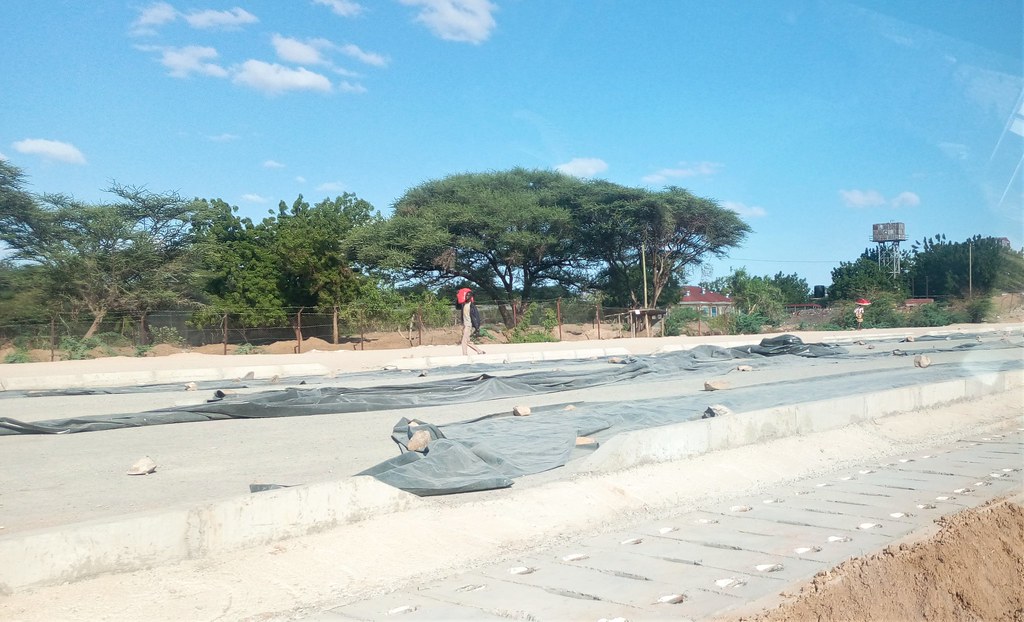
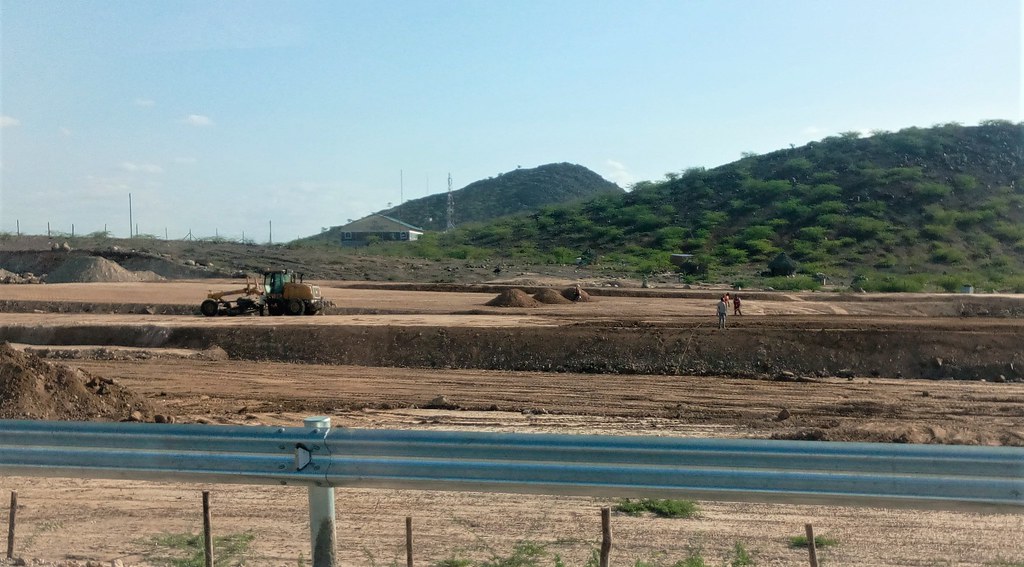
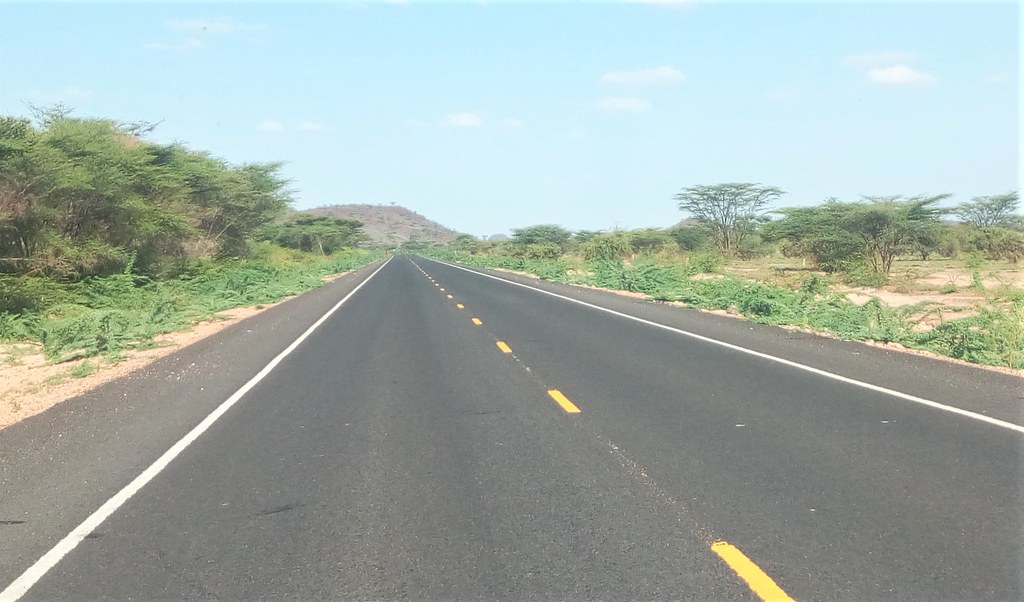
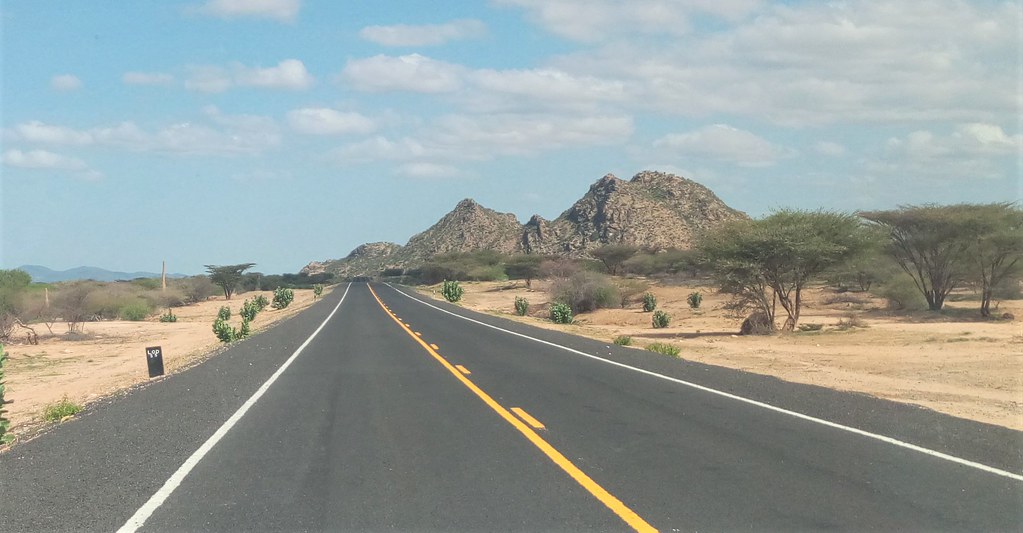
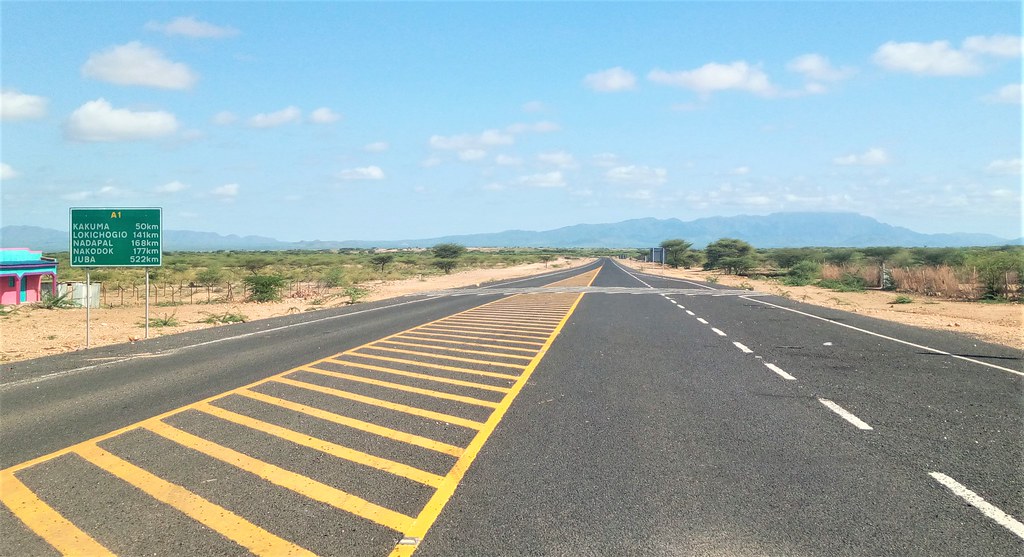
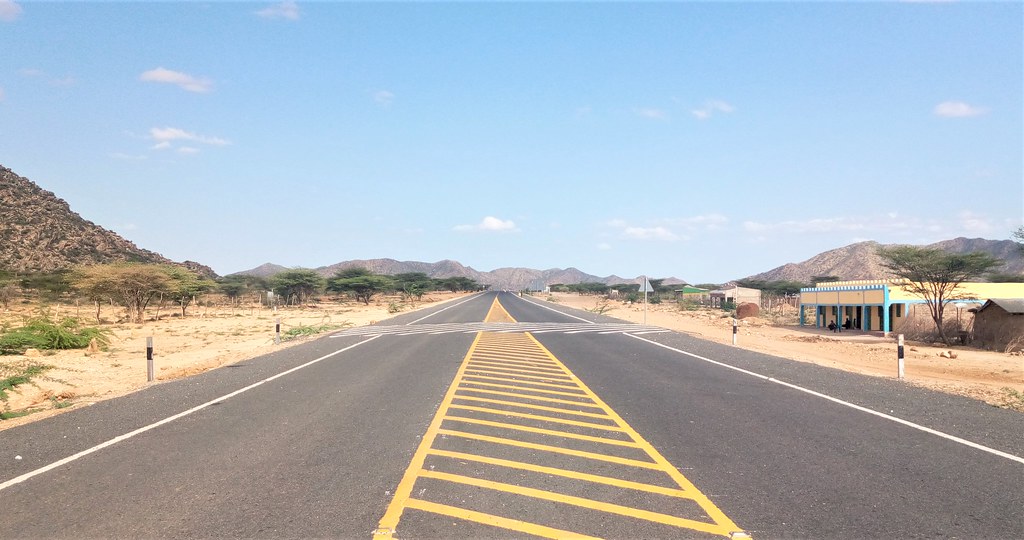
From this pic, and the signage on the left, It looks like there is atleast 177km left to reach the border point. Then from the border its 522km to Juba

51371548621_6405eb356f_b.jpg


51372552765_22bcf567bc_b.jpg


51371546581_09f8f131cc_b.jpg
 
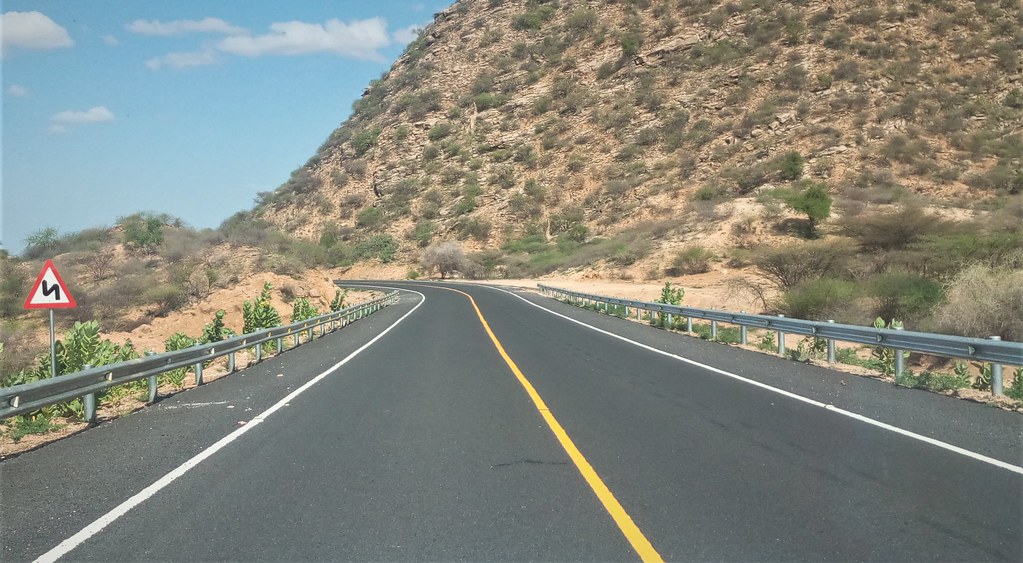
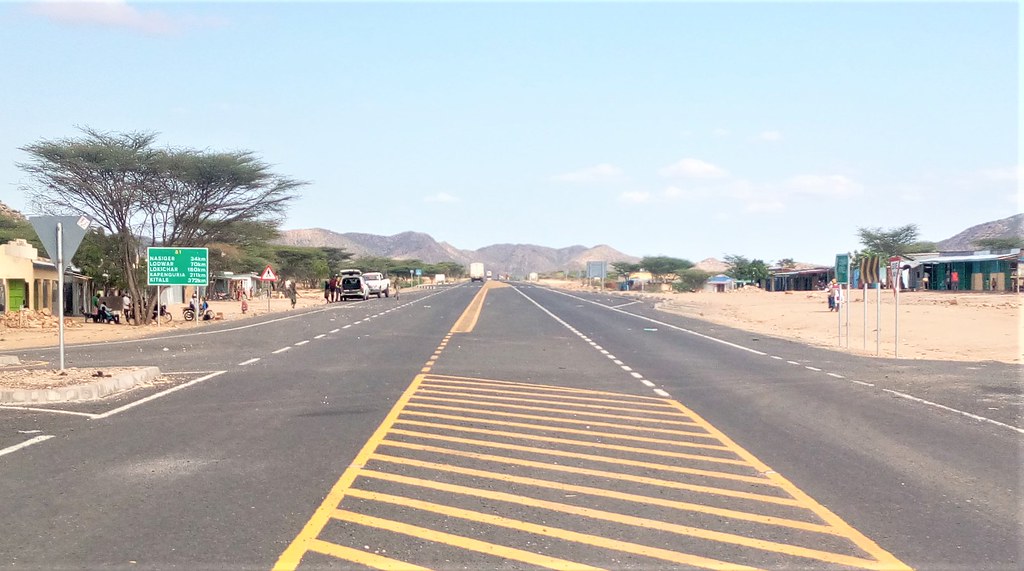
Kama Kenya ilikua inaperform uchumi unakua at 5.5% on average kila mwaka licha ya kua karibia 65% ya ardhi ya Kenya ilikua haiko kwa national grid ya umeme wala barabara, hebu fikiria sasa Kenya itakua kwa kiasi gani baada ya maeneo haya kuunganishwa vizuri kwa barabara na stima. 15 years from now Kenya will be a big deal! The moment wwe make northern Kenya livable, the whole game will change, mark my words, this will be the place to be!
 
Meanwhile Dongo Kundu bypass phase 2 and 3A leading to the Special Industrial Zone that will change Mombasa forever

1628873263706.png


The completion of the Phase 2 of Dongo Kundu will connect North to South Coast by road and thus obviate need to go through Mombasa Island. -Ministry of Transport Ke.


h6fXNVU.jpg
2CshBql.jpg


1628784396145-png.1898878

1628784011975-png.1898860


Haya, ile kamati ya roho chafu ... Kazi kwenu
 
Meanwhile Dongo Kundu bypass phase 2 and 3A leading to the Special Industrial Zone that will change Mombasa forever

View attachment 1891198


The completion of the Phase 2 of Dongo Kundu will connect North to South Coast by road and thus obviate need to go through Mombasa Island. -Ministry of Transport Ke.


h6fXNVU.jpg
2CshBql.jpg


1628784396145-png.1898878

1628784011975-png.1898860


Haya, ile kamati ya roho chafu ... Kazi kwenu

Mbona structure ya kawaida sanaaaaa !! Mchina anaendelea kuwafinya sio? BTW that structure over water can't be over 300 m! Mnajengewa vitu vya kawaida at the cost of vitu modern mnaridhika! Siku mnapata cable stayed bridge moja ya 400 m uje uongee na sisi wanaume marijali!!

Update: Selander's Tanzanite bridge....
👇 👇 👇 🤭🤭🤭
 

ADVERTISE WITH US​

CONNECT WITH US​


COMPLETE WITHIN SCHEDULE​

Uhuru camps at Coast to fast-track legacy projects​

The President has invested in excess of Sh3.6 trillion on infrastructure in the region since 2013​

In Summary
  • Three-decker Changamwe interchanged to be opened on October 21.
  • The Makupa Bridge to be completed in 10 months.
by CHARLES MGHENYIChief Correspondent, Coast Region
Coast
12 August 2021 - 22:00
  • 2021-08-12-uhuru-camps-at-coast-to-fast-track-legacy-projects
A delegation led by Transport Cabinet Secretary James Macharia tours the phase II of the Dongo Kundu bypass.
PRESIDENT UHURU'S LEGACY A delegation led by Transport Cabinet Secretary James Macharia tours the phase II of the Dongo Kundu bypass.
Image: LABAN WALLOGA
For almost two weeks since his return from the UK, President Uhuru Kenyatta has been at the Coast.
The President is said to be keen on ensuring all the mega infrastructural projects at the Coast are fast-tracked and finished within the scheduled time.
According to State House strategists, the Jubilee government has invested in excess of Sh3.6 trillion at the Coast since 2013.

The projects earmarked for completion before Uhuru’s exit from State House in August next year are; the Sh4.5 billion Makupa bridge, Sh16 billion three-decker Changamwe inter-change and dual road network to Kwa Jomvu and Sh19 billion dual road from Kwa Jomvu to Mariakani.
Others are the Sh40 billion new Kipevu Oil Terminal at the Port of Mombasa and phase II of the second container terminal at the Port of Mombasa, which has an additional capacity of 450,000 containers.
So far, the President has launched Phase I of the Dondo Kundu bypass which cost Sh11 billion and the Sh1.9 billion Likoni floating bridge.
On May 20, he commissioned the first berth of the Sh40 billion Lamu Port.
Other mega projects for Mombasa are the Dongo Kundu Special Economic Zone, dualing of the Mombasa-Malindi highway and the Sh85 billion permanent bridge across the Likoni crossing channel.
The 1.4km Mombasa Gateway Bridge, will connect Mombasa Island with South Coast, substituting the 84-year-old ferry service that suffers perennial breakdowns delaying traffic flow to and from Mombasa.
On Wednesday, Transport CS James Macharia led the Presidential Delivery Unit to check on the progress of a key infrastructure projects in Mombasa.
“As you can see, there are very many high-impact infrastructural projects, which have been going on in Mombasa for the past nine years,” he said.
They toured the Changamwe inter-change, Phase II of the Dongo Kundu bypass and the port of Mombasa.
Speaking during the tour, Macharia said the Changamwe inter-change will be a three-decker, first of its kind in East and Central Africa.
It is expected to be opened to the public on October 21 after a four-year construction period.
“The Changamwe interchange is part of the project that starts from Mombasa Island to Kwa Jomvu and is financed by Kenyan government and the European Union at Sh16 billion,” Macharia said.
The interchange is meant to address the congestion that was being experienced at Changamwe roundabout as trucks heading to the port of Mombasa to pick cargo sometimes block those going to Moi International Airport to catch a flight.

“This will be one of the modern interchanges in Africa and is due for completion on October 21. This project will make Mombasa beautiful,” the CS said.
On phase II of the Dongo Kundu bypass, Macharia said a Japanese consortium, Fujita Corporation-Mitsubishi Corporation, is working to complete the project on time.
The project is now 33 per cent done.
The Sh25 billion project will include an 8.96km dual carriageway, construction of an interchange at the Likoni-Lunga Lunga highway and two bridges; a 660-metre long one at Mwache and another at Mteza straddling 1,440 metres.
“This will be the longest bridge in the country,” Macharia said.
Phase III of the project, which will connect the Mteza Bridge to South Coast road in Kibundani area, is 85 per cent complete.
Macharia said Phase I of the Dongo Kundu bypass, which was commissioned in May 2018, has proven to be a game changer.
“Once this project is completed, people coming from Nairobi, will not need to use the Likoni crossing channel to get to the South Coast,” he said.
Currently, crossing from Mombasa to Kwale might take a motorist about three hours depending on the traffic snarl up at the Likoni ferry crossing channel.
“After the completion of this road, it will take you an average of 30 minutes to drive from Mombasa town to the South Coast,” Macharia said.
The Dongo Kundu project is connected to the Miritini Standard Gauge Railway terminus and the Moi International Airport.
The CS said to also address the challenge of traffic snarl up at Kibarani in Makupa causeway, the government is committed to complete the bridge within the next 10 months.
He said currently, Mombasa is not a true Island because the Makupa causeway has blocked water from flowing around the Island.
“After the completion of the bridge, we will demolish the causeway to allow water to move around. We will now reaffirm the status of Mombasa as a true Island,” he said.
-Edited by SKanyara
The ongoing construction of three-decker Changamwe inter-change in Mombasa.
LEGACY The ongoing construction of three-decker Changamwe inter-change in Mombasa.
Image: LABAN WALLOGA
 
Mbona structure ya kawaida sanaaaaa !! Mchina anaendelea kuwafinya sio? BTW structure over water can't be over 300 m! Mnajengewa vitu vya kawaida at the cost of vitu modern mnaridhika! Siku mnapata cable stayed bridge moja ya 400 m uje uongee na sisi wanaume marijali!!

Update: Selander's Tanzanite bridge....
👇 👇 👇 🤭🤭🤭

Pole sana Mr.Wivu Phase 2 of the bypass will cost $200m na inajengwa na Fujita Corporation ya Japan (not China). This includes hilo daraja unaloona hapo ambalo linaanza na viaduct ya 600m juu ya mangroove swamp alafu inachanganya na 600m bridge kwenye bahari. kwahivo bridge ni 600m... Alafu hapo mbele tena kuna daraja lengine linaitwa Mteza litakua 1.44KM long .... Madaraja hujengwa kulingana na mahitaji, Cable stayed bridge inajengwa sababu hapo katokati ni too deep ama unataka meli ziwe zinaweza kupita chini ya daraja, Hayo madaraja ya Kenya yako mahali penye shallow waters kwahivyo hayahitaji kujengwa juu sana...

Kule upande wa Nyali kunayo Supended bridge loading
 
Back
Top Bottom