ChoiceVariable
JF-Expert Member
- May 23, 2017
- 66,537
- 75,687
My Take:
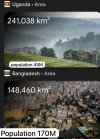
Hii population growth watakuja kuishi wapi ikizingatia Kanchi kenyewe kadogo? 👇
Watu Milioni 46 ni population explosion, yaani miaka 10 ijayo watakuwa sawa na Tanzania Kwa saaa.
Afrika Mashariki tunazaana sana ila ni fursa kubwa sana Kwa Tanzania hasa kwenye soko la bidhaa za Kilimo.
=========
Uganda’s population stood at 45, 935, 046 people, up from 34.6 million counted in 2014, according to new figures of the preliminary 2024 national census results released by Uganda Bureau of Statistics (Ubos) on Thursday.
This, according to Ubos, means that the population increased by 11.3 million people in the last 10 years, reflecting a 2.9 percent growth rate.
Data in Uganda’s 6th post-independence and first ever digital census was gathered using about 160 questions at household level and over 60 questions in a community questionnaire.
Refugees counted in Uganda’s on census night (May 9) accounted for at least 780, 061 of the country’s latest population data, according to Mukiza.
Majority of Uganda’s population is in Buganda with the least in the Karamoja region.
A population pyramid released by Ubos suggests that “Uganda is a young country with 50.5 percent of the population aged below 17 years while age group 18-30 (youths) form 22.7 of the count.
Women comprise 22.4million of the Ugandan population, implying they have remained consistently higher than men in the last 20+ years.
Uganda’s population has significantly grown since 1911 when the first national census was conducted.
The Citizen
Hii population growth watakuja kuishi wapi ikizingatia Kanchi kenyewe kadogo? 👇
Watu Milioni 46 ni population explosion, yaani miaka 10 ijayo watakuwa sawa na Tanzania Kwa saaa.
Afrika Mashariki tunazaana sana ila ni fursa kubwa sana Kwa Tanzania hasa kwenye soko la bidhaa za Kilimo.
=========
Uganda’s population stood at 45, 935, 046 people, up from 34.6 million counted in 2014, according to new figures of the preliminary 2024 national census results released by Uganda Bureau of Statistics (Ubos) on Thursday.
This, according to Ubos, means that the population increased by 11.3 million people in the last 10 years, reflecting a 2.9 percent growth rate.
Data in Uganda’s 6th post-independence and first ever digital census was gathered using about 160 questions at household level and over 60 questions in a community questionnaire.
Refugees counted in Uganda’s on census night (May 9) accounted for at least 780, 061 of the country’s latest population data, according to Mukiza.
Majority of Uganda’s population is in Buganda with the least in the Karamoja region.
A population pyramid released by Ubos suggests that “Uganda is a young country with 50.5 percent of the population aged below 17 years while age group 18-30 (youths) form 22.7 of the count.
Women comprise 22.4million of the Ugandan population, implying they have remained consistently higher than men in the last 20+ years.
Uganda’s population has significantly grown since 1911 when the first national census was conducted.
The Citizen