Mkapa hospital performs second kidney transplant in the country

Mkapa hospital performs second kidney transplant in the country

Hawakufanikiwa kufanya hiyo procedure japo walikua na malengo hayo, kwasasa ni hospital mbili tu, baada ya hiyo ya Sonko kama walifanikiwa kufanya, otherwise ilikuwa ni KNH pekee.
Usilazimishe buda!

"The programme has been successful and we are now able to run on our own because we have a team of surgeons and other trained staff. We want to make transplants a routine and also MTRH to be a centre of excellence in this process," said Dr Kibosia.
He said patients with renal failure can now undergo kidney transplant at MTRH and Kenyatta National Hospital at an affordable cost.
"The cost of kidney transplant at MTRH is Sh300,000 and an extra Sh100,000 for drugs. The National Hospital Insurance Fund (NHIF) clears Sh250,000 and the patient meets only Sh150,000. This is much affordable compared to seeking the same service abroad at Sh3 million," said Kibosia.
 
Umeonaa eee..si kidney transplant not simple a reason only two goverment hospitals in Kenya conduct the process. And all of those two are in Nairobi. Uache misifa uachie misifa GoK inayo-cook data kila siku.


Mbagathi Hospital to perform kidney transplant from next week
TUESDAY MARCH 6 2018
mba-pic.jpg

Nairobi's Mbagathi Hospital which, in collaboration with surgeons from India, will carry out the first kidney transplant next week. FILE PHOTO | NATION MEDIA GROUP

In Summary
  • The operation will be led by surgeon Rajesh Chaudhary assisted by four Kenyan surgeons.

  • Governor Mike Sonko said that it is unfortunate that majority of Kenyans have to travel abroad to seek medical attention.
  • Mr Sonko said that the first four kidney transplants will be free of charge.


No+photo.jpg

By COLLINS OMULO
More by this Author
Kenyans are set to benefit from kidney transplant at Mbagathi Hospital from next week.

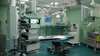
This comes after the hospital run by the county government of Nairobi was last month fitted with state-of-the-art theatre equipment.

The hospital has collaborated with surgeons from India to carry out the first procedure.

The operation will be led by surgeon Rajesh Chaudhary assisted by four Kenyan surgeons.

EQUIP HOSPITALS

Governor Mike Sonko, while announcing the breakthrough, said that it is unfortunate that majority of Kenyans have to travel abroad to seek medical attention whenever they have kidney problems yet local hospitals could also be equipped to ease the burden on the citizens.

“It is good news for Kenyans that Mbagathi Hospital can now perform kidney transplants. It is unfortunate that majority of Kenyans with kidney dysfunctions seek transplants abroad, which is costly,” Governor Sonko said.

Mr Sonko said that the first four kidney transplants will be free of charge but the hospital will be conducting subsequent surgeries at a subsidised cost.

The only other public hospital which has been able to carry out complex surgeries is the Kenyatta National Hospital, which is under the management of the national government.

Dr Chaudhary said the next week’s kidney transplant will also serve as an opportunity to train local doctors.

“We are putting up a programme that will see local Kenyan doctors trained on kidney transplant,” said Dr Rajesh.

Mbagathi Hospital to do first kidney transplant
Up to 2013, KNH had performed 99 kidney transplant, while in Tanzania it is only the second transplant to ever be perfomed in a public hospital
KNH opens first children kidney transplant unit - Business Daily

NAIROBI, Kenya, Aug 30 – The country’s first paediatric kidney transplants have been successfully carried out giving two girls and two boys aged between 13 and 17 a new lease of life and perhaps increasing hope for other Kenyan patients with renal failure.

The four transplants were performed on Thursday at the Kenyatta National Hospital (KNH) bringing to total the number of transplants done in the country to 99 after the first transplant in 1978.

KNH chief transplant surgeon Peter Mungai noted that children with kidney diseases were particularly disadvantaged because it was not advisable to place them on dialysis.

This is because of their tiny blood vessels in addition to the fact that they are unable to meet the 20-kilo weight threshold required.

“Help us transplant all those who are transplantable so that we can remove them from the list of those who need to go through dialysis and make the dialysis machines available for those who are waiting for a transplant,” he said on Friday.

Health Cabinet Secretary James Macharia, who was also present, promised to look into the issues affecting kidney patients saying that the National Hospital Insurance Fund was going to be overhauled as the government works towards making health services available to all.

He added that the supply chain at the Kenya Medical Supplies Agency would also be investigated so that the government can know why loads of drugs remained in stores instead of being taken to hospitals.

“There is no need of having drugs sitting in a big warehouse in Nairobi and not have them reach the most needy across the country,” he said.

Patients with kidney illnesses incur huge medical costs as they work towards managing the diseases.

Mary Nginyo, who is a recipient of a kidney, explained how she had to use drugs that cost her about Sh25,000 per month to ensure that her body does not reject the new organ.

“I have to take about three major drugs everyday for the rest of my life because if I don’t take these drugs I face the risk of my body rejecting the transplant. So I just want to ask you (Macharia) to subsidise the cost of these drugs,” she pleaded.

KNH Acting CEO Simeon Monda also said that the hospital was working towards becoming an international hub for kidney transplants within the next five years.

Many Kenyans who require kidney transplants opt to go to India for these services but Monda explained that it would be cheaper if they accessed their treatment in Kenya.

A kidney transplant at KNH costs about Sh500,000 while a single dialysis session costs Sh2,000.

“Contrary to what many people are peddling around that kidney transplant is cheaper in India than it is here, let me assure you that it is much cheaper here. We therefore need to be assisted as a hospital so that we are able to offer these services at this cheap cost,” he said.
 
Usilazimishe buda!

"The programme has been successful and we are now able to run on our own because we have a team of surgeons and other trained staff. We want to make transplants a routine and also MTRH to be a centre of excellence in this process," said Dr Kibosia.
He said patients with renal failure can now undergo kidney transplant at MTRH and Kenyatta National Hospital at an affordable cost.
"The cost of kidney transplant at MTRH is Sh300,000 and an extra Sh100,000 for drugs. The National Hospital Insurance Fund (NHIF) clears Sh250,000 and the patient meets only Sh150,000. This is much affordable compared to seeking the same service abroad at Sh3 million," said Kibosia.
So in 2013 the cost of a kidney transplant was 500,000ksh. And by 2015 it had come down to 300,000. And if you have nhif its only 150,000! Hm, I bet by 2020 it will be a normal procedure, Level 4,5 county hospitals should be next, but first we need to come up with a national health management a system to link up all public hospitals and include a database for transplants where it would by easier to find a donor match, too many people die of road accidents and their organs go to waste when they could really be saving lives by organ transplant
 
So in 2013 the cost of a kidney transplant was 500,000ksh. And by 2015 it had come down to 300,000. And if you have nhif its only 150,000! Hm, I bet by 2020 it will be a normal procedure, Level 4,5 county hospitals should be next, but first we need to come up with a national health management a system to link up all public hospitals and include a database for transplants where it would by easier to find a donor match, too many people die of road accidents and their organs go to waste when they could really be saving lives by organ transplant
I think devolution is playing a major role in devolving such services therefore lowering the Costs.
 
Congratulation our Chief Of The Department of Surgery at College of Health Science UDOM and BMH Acting Executive Director DR Alphonse Chandika for such achievements In University of Dodoma UDOM
As Our Motto In department of surgery says "SKILLED HANDS TOUCHING LIVES " yes [emoji818]️ today we have touched lives of Tanzanians via kidney transplant
UDOM- EMBRACING KNOWLEDGE
 
UDOM -EMBRACING KNOWLEDGE
 

Attachments

  • IMG_20180324_112216_264.jpeg
    IMG_20180324_112216_264.jpeg
    69.5 KB · Views: 80
  • GBWA-20180324112000.jpeg
    GBWA-20180324112000.jpeg
    46.3 KB · Views: 57
  • IMG_20180324_112445_257.jpeg
    IMG_20180324_112445_257.jpeg
    54.6 KB · Views: 50
The four transplants were performed on Thursday at the Kenyatta National Hospital (KNH) bringing to total the number of transplants done in the country to 99 after the first transplant in 1978.
Hapa hawatarudi tena
These guys are celebrating one kidney transplant while in Kenya we are at 99 and that was in 2013. Jeezus Lord have mercy on these bongolalas
 
And
Hapa hawatarudi tena
These guys are celebrating one kidney transplant while in Kenya we are at 99 and that was in 2013. Jeezus Lord have mercy on these bongolalas
And the thread is conveniently placed in Kenyan section. Sorry guys, we got nothing to learn from you
 
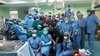
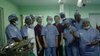
Mkapa hospital performs first kidney transplant

DODOMA-BASED Benjamin Mkapa Hospital (BMH) has become the second health facility in the country after Muhimbili National Hospital (MNH) to perform kidney transplant, saving millions of foreign currency which had to be used to send patients abroad for the health service.

0 Comments

BMH Acting Executive Director, Dr Alphonce Chandika noted here yesterday that a team of 10 doctors had on Thursday performed kidney transplant to a 51-year old resident of Mvumi, who had kidney complications. “Both the patient, Elias Sweti and his kidney donor Neema Sweti aged 45 are doing well after the operations,” Dr Chandika told a joint press conference with the University of Dodoma (UDOM) and Japan-based Medical Group, Kamakura.

Dr Chandika pointed out that five local doctors had teamed up with five doctors from Japan to perform the first kidney transplant at BMH, after the MNH performed the first such operation in the country last November. “We plan to perform the second kidney transplant to another person with kidney complications in June, this year,” he added.

Director of Kidney Diseases and Transplant Centre at Shonan Kamakura General Hospital, Dr Shuzo Kobayashi, said Tokushukai Medical Group signed a Memorandum of Understanding (MoU) with UDOM.

He said the MoU focuses on provision of medical kits and training support to the School of Medicine of UDOM, which also partners with the BMH, saying the Medical Group of Tokushukai donated ten dialysis machines to UDOM in 2013 as part of the agreement. “In 2016, I was asked by the then Vice-Chancellor of UDOM, Prof Kikula if it would be possible to conduct kidney transplant at Benjamin Mkapa Hospital,” he observed.

UDOM Vice-Chancellor, Prof Egid Mubofu, said UDOM and BMH have helped the government to save about 80m/- which was to be used to send the patient to India for kidney transplant, saying the cost for the health service at BMH stands at 22m/-. “I appeal to those who have no health insurance to join the National Health Insurance which covers the costs for the healthcare,” he said.

Prof Mubofu said that under the four-year agreement, between the Japanese medical group and UDOM, the Japanese medical experts will facilitate capacity building to local doctors, saying the Japanese doctors will visit the country four times a year for the mission.

He said previously, the people with kidney complications in Central Zone Regions had to travel to Dar es Salaam for Haemodialysis, saying the medical service is currently being offered at the Benjamin Mkapa Hospital thanks to cooperation between UDOM and the Japanese medical group.


KNH has been performing kidney transplants since 2010.

Kidney transplant now costs less in Kenya
 
Back
Top Bottom