Mkapa hospital performs first kidney transplant

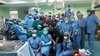
DODOMA-BASED Benjamin Mkapa Hospital (BMH) has become the second health facility in the country after Muhimbili National Hospital (MNH) to perform kidney transplant, saving millions of foreign currency which had to be used to send patients abroad for the health service.
0 Comments
BMH Acting Executive Director, Dr Alphonce Chandika noted here yesterday that a team of 10 doctors had on Thursday performed kidney transplant to a 51-year old resident of Mvumi, who had kidney complications. “Both the patient, Elias Sweti and his kidney donor Neema Sweti aged 45 are doing well after the operations,” Dr Chandika told a joint press conference with the University of Dodoma (UDOM) and Japan-based Medical Group, Kamakura.
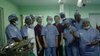
Dr Chandika pointed out that five local doctors had teamed up with five doctors from Japan to perform the first kidney transplant at BMH, after the MNH performed the first such operation in the country last November. “We plan to perform the second kidney transplant to another person with kidney complications in June, this year,” he added.
Director of Kidney Diseases and Transplant Centre at Shonan Kamakura General Hospital, Dr Shuzo Kobayashi, said Tokushukai Medical Group signed a Memorandum of Understanding (MoU) with UDOM.
He said the MoU focuses on provision of medical kits and training support to the School of Medicine of UDOM, which also partners with the BMH, saying the Medical Group of Tokushukai donated ten dialysis machines to UDOM in 2013 as part of the agreement. “In 2016, I was asked by the then Vice-Chancellor of UDOM, Prof Kikula if it would be possible to conduct kidney transplant at Benjamin Mkapa Hospital,” he observed.
UDOM Vice-Chancellor, Prof Egid Mubofu, said UDOM and BMH have helped the government to save about 80m/- which was to be used to send the patient to India for kidney transplant, saying the cost for the health service at BMH stands at 22m/-. “I appeal to those who have no health insurance to join the National Health Insurance which covers the costs for the healthcare,” he said.
Prof Mubofu said that under the four-year agreement, between the Japanese medical group and UDOM, the Japanese medical experts will facilitate capacity building to local doctors, saying the Japanese doctors will visit the country four times a year for the mission.
He said previously, the people with kidney complications in Central Zone Regions had to travel to Dar es Salaam for Haemodialysis, saying the medical service is currently being offered at the Benjamin Mkapa Hospital thanks to cooperation between UDOM and the Japanese medical group.