Rev. Kishoka
JF-Expert Member
- Mar 7, 2006
- 4,526
- 1,540
Ni jambo la kusikitisha kwa kilichotokea Mumbai. Pamoja na kuwa si rahisi kwa vyombo vya usalama na raia kujua ni lini watu wenye nia mbaya watafanya maovu, lakini tunaona tena umuhimu wa vyombo vya usalama na Serikali kuwa makini na wepesi wa kufanya maamuzi yanayotoa maana.
Ndio waziri wa Usalama wa India kajiuzulu, lakini tujiulize, ilikuwaje mpaka kukawa na udhaifu wa kiutendaji uliosababisha uhalifu na ugaidi wa namna hii utokee?
Nikisoma chapisho ya jarida la Newsweek, nakutana na taarifa ambazo zinatoa mfanano wa utendaji na utekelezaji wa kazi uliofanywa na Polisi wa India na hata wizara ya Usalama sawa na jinsi vyombo vya Usalama vya Tanzania vinavyoshughulikia uhalifu na hasa masuala ya ufisadi.
Polisi wa India walipewa tahadhari kwa nyakati tofauti kutoka kwa raia walioona, kusikia au kuhisi uhalifu unapangwa, lakini Polisi hawa ama walipuuza, hawakuona umuhimu kufanya kazi zao bila kupewa amri au kwa mtazamo wangu mwingine, je nao walikuwa washiriki na wanufaika wa uharamia huu?
Kuna mengine ya kushangaza kama kujua kuwa mji mkubwa kama Mumbai, hauna kikosi cha makomandoo na kuwa Waziri wa Usalama alitamka wazi hadharani kuwa kikosi cha makomandoo kilikuwa kinatoka New Dheli kwenda Mumbai na kuwapa wale Magaidi muda tosha wa kufanya udhalimu wao.
Najiuliza tena kama ninavyojiuliza mara nyingi, je ni lini Watendaji wa Tanzania yetu watakuwa wajasiri wa kujituma kufanya kazi zao kwa mujibu wa majukumu yao na si kusubiri amri(Pro-active)?
Kuna mengi ya kujifunza kutokana na hili la Mumbai. Naomba Mungu watendaji na wanasiasa wetu walichukulie hili kama somo na si hadithi za kijiweni na kuangalia CNN.
Kwa mifano niliyowekea mkazo hapo chini, mtaona ni jinsi gani kilichotokea Mumbai na India kwa ujumla, knaendelea kutokea Tanzania hasa kwenye suala la Rushwa, Uhujumu na Ufisadi, ukosefu wa Uimara wa Serikali!
Kwa wale wapambe wa viongozi, wale wapelelezi wa TAKUKURU, DPP,UWT, Wanasiasa na wananchi wote mtakaosoma ujumbe huu, tusaidiane kuanzisha hamasa ya kurekebisha kasoro zilizoko katika mfumo wetu wa vyombo vya usalama na utendaji wa vyombo hivyo na Serikali kwa ujumla.
Yaliyopita si ndwele, bali tugange kwa yanayokuja.
Naomba niwaachie hii nukuu kutoka Newsweek.
Ndio waziri wa Usalama wa India kajiuzulu, lakini tujiulize, ilikuwaje mpaka kukawa na udhaifu wa kiutendaji uliosababisha uhalifu na ugaidi wa namna hii utokee?
Nikisoma chapisho ya jarida la Newsweek, nakutana na taarifa ambazo zinatoa mfanano wa utendaji na utekelezaji wa kazi uliofanywa na Polisi wa India na hata wizara ya Usalama sawa na jinsi vyombo vya Usalama vya Tanzania vinavyoshughulikia uhalifu na hasa masuala ya ufisadi.
Polisi wa India walipewa tahadhari kwa nyakati tofauti kutoka kwa raia walioona, kusikia au kuhisi uhalifu unapangwa, lakini Polisi hawa ama walipuuza, hawakuona umuhimu kufanya kazi zao bila kupewa amri au kwa mtazamo wangu mwingine, je nao walikuwa washiriki na wanufaika wa uharamia huu?
Kuna mengine ya kushangaza kama kujua kuwa mji mkubwa kama Mumbai, hauna kikosi cha makomandoo na kuwa Waziri wa Usalama alitamka wazi hadharani kuwa kikosi cha makomandoo kilikuwa kinatoka New Dheli kwenda Mumbai na kuwapa wale Magaidi muda tosha wa kufanya udhalimu wao.
Najiuliza tena kama ninavyojiuliza mara nyingi, je ni lini Watendaji wa Tanzania yetu watakuwa wajasiri wa kujituma kufanya kazi zao kwa mujibu wa majukumu yao na si kusubiri amri(Pro-active)?
Kuna mengi ya kujifunza kutokana na hili la Mumbai. Naomba Mungu watendaji na wanasiasa wetu walichukulie hili kama somo na si hadithi za kijiweni na kuangalia CNN.
Kwa mifano niliyowekea mkazo hapo chini, mtaona ni jinsi gani kilichotokea Mumbai na India kwa ujumla, knaendelea kutokea Tanzania hasa kwenye suala la Rushwa, Uhujumu na Ufisadi, ukosefu wa Uimara wa Serikali!
Kwa wale wapambe wa viongozi, wale wapelelezi wa TAKUKURU, DPP,UWT, Wanasiasa na wananchi wote mtakaosoma ujumbe huu, tusaidiane kuanzisha hamasa ya kurekebisha kasoro zilizoko katika mfumo wetu wa vyombo vya usalama na utendaji wa vyombo hivyo na Serikali kwa ujumla.
Yaliyopita si ndwele, bali tugange kwa yanayokuja.
Naomba niwaachie hii nukuu kutoka Newsweek.
Flunking the Intelligence Test
The only real question about the Mumbai attack was just when it would come.
Sudip Mazumdar
NEWSWEEK
Published Nov 29, 2008 | Updated: 12:25 p.m. ET Nov 29, 2008
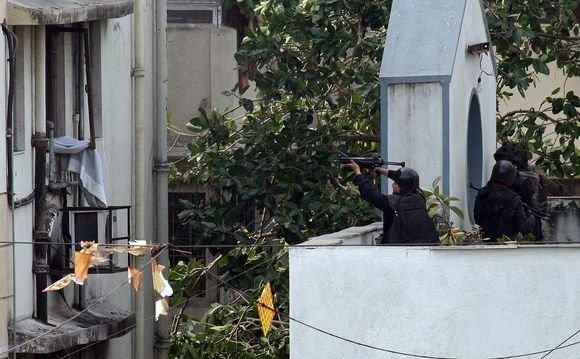
The hostage takers in Mumbai didn't need to wonder how large an armed rescue team the Indian government was sending, or when to anticipate its arrival. They had only to click on the nearest TV set, and there was the federal home minister, Shivraj Patil, obliviously telling viewers that 200 commandos had taken off on the two-hour flight from New Delhi at 2:30 a.m. Even after the aircraft had landed in Mumbai, the gunmen had plenty of time to get ready, as the troops were herded aboard rickety transport buses to be hauled from the city's northern edge to its southern tip. The commandos finally reached the scene about 6:30, roughly nine hours after the terrorists had launched their murderous attacks in the financial capital of India. The battle would drag on for the next two days while the body count reached 195 before the last gunman went down.
In Mumbai and throughout India, people reacted the way Americans did after September 11: they demanded to know why their government had failed to protect them. "Since November last year I have been drawing attention to the iceberg of jihadi terrorism," says B. Raman, a former top official at India's equivalent of the CIA, the Research and Analysis Wing (RAW). "The government of [Prime Minister] Manmohan Singh reacted to the repeated warning signals of the moving iceberg in the same way as the Bush administration reacted to reports about the plans of the Al Qaeda for aviation terrorism in the U.S.it just didn't react. It was in a denial mode."
Maybe that's why no one seems to have drawn up any guidelines for handling terrorist emergencies. Security professionals could only groan in frustration at Patil's televised lack of discretion on the commando deployment. Under mounting public anger, Patil finally resigned and a few other officials came under pressure to quit. In any case, these are hardly the Indian officials with a role in this bloody disaster. The problem is systemic in India, international security analysts say. "There is a frightening lack of strong and decisive political leadership in dealing with this menace," says Wilson John, a terrorism expert and senior fellow at the Observer Research Foundation in New Delhi. "This incompetence and lethargy seeps all the way down to the level of beat constable."
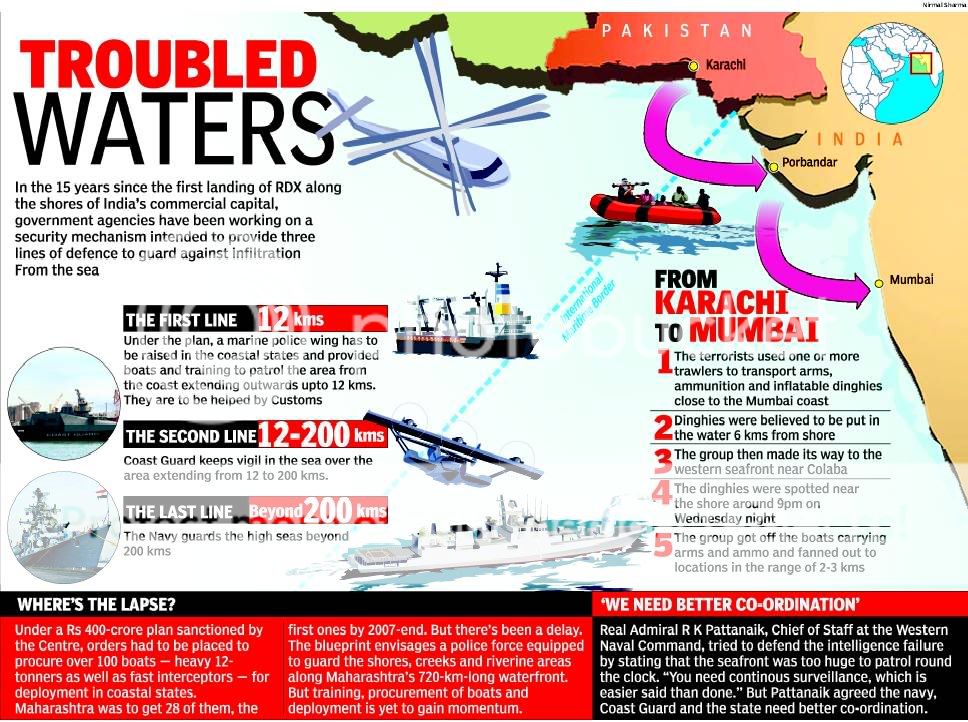
About an hour before the shooting started, villagers on the shore in South Mumbai saw a group of 10 young strangers climbing out of an inflatable raft. The incident was reported to local police, who did nothing. The cops might have displayed more interest if their superiors had given them a heads-up. About four months ago the president of the fishermen's union, Damodar Tandel, received a warning from a colleague in the coastal state of Gujarat: of the nearly 1,000 fishing boats that shuttle between Gujarat and Mumbai, some might be smuggling munitions and plastic explosives into the city, the friend said. Tandel relayed the message in a letter to the police chief in charge of Mumbai's port. The chief was asked about that letter last week, during the terrorist siege. "It was just a general statement," he said. "There was no specific information."
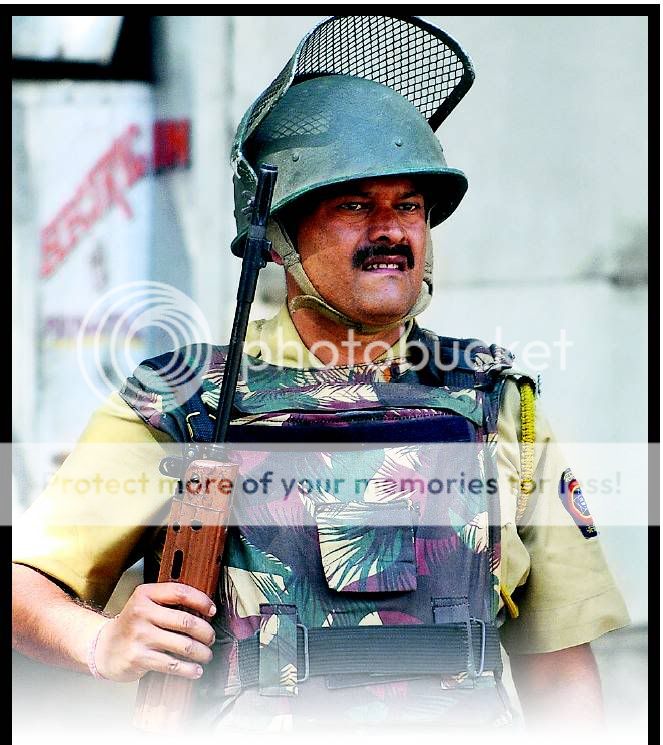
That's the kind of thing that infuriates people like India's No. 1 industrialist, Ratan Tata. "It has become clear that we don't have a crisis infrastructure in place," he told reporters, as terrorists remained holed up inside the city's landmark Taj Mahal Palace & Tower hotel, which his company owns. Proof of his complaint was all too evident after another gang seized hostages at a hospital not far away. The state's antiterrorism chief and two other top police officials arrived at the scene with a posse of cops who were armed with antiquated .303 rifles. Seemingly unaware of any danger, the three men stood unprotected on the firing line, where they were quickly mowed down by sudden bursts of automatic gunfire. Even then, intelligence sources say, the state government didn't seem to comprehend the magnitude of the attacks. The state's chief minister delayed nearly two hours before requesting specialized assistance from New Delhi. "The militants know and exploit gaping holes in India's counter-terrorism architecture and strategy," says John.
Horrified police officers in Mumbai saw their vehicles hijacked by terrorists who showed intimate knowledge of the city's streets and the layouts of the huge hotels they captured. In contrast, the police displayed no familiarity with the layouts of those buildings. The commandos who flew in from New Delhi had to waste precious time getting hotel staff members to sketch out the layouts of their workplaces. "We've really not learnt the lessons," says M. N. Singh, a former Mumbai police commissioner.
Mumbai has a long record of massive terrorist attacks dating at least as far back as 1993, when a wave of bombings left roughly 250 dead and 700 others injured. Deadly incidents have recurred ever since, most notably in July 2006, when seven huge explosions tore through commuter trains at rush hour, killing 160 people and injuring more than 200. On at least five occasions in the past nine months, terrorists have staged devastating strikes across the country. Even so, there has been little response beyond platitudes from politicians and well-publicized visits by government ministersalways surrounded by heavy security cordons.
That's the standard pattern in India: an inept and callous political leadership and a cocooned and corrupt bureaucracy take care of their own interests while ignoring the public's welfare. In the past few years that decay has spread to the country's intelligence services, including RAW. "Ten years ago it was one of the best in the world," says a source close to the French security establishment whose job precludes his being quoted by name. That was before India's ruling parties started appointing top officials based on their political leanings rather than their intelligence credentials. People in the field say a few serious professionals remain even now, like National Security Adviser M. K. Narayanan. "He's good," says this source. "But he doesn't have the power."
Not that anyone else in India's intelligence community is truly in charge. Not unlike America's agencies before September 11, India's many spy services are crippled by interagency rivalries and failures to communicate. One result, experts say, is that although nearly 16,000 suspected Islamist militants were detained and interrogated between 1991 and 2006, most of that information has never been analyzed and put to use by any central authority in order to prevent attacks. (Don't even ask about intelligence sharing with India's neighbor and fellow victim of Islamist terror, Pakistan.)
After the spectacular armed attack on India's Parliament Building in 2001, an elaborate Multi-Agency Center was created to oversee the country's counterterrorism efforts and collate information gathered by an array of new state-level agencies. Today MAC consists of a tiny staff using a bare-bones computer system with no real-time links to state police or other intelligence sources. Only five of India's 35 states have done their part by setting up local agencies.
The latest rampage in Mumbai has prompted widespread demands for the country's politicians to do something about terrorism instead of just talking about it. "There must now be public pressure on them the way it was in the United States after 9/11," says intelligence expert B. Raman. "We must tell them they won't get votes if they bicker over terrorism and politicize it."
Indians are fed up. "If the politicians abrogate their duty once again, I am not saying the streets will burn," says Bollywood actor and activist Rahul Bose. "But Mumbai will be a very, very angry place."
With Christopher Dickey
URL: Lessons From Mumbai's Latest Terrorist Rampage | Newsweek International | Newsweek.com