The rise and fall of Colonel Muamar Gadaffi

The rise and fall of Colonel Muamar Gadaffi

kwahiyo mlitaka nisema ninyi ndio mnaakili sana humu JF hapo mngefurahi sio.........acheni porojo hata video sijui kama mmeangalia.....siku nyingine msikurupeke tu.....Mnamjua Farrakhan nyie?!!!!!!!!:disapointed::Cry::help:


Wewe ndio mkurupukaji mkubwa, nimemjua huyu jamaa toka miaka ya 90... kutuambia marekani ina silaha kila kona ya dunia ndio busara, huwezi hata siku mija kumfananisha huyu jamaa na MLK au MX.... acha porojo wewe na kuwadanganya watu!!!:tape:
 
And here come the scammers!

Matapeli yameshaanza kuifanyizia kazi. Kuna hii barua imeshachongwa na kusambazwa mtandaoni. Jamaa hawalali!

Sir,

Im Hassan.Kebe 27yrs old Muslim boy from Libya(son of Musa Kebe official ADC to Gaddafi son) residence in Accra Ghana since Muammar Gaddafi started mass killing in my City Tobruk Libya we managed to escaped to Ghana with my mother since my father was killed by the Muammar Gaddafi loyalist, because my father failed and refused to face arms to his fellow people he was finally assassinated .

I inherited $5.5 million dollars with 8 kilos of gold from my assassinated father,Mr Mussa Muhamed Kebe,i will like to invest in your company for security and lucrative purposes.

Indicate your interest on this investment purposes by forwarding the following requirements bellow.

Your Phone and Fax Number.
Your full address.
Your company profile.
Your Name/ Sex.
Thanks,
Hassan Kebe.
Email:hassan.kebe@gmail.com
Dah!! Jamaa wako sensitive kweli na utapeli..
 
The Egyptian and US governments have both denied that they have special forces training the rebels, and a spokesman for the Libyan opposition's Transitional National Council has declined to say whether the rebels have bought new weapons or are receiving such training.

The spokesman, Mustafa Gheriani, said the rebels are seeking weapons and would welcome training from any friendly country. The opposition has almost from the beginning of the uprising sought to purchase weapons from other countries and on Friday announced a deal whereby it would sell oil to Qatar and use the revenue to purchase weapons and supplies.

The rebel source told Al Jazeera that he had been taken to a "secret facility" in the east to receive training on advanced, "heat-seeking" Katyusha rockets but had wound up receiving a shoulder-mounted model. Such a scenario is unlikely, though, since Katyushas - Russian-made rockets in use for decades - are heavy weapons with little guidance that are usually mounted in multi-barrel arrangements on truck beds.

Several media sources have said that CIA and SAS clandestine intelligence officers are in Libya, likely liasing with and training the rebels. It's possible that a civilian rebel with no military training could confuse such officers with special forces troops such as the Green Berets, who traditionally train foreign fighters.

Aljazeera
 
Around 70 corposes have been retrieved from the Mediterranean Sea over the past few days, and they're believed to be sub-Saharan refugees who tried to flee Libya. The bodies are believed to have belonged to a group of Eritreans who left Tripoli on March 28 on a dinghy, the head of the Jesuit Refugee Service in Malta told Al Jazeera. Some of the bodies washed up on shore, and others were picked up at sea across an area spanning 10 kilometres.

And, starting today, US aircraft are not to fly strike missions in Libya, though NATO commander General Charles Bouchard can request them, which would trigger an approval process in Washington DC, the AP reports. On Saturday, just before the deadline, US combat aircraft flew 24 strike missions in Libya, the Pentagon said.
 
Libyan deputy foreign minister has crossed from Libya into Tunisia - Tunisian Official News Agency
 
Fighting resumes in Libyan cities

Written on April 3, 2011 by Editor - Top News Stories

3 April 2011
Last updated at 06:17 ET

87c5a__51979707_011681042-1.jpg

Rebels are fighting for control of the oil city of Brega

Fighting has resumed in Libya with rebel forces continuing to battle for control of the eastern oil town of Brega. Rebels have captured the university on the outskirts of the city, AFP says.

Overnight, shelling resumed in Misrata, Libya's third biggest city and the last big rebel stronghold in the west, which has been besieged for weeks. At least 13 people were killed when a coalition plane fired on a rebel convoy between Brega and Ajdabiya on Friday.

The rebels' leadership has acknowledged that firing in the air through lack of discipline could have provoked the Nato air strike on their own forces on Friday.
The opposition leadership says it is trying to bring a new professionalism to its military campaign.

Road blocks have been set up close to the frontline and only soldiers with at least some training are allowed through.

Stalemate

Brega – some 800km (500 miles) east of the capital, Tripoli – has been the scene of intense exchanges over the past few days since pro-Gaddafi forces returned after being driven out.
This land cannot bear both of us [rebels and Col Gaddafi]. We will do whatever it takes to liberate our country - Iman Bugaighis, Rebel spokeswoman
The rebels had claimed to have recaptured the key oil town on Saturday, but pro-Gaddafi snipers were still said to be active, and others were apparently holed up in the university, AFP reports.

Early on Sunday morning, the rebels pushed forward and were occupying the university's vast campus on the outskirts of Brega, according to an AFP journalist. At least one person was killed and several wounded early on Sunday when forces loyal to Libyan leader Muammar Gaddafi shelled a building in Misrata, a resident has told Reuters news agency.

There have also been reports that Gaddafi forces have shelled the town of Yafran in a mountainous region south-west of Libya's capital, Tripoli, pan-Arab satellite channel al-Arabiya has reported, quoting an eyewitness.

Six-and-a-half weeks after the uprising began, it is hard to see how either side can break out of the military and political deadlock into which this conflict has descended, says the BBC's Jon Leyne in the rebel-controlled city of Benghazi. Neither side has the power to force an outright military victory, but neither is weak enough to force them into serious peace negotiations either, our correspondent adds.

Archbishop Desmond Tutu of South Africa has called for a swift end to the conflict in Libya even if it means offering Col Gaddafi safe haven in another country. Speaking to the BBC, Archbishop Tutu, who retired from public life last year, said in an ideal world the Libyan leader should stand trial, but that in reality it was better "to let him have a soft landing and save the lives as many people as you possibly can".

4b679__51964150__51958864_libya_airstrikes_01apr-1.jpg
 
At least 13 people were killed when a coalition plane fired on a rebel convoy between Brega and Ajdabiya on Friday.

The rebels' leadership has acknowledged that firing in the air through lack of discipline could have provoked the Nato air strike on their own forces on Friday.

The opposition leadership says it is trying to bring a new professionalism to its military campaign.

BBC News - Libya: Fighting resumes in key cities
 
Libyan deputy foreign minister has crossed from Libya into Tunisia - Tunisian Official News Agency

In another development, a senior Gaddafi official left Libya, reportedly flying to Athens to deliver a message to the Greek prime minister.

Abdelati Obeidi is Libya's deputy foreign minister for European affairs.
 
Haya naona US wamemaliza operation ndani ya Libya. Gaddafi na rebels inabidi wakubali kukaa chini tu maana sasa hivi wako kwenye stalemate.
 
Al Jazeera

These images, taken in Benghazi by EPA and Reuters photographers, show opposition forces receiving tactical and weapons training from soldiers who refuse to acknowledge Muammar Gaddafi's authority.
Training1.jpg


Training2.jpg


Training3.jpg


Training4.jpg


TrainingReuters.JPG


Al Jazeera
 
The Egyptian and US governments have both denied that they have special forces training the rebels, and a spokesman for the Libyan opposition's Transitional National Council has declined to say whether the rebels have bought new weapons or are receiving such training.

The spokesman, Mustafa Gheriani, said the rebels are seeking weapons and would welcome training from any friendly country. The opposition has almost from the beginning of the uprising sought to purchase weapons from other countries and on Friday announced a deal whereby it would sell oil to Qatar and use the revenue to purchase weapons and supplies.

The rebel source told Al Jazeera that he had been taken to a "secret facility" in the east to receive training on advanced, "heat-seeking" Katyusha rockets but had wound up receiving a shoulder-mounted model. Such a scenario is unlikely, though, since Katyushas - Russian-made rockets in use for decades - are heavy weapons with little guidance that are usually mounted in multi-barrel arrangements on truck beds.

Several media sources have said that CIA and SAS clandestine intelligence officers are in Libya, likely liasing with and training the rebels. It's possible that a civilian rebel with no military training could confuse such officers with special forces troops such as the Green Berets, who traditionally train foreign fighters.

Aljazeera

"...the President(obama) signed a secret order for CIA to assist the rebels..."

"...The Administration has told us they do not know who the rebels are, but they are considering arming them nonetheless..."

"...March 26, 2011. "...new leader of Libya's opposition military, left for Libya Two weeks ago", apparently after "...the President signed the covert operations order..."

"...His name: Colonel Khalifah Hiftar..."
 
Tripoli's Bishop: 'Nato Bombs Not The Answer'

Stuart Ramsay, Sky News chief correspondent
The Pope's senior representative in Libya has issued a stark warning to Western governments that without negotiation the war in the country will reach a bloody stalemate.

Bishop Giovanni Martinelli told Sky News that Colonel Muammar Gaddafi will not leave the country and will not stop the fighting while his army is being bombed.


"He will not leave," said the bishop, who was born in Libya and knows the Colonel and how he thinks.
"Maybe he will leave the power but with certain conditions; with dignity and desire to be with his people. He will stay, I think so. He doesn't want to leave the country. It is possible to find a solution but not with force."
The bishop has been critical of the bombing campaign because he says it is inaccurate and with the Libyan military still largely intact Col Gaddafi will become more intransigent.


"This is a crisis of generations and the rebellion is understandable. But violence is not the way forward," he added.
"I understand the feelings of the people in the east but they cannot win. They are not enough and not strong enough to defeat this army."
 
Wanaingia kinyemela?

British boots on the ground in Libya strike

Sunday, April 3, 2011
LONDON - Daily News with wires

britain-to-send-600-navy-marines-to-libya-says-report-2011-04-03_l.jpg


Libyan rebels shout religious slogans before heading towards the frontline near Brega. AP photo


The United Kingdom will send a Royal Navy taskforce of 600 marines and at least six ships to Libya this week as part of a humanitarian mission to provide medical and food aid to rebel-held towns, the London-based Times reported on Sunday, without disclosing where it got the information.

The marines, who are due to fly out to Gibraltar later this week, will be used to protect ports where supplies will be unloaded, the newspaper reported in its paper edition. The ships in the taskforce, which are due to leave in the next two days, will include the landing platform Albion, the type-42 destroyer Liverpool and four support ships, the Times said.

Britain is also under pressure to double the number of Royal Air Force planes available to attack the Libyan army after Saturday’s withdrawal of U.S. combat aircraft, the newspaper reported, without citing anyone.

The Times’ report came nearly two weeks after a Texas-based global intelligence company said that British commandos are already operational in the North African country. In an article on Libya war, George Friedman, founder of STRATFOR, said British SAS operators were already in Libya. According to Friedman, suspicion is growing that other countries’ special operations forces and intelligence services were also operating there.

Source:
 
Wanaingia kinyemela?

British boots on the ground in Libya strike

Sunday, April 3, 2011
LONDON - Daily News with wires

britain-to-send-600-navy-marines-to-libya-says-report-2011-04-03_l.jpg


Libyan rebels shout religious slogans before heading towards the frontline near Brega. AP photo


The United Kingdom will send a Royal Navy taskforce of 600 marines and at least six ships to Libya this week as part of a humanitarian mission to provide medical and food aid to rebel-held towns, the London-based Times reported on Sunday, without disclosing where it got the information.

The marines, who are due to fly out to Gibraltar later this week, will be used to protect ports where supplies will be unloaded, the newspaper reported in its paper edition. The ships in the taskforce, which are due to leave in the next two days, will include the landing platform Albion, the type-42 destroyer Liverpool and four support ships, the Times said.

Britain is also under pressure to double the number of Royal Air Force planes available to attack the Libyan army after Saturday's withdrawal of U.S. combat aircraft, the newspaper reported, without citing anyone.

The Times' report came nearly two weeks after a Texas-based global intelligence company said that British commandos are already operational in the North African country. In an article on Libya war, George Friedman, founder of STRATFOR, said British SAS operators were already in Libya. According to Friedman, suspicion is growing that other countries' special operations forces and intelligence services were also operating there.

Source:
nadhani pia watakuwa wanatoa ground combat operations kwa rebels-Gaddaf lazima aondoke
 
Hawa rebels wanataka kuwatisha pro-Gaddafi fighters kuwa wanapata mafunzo kutoka kwa special forces, seriously wangekuwa wanapata hiyo training tungeone mabadiliko na improvements. Chukulia wale Northern Alliance (Afghanistan) walipata msaada wa mafunzo na silaha au wa Kurd wa northern Iraq na mafanikio yao tuliyaona.

CIA covert officers wako ndani ya Libya kwa ajili ya kukusanya datas na kupin point targets.
 
22:26 Reuters Libyan Deputy Foreign Minister Abdelati Obeidi told Greek Prime Minister George Papandreou on Sunday that Libya wants to end fighting in the country, Greek officials said. "It seems that the Libyan authorities are seeking a solution," Foreign Minister Dimitris Droutsas said after the envoy met Papandreou. "There needs to be a serious effort for peace and stability in the region." Obeidi told Papandreou he will next travel to Malta and Turkey, Droutsas added
 
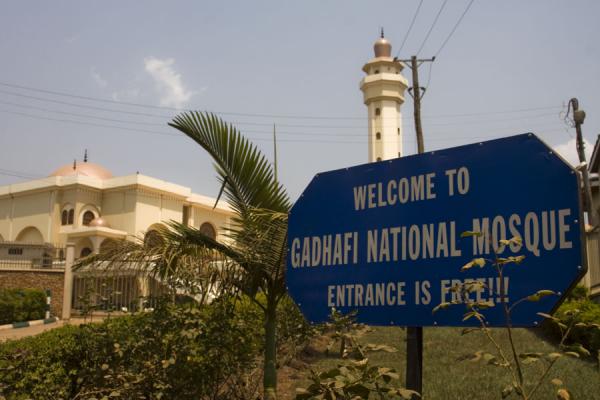
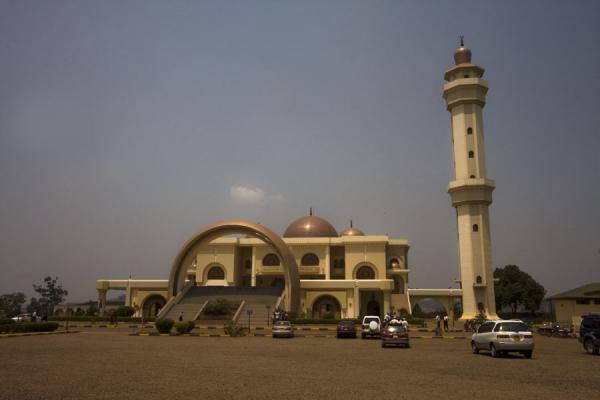
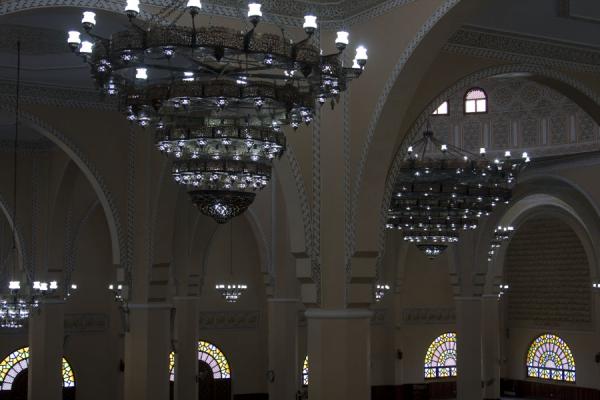
Gadhafi National Mosque in Uganda

Entrance of the mosque
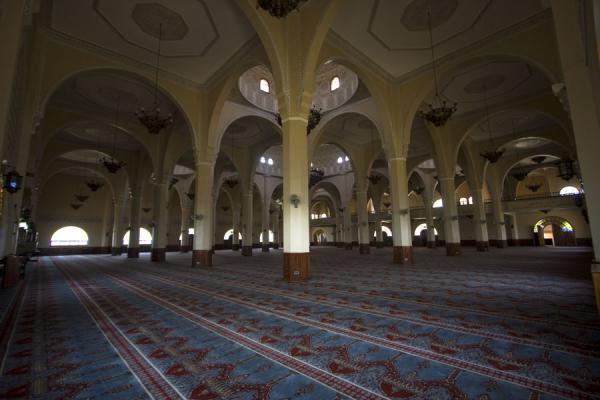
gadhafi-national-mosque-kampala15.jpg


The main prayer hall offering prayer space for some 7,000 people
gadhafi-national-mosque-kampala05.jpg


Close-up of one of the many lamps of the mosque
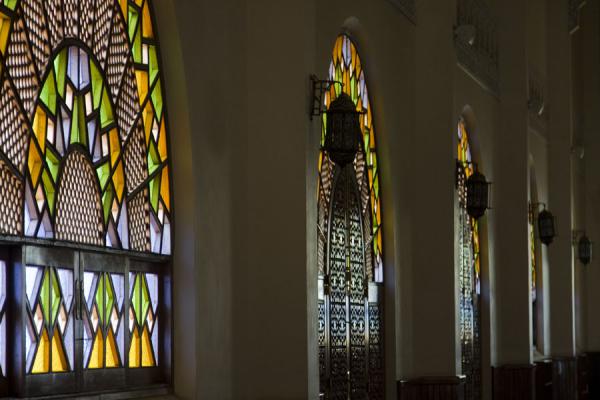
gadhafi-national-mosque-kampala11.jpg


Stained glass windows in the main prayer hall
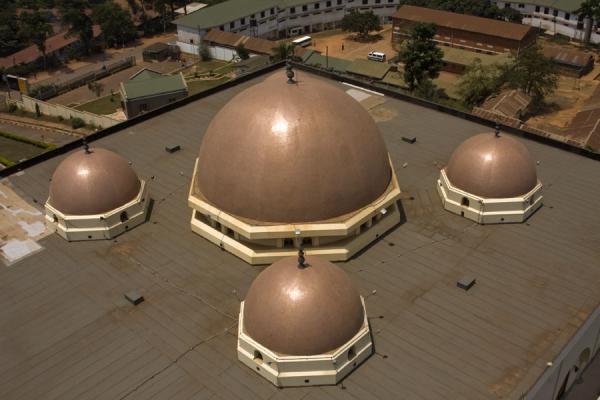
gadhafi-national-mosque-kampala04.jpg


Cupolas of the main prayer hall seen from above
gadhafi-national-mosque-kampala13.jpg


Front View
gadhafi-national-mosque-kampala14.jpg


Close-up of the decorations on the ceiling of the mosque
gadhafi-national-mosque-kampala10.jpg


Chandeliers and arches in the main prayer hall of the mosque
gadhafi-national-mosque-kampala06.jpg
 
By Gwynne Dyer

THEY have committed themselves to a war, but they have no plans for what happens after tomorrow night. They swear that they will never put ground troops into Libya, so their strategy consists solely of hoping that air strikes on Colonel Gadaffy’s air defence systems (and on his ground forces when they can be targeted without killing civilians) will persuade his troops to abandon him. They do not even have an agreed command structure.

So why is this “coalition of the willing” (which has yet to find a proper name for itself) doing this? Do not say “it is all about oil.” That is just lazy thinking: all the Western oil majors are already back in Libya. They have been back ever since the great reconciliation between their governments and Gaddafi in 2003.

Maybe it is just about local political advantage, then. President Nicolas Sarkozy of France was the driving force behind this intervention, and he faces a re-election battle next year. Is he seeking credit with French voters for this “humanitarian” intervention? Implausible, since it is the right-wing vote he must capture to win, and saving the lives of Arab foreigners does not rank high in the priorities of the French right.

Prime Minister David Cameron in Britain was the other prime mover in the Libyan intervention. Unless the coalition government he leads collapses (which is quite unlikely), he will not even have to face the electorate again until 2014. So what would be the point in seeking political popularity with a military intervention now? Even if that were a sure route to popularity in Britain, which it is not.

As for Barack Obama, he spent weeks trying to avoid an American military commitment in Libya, and his secretary of defence, Robert Gates, was outspoken in denouncing the idea. Yet there they all are, intervening: France, Britain, the United States, and half a dozen other Western countries. Strikingly unaccompanied by Arab military forces, or indeed by anybody else’s.

There is no profit in this for the West, and there is a high probability (of which the interveners are well aware) that it will all end in tears. There is the danger of “mission creep,” there is the risk that the bombing will kill Libyan civilians, and there is the fact that many of the countries that voted for Security Council Resolution 1973, or at least abstained from voting against it, are already peeling away from the commitment it implied.

So why have the Western countries embarked on this quixotic venture? Indians feel no need to intervene, nor do Chinese or Japanese. Russians and South Africans and Brazilians can watch the killing in Libya on their televisions and deplore Gaddafi’s behaviour without wanting to do something about it.

Even Egyptians, who are fellow Arabs, Libya’s next-door neighbours, and the beneficiaries of a similar but successful democratic revolution just last month, have not lifted a finger to help the Libyan revolutionaries. They do not lack the means – only a small fraction of their army could put an end to Gaddafi’s regime in days – but they lack the will. Indeed, they lack any sense of responsibility for what happens to people beyond their own borders.

That is normal. What is abnormal is a domestic politics in which the failure to intervene in Rwanda to stop the genocide is still remembered and debated fifteen years later. African countries do not hold that debate; only Western countries do. Western countries also feel guilty about their slow and timorous response to the slaughter in former Yugoslavia in the 1990s. Nobody else does.

Cynicism is a necessary tool when dealing with international affairs, but sometimes you have to admit that countries are acting from genuinely selfless and humanitarian motives. Yes, I know, Vietnam, and Iraq, and a hundred years of US meddling in Latin America, and five hundred years of European imperial plunder all around the world. I did say “sometimes”. But I think this is one of those times.

Why is it only Western countries that believe they have a duty to intervene militarily, even in places where they have no interests at stake, merely to save lives? My guess is that it is a heritage of the great wars they fought in the 20th century, and particularly of the war against Hitler, in which they told themselves (with some justification) that they were fighting pure evil – and eventually discovered that they were also fighting a terrible genocide.

This does not mean that all or most of their military adventures overseas are altruistic, nor does it mean that their current venture will end well. In fact, it probably will not. No good deed goes unpunished.
 
The battle for Libya is yet another demonstrations of the double-standards of western regimes, who are awash with the lust of resources found in poor nations. Their real motives are far from defending innocent people of Libya from being burchered by forces royal to Ghadaffi, but they are being driven by the lust OIL...they want to own it through a puppet leader they will install to calminate the whole gimmics.. like we see how it went about in Iraq, afganistan etc. So wild impressions that US and its allies has no interests at stake in Libya should be critically re-examined for take a glance of Ivory Coast innocent people are dying daily in hundreds, and a person perpetrating these murder is well-known globaly but nor US, European Union, or AU has raise a finger or taken affirmitive action to stop the carnage...reason Ivory Coast has no OIL or mineral resources to plunder! Ghadaffi may ultimately go! but His Libyan people will never forget him for the facts that he saved them honestly by providing vital humanitarian needs like free education for all from kindergatten to university level, free health to all, all these without subjecting them to pay tax.
 
You invade Bahrain. We take out Muammar Gaddafi in Libya. This, in short, is the essence of a deal struck between the Barack Obama administration and the House of Saud. Two diplomatic sources at the United Nations independently confirmed that Washington, via Secretary of State Hillary Clinton, gave the go-ahead for Saudi Arabia to invade Bahrain and crush the pro-democracy movement in their neighbor in exchange for a "yes"

Source: Pepe Escobar of the Asia Times

You Should Follow the following Articles for your own Interest

Asia Times Online :: the best of Pepe Escobar

Asia Times Online :: Middle East News, Iraq, Iran current affairs
 
Back
Top Bottom