
Bill Cosby
JF-Expert Member
- Sep 2, 2013
- 2,588
- 1,554
Follow along with the video below to see how to install our site as a web app on your home screen.
Note: This feature may not be available in some browsers.
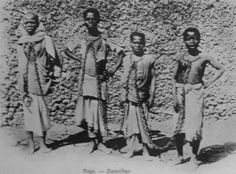
Nimemuuliza na mimi hilo swali...hajanijibu kaacha kumlaumu babu yake tipu tipu alokuwa anawauza wajukuu zake kama watumwa yeye analaumu mtu alokuwa sokoni zanzibarJiulize ipatikane picha ya kumpiga picha huyu mtawala wa kiarabu katika mwaka 1880 na yahuyu tiptip anaeambiwa ndio kinara wa biashara ya utumwaView attachment 339097 View attachment 339098
Hahaaaaa very nice observation....achilia kufanya kazi je kutembea from ujiji kigoma to bagamoyo...huku kwwnye kifundo cha mguu kuna tobo la kidonda lenye mnyororo unaochubua unawezaje kutembea?Naomba kujua,mtumwa mwenyeki makovu ya minyororo na majeraha ya vipigo anamudu vipi kufanya kazi?

Lies
Wanabodi,
Katika karibu kila jambo, kuna mazuri na mabaya yake, kama ilivyo kwa ukoloni, japo wakoloni walitunyonya, pia kuna mazuri, walituachia, ikiwepo elimu, maendeleo na dini ya Kikrito, vivyo hivyo pamoja na mazuri ya Waarabu kuvivamia visiwa vya Zanzibar na Pemba na kuvitwaa kama mali yao, miongoni mwa mazuri waliyoyaleta Waarabu hawa, ni Dini ya Kiislamu. Lakini pamoja na mazuri haya, sio vibaya kama wasiofuatilia historia, wakayajua madhila yaliyowakuta ndugu zetu Wamatumbi, wakati wa utawala dhalimu wa Sultani, kwenye visiwa vya Unguja na Pemba.
Naomba kukiri, nimekuwa inspired kupandisha bandiko hili kutoka na mada hii
Sultani gani aliye na shutuma za mauaji Zanzibar
ya Mkuu Maalim
Mohamed Said
yenye lengo la kuonyesha kuwa Yale Mapinduzi Matukufu ya Zanzibar ndio pekee yaliyosababisha mauaji Zanzibar, simply because aliyeuwawa kwenye Mapinduzi yale, ni Mwarabu, yaani ndio binadamu, lakini Wamatumbi wote waliouwawa vifo vya kikatili chini ya mokono ya Waarabu, wao sii kitu!.Mkuu Maalim
Mohamed Said
, kwa heshma na taadhima, nakuomba kwanza acha chuki zako na wamisionari, pili hata kama lengo lako ni kuutetea Uislamu, lakini mara moja moja kuwa mkweli toka ndani ya nafsi yako, kwa sababu naamini kabisa unayajua fika madhila yaliyowapata ndugu zetu Wamatumbi wakati wa kipindi chote cha utumwa chini ya Wavamizi Waarabu na utawala wao dhalimu!.
Hizo picha japo ni za kuchorwa, kiukweli kilichowapata ni kibaya kuliko hata hicho kilichochorwa!. Chini ya utawala dhalimu wa Waarabu, watumwa wote wanaume walihasiwa!, lengo la kuwahasi wanaume ni ili kuzuia wasizaane, kitendo cha mwanamke kubeba ujauzito miezi 9 kisha kuzaa mtoto na kumsubiri hadi akue, itakuwa ni hasara, na hivyo kupunguza kasi ya mahitaji ya watumwa wapya!.
Watumwa wa soko la Zanzibar waliouzwa Arabuni na Bara Hindi, ambapo baada ya kufika kule, wanaume wote walifanyiwa ukatili wa ajabu kwa kuhasiwa ili wasizaane, na walifanyishwa kazi za shokoa. Wanawake walifanywa wajakazi, kazi za wajakazi zinajulikana, wenye bahati zao, walifanywa masuria, wasio na bahati waliuliwa na wengine kujifia, ndio maana hakuna kizazi cha watu weusi India na Arabuni, hao machotara, ni kwa baadhi ya Waarabu wenye utu na roho nzuri, lakini the rest ni unyama unyama tuu!.
Idadi kubwa kizazi chotara cha machotara, ni Wanaume dhalimu wa Kiarabu, kuwaingilia kwa nguvu watumwa wa kike ambao walinunuliwa mahsusi kama wajakazi, na pale waliposhika ujauzito, wamiliki walikuwa huru, kuwafanya chochote watumwa wao, ikiwepo kuwatesa, kuwapiga hadi kuwaua kwa ukatili wa hali ya juu!. Mtumwa mwanamke baada ya kuingiliwa ki nguvu, yaani kubakwa, ikitokea akashika ujauzito, mwanamke yule aliuwawa kwa kuwatoboa tumbo, kutoa, kiumbe ambacho ndicho kilizikwa kama binadamu, na mwili wa mtumwa ulifukiwa tuu kama mzoga!.
Jee wajua kuwa hata baada ya kupigwa marufuku kwa biashaa haramu ya watumwa duniani kote, biashara hii iliendelea kufanyika Zanzibar kwa siri?!. Jee wajua kuna njia za chini kwa chini zimechimbwa Bagamoyo na Zanzibar ambapo watumwa walifichwa kwenye mapango na kupitishwa chini kwa chini hadi baharini?
Jee ulikuwa unajua kuwa kila Sultani, wake zao na watoto zao, walipokufa, walizikwa na watumwa hai?!. Jee wajua kwenye jengo la Beit Al Ajab, kwenye kila milingoti hapo, ndani walimuweka mtumwa hai mwanamume?!.
Jee wajua waliofanikisha kukomesha biashaa ya Utumwa Zanzibar ni akina nani?!. Kwa kusaidia tuu, waliokomesha biashara hii dhalimu Zanzibar ni wamisionari, ambao waliingia kabisa mkatataba na Sultani dhalimu wa Zanzibar, ndipo ikukubaliwa kuwa watumwa wote wenye kutaka kuwa huru, lazima wagombolewe kwa wale matajii wao kulipwa fedha, ambapo hao wamisionari, waliwalipia fedha kuwagomboa, na ndipo wakaanzisha kanisa la kwanza kabisa Afrika Mashariki, lilianzia Zanzibar, na waumini wa kwanza, ni watumwa waliogombolewa!.
Jee wajua kitu walichofanyiwa Waarabu dhalimu hawa baada ya yale Mapinduzi Matukufu ya Zanzibar, ilikuwa ni katika kujibu tuu au payback ya "what goes around, comes around?!", ila hapa naomba kukiri wazi, kuwa sio Waaabu wote kabisa walikuwa madhalimu kwa kuwatenda vibaya watumwa wao!, wako Waarabu ambao waliwatendea wema watumwa wao, na wamisionari walipotaka kuwagomboa, watumwa hao walikataa kwa ridhaa zao, hivyo wakaendelea kubaki utumwani kwa ridhaa zao wenyewe!.
Wako Waarabu, waliwapenda watumwa wa kike, japo waliwanunua kama vijakazi kwa ajili ya kuwafanya watumwa wa mapenzi, lakini wapo waliotokea na kuwapenda kwa mapenzi ya dhati, wengine wakawaoa na kuwa masuria, na wakawazalia watoto!. Namfahamu mmoja wa watoto wa Sultani ambaye alizaliwa na suria, na yungalipo hai hadi leo!.
Hii ni Ripoti ya aliyetumwa na utawala wa Waingereza kufuatilia kilichokuwa kinafanywa na serikali dhalimu ya Sultan, baada ya kupigwa marufuku biashara ya utumwa.
Pitia hapa
A report on slavery and the slave trade in Zanzibar, Pemba ...
Na kwa vile wengi wetu ni wavivu, hatupendi kusoma kujiongezea maarifa bali tunapenda kupikiwa, kupakuliwa, kulishwa, kutafuniwa, sisi kazi yetu ibaki kumeza tuu, hivyo na mimi nitawatafunia sehemu chache chache za ripoti hii na kuzitafasiri kwa ajili ya wale wenzangu na mimi!.
"They complained that the Arabs treated them harshly", yaani Waarabu wanawatesa!.
In Zanzibar a good many people had been telling me how slaves were suffering in the handa of Arabs!. At Chaki Chaki I walked into a tumble-down I found a number of slaves male and female, heavily chained and fettered". Nilikuta makundi ya watumwa wake kwa waume wamefungwa minyororo!".


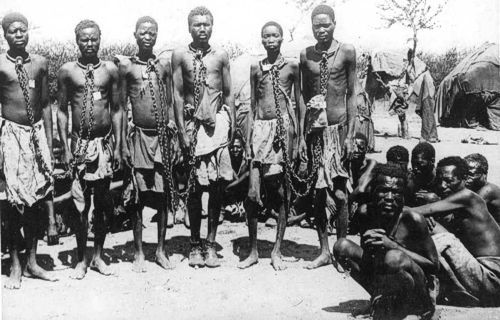


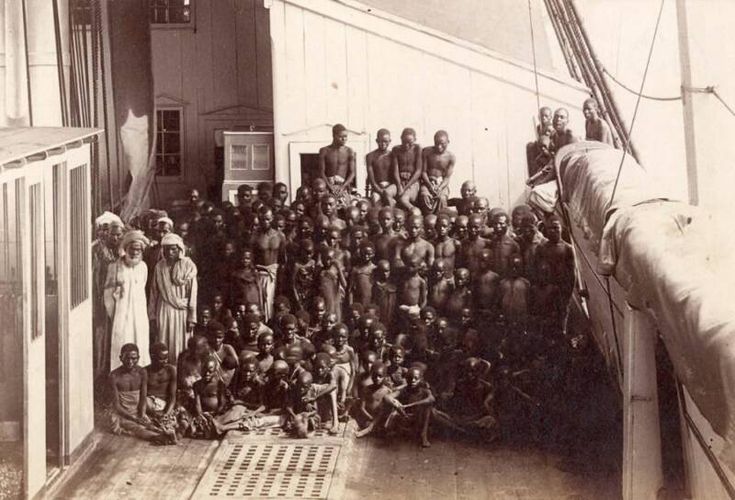


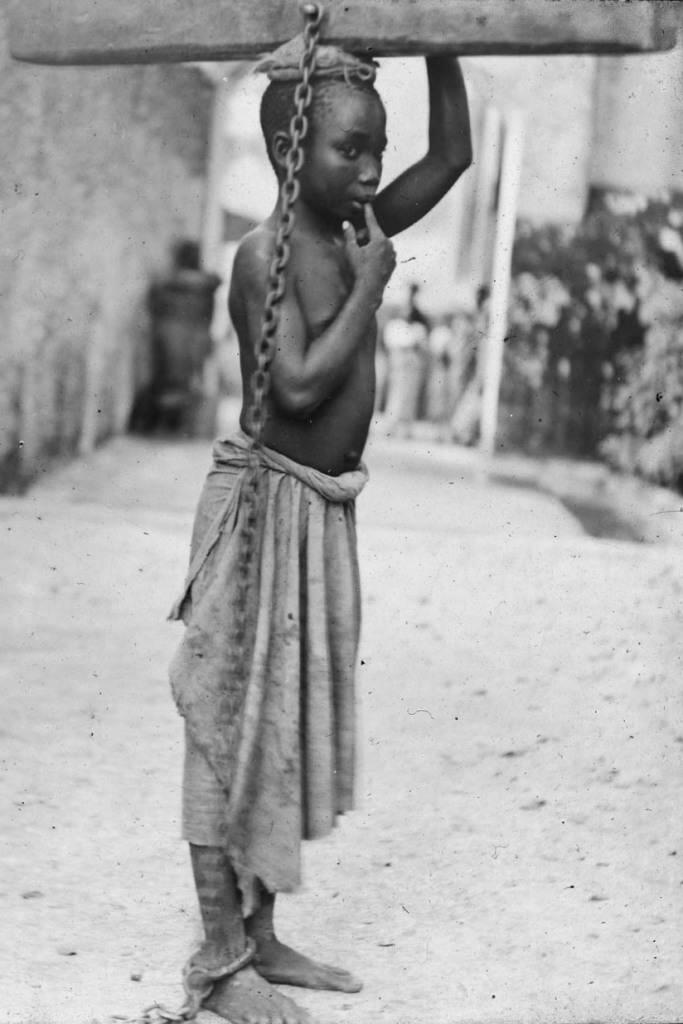
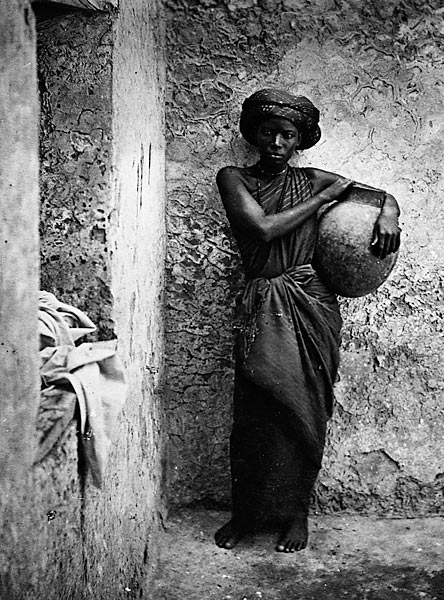
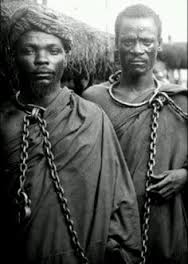
Hizi picha wajemeni sio picha ya kuchorwa, ni picha za kweli na halisi zilizopigwa na kamera za wadhungu!.
Lengo la uzi huu sio ubaguzi, au kuwakumbusha machungu ya Waarabu, bali ni kujikumbusha tuu, na kuwaelimisha baadhi ya wenzetu, wasiowajua hawa Waarabu wa Unguja na Pemba waliwafanya nini mababu zetu!.
Ila pia naomba kutoa Maangalizo muhimu yafuatayo.
1. Tuwe makini sana na watu waliofilisika kiakili ambao watachanganya Uarabu na dini ya Kiislam simply because, Dini ya Kiislamu inatumia lugha ya Kiarabu!. Masikini muflisi hawa, hawajui kuwa hata Ukiristo umeanzia Arabuni. Wakristo na Waislamu ni watoto wa baba mmoja, Ibrahim, Waislamu ni uzao wa mwanae wa kwanza Ismail, aliyezaa na mjakazi wa ki Misri, na Wakristo ni uzao wa Isaka aliyezaa na mkewe Sara. Hata Yesu Kristo, licha ya kuzaliwa Isael, alikulia Misri na alizungumza lugha ya Kiarabu!. Hapa mimi nazungumzia udhalimu wa Waarabu kama jamii na sio dini ya Kiislamu.
Udhalimu ni udhalimu tuu hauna dini, wala kabila, wala jamii, kwa sababu kwenye udhalimu sio Waarabu tuu peke yao ndio madhalimu, watu wa mataifa mbalimbali wamefanya udhalimu kwa watu wa mataifa mengine, na mfano mzuri ni udhalimu wa Wajerumani kwa Mayahudi chini ya Hitler ulioitwa Halocust ambapo Hitler aliwaua Wayahudi zaidi ya milioni 6 kwa ukatili wa ajabu!, ila kwenye biashara ya Utumwa Unguja, Pemba, na Arabuni, watumwa hawa walihasiwa hivyo kufanyiwa genoside na wahusika sii wengine bali ndugu zetu hawa hawa Waarabu ambao leo tunakula nao, tunakunywa naa na kufurahi nao kwa vile tumeishasahau, yaliyopita sii ndwele!.
2. Kwenye biashara ya utumwa, waliokuwa wakikamata watumwa, sio Waarabu, Waarabu wao walikuwa ni wafanyabiashara ya watumwa kwenye soko kuu la watumwa la Zanzibar, wakitokea Bagamoyo, na wanunuzi wakuu wa watumwa toka soko la Zanzibar kwa ajili ya kuwasafirisha kuwauza Uaabuni na India, ambako kote huko baada ya kufika, watumwa wanaume walihasiwa!. Waarabu pia ndio walikuwa wamiliki wa watumwa katika mashamba ya Zanzibar na`Pemba, ambapo nako watumwa wanaume walihasiwa, wanawake walifanywa vijakazi na ndio wazazi wa machotara wa Zanzibar na Pemba, wengi ni baba Mwarabu, mama uzao wa watumwa wanawake wenye bahati, ambao hawakutumbuliwa mimba za Waarabu!.
Upatikanaji wa watumwa kutoka bara pia ulihusisha baadhi ya watawala wakiwemo machifu ambapo baadhi ya wahalifu waliostahili adhabu za vifo katika jamii zao, badala ya kuuliwa na kuwa hasara jumla, waliuzwa, utumwani, lakini watumwa wengi ni watu tuu wa kawaida wasio na hatia yoyote ambao waliwamiwa na kukamatwa kwa nguvu, wakiwemo wanawake na watoto!. Zoezi la ukamataji watumwa pia lilihusisha vitendo vya ukatili, ambapo wengi watumwa hawa, waliuawawa katika purukushani, na wengine wengi walifia njiani na miili yao kuachwa ikioza, miili yenye bahati ilifanywa vitowea vya wanyama wa porini. Kwenye misafara hiyo, ndugu zetu waliteswa sana mateso ambayo hayazungumziki walioishiwa nguvu, walipigwa hadi kifo ila hakukuwepo na kamera ya mzungu wa kutupigia picha kuja kutuleta humu!.
3. Waarabu ninaowazungumza hapa, ni wale Waarabu madhalimu na makatili wa wa enzi zile za utumwa ambao wengi wao, mwaka 1964, walifurushwa kutoka Unguja kwenye yale Mapinduzi Matukufu ya Zanzibar ya Mwaka 1964!, ila waliofurushwa ni wale tuu waliokuwa Zanzibar. Waliokuwa Pemba hawakuguswa. Hawa Waarabu wa leo, ni vizalia vya Waarabu wale wale, ila hawa wa sasa, ni Waarabu wema,wastaarabu kama Waarabu wa sasa, wenye roho nzuri, sio wakatili, sio wadhalimu na wanawapenda watu weusi na kuwaoa kwa mapenzi, huku wanawake wao, wakiwapenda weusi na wakiolewa nao japo mwanzo ilikuwa ni kwa kulamishishwa na Karume, hivyo nashauri, kwa siku zijazo, hata Waarabu hawa, ama machotaa wao, wakishiriki tena uchaguzi, wakashinda kwenye uchaguzi kwa haki, wapewe tuu nchi watawale kwa sababu Waarabu hawa sii wale!, wasinyimwe kutawala eti kwa sababu tuu ni Waarabu wale wa mwanzo na wa enzi za utumwa, walikuwa mashalimu, hivyo kuendelea kudhani hata hawa wazaliwa wao pia lazima ni mashalimu!, kwa kanuni ya mwana wa nyoka ni nyoka!.
Mwana wa nyoka sii lazima awe nyoka, kwa sababu hata shetani mwanzo alikuwa malaika!, hivyo Waarabu hawa wa sasa ni Waarabu wema, ni wenzetu na ni sehemu yetu!.
Pasco
Wanabodi,
Katika karibu kila jambo, kuna mazuri na mabaya yake, kama ilivyo kwa ukoloni, japo wakoloni walitunyonya, pia kuna mazuri, walituachia, ikiwepo elimu, maendeleo na dini ya Kikrito, vivyo hivyo pamoja na mazuri ya Waarabu kuvivamia visiwa vya Zanzibar na Pemba na kuvitwaa kama mali yao, miongoni mwa mazuri waliyoyaleta Waarabu hawa, ni Dini ya Kiislamu. Lakini pamoja na mazuri haya, sio vibaya kama wasiofuatilia historia, wakayajua madhila yaliyowakuta ndugu zetu Wamatumbi, wakati wa utawala dhalimu wa Sultani, kwenye visiwa vya Unguja na Pemba.
Naomba kukiri, nimekuwa inspired kupandisha bandiko hili kutoka na mada hii
Sultani gani aliye na shutuma za mauaji Zanzibar
ya Mkuu Maalim
Mohamed Said
yenye lengo la kuonyesha kuwa Yale Mapinduzi Matukufu ya Zanzibar ndio pekee yaliyosababisha mauaji Zanzibar, simply because aliyeuwawa kwenye Mapinduzi yale, ni Mwarabu, yaani ndio binadamu, lakini Wamatumbi wote waliouwawa vifo vya kikatili chini ya mokono ya Waarabu, wao sii kitu!.Mkuu Maalim
Mohamed Said
, kwa heshma na taadhima, nakuomba kwanza acha chuki zako na wamisionari, pili hata kama lengo lako ni kuutetea Uislamu, lakini mara moja moja kuwa mkweli toka ndani ya nafsi yako, kwa sababu naamini kabisa unayajua fika madhila yaliyowapata ndugu zetu Wamatumbi wakati wa kipindi chote cha utumwa chini ya Wavamizi Waarabu na utawala wao dhalimu!.
Hizo picha japo ni za kuchorwa, kiukweli kilichowapata ni kibaya kuliko hata hicho kilichochorwa!. Chini ya utawala dhalimu wa Waarabu, watumwa wote wanaume walihasiwa!, lengo la kuwahasi wanaume ni ili kuzuia wasizaane, kitendo cha mwanamke kubeba ujauzito miezi 9 kisha kuzaa mtoto na kumsubiri hadi akue, itakuwa ni hasara, na hivyo kupunguza kasi ya mahitaji ya watumwa wapya!.
Watumwa wa soko la Zanzibar waliouzwa Arabuni na Bara Hindi, ambapo baada ya kufika kule, wanaume wote walifanyiwa ukatili wa ajabu kwa kuhasiwa ili wasizaane, na walifanyishwa kazi za shokoa. Wanawake walifanywa wajakazi, kazi za wajakazi zinajulikana, wenye bahati zao, walifanywa masuria, wasio na bahati waliuliwa na wengine kujifia, ndio maana hakuna kizazi cha watu weusi India na Arabuni, hao machotara, ni kwa baadhi ya Waarabu wenye utu na roho nzuri, lakini the rest ni unyama unyama tuu!.
Idadi kubwa kizazi chotara cha machotara, ni Wanaume dhalimu wa Kiarabu, kuwaingilia kwa nguvu watumwa wa kike ambao walinunuliwa mahsusi kama wajakazi, na pale waliposhika ujauzito, wamiliki walikuwa huru, kuwafanya chochote watumwa wao, ikiwepo kuwatesa, kuwapiga hadi kuwaua kwa ukatili wa hali ya juu!. Mtumwa mwanamke baada ya kuingiliwa ki nguvu, yaani kubakwa, ikitokea akashika ujauzito, mwanamke yule aliuwawa kwa kuwatoboa tumbo, kutoa, kiumbe ambacho ndicho kilizikwa kama binadamu, na mwili wa mtumwa ulifukiwa tuu kama mzoga!.
Jee wajua kuwa hata baada ya kupigwa marufuku kwa biashaa haramu ya watumwa duniani kote, biashara hii iliendelea kufanyika Zanzibar kwa siri?!. Jee wajua kuna njia za chini kwa chini zimechimbwa Bagamoyo na Zanzibar ambapo watumwa walifichwa kwenye mapango na kupitishwa chini kwa chini hadi baharini?
Jee ulikuwa unajua kuwa kila Sultani, wake zao na watoto zao, walipokufa, walizikwa na watumwa hai?!. Jee wajua kwenye jengo la Beit Al Ajab, kwenye kila milingoti hapo, ndani walimuweka mtumwa hai mwanamume?!.
Jee wajua waliofanikisha kukomesha biashaa ya Utumwa Zanzibar ni akina nani?!. Kwa kusaidia tuu, waliokomesha biashara hii dhalimu Zanzibar ni wamisionari, ambao waliingia kabisa mkatataba na Sultani dhalimu wa Zanzibar, ndipo ikukubaliwa kuwa watumwa wote wenye kutaka kuwa huru, lazima wagombolewe kwa wale matajii wao kulipwa fedha, ambapo hao wamisionari, waliwalipia fedha kuwagomboa, na ndipo wakaanzisha kanisa la kwanza kabisa Afrika Mashariki, lilianzia Zanzibar, na waumini wa kwanza, ni watumwa waliogombolewa!.
Jee wajua kitu walichofanyiwa Waarabu dhalimu hawa baada ya yale Mapinduzi Matukufu ya Zanzibar, ilikuwa ni katika kujibu tuu au payback ya "what goes around, comes around?!", ila hapa naomba kukiri wazi, kuwa sio Waaabu wote kabisa walikuwa madhalimu kwa kuwatenda vibaya watumwa wao!, wako Waarabu ambao waliwatendea wema watumwa wao, na wamisionari walipotaka kuwagomboa, watumwa hao walikataa kwa ridhaa zao, hivyo wakaendelea kubaki utumwani kwa ridhaa zao wenyewe!.
Wako Waarabu, waliwapenda watumwa wa kike, japo waliwanunua kama vijakazi kwa ajili ya kuwafanya watumwa wa mapenzi, lakini wapo waliotokea na kuwapenda kwa mapenzi ya dhati, wengine wakawaoa na kuwa masuria, na wakawazalia watoto!. Namfahamu mmoja wa watoto wa Sultani ambaye alizaliwa na suria, na yungalipo hai hadi leo!.
Hii ni Ripoti ya aliyetumwa na utawala wa Waingereza kufuatilia kilichokuwa kinafanywa na serikali dhalimu ya Sultan, baada ya kupigwa marufuku biashara ya utumwa.
Pitia hapa
A report on slavery and the slave trade in Zanzibar, Pemba ...
Na kwa vile wengi wetu ni wavivu, hatupendi kusoma kujiongezea maarifa bali tunapenda kupikiwa, kupakuliwa, kulishwa, kutafuniwa, sisi kazi yetu ibaki kumeza tuu, hivyo na mimi nitawatafunia sehemu chache chache za ripoti hii na kuzitafasiri kwa ajili ya wale wenzangu na mimi!.
"They complained that the Arabs treated them harshly", yaani Waarabu wanawatesa!.
In Zanzibar a good many people had been telling me how slaves were suffering in the handa of Arabs!. At Chaki Chaki I walked into a tumble-down I found a number of slaves male and female, heavily chained and fettered". Nilikuta makundi ya watumwa wake kwa waume wamefungwa minyororo!".
Hizi picha wajemeni sio picha ya kuchorwa, ni picha za kweli na halisi zilizopigwa na kamera za wadhungu!.
Lengo la uzi huu sio ubaguzi, au kuwakumbusha machungu ya Waarabu, bali ni kujikumbusha tuu, na kuwaelimisha baadhi ya wenzetu, wasiowajua hawa Waarabu wa Unguja na Pemba waliwafanya nini mababu zetu!.
Ila pia naomba kutoa Maangalizo muhimu yafuatayo.
1. Tuwe makini sana na watu waliofilisika kiakili ambao watachanganya Uarabu na dini ya Kiislam simply because, Dini ya Kiislamu inatumia lugha ya Kiarabu!. Masikini muflisi hawa, hawajui kuwa hata Ukiristo umeanzia Arabuni. Wakristo na Waislamu ni watoto wa baba mmoja, Ibrahim, Waislamu ni uzao wa mwanae wa kwanza Ismail, aliyezaa na mjakazi wa ki Misri, na Wakristo ni uzao wa Isaka aliyezaa na mkewe Sara. Hata Yesu Kristo, licha ya kuzaliwa Isael, alikulia Misri na alizungumza lugha ya Kiarabu!. Hapa mimi nazungumzia udhalimu wa Waarabu kama jamii na sio dini ya Kiislamu.
Udhalimu ni udhalimu tuu hauna dini, wala kabila, wala jamii, kwa sababu kwenye udhalimu sio Waarabu tuu peke yao ndio madhalimu, watu wa mataifa mbalimbali wamefanya udhalimu kwa watu wa mataifa mengine, na mfano mzuri ni udhalimu wa Wajerumani kwa Mayahudi chini ya Hitler ulioitwa Halocust ambapo Hitler aliwaua Wayahudi zaidi ya milioni 6 kwa ukatili wa ajabu!, ila kwenye biashara ya Utumwa Unguja, Pemba, na Arabuni, watumwa hawa walihasiwa hivyo kufanyiwa genoside na wahusika sii wengine bali ndugu zetu hawa hawa Waarabu ambao leo tunakula nao, tunakunywa naa na kufurahi nao kwa vile tumeishasahau, yaliyopita sii ndwele!.
2. Kwenye biashara ya utumwa, waliokuwa wakikamata watumwa, sio Waarabu, Waarabu wao walikuwa ni wafanyabiashara ya watumwa kwenye soko kuu la watumwa la Zanzibar, wakitokea Bagamoyo, na wanunuzi wakuu wa watumwa toka soko la Zanzibar kwa ajili ya kuwasafirisha kuwauza Uaabuni na India, ambako kote huko baada ya kufika, watumwa wanaume walihasiwa!. Waarabu pia ndio walikuwa wamiliki wa watumwa katika mashamba ya Zanzibar na`Pemba, ambapo nako watumwa wanaume walihasiwa, wanawake walifanywa vijakazi na ndio wazazi wa machotara wa Zanzibar na Pemba, wengi ni baba Mwarabu, mama uzao wa watumwa wanawake wenye bahati, ambao hawakutumbuliwa mimba za Waarabu!.
Upatikanaji wa watumwa kutoka bara pia ulihusisha baadhi ya watawala wakiwemo machifu ambapo baadhi ya wahalifu waliostahili adhabu za vifo katika jamii zao, badala ya kuuliwa na kuwa hasara jumla, waliuzwa, utumwani, lakini watumwa wengi ni watu tuu wa kawaida wasio na hatia yoyote ambao waliwamiwa na kukamatwa kwa nguvu, wakiwemo wanawake na watoto!. Zoezi la ukamataji watumwa pia lilihusisha vitendo vya ukatili, ambapo wengi watumwa hawa, waliuawawa katika purukushani, na wengine wengi walifia njiani na miili yao kuachwa ikioza, miili yenye bahati ilifanywa vitowea vya wanyama wa porini. Kwenye misafara hiyo, ndugu zetu waliteswa sana mateso ambayo hayazungumziki walioishiwa nguvu, walipigwa hadi kifo ila hakukuwepo na kamera ya mzungu wa kutupigia picha kuja kutuleta humu!.
3. Waarabu ninaowazungumza hapa, ni wale Waarabu madhalimu na makatili wa wa enzi zile za utumwa ambao wengi wao, mwaka 1964, walifurushwa kutoka Unguja kwenye yale Mapinduzi Matukufu ya Zanzibar ya Mwaka 1964!, ila waliofurushwa ni wale tuu waliokuwa Zanzibar. Waliokuwa Pemba hawakuguswa. Hawa Waarabu wa leo, ni vizalia vya Waarabu wale wale, ila hawa wa sasa, ni Waarabu wema,wastaarabu kama Waarabu wa sasa, wenye roho nzuri, sio wakatili, sio wadhalimu na wanawapenda watu weusi na kuwaoa kwa mapenzi, huku wanawake wao, wakiwapenda weusi na wakiolewa nao japo mwanzo ilikuwa ni kwa kulamishishwa na Karume, hivyo nashauri, kwa siku zijazo, hata Waarabu hawa, ama machotaa wao, wakishiriki tena uchaguzi, wakashinda kwenye uchaguzi kwa haki, wapewe tuu nchi watawale kwa sababu Waarabu hawa sii wale!, wasinyimwe kutawala eti kwa sababu tuu ni Waarabu wale wa mwanzo na wa enzi za utumwa, walikuwa mashalimu, hivyo kuendelea kudhani hata hawa wazaliwa wao pia lazima ni mashalimu!, kwa kanuni ya mwana wa nyoka ni nyoka!.
Mwana wa nyoka sii lazima awe nyoka, kwa sababu hata shetani mwanzo alikuwa malaika!, hivyo Waarabu hawa wa sasa ni Waarabu wema, ni wenzetu na ni sehemu yetu!.
Pasco
Wanabodi,
Katika karibu kila jambo, kuna mazuri na mabaya yake, kama ilivyo kwa ukoloni, japo wakoloni walitunyonya, pia kuna mazuri, walituachia, ikiwepo elimu, maendeleo na dini ya Kikrito, vivyo hivyo pamoja na mazuri ya Waarabu kuvivamia visiwa vya Zanzibar na Pemba na kuvitwaa kama mali yao, miongoni mwa mazuri waliyoyaleta Waarabu hawa, ni Dini ya Kiislamu. Lakini pamoja na mazuri haya, sio vibaya kama wasiofuatilia historia, wakayajua madhila yaliyowakuta ndugu zetu Wamatumbi, wakati wa utawala dhalimu wa Sultani, kwenye visiwa vya Unguja na Pemba.
Naomba kukiri, nimekuwa inspired kupandisha bandiko hili kutoka na mada hii
Sultani gani aliye na shutuma za mauaji Zanzibar
ya Mkuu Maalim
Mohamed Said
yenye lengo la kuonyesha kuwa Yale Mapinduzi Matukufu ya Zanzibar ndio pekee yaliyosababisha mauaji Zanzibar, simply because aliyeuwawa kwenye Mapinduzi yale, ni Mwarabu, yaani ndio binadamu, lakini Wamatumbi wote waliouwawa vifo vya kikatili chini ya mokono ya Waarabu, wao sii kitu!.Mkuu Maalim
Mohamed Said
, kwa heshma na taadhima, nakuomba kwanza acha chuki zako na wamisionari, pili hata kama lengo lako ni kuutetea Uislamu, lakini mara moja moja kuwa mkweli toka ndani ya nafsi yako, kwa sababu naamini kabisa unayajua fika madhila yaliyowapata ndugu zetu Wamatumbi wakati wa kipindi chote cha utumwa chini ya Wavamizi Waarabu na utawala wao dhalimu!.
Hizo picha japo ni za kuchorwa, kiukweli kilichowapata ni kibaya kuliko hata hicho kilichochorwa!. Chini ya utawala dhalimu wa Waarabu, watumwa wote wanaume walihasiwa!, lengo la kuwahasi wanaume ni ili kuzuia wasizaane, kitendo cha mwanamke kubeba ujauzito miezi 9 kisha kuzaa mtoto na kumsubiri hadi akue, itakuwa ni hasara, na hivyo kupunguza kasi ya mahitaji ya watumwa wapya!.
Watumwa wa soko la Zanzibar waliouzwa Arabuni na Bara Hindi, ambapo baada ya kufika kule, wanaume wote walifanyiwa ukatili wa ajabu kwa kuhasiwa ili wasizaane, na walifanyishwa kazi za shokoa. Wanawake walifanywa wajakazi, kazi za wajakazi zinajulikana, wenye bahati zao, walifanywa masuria, wasio na bahati waliuliwa na wengine kujifia, ndio maana hakuna kizazi cha watu weusi India na Arabuni, hao machotara, ni kwa baadhi ya Waarabu wenye utu na roho nzuri, lakini the rest ni unyama unyama tuu!.
Idadi kubwa kizazi chotara cha machotara, ni Wanaume dhalimu wa Kiarabu, kuwaingilia kwa nguvu watumwa wa kike ambao walinunuliwa mahsusi kama wajakazi, na pale waliposhika ujauzito, wamiliki walikuwa huru, kuwafanya chochote watumwa wao, ikiwepo kuwatesa, kuwapiga hadi kuwaua kwa ukatili wa hali ya juu!. Mtumwa mwanamke baada ya kuingiliwa ki nguvu, yaani kubakwa, ikitokea akashika ujauzito, mwanamke yule aliuwawa kwa kuwatoboa tumbo, kutoa, kiumbe ambacho ndicho kilizikwa kama binadamu, na mwili wa mtumwa ulifukiwa tuu kama mzoga!.
Jee wajua kuwa hata baada ya kupigwa marufuku kwa biashaa haramu ya watumwa duniani kote, biashara hii iliendelea kufanyika Zanzibar kwa siri?!. Jee wajua kuna njia za chini kwa chini zimechimbwa Bagamoyo na Zanzibar ambapo watumwa walifichwa kwenye mapango na kupitishwa chini kwa chini hadi baharini?
Jee ulikuwa unajua kuwa kila Sultani, wake zao na watoto zao, walipokufa, walizikwa na watumwa hai?!. Jee wajua kwenye jengo la Beit Al Ajab, kwenye kila milingoti hapo, ndani walimuweka mtumwa hai mwanamume?!.
Jee wajua waliofanikisha kukomesha biashaa ya Utumwa Zanzibar ni akina nani?!. Kwa kusaidia tuu, waliokomesha biashara hii dhalimu Zanzibar ni wamisionari, ambao waliingia kabisa mkatataba na Sultani dhalimu wa Zanzibar, ndipo ikukubaliwa kuwa watumwa wote wenye kutaka kuwa huru, lazima wagombolewe kwa wale matajii wao kulipwa fedha, ambapo hao wamisionari, waliwalipia fedha kuwagomboa, na ndipo wakaanzisha kanisa la kwanza kabisa Afrika Mashariki, lilianzia Zanzibar, na waumini wa kwanza, ni watumwa waliogombolewa!.
Jee wajua kitu walichofanyiwa Waarabu dhalimu hawa baada ya yale Mapinduzi Matukufu ya Zanzibar, ilikuwa ni katika kujibu tuu au payback ya "what goes around, comes around?!", ila hapa naomba kukiri wazi, kuwa sio Waaabu wote kabisa walikuwa madhalimu kwa kuwatenda vibaya watumwa wao!, wako Waarabu ambao waliwatendea wema watumwa wao, na wamisionari walipotaka kuwagomboa, watumwa hao walikataa kwa ridhaa zao, hivyo wakaendelea kubaki utumwani kwa ridhaa zao wenyewe!.
Wako Waarabu, waliwapenda watumwa wa kike, japo waliwanunua kama vijakazi kwa ajili ya kuwafanya watumwa wa mapenzi, lakini wapo waliotokea na kuwapenda kwa mapenzi ya dhati, wengine wakawaoa na kuwa masuria, na wakawazalia watoto!. Namfahamu mmoja wa watoto wa Sultani ambaye alizaliwa na suria, na yungalipo hai hadi leo!.
Hii ni Ripoti ya aliyetumwa na utawala wa Waingereza kufuatilia kilichokuwa kinafanywa na serikali dhalimu ya Sultan, baada ya kupigwa marufuku biashara ya utumwa.
Pitia hapa
A report on slavery and the slave trade in Zanzibar, Pemba ...
Na kwa vile wengi wetu ni wavivu, hatupendi kusoma kujiongezea maarifa bali tunapenda kupikiwa, kupakuliwa, kulishwa, kutafuniwa, sisi kazi yetu ibaki kumeza tuu, hivyo na mimi nitawatafunia sehemu chache chache za ripoti hii na kuzitafasiri kwa ajili ya wale wenzangu na mimi!.
"They complained that the Arabs treated them harshly", yaani Waarabu wanawatesa!.
In Zanzibar a good many people had been telling me how slaves were suffering in the handa of Arabs!. At Chaki Chaki I walked into a tumble-down I found a number of slaves male and female, heavily chained and fettered". Nilikuta makundi ya watumwa wake kwa waume wamefungwa minyororo!".
Hizi picha wajemeni sio picha ya kuchorwa, ni picha za kweli na halisi zilizopigwa na kamera za wadhungu!.
Lengo la uzi huu sio ubaguzi, au kuwakumbusha machungu ya Waarabu, bali ni kujikumbusha tuu, na kuwaelimisha baadhi ya wenzetu, wasiowajua hawa Waarabu wa Unguja na Pemba waliwafanya nini mababu zetu!.
Ila pia naomba kutoa Maangalizo muhimu yafuatayo.
1. Tuwe makini sana na watu waliofilisika kiakili ambao watachanganya Uarabu na dini ya Kiislam simply because, Dini ya Kiislamu inatumia lugha ya Kiarabu!. Masikini muflisi hawa, hawajui kuwa hata Ukiristo umeanzia Arabuni. Wakristo na Waislamu ni watoto wa baba mmoja, Ibrahim, Waislamu ni uzao wa mwanae wa kwanza Ismail, aliyezaa na mjakazi wa ki Misri, na Wakristo ni uzao wa Isaka aliyezaa na mkewe Sara. Hata Yesu Kristo, licha ya kuzaliwa Isael, alikulia Misri na alizungumza lugha ya Kiarabu!. Hapa mimi nazungumzia udhalimu wa Waarabu kama jamii na sio dini ya Kiislamu.
Udhalimu ni udhalimu tuu hauna dini, wala kabila, wala jamii, kwa sababu kwenye udhalimu sio Waarabu tuu peke yao ndio madhalimu, watu wa mataifa mbalimbali wamefanya udhalimu kwa watu wa mataifa mengine, na mfano mzuri ni udhalimu wa Wajerumani kwa Mayahudi chini ya Hitler ulioitwa Halocust ambapo Hitler aliwaua Wayahudi zaidi ya milioni 6 kwa ukatili wa ajabu!, ila kwenye biashara ya Utumwa Unguja, Pemba, na Arabuni, watumwa hawa walihasiwa hivyo kufanyiwa genoside na wahusika sii wengine bali ndugu zetu hawa hawa Waarabu ambao leo tunakula nao, tunakunywa naa na kufurahi nao kwa vile tumeishasahau, yaliyopita sii ndwele!.
2. Kwenye biashara ya utumwa, waliokuwa wakikamata watumwa, sio Waarabu, Waarabu wao walikuwa ni wafanyabiashara ya watumwa kwenye soko kuu la watumwa la Zanzibar, wakitokea Bagamoyo, na wanunuzi wakuu wa watumwa toka soko la Zanzibar kwa ajili ya kuwasafirisha kuwauza Uaabuni na India, ambako kote huko baada ya kufika, watumwa wanaume walihasiwa!. Waarabu pia ndio walikuwa wamiliki wa watumwa katika mashamba ya Zanzibar na`Pemba, ambapo nako watumwa wanaume walihasiwa, wanawake walifanywa vijakazi na ndio wazazi wa machotara wa Zanzibar na Pemba, wengi ni baba Mwarabu, mama uzao wa watumwa wanawake wenye bahati, ambao hawakutumbuliwa mimba za Waarabu!.
Upatikanaji wa watumwa kutoka bara pia ulihusisha baadhi ya watawala wakiwemo machifu ambapo baadhi ya wahalifu waliostahili adhabu za vifo katika jamii zao, badala ya kuuliwa na kuwa hasara jumla, waliuzwa, utumwani, lakini watumwa wengi ni watu tuu wa kawaida wasio na hatia yoyote ambao waliwamiwa na kukamatwa kwa nguvu, wakiwemo wanawake na watoto!. Zoezi la ukamataji watumwa pia lilihusisha vitendo vya ukatili, ambapo wengi watumwa hawa, waliuawawa katika purukushani, na wengine wengi walifia njiani na miili yao kuachwa ikioza, miili yenye bahati ilifanywa vitowea vya wanyama wa porini. Kwenye misafara hiyo, ndugu zetu waliteswa sana mateso ambayo hayazungumziki walioishiwa nguvu, walipigwa hadi kifo ila hakukuwepo na kamera ya mzungu wa kutupigia picha kuja kutuleta humu!.
3. Waarabu ninaowazungumza hapa, ni wale Waarabu madhalimu na makatili wa wa enzi zile za utumwa ambao wengi wao, mwaka 1964, walifurushwa kutoka Unguja kwenye yale Mapinduzi Matukufu ya Zanzibar ya Mwaka 1964!, ila waliofurushwa ni wale tuu waliokuwa Zanzibar. Waliokuwa Pemba hawakuguswa. Hawa Waarabu wa leo, ni vizalia vya Waarabu wale wale, ila hawa wa sasa, ni Waarabu wema,wastaarabu kama Waarabu wa sasa, wenye roho nzuri, sio wakatili, sio wadhalimu na wanawapenda watu weusi na kuwaoa kwa mapenzi, huku wanawake wao, wakiwapenda weusi na wakiolewa nao japo mwanzo ilikuwa ni kwa kulamishishwa na Karume, hivyo nashauri, kwa siku zijazo, hata Waarabu hawa, ama machotaa wao, wakishiriki tena uchaguzi, wakashinda kwenye uchaguzi kwa haki, wapewe tuu nchi watawale kwa sababu Waarabu hawa sii wale!, wasinyimwe kutawala eti kwa sababu tuu ni Waarabu wale wa mwanzo na wa enzi za utumwa, walikuwa mashalimu, hivyo kuendelea kudhani hata hawa wazaliwa wao pia lazima ni mashalimu!, kwa kanuni ya mwana wa nyoka ni nyoka!.
Mwana wa nyoka sii lazima awe nyoka, kwa sababu hata shetani mwanzo alikuwa malaika!, hivyo Waarabu hawa wa sasa ni Waarabu wema, ni wenzetu na ni sehemu yetu!.
Pasco

Cc Pasco FaizaFoxy Bill Cosby MahmoodAcheni hizo babu zenu waliokumbwa na hili janga wakisikia mnavyowatete hao wavamizi wenu wazungu na warabu kwa minajili ya dini zenu watakufa kwa mara ya pili.biashara ya utumwa ndio jambo baya alilowahi fanya binadamu kwa binadamu mwenzake haijarishi aliyefanya ni mkristo au muislam.Utumwa ulichukua kila kitu cha muafrika.Shame on you all who want to justify slavery was nothing for the sake of your religions.
Unfortunately hukumalizia mpaka mstari wa 20. Ili kuelewa maudhui yame ni yapi.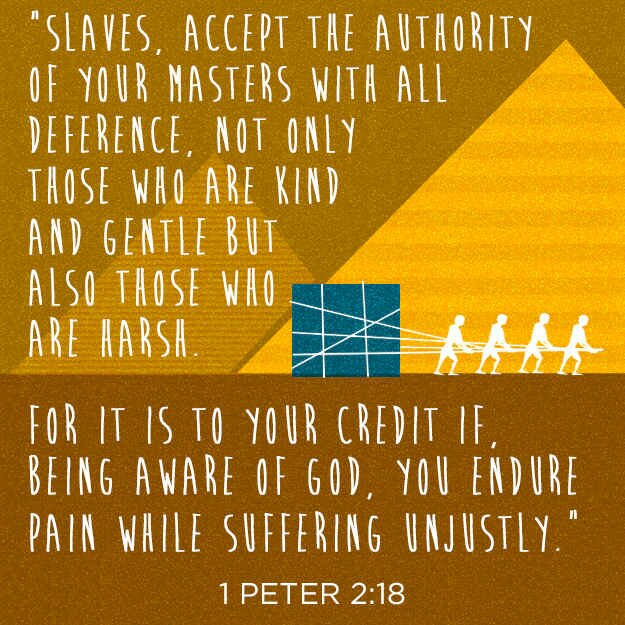
Fact from So holly BIBLE [emoji115]
Unfortunately katika dini isiyovumilia criticisms zA aina yoyote ile duniani ni hiyo ya kwako. Hadi waumini wanaitana watukufu, kitabu kitukufu nk.kanisa ambalo ndio njia kuu ya unyonyaji ya wakoloni ndio huwa linatetewa mara nyingi.
Angalia nini uovu wa kanisa katoliki Duniani
From running on donations to becoming an international holding company, the Catholic Church's financial past is littered with secrets.
So much that author Gerald Posner wrote hundreds of pages chronicling the institution's financial scandals in his new book, God's Bankers.
A little history:
Years ago, the Vatican financed its operations with donations and indulgences, free passes for sins in exchange for money. In the early days, the Vatican made little effort to keep track of finances, which meant the institution was rife with extravagant spending and embezzlement.
After teetering on the edge of bankruptcy several times, the Vatican appointed Bernardino Nogara as its new financial advisor in 1929, who straightened out the church's finances and grew a $92 million investment from Benito Mussolini into almost $1 billion.
World War II also played a huge role in the creation of the Vatican Bank, as well as the unique power it held. As the Allies imposed restrictions on bank accounts, it became harder to move money around. Nogara created the bank, called the Institute for Religious Works, in 1942 to avoid having financial transactions tracked through Western Banks. Because it resided in Vatican City, it was exempt from all wartime restrictions and became "the world's best offshore bank."
The quest to hold onto the money and power that followed resulted in shady deals, cover-ups, and scandals within the Vatican.
Among them, here are some of the craziest schemes revealed in Posner's book.
1. Making money directly off the murder of Jews during the Holocaust
A German officer admitted to having many war-time spies in the Vatican, one of them potentially being Nogara, the acclaimed and able financial advisor. During the war, Nogara began investing in Italian insurance companies which "developed into stakes that profited from the ongoing murder of Europe's Jews," Posner wrote.
These companies made money by keeping all financial assets from life insurance policies of deceased Jewish policyholders, and refusing to pay for those still living. But because the Vatican was not a direct insurer, it was never required to pay restitution after the war.
Many financial records were destroyed during the war, and the Vatican refused access to its own records. Therefore, the full scope of the scheme remains unclear.
Meanwhile, the pope at the time refused to publicly denounce anything the Third Reich was doing, even though the Vatican was one of the most informed institutions on the mass killings, long before the Allies discovered anything.
The Vatican Bank was the perfect place to hide billions in stolen wartime loot. The church also aided and saved many Nazi war criminals after the war.
2. Trying to buy fake securities from a Mafia-linked counterfeit ring
In 1973, the U.S Justice Department began looking into a potential role the Vatican Bank played in a counterfeit and stolen securities operation.
According to an 18-month FBI investigation, New York mobsters were planning to sell counterfeit corporate bonds and stock certificates to the Vatican, a $900 million payment in five installments over several months.
A Vatican cardinal planned to use the faked securities as collateral in order to obtain financing. The counterfeit bonds would be undetectable unless the Vatican Bank lost money on its investments and was unable to pay back the loans, at which point the Vatican could claim ignorance of an outside scam.
When confronted with the accusation in a secret meeting in New York, representatives of the Vatican refused to answer any questions. The then-president of the Vatican Bank, Paul Marcinkus, denied any wrongdoing. The investigation could not come up with enough information to charge Marcinkus or anyone in the Vatican.
3. Using $5 million to cover up monks who were squandering donations
After hearing reports that a group of Pauline monks in Philadelphia were involved in a financial scandal, church officials discovered that the monks in question had spent almost $20 million in charitable donations on a life of luxury.
The monks would raise funds for religious projects, yet would spend the money on cars and personal expenses. Despite their high lifestyle, they also defaulted on $4.3 million worth of church bonds. The vicar-general kept a mistress with church money, and took half the salary of friends appointed to monastery jobs.
Half the monks left the order when the Vatican ordered them to turn over their televisions, stereos, cars and credit cars.
To hide the scandal, the Vatican Bank sent more than $5 million to cover the cost of the monks' defaults and pay back creditors. The hush money also helped to avoid being sued or facing criminal charges.
4. Smugging gold into Poland to overthrow the communist regime
In an effort to fight communism in the 1980s, the Pope authorized the sending of millions in funds to help the Polish resistance, a ten million member organization in Poland called Solidarity.
Marcinkus had an Italian intelligence agent convert $3.5 million in cash into pure gold ingots, then smuggle them into Poland hidden in an SUV. The gold was placed in custom-built double bottoms and on the inside of the SUV doors.
Roberto Calvi, an Italian banker close to the Vatican Bank, said if the church's role ever came to light, it could lead to another world war and the collapse of the Vatican. "If it comes out that you're giving money to Solidarity, there won't be a stone left of St. Peters," Calvi told Marcinkus.
5. Laundering money for the Mafia and other Italian elite
Because of its sovereignty, the Vatican Bank has the ability to withhold account information from regulators and authorities. This secrecy has provided an excellent cover throughout history, as the Vatican moved money here and there to gain illegal profits and power.
"It was not much of a secret that for decades Italy's elite had used the IOR to hide their money," Posner wrote. "One internal review estimated there were approximately 9,300 accounts belonging to 'privileged citizens of Italy,' compared to only 2,500 that met the bank's strict rules. Some accounts were rumored to be proxies for the Spatola and Inzerillo crime families."
In the 1970s, the bank bought a stake in the Italian bank Ambrosiano, which was led by the banker Calvi. For two years, the Vatican Bank moved money around Ambrosiano's accounts, to allow banks and companies to pass financial inspection. Then they'd withdraw the money right after inspection, and keep a cut of the sum.
Ambrosiano later crashed in a massive scandal, and the Vatican paid a $244 million settlement without admitting to any wrongdoing. Calvi faced criminal charges, then died in a murder made to look like a suicide. Rumors swirled around who was responsible for Calvi's death – whispered possibilities including the Mafia and the Vatican.
In 2009, an Italian journalist published a book based on hundreds of internal documents smuggled out of the Vatican Bank that proved fake charity accounts were created and instead used for political donations, laundering, and embezzlement. Even donations to real charity accounts fell into the mix and ended up disappearing.
In 2012, four priests came under investigation for operating bank accounts for the Mafia to launder money.
You can find the full story of money, scandal, and power at the Vatican in Posner's book, God's Bankers.
Wazungu ndio wagunduzi wa Camera..ni nadra kupata picha zA waarabu kwasababu hawakua na technolohja yoyote ya kisayansi. Waarabu ni wala date tu. Na kujifunika vumbi isiingie kwenye PUA zao.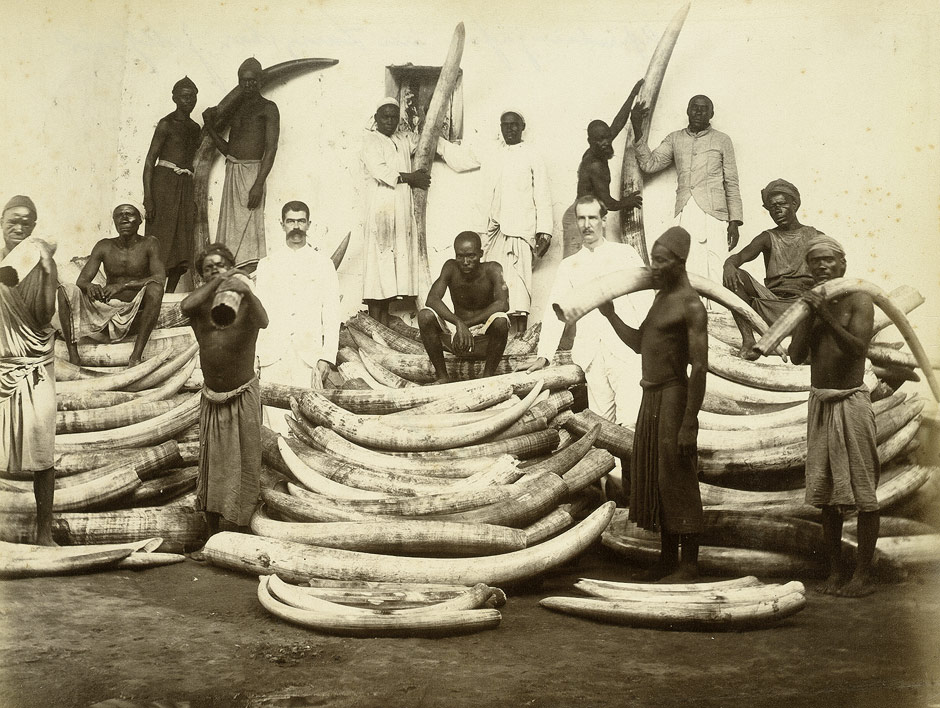
Pasco
Waarabu na biashara ya utumwa
Umeshindwa kupinga hata kimoja kihusu UJAMBAZI na Uuwaji unaofanywa na KANISA badala yake unatukana mavazi ya waislamu.Unfortunately katika dini isiyovumilia criticisms zA aina yoyote ile duniani ni hiyo ya kwako. Hadi waumini wanaitana watukufu, kitabu kitukufu nk.
Wanapenda kusalimiwa na kuvaa mavazi meupe kufuga sharubu ndefu ili kuonyesha ukuu wao.. Yesu alituonya kuhusu hawa watu two thousands years ago.
Nikiweka hapa ideas za utumwa naamini mods watafunga haka ka thread mapema. Ili ukweli usikufikieni.
We endelea kukaa kwenye box. Ujidanganye, uone umeshinda lakini dhamiri yako inakuunguza.na kukuchoma, Ndani kwa Ndani. Inakutaka ujiulize. Na wewe hutaki kuisikiliza.
Itakuhukumu siku moja.itakua ushahidi wako siku moja..
Unaweza mdanganya kila mtu duniani lakini sio Mungu aliye hai katika Yesu Kristo Bwana wetu.
Unfortunately katika dini isiyovumilia criticisms zA aina yoyote ile duniani ni hiyo ya kwako. Hadi waumini wanaitana watukufu, kitabu kitukufu nk.
Wanapenda kusalimiwa na kuvaa mavazi meupe kufuga sharubu ndefu ili kuonyesha ukuu wao.. Yesu alituonya kuhusu hawa watu two thousands years ago.
Nikiweka hapa ideas za utumwa naamini mods watafunga haka ka thread mapema. Ili ukweli usikufikieni.
We endelea kukaa kwenye box. Ujidanganye, uone umeshinda lakini dhamiri yako inakuunguza.na kukuchoma, Ndani kwa Ndani. Inakutaka ujiulize. Na wewe hutaki kuisikiliza.
Itakuhukumu siku moja.itakua ushahidi wako siku moja..
Unaweza mdanganya kila mtu duniani lakini sio Mungu aliye hai katika Yesu Kristo Bwana wetu.
Tatizo kubwa lililopo kwa waafrika sasa ni utumwa kwenye akili zetu na hasa kupitia hizi dini za hawa conqueres wetu au slave masters hasa waarabu na wazungu ila kiukweli kabisa wazungu wanajulikana kwa ukatili wao dhid ya mtu mweusi lakini once ukimgusa mwarabu ambaye ni katili mara mia ya mzungu basi wafia dini au watumwa wa hiyo dini huja juu na hata kutaka kubadilisha uhasilia wa historia ilivyo,kwahiyo usishange mkuu kuona watu kama kina naniiiii humu wakitokwa na povu kumtetea katili mwarabu,ujue damage iliyofanyika kwa mtu mweusi ni kubwa mno hivyo basi utumwa wa akili hautaisha mileleNimecheka sana watu wanavyosema sultan hajawahi kuwatesa wazanzibari...
It seems ukiwasema waarabu... mada inabadilishwa kuonyesha unaisema dini fulani...
Hapa itakuwa vita tu ya udini maana waafrika akili zetu ndivyo zilivyo...
Wewe pia ni mmoja wa wahanga wa utumwa.Tatizo kubwa lililopo kwa waafrika sasa ni utumwa kwenye akili zetu na hasa kupitia hizi dini za hawa conqueres wetu au slave masters hasa waarabu na wazungu ila kiukweli kabisa wazungu wanajulikana kwa ukatili wao dhid ya mtu mweusi lakini once ukimgusa mwarabu ambaye ni katili mara mia ya mzungu basi wafia dini au watumwa wa hiyo dini huja juu na hata kutaka kubadilisha uhasilia wa historia ilivyo,kwahiyo usishange mkuu kuona watu kama kina naniiiii humu wakitokwa na povu kumtetea katili mwarabu,ujue damage iliyofanyika kwa mtu mweusi ni kubwa mno hivyo basi utumwa wa akili hautaisha milele


