Come on now, historia darasa la tano.
Mtumbwi ulikuwa unavua samaki Africa ukapotea baharini kuibukia India. Hawakuhitaji Global Positioning System navigation.
The greatest of far-out explorers in history, Bathlomeo Diaz, Henry the Navigator, Vasco Da Gama, Ibn Battuta, Marco Polo, Christopher Columbus they all made discoveries by chance and stumbling, far from geoscience precision.
Red Indians wa Marekani wanaitwa Indians leo kwa sababu Christopher Columbus alidhani kafika India. Kumbe bana wale sio wahindi.
Vasco Da Gama aliingia chaka akielekea India kutafuta black pepper, akajikuta yuko Kariakoo.
You did not need high tech navigation to conquer world frontiers.
Hao Weusi wengi ni kutoka generation ya utumwa kama Weusi wa Marekani.
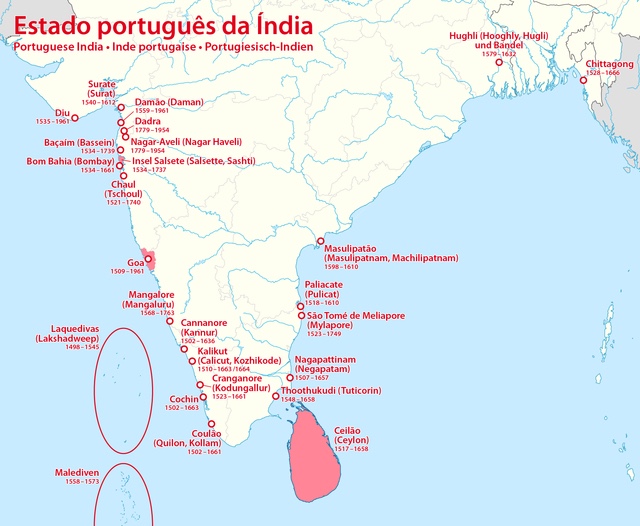
Kumbuka Ureno ilitawala baadhi ya maeneo ya India, hasa Goa tangu 1500's , kwa zaidi ya miaka 450 na koloni zake Afrika zilikuwa chini ya Gavana wa Goa.
Ureno ilikataa kuirudisha Goa hata baada ya India kupata uhuru mwaka 1947. Ilichukuliwa kinguvu na jeshi la India mwaka 1961.
Wareno wanajulikana kama wauzaji wakubwa wa watumwa duniani.
Soma zaidi chini kutoka ibtimes.com:
Among the many different ethnic groups and peoples scattered across the vast Indian sub-continent, perhaps the most unusual and surprising are The Sidis -- the “lost Africans” of India.
Long before black African slaves were moved en masse to the New World to toil in tobacco, sugar and cotton plantations, a smaller number of Africans were brought (or forcibly taken) eastward to India.
Some of these people, primarily from East Africa it is believed, were employed as soldiers, entertainers and slave-laborers by the various princely states of India.
This migration is believed to have lasted from the 12th to the 19th centuries.
Helene Basu, associate professor at Free University in Berlin, and an expert on Sidis, told Frontline: “In the 13th and 14th centuries, slaves were mainly drawn from lower Egypt, Ethiopia, Somalia and Sudan -- the Nile area. Many of them ended up being so-called 'slave-soldiers' in the armies of conquerors and Sultans all over the Islamic world.
After the 16th century, when the Europeans, specifically the Portuguese, entered the scene, slave-trade routes moved further south along the East African coast, as far as Mozambique. Slaves were drawn from the hinterland of the coastal regions, such as inland Tanzania, Malawi or even the Congo.”