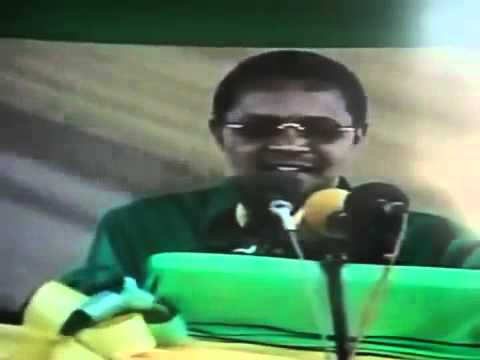
Elections 2010 Dr. Slaa kujibu maswali "Live" ITV saa moja Usiku Jumamosi Hii
Our Community
Regional Communities
Navigation
Install the app
How to install the app on iOS
Follow along with the video below to see how to install our site as a web app on your home screen.
Note: This feature may not be available in some browsers.
More options
Style variation
You are using an out of date browser. It may not display this or other websites correctly.
You should upgrade or use an alternative browser.
You should upgrade or use an alternative browser.
Elections 2010 Dr. Slaa kujibu maswali "Live" ITV saa moja Usiku Jumamosi Hii
- Thread starter Lu-ma-ga
- Start date


tempo_user1
Senior Member
- Sep 7, 2010
- 134
- 15
mkumbuke atakayekuwa anaendesha mdahalo ni Jenerali Ulimwengu na siyo Malaria Sugu

Ntemi Kazwile
JF-Expert Member
- May 14, 2010
- 2,182
- 308
Mwanaume uke baba


Mimibaba
JF-Expert Member
- Jul 1, 2009
- 4,557
- 1,294
NITAJARIBU SIMU ili kumuuliza dk slaa, endapo sitofanikiwa nitamomba generla ULIMWENGU kuniulizia maswla haya
1) Uganda imejiunga na OIC. waislam watz wanataka kujiunga. nini malengo ya Chama cha chadema ktk swala hili?
Hili ni swali lako unataka sisi tukusaidie kuuliza? Umeshakata tamaa kabla; jipe moyo utapata nafasi na utauliza swali lako. Ila jua kuwa halipo kwenye sera au ahadi za wagombea wote. Labda ungekuwa fair uwaulize wagombea wote kwa nini hawana ahadi hiyo. Lakini kama unataarifa za mgombea aliyekuahidi hivyo basi mchague huyo kama lina tija kwa watanzania wote.

Kibunango
Platinum Member
- Aug 29, 2006
- 8,468
- 2,349


payuka
JF-Expert Member
- Jun 17, 2010
- 829
- 127
NITAJARIBU SIMU ili kumuuliza dk slaa, endapo sitofanikiwa nitamomba generla ULIMWENGU kuniulizia maswla haya
1) Uganda imejiunga na OIC. waislam watz wanataka kujiunga. nini malengo ya Chama cha chadema ktk swala hili?
Mbona unapenda sana mambo ya udini???? huna maswali mengine yenye kulijenga taifa badala ya kulibomoa?
Wadau kama kunamtu anaweza kutrace IP address ya huyu bwana itakuwa bomba sana, ili tujue ni mtu wa namna gani?? maana unaweza kukuta ni mgonjwa aliyeko mirembe hospital anachezea laptop ya daktari.
Mimibaba
JF-Expert Member
- Jul 1, 2009
- 4,557
- 1,294
inamaana dk slaa kwake halipo?
Halipo ndiyo. Kwani mgombea gani analo uliyemsikia hata angalau ahadi ya mfukoni tujulishe mzee.

Companero
Platinum Member
- Jul 12, 2008
- 5,606
- 1,711
WHY SLAA COULD WIN THE PRESIDENTIAL ELECTION ON SUNDAY 31 OCTOBER 2010
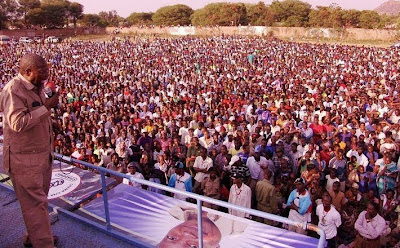
This is a sequel to my article on Election campaigns and the politics of performance. Therein we looked at the power of performance. Now we look at the power of psychology and personality.
 

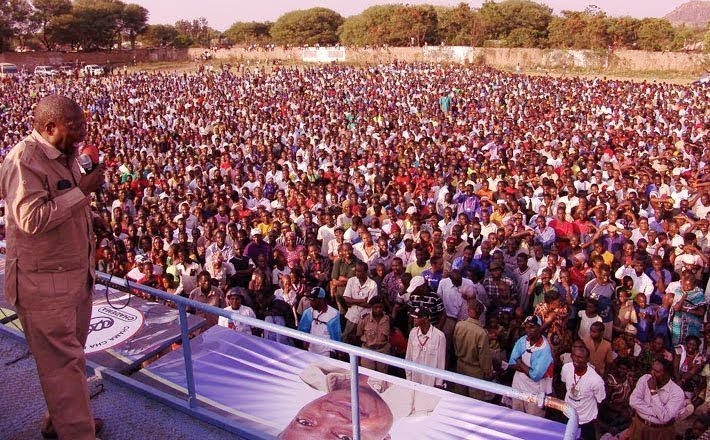
This is a sequel to my article on Election campaigns and the politics of performance. Therein we looked at the power of performance. Now we look at the power of psychology and personality.
 

It is quite clear that Dr. Wilbrod Slaas decision to run as a presidential candidate has tilted the balance of power. Now the debate is no longer about whether the ruling partys candidate will get a landslide victory - as in the previous election. Rather, it is about by how much that victory will be cut.
 

For the more optimistic, who draw inspiration from the rise of Barack Obama against all odds, everything is possible. However, to the more cautious, who have not forgotten how the then celebrated Augustine Mrema did not become the president in 1995, this is a delusional hype. Yes Slaa can is thus pitted against No Slaa cannot. 

Frankly, I think it needs nothing short of a miracle for Slaa to win. But there is something in this election that is different from previous elections. It is coming at a time when, for a combination of reasons, many more people have registered to vote. So, it is difficult to have a situation, like the one we had in 1995, when one opposition partys candidate blamed the massive crowds who attended his campaigns for his loss. Why? Simply because they could not and did not vote as they were not registered.
This time the crowd matters. As I said during the registration period, a number of people - including many youth - have registered not necessarily because they want (ed) to vote. All they need (ed) was a card that will help, particularly the unemployed, have a sense of identification when opening a bank account or, as a colleague alerted me recently, to register a Sim card. It is in this regard that at 19,670,631 - the official figure in the National Electoral Commissions (NEC) permanent voters register - nearly half of the population is eligible to vote in this election.
Now, regardless of political parties weaknesses in data storage and processing, it is a well-known fact that, in terms of membership, the ruling party can hardly boast a quarter of that number. This implies that many of those who have registered, including myself, are the swing voters. We can swing either way in terms of the personality and policy of the candidate.
 

This is what happened in 2005 when the ruling party fielded a very attractive personality. It is now happening as one of the opposition parties has fielded a very influential personality. But that is not enough to make Slaa overcome the strength or experience of the ruling party election machinery. It is another factor, what I call a reverse bystander effect, that can do this.
 

In social psychology a bystander effect happens when a number of people - the bystanders - in an emergency situation increases. This causes a diffusion of responsibility as they end up thinking that someone else will intervene. In such cases an emergency can simply pass on unattended to.
One can hardly claim it to be treason to state that in a way the country has been in a state of emergency. The war on grand corruption is too overwhelming. Its attendant impoverishment is unbearable. The voters are desperate for change. Slaa is indeed using this as his policy ace card. What I am observing so far is some sort of a reverse bystander - or maybe I should call it byvoter - effect. Increasingly, people are deciding to vote for Slaa since they think most people will vote for the ruling partys candidate anyway.
Coupled with massive voter awareness and election campaigns, it is possible that Slaa will win the presidential seat. But, again, it is also quite possible that Slaa will be a lame president since it is very likely that the ruling party will have a majority of seats in parliament. I am not sure how well prepared the Constitution is to deal with such an outcome. One thing I am very sure of: such an eventuality will open a new chapter in Tanzanias quest for democratic constitutional reform. Slaa may not become president. But his candidature is democratising us. Either way he wins.


Zak Malang
JF-Expert Member
- Dec 30, 2008
- 5,404
- 239
Mtu hatakosea akihisi kwamba kwa takriban masaa mawili jioni hii JK atakuwa hana raha pale Dr wa Ukweli atakapokuwa anatoa sera zake na kujibu maswali. Na hali hii ya kukosa raha itatokana na maswali fulani ya kuhusu ufisadi wa serikali ya CCM na viongozi wake na mabomu mengine ya ufisadi kulipuliwa.
Wadau wenye maswali kuhusu ufisadi waanze kuyanoa ili JK aonekane siyo msaliti tu kwa Watz, bali ni mnafiki mkubwa kuhusu 'vita' yake kuhusu ufisadi ambayo imgundulika kuwa ni geresha kubwa.
Wadau wenye maswali kuhusu ufisadi waanze kuyanoa ili JK aonekane siyo msaliti tu kwa Watz, bali ni mnafiki mkubwa kuhusu 'vita' yake kuhusu ufisadi ambayo imgundulika kuwa ni geresha kubwa.

Ng'wanangwa
JF-Expert Member
- Aug 28, 2010
- 10,827
- 4,176
mkumbuke atakayekuwa anaendesha mdahalo ni Jenerali Ulimwengu na siyo Malaria Sugu
hahahahaaaaaaaaaaaaaaaaaaaaaaaaaaaaaaaaaaaaaaaaaaaaaaaa!
Mpaka hapo CCM wamefulia.

Catagena
Member
- Oct 23, 2010
- 91
- 14
Ahsante kwa taarifa mdau...ukiona wapinzani wako wanahaha huku na kule, ujue umewapiku kwa kila njia. Acha wahangaike lakini Dr. Slaa sio wakubabaika jukwaani...Wakitaka, wawaombe wagombea wao wapande kwenye mdahalo uone..Kama yale ya HAWA NG"UMBI wa Ubungo hayatajitokeza mpaka kwa mgombea wao wa ktit cha urais..
MAPINDUZI YATAFANIKISHWA NA WACHACHE WENYE MOYO..NENDA KAPIGE KURA YA KIMAPINDUZI NA YAKIUZALENDO SIKU YA TAREHE 31..
MAPINDUZI YATAFANIKISHWA NA WACHACHE WENYE MOYO..NENDA KAPIGE KURA YA KIMAPINDUZI NA YAKIUZALENDO SIKU YA TAREHE 31..
Ng'wanangwa
JF-Expert Member
- Aug 28, 2010
- 10,827
- 4,176
inamaana dk slaa kwake halipo?
La nini sasa? Halina maana. Halina mashiko. Hatulitaki.
Nani ataruhusu watu kuuwawa kwa kupigwa mawe?
Nani ataruhusu wananchi kulazimishwa kula tende?
Nani atakubali kipindi cha Ramadani migahawa yote Kariakoo ifungwe?
HATUTAKI WITH A BIG NO

Kachanchabuseta
JF-Expert Member
- Mar 8, 2010
- 7,264
- 678
mimi oic ni jambo muhimu sawa sawa na wewe ukiambiwa uondoshe ubalozi wa vatican utakuwa mkali sana tu
Kachanchabuseta
JF-Expert Member
- Mar 8, 2010
- 7,264
- 678
Ng'wanangwa
JF-Expert Member
- Aug 28, 2010
- 10,827
- 4,176
Ntemi Kazwile
JF-Expert Member
- May 14, 2010
- 2,182
- 308
Mbona humsemi JK na vimada waliotapakaa nchi nzima, including vyangu

Lupweko
JF-Expert Member
- Mar 26, 2009
- 23,566
- 24,891
jee endapo atashinda, waislam wakataka kujua nini itakuwa?
Halipo kwenye ilani. Kwani JK si amesema kwamba ametekeleza ilani ya 2005 kwa 100% ? Sasa kama JK ameshatekeleza, OIC ya nini tena kwenye awamu ya tano? Ni vyema ukamuuliza JK

KakaJambazi
JF-Expert Member
- Jun 5, 2009
- 18,804
- 12,227
dr slaa usisahau kurudia kuziomba live kura za wafanyakazi, watoto wa wafanyakazi,wazazi wao,wajukuu wao, na za mahause girl wao.