Faidika na darasa la FaizaFoxy; Uliza chochote utajibiwa

Faidika na darasa la FaizaFoxy; Uliza chochote utajibiwa

Mbona hujaiweka Qur'an yenyewe na umeweka Tafsiri ya Kiswahili na maneno yako tu?

Hahahaha. Hiyo ndiyo adhabu ya kaburi kikwenu? Hata kusoma hamuelewi?

Halafu acha kutia maneno yako kwenye Qur'an. Qur'an imekamilika haihitaji maneno yako. Hayo mambo ya kaburi hayapo kwenye hiyo aya umeyaweka wewe. Achana na huo ujinga.

Soma hii bila maneno ya yeyote...

Qur'an 3:
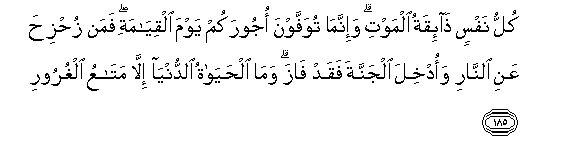
3_185.gif

185. Kila nafsi itaonja mauti. Na bila ya shaka mtapewa ujira wenu kaamili Siku ya Kiyama. Na atakaye epushwa na Moto na akatiwa Peponi basi huyo amefuzu. Na maisha ya dunia si kitu ila ni starehe ya udanganyifu. 185


"Mtapewa ujira wenu kqmili siku ya kiyama"

Punishment of the Grave

ANSWER
In the name of Allah, Most Compassionate, Most Merciful,
The punishment of the grave (adhab al-qabr) for the unbelievers and for some of the disobedient believers is established and proven by the Qur’an, narrations that reach the level of certainty (tawatur) and the consensus of the Ummah (ijma’), and it is a agreed upon concept among the Ahl al-Sunnah wa al-Jama’ah. Only some members of the deviated sect Mu’tazila and the Khawarij denied the punishment of the grave.
Many scholars throughout the ages discussed this issue and compiled short and detailed works on the subject. Scholars such as Imam al-Bukhari, Hafidh Ibn Hajar, Imam al-Suyuti, Imam al-Bayhaqi, Mulla Ali al-Qari, and others have proved the occurrence of the punishment in the grave in light of the numerous evidences found in the Qur’an and Sunnah.
Evidences from the Qur’an
1) Allah Most High says regarding the punishment for Pharaoh and his people:
“In front of the fire they will be brought morning and evening. And (the sentence will be) on the day that judgment will be established (it will be ordered) cast you the people of Pharaoh in the severest penalty.”(Surah al-Mu’min, 46).
The famous scholar, Imam Fakhruddin al-Razi (Allah have mercy on him), in his renowned exegesis Tafsir al-Kabir, commentating on this verse states:
“Our scholars have substantiated the punishment of the grave with this verse of the Holy Qur’an. They say: “The verse indicates that fire will be brought to them morning and evening and this does not refer to the day of judgment as Allah says: “And on the day judgment will be established, cast you the people of Pharaoh in the severest penalty” (i.e. it is referring to a time that is before the day of judgment, m). It also does not refer to this world, as bringing them to the fire did not occur in this world. Therefore, it becomes evident that this happened after their death and will happen before the Day of Judgment, thus it proves the establishment of the punishment in the grave. When it is established and proved for Pharaoh’s people it will also be established for others, as there is no reason for distinction.” (Tafsir al-Kabir).
Another great Tafsir scholar, Imam Ibn Kathir (Allah have mercy on him) states:
“This verse is a fundamental evidence for the Ahl al-Sunnah wa al-Jama’ah in establishing the punishment of the grave.” (Ibn Kathir, Tafsir al-Qur’an al-Adhim, 4/84).
Hafidh Ibn Hajar al-Asqalani (Allah have mercy on him) reports a narration in the explanation of this verse in his monumental commentary of Imam al-Bukhari’s Sahih, Fath al-Bari:
“Shurahbil narrates from Abd Allah ibn Mas’ud (Allah be pleased with him): “The souls of Pharaoh’s people will in the form of black birds. They are brought to the fire every morning and evening and shown their aboard” (See: Musannaf Abd al-Razzaq, Ibn Abi Hatim & Tafsir al-Mazhari).
2) Allah Most High says:
“If you could but see how the wicked (do fare) in the flood of confusion at death and the angels stretch forth their hands (saying): “Yield up your souls. This day shall you receive your reward, a punishment of shame.” (Surah al-An’am, 93).
Ibn Hajar (Allah have mercy on him) quotes Tabrani narrating from Sayyiduna Ibn Abbas (Allah be pleased with him):
“This will occur at the time of death. And the meaning of “stretching forth their hands” is smiting their faces and backs.”
3) Allah Most High says:
“If you could see when the angels take the souls of the unbelievers (at death), (how) they smite their faces and their backs (saying): “Taste the penalty of the blazing fire.” (Surah al-Anfal, 50).
The above two verses indicate that the punishment will commence at the time of death, which in effect is the punishment of the grave.
4) Allah Most High says regarding the people of Sayyiduna Nuh (Peace be upon him):
“Because of their sins they were drowned (in the flood) and were made to enter the fire (of punishment), and they found in lieu of Allah none to help.” (Surah Nuh, 250).
This verse indicates that the people of Nuh were entered into the fire directly after drowning.
5) Allah Most High says:
“Twice shall we punish them, and thereafter shall they be sent to a grievous penalty.” (Surah al-Tawba, 101).
Ibn Hajar al-Asqalani (Allah have mercy on him) states in his Fath al-Bari:
“Tabrani narrates from Sayyiduna Ibn Abbas (Allah be pleased with him) that he said: “Once on Friday the Messenger of Allah (Allah bless him & give him peace) gave a sermon……and then he said: “Allah has disgraced the hypocrites in the world and that is the first punishment and the second punishment will be in the grave.” (Fath al-Bari, 3/18).
There are many other evidences in the Qur’an that prove the punishment of the grave, which can not obviously be covered here. One may look at the following verses with the relevant commentaries: 14/27, 20/124, 32/21, 89/27, 102/1-2, and many other verses.
Evidences from the Hadith
There are many narrations of the blessed Messenger of Allah (Allah bless him & give him peace) that prove the punishment of the grave. Imam al-Suyuti (Allah have mercy on him) compiled seventy such narrations in his excellent work Sharh al-sudur fi ahwal al-mawta wa al-qubur. He says:
“The narrations with regards to the punishment of the grave have reached the level of certainty (tawatur). They have been reported by a group of Companions (Allah be pleased with them all)”, and then he named the names of theses companions. (Sharh al-Sudur).
Imam al-Taftazani states in his commentary of al-Aqa’id al-Nasafiyya:
“In general the narrations on this subject (punishment of the grave) and on many of the states of the next world are mutawatir in meaning, although the individual narrations taken separately do not attain the rank of tawatur.” (Sa’d al-Din al-Taftazani on the creed of Najm al-Din al-Nasafi, P.160).
As the scholars have mentioned that the Ahadith with regards to the punishment of the grave collectively have reached the level of tawatur, even though individually the incident of each Hadith may not have reached this level.
Scholars of the principles of fiqh (Usul al-Fiqh) categorize Tawatur into two categories:
a) Narrations that reach the level of tawatur in that all the reports are identical in terms of the wording of the hadith and the incident mentioned therein. This type of Mutawatir is known as Mutawatir bi’l lafz (verbal mutawatir).
b) Narrations that reach the level of Tawatur with the common meaning found in all of them, even though they differ in wording or incident. This is called Mutawatir bi’l-ma’na (conceptual Mutawatir). For example, one report says that Zaid gave a book, the other says, he gave a pen, the third says, he gave money. Now, collectively all the reports indicate that Zaid gave, however they differ as to what he gave. Therefore, tawatur will be considered in that Zaid gave. Examples of this kind of Mutawatir are numerous in the Hadith. (See Imam Suyuti’s Tadrib al-Rawi, 460-461).
So the narrations regarding the punishment of the grave have reached the level of tawatur bi’l Ma’na.
Imam al-Bukhari (Allah have mercy on him) formed a special chapter titled ‘Chapter regarding the punishment of the grave’ and reported six narrations in this regard.
Below are some of the narrations regarding the punishment of the grave:
1) Sayyiduna Anas ibn Malik (Allah be pleased with him) narrates that the Messenger of Allah (Allah bless him & give him peace) said: “When a individual is placed in his grave and his companions return and he even hears their footsteps, two angels come to him, make him sit and ask: “What did you use to say regarding this man (i.e. Muhammad, Allah bless him & give him peace)? The believer will say: “I bear testimony that he is the servant and Messenger of Allah” It will be said to him: “Look at your place in the fire of Hell, Allah has changed instead of it a place for you in Paradise” So he will see both of his places, (Qatada said: “we were informed that his grave would be made spacious” then he went back to the narration of Anas who said: “As far as the hypocrite and non-believer is concerned, it will be said to him: “What did you use to say regarding this man? He will reply: “I do not know, but I use to say what people use to say” It will said to him: “Neither did you know nor did you recite (the Qur’an and took guidance), and he will be hit with a iron hammer once, and he will send such a cry that everything near him will be able to hear, except the Jinns and human beings.” (Sahih al-Bukhari, no.1308 & Sahih Muslim, no. 2870).
2) Sayyida A’isha (Allah be pleased with her) narrates that a Jewish woman came to her and mentioned the punishment of the grave and said: “May Allah save you from the punishment in the grave.” A’isha (Allah be pleased with her) then asked the Messenger of Allah (Allah bless him & give him peace) regarding the punishment of the grave and he replied: “Yes, the punishment in the grave is true.” A’isha (Allah be pleased with her) said: “After that I never saw the Messenger of Allah except that he sought refuge of Allah from the punishment in the grave in every prayer that he prayed.” (Sahih al-Bukhari, no. 1306, & Sahih Muslim).
3) Abu Ayyub (Allah be pleased with him) narrates: “Once the Messenger of Allah (Allah bless him & give him peace) came out after sunset and heard a (dreadful) sound. He said: “The Jews are being punished in their graves.” (Sahih al-Bukhari, no. 1309 & Sahih Muslim, no. 2869).
4) Asma bint Abi Bakr (Allah be pleased with her) narrates: “once the Messenger of Allah stood up delivering a sermon and mentioned the tribulations of the grave that people will face in their graves. When he mentioned this, the Muslims started to shout out loudly.” (Sahih al-Bukhari, no. 1307).
5) Anas ibn Malik (Allah be pleased with him) narrates that the Messenger of Allah (Allah bless him & give peace) said: “If (I had not feared) that you would stop burying your deceased, I would have asked Allah to make you hear the punishment in the grave.” (Sahih Muslim).
6) The daughter of Khalid ibn Sa’id ibn al-As (Allah be pleased with her) narrates that she heard the Messenger of Allah (Allah bless him & give him peace) seeking refuge from the punishment of the grave. (Sahih al-Bukhari, no. 1310).
7) Abu Huraira (Allah be pleased with him) narrates: “The Messenger of Allah (Allah bless him & give him peace) used to make the following supplication: “O Allah! I seek your refuge from the punishment in the grave and from the punishment in the fire of Hell and from the tribulations of life and death and from the tribulations of the Antichrist (masih al-Dajjal).” (Sahih al-Bukhari, no. 1311).
8) Ibn Abbas (Allah be pleased with him) narrates: “The Messenger of Allah (Allah bless him & give him peace) once passed by two graves and said: “They (in the grave) are being punished not for a great thing to avoid” Then he added: “Yes, (they are being punished for a great sin), for one of them used to go about with calumnies while the other never saved himself from the splashes of urine.” Ibn Abbas said: “Then he (Sallallahu Alayhi Wasallam) took a green leaf and split it into two pieces, then placed one piece on each of the two graves and said: “Their punishment may decrease until these two pieces become dry.” (Sahih al-Bukhari, no. 1312).
9) Abu Sa’id al-Khudri narrates that the Messenger of Allah (Allah bless him & give him peace) said: “The grave is either a garden from the gardens of Paradise or a pit from the pits of Hell.” (Sunan Tirmidhi).
10) Bara ibn Azib (Allah be pleased with him) narrates that the Messenger of Allah (Allah bless him & give him peace) said: “When a believer is made to sit in his grave, then the angels come to him and he testifies that none has the right to be worshiped besides Allah and Muhammad is Allah’s Messenger. That corresponds with the statement of Allah “Allah will establish in strength those who believe, with the word that stands firm.” (14/27). Shu’ba added: “This verse was revealed concerning the punishment of the grave” (Sahih al-Bukhari, no. 1303).
The above are just some of the narrations recorded regarding the punishment in the grave (adhab al-Qabr, May Allah save us all). As mentioned previously, there are many other such narrations and up to seventy in Imam Suyuti’s work. The majority of the above mentioned narrations are recorded in Sahih al-Bukhari and should be more than sufficient for an individual seeking the truth in establishing that the punishment in the grave is true and will occur.
Consensus of the Ummah
Imam Ibn al-Qayyim al-Jawziyya (Allah have mercy on him) states in his book Kitab al-Ruh:
“This (punishment of the grave) is a well accepted fact among the Ahl al-Sunnah wa al-Jama’ah. al-Marwazi relates from Imam Ahmad (Allah have mercy on him) that only a severely deviated person who also deviates others denies the punishment of the grave.” (Kitab al-Ruh).
Hafidh Ibn Hajar (Allah have mercy on him) mentions that the Khawarij and some of the Mu’tazilites denied the punishment of the grave, where as the majority of the Mu’tazilites and all of the Ahl al-Sunnah wa al-Jama’ah opposed them.”(Fath al-Bari).
Imam al-Nasafi (Allah have mercy on him) states:
“The punishment of the grave for unbelievers and for some of the believers, and the bliss of the obedient in the grave by that Allah knows and wills, and the questioning of Munkar and Nakir are established by proofs based on authority.” (al-Aqaid al-Nasafiyya, 156-157).
Imam al-Taftazani (Allah have mercy on him) states commentating on this in his commentary:
“Some of the Mu’tazilites and the Rawafid denied the punishment of the grave because a dead man is solid (jamad) devoid of life and comprehension, so punishing him is impossible. The answer to this is that it is possible for Allah to create in all or in some of the parts a kind of life such as would be able to comprehend the pain of punishment or the enjoyment of bliss. This does not require that the soul (ruh) be returned to the body nor that it move or be troubled or show any mark of punishment, for even a drowned man in water, or the one devoured in the bellies of beasts, or the one crucified in the air is punished, although we do not see it. Whosoever ponders the wonders of Allah in the kingdoms of this world (mulk) and of Heaven (malakut) and the marvels of His Power and Might (jabarut) will not consider such things improbable, let alone impossible.” (Sharh al-Aqaid al-Nasafiyya, 160-161).
Shaykh Ibrahim al-Laqqani al-Maliki (Allah have mercy on him) states in his al-Jawhara:
“Our questioning, then the punishment of the grave, the bliss (tan’im) in the graves is established as is resurrection and the assembling of the bodies.” (Jawhara al-Tawhid with the commentary of Imam al-Bajuri, 167).
And finally Imam al-Tahawi (Allah have mercy on him) states in his famous al-Aqida al-Tahawiyya:
“We believe in the punishment of the grave for those who deserve it, and in the questioning in the grave by Munkar and Nakir about one’s Lords, one’s religion and one’s Prophet, as has come down in the narrations from the Messenger of Allah (Allah bless him & give him peace) and his Companions (Allah be pleased with them all)” (P. 14).
In light of the above evidences from the Qur’an, Hadith and the statements of the great scholars of the Sunni way, it becomes clear that the punishment of the grave is an established part of the Aqidah of the Ahl al-Sunnah wa al-Jama’ah.
However, scholars mention that despite disbelieving in this Aqidah being kufr in itself, caution should be exercised in branding somebody a Kafir for not believing in the punishment of the grave. The reason for this is that the denying of the punishment in the grave has come about due to misinterpretation (ta’weel) and as Suyuti says that a rejecter of the punishment in the grave and the questioning is severely deviated and an innovator. May Allah save us all from the tribulations of the grave (Ameen).
And Allah Knows Best
[Mufti] Muhammad ibn Adam


Haya jibu lililotolewa ni hilo( Lugha ya kigeni mwenye kuweza kutafsiria watu na afanye hivyo). Kuna aya humo na hadithi pia. Kazi kwenu kuamini au kutoamini. Muache kujibishana wenyewe kwa wenyewe sote tunawaheshimu humu kwa mafundisho yenu.
 
Punishment of the Grave

ANSWER
In the name of Allah, Most Compassionate, Most Merciful,
The punishment of the grave (adhab al-qabr) for the unbelievers and for some of the disobedient believers is established and proven by the Qur’an, narrations that reach the level of certainty (tawatur) and the consensus of the Ummah (ijma’), and it is a agreed upon concept among the Ahl al-Sunnah wa al-Jama’ah. Only some members of the deviated sect Mu’tazila and the Khawarij denied the punishment of the grave.
Many scholars throughout the ages discussed this issue and compiled short and detailed works on the subject. Scholars such as Imam al-Bukhari, Hafidh Ibn Hajar, Imam al-Suyuti, Imam al-Bayhaqi, Mulla Ali al-Qari, and others have proved the occurrence of the punishment in the grave in light of the numerous evidences found in the Qur’an and Sunnah.
Evidences from the Qur’an
1) Allah Most High says regarding the punishment for Pharaoh and his people:
“In front of the fire they will be brought morning and evening. And (the sentence will be) on the day that judgment will be established (it will be ordered) cast you the people of Pharaoh in the severest penalty.”(Surah al-Mu’min, 46).
The famous scholar, Imam Fakhruddin al-Razi (Allah have mercy on him), in his renowned exegesis Tafsir al-Kabir, commentating on this verse states:
“Our scholars have substantiated the punishment of the grave with this verse of the Holy Qur’an. They say: “The verse indicates that fire will be brought to them morning and evening and this does not refer to the day of judgment as Allah says: “And on the day judgment will be established, cast you the people of Pharaoh in the severest penalty” (i.e. it is referring to a time that is before the day of judgment, m). It also does not refer to this world, as bringing them to the fire did not occur in this world. Therefore, it becomes evident that this happened after their death and will happen before the Day of Judgment, thus it proves the establishment of the punishment in the grave. When it is established and proved for Pharaoh’s people it will also be established for others, as there is no reason for distinction.” (Tafsir al-Kabir).
Another great Tafsir scholar, Imam Ibn Kathir (Allah have mercy on him) states:
“This verse is a fundamental evidence for the Ahl al-Sunnah wa al-Jama’ah in establishing the punishment of the grave.” (Ibn Kathir, Tafsir al-Qur’an al-Adhim, 4/84).
Hafidh Ibn Hajar al-Asqalani (Allah have mercy on him) reports a narration in the explanation of this verse in his monumental commentary of Imam al-Bukhari’s Sahih, Fath al-Bari:
“Shurahbil narrates from Abd Allah ibn Mas’ud (Allah be pleased with him): “The souls of Pharaoh’s people will in the form of black birds. They are brought to the fire every morning and evening and shown their aboard” (See: Musannaf Abd al-Razzaq, Ibn Abi Hatim & Tafsir al-Mazhari).
2) Allah Most High says:
“If you could but see how the wicked (do fare) in the flood of confusion at death and the angels stretch forth their hands (saying): “Yield up your souls. This day shall you receive your reward, a punishment of shame.” (Surah al-An’am, 93).
Ibn Hajar (Allah have mercy on him) quotes Tabrani narrating from Sayyiduna Ibn Abbas (Allah be pleased with him):
“This will occur at the time of death. And the meaning of “stretching forth their hands” is smiting their faces and backs.”
3) Allah Most High says:
“If you could see when the angels take the souls of the unbelievers (at death), (how) they smite their faces and their backs (saying): “Taste the penalty of the blazing fire.” (Surah al-Anfal, 50).
The above two verses indicate that the punishment will commence at the time of death, which in effect is the punishment of the grave.
4) Allah Most High says regarding the people of Sayyiduna Nuh (Peace be upon him):
“Because of their sins they were drowned (in the flood) and were made to enter the fire (of punishment), and they found in lieu of Allah none to help.” (Surah Nuh, 250).
This verse indicates that the people of Nuh were entered into the fire directly after drowning.
5) Allah Most High says:
“Twice shall we punish them, and thereafter shall they be sent to a grievous penalty.” (Surah al-Tawba, 101).
Ibn Hajar al-Asqalani (Allah have mercy on him) states in his Fath al-Bari:
“Tabrani narrates from Sayyiduna Ibn Abbas (Allah be pleased with him) that he said: “Once on Friday the Messenger of Allah (Allah bless him & give him peace) gave a sermon……and then he said: “Allah has disgraced the hypocrites in the world and that is the first punishment and the second punishment will be in the grave.” (Fath al-Bari, 3/18).
There are many other evidences in the Qur’an that prove the punishment of the grave, which can not obviously be covered here. One may look at the following verses with the relevant commentaries: 14/27, 20/124, 32/21, 89/27, 102/1-2, and many other verses.
Evidences from the Hadith
There are many narrations of the blessed Messenger of Allah (Allah bless him & give him peace) that prove the punishment of the grave. Imam al-Suyuti (Allah have mercy on him) compiled seventy such narrations in his excellent work Sharh al-sudur fi ahwal al-mawta wa al-qubur. He says:
“The narrations with regards to the punishment of the grave have reached the level of certainty (tawatur). They have been reported by a group of Companions (Allah be pleased with them all)”, and then he named the names of theses companions. (Sharh al-Sudur).
Imam al-Taftazani states in his commentary of al-Aqa’id al-Nasafiyya:
“In general the narrations on this subject (punishment of the grave) and on many of the states of the next world are mutawatir in meaning, although the individual narrations taken separately do not attain the rank of tawatur.” (Sa’d al-Din al-Taftazani on the creed of Najm al-Din al-Nasafi, P.160).
As the scholars have mentioned that the Ahadith with regards to the punishment of the grave collectively have reached the level of tawatur, even though individually the incident of each Hadith may not have reached this level.
Scholars of the principles of fiqh (Usul al-Fiqh) categorize Tawatur into two categories:
a) Narrations that reach the level of tawatur in that all the reports are identical in terms of the wording of the hadith and the incident mentioned therein. This type of Mutawatir is known as Mutawatir bi’l lafz (verbal mutawatir).
b) Narrations that reach the level of Tawatur with the common meaning found in all of them, even though they differ in wording or incident. This is called Mutawatir bi’l-ma’na (conceptual Mutawatir). For example, one report says that Zaid gave a book, the other says, he gave a pen, the third says, he gave money. Now, collectively all the reports indicate that Zaid gave, however they differ as to what he gave. Therefore, tawatur will be considered in that Zaid gave. Examples of this kind of Mutawatir are numerous in the Hadith. (See Imam Suyuti’s Tadrib al-Rawi, 460-461).
So the narrations regarding the punishment of the grave have reached the level of tawatur bi’l Ma’na.
Imam al-Bukhari (Allah have mercy on him) formed a special chapter titled ‘Chapter regarding the punishment of the grave’ and reported six narrations in this regard.
Below are some of the narrations regarding the punishment of the grave:
1) Sayyiduna Anas ibn Malik (Allah be pleased with him) narrates that the Messenger of Allah (Allah bless him & give him peace) said: “When a individual is placed in his grave and his companions return and he even hears their footsteps, two angels come to him, make him sit and ask: “What did you use to say regarding this man (i.e. Muhammad, Allah bless him & give him peace)? The believer will say: “I bear testimony that he is the servant and Messenger of Allah” It will be said to him: “Look at your place in the fire of Hell, Allah has changed instead of it a place for you in Paradise” So he will see both of his places, (Qatada said: “we were informed that his grave would be made spacious” then he went back to the narration of Anas who said: “As far as the hypocrite and non-believer is concerned, it will be said to him: “What did you use to say regarding this man? He will reply: “I do not know, but I use to say what people use to say” It will said to him: “Neither did you know nor did you recite (the Qur’an and took guidance), and he will be hit with a iron hammer once, and he will send such a cry that everything near him will be able to hear, except the Jinns and human beings.” (Sahih al-Bukhari, no.1308 & Sahih Muslim, no. 2870).
2) Sayyida A’isha (Allah be pleased with her) narrates that a Jewish woman came to her and mentioned the punishment of the grave and said: “May Allah save you from the punishment in the grave.” A’isha (Allah be pleased with her) then asked the Messenger of Allah (Allah bless him & give him peace) regarding the punishment of the grave and he replied: “Yes, the punishment in the grave is true.” A’isha (Allah be pleased with her) said: “After that I never saw the Messenger of Allah except that he sought refuge of Allah from the punishment in the grave in every prayer that he prayed.” (Sahih al-Bukhari, no. 1306, & Sahih Muslim).
3) Abu Ayyub (Allah be pleased with him) narrates: “Once the Messenger of Allah (Allah bless him & give him peace) came out after sunset and heard a (dreadful) sound. He said: “The Jews are being punished in their graves.” (Sahih al-Bukhari, no. 1309 & Sahih Muslim, no. 2869).
4) Asma bint Abi Bakr (Allah be pleased with her) narrates: “once the Messenger of Allah stood up delivering a sermon and mentioned the tribulations of the grave that people will face in their graves. When he mentioned this, the Muslims started to shout out loudly.” (Sahih al-Bukhari, no. 1307).
5) Anas ibn Malik (Allah be pleased with him) narrates that the Messenger of Allah (Allah bless him & give peace) said: “If (I had not feared) that you would stop burying your deceased, I would have asked Allah to make you hear the punishment in the grave.” (Sahih Muslim).
6) The daughter of Khalid ibn Sa’id ibn al-As (Allah be pleased with her) narrates that she heard the Messenger of Allah (Allah bless him & give him peace) seeking refuge from the punishment of the grave. (Sahih al-Bukhari, no. 1310).
7) Abu Huraira (Allah be pleased with him) narrates: “The Messenger of Allah (Allah bless him & give him peace) used to make the following supplication: “O Allah! I seek your refuge from the punishment in the grave and from the punishment in the fire of Hell and from the tribulations of life and death and from the tribulations of the Antichrist (masih al-Dajjal).” (Sahih al-Bukhari, no. 1311).
8) Ibn Abbas (Allah be pleased with him) narrates: “The Messenger of Allah (Allah bless him & give him peace) once passed by two graves and said: “They (in the grave) are being punished not for a great thing to avoid” Then he added: “Yes, (they are being punished for a great sin), for one of them used to go about with calumnies while the other never saved himself from the splashes of urine.” Ibn Abbas said: “Then he (Sallallahu Alayhi Wasallam) took a green leaf and split it into two pieces, then placed one piece on each of the two graves and said: “Their punishment may decrease until these two pieces become dry.” (Sahih al-Bukhari, no. 1312).
9) Abu Sa’id al-Khudri narrates that the Messenger of Allah (Allah bless him & give him peace) said: “The grave is either a garden from the gardens of Paradise or a pit from the pits of Hell.” (Sunan Tirmidhi).
10) Bara ibn Azib (Allah be pleased with him) narrates that the Messenger of Allah (Allah bless him & give him peace) said: “When a believer is made to sit in his grave, then the angels come to him and he testifies that none has the right to be worshiped besides Allah and Muhammad is Allah’s Messenger. That corresponds with the statement of Allah “Allah will establish in strength those who believe, with the word that stands firm.” (14/27). Shu’ba added: “This verse was revealed concerning the punishment of the grave” (Sahih al-Bukhari, no. 1303).
The above are just some of the narrations recorded regarding the punishment in the grave (adhab al-Qabr, May Allah save us all). As mentioned previously, there are many other such narrations and up to seventy in Imam Suyuti’s work. The majority of the above mentioned narrations are recorded in Sahih al-Bukhari and should be more than sufficient for an individual seeking the truth in establishing that the punishment in the grave is true and will occur.
Consensus of the Ummah
Imam Ibn al-Qayyim al-Jawziyya (Allah have mercy on him) states in his book Kitab al-Ruh:
“This (punishment of the grave) is a well accepted fact among the Ahl al-Sunnah wa al-Jama’ah. al-Marwazi relates from Imam Ahmad (Allah have mercy on him) that only a severely deviated person who also deviates others denies the punishment of the grave.” (Kitab al-Ruh).
Hafidh Ibn Hajar (Allah have mercy on him) mentions that the Khawarij and some of the Mu’tazilites denied the punishment of the grave, where as the majority of the Mu’tazilites and all of the Ahl al-Sunnah wa al-Jama’ah opposed them.”(Fath al-Bari).
Imam al-Nasafi (Allah have mercy on him) states:
“The punishment of the grave for unbelievers and for some of the believers, and the bliss of the obedient in the grave by that Allah knows and wills, and the questioning of Munkar and Nakir are established by proofs based on authority.” (al-Aqaid al-Nasafiyya, 156-157).
Imam al-Taftazani (Allah have mercy on him) states commentating on this in his commentary:
“Some of the Mu’tazilites and the Rawafid denied the punishment of the grave because a dead man is solid (jamad) devoid of life and comprehension, so punishing him is impossible. The answer to this is that it is possible for Allah to create in all or in some of the parts a kind of life such as would be able to comprehend the pain of punishment or the enjoyment of bliss. This does not require that the soul (ruh) be returned to the body nor that it move or be troubled or show any mark of punishment, for even a drowned man in water, or the one devoured in the bellies of beasts, or the one crucified in the air is punished, although we do not see it. Whosoever ponders the wonders of Allah in the kingdoms of this world (mulk) and of Heaven (malakut) and the marvels of His Power and Might (jabarut) will not consider such things improbable, let alone impossible.” (Sharh al-Aqaid al-Nasafiyya, 160-161).
Shaykh Ibrahim al-Laqqani al-Maliki (Allah have mercy on him) states in his al-Jawhara:
“Our questioning, then the punishment of the grave, the bliss (tan’im) in the graves is established as is resurrection and the assembling of the bodies.” (Jawhara al-Tawhid with the commentary of Imam al-Bajuri, 167).
And finally Imam al-Tahawi (Allah have mercy on him) states in his famous al-Aqida al-Tahawiyya:
“We believe in the punishment of the grave for those who deserve it, and in the questioning in the grave by Munkar and Nakir about one’s Lords, one’s religion and one’s Prophet, as has come down in the narrations from the Messenger of Allah (Allah bless him & give him peace) and his Companions (Allah be pleased with them all)” (P. 14).
In light of the above evidences from the Qur’an, Hadith and the statements of the great scholars of the Sunni way, it becomes clear that the punishment of the grave is an established part of the Aqidah of the Ahl al-Sunnah wa al-Jama’ah.
However, scholars mention that despite disbelieving in this Aqidah being kufr in itself, caution should be exercised in branding somebody a Kafir for not believing in the punishment of the grave. The reason for this is that the denying of the punishment in the grave has come about due to misinterpretation (ta’weel) and as Suyuti says that a rejecter of the punishment in the grave and the questioning is severely deviated and an innovator. May Allah save us all from the tribulations of the grave (Ameen).
And Allah Knows Best
[Mufti] Muhammad ibn Adam


Haya jibu lililotolewa ni hilo( Lugha ya kigeni mwenye kuweza kutafsiria watu na afanye hivyo). Kuna aya humo na hadithi pia. Kazi kwenu kuamini au kutoamini. Muache kujibishana wenyewe kwa wenyewe sote tunawaheshimu humu kwa mafundisho yenu.
Usijali kuhusu tafsiri ya hiyo lugha naielewa na hilo bandiko nalielewa sana.

Na lilishajibiwa, ngoja nami nikubandikie jibu...

There is No Punishment of the Grave

The whole concept of Judgement Day in the Qur'an revolves around judging whether a person deserves the eternal sentence of Hell or is eligible for the eternal bliss of the Gardens. There cannot be any punishment without first being judged. Just as in the world, we do not punish a suspect without trying him at the courts. The Day of Judgement is the day every man and woman will be judged before they are sent to their final abodes.

"Every soul shall have a taste of death: And only on the Day of Judgment shall you be paid your full recompense. Only he who is saved far from the Fire and admitted to the Garden will have been victorious: For the life of this world is nothing but the enjoyment of delusion." (Qur'an 3:185)

The Qur'an, revolving around some six thousand verses with the primary theme of Heaven and Hell, depicts no picture of a dead body being punished inside his grave prior to Judgement Day. A well versed believer in the Qur'an will certainly find this very absurd. Allah always makes a special point of the punishment of people who deny His path being deferred to the Hereafter after the Day of Judgement.

Graves


When you die, you return to a state of non-existence, exactly like how you were before you were born. In this state, no thoughts, memories, feelings, time, matter or space exist. Think of someone who has passed away in your life. This person has no feelings of time, thoughts, or awareness of matter or space like someone who is not yet conceived. He or she is non-existent right now. Though you are living your life, that person no longer knows there is a universe. From their last known perspective, they just breathed their last breath. In truth, they do not have a last known perspective, as from the perspective of non-existence, they never ever lived.

Before the Day of Judgment commences, the heavens and the earth will be destroyed. According to the Qur'an, the sound of a trumpet will reverberate through the earth twice. The first time it sounds, the destruction of the heavens and the earth will happen. On the second sounding of the trumpet, billions of people who have lived on earth since the beginning of humankind's existence to that day will be raised from their graves. This is the Day of Judgement (Qur'an 39:68-70).

During the period between your death and being raised again, there is bleak nothingness where you never existed. As stated, in this state, no time, space, matter, memories or feelings exist. Allah explains this state using the example of sleep by saying that waking up from sleep is 'like resurrection' (نُشُورًا - nushoora), which is the same word used for resurrection on the Last Day (see 25:40).

"And He made the night a covering for you, and sleep a rest, and He made the day a time for Resurrection (نُشُورًا - nushoora)". (Qur'an 25:47)

The excuse that dreams can be experienced in sleep is not valid because dreams require a biologically functioning brain. With death, the brain is dead.
Death takes a person from living into a state of complete non-existence. He is re-assembled by Allah on the second blowing of the trumpet. To him, the moment his death occurred and the moment he woke up is a mere blink of an eye with no time in-between (therefore, even shorter than a blink), even though thousands of years may lie in-between. This is because there was no concept of time between death and Resurrection. Allah explains this as follows:

"All that is hidden from view in the heavens and earth belongs to Allah. The coming of the Hour of Judgement is like the blink of an eye, or even quicker: Allah has power over everything." (Qur'an 16:77)

In this bleak nothingness of death, there is no punishment at all, as nothing exists from the perspective of nothingness. Punishment is metered out once the person is judged and the verdict of Hell is declared in the manner described in the Qur'an.

The bewilderment of disbelievers raised from their graves indicates that they did not experience anything in their graves. If they were experiencing punishment in their graves, they would not be bewildered by their restored state of living. They would also not be shocked by the realisation that Allah's religion is the truth:
"The Trumpet will be blown and at once they will be rushing out from their graves towards their Lord. They will say, 'Ahh! That is it for us! Who has raised us from our sleeping-place? This is what the All-Merciful promised us. The Messengers were telling the truth.' " (Qur'an 36:51-52)
This is the true understanding of death, Hereafter, and punishment as explained by Allah.

"Do you have another book which you study? In it you find whatever you wish to find?" (Qur’an 68:37-38)

Two states of Living & Non-existence
قَالُوا رَبَّنَا أَمَتَّنَا اثْنَتَيْنِ وَأَحْيَيْتَنَا اثْنَتَيْنِ فَاعْتَرَفْنَا بِذُنُوبِنَا فَهَلْ إِلَى خُرُوجٍ مِنْ سَبِيلٍ
"The [disbelievers] said [on the Day of Judgement]: Our Lord! twice did you make us subject to death, and twice you have given us life, so we do confess our faults; is there a way to get out?" (Qur'an 40:11)
This is a testification from the disbelievers who are brought to life in the Hereafter. They testify that the period before their birth on earth was of the same essence of non-existence as the period between their death and resurrection. We know this because the same words (أَمَتَّنَا - "to cause us to be dead") is used for both cases. Only in the two other cases did they feel and experience: life on earth, and the Hereafter. In other words, there were no feelings, time, space, matter, or any sensory perception associated with living between death and resurrection just like there were not any before conception on earth. This verse reinforces the description of the bewildered minds of disbelievers upon resurrection mentioned in verse 36:51-52, and that there is no punishment of the grave.
 
Usijali kuhusu tafsiri ya hiyo lugha naielewa na hilo bandiko nalielewa sana.

Na lilishajibiwa, ngoja nami nikubandikie jibu...

There is No Punishment of the Grave

The whole concept of Judgement Day in the Qur'an revolves around judging whether a person deserves the eternal sentence of Hell or is eligible for the eternal bliss of the Gardens. There cannot be any punishment without first being judged. Just as in the world, we do not punish a suspect without trying him at the courts. The Day of Judgement is the day every man and woman will be judged before they are sent to their final abodes.

"Every soul shall have a taste of death: And only on the Day of Judgment shall you be paid your full recompense. Only he who is saved far from the Fire and admitted to the Garden will have been victorious: For the life of this world is nothing but the enjoyment of delusion." (Qur'an 3:185)

The Qur'an, revolving around some six thousand verses with the primary theme of Heaven and Hell, depicts no picture of a dead body being punished inside his grave prior to Judgement Day. A well versed believer in the Qur'an will certainly find this very absurd. Allah always makes a special point of the punishment of people who deny His path being deferred to the Hereafter after the Day of Judgement.

Graves


When you die, you return to a state of non-existence, exactly like how you were before you were born. In this state, no thoughts, memories, feelings, time, matter or space exist. Think of someone who has passed away in your life. This person has no feelings of time, thoughts, or awareness of matter or space like someone who is not yet conceived. He or she is non-existent right now. Though you are living your life, that person no longer knows there is a universe. From their last known perspective, they just breathed their last breath. In truth, they do not have a last known perspective, as from the perspective of non-existence, they never ever lived.

Before the Day of Judgment commences, the heavens and the earth will be destroyed. According to the Qur'an, the sound of a trumpet will reverberate through the earth twice. The first time it sounds, the destruction of the heavens and the earth will happen. On the second sounding of the trumpet, billions of people who have lived on earth since the beginning of humankind's existence to that day will be raised from their graves. This is the Day of Judgement (Qur'an 39:68-70).

During the period between your death and being raised again, there is bleak nothingness where you never existed. As stated, in this state, no time, space, matter, memories or feelings exist. Allah explains this state using the example of sleep by saying that waking up from sleep is 'like resurrection' (نُشُورًا - nushoora), which is the same word used for resurrection on the Last Day (see 25:40).

"And He made the night a covering for you, and sleep a rest, and He made the day a time for Resurrection (نُشُورًا - nushoora)". (Qur'an 25:47)

The excuse that dreams can be experienced in sleep is not valid because dreams require a biologically functioning brain. With death, the brain is dead.
Death takes a person from living into a state of complete non-existence. He is re-assembled by Allah on the second blowing of the trumpet. To him, the moment his death occurred and the moment he woke up is a mere blink of an eye with no time in-between (therefore, even shorter than a blink), even though thousands of years may lie in-between. This is because there was no concept of time between death and Resurrection. Allah explains this as follows:

"All that is hidden from view in the heavens and earth belongs to Allah. The coming of the Hour of Judgement is like the blink of an eye, or even quicker: Allah has power over everything." (Qur'an 16:77)

In this bleak nothingness of death, there is no punishment at all, as nothing exists from the perspective of nothingness. Punishment is metered out once the person is judged and the verdict of Hell is declared in the manner described in the Qur'an.

The bewilderment of disbelievers raised from their graves indicates that they did not experience anything in their graves. If they were experiencing punishment in their graves, they would not be bewildered by their restored state of living. They would also not be shocked by the realisation that Allah's religion is the truth:
"The Trumpet will be blown and at once they will be rushing out from their graves towards their Lord. They will say, 'Ahh! That is it for us! Who has raised us from our sleeping-place? This is what the All-Merciful promised us. The Messengers were telling the truth.' " (Qur'an 36:51-52)
This is the true understanding of death, Hereafter, and punishment as explained by Allah.

"Do you have another book which you study? In it you find whatever you wish to find?" (Qur’an 68:37-38)

Two states of Living & Non-existence
قَالُوا رَبَّنَا أَمَتَّنَا اثْنَتَيْنِ وَأَحْيَيْتَنَا اثْنَتَيْنِ فَاعْتَرَفْنَا بِذُنُوبِنَا فَهَلْ إِلَى خُرُوجٍ مِنْ سَبِيلٍ
"The [disbelievers] said [on the Day of Judgement]: Our Lord! twice did you make us subject to death, and twice you have given us life, so we do confess our faults; is there a way to get out?" (Qur'an 40:11)
This is a testification from the disbelievers who are brought to life in the Hereafter. They testify that the period before their birth on earth was of the same essence of non-existence as the period between their death and resurrection. We know this because the same words (أَمَتَّنَا - "to cause us to be dead") is used for both cases. Only in the two other cases did they feel and experience: life on earth, and the Hereafter. In other words, there were no feelings, time, space, matter, or any sensory perception associated with living between death and resurrection just like there were not any before conception on earth. This verse reinforces the description of the bewildered minds of disbelievers upon resurrection mentioned in verse 36:51-52, and that there is no punishment of the grave.
Hii huja quote amesema nani na ni makubaliano ya scholars wepi?
 
Mbona sijaona huo wazni kama upo?

Mimi nataka wazni wa neno kuowana kama hujui sema hujui pa kuanzia.

Nina hakika hujui swarfu weye ndo mana unakimbia kimbia.
Unaniuliza mm kuowana kwa kiarabu ni nini.

Nikuulize wewe hapo uko wapi wazni wa neno kuowana kwa kiarabu....?

Sasa wewe sema wazni uzito wakati kiswarfu ina maana yake utachekwa sana weye.
Mbona sijauona huo wazni au hauna?

Mmi nataka uulete au useme haujui.ila porojo zingine sisikilizi.kwa sababu ninalotaka lipo wazi.
Nimekujibu zamaaani rudia hapa, bofya hayo maandishi ya blue hapo chini ukajisomee tena kama utaelewa:

Faidika na darasa la FaizaFoxy; Uliza chochote utajibiwa

Sent using Jamii Forums mobile app
 
Hapa hakuna sehemu kuna wazni wa neno kuowana bali hyo ni كيفية namna ndoa inavyokuwa ndio maana wakatajwa mpaka mashahidi hapo.sasa mashahidi wa wazni wapi na wapi?

Nataka Waznu wa neno KUOWANA kwa kiarabu kwa mujibu wa swarfu ni upi waznu huo..?

safuher na Zurri

Darsa linaendelea. Sasa someni Kiarabu, .kisha mtafsiri kama mnaweza, hapo bado sijaingia kwa Qurtubi, ntawachanganya. Soma...

نكاح

يتم توقيع عقد الزواج في حفل نكاح يقترح فيه العريس أو ممثله على العروس أمام شاهدين على الأقل مع ذكر تفاصيل المهر. يظهر العريس والعروس إرادتهم الحرة بتكرار كلمة qabul ("أقبل" بالعربية) ثلاث مرات. ثم يوقع الزوجان والشاهدان على العقد مما يجعل الزواج قانونيًا وفقًا للقانون المدني والديني. باتباع العادات الإسلامية التقليدية يمكن للعروس والعريس مشاركة قطعة من الفاكهة الحلوة مثل التاريخ. إذا تم فصل الرجال والنساء عن الحفل دعا ممثل من الذكور دعا الوالي بالنيابة عن العروس خلال النقاه
Haya vijana. Hiyo ndiyo Nikah ya Kiislam imefafanuliwa kwa Kiarabu.

Bado hamjaelewa? Kama bado, semeni nini ambacho hamjaelewa hapo?

Sent using Jamii Forums mobile app
 
Mkuu huyu anakataa hadithi za mtume ni sawa anamkataa huyo mtume mwenyewe mafundisho yake.

Ni sawa na john tu tena bora john anakubali kuwa mtume alioa binti mdogo ila huyu hzo hadithi hazikubali.kiufupi huyu ni muovu zaidi kwa sababu anaharibu uislamu kuliko wasiokuwa waislamu.

Wasiokuwa waislamu wanakubali kuwa zipo hadithi za mtume ila huyu anaejitia muislamu hakubali.sijui bado anajivika uislamu
Nasema tena hivi acha utoto, mpaka najiuliza kwanini hujibu maswali yangu ?

Nayaandika tena hapa mara ya mwasho, kama hutojibi usini quote.

1. Niambie maana ya "...adhabu mara mbili" ni ipi ? (Na nia aya nyingine zaidi ya tatu zinazo thibtisha uwepowa maisha ya kaburini na adhabu zake, achilia mbali hadithi lukuki za mtume wa Allah amani iwe juu yake)

2. Tashahudi (Kikao cha mwisho hasa kabla ya kutoa salamu katika sala, huwa unaisomaje ?

3. Sala yako umejifunza wapi ?

Nasema tena acha utoto, kama huwezi kujibu haya maswali, usini quote

Sent using Jamii Forums mobile app
 
Lazima uingie "mitini" kwa sababu bado u finyu sana na mwenzako yu finyu sana ndiyo maana nikawaita mshirikiane, mfanye shirk, na bado shirk yenu haikufua dafu.

Hivi mlidhani mnaweza kushindana na aya za Quran kwa viji hadith vyenu ambavyo hamna ujuzi navyo?

Umeshindwa kujibu swali jepesi kabisa "kuowana" ndiyo nini Kiarabu?

Nasubiri bado aya zako kuhusu adhabu ya kaburi, mwambie na huyo kijana anaejiita Zurri akusaidie. Hahaha kaja na aya akaitia maneno yake, nikampa za USO, Hana nyingine.

Kumbukeni, huwa sikisii.
Nacheka sana, nimekwambia aya ziko nyingi, sasa kujadiliana na mtu mjinga na asie jibu maswali tunapoteza muda tu.

Nimekuuliza maswali matatu najus huwezi kuyajibu mpaka unakufa, ila nimekuuliza kwa ajili ya kuonyesha ujinga wako ulipo, halafu ajabu ni maswali marahisi sana.
 
Mkuu huyu anakataa hadithi za mtume ni sawa anamkataa huyo mtume mwenyewe mafundisho yake.

Ni sawa na john tu tena bora john anakubali kuwa mtume alioa binti mdogo ila huyu hzo hadithi hazikubali.kiufupi huyu ni muovu zaidi kwa sababu anaharibu uislamu kuliko wasiokuwa waislamu.

Wasiokuwa waislamu wanakubali kuwa zipo hadithi za mtume ila huyu anaejitia muislamu hakubali.sijui bado anajivika uislamu

Sent using Jamii Forums mobile app
Kichaka chake anachokitumia ni kukwepa maswali, yaani hajibu maswali. Anaweka aya ambayo hazina munasaba kabisa.

Huyu anatoka katika Uislamu bila kujijua, wakati Allah anasema :

Na anacho kupeni Mtume chukueni, na anacho kukatazeni jiepusheni nacho. Na mcheni Mwenyezi Mungu. Hakika Mwenyezi Mungu ni Mkali wa kuadhibu. (al Ha'shiri : 7 )

Sasa unajiuliza huyu ibada zake anazipata wapi, maana mafunzo ya ibada zote unayapata kwenye Hadithi za mtume.

Kwenye Qur'aan kuna aya ya twahara tu na tena haichambui namna ya udhu wote kwa jumla, bali aya imezungumzia kwa ujumla.
 
Nacheka sana, nimekwambia aya ziko nyingi, sasa kujadiliana na mtu mjinga na asie jibu maswali tunapoteza muda tu.

Nimekuuliza maswali matatu najus huwezi kuyajibu mpaka unakufa, ila nimekuuliza kwa ajili ya kuonyesha ujinga wako ulipo, halafu ajabu ni maswali marahisi sana.
Sasa mjinga mimi mjinga wewe ambae nakuwekea aya za Quran unaona hujapewa jibu na bado unatamba kuwa eti "nacheka sana". Kuna cha kuchekesha kwenye Qur'an? Sikushangai mmeshatajwa katika Qur'an watu kama wewe. Soma...

Qur'an 83:
83_29.gif

29. Kwa hakika wale walio kuwa wakosefu walikuwa wakiwacheka walio amini. 29

83_30.gif

30 Na wanapo pita karibu yao wakikonyezana. 30

83_31.gif

31. Na wanapo rudi kwa watu wao hurudi nao wamefurahi. 31

83_32.gif

32. Na wanapo waona husema: Hakika hawa ndio khasa walio potea. 32

83_33.gif

33. Na wao hawakutumwa wawe walinzi juu yao. 33

83_34.gif

34. Basi leo walio amini ndio watawacheka makafiri, 34


Sasa rudia swali maswali yako moja moja nikuoneshe nilivyokwisha kukujibu, hapa huchomoki. Umekazania "aya zipo nyingi, aya zipo nyingi" lakini huziweki, kulikoni?

Siku hizi ntakuwa nawapa darsa la kuifahamu Qur'an, kuwa ndiyo "Furqan" Pekee na siyo porojo zenu. Anza...

Kabla hujarudia maswali yako, ambayo nimekujibu kwa kukukumbusha kwa Qur'an, nakuwekea aya ya Qur'an halafu wewe sema hapa umeelewa nini? Au huiamini Qur'an kuwa ndiyo yenye mafundisho yaliyo wazi wazi?

Qur'an 3:
اللَّهُ لَا إِلَٰهَ إِلَّا هُوَ الْحَيُّ الْقَيُّومُ - 3:2
. Mwenyezi Mungu, hakuna mungu ila Yeye Aliye Hai, Msimamizi wa yote milele. 2

3_3.gif

3. Amekuteremshia Kitabu kwa haki, kinacho sadikisha yaliyo kuwa kabla yake. Na aliteremsha Taurati na Injili 3

3_4.gif

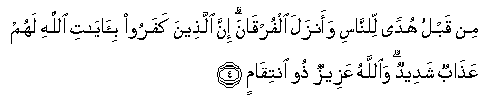
4. Kabla yake, ziwe uwongofu kwa watu. Na akateremsha Furqani (Upambanuo). Hakika walio zikanusha Ishara za Mwenyezi Mungu watakuwa na adhabu kali. Na Mwenyezi Mungu ni Mwenye nguvu na Mwenye kulipa. 4

3_5.gif

5. Hakika Mwenyezi Mungu hakifichiki chochote kwake, duniani wala mbinguni. 5

3_6.gif

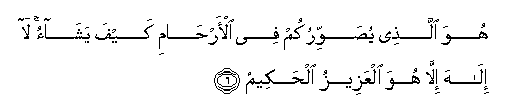
6. Yeye ndiye anaye kuundeni ndani ya matumbo ya wazazi kwa namna apendayo. Hapana mungu ila Yeye, Mwenye nguvu na Mwenye hikima. 6

3_7.gif

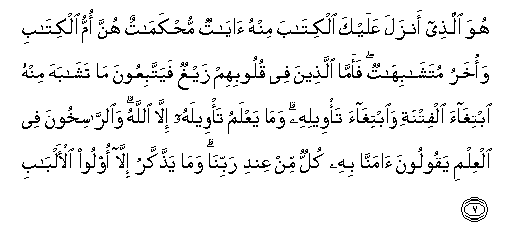
7. Yeye ndiye aliye kuteremshia Kitabu hichi. Ndani yake zimo Aya muhkam, zenye maana wazi. Hizo ndizo msingi wa Kitabu hichi. Na ziko nyengine za mifano. Ama wale ambao nyoyoni mwao umo upotovu wanafuata zile za mifano kwa kutafuta fitna, na kutafuta maana yake; na wala hapana ajuaye maana yake ila Mwenyezi Mungu. Na wale wenye msingi madhubuti katika ilimu husema: Sisi tumeziamini, zote zimetoka kwa Mola wetu Mlezi. Lakini hawakumbuki hayo isipo kuwa wenye akili.
7
 
Sasa mjinga Mimi mjinga wewe ambae nakuwekea aya za Quran unaona hujapewa jibu. Rudia swali lakes moja moja nikuoneshe nilivyokwisha kujibu, hapa huchomoki. Umekazania aya zipo nyingi aya zipo nyingi lakini huziweki, kulikoni?

Siku hizi ntakuwa nawapa darsa lamkuigahamu Qur'an kuwa ndiyo "Furqan" Pelee na siyo porojo zenu. Anza...

Kabla hujarudia maswali yako, ambayo nimekukumbusha bunkwa Qur'an, nakuwekea aya ya Qur'an halafu wewe sema hapa umeelewa nini? Au huiamini Qur'an kuwa ndiyo yenye mafundisho yaliyo wazi wazi?

Qur'an 3:
اللَّهُ لَا إِلَٰهَ إِلَّا هُوَ الْحَيُّ الْقَيُّومُ - 3:2
. Mwenyezi Mungu, hakuna mungu ila Yeye Aliye Hai, Msimamizi wa yote milele. 2

3_3.gif

3. Amekuteremshia Kitabu kwa haki, kinacho sadikisha yaliyo kuwa kabla yake. Na aliteremsha Taurati na Injili 3

3_4.gif

4. Kabla yake, ziwe uwongofu kwa watu. Na akateremsha Furqani (Upambanuo). Hakika walio zikanusha Ishara za Mwenyezi Mungu watakuwa na adhabu kali. Na Mwenyezi Mungu ni Mwenye nguvu na Mwenye kulipa. 4

3_5.gif

5. Hakika Mwenyezi Mungu hakifichiki chochote kwake, duniani wala mbinguni. 5

3_6.gif

6. Yeye ndiye anaye kuundeni ndani ya matumbo ya wazazi kwa namna apendayo. Hapana mungu ila Yeye, Mwenye nguvu na Mwenye hikima. 6

3_7.gif

7. Yeye ndiye aliye kuteremshia Kitabu hichi. Ndani yake zimo Aya muhkam, zenye maana wazi. Hizo ndizo msingi wa Kitabu hichi. Na ziko nyengine za mifano. Ama wale ambao nyoyoni mwao umo upotovu wanafuata zile za mifano kwa kutafuta fitna, na kutafuta maana yake; na wala hapana ajuaye maana yake ila Mwenyezi Mungu. Na wale wenye msingi madhubuti katika ilimu husema: Sisi tumeziamini, zote zimetoka kwa Mola wetu Mlezi. Lakini hawakumbuki hayo isipo kuwa wenye akili. 7
Unaweka aya mahala ambapo sio pake.

Nimekuuliza tashahudi yako kwenye sala huwa unaisomaje, hujibu. Huu ni utoto.

Sasa jibu maswali niliyo kuuliza.

Hapa mpaka akili ikukae sawa. Usilete utoto, na hatulei ujinga. Si unakataa adhabu za kaburi na ushahidi huna nimekuwekea aya, umekimbia sasa nimekuuliza ukisali unasali vipi, na Tashahud unaisomaje ? Hujibu swali.
 
Hapa hakuna sehemu kuna wazni wa neno kuowana bali hyo ni كيفية namna ndoa inavyokuwa ndio maana wakatajwa mpaka mashahidi hapo.sasa mashahidi wa wazni wapi na wapi?

Nataka Waznu wa neno KUOWANA kwa kiarabu kwa mujibu wa swarfu ni upi waznu huo..?


Sent using Jamii Forums mobile app
Neno "kuowana" ni nini Kiarabu chake?

Naona darsa limeanza kukuingia na sasa umebadili neno "wazni" na unaanza kuandika "waznu".

Nilikwambia, ingawa unajifanya kichwa ngumu lakini darsa litakuingia tu. Huwa sikisii.

Alhamdulillah.
 
Unaweka aya mahala ambapo sio pake.

Nimekuuliza tashahudi yako kwenye sala huwa unaisomaje, hujibu. Huu ni utoto.

Sasa jibu maswali niliyo kuuliza.

Hapa mpaka akili ikukae sawa. Usilete utoto, na hatulei ujinga. Si unakataa adhabu za kaburi na ushahidi huna nimekuwekea aya, umekimbia sasa nimekuuliza ukisali unasali vipi, na Tashahud unaisomaje ? Hujibu swali.

Sasa unaanza kufuru nyingine ya kutaka aya za Qur'an zisitumike. Na kila ulipowekewa aya ya Qur'an huoni kuwa Qur'an ilishajibu zamaaani swali lako. Tashahud tulikujibu kwa aya za Qur'an na kama hujazisoma wala isiwe taabu, ntakuwekea tena. Qur'an haijawahi kunichosha kuitumia kuwapa darsa watu kama wewe.mpaka.muielewe ni nini maana ya Furqan. Kumbuka hilo.

Sikushangai, mmeandikwa...

Qur'an 7:
7_40.gif

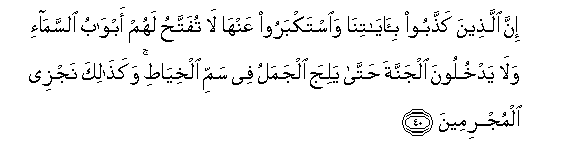
40. Hakika wale wanao zikanusha Ishara zetu na wakazifanyia kiburi hawatafunguliwa milango ya mbingu, wala hawataingia Peponi mpaka apite ngamia katika tundu ya sindano. Na hivi ndivyo tunavyo walipa wakosefu. 40
 
Sasa unaanza kufuru nyingine ya kutaka aya za Qur'an zisitumike. Na kila ulipowekewa aya ya Qur'an huoni kuwa Qur'an ilishajibu zamaaani swali lako. Tashahud tulikujibu kwa aya za Qur'an na kama hujazisoma wala isiwe taabu, ntakuwekea tena. Qur'an haijawahi kunichosha kuitumia kuwapa darsa watu kama wewe.mpaka.muielewe ni nini maana ya Furqan. Kumbuka hilo.

Sikushangai, mmeandikwa...

Qur'an 7:
7_40.gif

40. Hakika wale wanao zikanusha Ishara zetu na wakazifanyia kiburi hawatafunguliwa milango ya mbingu, wala hawataingia Peponi mpaka apite ngamia katika tundu ya sindano. Na hivi ndivyo tunavyo walipa wakosefu. 40
Nacheka sana, nakuuliza jambo la Tashahudi unaweka aya nyingine kabisa, huu ni ujinga na inaonyesha huna elimu.

Bora kidogo tungekuwa tunaongela udhu ukaweka aya ya udhu, hapo sawa. Usilo lijua hata namna ya kutumia nususi kuna taka elimu yaani unasomea, sio aya za kiyama unazitumia kuelezea maisha ya ulimwengu (huu nimekupa mfano tu), huu ni ujinga. Kwahiyo sijapinga kutumia aya nimepinga kutokuweka kwako aya mahala pake, na huu ndio ujinga mlio nao wengi sana.

Maswali yangu matatu hujajibu hata moja. Najua huo uwezo huna na nimekuuliza vile ili watu waone ujinga wako ulipo. Nataka nikuongezee moja lakini naona kama nakuonea hivi.

Hujajibu swali la Tashahud, na huna uwezo huo. Aya zile hazizungumzii sala, ndio hapo ujinga wako ulipo. Nimekuliza Tashahudi ukiwa unasali unaisomaje ? Hujibu, kwahiyo yale yaliyopo kwenye zile aya ndio huwa unayasoma kwenye kikao cha Tashahud ? Acha utoto wewe mama.

Kama hujui Tashahud ni kikako hukaliwa unapo hitimisha sala, yaani kikao cha mwisho unapo hitimisha sala, pale kuna dua unaomba, na dua ile ni wajibu kuiomba. Sasa wewe kwenye kile kikao huwa unasoma nini ? Hujibu. MJINGA MKUBWA wewe mama. Unanipotezea muda.
 
Nacheka sana, nakuuliza jambo la Tashahudi unaweka aya nyingine kabisa, huu ni ujinga na inaonyesha huna elimu.

Bora kidogo tungekuwa tunaongela udhu ukaweka aya ya udhu, hapo sawa. Usilo lijua hata namna ya kutumia nususi kuna taka elimu yaani unasomea, sio aya za kiyama unazitumia kuelezea maisha ya ulimwengu (huu nimekupa mfano tu), huu ni ujinga. Kwahiyo sijapinga kutumia aya nimepinga kutokuweka kwako aya mahala pake, na huu ndio ujinga mlio nao wengi sana.

Maswali yangu matatu hujajibu hata moja. Najua huo uwezo huna na nimekuuliza vile ili watu waone ujinga wako ulipo. Nataka nikuongezee moja lakini naona kama nakuonea hivi.

Hujajibu swali la Tashahud, na huna uwezo huo. Aya zile hazizungumzii sala, ndio hapo ujinga wako ulipo. Nimekuliza Tashahudi ukiwa unasali unaisomaje ? Hujibu, kwahiyo yale yaliyopo kwenye zile aya ndio huwa unayasoma kwenye kikao cha Tashahud ? Acha utoto wewe mama.

Kama hujui Tashahud ni kikako hukaliwa unapo hitimisha sala, yaani kikao cha mwisho unapo hitimisha sala, pale kuna dua unaomba, na dua ile ni wajibu kuiomba. Sasa wewe kwenye kile kikao huwa unasoma nini ? Hujibu. MJINGA MKUBWA wewe mama. Unanipotezea muda.
Sikushangai, unapoziona aya za Qur'an huzisomi? Au unaogopa kuzisoma kwani jibu la kutamba kwako kuwa eti "nacheka sana". tulishakupa kitambo, rudia...

Kuna cha kuchekesha kwenye Qur'an? Sikushangai mmeshatajwa katika Qur'an watu kama wewe. Soma...

Qur'an 83:

83_29.gif

29. Kwa hakika wale walio kuwa wakosefu walikuwa wakiwacheka walio amini. 29


83_30.gif

30 Na wanapo pita karibu yao wakikonyezana. 30

83_31.gif

31. Na wanapo rudi kwa watu wao hurudi nao wamefurahi. 31
83_32.gif

32. Na wanapo waona husema: Hakika hawa ndio khasa walio potea. 32

83_33.gif

33. Na wao hawakutumwa wawe walinzi juu yao. 33

83_34.gif

34. Basi leo walio amini ndio watawacheka makafiri, 34
 
nakuuliza jambo la Tashahudi unaweka aya nyingine kabisa,
Hujajibu swali la Tashahud, na huna uwezo huo. Aya zile hazizungumzii sala, ndio hapo ujinga wako ulipo. Nimekuliza Tashahudi ukiwa unasali unaisomaje ? Hujibu, kwahiyo yale yaliyopo kwenye zile aya ndio huwa unayasoma kwenye kikao cha Tashahud ? Acha utoto wewe mama.

Kama hujui Tashahud ni kikako hukaliwa unapo hitimisha sala, yaani kikao cha mwisho unapo hitimisha sala, pale kuna dua unaomba, na dua ile ni wajibu kuiomba. Sasa wewe kwenye kile kikao huwa unasoma nini ? Hujibu. MJINGA MKUBWA wewe mama. Unanipotezea muda.
Acha uongo kijana. Nilikujibu kwenye post namba 9212 kuhusu Tashahud lakini sikushangai kuwa huielewi Quran. Rudia...

Halafu unaniuliza kuhusu "Tashahud"? Hivi huwa hamuisomi Qur'an? Soma hiyo, useme nini hicho...

Qur'an 3:
وَإِذْ أَخَذَ اللَّهُ مِيثَاقَ النَّبِيِّينَ لَمَا آتَيْتُكُم مِّن كِتَابٍ وَحِكْمَةٍ ثُمَّ جَاءَكُمْ رَسُولٌ مُّصَدِّقٌ لِّمَا مَعَكُمْ لَتُؤْمِنُنَّ بِهِ وَلَتَنصُرُنَّهُ ۚ قَالَ أَأَقْرَرْتُمْ وَأَخَذْتُمْ عَلَىٰ ذَٰلِكُمْ إِصْرِي ۖ قَالُوا أَقْرَرْنَا ۚ قَالَ فَاشْهَدُوا وَأَنَا مَعَكُم مِّنَ الشَّاهِدِينَ - 3:81
81. Na pale Mwenyezi Mungu alipo chukua ahadi kwa Manabii: Nikisha kupeni Kitabu na hikima, kisha akakujieni Mtume mwenye kusadikisha mliyo nayo, ni juu yenu mumuamini na mumsaidie. Akasema: Je, mmekiri na mmekubali kushika agizo langu juu ya hayo? Wakasema: Tumekubali. Akasema: Basi shuhudieni, na Mimi ni pamoja nanyi katika kushuhudia.
81
 
Acha uongo kijana. Nilikujibu kwenye post namba 9212 kuhusu Tashahud lakini sikushangai kuwa huielewi Quran. Rudia...

Halafu unaniuliza kuhusu "Tashahud"? Hivi huwa hamuisomi Qur'an? Soma hiyo, useme nini hicho...

Qur'an 3:
وَإِذْ أَخَذَ اللَّهُ مِيثَاقَ النَّبِيِّينَ لَمَا آتَيْتُكُم مِّن كِتَابٍ وَحِكْمَةٍ ثُمَّ جَاءَكُمْ رَسُولٌ مُّصَدِّقٌ لِّمَا مَعَكُمْ لَتُؤْمِنُنَّ بِهِ وَلَتَنصُرُنَّهُ ۚ قَالَ أَأَقْرَرْتُمْ وَأَخَذْتُمْ عَلَىٰ ذَٰلِكُمْ إِصْرِي ۖ قَالُوا أَقْرَرْنَا ۚ قَالَ فَاشْهَدُوا وَأَنَا مَعَكُم مِّنَ الشَّاهِدِينَ - 3:81
81. Na pale Mwenyezi Mungu alipo chukua ahadi kwa Manabii: Nikisha kupeni Kitabu na hikima, kisha akakujieni Mtume mwenye kusadikisha mliyo nayo, ni juu yenu mumuamini na mumsaidie. Akasema: Je, mmekiri na mmekubali kushika agizo langu juu ya hayo? Wakasema: Tumekubali. Akasema: Basi shuhudieni, na Mimi ni pamoja nanyi katika kushuhudia.
81
Mama kuwa muelewa.

Aya ipi inakuruhusu na kukuambia wewe kuwa kwenye kikao cha mwisho soma kitu hiki na hiki.toa aya

Wewe kama unategemea aya inatakiwa utoe ushahidi wa uhakika na sio ushahidi kama wa wasiokuwa waislamu wanapotaka kuuchafua uislamu.

Sent using Jamii Forums mobile app
 
Unaulizaje swali ambalo nakuuliza mimi sasa.
Nimekuambia tokea mwanzo wewe ndo unipe WAZNU wa neno kuowana kwa kiarabu tutatumia wazni upi ?

Hili swali ni mwiba sana kwako kwa sababu hata huo waznu sijui kama unafahamu.na ujiha wako ungine ni kuwa nimegundua hujui nahwu ndo mana unachanganyikiwa nikisema wazni na waznu.

Kama wewe mkweli na unaelewa unachosema basi ilikuwa unipe maana ya neno kuowana itakuwa katika wazni upi ikiletwa kwa. Kiarabu?

Kumbuka neno "fankihuu" wewe umesema ni kuowana.sasa kwa nini usiseme kuwa maana yake ni hilo neno?

Na ukisema maana yake ni hilo neno nitakudai ushahidi kwa mizani ipi ya kiswarfu umetumia mpaka useme fankihuu ni kuowana wakati misingi ya swarfu inakataa kabisa?

Naomba maana ya kouwana kwa kiarabu iweke kama kweli ulikuwa hubahatishi.hapa ni jambo dogo tu nipe kwa kiarabu neno kuowana tutaliandika vipi?

Alafu ukinipa hilo neno tuende kwenye aya sasa kuangalia.

Tehehhe
Neno "kuowana" ni nini Kiarabu chake?

Naona darsa limewnza kukuingia na sasa umebadili neno "wazni" na unaanza kuandika "waznu".

Nilikwambia, ingawa unajifanya kichwa ngumu lakini darsa litakuingia tu. Huwa sikisii.

Alhamdulillah.

Sent using Jamii Forums mobile app
 
Akijibu kwa ushahidi mkuu namtafutia mume mana nahisi hana mume huyu bibi kwa ujuha wake huu mume gani atakaa na kijeba huyu.
Nacheka sana, nakuuliza jambo la Tashahudi unaweka aya nyingine kabisa, huu ni ujinga na inaonyesha huna elimu.

Bora kidogo tungekuwa tunaongela udhu ukaweka aya ya udhu, hapo sawa. Usilo lijua hata namna ya kutumia nususi kuna taka elimu yaani unasomea, sio aya za kiyama unazitumia kuelezea maisha ya ulimwengu (huu nimekupa mfano tu), huu ni ujinga. Kwahiyo sijapinga kutumia aya nimepinga kutokuweka kwako aya mahala pake, na huu ndio ujinga mlio nao wengi sana.

Maswali yangu matatu hujajibu hata moja. Najua huo uwezo huna na nimekuuliza vile ili watu waone ujinga wako ulipo. Nataka nikuongezee moja lakini naona kama nakuonea hivi.

Hujajibu swali la Tashahud, na huna uwezo huo. Aya zile hazizungumzii sala, ndio hapo ujinga wako ulipo. Nimekuliza Tashahudi ukiwa unasali unaisomaje ? Hujibu, kwahiyo yale yaliyopo kwenye zile aya ndio huwa unayasoma kwenye kikao cha Tashahud ? Acha utoto wewe mama.

Kama hujui Tashahud ni kikako hukaliwa unapo hitimisha sala, yaani kikao cha mwisho unapo hitimisha sala, pale kuna dua unaomba, na dua ile ni wajibu kuiomba. Sasa wewe kwenye kile kikao huwa unasoma nini ? Hujibu. MJINGA MKUBWA wewe mama. Unanipotezea muda.

Sent using Jamii Forums mobile app
 
Huyu mama bwana.

Yani abandika tu
Unaweka aya mahala ambapo sio pake.

Nimekuuliza tashahudi yako kwenye sala huwa unaisomaje, hujibu. Huu ni utoto.

Sasa jibu maswali niliyo kuuliza.

Hapa mpaka akili ikukae sawa. Usilete utoto, na hatulei ujinga. Si unakataa adhabu za kaburi na ushahidi huna nimekuwekea aya, umekimbia sasa nimekuuliza ukisali unasali vipi, na Tashahud unaisomaje ? Hujibu swali.

Sent using Jamii Forums mobile app
 
Kichaka chake anachokitumia ni kukwepa maswali, yaani hajibu maswali. Anaweka aya ambayo hazina munasaba kabisa.

Huyu anatoka katika Uislamu bila kujijua, wakati Allah anasema :

Na anacho kupeni Mtume chukueni, na anacho kukatazeni jiepusheni nacho. Na mcheni Mwenyezi Mungu. Hakika Mwenyezi Mungu ni Mkali wa kuadhibu. (al Ha'shiri : 7 )

Sasa unajiuliza huyu ibada zake anazipata wapi, maana mafunzo ya ibada zote unayapata kwenye Hadithi za mtume.

Kwenye Qur'aan kuna aya ya twahara tu na tena haichambui namna ya udhu wote kwa jumla, bali aya imezungumzia kwa ujumla.
Mkuu hamna namna.

Huyu mama ni mchafu wa itikadi mana hakuns namna ingine.


Sent using Jamii Forums mobile app
 
Back
Top Bottom