Kashatafuna Uboga huyo, si ndio michezo yao hiyo.
Sent using
Jamii Forums mobile app
Brave Father Musala
When a priest raised the alarm about rampant sex abuse in the Catholic Church in Uganda, he was sacked and accused of being gay. Patience Akumu caught up with him in Kampala.
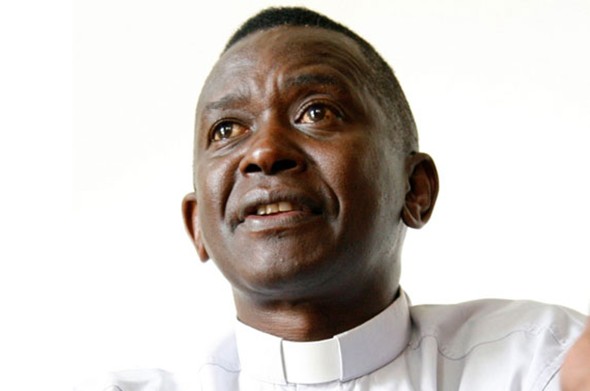
‘Injustice must be resisted,’ insists Father Musala. © redpepper.co.ug
Father Anthony Musala waltzed into Uganda from England, where he was ordained, with change up his sleeves. When the Irish national of Ugandan origin released a music video in which he danced with abandon in his priestly robes, he dazzled and shocked conservative African Catholics.
‘It was something they had never seen,’ Musala, now 57, recalls. ‘A priest was supposed to be quiet.’
At first, he pulled crowds with his dashing celebrations of mass, his passionate and compassionate preaching and use of lively music. But there was an uncomfortable undercurrent. In a country of unbridled homophobia, Musala welcomed gay people to his church. He dared to speak openly about sexual abuse of boys and girls by Catholic priests who he said kept secret wives and children. As a confessor and counsellor, he knew how prevalent it was.
Last year, Musala wrote to the Archbishop of Kampala, Cyprian Lwanga, asking him to investigate sexual abuse and warning that the issue threatened to blow up in Uganda as it had in Europe. He also advised that the Catholic Church revise the rules on celibacy.
The authorities reacted by suspending him indefinitely and accusing him of homosexuality. The Archbishop said that the priest’s letter was threatening the morality of the Church and its followers. But Musala maintains that the Church, like the State, is using homosexuality as a diversionary tactic in order not to tackle the issue of clerical sex abuse.
‘They are promoting injustice. They do not know what it means to be abused,’ he adds, referring to his experience of molestation, aged 16, in a Catholic school. ‘There is hostility towards victims whenever they come out.’
‘I am an African. I belong here’
Still, many lauded Musala for his brave revelations, hoping it would lead to a proper investigation. But allegations about Musala’s sexuality soon took centre stage.
‘They asked me on television if I am gay – in a country that wants to imprison gay people for life.’
Like many countries in Africa, Uganda clings to old British colonial laws criminalizing homosexuality, but a new law has increased penalties. Passed last December, it was presented in parliament as a ‘Christmas present’ to the populace.
At first, the Catholic Church in Uganda had not supported the bill, saying it went against Catholic teaching. But later, together with the Orthodox and Anglican Church, it endorsed it.
US evangelists further fanned the anti-gay flames. It was they, according to Musala, who first sowed the seeds of homophobia in the country after a lesbian wedding in Wandegeya – a small Ugandan town known for a robust night life – in 1999.
‘Two women held a ceremony. They moved on to the street and people were fascinated. They were curious. They were not homophobic like they are today.’
But it was not all innocent curiosity. Solomon Male and Martin Ssempa, renowned anti-gay pastors, approached the media, saying that the ‘gay agenda’ was out to destroy Africa.
‘That is when they began to say that gay people were getting money from Americans; that they were sick and they needed help.’
Musala alleges that the subject of celibacy is particularly sensitive in Uganda because top Catholic leaders have sired children. He blames this on Africa’s culture of patriarchy that views women as no more than baby-making machines.
‘They feel like they too should get a woman to have a child with. It does not matter [to them] if she is under-age.’
The priest regrets that while the Church chooses to condemn some atrocities in the country, like the rampant violation of political rights, it metes out similar injustices itself.
Musala appealed to the Vatican against the decision to suspend him six months ago but received no reply.
In desperation, he travelled to London to ask the Archdiocese of Westminster, where he was ordained, to intervene. Or, at the very least, to provide him with employment, not necessarily as a priest, so he could meet his daily needs. The diocese would not get involved, fearing that any comments might prejudice the final decision at the Vatican.
‘There is a deep tradition of silence in the church. Westminster could not speak out, even if what the Catholic Church in Uganda is doing would not be allowed in England,’ he says. ‘In England they were forced to speak only because the church was sued for similar violations.’
Musala returned to Uganda but his quest for justice has left him weary and uncertain, a shadow of his old enthusiastic self.
‘I do not know where to go. I do not know what to do. Do you think the civil courts can help me?’ he asks.
But he is not daunted. Not even by Ugandans who dismiss his criticisms as evidence of foreign influence.
‘Injustice must be resisted. I am African. I belong here.’