Je unajua ni kwanini siku ina saa 24?

Je unajua ni kwanini siku ina saa 24?

kayaman twende naye mdogomdogo tu mbona mweupe tu huyu? Ukali ni dalili ya kutojiamini na kujihami

Wewe unaejiami mbona unashindwa kuja? Nakuapia njoo, halafu kesho uje kuhadithia humu JF, kama utaweza. Unangoja nini?

Kama huijuwi Kariakoo, mwaka huu utaijuwa, tafadhal.
 
Wewe unaejiami mbona unashindwa kuja? Nakuapia njoo, halafu kesho uje kuhadithia humu JF, kama utaweza. Unangoja nini?

Kama huijuwi Kariakoo, mwaka huu utaijuwa, tafadhal.

Acha mikwara faiza angalia usije simulia wewe...! Tuache majigambo ya jamvini kariakoo kubwa taja mtaa na nyumba! Tiptop mpaka hapo mbona dakika tuu
 
Last edited by a moderator:
Kama unajua tafadhali nielimishe, nimeijiwa tu na hili wazo from nowhere nikiwaza ingekuwaje siku ingekuwa na saa 48 kwa mfano; ningeweza kuwa na muda zaidi?

Si nadra siku kuisha ukiwa na viporo vya majukumu...

Anyways back to the topic, ni nani aliamua siku iwe na saa 24 tu?

Hicho ni kipimo cha muda ambacho ni standard na kinasaidia sana katika kutekeleza majukumu. Hata kama ingekuwa siku ina saa 48 mambo yangekuwa vile vile kwani ni sawa na kuongeza speed ya instrument inayopima muda.

Wazo lako au swali linatokana na kutokuwa na skills za kutunza muda yaani time management. Ukupata skills hizo basi hautauliza tena kitu kama hicho.
 
Acha mikwara faiza angalia usije simulia wewe...! Tuache majigambo ya jamvini kariakoo kubwa taja mtaa na nyumba! Tiptop mpaka hapo mbona dakika tuu

Lumumba na Udoe, ghorofa ni moja tu hapo kona, ghorofa ya tano. Floor nzima ni yangu, tafadhal,

Tena si kuhadithia tu na picha ntaweka.
 
Lumumba na Udoe, ghorofa ni moja tu hapo kona, ghorofa ya tano. Floor nzima ni yangu, tafadhal,

Tena si kuhadithia tu na picha ntaweka.

So ndio huo mtaa usio na lami unaokuja kukutana na mtaa wa rufiji?
 
Kama unajua tafadhali nielimishe, nimeijiwa tu na hili wazo from nowhere nikiwaza ingekuwaje siku ingekuwa na saa 48 kwa mfano; ningeweza kuwa na muda zaidi?

Si nadra siku kuisha ukiwa na viporo vya majukumu...

Anyways back to the topic, ni nani aliamua siku iwe na saa 24 tu?

Why is a day divided into 24 hours?

December 2003 answer: It appears that the Egyptians were responsible for the 24 hour day. The Eqyptians were fond of counting in base twelve (instead of base 10 which is commonly used today). This is thought to be because they counted finger joints instead of fingers. Each of your fingers has three joints, so if you count by pointing to finger joints with your thumb you can count to twelve on each hand. This might seem arbitrary, but is actually just a strange as counting in base ten simply because we have ten digits.

(Feb 2004 Update: Thanks to a "Curious" reader for pointing out that another reason the Egyptians (and Indians) liked counting in base 12 is that 12 has a larger number of integer factors than 10. ie. 12/6=2, 12/4=3, 12/3=4, 12/2=6, while 10/5=2 and 10/2=5 are all there are for the number 10).


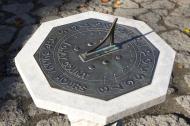
The Egyptians divided the clock into 12 hours of daytime and 12 hours of night-time (or alternatively 10 hours between sunrise and sunset, an hour for each twilight period and 12 hours of darkness). This is known because of various sundials from the period which have been found to be marked with hours. Interestingly this means that hours started out changing in length with the seasons (as the amount of daylight vs. darkness changes).


There is a more in-depth explanation for the division of night-time into 12 hours which is based on the number of "decan" stars which were seen to rise during summer nights in Ancient Egypt. A "decan" star was a star which rose just before sunrise at the beginning of a 10-day "decade" in Ancient Egypt. 36 "decan" stars marked the passage of a year for the Egyptians (or 36 10 day periods). During summer nights, 12 decan stars rose - one for each "hour".


However, hours did not have a fixed length until the Greeks decided they needed such a system for theoretical calculations. Hipparchus proposed dividing the day equally into 24 hours which came to be known as equinoctial hours (because they are based on 12 hours of daylight and 12 hours of darkness on the days of the Equinoxes). Ordinary people continued to use the seasonally varying hours for a long time. Only with the advent of mechanical clocks in Europe in the 14th Century, did the system we use today become common place.


Follow-up question (Apr 2006):
How come there are 36 decan stars but only 12 in a night. Why aren't there 18 each night? Are some of the decan stars below the southern horizon part of the year. I don't understand how 36 of them equal 24 hours; it seems to me they'd equal 24/36 = 2/3 hour each. What am I missing here?


There was not a decan star every modern hour. Remember that the length of darkness in the summer is actually less than 12 "modern" hours. The Egyptian "hours" marked by the rising of each of the 12 decan stars were shorter than what we call an hour now. As I said, hours did not have a fixed length until much later when people decided that would be useful! Initially 12 hours was always the length of night/day, but the hours themselves changed in length with the seasons, and a nighttime hour would have been different to a daytime hour! The "hours" in this era were only equal to our current hours on the equinoxes.

Is there a list of the decan stars somewhere?

I could not find a list of decan stars (or star groups in some cases), in modern terminology. A list of them in Egyptian terms is here.
 
The earth spins on it axis for 24horas hii ni somo la form 1 labda mtaala wa siku hizi haufundishi hili au mleta mada hakupita form one?
 
Kwa kifupi wamisri waliipenda namba 12 kuliko 10 kwa kuwa inagawanyika mara nyingi kuliko 10...ndio maana hata kwa mwaka kuna miezi 12.

Wayahudi pia ndio maana hata mahesabu ya idadi utakuta ni kumi na mbili kama mitumi isipokuwa manabii wakubwa wanatambulika ni kumi na moja.
 
The earth spins on it axis for 24horas hii ni somo la form 1 labda mtaala wa siku hizi haufundishi hili au mleta mada hakupita form one?

Time_Clock-620x587.gif

Idadi ya masaa si mahesabu ya dunia kujizungusha katika safari yake kulizunguka jua. Kwamba siku za dunia kulizunguka jua ni kipimo sahihi sababu ya kutumia majira ya siku ya usiku na mchana, lakini masaa ni matakwa aliyopanga binadamu na imepokeleka hivyo.

Mapokea katika kutumia masaa 12 au 24 ni kizungu, asili yetu waafrika hatukutumia masaa ila mwenekano wa jua kuchomoza, utosini na kuzama kisha usiku. Usiku kipimo kilikuwa nyota ambazo zilizoeleka za jioni, usiku kati na nyota ya asubuhi.
 
Kama unajua tafadhali nielimishe, nimeijiwa tu na hili wazo from nowhere nikiwaza ingekuwaje siku ingekuwa na saa 48 kwa mfano; ningeweza kuwa na muda zaidi?

Si nadra siku kuisha ukiwa na viporo vya majukumu...

Anyways back to the topic, ni nani aliamua siku iwe na saa 24 tu?

220px-Equatorial_sundial_topview.gif


[h=1]Hour[/h]The hour (common symbol: h or hr) is a unit of measurement of time. In modern usage, an hour comprises 60 minutes, or 3,600 seconds. It is approximately 1/24 of a mean solar day.
An hour in the Universal Coordinated Time (UTC) time standard can include a negative or positive leap second, and may therefore have a duration of 3,599 or 3,601 seconds for adjustment purposes.
Although it is not a standard defined by the International System of Units, the hour is a unit accepted for use with SI, represented by the symbol h.[SUP][1]

[/SUP]

[h=2]Etymology[edit][/h]The Middle English word ure first appears in the 13th century, as a loanword from Old French ure, ore, from Latin hōra.[SUP][2][/SUP]Hora, in turn, derives from Greek ὥρα ("season, time of day, hour").[SUP][2][/SUP] In terms of the Proto-Indo-European language, ὥραis a cognate of English year and is derived from the Proto-Indo-European word *i̯ēro- ("year, summer").
The ure of Middle English and the Anglo-French houre gradually supplanted the Old English nouns tīd (which survives in Modern English as tide) and stund. Stund is the progenitor of stound, which remains an archaic synonym for hour. Stund is related to the Old High German stunta, from Germanic *stundō ("time, interval, while").


[h=2]History[edit][/h]Main article: History of timekeeping devices
Ancient Egyptians used sundials that "divided a sunlit day into 10 parts plus two "twilight hours" in the morning and evening."[SUP][3][/SUP] The Greek astronomer, Andronicus of Cyrrhus, oversaw the construction of a horologion called the Tower of the Windsin Athens during the first century BCE. This structure tracked a 24-hour day using both sundials and mechanical hour indicators.[SUP][3][/SUP]
Ancient Sumer and India also divided days into either one twelfth of the time between sunrise and sunset or one twenty-fourth of a full day. In either case the division reflected the widespread use of a duodecimal numbering system. The importance of 12 has been attributed to the number of lunar cycles in a year. InChina, the whole day was divided into twelve parts.
Astronomers in Egypt's Middle Kingdom (9th and 10th Dynasties) observed a set of 36 decan stars throughout the year. These star tables have been found on the lids of coffins of the period. The heliacal rising of the next decan star marked the start of a new civil week, which was then ten days. The period from sunset to sunrise was marked by 18 decan stars. Three of these were assigned to each of the two twilight periods, so the period of total darkness was marked by the remaining 12 decan stars, resulting in the 12 divisions of the night. The time between the appearance of each of these decan stars over the horizon during the night would have been about 40 modern minutes. During the New Kingdom, the system was simplified, using a set of 24 stars, 12 of which marked the passage of the night.
Ancient Sinhalese in Sri Lanka divided a solar day into 60 Peya (now called Sinhala Peya). One Sinhala Peya was divided into 24 Vinadi. Since 60 (peya) x 24 (vinadi) = 24 (hours) x 60 (minutes), one Vinadi is equal to one present-day standard minute.
Earlier definitions of the hour varied within these parameters:

  • One twelfth of the time from sunrise to sunset. As a consequence, hours on summer days were longer than on winter days, their length varying with latitude and even, to a small extent, with the local weather (since it affects theatmosphere's index of refraction). For this reason, these hours are sometimes called temporal, seasonal, or unequal hours. Romans, Greeks and Jews of the ancient world used this definition (although Jews of the Old Testament period did not have a word for hour and did not keep time this way);[SUP][4][/SUP] as did the ancient Chinese and Japanese. The Romans and Greeks also divided the night into three or four night watches, but later the night (the time between sunset and sunrise) was also divided into twelve hours. When, in post-classical times, a clock showed these hours, its period had to be changed every morning and evening (for example by changing the length of its pendulum), or it had to keep to the position of the Sun on the ecliptic (see Prague Astronomical Clock).
  • One twenty-fourth of the apparent solar day (between one noon and the next, or between one sunset and the next). As a consequence hours varied a little, as the length of an apparent solar day varies throughout the year. When a clock showed these hours it had to be adjusted a few times in a month. These hours were sometimes referred to as equal orequinoctial hours.
  • One twenty-fourth of the mean solar day. See solar time for more information on the difference to the apparent solar day. When an accurate clock showed these hours it virtually never had to be adjusted. However, as the Earth's rotation slows down, this definition has been abandoned. See UTC.
 
View attachment 213602

Idadi ya masaa si mahesabu ya dunia kujizungusha katika safari yake kulizunguka jua. Kwamba siku za dunia kulizunguka jua ni kipimo sahihi sababu ya kutumia majira ya siku ya usiku na mchana, lakini masaa ni matakwa aliyopanga binadamu na imepokeleka hivyo.

Mapokea katika kutumia masaa 12 au 24 ni kizungu, asili yetu waafrika hatukutumia masaa ila mwenekano wa jua kuchomoza, utosini na kuzama kisha usiku. Usiku kipimo kilikuwa nyota ambazo zilizoeleka za jioni, usiku kati na nyota ya asubuhi.

Mkuu hapa hatuongelei dunia kulizunguka jua bali dunia kujizungusha kwenye muhimili wake!
 
qur-an 36:38 "na jua linapita katika vituo vyake.mwendo huo ni makadirio ya mwenye nguvu(za kulipitisha),mwenye ujuzi(masaa 12 ya mchana ufanye kazi kwa kiasi na masaa 12 ya usiku upumzike kwa kiasi) muhimu:qur-an 18:54 ".....mwanadamu ni kiumbe anayependa mijadala"
hiyo ni Jiografia ya Kidato cha III au hata STD IV
Huu muda wa masaa 12 unapatikana tu katika Ikweta napo kuna miezi tu
walio juu ya Tropik ya Kansa na wale wa Tropik ya Kaprikon masaa ya mchana huwa yanafikia hata masaa 18 na miezi mingine zaidi ya masaa 6 tu jua huonekana
Wale Waislamu walioko Nchi za Arctic (Norway Scandinavia) watakujuza kuwa mchana huzidi hizo saa
Kwetu Tanzania Jua likiwa kusini mizi hii ya Disemba masaa huwa yanazidi hadi 13 kwa Miji ya Kigoma
na hapa Tanzania ifikapo miezi ya march usiku huwa mrefu yaani saa moja ni giza kabisa huko Kigoma

350px-World_map_with_tropic_of_capricorn.svg.png

Z

Kwa hiyo jua linapokuwa mistari ya juu au chini masaa yanabadilika na hili ni somo pana sana
ila kwa jibu la mleta Mada Lukansola wavumbuzi wa zamani wa masaa walitumia Mti uliowekwa ardhini na kukifuatiia kivuli chake
Au mchanga kuuweka ndani ya chupa kubwa yenye sehemu mbili zilizogawanyika na hivyo wakaweza kugawa na kupata mahesabu ya masaa 12 wakagawa wakapata dakika 60 ni kila saa moja vivyo hivyo dakika kwenda sekunde
Miezi, Wiki / majuma walitumia misimu ya mvua vuli na kiangazi na nyota angani
sundial-analemma.jpg
hourglass.jpg
http://www.time-for-time.com/history.htm
 
Mkuu hapa hatuongelei dunia kulizunguka jua bali dunia kujizungusha kwenye muhimili wake!

Nimejaribu kupanua wigo kwa maana ya kujua kwa nini kuna majira mbalimbali katika mwaka na hujirudia muda ule ule ni hoja ya wazi kuwa mahesabu ya dunia kulizunguka jua kwa siku 360 ni sahihi, lakini kuhuu masaa 24 ni mpangilio usiokuwa na hoja maalum ila mapokeo na uamuzi tu. Hoja ya dunia kulizunguka jua lengo langu kuleta upambanuzi zaidi kuuhusu masaa 24.
 
Back
Top Bottom