27 March 2026
Mantashe - 'Mizigo inayoelekea Afrika ya Kusini kupitia Mlango-Bahari wa Hormuz haipati usumbufu '
Mantashe - Kutokuwa marafiki na waMarekani na Israel kumetuponya kutopata dhahma kutoka Iran
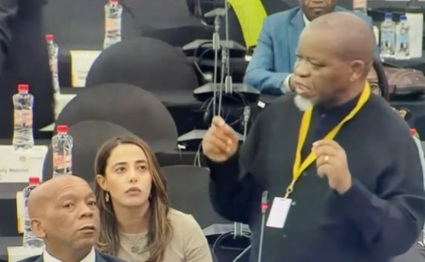
Picha ya skrini: Habari za gazeti la Mwananchi la Afrika ya Kusini
Waziri wa Madini na Petroli wa Afrika Kusini Gwede Mantashe amewasihi Waafrika Kusini wasiwe na hofu kuhusu uhaba wa mafuta unaowezekana, akisema meli zinazobeba mizigo na vifaa vinavyoelekea Afrika Kusini zinapita katika Mlango-Bahari wa Hormuz bila usumbufu au vitisho vya mashambulizi kutoka Iran.
Mantashe alikuwa akijibu maswali katika Bunge la Kitaifa Jumatano huku Waafrika Kusini wakiendelea kuwa na wasiwasi mkubwa kuhusu uhaba wa mafuta na ongezeko kubwa la bei ya mafuta, ambalo linatarajiwa kuanza wiki ijayo.
Ugavi wa mafuta
Vita vya Marekani na Israel dhidi ya Iran vimeibua hofu duniani, huku mzozo huo ukitarajiwa kuathiri pakubwa bei ya mafuta na usambazaji.
Wakati wa kikao katika Bunge la Kitaifa, Mbunge wa ANC Fasiha Hassan alimuuliza Mantashe kama mipango ya usalama wa usambazaji wa mafuta ya petroli ya Afrika Kusini inatosha kuhimili usumbufu unaoendelea wa usambazaji wa nje unaotokana na vita.
Mantashe alisema hakuna haja ya kuogopa.
"Utaona kwamba swali hilo linaonyesha hofu. Na kama mfanyakazi wa migodi, jambo moja nililojifunza mapema maishani ni kwamba hofu huua. Licha ya hatari kubwa ya kijiografia, ikiwa ni pamoja na kuvurugika kwa njia za meli za Mashariki ya Kati, mpangilio wa sasa wa usalama wa usambazaji wa mafuta wa Jamhuri unabaki imara."
Mlango-Bahari wa Hormuz
Mantashe alisema msimamo uliotajwa wa Iran unapaswa kupunguza hofu ya usumbufu wa haraka wa usambazaji, haswa kwa Afrika Kusini.
"Nina uhakika ukifuatilia habari, utafahamu kwamba Mlango-Bahari wa Hormuz unaruhusu mizigo inayokwenda Afrika Kusini bila usumbufu. Kwa hivyo hiyo ina maana kwamba tuna nafasi ya kudumisha usambazaji thabiti kwa muda mrefu. Hakupaswi kuwa na hofu nchini Afrika Kusini; hofu huua."
Mahitaji ya Iran
Mantashe aliongeza kuwa Iran ilizipa nchi hizo mahitaji mawili ya kuendelea kufanya kazi katika eneo la bahari, akisema Pretoria ilikuwa ikiwashirikisha washirika wa Brics kuhusu mzozo wa sasa.
"Katika Mlango-Bahari wa Hormuz, kuna sharti moja wanalotaka, unaweza kulipitia ikiwa wewe si mshirika au katika muungano na Marekani na Israeli. Ikiwa huna muungano na hizo, unaruhusiwa kulipitia. Sharti la pili ni kwamba utalipa Iran kwa rial, si dola."
"Huo ni uamuzi wa kisiasa uliochukuliwa na Iran," Mantashe aliwaambia wabunge. "Mizigo yote inayokuja Afrika Kusini inaruhusiwa kupita. Hakuna hofu ya hili. Isipokuwa unataka kujitambulisha na [Marekani] na Israeli."
SA mdogo anaweza kufanya
Huku bei ya petroli ikitarajiwa kutangazwa wiki ijayo, Mantashe alisema hakuna kitu kikubwa ambacho Afrika Kusini inaweza kufanya kuhusu mishtuko ya bei ya mafuta.
"Kuna mambo tunayoweza kufanya na mambo ambayo hatuwezi kufanya. Ikiwa mizigo haiwezi kutufikia kutoka Mashariki ya Kati, basi ifike Aprili 1, unaweza kutarajia ongezeko la bei. Njia pekee ambayo Afrika Kusini mwa Afrika inaweza kupunguza hatari ya mshtuko wa bei ya mafuta ni kwa nchi hiyo kuendeleza rasilimali zake za mafuta."
"Njia pekee ni kuchimba, kuchimba, kuchimba na kuzalisha mafuta yetu wenyewe. Tusipofanya hivyo, hatutashinda hatari za vita. Kila wakati tunapochimba, tunapelekwa mahakamani. Kama tungekuwa na mahakama maalum zinazoshughulikia kesi hizo, ingesaidia sana kutatua tatizo hilo. Kama tuna vyanzo vyetu vya nishati, tunaweza kupunguza," Mantashe alisema.
Wakati huo huo, huku Waafrika Kusini wakijiandaa kwa ongezeko kubwa la bei ya petroli linalokaribia, wakazi katika Rasi ya Cape tayari wanahisi shida.
Ripoti za mgao katika vituo vya huduma vya Garden Route na kuchelewa kwa usafirishaji wa dizeli kumeibua wasiwasi, hasa ndani ya sekta ya kilimo katika wakati muhimu katika kalenda ya kilimo.
Mbali na dizeli, bei za pembejeo, kama vile mbolea, pia zinaongezeka kutokana na ongezeko lililopangwa la gharama za mafuta na dizeli.
Bei za petroli
Kulingana na data ya hivi karibuni ya Mfuko Mkuu wa Nishati (CEF) wa Afrika Kusini mwezi Machi, bei za petroli na dizeli zinaonyesha kupungua kwa kiasi kikubwa kwa bei kutokana na vita vinavyoendelea nchini Iran.
Takwimu za CEF zinaonyesha kuwa petroli ya oktani 93 ina upungufu wa urejeshaji wa 507, huku petroli ya oktani 95 ikiwa na upungufu wa urejeshaji wa 562.
Madereva wanaotumia magari yanayotumia dizeli wanakabiliwa na kupanda mlima kwa kasi zaidi.
Bei ya dizeli (0.05% sulfuri) ina upungufu wa uzalishaji wa 937, huku dizeli yenye (0.005% sulfuri) ikiwa 950.
Utabiri
Ikiwa utabiri huu hautabadilika, madereva nchini Afrika Kusini watalazimika kubeba uchungu wa kupanda milima mikubwa tarehe 1 Aprili.
- Petroli 93: Ongezeko la R5.07 kwa lita;
- Petroli 95: Ongezeko la R5.62 kwa lita;
- Dizeli 0.05%: Ongezeko la R9.37 kwa lita;
- Dizeli 0.005%: Ongezeko la R9.50 kwa lita; na
- Mafuta ya taa yanayotoa mwanga: Ongezeko la R11.00 kwa lita.
Chanzo: The Citizen, Afrika Kusini
‘Cargo destined for SA passing through Strait of Hormuz without interruption’ – Mantashe
Screengrab: The Citizen News
South Africa’s Mineral and Petroleum Resources Minister Gwede Mantashe has urged South Africans not to panic about a possible fuel shortage, saying vessels carrying cargo and supplies destined for South Africa are passing through the Strait of Hormuz without interruption or threats of attacks from Iran.
Mantashe was responding to questions in the National Assembly on Wednesday as South Africans remained deeply concerned about fuel shortages and a possible massive spike in fuel prices, which is expected to kick in next week.
Fuel supply
The United States and Israel’s war in Iran has ignited global panic, with the conflict expected to severely impact fuel prices and supply.
During the session in the National Assembly, ANC MP Fasiha Hassan asked Mantashe whether South Africa’s petroleum supply security arrangements are adequate to withstand sustained external supply disruptions resulting from the war.
Mantashe said there was no need to panic.
“You will see that the question reflects panic. And as a mineworker, one thing I learnt early in life is that panic kills. Despite the heightened geopolitical risk, including the disruption to the Middle East shipping routes, the Republic’s current petroleum supply security arrangement remains robust.”
Strait of Hormuz
Mantashe said Iran’s stated position should allay fears of immediate supply disruption, especially to South Africa.
“I am sure if you monitor the news, you will appreciate that the Strait of Hormuz allows cargo that goes to South Africa without interruption. So that means we have a chance to maintain a stable supply for a long period of time. There should be no panic in South Africa; panic kills.”
Iran’s requirements
Mantashe added that Iran gave countries two requirements to continue operating in the strait, saying Pretoria was engaging Brics partners about the current conflict.
“In the Strait of Hormuz, there is one requirement they want, you can go through if you are not a partner or in alliance with the US and Israel. If you are not in alliance with those, you are allowed through. The second requirement is that you will pay Iran in rial, not dollars.
“That is a political decision taken by Iran,” Mantashe told MPs. “All cargo coming to South Africa is allowed through. There is no fear of this. Unless you want to identify yourself with [the US] and Israel.”
Little SA can do
With the price of petrol expected to be announced next week, Mantashe said there was little South Africa could do about oil price shocks.
“There are things we can do and things we can’t do. If cargo cannot reach us from the Middle East, then come 1 April, you can expect a price increase. The only way that SA could mitigate the risk of oil price shocks would be for it to develop its own petroleum resources.
“The only way is to drill, drill, drill and produce our own petroleum. If we don’t do that, we will not overcome the risks of war. Every time we drill, we are taken to court. If we could have special courts dealing with those cases, it would go a long way to solving that problem. If we have our own sources of energy, we can mitigate,” Mantashe said.
Meanwhile, as South Africans brace for a massive looming petrol price hike, residents in the Cape Peninsula are already feeling the pinch.
Reports of rationing at Garden Route service stations and delayed diesel deliveries have raised concern, particularly within the agricultural sector at a critical time in the farming calendar.
In addition to diesel, input prices, such as fertiliser, are also rising due to the planned increases in fuel and diesel costs.
Petrol prices
According to South Africa’s Central Energy Fund’s (CEF) latest March data, petrol and diesel prices are showing massive under-recoveries due to the ongoing war in Iran.
The CEF data show that 93-octane petrol has an under-recovery of 507, while 95-octane petrol has an under-recovery of 562.
Motorists using diesel-powered vehicles face an even steeper hike.
The price of diesel (0.05% sulphur) has an under-recovery of 937, while diesel with (0.005% sulphur) is at 950.
Forecast
If these forecasts remain unchanged, motorists in South Africa will have to bear the pain of massive hikes on 1 April.
- Petrol 93: Increase of R5.07 per litre;
- Petrol 95: Increase of R5.62 per litre;
- Diesel 0.05%: Increase of R9.37 per litre;
- Diesel 0.005%: Increase of R9.50 per litre; and
- Illuminating paraffin: Increase of R11.00 per litre.
Source: The Citizen, South Africa