Tukumbuke Zamani: Historia ya Taifa letu katika picha

Tukumbuke Zamani: Historia ya Taifa letu katika picha

Jamaa kanikumbusha mengi sana kwa post ile inyohusu Shafi kwani nilisoma sana vitabu vyake wakti ningali mdogo.

Nimekumbuka watu kama Sheikh Amri Abeid, Sheikh Saadan Abdul Kandoro, Shaaban Robert (nilishaandika habari zake), Euphrase Kezilahabi, Faraji Hassan Huessin Katalambula, Kahigi, Mulokozi na waandishi wengine wengi tu.

Vile vile amanekimbusha mababu zetu waliotufundisha kuwa kutawaliwa na fedheha: hao ni miamba kama vile akina Chief Mkwawa, Bushiri Bin Salim, Chief Milambo, Kinjekikitile, na wengineo wengi tu.

Tumombe Mungu atusaidie tupate uongozi tena ili tuweze turudi kwenye njia sahihi kutoka huko machakani tunakohangaika kutafuta pa kwenda bila ya kuwa na kiongozi.

Picha za namna hiyo ndizo ninzaotafuta kwa nbguvu hapa. Hebu kumbuke hiz chache:
 
Wachangiaji. Naomba turudi kwenye mada kulingana na kichwa cha thread kilivyo "Tukumbuke Zamani: Historia Ya Taifa Letu Katika Picha" . Muhimu ni picha, sio maelezo mengi yasiyoambatana na picha. Comments ziwe fupi. Hata quotation pia ziwe fupi. Hii italeta msisimko kwenye thread.
 
Zanzibar imewahi kutoa vichwa viwili safi navyo ni SAS na BABU vinginevyo ni viazi vitupu mtatake msitake huo ndo ukweli ingawa unauma.

unakosea mkuu. prof. haroub othman ni kichwa
 
Wachangiaji. Naomba turudi kwenye mada kulingana na kichwa cha thread kilivyo "Tukumbuke Zamani: Historia Ya Taifa Letu Katika Picha" . Muhimu ni picha, sio maelezo mengi yasiyoambatana na picha. Comments ziwe fupi. Hata quotation pia ziwe fupi. Hii italeta msisimko kwenye thread.

Not necessarily, wakuu wengine kama hamuiwezi hii topic sio lazima mjiunge nayo, kwani tatizo lako nini hasa mkuu? tunahitaji picha na maelezo marefu sana kwa sababu historia haiwezi kuelezwa kwa maelezo mafupi, zimewekwa picha za wasomi wa Zanzibar sasa tunazichambua, sasa tatizo liko wapi?

Wakuu tuendelee na historia na picha hakuna maneno.
 
Mkuu Son Of Alaska,

Heshima mbele, I mean kuna wakati ninakumbuka sana Zanzibar wananchi walikuwa na maisha bora kuliko sisi bara, na kulikuwa biashara nyingi sana za raba za mtoni, sabuni, na hata nguo kutoka kule kuja bara,

Binafsi nilishiriki sana kwenye usafirishaji wa raba za aina ya Tiger, sijui kama unazikumbuka, zilikuwa ni kutoka Japan lakini zilikuwepo Zenji tu kwenye duka la Uwanja wao mpya wa Mpira Tartan,

Ninakumbuka wananchi wa zenji walikuwa wakiishi kwenye ma-flat safi sana kama sio bure ilikuwa kwa bei ya almost bure, I mean kuna wakati wananchi wa kule walikuwa na maisha bora zaidi kulinganisha na wengi huku Bara, kwa hiyo kutokudaiwa kwao as a government ilikuwa ni sawia na maisha bora ya wananchi wao, ingawa baadaye sijui exactly what happened!


Heshima yako, Mkuu! Hapa pa raba za Tiger pamenikumbusha mbali. kwenye miaka ya 1971/73 jijini Dar palikuja viatu vya kuchezea mpira vya watoto vilivyokuwa na njumu sita ambavyo tuliviita 'Six Meno'! vikuzwa duka moja tu pale mtaa wa Samora Avenue enzi hizo Independence Avenue.
Nakumbuka pale mitaa ya Keko NHC ule mtaa wa Ngorongoro tulikuwa na kitimu chetu cha mtaani tukikiita 'Manchester Rovers' ambacho kilitetemesha sana vitimu vya watoto vya mitaa hiyo kwa sababu Wazee tuliokuwa tukikaa nao kwenye zile kota za NHC walikuwa na kauwezo ka kutununulia hizo Six Meno zilizokuwa zikiuzwa shs 32 tu!
Nawakumbuka jamaa zangu kadhaa ambao sijui kama kuna anayewafahamu humu akanipa taarifa zao; Chris na Ivor De Mello hawa nasikia walihamiaga Canada, Endrico na Roy Fiquerido hawa wanaendelea na muziki hapa Bongo. George na Erick Edward, George na Stuart, Jacob, Julius Silvester, Deo, Nkurumah Mkandawire na mdogo wake Moses aliyekuja kuchezea Simba.
Those were really the Good Days!!
 
Jamaa kanikumbusha mengi sana kwa post ile inyohusu Shafi kwani nilisoma sana vitabu vyake wakti ningali mdogo.

Nimekumbuka watu kama Sheikh Amri Abeid, Sheikh Saadan Abdul Kandoro, Shaaban Robert (nilishaandika habari zake), Euphrase Kezilahabi, Faraji Hassan Huessin Katalambula, Kahigi Mulokozi na waandishi wengine wengi tu.

Vile vile amanekimbusha mababu zetu waliotufundisha kuwa kutwalaiwa na fedheha: hao ni miamba kama vile akina Chief Mkwawa, Bushiri Bin Salim, Chief Milambo, Kinjekikitile, na wengineo wengi tu.

Tumombe Mungu atusaidie tupate uongozi tena ili tuweze turudi kwenye njia sahihi kutoka huko machakani tunakohangaika kutafuta njia biloa kuwa na kiongozi.

Picha za namna hiyo ndizo ninzaotafuta kwa nbguvu hapa. Hebu kumbuke hiz chache:

Kichuguu, kuna yule muandishi mwingine wa Zanzibar ambaye jina limenitoka kidogo (Samahanini!) aliyetunga 'Kisima cha Giningi', 'Siri ya Sifuri' na vinginevyo ambapo mhusika mkuu wa hadithi hizo alikuwa ni mpelelezi Bwana Msa akisaidiwa na Najum ambapo baadhi ya watu walisema muandishi alitumia mfumo wa riwaya za mpelelezi wa kiingereza wa zamani Sherlock Holmes na msaidizi wake Dr. Watson!
 
Siti binti Sadi
Siti_Binti_Sadi.jpg

As the first and greatest Taarab Recording-Star from the early days of phonographic records She popularized Taarab music through works combing her musical excellence with love songs containing themes of social empowerment and political commentary. What made her work so revolutionary was that she sang in the language of the common people. A long time resident of the Ng'ambo section of Zanzibar City, she later traveled throughout East Africa performing and selling thousands of records. So popular among the masses was this new recorded music, from one of their own in their own language, that some scholars attribute much of modern spread and regional domination of the Swahili Language to these early recordings.

As a daughter of slaves she started life with very little. Through her own hard work and her wonderful voice she first mastered the singing of courtly Tarabu; songs of the palace, in praise of the Ruler, and sung in Arabic. She then translated those rhythmic and poetic structures onto popular tunes. The result, Swahili Taarab, made her a Star and created an new art form, that is still very popular in the Islands and practically indispensable at Zanzibari weddings and festivals.
 
OKELLO na mashabki wake

attachment.php


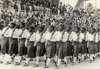
wanawake wanajeshi wa kizanzibari

attachment.php

kiboko ya nyerere

attachment.php

siku ya mapinduzi Zenji
attachment.php
 

Attachments

  • Okello and supporters .jpg
    Okello and supporters .jpg
    60.2 KB · Views: 1,182
  • Zanzibar Women Post Revolution Soldiers.jpg
    Zanzibar Women Post Revolution Soldiers.jpg
    66.6 KB · Views: 1,207
  • Karume c197x .jpg
    Karume c197x .jpg
    53 KB · Views: 1,183
  • Violence.JPG
    Violence.JPG
    39.1 KB · Views: 1,170
Last edited by a moderator:
wakati NYERERE na rafikiye SOKOINE wanaplot kuwafanya waBARA ma mbumbumbu ZENJI tayari walishaanza kuwa na SPACE PROGRAM sasa asiyetaka ajinyonge

Space Station Zanzibar

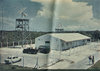
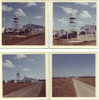
About 15km east of Stone Town, near the village of Tunguu, lie the rusting remains of an American Satellite Tracking Station. This Station was built in 1960 to track and communicate with the first American manned Space Missions. It functioned first during the early 'Project Mercury' launches when Astronauts were just shot into space in a parabolic arc from Florida to the other side of Africa. It also lay along the "Earth track" of most of the later Orbital missions and thus was a vital part of the tracking and telemetry net that helped communicate with these space craft.
attachment.php

The station was forced to close just after the 1964 Revolution. The new revolutionary government claiming that the Telemetry towers would be used to direct missiles towards Zanzibar. The Station personnel were hurriedly evacuated while a US Navy Destroyer stood off Stone Town to ensure that the American technicians and their families were allowed to leave unmolested.
Tunguu_Tracking_Station_1961.jpg

Today the site is hard to find but if one turns South, off the road from Stone Town to the East Coast, just before it reaches Tunguu, you will suddenly come upon an unusually straight road that leads to what older locals still call "the Americani Buildings". Best preserved of these is the Butler-Aluminum "Maintenance Building", still containing the large diesel generator used to power the Station. Also nearby is the "Dormitory Building". It was used by the technicians only when an actual mission was in progress. The rest of the time the Americans lived in or near Stone Town with their families and blended in as just one more minority in cosmopolitan Zanzibar.
Project%20Mercury%20Zanzibar%20start%20announcement.%20Samachar%20June%205th%201960.jpg

The high tech equipment, and the reach for the stars attitude, intrigued many young Zanzibaris. They learned about the schedules and I remember friends would lay on the beach looking up waiting for the American spaceship to pass overhead. One friend who had just heard about this phenomenon joined the beachwachers....only to be disappointed by the small slow moving star-like object that he witnessed. He expected a flying saucer perhaps.
Tunguu_Tracking_Station2_1994.jpg

Another who was moved by the future-looking nature of the tracking station was the soon to be famous Farrokh Bulsara. After the revolution he moved from Zanzibar to Britain and became the rock star Freddy Mercury.
Decades after the end of Project Mercury the work begun by those early NASA pioneers continues. Recently that work returned dividends to Zanzibar in the form of these amazing photos from Space of the spice islands.
Mercury%20Logo.jpg
 

Attachments

  • Project Mercury Zanzibar Map 1960.jpg
    Project Mercury Zanzibar Map 1960.jpg
    34.3 KB · Views: 553
These tracking stations were operated and maintained year round by technicians working for the Bendix Radio corporation, an American company that had a contract with the US government. Bendix operated other similar sites around the world with their employees rotating between these sites occasionally. NASA employees and sometimes an astronaut in training would visit the sites only when there was a mission in progress.
attachment.php

For the American technicians Zanzibar was a favored assignment, it was one of the few foreign sites where families were allowed to accompany the workers. It was considered a safe environment and there had an American diplomatic Counsel on Zanzibar for over one hundred years. The resident Americans and their family members numbered between 50 and 60 individuals at any one time. They lived in or close to Zanzibar City and commuted from there to the Tunguu site on what were then excellent roads. Some of the workers were radio aficionados, they established the first shortwave broadcasts from Zanzibar and even donated and installed radio equipment in the wards of the city hospital so that recuperating patients could listen to local news and music.
Petterson.jpg

When the Zanzibar revolution occurred in January 1964 there was fighting throughout the Island. The resident American workers were fearful for their families. Though no American was harmed on the day of the rebellion there was great uncertainty about what would happen next. In the 1963 elections some politicians had expressed opposition to the Mercury site, falsely claiming that it was a military installation that could be used to direct missiles against the people of Zanzibar. Some of these same politicians were now in control of the country. The Americans therefore organized a secret convoy of vehicles to pick up the scattered technicians from their homes and bring them to a central location, the Africa House Hotel, near the city harbor. On the day after the revolution an American warship, the USS Manley (DD-940) steamed into Zanzibar harbor and that ship's Executive Officer, Lieutenant Commander Joseph E. Murray, Jr. negotiated an agreement with the revolutionaries to allow the Destroyer to send small boats ashore to evacuate the American citizens and some others who worked at Project Mercury. A total of 91 people were then swiftly and safely evacuated, 54 Americans and 37 allied nationals.
attachment.php

Not all Americans left on the Manley however. Some American diplomats remained and a skeleton crew mothballed the Mercury site while the politicians wrangled over it. However the the end was never really in doubt. The last Mercury flight, Faith 7, had already been completed before the Zanzibar Revolution and the last planned mission, Freedom 7-II had been scrubbed as unnecessary at a time when NASA was already looking ahead to the new two man Gemini missions.
 

Attachments

  • Zanzibar Project Mercury 1962.jpg
    Zanzibar Project Mercury 1962.jpg
    40.6 KB · Views: 581
  • Tunguu Site.jpg
    Tunguu Site.jpg
    50.3 KB · Views: 568
Last edited by a moderator:
Kichuguu, kuna yule muandishi mwingine wa Zanzibar ambaye jina limenitoka kidogo (Samahanini!) aliyetunga 'Kisima cha Giningi', 'Siri ya Sifuri' na vinginevyo ambapo mhusika mkuu wa hadithi hizo alikuwa ni mpelelezi Bwana Msa akisaidiwa na Najum ambapo baadhi ya watu walisema muandishi alitumia mfumo wa riwaya za mpelelezi wa kiingereza wa zamani Sherlock Holmes na msaidizi wake Dr. Watson!


Nadhani huyo ni Mohamed Said Abdullah: alitunga

(a) Duniani kuna watu
(b) Mke mmoja waume watatu
(c) Siri ya sifuri
(d) Mzimu wa watu wa kale
(e) Kisima cha Giningi
(f) Mwana wa Yungi Hulewa
 
Game Theory, je unaweza kuze-squeeze hizi picha kusudi iwe rahise kwa wengine kuziona sawasawa?
 
Nadhani huyo ni Mohamed Said Abdullah: alitunga

(a) Duniani kuna watu
(b) Mke mmoja waume watatu
(c) Siri ya sifuri
(d) Mzimu wa watu wa kale
(e) Kisima cha Giningi
(f) Mwana wa Yungi Hulewa


Mkuu, asante sana! Ndiye huyo, ila nadhani kuna kitu nimechemsha. Nadhani hii 'kisima cha Giningi' nilichokisema mimi ndio iko ndani ya 'Mzimu wa Watu wa Kale' kama sikosei ama vilikuwa ni vitabu viwili tofauti? Unajua tena miaka mingi imepita tangia tuvisome enzi za kina 'Roza Mistika', 'Mashimo ya Mfalme Suleiman', 'Hadithi za Alan Quaterman', 'Visa vya Ajabu' na kadhalika na kadhalika...!
 
Back
Top Bottom