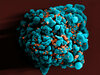
Doctors in London say they have apparently eradicated HIV from a patient's body. It's only the second time this has been accomplished, despite many attempts over more than a decade.
While some commentators are calling this a "cure" for HIV, the scientists who performed the experiment say it's too soon to say that. Instead, they say the patient is in remission.
Both cases involved a risky procedure called a stem-cell transplant (otherwise known as a bone marrow transplant). The first recipient,
Timothy Brown, gained fame as the so-called Berlin patient after transplants in 2007 and 2008 rid him of HIV. He
remains free of HIV today.
That result raised hopes that HIV could be eradicated through a medical procedure and cure people of HIV infection. Yet Brown's case remained the lone success since then. Other attempts had failed.
 Shots - Health News
HIV Cure Is Closer As Patient's Full Recovery Inspires New Research
Shots - Health News
HIV Cure Is Closer As Patient's Full Recovery Inspires New Research
Now, researchers at University College London
report in a paper being published Tuesday in
Nature that they have apparently eliminated HIV in a second person.
That man had been diagnosed with HIV in 2003. Then, in 2012 the unidentified patient was diagnosed with a cancer,
Hodgkin lymphoma. After standard treatments failed, they gave the patient a stem-cell transplant — essentially killing off his old immune system and giving him a new one.
The doctors selected a donor who had two copies of a particular mutation in the
CCR5 gene that prevents HIV from infecting T-cells, a part of the immune system where the virus takes hold and does its damage. As a result, the man ended up with an immune system that was naturally resistant to HIV.