Uchochezi wa Mohamed Said na dhihaka kwa Wapigania Uhuru wa Tanganyika na Zanzibar

Uchochezi wa Mohamed Said na dhihaka kwa Wapigania Uhuru wa Tanganyika na Zanzibar

Intelligence Quotient~IQ.

Tuendelee na mnakasha hujue wa magharibi wanawachukuliwa watu kama Ibn Battuta siyo GRADUATE kutoka na elimu zao ukiangalia mtu kama Ibn Battuta alikuwepo miaka 1304 mpaka 1369 vitu alivyofanya ni vikubwa sana.

Umetaja University of Cordoba ni baadhi ya vyuo vilivyoleta mapinduzi ya elimu duniani wakati huo Ulaya na Marekani bado kuna giza kubwa la ujinga.

Kimsingi Islamic Scholar hawakubariki kwenye nchi za magharibi ingawa wao ndiyo wameleta elimu kubwa huko kwao.

Ritz umenikumbusha mbali kuhusu huyu Ibn Battuta huyu jamaa alikuja mpaka Mombasa akapita na pale Kilwa story yake ni ndefu kitabu chake kinaitwa "rihila Ibn Battuta" au The travel of ibn Battuta.
 
Mkuu

Simamia ukweli, tupo hapa yapata mwezi wa tano sasa kwaajili ya kulifua kaniki aliloharibu Mohamed Said, lazima litakate bila kuremba wala kuparamaa!

Tupo kwaajili ya kuufuta uongo na kuweka ukweli!

Tumeshabaini na kuweka ukweli kuwa wanaotetewa na kikundi hiki ambacho ni radical Muslims kinachoongozwa na Mohamed Said walikuwa ni WAASI wa TANU na serikali halali ya Tanganyika!

Na zaidi kadiri tunavyozidi kupekua tumegundua kuwa yule wanae muabudu Shehe Hassan Bin Amir alikuwa ni mchochezi, mnafiki na HAINI ambae serikali yoyote ile duniani ingemuondoa duniani, lakini kwa heshima na hekima za Mwalimu Nyerere amfukuza katika ardhi ya Tanganyika baada ya kila juhudi za kumpa kazi ya kurekebisha yale aliyokuwa akiyahubiri nje ya serikali (misikitini) kugoma!

Sasa hapo mlitaka mwalimu amfanye nini huyu fedhuri na hasidi?

Ange achwa andelee kuvuruga amani ya nchi?

Hawa ndiyo vijana wa Nguruvi3, naona wameamua koporomosha matusi sasa baada ya hoja ya uchochezi kuisha nadhani wanaukumbi wanawasomeni na dhamira yenu sasa ipo wazi.

Mwalimu wangu wa historia Mohamed Said, aliniambia ukiona mtu anaanza kutoa za matusi hujue kaishiwa hoja.
gombesugu, Kadogoo. Jasusi,
 
Ritz umenikumbusha mbali kuhusu huyu Ibn Battuta huyu jamaa alikuja mpaka Mombasa akapita na pale Kilwa story yake ni ndefu kitabu chake kinaitwa "rihila Ibn Battuta" au The travel of ibn Battuta.

Ibn Battuta


Early life and his first hajj


A 13th-century book illustration produced in Baghdad by al-Wasiti showing a group of pilgrims on a Hajj.


All that is known about Ibn Battuta's life comes from the autobiographical information included in the account of his travels. Ibn Battuta was born into a family of Islamic legal scholars in Tangier, Morocco, on 25 February 1304, during the reign of the Marinid dynasty.[SUP][2][/SUP] He claimed descent from the Berber tribe known as the Lawata.[SUP][3][/SUP] As a young man he would have studied at a Sunni Maliki madh'hab, (Islamic jurisprudence school), the dominant form of education in North Africa at that time.[SUP][4][/SUP] In June 1325, at the age of twenty-one, Ibn Battuta set off from his hometown on a hajj, or pilgrimage, to Mecca, a journey that would take sixteen months. He would not see Morocco again for twenty-four years.
I set out alone, finding no companion to cheer the way with friendly intercourse, and no party of travellers with whom to associate myself. Swayed by an overmastering impulse within me, and a long-cherished desire to visit those glorious sanctuaries, I resolved to quit all my friends and tear myself away from my home. As my parents were still alive, it weighed grievously upon me to part from them, and both they and I were afflicted with sorrow.[SUP][5][/SUP]
He travelled to Mecca overland, following the North African coast across the sultanates of Abd al-Wadid and Hafsid. The route took him through Tlemcen, Béjaïa, and then Tunis, where he stayed for two months.[SUP][6][/SUP] For safety, Ibn Battuta usually joined a caravan to reduce the risk of an attack by wandering Arab Bedouin. He took a bride in the town of Sfax, the first in a series of marriages that would feature in his travels.[SUP][7][/SUP]
In the early spring of 1326, after a journey of over 3,500 km (2,200 mi), Ibn Battuta arrived at the port of Alexandria, then part of the Bahri Mamluk empire.[SUP][8][/SUP] He spent several weeks visiting sites in the area, and then headed inland to Cairo, the capital of the Mamluk Sultanate and even at that time an important large city. After spending about a month in Cairo,[SUP][9][/SUP] he embarked on the first of many detours within the relative safety of Mamluk territory. Of the three usual routes to Mecca, Ibn Battuta chose the least-travelled, which involved a journey up the Nile valley, then east to the Red Sea port of Aydhab,[SUP][a][/SUP] Upon approaching the town, however, a local rebellion forced him to turn back.[SUP][10][/SUP]
Ibn Battuta returned to Cairo and took a second side trip, this time to Mamluk-controlled Damascus. During his first trip he had encountered a holy man, Shaykh Abul Hasan al Shadili, who prophesied that he would only reach Mecca by travelling through Syria. The diversion held an added advantage; because of the holy places that lay along the way, including Hebron, Jerusalem, and Bethlehem, the Mamluk authorities spared no efforts in keeping the route safe for pilgrims. Without this help many travellers would be robbed and murdered.
After spending the Muslim month of Ramadan in Damascus, he joined a caravan travelling the 1,500 km (930 mi) south to Medina, tomb of the Islamic prophet Muhammad. After four days in the town, he journeyed on to Mecca, where completing his pilgrimage he took the honorific status of El-Hajji. Rather than return home, Ibn Battuta instead decided to continue on, choosing as his next destination the Ilkhanate, a Mongol Khanate, to the northeast.
Iraq and Persia


Ibn Battuta made an brief visit to the Persian-Mongol city of Tabriz in 1327.


On 17 November 1326, following a month spent in Mecca, Ibn Battuta joined a large caravan of pilgrims returning to Iraq across the Arabian Peninsula.[SUP][11][/SUP] The group headed north to Medina and then, travelling at night, turned northeast across the Najd plateau to Najaf, on a journey that lasted about two weeks. In Najaf he visited the mausoleum of Ali ibn Abi Talib (Ali), the first Imam, the 4th caliph and the son-in-law of the prophet Muhammad.
Then, instead of continuing on to Baghdad with the caravan, Ibn Battuta started a six-month detour that took him into Persia. From Najaf he journeyed to Wasit then followed the river Tigris south to Basra. His next destination was the town of Esfahān across the Zagros Mountains in Persia. He then headed south to Shiraz, a large, flourishing city spared the destruction wrought by Mongol invaders on many more northerly towns. Finally, he returned across the mountains to Baghdad, arriving there in June 1327.[SUP][12][/SUP] Parts of the city were still ruined from the damage inflicted by Hulago Khan's invading army in 1258.
In Baghdad he found Abu Sa'id, the last Mongol ruler of the unified Ilkhanate, leaving the city and heading north with a large retinue.[SUP][13][/SUP] Ibn Battuta joined the royal caravan for a while, then turned north on the Silk Road to Tabriz, the first major city in the region to open its gates to the Mongols and by then an important trading centre as most of its nearby rivals had been razed by the Mongol invaders.[SUP][14][/SUP]
Ibn Battuta left again for Baghdad, probably in July, but first took an excursion northwards along the river Tigris. He visited Mosul where he was the guest of the Ilkhanate governor,[SUP][15][/SUP] and then the towns of Cizre (Jazirat ibn 'Umar) and Mardin in modern day Turkey. At a hermitage on a mountain near Sinjar he met a Kurdish mystic who gave him some silver coins.[SUP]http://en.wikipedia.org/wiki/Ibn_Battuta#cite_note-18[/SUP][SUP][17][/SUP] Once back in Mosul, he joined a "feeder" caravan of pilgrims heading south to Baghdad where they would meet up with the main caravan that crossed the Arabian Desert to Mecca. Ill with diarrhoea, he arrived in the city weak and exhausted for his second hajj.[SUP][18][/SUP]
Arabian Peninsula

Ibn Battuta remained in Mecca for some time (the Rihla suggests about three years, from September 1327 until autumn 1330). Problems with chronology, however, lead commentators to suggest that he may have left after the 1328 hajj.[SUP][c][/SUP]
After the hajj in either 1328 or 1330, he made his way to the port of Jeddah on the Red Sea coast. From there he followed the coast in a series of boats making slow progress against the prevailing south-easterly winds. Once in Yemen he visited Zabīd and later the highland town of Ta'izz, where he met the Rasulid dynasty king (Malik) Mujahid Nur al-Din Ali. Ibn Battuta also mentions visiting Sana'a, but whether he actually did so is doubtful.[SUP][19][/SUP] In all likelihood, he went directly from Ta'izz to the important trading port of Aden, arriving around the beginning of 1329 or 1331.[SUP][20][/SUP]
Somalia


The port and waterfront of Zeila.


From Aden, Ibn Battuta embarked on a ship heading for Zeila on the coast of Somalia. He then moved on to Cape Guardafui further down the Somalia seaboard, spending about a week in each location. Later he would visit Mogadishu, the then pre-eminent city of the "Land of the Berbers" (بلد البربر Balad al-Barbar, the medieval Arabic term for the Horn of Africa).[SUP][21][/SUP][SUP][22][/SUP][SUP][23][/SUP]
When he arrived in 1331, Mogadishu stood at the zenith of its prosperity. Ibn Battuta described it as "an exceedingly large city" with many rich merchants, noted for its high-quality fabric that was exported to other countries including Egypt.[SUP][24][/SUP][SUP][25][/SUP] He added that the city was ruled by a Somali Sultan, originally from Barbara in northern Somalia, who spoke both Somali (referred to as Mogadishan, the Benadir dialect of Somali) and Arabic with equal fluency.[SUP][26][/SUP][SUP][27][/SUP] The Sultan also had a retinue of wazirs (ministers), legal experts, commanders, royal eunuchs, and assorted hangers-on at his beck and call.[SUP][26][/SUP]
Swahili Coast


The Great Mosque of Kilwa Kisiwani, made of coral stones is the largest Mosque of its kind.


Battuta continued by ship south to the Swahili Coast, a region then known in Arabic as the Bilad al-Zanj ("Land of the Zanj"),[SUP][28][/SUP] with an overnight stop at the island town of Mombasa.[SUP][29][/SUP] Although relatively small at the time, Mombasa would become important in the following century.[SUP][30][/SUP] After a journey along the coast, Ibn Battuta next arrived in the island town of Kilwa in present-day Tanzania,[SUP][31][/SUP] which had become an important transit centre of the gold trade.[SUP][32][/SUP] He described the city as "one of the most beautiful and well-constructed towns in the world".[SUP][33][/SUP]
Ibn Battuta recorded his visit to the Kilwa Sultanate in 1330, and commented favorably on the humility and religion of its ruler, Sultan al-Hasan ibn Sulaiman, a descendant of the legendary Ali ibn al-Hassan Shirazi. He further wrote that the authority of the Sultan extended from Malindi in the north to Inhambane in the south and was particularly impressed by the planning of the city, believing it to be the reason for Kilwa's success along the coast. From this period date the construction of the Palace of Husuni Kubwa and a significant extension to the Great Mosque of Kilwa, which was made of Coral Stones and the largest Mosque of its kind. With a change in the monsoon winds, Ibn Battuta sailed back to Arabia, first to Oman and the Strait of Hormuz then on to Mecca for the hajj of 1330 (or 1332).
map_daralislam.png
 
Hawa ndiyo vijana wa Nguruvi3, naona wameamua koporomosha matusi sasa baada ya hoja ya uchochezi kuisha nadhani wanaukumbi wanawasomeni na dhamira yenu sasa ipo wazi.

Mwalimu wangu wa historia Mohamed Said, aliniambia ukiona mtu anaanza kutoa za matusi hujue kaishiwa hoja.
gombesugu, Kadogoo. Jasusi,

Sisi tuliopevuka tunaipokea hoja ama tunajenga hoja nakuchambua kwa nguvu ya hoja na sio hoja ya nguvu kisha tunamaliza na fungate la majumuisho kuwa Shehe Hassan Bin Amir alikuwa ni mchochezi, mfitini, mnafiki na HAINI!

Hatuumi maneno kwa faida ya wapumbavu bali tunatoa maneno stahiki kwa faida ya weledi!

Ukiona mbwa usiseme

"aaha nimeona kama mbwa lakini sio yeye anafanana tu lakini ni mbwa"

Hapo utakuwa wewe ni MWEHU!
 
Sehemu ya tatu...
Tarehe 27 Aprili, 1985 Julius Kambarage Nyerere, sasa akijulikana kama Baba wa Taifa,[SUP]294[/SUP] katika sherehe kubwa katika viwanja vya Ikulu, alitoa jumla ya medali 3979 kwa Watanzania waliochangia katika maendeleo ya taifa. Kati ya wale ambao walipewa medali hizo alikuwa Sheikh Abdallah Chaurembo.

Wazalendo waliotajwa ndani ya kitabu hiki ambao walipigania uhuru wa Tanganyika, hakuna hata mmoja wao aliyekuwa katika orodha ile ya heshima. Baada ya siku chache kupita, Nyerere kama mtu aliyegutuka alimualika Dossa Aziz Ikulu. Dossa Aziz, wakati wa kudai uhuru wa Tanganyika alikuwa mtu maarufu, mwenye nafasi, na kujiweza sana. Sasa Dossa baada ya miaka kupita hakuwa akifahamika tena na ule umaarufu na utajiri wake ulikuwa umetoweka. Alikuwa akiishi maisha ya kawaida kijijini Mlandege, maili chache nje ya Dar es Salaam. Katika sherehe ya faragha Nyerere alimtunukia medali Dossa Aziz, rafiki yake wa zamani. [SUP]295[/SUP]
Ule Mkutano wa Tabora ulikuwa umeacha kovu lake katika historia ya uhuru wa Tanganyika. Huenda kama si yale masharti ya uchaguzi wa kura tatu, historia ya TANU na kwa hakika ile ya ukoloni Tanganyika isingekuwa hivi ilivyo sasa. Yamkini kusingekuwepo na mgawanyiko katika TANU wala Zuberi Mtemvu asingeunda ANC, na Mashado Plantan - AMNUT; wala suala la udini katika siasa za Tanganyika lisingewekwa katika agenda, jambo ambalo kwa miongo mitatu baada ya uhuru ngurumo zake bado zinasikika na zinatishia utengemano na uthabiti wa nchi. Waislam wanamlaumu Nyerere na Wakristo waliokabidhiwa madaraka ya kutawala nchi kwa msaada mkubwa wa Waislam. Waislam wanadai kuwa wamesalitiwa. Kwa hivi sasa Waislam wako katika mwelekeo wa kujitambua kwa mara ya pili na historia yao yenye mengi sana. Wanaamini majibu ya baadhi ya matatizo yao ya hivi sasa yamo katika historia yao ya zamani.
***
Mjini Dar es Salaam katika msikiti wa Kitumbini hawli husomwa kila mwaka katika mwezi wa Oktoba kumkumbuka Abdulwahid Kleist Sykes. Hii ni hafla ya kifamilia ikihudhuriwa hasa na wana-ndugu. Ukiachia mbali ule wajibu wa Waislam kurehemiana kama ilivyo kawaida katika Uislam, Abdulwahid hufanyiwa hafla hii pale msikitini kwa sababu nyingine. Katika umri wake mfupi, Abdulwahid alikuwa akiswali pale msikitini na katika msikiti ule ndipo aliposwaliwa swala yake ya mwisho kabla ya kupelekwa kuzikwa. Abdulwahid alikuwa mtu mashuhuri katika jamii ya Waislam Dar es Salaam. Alifanya shughuli nyingi chini ya Al Jamiatul Islamiyya. Halikadhalika alikuwa katibu baadae rais wa TAA. Ingawa historia ya Tanzania bado haijamtambua mchango wake ni wazi kuwa Abdulwahid ndiye aliyekuwa bongo katika kuasisi TANU chama ambacho kilikuja kuwaunganisha wananchi wa Tanganyika katika kudai uhuru wao kwa Waingereza.
Marika ya Abdulwahid bado wa hai na baadhi yao wanaswali pale msikitini. Huwa wanafurahishwa na kumbukumbu hii ya kumrehemu mwenzao. Karibu walio wengi ni maveterani wa TANU ya miaka ya 1950. Hivi sasa wao ni wazee na kwa uchungu hawana haja na siasa. Ukiacha ndugu wa marehemu Abdulwahid (sasa hivi wanajumuika na wajukuu zake), marafiki wa karibu na wanachama wa zamani wa TANU, hakuna hata mtu mmoja katika Chama cha Mapinduzi (chama kilichorithi nafasi ya TANU) anaemkumbuka. Jina la Abdulwahid halitajwi kabisa katika historia ya kudai uhuru wa Tanganyika au katika historia ya kuasisi TANU. Juu ya haya yote Abdulwahid ndiye aliyewasha cheche za kuanzisha harakati za kudai uhuru wa Tanganyika.

Jopo la wana-historia wa Chama Cha Mapinduzi waliopewa jukumu la kutafiti na kuandika historia rasmi ya TANU, hakuna hata sehemu moja waliyotaja jina la Abdulwahid katika kitabu kizima.[SUP]296[/SUP] Dhana inayojaribiwa kuenezwa katika kitabu kile ni kuwa kabla ya kutokea kwa Julius Nyerere mwezi Aprili, 1953, alipochaguliwa kuwa rais wa TAA, chama hicho hakikuwa na mwelekeo wowote wa siasa. Kitu cha ajabu ni kuwa kitabu hicho wala hakielezi huo urais wa TAA, Nyerere aliupataje au aliuchukua kutoka kwa kiongozi gani wa wakati ule. Kitendo hiki kimeondoa hadhi na heshima ya wazalendo wengi waliopigania nchi hii na halikadhalika kimeiondolea TAA heshima ya kuitwa chama cha siasa. Wanahistoria wazalendo pamoja na wanasiasa wa sasa hawataki kabisa kuipa TAA hadhi ya chama cha siasa. Kambona aliiita African Association chama cha majadiliano:
Sasa inakaribia mwaka mmoja toka iundwe Tanganyika African National Union na katika kipindi hiki chama kimekua kikipata nguvu siku hadi siku, wakati mwingine chini ya upinzani mkubwa. Kama mnavyofahamu chama hiki ni badala ya Tanganyika African Union ambayo ilikuwa sawasawa na chama cha majadiliano.[SUP]297[/SUP]
Ulotu anaieleza TAA kuwa ilikuwa chama cha ustawi wa jamii.[SUP]298[/SUP] Wengine wameieleza TAA kama taasisi ya jamii: Nyerere (1976), [SUP]299[/SUP] halikadhalika Japhet na Seaton (1966).[SUP]300[/SUP] TAA wakati mwingine inaelezwa kuwa ilikuwa chama cha vuguvugu za upinzani dhidi ya ukoloni, lakini upinzani wake haukuwa dhahiri: Kaniki (1974), [SUP]301[/SUP] Nyerere (1953) [SUP]302[/SUP] aliieleza TAA kama chama cha vuguvugu la siasa lakini si za dhahiri. Julius Nyerere alipohutubia Baraza la Udhamini la Umoja wa Mataifa, New York, tarehe 7 Machi, 1955 alisema:
Tanganyika African National Union kwa mtazamo mmoja ni chama kipya, lakini kwa mtazamo mwingine ni chama kikongwe. TANU imechukua nafasi ya Tanganyika African Association ambayo ilianzishwa mwaka 1929, kama chama cha kijamii. Tanganyika African National Union, chama kilichochukua nafasi ya African Association miezi kumi iliyopita ni chama kipya kwa maana ni chama cha siasa, wakati TAA ilikuwa chama cha siasa nusunusu.

Itaendelea...

Shariff Ritz,

Shukran kwa hizi bayana adimu.

Tafadhali,labda pia utuombee kwa Sheikh Mohammed akipata fursa pia atuwekee na kile kisa cha Vita ya MajiMaji na wale Waungwana, Mashahid, ndugu zetu walopoteza roho zao wakiongozwa na Al Shahid Abdallah Kinjekitile Ngwale.

Niliwahi kuuliza awali hapa jamvini,walakin jawaba halijapatikana. Nahisi labda Sheikh Mohammed kama anajua atatujuza japo kiduchu.

Hivi Alhaj Abdilawahid Sykes,kifo chake kilitokana na nini khasa!? Kwa sababu yaelekea alikua bado ni kijana mbichi(Al Shabab) na pia mwenye afya njema. Was any known medical condition!? Je maiti yake ilifanziwa Post Mortem kutambua sababu khalis ya kifo chake!?

Al Akhiy Sheikh Mohammed Said;tafadhali kama utahisi yakuwa si vyema kunijibu haya masuali,haina neno nami nitakuelewa bila dhiki.

Shukran.

Cc;Sheikh Mohammed Said
 
Wanajamvi,
Nimgeliweza kueleza mgogoro mzima wa Sheikh Hassan bin Amir na Nyerere
sheikh akiwa sasa anaongoza taasisi iliyoitwa Daawat Islamiyya (Wito kwa
Waislam) yeye akiwa Mwenyekiti na Schneider Abdillah Plantan akiwa katibu.

Lakini kwa kuwa Sheikh Hassan ametukanwa hapa ninajizuia kwa ajili ya kuhifadhi
heshma ya kiongozi wetu ambaye wengi wanamuitikadi kuwa alikuwa walii.

Mzee MS; With due respect, I differ. Nadhani sio vyema ku-incite people on this point. On the other hand sioni anachosema Nguruvi kinakuzuia nini ku-post ulichotaka. After all hizo posts za huko tulikotoka huku-sample views za readers. Haya ya kushambulia viongozi wa imani ni mavuno ya matusi na kejeli za baadhi yetu humu ndani tuliojivalia jukumu la kuhoji taratibu za dini ambazo sii zetu na kuzikebehi kama vile Ukatoliki na utakatifu wa Julius. Awali, nilijitahidi kukumbusha kuwa jamani kila watu wana taratibu zao lakini ni wachache waliosikia. Sasa ndio kama hivi. Kwamba unamlilia Staha Sheikh. Wengine hata hilo neno Walii huenda wakafikiri ni mchele uliopikwa. Kwa hiyo kama ulitaka ku-post material on the Sheikh, why refrain? Na kama Nguruvi ana materials za ku-cast doubt kuhusu uwezo na tabia ya huyu Sheikh, what is the problem? Let the readers have both.

Now you can finally see why I said many months ago kuwa kuandika jinsi "alivyokuwa analishwa na kupishwa kulala ni kumsimanga na ni maudhi". Wewe UKABISHA na ukasema ULILAZIMIKA kuyaandika ILI kukamilisha historia. Sasa suddenly hutaki kubandika historia ya MTU in the open!!!!!!
 
gombesugu said:
Embu fikiria,JokaKuu amefikia ati mpaka ya kusema sisi huku Bara Wazungu hawana ubaya na sisi lakini Waarabu tu ndio tunawaona wabaya kwa ile biashara ya Utumwa!? Hapa napata wasiwasi kama kweli hawa ndugu zetu wanaelewa kiundani Historia ya hao Wazungu wanaowatetea dhidi ya nchi/Bara letu. Au kwa sasa kuna WaTanzania wameamua kuweka kando baadhi ya ukweli wa kiHistoria kwa muda ili"kuwashughulikia" WaZanzibary!?


gombesugu,

..hayo uliyoandika hapo juu kwa kweli unanionea.

..badala ya ku-paraphrase nilichosema bora ungetumia feature ya ku-quote ambayo tunayo hapa JF.

..nilichosema mimi ni kwamba Waarabu na Wazungu ni watu wa kuja huku Bara.

..zaidi nikasema kwa uelewa wetu WAZUNGU walikuwa ni WAKOLONI, na WAAARABU walikuwa wafanya biashara ya WATUMWA.

..pamoja na hayo, leo hii tuna mashirikiano ya kibalozi na Oman, Uingereza,na Ujerumani, ambao ancenstors wao walifanyia mambo mabaya sana ancestors wetu.

cc: Mag3, Nguruvi3, Jasusi, Wickama, Ritz

 
Last edited by a moderator:
Heee ! wenzangu yamekuwa hayo.

Mimi nimeuliza maswali mbona nashambuliwa kiasi hiki.
Tena imefikia mahali naitwa fataani, nimetumwa n.k. Hivi kwanini watu wanaghadhabu nami.
Yaani hata mahali nisipoingia mtu atatafuta upenyo apitishe jina langu ilimradi tu.

Gombesugu, Mohamed ndiye mwandishi na msomi pekee ninaye mfahamu anayefanya ''self quotation'' au reference.
Huko mimi sipo.

Haya tunayoongea hapa tuna ufahamu nayo. Kama tungekuwa hatujui tusingemvua Mohamed nguo, tukamfunga mikono na miguu kwa nguo hizo na hata kumchapa usoni na mtambara yake.

Wewe ulijua kuwa balozi hakuhutubia Bunge! Tulimuuliza akaingia na tarehe tukamchapa nazo usoni.
Sasa hivi amebaki na Mkoba wa Ibadan! FYI we have strong and wide background! Ninaiangalia dunia kwa mtazamo mpana siyo wa kipata au mfenesini! Gombesugu!

Kama unataka link n.k. tutoa, kwani si unataka link za jinsi gani Rukara alipata passport ya Tz.
Unataka tutaje hata ufuska na majina ya wahusika! ndivyo unataka?
Mimi nasitiri watu na kujisitiri, sipiti nikizungumzia vyumba vya watu na vitoweo hovyo barabarani, nina weledi.

Najua kinachowatia hasira ni sheikh Amir kuitwa Mnafiki na mfitini mkubwa.
Mimi nasema Amir ni mnafiki mkubwa sana nimeeleza sababu kwa kufanya quotation ya maneno ya Mohamed ili muamini zaidi. Nasema Bibi Titi alikuwa na uadilifu kuliko huyu mnafiki mkubwa anayeitwa sheikh.
Mnafiki huyu habri zake za kinafiki zinajulikana.

Nafahamu pia hasira ni kutokana na miba ya muungano, hasa kwa wznz! nawe unajua hilo kwahiyo sitegemei kusikia neno zuri kutoka kwako linalonihusu. Guess what, mimi spade naita spade sisemi ni big spoon!

Kama hakuna majibu ya maswali nitaleta link, subra yavuta heri

Nguruvi ndugu yangu samahani kwa usumbufu unaweza kuni dadavulia unafiki na fitina za sheikh Hassan bin Amir ili na mimi nipate kujua?
 

gombesugu,

[/B]..hayo uliyoandika hapo juu kwa kweli unanionea.

..badala ya ku-paraphrase nilichosema bora ungetumia feature ya ku-quote ambayo tunayo hapa JF.

..nilichosema mimi ni kwamba Waarabu na Wazungu ni watu wa kuja huku Bara.

..zaidi nikasema kwa uelewa wetu WAZUNGU walikuwa ni WAKOLONI, na WAAARABU walikuwa wafanya biashara ya WATUMWA.

..pamoja na hayo, leo hii tuna mashirikiano ya kibalozi na Oman, Uingereza,na Ujerumani, ambao ancenstors wao walifanyia mambo mabaya sana ancestors wetu.

cc: Mag3, Nguruvi3, Jasusi, Wickama, Ritz


JokaKuu,

Wallahi,niwie radhi ndugu yangu kama unahisi nimenena urongo. Maana si dasturi yangu asilan kusema liso kweli,nastaajabu kimenisibu kipi leo!?

Sikutaka kuweka ile Quote yako,maana kwa hishma nikupayo ingalikuwa kama vile nakusuduku/nakusuta ndugu yangu.

Haina neno tuendelee na mnakasha..

Shukran.

Cc;Ritz
 
Yericko Nyerere,
Mimi ata siku moja siwezi kukukimbia wewe humu ukumbini najua hujui chochote mimi binafsi nimeishakuuliza maswali mengi unakimbia mimi takujibu kwa faida ya wanaumbi siyo wewe.

Waasisi wa AA ni Kleist Sykes , Mzee bin Sudi, Cecil Matola, Suleiman Mjisu,Raikes Kusi. Dr. James Aggrey, hawa ndiyo waasisi wa AA, Kleist Sykes wakati huo mwaka 1929 alikuwa na umri wa miaka 35. na mimi naomba kukuuliza huyo Askofu Maranta alikuwa na umri gani wakati wanakutana na huyo Sheikh Issa?

Kwakweli inanishangaza sana, tena sana!

Nikiona hapa watu kama wewe mnajiita mna shahada za uzamili na uzamifu (PHd)

Najiuliza sana mlipataje kuwa hivyo?

Hivi kweli kwa mtu kama Kasisi Maranta unaweza kuuliza eti alikuwa na umri gani kipindi cha harakati za ukombozi barani afrika?

Maranta anafahamika dunia nzima, na ulimwengu wa dotikomu huu hata mwanangu wa mwenye umri wa mwaka mmoja amecheka nilipomwambia kuwa hili ni swali nililoulizwa na Mtanzania mwenye PHd,

Akaniuliza anaishi Dar? Nikamjibu yupo ughaibuni anabeba box, akaniambia baba usicheke nikweli atakuwa na PHd ya mabox!


Sasa ndugu yangu maamuma nakusaidia kukupa wasifu wa Kasisi Maranta hapa chini na mapito yake!

http://bit.ly/16QNsQR

Archbishop Edgar Aristide Maranta, O.F.M. Cap. †

Deceased

Archbishop Emeritus of Dar-es-Salaam

Titular Archbishop of Castrum

Events

Date

Age

Event

Title

9 Jan 1897

Born

Poschiavo, Switzerland

6 Apr 1924

27.2

Ordained Priest

Priest of Order of Friars Minor Capuchin

27 Mar 1930

33.2

Appointed

Vicar Apostolic of Dar-es-Salaam, Tanzania

27 Mar 1930

33.2

Appointed

Titular Bishop of Vinda

17 Aug 1930

33.6

Ordained Bishop

Titular Bishop of Vinda

25 Mar 1953

56.2

Appointed

Archbishop of Dar-es-Salaam, Tanzania

12 Dec 1964

67.9

Appointed

Apostolic Administrator of Zanzibar e Pemba, Tanzania

9 May 1966

69.3

Resigned

Apostolic Administrator of Zanzibar e Pemba, Tanzania

19 Dec 1968

71.9

Resigned

Archbishop of Dar-es-Salaam, Tanzania

19 Dec 1968

71.9

Appointed

Titular Archbishop of Castrum

29 Jan 1975

78.1

Died

Archbishop Emeritus of Dar-es-Salaam, Tanzania

Second Vatican Council: Session One: Council Father

Second Vatican Council: Session Two: Council Father

Second Vatican Council: Session Three: Council Father

Second Vatican Council: Session Four: Council Father

a priest for 50.8 years

a bishop for 44.4 years

Principal Consecrator:

Arthur Cardinal Hinsley †

Principal Co-Consecrators:

Bishop Louis-Justin Gumy, O.F.M. Cap. †

Bishop Joseph-Marie Birraux, M. Afr. †

Episcopal Lineage / Apostolic Succession:

Archbishop Edgar Aristide Maranta, O.F.M. Cap. † (1930)

Arthur Cardinal Hinsley † (1926)

Rafael Cardinal Merry del Val y Zulueta † (1900)

Mariano Cardinal Rampolla del Tindaro † (1882)

Edward Henry Cardinal Howard † (1872)

Carlo Cardinal Sacconi † (1851)

Giacomo Filippo Cardinal Fransoni † (1822)

Pietro Francesco Cardinal Galleffi † (1819)

Alessandro Cardinal Mattei † (1777)

Bernardino Cardinal Giraud † (1767)

Pope Carlo della Torre Rezzonico † (1743)

Pope Prospero Lorenzo Lambertini † (1724)

Pope Pietro Francesco (Vincenzo Maria) Orsini de Gravina, O.P. † (1675)

Paluzzo Cardinal Paluzzi Altieri Degli Albertoni † (1666)

Ulderico Cardinal Carpegna † (1630)

Luigi Cardinal Caetani † (1622)

Ludovico Cardinal Ludovisi † (1621)

Archbishop Galeazzo Sanvitale † (1604)

Girolamo Cardinal Bernerio, O.P. † (1586)

Giulio Antonio Cardinal Santorio † (1566)

Scipione Cardinal Rebiba †

Principal Consecrator of:

Abbot Anthony Victor Haelg (Hälg), O.S.B. †

Principal Co-Consecrator of:

Bishop Attilio Beltramino, I.M.C. †

Bishop Elias Mchonde †
 
Last edited by a moderator:

gombesugu,

[/B]..hayo uliyoandika hapo juu kwa kweli unanionea.

..badala ya ku-paraphrase nilichosema bora ungetumia feature ya ku-quote ambayo tunayo hapa JF.

..nilichosema mimi ni kwamba Waarabu na Wazungu ni watu wa kuja huku Bara.

..zaidi nikasema kwa uelewa wetu WAZUNGU walikuwa ni WAKOLONI, na WAAARABU walikuwa wafanya biashara ya WATUMWA.

..pamoja na hayo, leo hii tuna mashirikiano ya kibalozi na Oman, Uingereza,na Ujerumani, ambao ancenstors wao walifanyia mambo mabaya sana ancestors wetu.

cc: Mag3, Nguruvi3, Jasusi, Wickama, Ritz


JokaKuu,

Ndugu yangu mbona unakuwa na utumwa wa fikra hii kitu leo mara ya pili unaileta humu ukumbini.

Kuwa wazungu hawakuwahi kufanya biashara ya utumwa sijui hii umeitoa wapi.

Nimeishakuletea ushahidi kuwa wazungu ni waasisi wa biashara ya utumwa duniani lakini bado hautaki kuamini.

Kweli una mahaba na wazungu umeishaifunga akili yako.
 
Last edited by a moderator:
Ibn Battuta


Early life and his first hajj


A 13th-century book illustration produced in Baghdad by al-Wasiti showing a group of pilgrims on a Hajj.


All that is known about Ibn Battuta's life comes from the autobiographical information included in the account of his travels. Ibn Battuta was born into a family of Islamic legal scholars in Tangier, Morocco, on 25 February 1304, during the reign of the Marinid dynasty.[SUP][2][/SUP] He claimed descent from the Berber tribe known as the Lawata.[SUP][3][/SUP] As a young man he would have studied at a Sunni Maliki madh'hab, (Islamic jurisprudence school), the dominant form of education in North Africa at that time.[SUP][4][/SUP] In June 1325, at the age of twenty-one, Ibn Battuta set off from his hometown on a hajj, or pilgrimage, to Mecca, a journey that would take sixteen months. He would not see Morocco again for twenty-four years.
I set out alone, finding no companion to cheer the way with friendly intercourse, and no party of travellers with whom to associate myself. Swayed by an overmastering impulse within me, and a long-cherished desire to visit those glorious sanctuaries, I resolved to quit all my friends and tear myself away from my home. As my parents were still alive, it weighed grievously upon me to part from them, and both they and I were afflicted with sorrow.[SUP][5][/SUP]
He travelled to Mecca overland, following the North African coast across the sultanates of Abd al-Wadid and Hafsid. The route took him through Tlemcen, Béjaïa, and then Tunis, where he stayed for two months.[SUP][6][/SUP] For safety, Ibn Battuta usually joined a caravan to reduce the risk of an attack by wandering Arab Bedouin. He took a bride in the town of Sfax, the first in a series of marriages that would feature in his travels.[SUP][7][/SUP]
In the early spring of 1326, after a journey of over 3,500 km (2,200 mi), Ibn Battuta arrived at the port of Alexandria, then part of the Bahri Mamluk empire.[SUP][8][/SUP] He spent several weeks visiting sites in the area, and then headed inland to Cairo, the capital of the Mamluk Sultanate and even at that time an important large city. After spending about a month in Cairo,[SUP][9][/SUP] he embarked on the first of many detours within the relative safety of Mamluk territory. Of the three usual routes to Mecca, Ibn Battuta chose the least-travelled, which involved a journey up the Nile valley, then east to the Red Sea port of Aydhab,[SUP][a][/SUP] Upon approaching the town, however, a local rebellion forced him to turn back.[SUP][10][/SUP]
Ibn Battuta returned to Cairo and took a second side trip, this time to Mamluk-controlled Damascus. During his first trip he had encountered a holy man, Shaykh Abul Hasan al Shadili, who prophesied that he would only reach Mecca by travelling through Syria. The diversion held an added advantage; because of the holy places that lay along the way, including Hebron, Jerusalem, and Bethlehem, the Mamluk authorities spared no efforts in keeping the route safe for pilgrims. Without this help many travellers would be robbed and murdered.
After spending the Muslim month of Ramadan in Damascus, he joined a caravan travelling the 1,500 km (930 mi) south to Medina, tomb of the Islamic prophet Muhammad. After four days in the town, he journeyed on to Mecca, where completing his pilgrimage he took the honorific status of El-Hajji. Rather than return home, Ibn Battuta instead decided to continue on, choosing as his next destination the Ilkhanate, a Mongol Khanate, to the northeast.
Iraq and Persia


Ibn Battuta made an brief visit to the Persian-Mongol city of Tabriz in 1327.


On 17 November 1326, following a month spent in Mecca, Ibn Battuta joined a large caravan of pilgrims returning to Iraq across the Arabian Peninsula.[SUP][11][/SUP] The group headed north to Medina and then, travelling at night, turned northeast across the Najd plateau to Najaf, on a journey that lasted about two weeks. In Najaf he visited the mausoleum of Ali ibn Abi Talib (Ali), the first Imam, the 4th caliph and the son-in-law of the prophet Muhammad.
Then, instead of continuing on to Baghdad with the caravan, Ibn Battuta started a six-month detour that took him into Persia. From Najaf he journeyed to Wasit then followed the river Tigris south to Basra. His next destination was the town of Esfahān across the Zagros Mountains in Persia. He then headed south to Shiraz, a large, flourishing city spared the destruction wrought by Mongol invaders on many more northerly towns. Finally, he returned across the mountains to Baghdad, arriving there in June 1327.[SUP][12][/SUP] Parts of the city were still ruined from the damage inflicted by Hulago Khan's invading army in 1258.
In Baghdad he found Abu Sa'id, the last Mongol ruler of the unified Ilkhanate, leaving the city and heading north with a large retinue.[SUP][13][/SUP] Ibn Battuta joined the royal caravan for a while, then turned north on the Silk Road to Tabriz, the first major city in the region to open its gates to the Mongols and by then an important trading centre as most of its nearby rivals had been razed by the Mongol invaders.[SUP][14][/SUP]
Ibn Battuta left again for Baghdad, probably in July, but first took an excursion northwards along the river Tigris. He visited Mosul where he was the guest of the Ilkhanate governor,[SUP][15][/SUP] and then the towns of Cizre (Jazirat ibn 'Umar) and Mardin in modern day Turkey. At a hermitage on a mountain near Sinjar he met a Kurdish mystic who gave him some silver coins.[SUP]http://en.wikipedia.org/wiki/Ibn_Battuta#cite_note-18[/SUP][SUP][17][/SUP] Once back in Mosul, he joined a "feeder" caravan of pilgrims heading south to Baghdad where they would meet up with the main caravan that crossed the Arabian Desert to Mecca. Ill with diarrhoea, he arrived in the city weak and exhausted for his second hajj.[SUP][18][/SUP]
Arabian Peninsula

Ibn Battuta remained in Mecca for some time (the Rihla suggests about three years, from September 1327 until autumn 1330). Problems with chronology, however, lead commentators to suggest that he may have left after the 1328 hajj.[SUP][c][/SUP]
After the hajj in either 1328 or 1330, he made his way to the port of Jeddah on the Red Sea coast. From there he followed the coast in a series of boats making slow progress against the prevailing south-easterly winds. Once in Yemen he visited Zabīd and later the highland town of Ta'izz, where he met the Rasulid dynasty king (Malik) Mujahid Nur al-Din Ali. Ibn Battuta also mentions visiting Sana'a, but whether he actually did so is doubtful.[SUP][19][/SUP] In all likelihood, he went directly from Ta'izz to the important trading port of Aden, arriving around the beginning of 1329 or 1331.[SUP][20][/SUP]
Somalia


The port and waterfront of Zeila.


From Aden, Ibn Battuta embarked on a ship heading for Zeila on the coast of Somalia. He then moved on to Cape Guardafui further down the Somalia seaboard, spending about a week in each location. Later he would visit Mogadishu, the then pre-eminent city of the "Land of the Berbers" (بلد البربر Balad al-Barbar, the medieval Arabic term for the Horn of Africa).[SUP][21][/SUP][SUP][22][/SUP][SUP][23][/SUP]
When he arrived in 1331, Mogadishu stood at the zenith of its prosperity. Ibn Battuta described it as "an exceedingly large city" with many rich merchants, noted for its high-quality fabric that was exported to other countries including Egypt.[SUP][24][/SUP][SUP][25][/SUP] He added that the city was ruled by a Somali Sultan, originally from Barbara in northern Somalia, who spoke both Somali (referred to as Mogadishan, the Benadir dialect of Somali) and Arabic with equal fluency.[SUP][26][/SUP][SUP][27][/SUP] The Sultan also had a retinue of wazirs (ministers), legal experts, commanders, royal eunuchs, and assorted hangers-on at his beck and call.[SUP][26][/SUP]
Swahili Coast
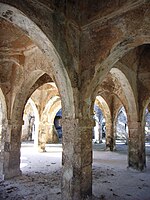

The Great Mosque of Kilwa Kisiwani, made of coral stones is the largest Mosque of its kind.


Battuta continued by ship south to the Swahili Coast, a region then known in Arabic as the Bilad al-Zanj ("Land of the Zanj"),[SUP][28][/SUP] with an overnight stop at the island town of Mombasa.[SUP][29][/SUP] Although relatively small at the time, Mombasa would become important in the following century.[SUP][30][/SUP] After a journey along the coast, Ibn Battuta next arrived in the island town of Kilwa in present-day Tanzania,[SUP][31][/SUP] which had become an important transit centre of the gold trade.[SUP][32][/SUP] He described the city as "one of the most beautiful and well-constructed towns in the world".[SUP][33][/SUP]
Ibn Battuta recorded his visit to the Kilwa Sultanate in 1330, and commented favorably on the humility and religion of its ruler, Sultan al-Hasan ibn Sulaiman, a descendant of the legendary Ali ibn al-Hassan Shirazi. He further wrote that the authority of the Sultan extended from Malindi in the north to Inhambane in the south and was particularly impressed by the planning of the city, believing it to be the reason for Kilwa's success along the coast. From this period date the construction of the Palace of Husuni Kubwa and a significant extension to the Great Mosque of Kilwa, which was made of Coral Stones and the largest Mosque of its kind. With a change in the monsoon winds, Ibn Battuta sailed back to Arabia, first to Oman and the Strait of Hormuz then on to Mecca for the hajj of 1330 (or 1332).
map_daralislam.png


Shariff Ritz,

Nahisi baina yetu mimi nawe tuna ile-telepathy ya nguvu. Maana hizi bayana uwekazo hapa mimi ndo "maradhwi yangu" nisopona Wallahi!

Ahsanta sana Al Akhiy.
 
Kwakweli inanishangaza sana, tena sana!

Nikiona hapa watu kama wewe mnajiita mna shahada za uzamili na uzamifu (PHd)

Najiuliza sana mlipataje kuwa hivyo?

Hivi kweli kwa mtu kama Kasisi Maranta unaweza kuuliza eti alikuwa na umri gani kipindi cha harakati za ukombozi barani afrika?

Maranta anafahamika dunia nzima, na ulimwengu wa dotikomu huu hata mwanangu wa mwenye umri wa mwaka mmoja amecheka nilipomwambia kuwa hili ni swali nililoulizwa na Mtanzania mwenye PHd,

Akaniuliza anaishi Dar? Nikamjibu yupo ughaibuni anabeba box, akaniambia baba usicheke nikweli atakuwa na PHd ya mabox!


Sasa ndugu yangu maamuma nakusaidia kukupa wasifu wa Kasisi Maranta hapa chini na mapito yake!

http://bit.ly/16QNsQR

Archbishop Edgar Aristide Maranta, O.F.M. Cap. 

Deceased

Archbishop Emeritus of Dar-es-Salaam

Titular Archbishop of Castrum

Events

Date

Age

Event

Title

9 Jan 1897

Born

Poschiavo, Switzerland

6 Apr 1924

27.2

Ordained Priest

Priest of Order of Friars Minor Capuchin

27 Mar 1930

33.2

Appointed

Vicar Apostolic of Dar-es-Salaam, Tanzania

27 Mar 1930

33.2

Appointed

Titular Bishop of Vinda

17 Aug 1930

33.6

Ordained Bishop

Titular Bishop of Vinda

25 Mar 1953

56.2

Appointed

Archbishop of Dar-es-Salaam, Tanzania

12 Dec 1964

67.9

Appointed

Apostolic Administrator of Zanzibar e Pemba, Tanzania

9 May 1966

69.3

Resigned

Apostolic Administrator of Zanzibar e Pemba, Tanzania

19 Dec 1968

71.9

Resigned

Archbishop of Dar-es-Salaam, Tanzania

19 Dec 1968

71.9

Appointed

Titular Archbishop of Castrum

29 Jan 1975

78.1

Died

Archbishop Emeritus of Dar-es-Salaam, Tanzania

Second Vatican Council: Session One: Council Father

Second Vatican Council: Session Two: Council Father

Second Vatican Council: Session Three: Council Father

Second Vatican Council: Session Four: Council Father

a priest for 50.8 years

a bishop for 44.4 years

Principal Consecrator:

Arthur Cardinal Hinsley 

Principal Co-Consecrators:

Bishop Louis-Justin Gumy, O.F.M. Cap. 

Bishop Joseph-Marie Birraux, M. Afr. 

Episcopal Lineage / Apostolic Succession:

Archbishop Edgar Aristide Maranta, O.F.M. Cap.  (1930)

Arthur Cardinal Hinsley  (1926)

Rafael Cardinal Merry del Val y Zulueta  (1900)

Mariano Cardinal Rampolla del Tindaro  (1882)

Edward Henry Cardinal Howard  (1872)

Carlo Cardinal Sacconi  (1851)

Giacomo Filippo Cardinal Fransoni  (1822)

Pietro Francesco Cardinal Galleffi  (1819)

Alessandro Cardinal Mattei  (1777)

Bernardino Cardinal Giraud  (1767)

Pope Carlo della Torre Rezzonico  (1743)

Pope Prospero Lorenzo Lambertini  (1724)

Pope Pietro Francesco (Vincenzo Maria) Orsini de Gravina, O.P.  (1675)

Paluzzo Cardinal Paluzzi Altieri Degli Albertoni  (1666)

Ulderico Cardinal Carpegna  (1630)

Luigi Cardinal Caetani  (1622)

Ludovico Cardinal Ludovisi  (1621)

Archbishop Galeazzo Sanvitale  (1604)

Girolamo Cardinal Bernerio, O.P.  (1586)

Giulio Antonio Cardinal Santorio  (1566)

Scipione Cardinal Rebiba 

Principal Consecrator of:

Abbot Anthony Victor Haelg (Hälg), O.S.B. 

Principal Co-Consecrator of:

Bishop Attilio Beltramino, I.M.C. 

Bishop Elias Mchonde 

Umepanic man,

Wewe umeniuliza nitajie umri wa muasisi wa AA wakati anaanzisha chama, mimi bila hiyana nimekutajia.

Mimi kukuuliza Askofu na huyo Sheikh Issa wakati wanakutana Askofu alikuwa na umri gani? Sheikh Issa yeye tumepata umri wa miaka 104.

Badala ya kujibu unaanza kulia lia naona mipini bado imekuchanganya leo haupo sawa unatukana ovyo.
 
JokaKuu,

Ndugu yangu mbona unakuwa na utumwa wa fikra hii kitu leo mara ya pili unaileta humu ukumbini.

Kuwa wazungu hawakuwahi kufanya biashara ya utumwa sijui hii umeitoa wapi.

Nimeishakuletea ushahidi kuwa wazungu ni waasisi wa biashara ya utumwa duniani lakini bado hautaki kuamini.

Kweli una mahaba na wazungu umeishaifunga akili yako.

Ritz,

Mwache tu aendelee na fikra na "elimu" hiyo hiyo....ndo maana mimi punde nimemwandikia "kumtaka radhi kwa kusema urongo"!

Hata nastaajabu hii "Historia" huyu ndugu yetu anachagua kuianzia mwaka upi!?

Tuendelee na mnakasha haina neno.

Shukran.
 
Umepanic man,

Wewe umeniuliza nitajie umri wa muasisi wa AA wakati anaanzisha chama, mimi bila hiyana nimekutajia.

Mimi kukuuliza Askofu na huyo Sheikh Issa wakati wanakutana Askofu alikuwa na umri gani? Sheikh Issa yeye tumepata umri wa miaka 104.

Badala ya kujibu unaanza kulia lia naona mipini bado imekuchanganya leo haupo sawa unatukana ovyo.

Shariff Ritz,

Acha hayo masuali yako...maana unanivunja mbavu zaidi!ahaha!!....Sheikh Issa Bin Amir alikua ni mvuvi na mpiga mbizi mzuri nasikia wakti huo wa "ujana wake" wa miaka 107!ahaha!!

Punguza uchokozi mwache jamaa aheme japo kiduchu!ahaha!!

Ahsanta.
 
JokaKuu,

Ndugu yangu mbona unakuwa na utumwa wa fikra hii kitu leo mara ya pili unaileta humu ukumbini.

Kuwa wazungu hawakuwahi kufanya biashara ya utumwa sijui hii umeitoa wapi.

Nimeishakuletea ushahidi kuwa wazungu ni waasisi wa biashara ya utumwa duniani lakini bado hautaki kuamini.

Kweli una mahaba na wazungu umeishaifunga akili yako.
Ritz,

..mimi nazungumzia hapa Tanganyika.

..aliyeonekana kwenye misafara ya watumwa ni MWARABU.

..kwamba baada ya kufikisha bidhaa zake pwani, na Zanzibar, alimuuzia Mzungu hilo wala sijabisha.

..mimi nadhani nyinyi ndiyo mna mahaba yaliyopitiliza na Uarabu na Sultani.

NB:

..wako Waafrika pia waliojishughulisha na biashara ya utumwa huku Tanganyika.

cc: Mag3, Nguruvi3, gombesugu, Wickama,
 
Last edited by a moderator:
Ritz,

..mimi nazungumzia hapa Tanganyika.

..aliyeonekana kwenye misafara ya watumwa ni MWARABU.

..kwamba baada ya kufikisha bidhaa zake pwani, na Zanzibar, alimuuzia Mzungu hilo wala sijabisha.

..mimi nadhani nyinyi ndiyo mna mahaba yaliyopitiliza na Uarabu na Sultani.

NB:

..wako Waafrika pia waliojishughulisha na biashara ya utumwa huku Tanganyika.

cc: Mag3, Nguruvi3, gombesugu, Wickama,

JokaKuu,

Ndugu yangu taratibu, na tupendane.

Hakuna anayependa au kuabudu Waarabu hapa!

Siwai Nogela Munukiwa,siwai nogela munu. Na uvale kitenge bure na uvale "Laizoni" bure...siwai nogela munu!!

Shukran kutoka kwa Mtanganyika mwenzio.

Cc;Ritz
 
Sisi tuliopevuka tunaipokea hoja ama tunajenga hoja nakuchambua kwa nguvu ya hoja na sio hoja ya nguvu kisha tunamaliza na fungate la majumuisho kuwa Shehe Hassan Bin Amir alikuwa ni mchochezi, mfitini, mnafiki na HAINI!

Hatuumi maneno kwa faida ya wapumbavu bali tunatoa maneno stahiki kwa faida ya weledi!

Ukiona mbwa usiseme

"aaha nimeona kama mbwa lakini sio yeye anafanana tu lakini ni mbwa"

Hapo utakuwa wewe ni MWEHU!

Hoja za uchochezi zimeisha...ha ha haa.
 
JokaKuu,

Ndugu yangu taratibu, na tupendane.

Hakuna anayependa au kuabudu Waarabu hapa!

Siwai Nogela Munukiwa,siwai nogela munu. Na uvale kitenge bure na uvale "Laizoni" bure...siwai nogela munu!!

Shukran kutoka kwa Mtanganyika mwenzio.

Cc;Ritz
gombesugu,

..Thank u.

..lakini kama SULTANI na vibaraka wake wa KIARABU hawakujihusisha na biashara ya WATUMWA, kwanini alisaini Moresby Treaty, na baadaye Hamerton Treaty??

cc: Nguruvi3, Mag3, Jasusi, Kadogoo, Ritz
 
Last edited by a moderator:
Wahenga walinena kuwa ukubwa wa pua si wingi wa kamasi,

Msemo huo hautazamwi kwa urefu wa maandishi tu bali husimamia mantiki,

Mada iliyopo haihusiani na unakodandia/kuokoteza hoja!

Ikiwa upo hapa kwaajili ya kubishana na familia ya Mwalimu Nyerere ningekuomba uje hapa na jina lako halisi "verified" bila shaka naamini wakuu wa familia wakiona unahoja zinazostahili kujibiwa watakujibu, lakini wakiona una viroja kama mimi nikuonavyo basi watakupuuza kama nifanyavyo mimi,

Laki huko mimi sitaingia katika hili, ndio, sitaingia kwa miiko na maadili niliyofunzwa!

Mimi ni muumini wa hoja, huwa siamini katika "vijineno/umbeya" hata siku moja!

Nguvu hiyo (umbeya/udaku) ungetumia katika kukihimiza kizazi cha familia za kiislamu zijikite zaidi katika elimu ya (dunia) maarifa badala ya elimu ya (ahera)madrasa ungeokoa vijana wengi sana wanaoangamia kwa uchochezi wenu!

Yericko,

Lazim ujue yakuwa hawa Jamii Forum wako hawana uwezo wala credibility ya ku-verify mtu au kitu chochote.

Ndo maana ilimlazim aje Andrew Nyerere mwenyewe hapa Jamvini ili kukuweka sawa!?

Don't expect easy ride here Sir,especially when you being disrespectful to Wazee wetu and Muslims.

Deers cannot invite Lions over for dinner and get shocked that they became the meat to eat.

Abdicate responsibility and you pay!

People like you are Lunatics they have no clue what the hell they are talking about. You are in effect saying that Muslims are stuppid and cannot fix their own problem/s!?

You are an infectious minded fool bought into the lies you have been fed for decades.

Indeed your kinds are the real fools!

....


Cc;Ritz
 
Back
Top Bottom